


Photos by author
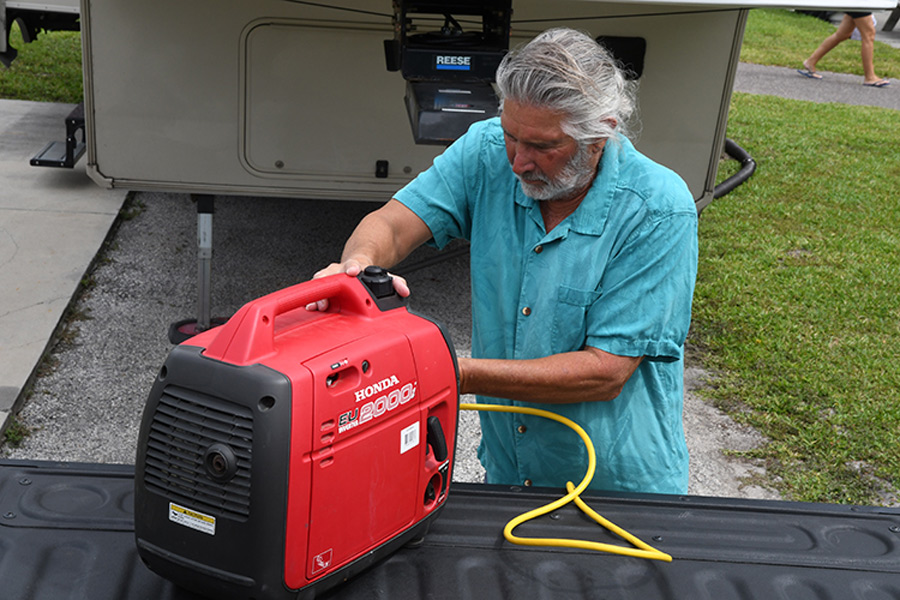
enerators. RVers can’t live with ’em and can’t live without ’em. We all hate messing around with gasoline containers, and portable generators large enough to power an RV’s electrical system are generally too heavy for one person to lift. Plus, some generators are so loud that they can be heard from a football field away. Then there’s a plethora of specifications such as continuous watts, starting watts, 120 volts AC, 120/240-volts AC, single fuel, dual-fuel, multi-fuel, inverter or contractor, SPL decibel levels, parallel operation…the list seems to go on and on.
It’s enough to almost make you want to forego all those creature comforts you paid for with your RV when you’re boondocking. At the very least, you need to invest some time and effort into educating yourself on what you need before you pluck down $1,000 or more for portable power. Let’s begin with a few definitions.
Inverter vs. Conventional Generators
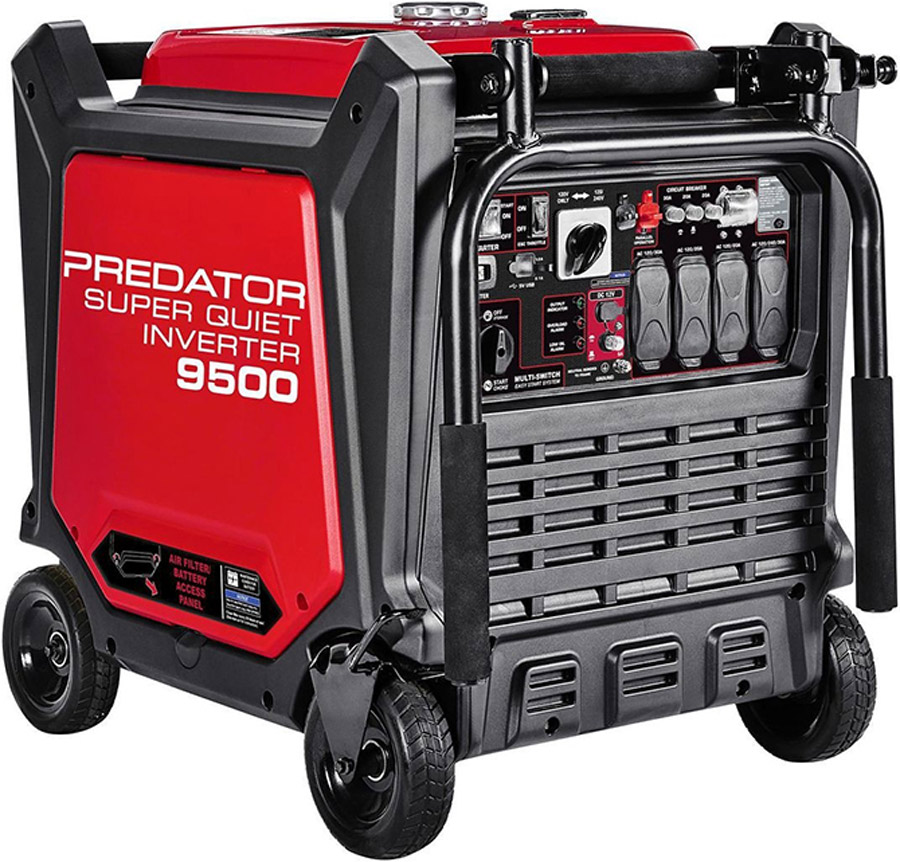
Inverter Generators: Inverter generators are the new kids on the block, comparatively speaking. Basically, an inverter generator is a 3-phase DC alternator (just like in your car) that makes 12-volt DC power. That, in turn, powers an inverter which changes the 12-volts DC into 120-volts AC at 60 Hz (cycles per second). Because the inverter section is crystal-locked and controlled by a microprocessor, it can have extremely good voltage and frequency regulation.

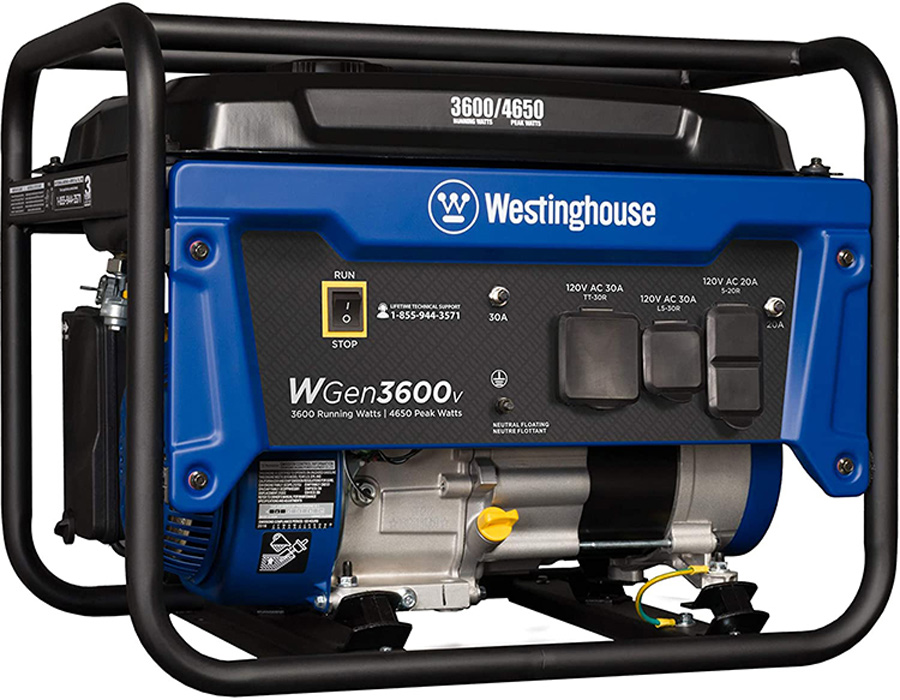
Conventional Portable Generators: These open-frame or contractor generators are basically just spinning copper and iron, with little or no electronics involved. But because they generate AC voltage directly from the spinning rotor, the engine (powered by gasoline, diesel or propane) needs to run at full speed (typically 1,800 or 3,600 RPM) all the time. This translates into higher fuel consumption than an inverter generator, as well as more noise. The extra noise also results from a smaller muffler and an open frame design without sound proofing, which helps keep the price down when compared to an inverter genset.
Simply put, an open-frame contractor generator running in a campground won’t make you any friends. The constant speed of the gasoline motor makes a lot of racket — and the lack of sound-deadening material only adds to the noise. While a quality inverter generator will be rated around 52 dB SPL at 21 feet in Eco Mode (low RPM idle), an open-frame contractor generator can be upwards of 68 dB SPL. Granted, 16 dB (decibels) doesn’t seem like a lot — but each additional 3 dB of SPL is double the amount of acoustic energy for the previous level. So that’s 2 x 2 x 2 x 2 = 16 times the noise from a contractor generator compared to a quiet inverter generator. How do I know this? Well, I ran a calibrated test (of course).

Typically, all portable generators produce either 120 volts AC or a combination of 120/240 volts AC in a split-phase configuration. (There also are huge trailer-mounted 3-phase generators that can produce 480/277/240/208/120 volts AC capable of powering an RV rally in a field with portable pedestals, but that class of generator is for the event organizers to spec and setup properly.) You will find that 3,000-watt (and under) class generators are generally 120-volts AC only. That is, they produce single-pole power on a variety of outlet types at different wattages.
The three types of outlets you’ll likely encounter on these generators are Edison 20-amp (NEMA 5-20 receptacles) for a 2kW or 1kW generator, plus a 30-amp 3-pin twist-lock outlet (NEMA L5-30) on some 2-4.5kW generators that are meant to be run in parallel with a second matching unit by using a parallel cable kit.
If you have a 3kW class generator it will probably have a pair of 20-amp Edison outlets in addition to a twist-lock 30-amp outlet (the same NEMA L5-50 as above) or sometimes what’s called “RV Ready” with a standard RV 30-amp/120-volt AC outlet (a NEMA TT-30R receptacle). There will also be 20- and 30-amp circuit breakers for each of these outlets.
Larger (5kW and 7kW) classes of portable generators (in conventional and inverter types) will typically make 240/120 volts AC in split-phase mode. But don’t worry if you’re plugging your RV into one that needs 120 volts AC or 120/120 volts; probably 99 percent or more of all RVs only use 120-volts AC even if they’re plugged into a 240/120-volt AC 50-amp pedestal outlet.

Peak/Starting or Running Watts?
This is where some optimistic numbers are often provided by the manufacturer’s marketing teams. Running watts refers to the continuous power that a generator can supply for a long time (an hour or more). Things like electric space heaters use a lot of continuous/running watts (1,500 watts equals around 12 amperes at 120 volts AC), as do battery converters/chargers (perhaps 10 amperes or 1,200 continuous/running watts) and microwave ovens (up to 12 amps or 1,500 continuous/running watts).
Peak/starting watts are needed to get some common RV appliances up and running. For example, your rooftop air conditioner may pull around 14 amps continuously while the compressor is running (that’s 14 amps x 120 volts = 1,680 watts). However, during the compressor starting time (which lasts a fraction of a second) that compressor can pull up to 50 amperes or more for around 150 milliseconds (1/6 of a second). This is called the “starting surge” current, which can instantly trip that 2,000-watt generator that only wants to produce 16 amps continuously and perhaps 30 amps of peak/surge current.
That’s where the new wave of “soft start” controllers come into play. There are at least two different manufacturers who build and sell soft start units: Micro-Air and SoftStartRV, both of which operate in pretty much the same way. They’re wired into the air conditioner compressor starting circuit and when the compressor starts up they ramp up the starting current more slowly, reducing the peak surge from 50-plus amperes of current for 150 milliseconds down to 25 amperes or so for 300 milliseconds.
I’ve included a graph for the SoftStart RV unit I’ve already measured (I’ll be doing a follow up study of the Micro-Air controller next month). Both of these soft-start controllers really do allow you to start and run a 15,000 Btu air conditioner from a 2,200-watt (running) inverter generator, which is pretty amazing. Note that these are definitely not hard-start-capacitor technology, which is an entirely different animal that probably won’t help get your air conditioner started on a small generator.
Parallel Generators
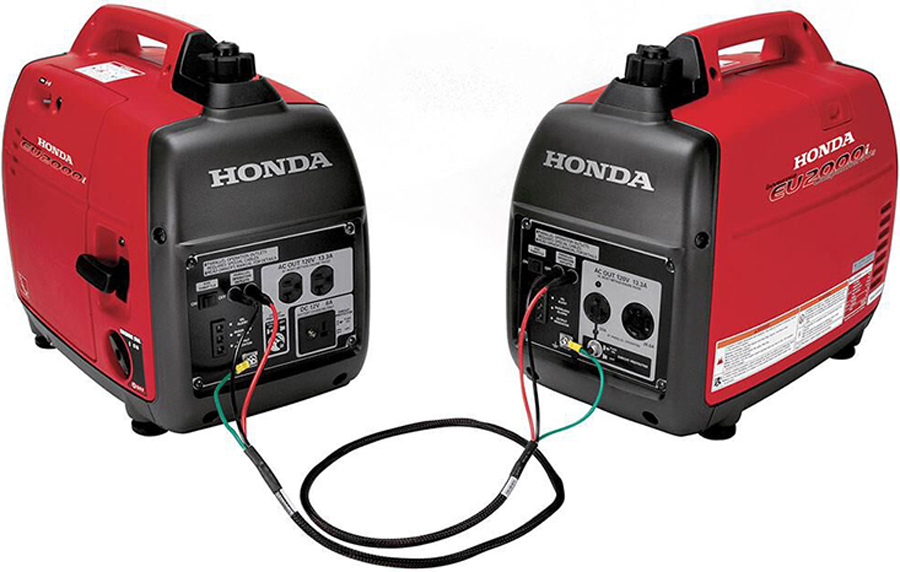
Every modern inverter generator has the ability to link two of the same models into a common outlet, thereby doubling the available wattage. Some of them have a box with a 30-amp or 50-amp outlet that plugs into both generators using heavy-duty banana plugs. However, a few manufacturers — such as Honda — use a 2kW “Companion” generator with a 30-amp twist-lock outlet and a 2kW Edison-outlet generator with a parallel-link kit (heavy-duty banana plugs). You can choose to run just one generator if you’re just charging the batteries and cooling down the refrigerator in your RV, but if you start both of them you now have 4,000 watts of power available and can run more appliances at once.
The big advantage is that each 2kW generator weighs just a bit more than 30 pounds, which is pretty easy to lift; a 3kW inverter generator, on the other hand, can weigh more than 100 pounds. Plus, fuel consumption is cut by 50% when you only have one generator running.

It seems like I answer this question in my RVelectricity Facebook Group every week. First of all, there is no requirement — or need — to drive a ground rod in and connect it to any portable or built-in RV generator. In fact, the last thing you want to do is try to drive an 8-foot rod into the ground while at a campground with all kinds of electrical wire and plumbing running about 2 feet underground.
What about your EMS Surge Protector indicating there’s no ground? Well, that’s something I know a lot about. Around 10 years ago, I discovered that inverter generators have floating neutrals (unbonded from the chassis ground), so if your RV has a built-in electrical management system (EMS) or total protection system (TPS) surge protector, it will misinterpret this floating neutral as an open ground — which could cause a hot-skin voltage condition on the RV if it was plugged into a pedestal outlet (See “Hot Skin” Parts 1 and 2 in the April/May issues of RV Enthusiast for more information on this important subject; you can find these articles at rventhusiast.com.)
However, your RV generator is completely isolated from the power grid, so there’s no need for a ground rod like your home or campground service panel. But you can add a simple ground/neutral bonding plug to any free 15- or 20-amp outlet on your portable generator (not in your RV) and it will properly bond the neutral and ground wires together inside of your generator, keeping your EMS surge protector happy. You can buy one of these generator bonding plugs (https://amzn.to/3uUwkI4) from Amazon for $12 or so.
36 CFR §2.12 Audio disturbances.
“(a) The following are prohibited:
(1) Operating motorized equipment or machinery such as an electric generating plant, motor vehicle, motorized toy, or an audio device, such as a radio, television set, tape deck or musical instrument, in a manner: (i) That exceeds a noise level of 60 decibels measured on the A-weighted scale at 50 feet; or, if below that level, nevertheless; (ii) makes noise which is unreasonable, considering the nature and purpose of the actor’s conduct, location, time of day or night, purpose for which the area was established, impact on park users, and other factors that would govern the conduct of a reasonably prudent person under the circumstances.”
Most generators and inverter generators will have a noise rating in the specs that can be referenced.
Additionally, any generator you buy should have a spark arrestor. “Currently, a significant number of States, municipalities, federally managed lands, and all USDA Forest Service regions require that all internal or external combustion engines must be equipped with a spark arrestor that meets the requirements established by the SAE Standard J335 or USDA Forest Service Specification 5100-1. The Code of Federal Regulations, 36 CFR 261.52, and orders written by USDA Forest Service line officers explain the requirements.” According to Ralph Gonzales, mechanical engineer for the US Forest Service.
Dog-bone Adapters
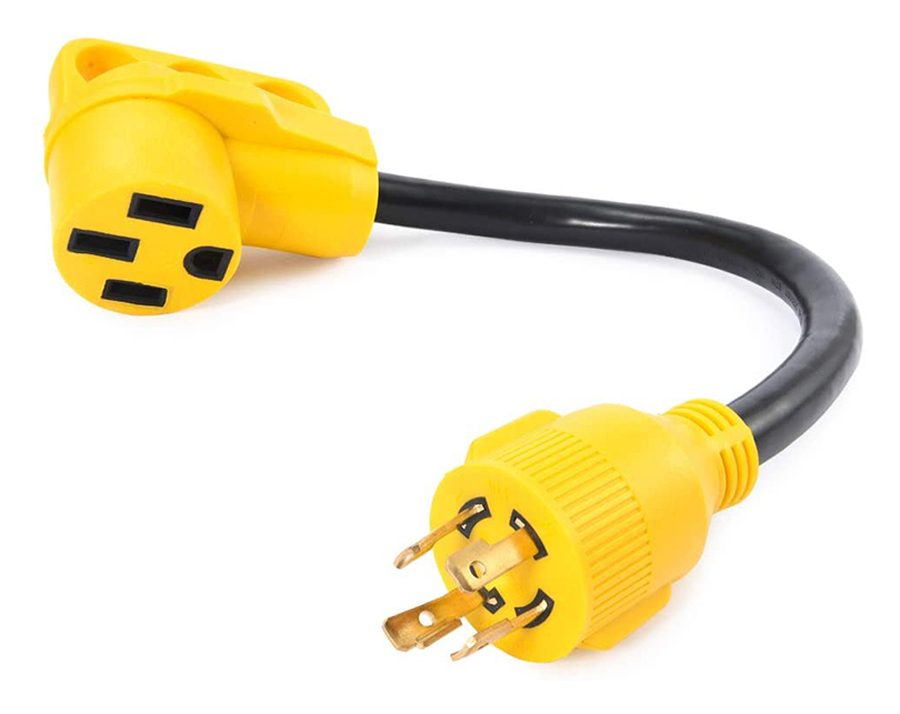
Unless you get an RV Ready 3,000-watt class generator that already has a TT-30 outlet, you’ll need some sort of dog-bone adapter to power your RV. Don’t go cheap here, as there are some poorly built import units that can overheat. At least a few I’ve seen were internally mis-wired from the factory. So Caveat Emptor as far as dog-bone adapters go. (That’s probably the first time you’ve read Latin in an RV tech article; it means “let the buyer beware.”)
For example, when connecting a 30-amp RV to a 2kW generator with a 20-amp outlet you’ll need a 15-30-amp dogbone. It’s exactly what you would use to connect your 30-amp RV shore power cord to a home Edison outlet. You won’t have a full 20 amps continuous power available, but you should be able to run several small things at once or one big thing (such as a hair dryer, microwave oven, or rooftop air conditioner with a soft starter installed).
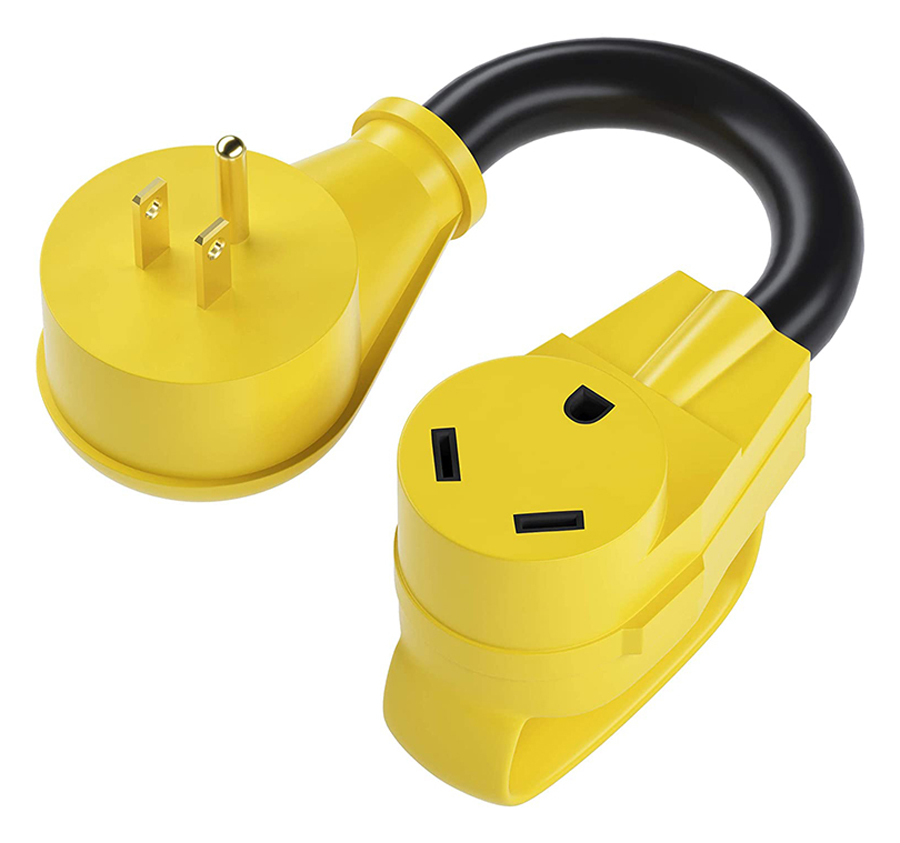
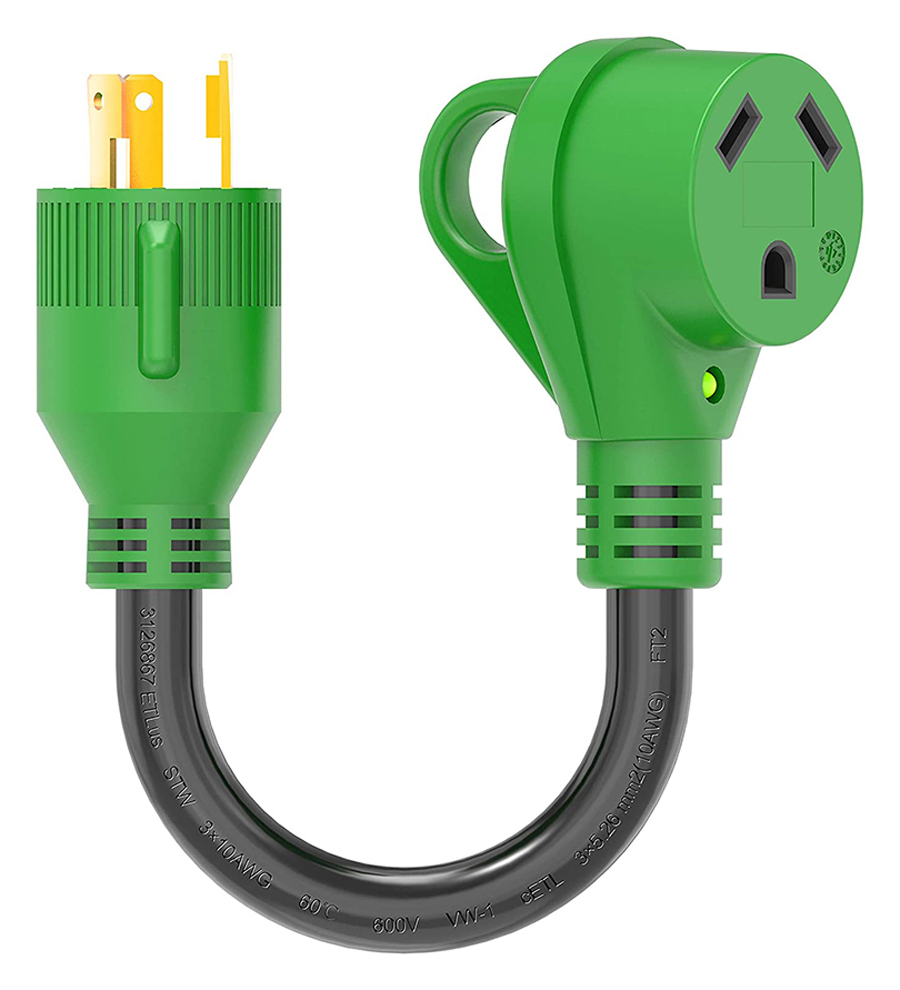

- Connecting a 30-amp RV’s shore power plug to a 3,000-watt generator with a twist lock outlet: 30-amp generator dogbone. (Find one at https://amzn.to/3eLtxew.)
- Connecting a 50-amp RV to a 2,000-watt generator with a twist-lock companion outlet: 30-50-amp generator dogbone. (Find one at https://amzn.to/3fn8r5h.)
By the way: This type of 3-prong, 30/50-amp dogbone adapter will properly feed that 30 amps of current into both legs of your RV’s 50-amp shore power cord. With it, you should be able to run your refrigerator, air conditioner or microwave, but not all at the same time.
Also, while a single 2kW generator is only rated for 16 amps of current, if you do connect a second 2kW generator in parallel it will make 32 amps of combined current at 120 volts AC, which is around 4,000 watts of power. That will allow you to run multiple appliances at the same time.
- Connecting a 50-amp RV shore power cord to a 5kW to 7kW generator with 240/120-volt output: 50/50 generator dogbone.
This is an easy one. You just need a dog-bone adapter with a 4-prong 30-amp male plug on one end, and a 4-prong NEMA 14-50 outlet (which matches your 50-amp shore power plug) on the other end. You’ll only have 30 amps available on each leg of your RV power panel, but that’s okay: 30 + 30 = 60 amps at 120 volts AC, and that’s up to 7,200 watts of continuous power (depending on your generator rating). That’s not the full 50 + 50 =100 amps from a pedestal (which is 12,000 watts continuous), but as long as you don’t turn on everything at the same time it should be able to keep you powered up in style. (Find one at https://amzn.to/3ogfpNi.)