

aving grown up with RVing from the early 1970’s, I never experienced many RV potty problems. Basic mechanics, a farm upbringing and science got me through quite well. It wasn’t until I started working as a technician that I realized what a problem there was with all this crap (pun absolutely intended). As it turns out, when you take folks who have known nothing but a flush toilet, add any kind of paper that the TV commercials say is “soft and strong” and introduce them to a system they have to interact with…well, you have a potential problem.
aving grown up with RVing from the early 1970’s, I never experienced many RV potty problems. Basic mechanics, a farm upbringing and science got me through quite well. It wasn’t until I started working as a technician that I realized what a problem there was with all this crap (pun absolutely intended). As it turns out, when you take folks who have known nothing but a flush toilet, add any kind of paper that the TV commercials say is “soft and strong” and introduce them to a system they have to interact with…well, you have a potential problem.
In truth, holding tanks and gravity toilets in RVs are both a blessing and a curse. Dealing with them is arguably the least-favorite part of RVing, but if you follow a good process, use the right products and enough water, you’ll find that this chore will become relatively painless — and ecologically friendly.
The System
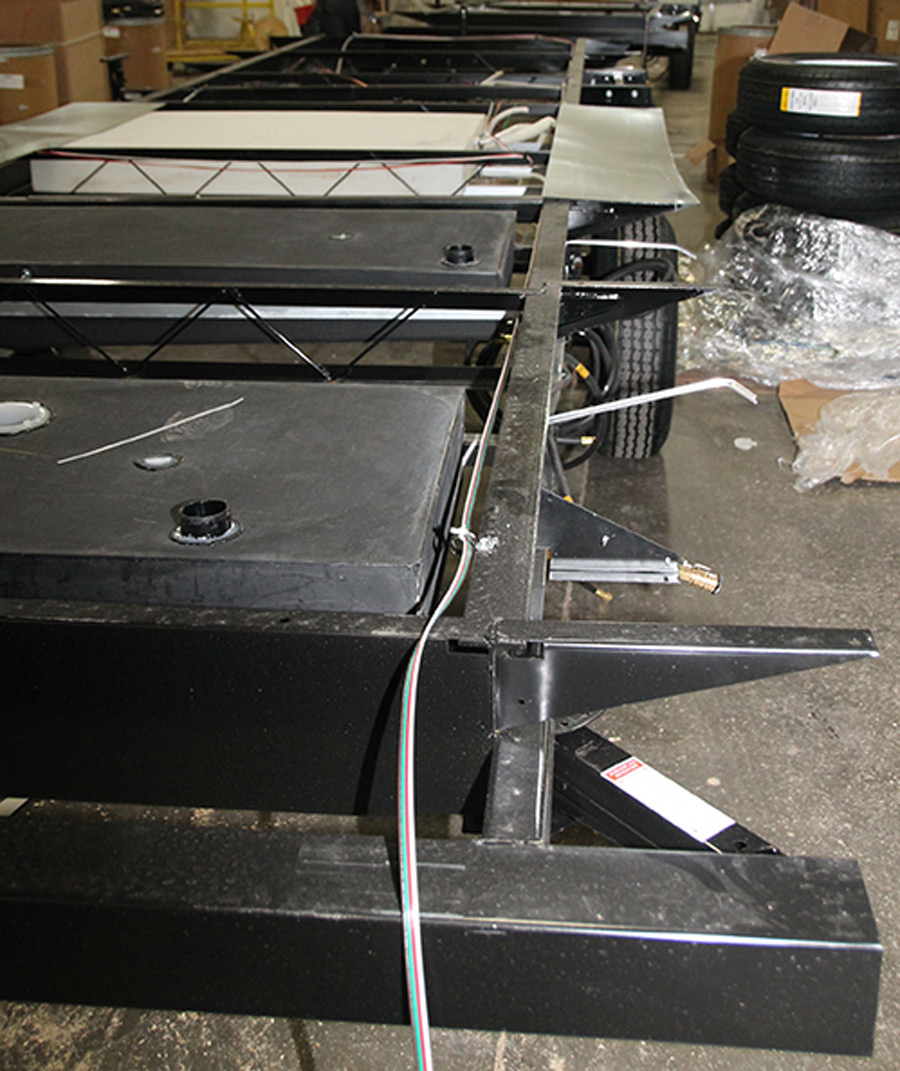
For people who are new to the lifestyle — and to serve as a review for the folks who have been around it for a while — wastewater in an RV is generally separated into liquid waste (grey water) and a mix of solid and liquid waste (black water). Most of the time, sinks, showers, clothes washers and dishwashers drain into one or more grey water tanks in the RV via 1-½ inch black ABS pipe. Occasionally, systems in small RVs will have a single tank to capture black and grey water, but this is rare and frankly a less than ideal setup. Imagine the shower drain backing up because the single holding tank is full. Not a pretty picture.
Toilet waste goes into the black tank via a 3-inch black ABS pipe. In many RVs, the toilet sits directly atop and within a couple of inches of the tank, which makes the draining of the toilet more efficient. It also allows the owner to visualize the level of the effluent in the tank and ascertain if there’s enough water in it.
Plumbing systems in RVs with 1-½ baths are more complicated. Depending on the RV, this configuration is handled via the use of either a second black water tank, a macerating toilet that pumps through 1-inch hose to the black tank or a macerating pump that must be turned on to pump everything to the black tank. There are also vacuum-powered systems on some higher-end RVs.
Black tanks are frequently equipped with a tank flush feature; if your RV doesn’t have one of these, you might think about adding one. Of course, a hose or RV flushing wand positioned down the toilet and into the holding tank often suffices for this, but it’s not as convenient.

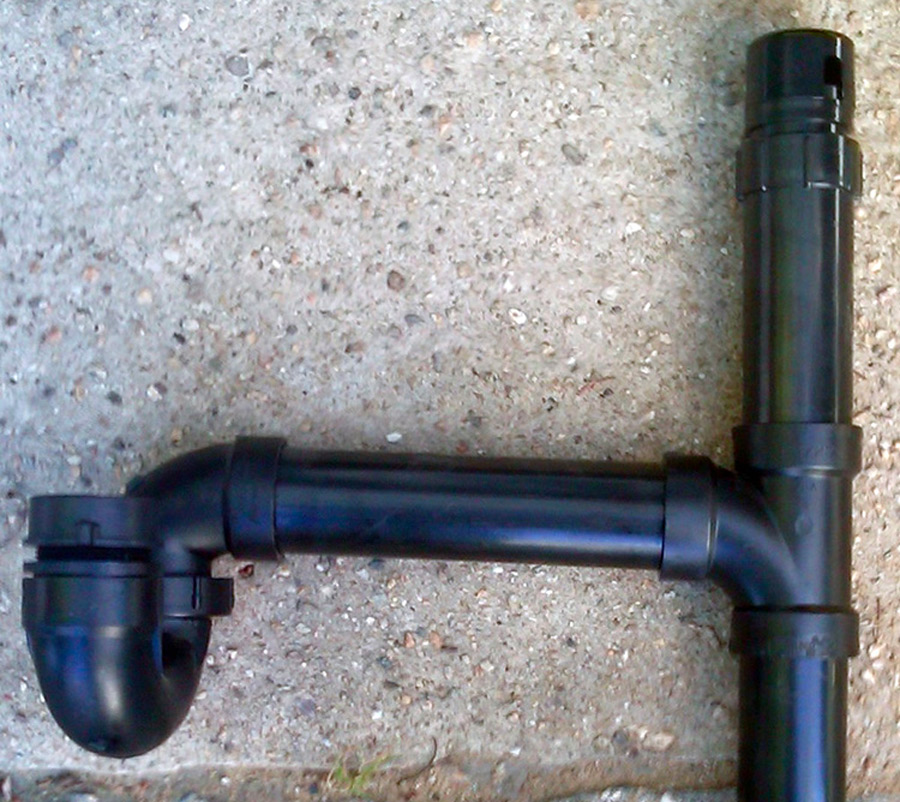
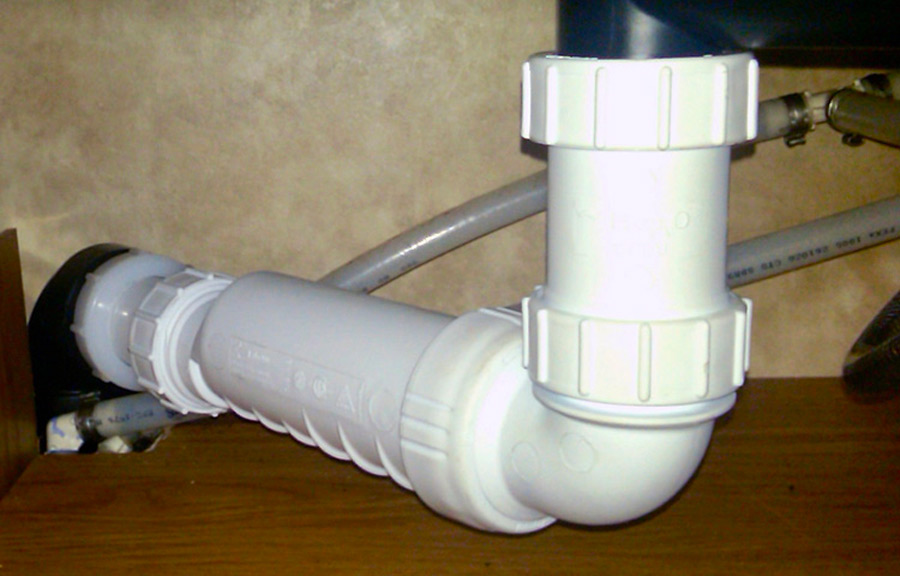
Grey plumbing is pretty simple, with the use of P-traps at each sink or, more recently, the installation of a HEPvO waterless P-trap that is very efficient. Sinks will often have an Anti-Siphon Trap Vent Device (ASTVD) under the sink adjacent to the drain. This allows the sink to drain properly, using a small rubber flap inside the device instead of running a vent stack through the roof for every draining fixture. That would result in a lot of pipe and extra weight, and many more holes in the roof! In most RVs, just the holding tanks are vented to the roof. The rest use ASTVDs unless connection to the roof vent pipe is preferable by the manufacturer.
The Process
The RV waste plumbing system isn’t nearly as forgiving as that in a house, which is attached to a municipal sewer system. You’ll never see a garbage disposal in the galley of an RV, for example.
It best not to allow solids to drain into a grey holding tank. Often they’ll collect along with a layer of soaps and fats in the grey tank; that will lead to odor, which can sometimes be worse than odor emitted from the black tank. There are grey water odor-control products available to help reduce or eliminate odor problems, but if you have grease to dispose of, don’t put it in your holding tanks. Instead, dispose of it in a grease bag and throw it into a trash container, bury it or burn it in your campfire (add it warm enough to be liquified to a hot fire).
Always use plenty of water when introducing solids into the black tank. Make sure you use a good RV toilet chemical/treatment product in the holding tank to aid in the breakdown of solids and toilet paper and to control odor. Formaldehyde was once the go-to product and still works well, although this practice has sparked heated debates on the impact of formaldehyde being introduced to septic systems. Eco-friendly products without formaldehyde are available at most RV stores and online. Some work better than others in varying temperature conditions, so it’s best to try different products to determine which ones work best for your system. These products are designed to be safe, work for this purpose and not mess up septic systems.
Always keep your dump valves closed until you’re ready to dump. Here’s why:
- The black tank needs the accumulation of water to liquify waste, allow the chemical/treatment to work and to effectively evacuate the tank. If the valve is left open all the time, the solids simply land on the tank floor, pile up and dry out. Eventually the tank becomes full of solids (the dreaded poo pyramid) without liquid. This means that some unfortunate soul has to go in and manually try to disrupt the solids and flush them — but usually (and unfortunately) by the time this has happened, the solids have packed in the drainpipe against the fullway (dump) valve like, well, foul-smelling mud.
- The grey water tank also needs water to reduce the accumulation of galley solids and hair. Also, the grey water can be used to flush the sewer hose out after the black tank has been dumped and rinsed. It’s best to allow holding tanks to fill, then dump them as needed. Always have enough grey water to aid flushing the sewer hoses.
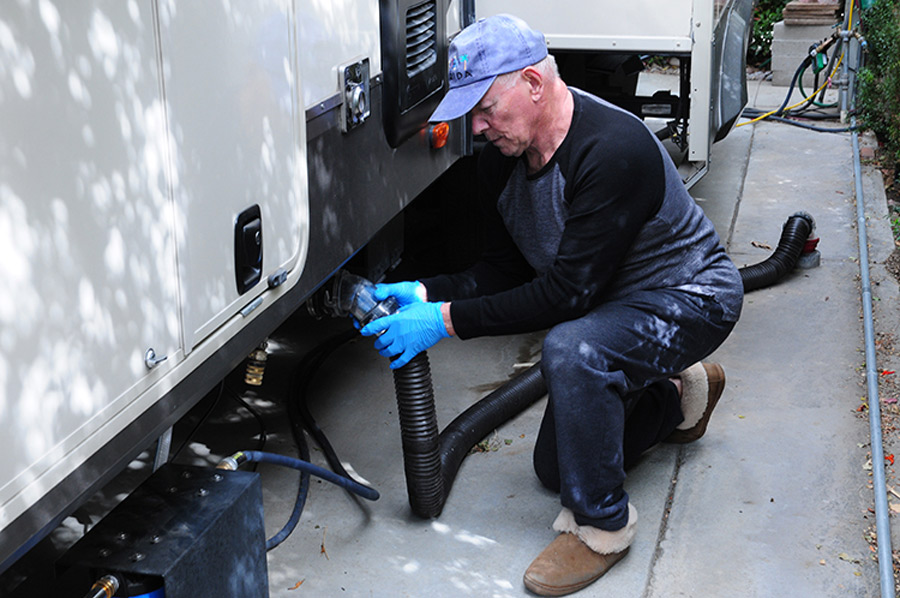
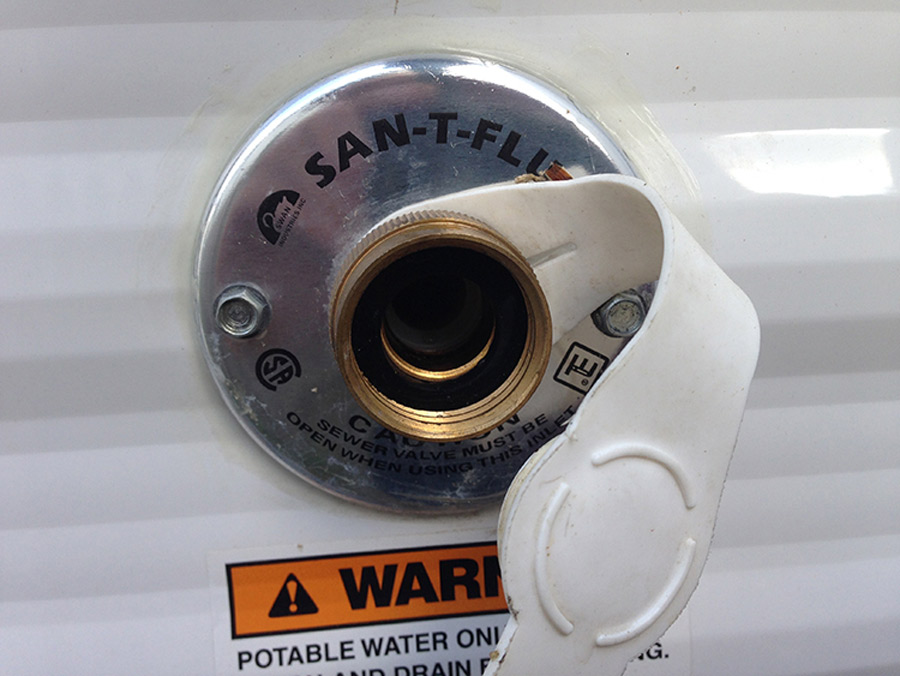
Make sure your sewer hoses are of good quality and properly connected. You should have a good connection to the dump station port, and if it doesn’t have threads to screw in to, use a sewer doughnut and/or a sandbag to keep the fitting in place. In most RV parks, a sealed connection is mandatory.


The Products
There are many accessory products for RVers, from appliances to electrical adaptors, water hoses to sewer hoses. As time goes on, RVers learn when to buy higher-quality products. Sewage dumping equipment is one of those places where extra dollars for a quality setup is well worth the investment. A cleaner, simpler and less flimsy dumping experience promotes happy RVing. By contrast, sewage blown all over a campsite — and you — will never endear you to your neighbors, the campground owner, your family and the dog.
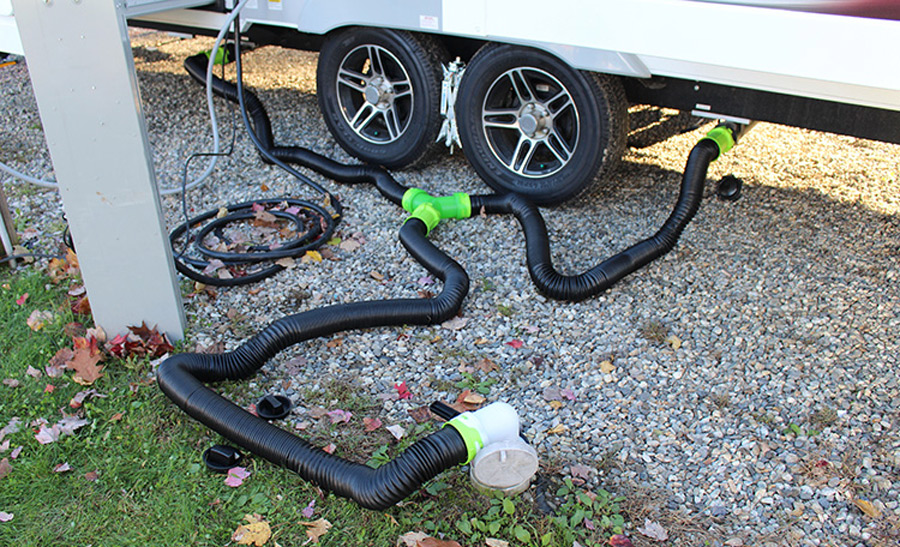
A quality sewer-disposal kit should have a couple of interconnecting hoses and a sewer port fitting. Some campsite sewer connections can be as far as 25-30 feet from the hookup pipe on the RV, so we recommend getting various lengths that add up to the above length if you have room to carry the hoses. If you’re storing the hose in a 4-inch trailer bumper, make sure the hose you’re buying will actually fit. For example, the Camco RhinoFlex will fit, but the Thetford Titan, while an excellent product, won’t fit in a standard bumper, as we learned on a previous test.
The fittings will have inside seals, and those seals should not be compressed all the time. High-end hose caps are available that spare the seals. The seals can be lubed with a valve grease like Dow Corning 111 or a silicone spray.
Many RVs, especially large travel trailers and fifth wheels, have two sewage discharges. While it is possible to move your sewer hose from one port to the other for dumping, consider adding a wye fitting so the two can stay connected while parked on a site. It’s best to purchase all of your accessories that match your base kit for compatibility, when possible.
Flushing and rinsing sewer hoses and accessories are important. You need to keep a dedicated water hose for these chores and for connecting to the black tank flush or a tank rinser. Make sure that hose is a different color and kept separately from drinking water hoses. Garden hose quick-connect fittings, available online or at retail home centers and hardware stores, make connecting and disconnecting hoses that much easier and quicker.
Lastly, if you camp without the benefit of a sewer connection, consider a portable sewage tank (sometimes known as a sewer tote). The portable sewage tank should preferably be at least the size of your black holding tank if possible — black tank contents are tricky to stop mid-stream and can jam in the fullway valve track and seal, causing leaks. Even if the portable tank is big, ladder tank storage mounts are available as are hitch platforms. Just make sure the tank is securely attached while in transit — I saw a big blue rolling tank bounce across the interstate in Rhode Island on my last trip.
With a little care and the right products, sewage handling can become just another acceptable chore rather than something you dread.
- Water is your friend! Understand that, with an RV gravity toilet, it doesn’t automatically provide enough water for the flush. Introducing solids and paper into the system? Add ample water — 2/3 of the toilet bowl level should be OK.
- Always maintain a minimum amount of water and chemical in the holding tank. After emptying and flushing the tank, add at least a couple to a few gallons of water followed by the holding tank treatment product.
- Always use an approved toilet chemical/treatment. Don’t mix your own “home brew.” Over the years, I’ve heard people talk about fabric softener, clothes detergent, acid, ammonia, bleach, septic system enzymes — all kinds of things. Some of them can be very dangerous when introduced into a holding tank with other commercial RV tank-treatment products and can be detrimental to valve sweals and septic systems in campgrounds.
- Use an RV/Marine grade toilet paper; one that degrades easily in water (see “The Great Wipe Off!” elsewhere in this issue).
- Keep your holding tanks as clean as possible. This allows the sensors to work properly and reduces odor. Black-tank-sensor inaccuracies, in particular, have been around seemingly forever and it’s a problem RVers know well. The cause is wet, living slime on the tank sidewalls that creates electrical conductivity between the sensors, which fools the display.
While recent technology, like the See-Level II by Garnet Industries (garnetinstruments.com/product/709p3-seelevel-tank-monitor/) and the Horst Miracle Probes (valterra.com/product/horst-miracle-probes-black-water-tanks-pack-4-carded/) reduce or eliminate these issues, those with standard button sensors can make improvements. Forget about ice cubes and driving around — the key is actually washing the inside surface of the tank and the sensors. Eliminating the slime and keeping it away from the sensors (as with the Horst Miracle Probes) or installing systems with outside senders (as with the Garnet SeeLevel II) are the best solutions, but getting rid of the slime also eliminates the odor.
This is a whole article in itself, but it is possible to pressure-wash the inside of your tanks. There are companies that provide this service, and we’ll take a look at a couple of DIY options in a future issue.

