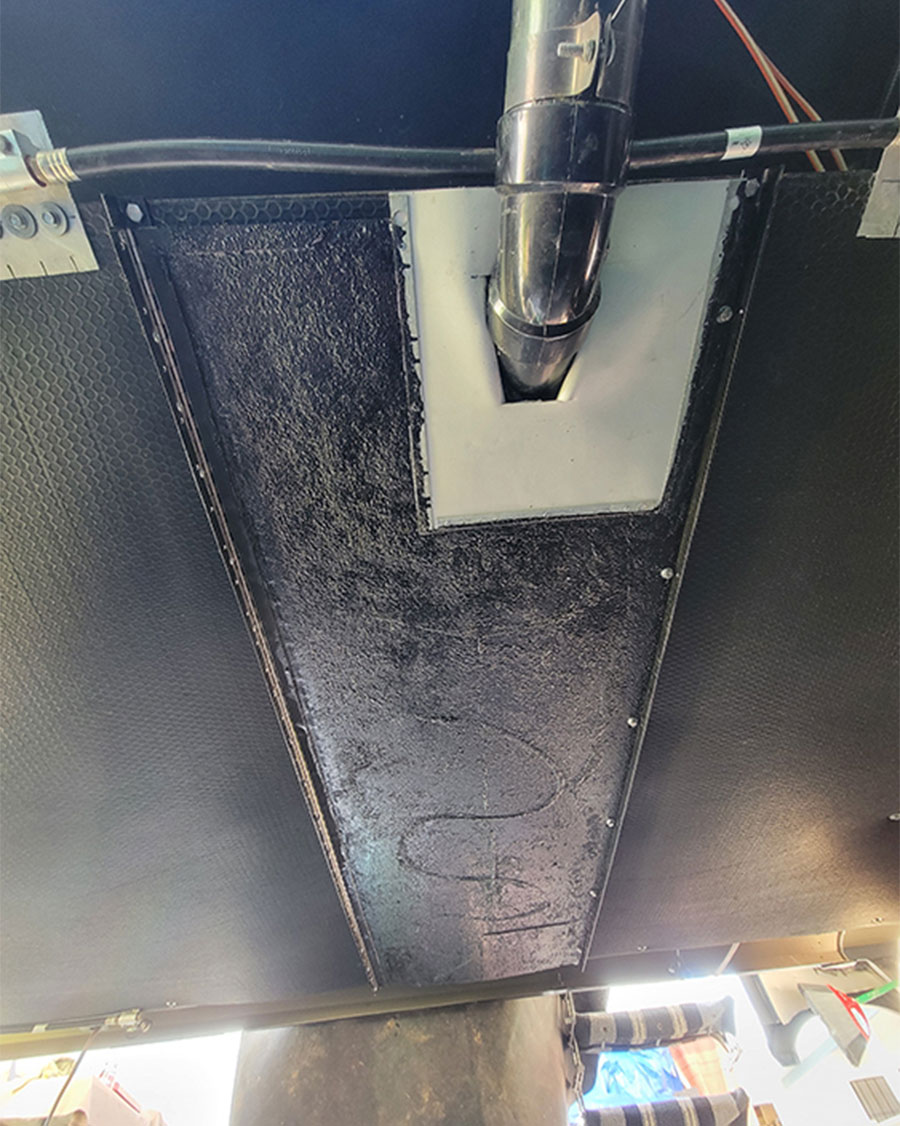


Trap Door
[maghub_sidebar]
Trap Door typography
There’s probably nothing less desirable than working on a dump valve that has failed — especially if the holding tank is full. Adding an access panel in the corrugated plastic belly pan eliminates the frustration of making nasty repairs when in the field.
By Bill Gehr / Photos by author
C

overing the bottom of any travel trailer or fifth wheel with a one-piece corrugated plastic sheeting protects the innards below the floor from succumbing to road/environmental hazards — plus, it provides a smooth, finished look. The downside of this belly pan is the inability to access tanks, valves, pipes and wiring without taking a large section down, which can be a big project and most likely messy. Case in point is having access to the cable-operated dump valves that have a propensity to fail — usually at the worst time.

There are several scenarios that can develop, the worst being when you pull the dump valve handle, located in the utility compartment or under the rig, and the cable pulls out without opening the valve. The only way to get the valve open at this point is to either reattach the cable, if possible, or pull the valve open temporarily with a Vice-Grip pliers, but that requires access to the valves. I originally tried dropping a small section of the corrugated plastic to peek in and locate the exact area of the valves, but access was restricted and compounded by a rat’s nest of wires and pipes.
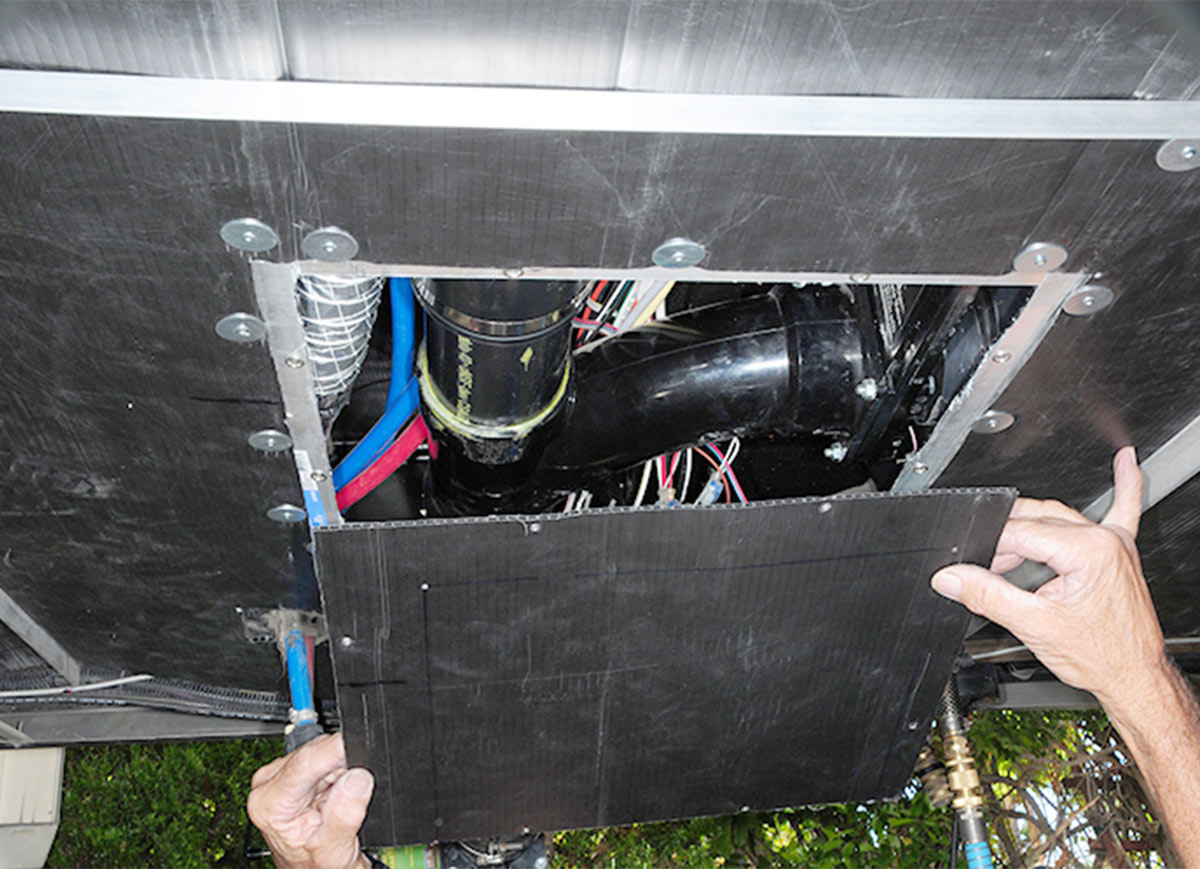
access panel being removed from the underside of an RV
The original project resulted in individual access panels that were fastened to an aluminum frame. It worked well, but the improved version requires only one larger panel, which allows for better access.
RV Enthusiast Publisher Bob Livingston and I have more than a few years of RVing under our collective belts, and we’ve both been through this exercise many times. That’s why, a few years back, we devised a removable-panel system on his fifth wheel to gain easy access to the dump valves without dropping the belly pan (see “Belly Pains,” May 2022 issue). It works great, but after brainstorming the pros and cons of this underbelly project, we came up with an improved version for my new fifth wheel.

Essentially, we figured out a way to make access even better (and easier) through a single port.

I began by releasing a large section of the belly pan and making accurate measurements for the new access panel. The first thing that I noticed was that the holding tank heating pads we’re laying on the corrugated plastic because the adhesive failed. Also, there was a bunch of wiring loose on the belly pan that was going to take some time to clean up and secure with cable ties. With the measurements in hand, it was time to seek out a suitable material for the new access panel that was not too difficult to work with but rigid enough to maintain a tight seal when closed.
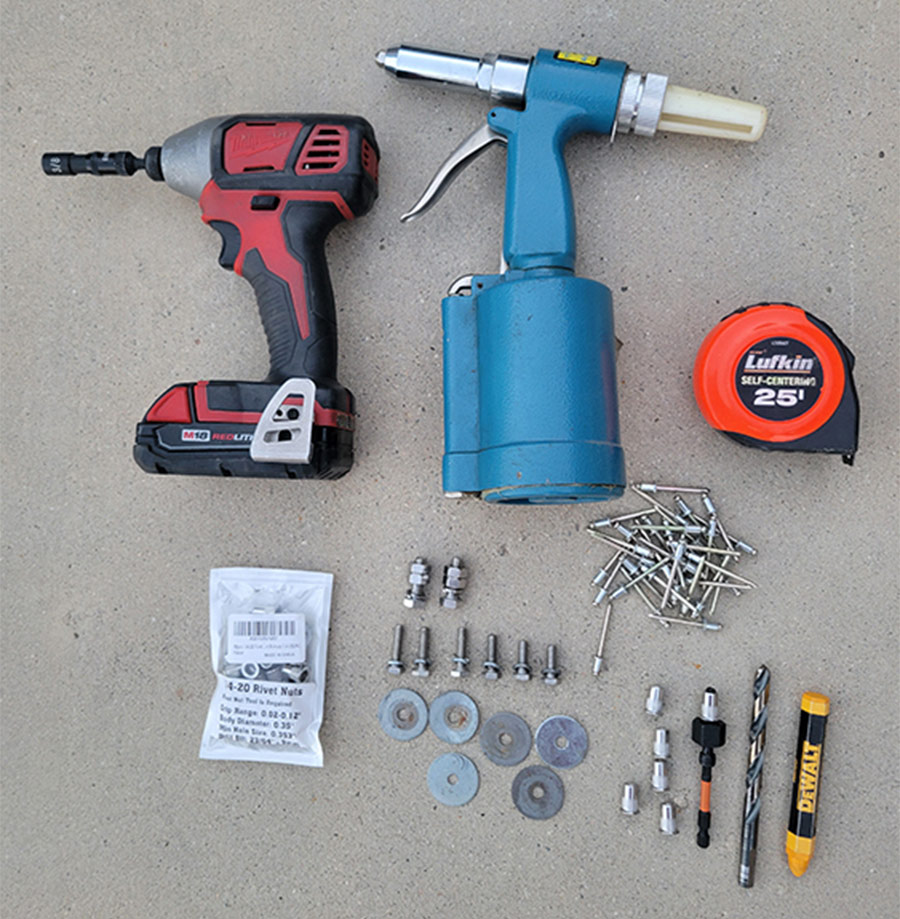
various hand tools laid out on a table
For the most part, the project was accomplished with common hand tools, including an impact driver, which was necessary to pull the frame bolts and install the rivet nuts. I borrowed an air rivet tool to save my hands from installing dozens of heavy-duty steel rivets.
aluminum diamond plate that will be used to cut the panel
It was decided to cut the panel from standard, aluminum diamond plate. The stars must have been aligned for me to find an old, almost perfectly sized piece of diamond plate in a friend’s backyard. That saved me almost $100.
Because the black-tank valve was close to the driver’s side of the fifth wheel and both gray-tank valves were almost all the way to the passenger side, it made sense to build an access panel that covers as much area as possible between the I-beams on both sides of the frame. Livingston and I figured aluminum diamond plate was the best way to go since it’s strong, lightweight and should be durable for many years. After that, it was just a matter of designing a method for mounting the diamond plate on a hinge that could be latched in place during travel. We thought about angle aluminum to bridge the 72-inch gap across the frames, but ultimately went with steel angle iron.

I also decided to use a heavy-duty piano hinge that could be riveted to the angle iron and diamond plate. Four rivet nuts and 5/16-inch bolts were used to latch the other side of the diamond plate to a parallel piece of angle iron spanning the width of the fifth wheel. The entire panel system added only a little more than 20 pounds to the trailer.

As luck would have it, a friend had an old piece of diamond plate aluminum tucked away in his backyard that was close to the size I needed for the project. I actually wanted a piece of diamond plate that was a little bit wider, but at 25 x 72 inches, this well-used piece reduced the overall cost of the project. Aluminum diamond plate is available in various sizes; figure on paying at least $100 for a precut piece that measures 24 x 72 inches (which should be wide enough for most access points). You’ll pay quite a bit less for plain aluminum, which would also work for this project.

Because the old piece of diamond plate was sitting outside for years, it needed a serious cleaning. Some of the stains would not come off even after scrubbing with a wire brush and degreaser, but the flaws were eventually concealed with a rubberized truck-bed coating — and it’s under the fifth wheel anyway, so it wouldn’t take long for the road debris to make it dirty again; both sides were treated with the rubberized coating.

closeup of measuring tape
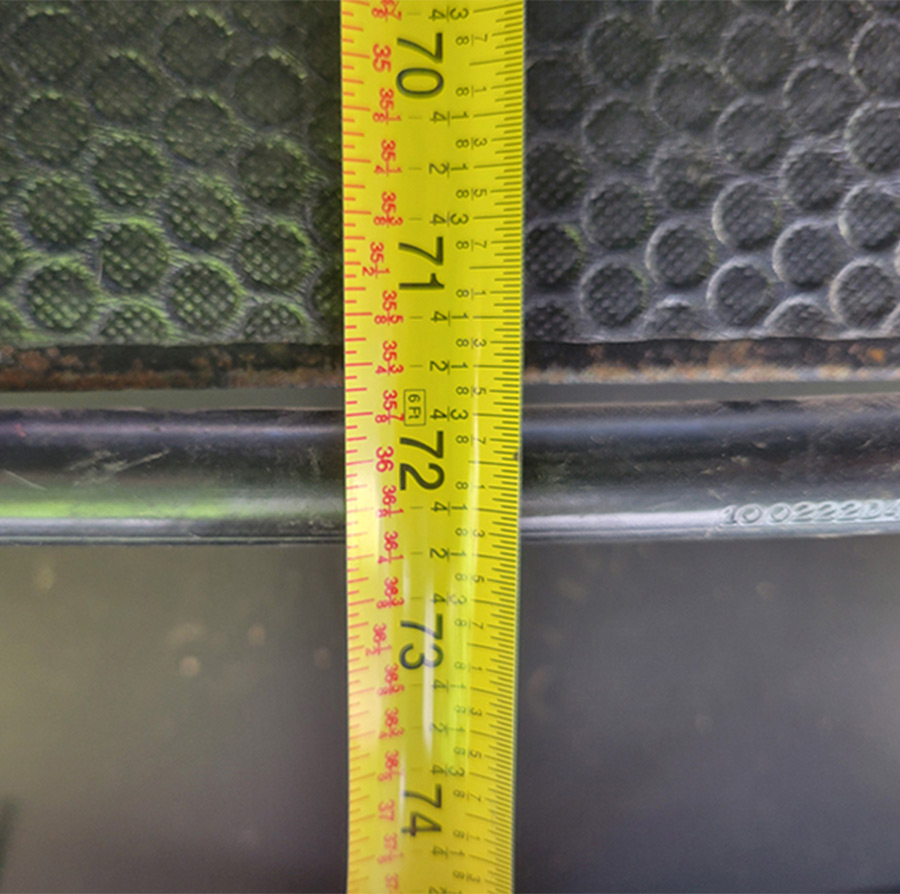
Sometimes you have to be creative when you don’t have someone to hold the dumb side of a measuring tape. To get the needed length of angle iron across the fifth wheel, I used a strong magnet to hold the end of the tape in place. You’ll have to measure the distance from the outer edges of the frame to get the right length.
Coating the diamond-plate surface with the rubberized material took some patience — and more work than anticipated. After stirring the gooey liquid thoroughly, a stick was used to glob on the material before smoothing out with a foam roller. Unfortunately, it started to dry before all the material was spread out. Applying material to smaller sections made the job easier, though it was still difficult to make sure all the spots were covered before the rubber cured. A few doses of plastic dip designed for tool handles touched up any exposed areas and should last nearly as long as the truck-bed coating.

The angle iron was 8 feet long, which required cutting with a chop saw to make each length fit properly. I then sanded and spray-painted the angle iron with an all-in-one primer and paint to prevent rust from eating away at the metal. After copious measuring sessions, I also decided to cut the hinge a little bit shorter so that after the angle iron was cut, the protruding rivets would not prevent the ends of the angle iron from mounting flush against the frame, which has a fairly narrow lip.
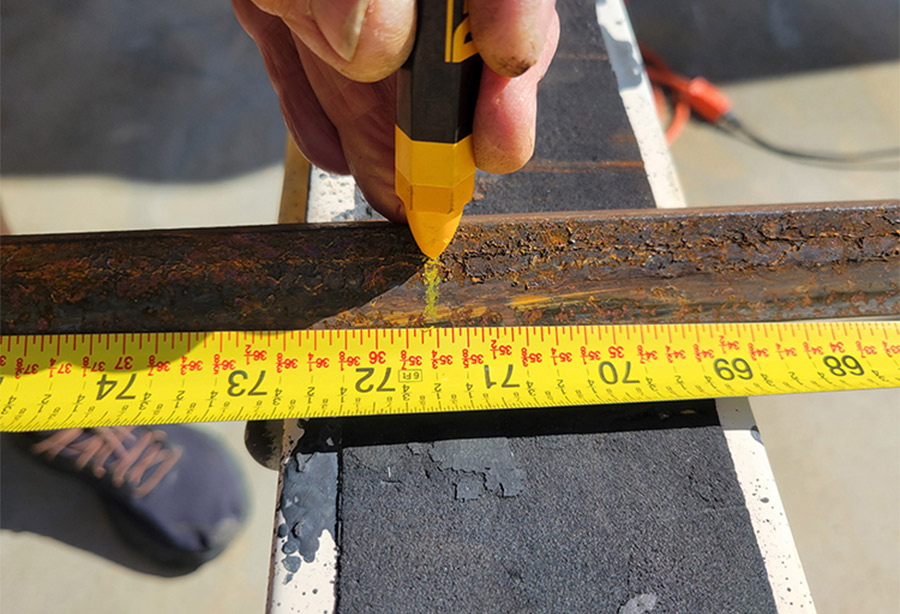
iron rod being marked with a yellow construction crayon
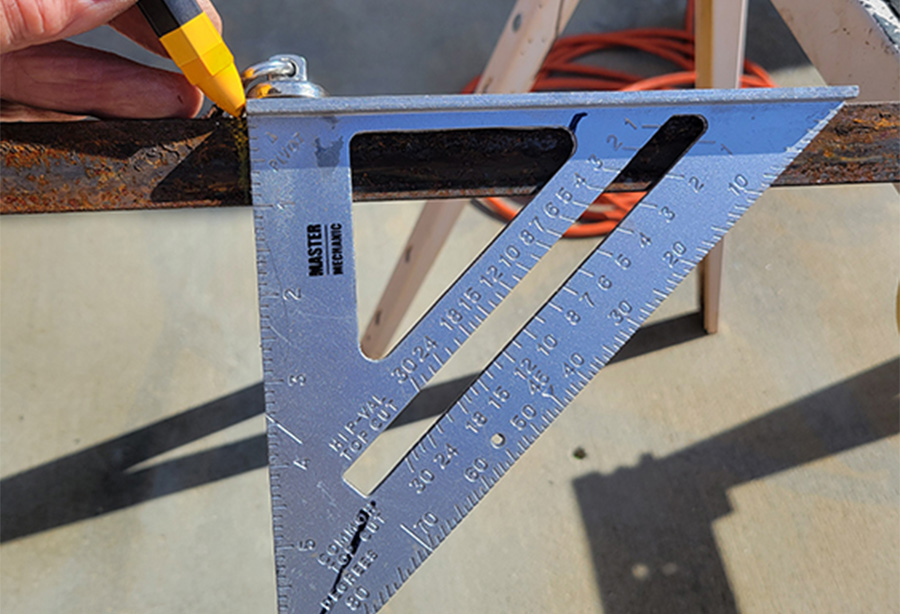
speed square ruler being used to draw a straight line on an iron rod
Once the length is established, the area to cut was marked with a construction crayon, which is more visible. A speed square was used to make a straight line.
I decided it would be much easier to assemble all the pieces on a 4- x 8-foot sheet of half-inch plywood placed across two sawhorses. I had a suspicion that installing all of the rivets would be a challenge — and it could have been without the use of a friend’s air rivet gun. Squeezing a hand tool for setting dozens of 3/16-inch short steel pop rivets would have been brutal.

I was pretty confident that the steel rivets would be more than strong enough to hold the diamond plate to the hinge for the lifetime of my fifth wheel. It was important that multiple measurements were taken to ensure that the rivets would not need to be drilled out and reset, which is a pain.

As it turned out, attaching the piano hinge was the trickiest part of the project. The hinge was purchased on Amazon (852777 Continuous Pin 72” x 2” Nickel; $30.99). After confirming that the aluminum plate would fit flush against the corrugated plastic flap (more on that later) at a 90-degree angle without restriction, the hinge was riveted to the diamond plate first. This made it much easier to handle the long piano hinge. One rivet on each end of the hinge was installed initially to prevent it from drifting during the process of adding rivets. Then the other rivets were installed in the middle of the piano hinge to make sure that it didn’t create a bow, which could have inhibited the action of the aluminum plate when opened or closed. Because of the strength of these large rivets and the hinge, a rivet was installed in every other hole rather than in all of them, which would have been overkill.
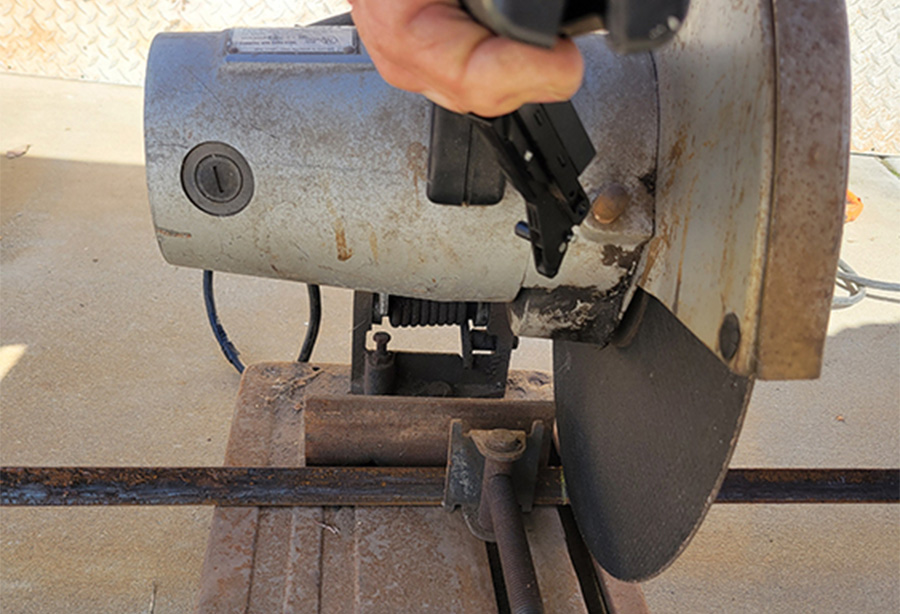
closeup of chop saw cutting through iron rod
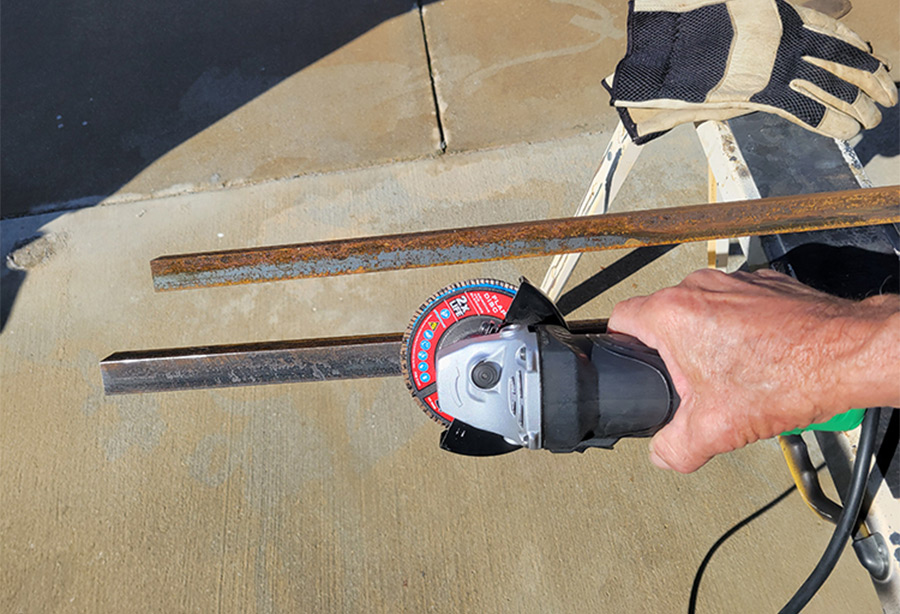
iron rod resting on a sheet of plywood with hand holding a circular hand saw
The angle iron was cut with an old chop saw, designed for cutting steel. The remaining assembly work was done on a 4- x 8-foot sheet of plywood set on two sawhorses.
hand holding up a can of primer/paint to spray onto the angle iron
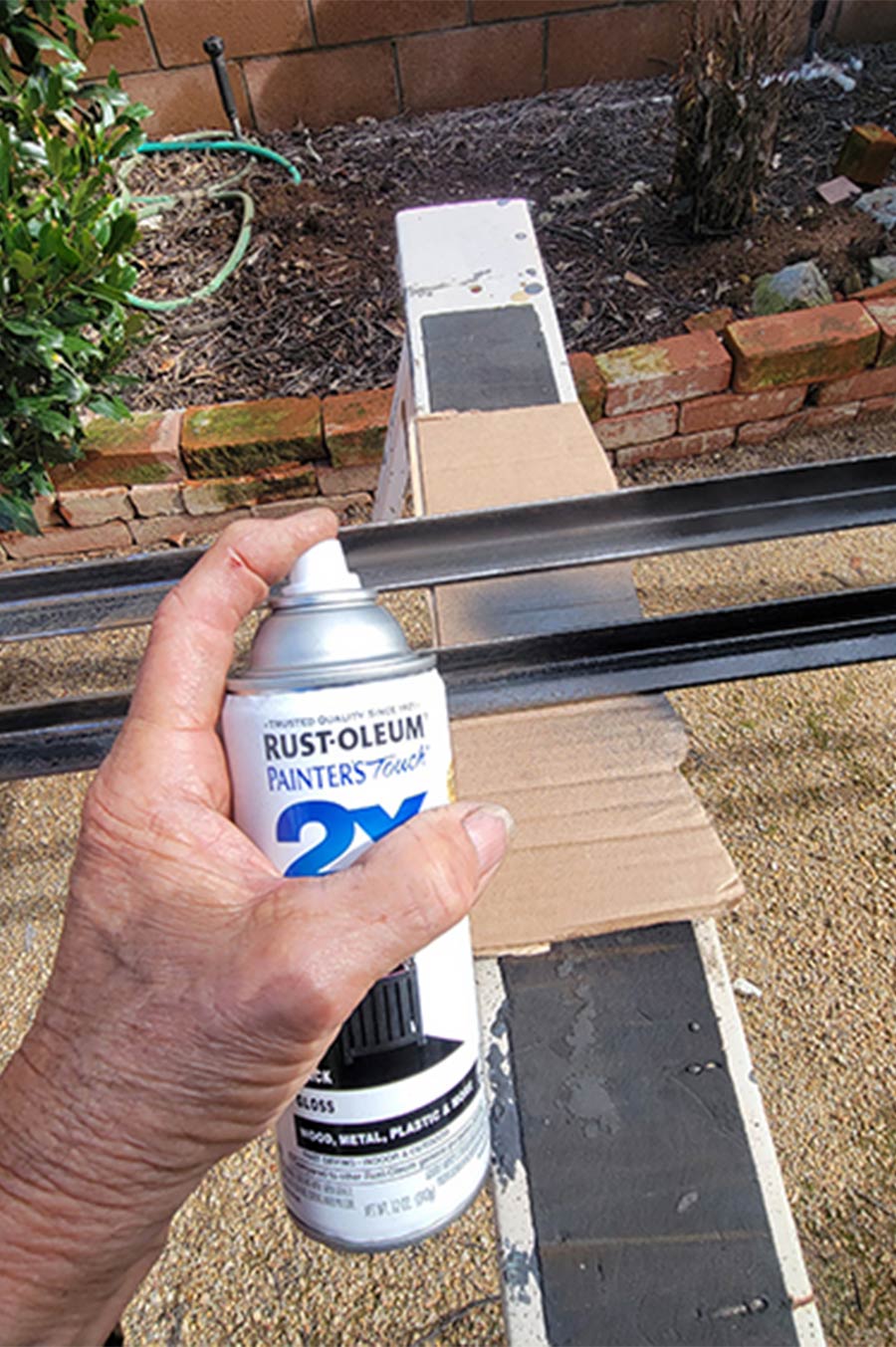
After cleaning up and sanding the angle iron, which was acquired at a local metal shop, it was painted with a combination primer/paint from a rattle can.
closeup view of the location of the dump valves
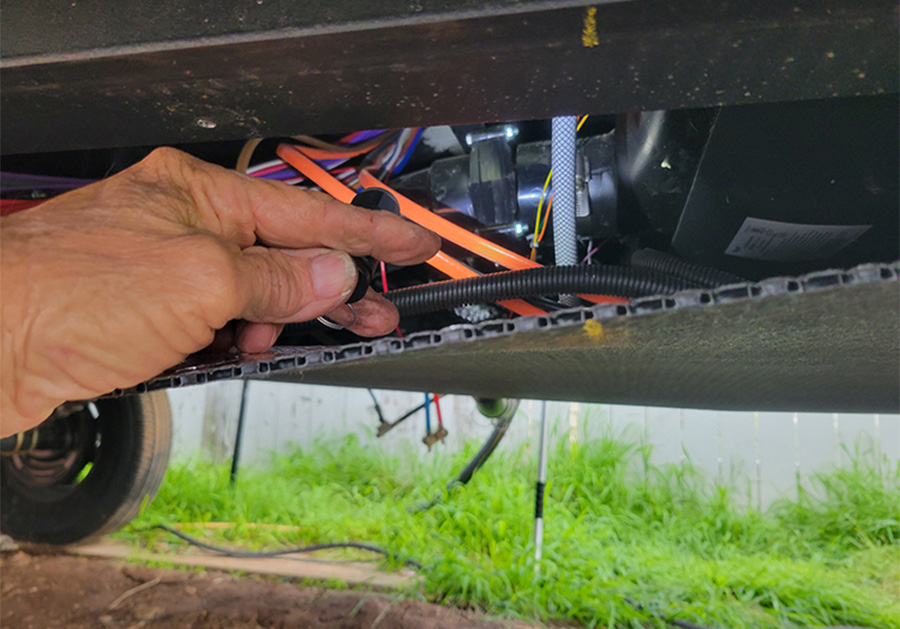
A section of belly pan was unbolted and pulled down on both sides to locate the dump valves. You’ll probably need a powerful flashlight to have a clear view.
Once I was confident that the hinge was centered on the angle iron, a rivet was first installed on each end and then from the middle out — while constantly stopping to make sure it would fit properly; 36 rivets were finally installed. Surprisingly, even with all the precautions, the hinge drifted while installing all the rivets, but the weight of the panel made it an operational non-issue.

The next step required cutting a notch in the aluminum to accommodate the 3-inch sewer drain, made even more complicated by the two low point drains hanging down about 3 or 4 inches near the sewer outlet. Fortunately, after cutting the plastic around the sewer outlet, there was enough slack to move the drain lines under the belly pan, which in turn allowed a smaller opening to be cut in the aluminum panel. Next, a flexible piece of rubber was riveted to the aluminum and a few slits cut into the material made it possible to wrap around the sewer pipe.

Installing the aluminum and angle iron assembly required some unique logistics when it came time to position it under the fifth wheel. Using a floor jack initially made sense, but moving it through the dirt and across a tarp (on mud) while balancing the large, bulky access panel structure didn’t seem feasible. Ultimately, a helper (my girlfriend) crawled under the fifth wheel and held the fully assembled structure against the frame with her back while I marked where the holes needed to be drilled — so, yeah, you’ll need a friend to help with the installation. The holes were drilled first with an 1/8-inch bit, followed by a 3/16-inch bit and finally 5/16-inch holes were drilled for placing the bolts, lock washers and nuts.

With the unit bolted into place, it was time to install the rivet nuts (“HIFESON Hand Rivet Nut Tool, Handy Rivnut Tool—Metric & SAE with 30pcs Steel Rivet Nuts;” Amazon $27.88) into the other angle iron, which will accept ¼-inch bolts to keep the door closed. When it comes time to open the access panel, the ¼-inch bolts are simply removed and the panel hinges down, exposing a large opening for working on the valves and adjacent wiring/tubing. Rather than remove the corrugated plastic entirely, it was cut in such a way that it drops down in concert with the diamond-plate panel. It worked perfectly and provided another layer of insulation.

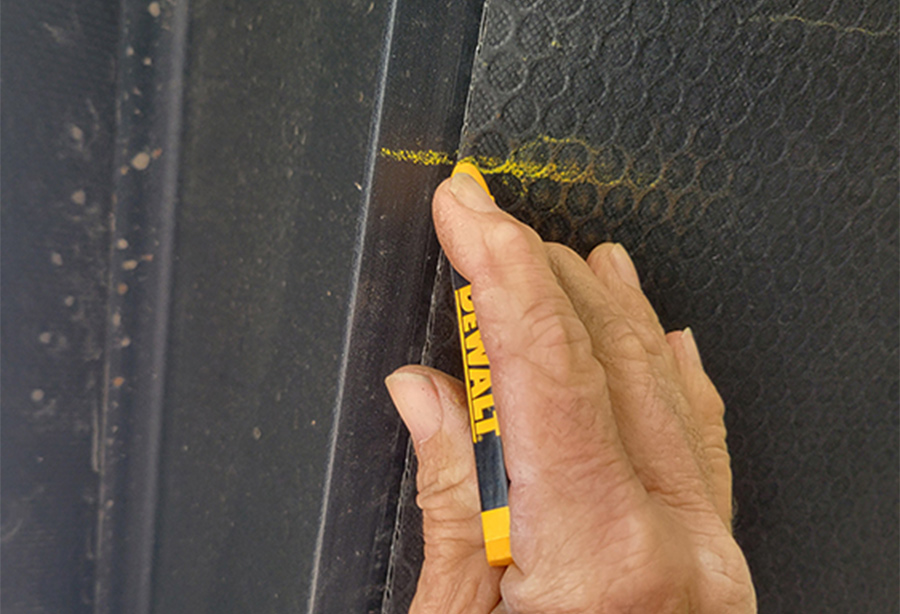
yellow construction crayon being used to mark the edge of the frame where the dump valves are located
corrugated plastic being marked with a yellow construction crayon
The frame was marked at the edge of the frame where the dump valves were located. Next the corrugated plastic was also marked after determining where the angle would be installed.
marked diamond plate clamped to sawhorses
circular saw being used to cut the diamond plate with a piece of wood laying on the plate as a guide
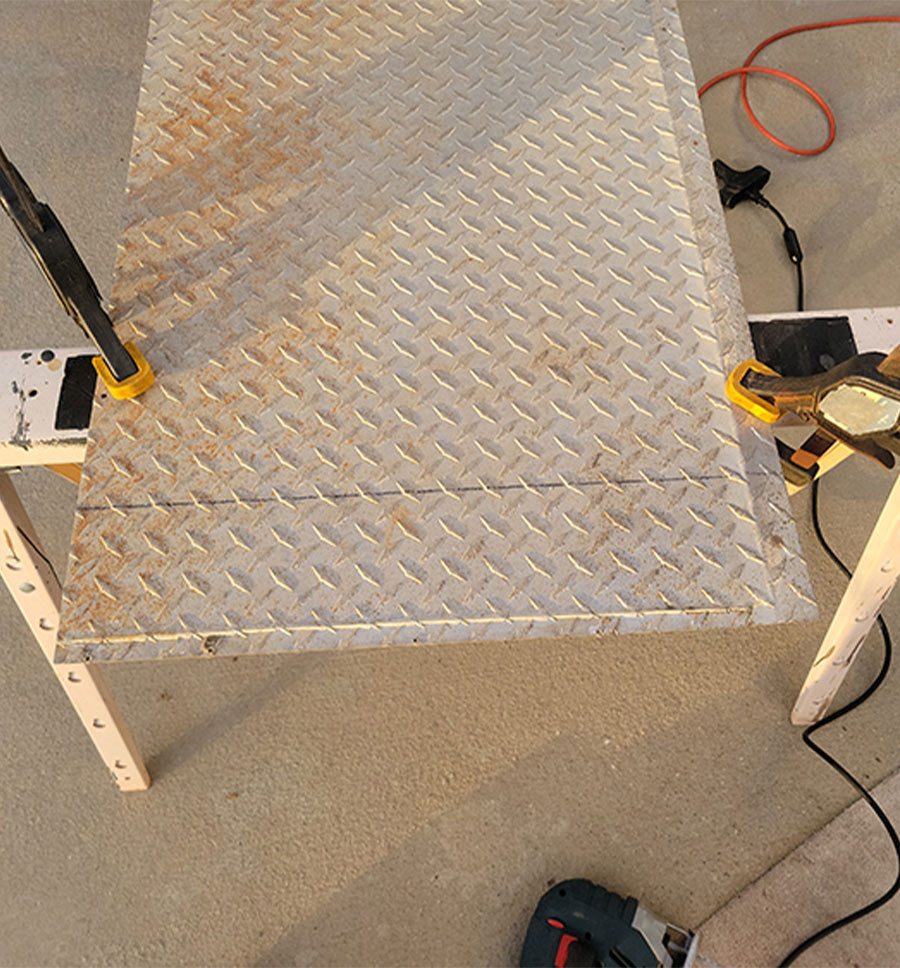
Once the diamond plate was marked for the exact length needed to build the panel, it was clamped to the sawhorses for stability while cutting with a circular saw and a carbine-tipped blade. A piece of wood was used as a guide for cutting.
It was necessary to fabricate brackets to move the propane-hose junction block beyond the frame I-beam in order to make way for the attachment point of the new angle iron. The next step was to install the aforementioned rubber flap to the aluminum panel with 3/16-inch rivets. With this configuration, the flap was solid, yet still flexible enough to mold around the sewer line and gas lines when the aluminum panel was closed. Lastly, all of the self-tapping screws that held the belly pan in place were reinstalled.

Satisfied that everything was in place and all the bolts and screws were tight, a bead of silicone rubber was run along the angle iron against the corrugated plastic to prevent water intrusion while driving on wet or rainy roadways.

Though not the main impetus for this project, a side benefit was access to the wiring and pipes, which I will rearrange later, and bundle neatly. Also, while I was there, I added extra insulation between the belly pan and floor where cold air seemed to be finding its way into the storage compartment.
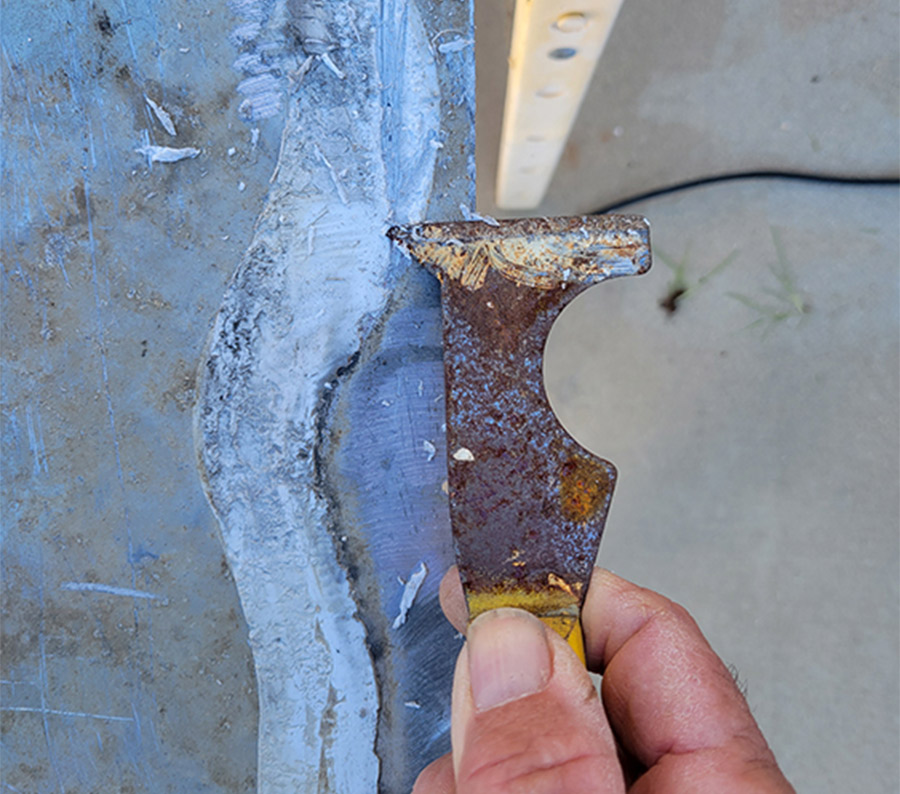
closeup of a putty knife scraping old caulking from the diamond plate
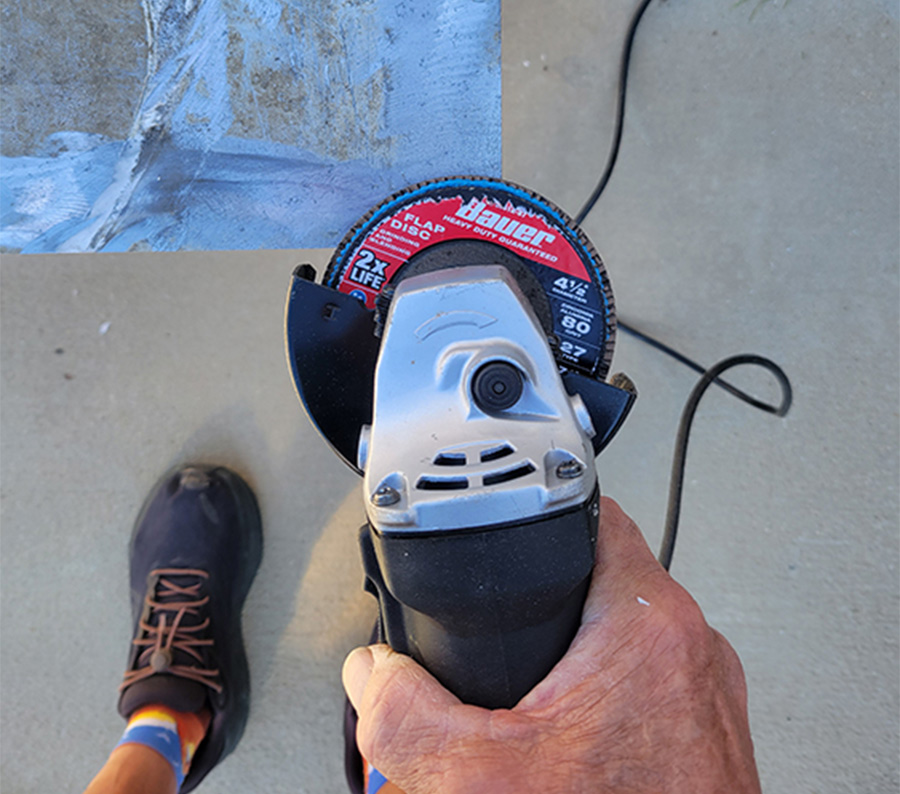
power grinder with a sanding disc being used to clean up the edges of the diamond plate
It was necessary to scrape off previously applied caulking from the old piece of diamond plate. A power grinder with a sanding disc was used to finish the clean-up after the bulk caulking was removed with a putty knife.
man pouring rubberized truck-bed coating onto a cloth to apply onto the diamond plate
man holding a diamond plate with rubberized truck-bed coating applied
I made an executive decision to coat both sides of the diamond plate with a thick layer of rubberized truck-bed coating. The inside was done before assembling. Make sure the surface is cleaned thoroughly with alcohol before applying the coating.
As Livingston can attest after living in his fifth wheel for nearly two years with our previous panel design, having easy access to the dump valves and surrounding area is a godsend when it comes to unexpected service. It takes just a few minutes to open the panel and be working on the valves. When deciding on the size of the access panel for your trailer or fifth wheel, make sure you can get both hands and wrenches on each side of the dump valve without turning your arms and body into a giant pretzel.

Expect to spend quite a bit of time planning a project like this, and figure on spending around $300 to get it done. But you won’t regret the added convenience.

heavy-duty, nickel-coated piano hinge with a ruler being held next to it to determine where to cut it
A heavy-duty, nickel-coated piano hinge was marked for cutting. This hinge is readily available on Amazon.
bolts on the end of the angle iron with a ruler being held up next to it
First, the bolts on each end of the angle iron were temporarily installed to make sure the hinge had enough clearance before installing.
drill being used to create holes in the hinge
Every other hole in the hinge was drilled out accommodate the 3/16-inch steel pop rivets that would be used for attaching to the diamond plate.
permanent marker being used to mark the location for attaching the hinge to the diamond plate
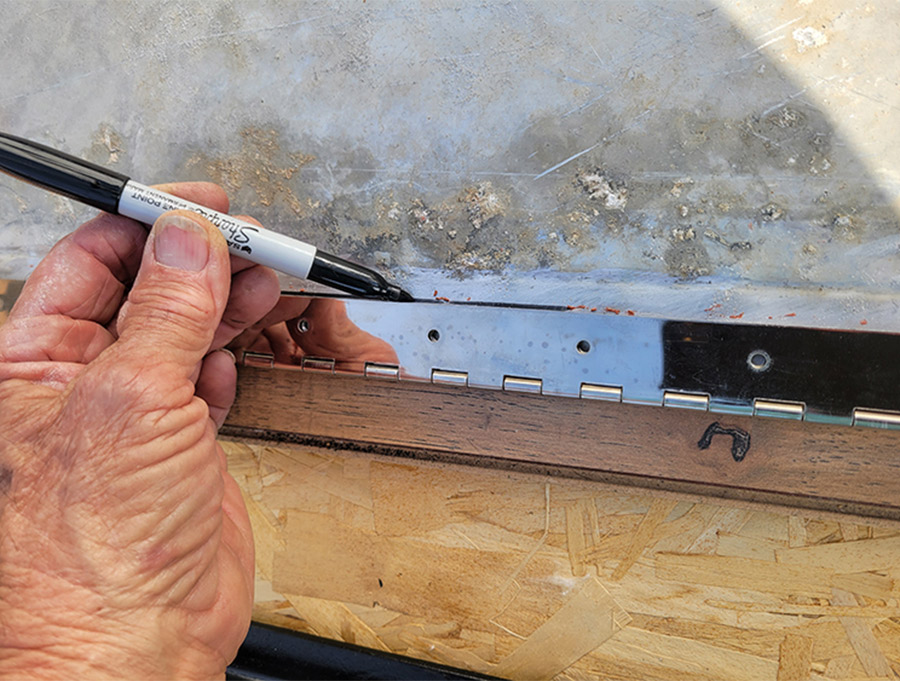
Here the location for attaching the hinge to the diamond plate was marked all the way across to make sure the hinge was not drifting while setting the rivets.
drill being used to create holes through the angle iron
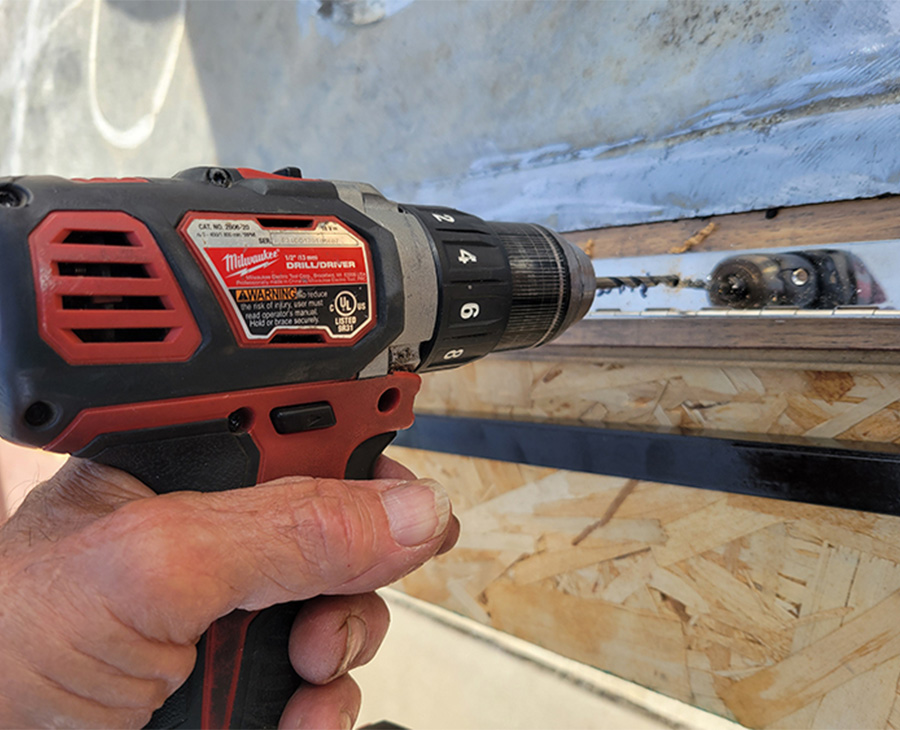
Once the hinge was in place, the corresponding holes were drilled through the angle iron. I started in the middle, then halfway to the ends on both sides, and then one on each end to make sure the hinge was not drifting. The rest of the holes were then filled in along the hinge.
rivet nut being installed in the holes on the angle iron
The holes for the rivet nuts that would be used for opening and closing the panel were drilled into the other angle iron.
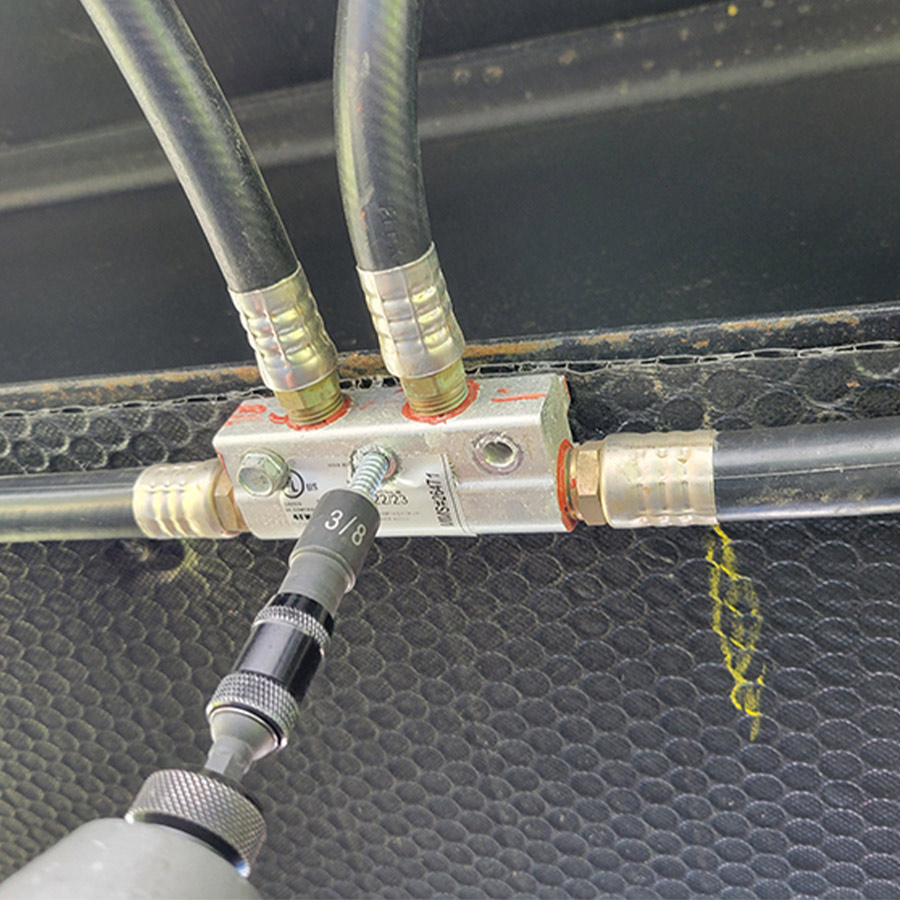
closeup of rivet nuts being installed using a wrench and screwdriver
Installing rivet nuts takes some patience, but using the tool that was part of the kit with the stainless-steel rivet nuts and an impact gun made it easier on the hands. Basic tools (not shown) that require two wrenches require a lot more time and effort.
angle iron and hinge laying beside each other
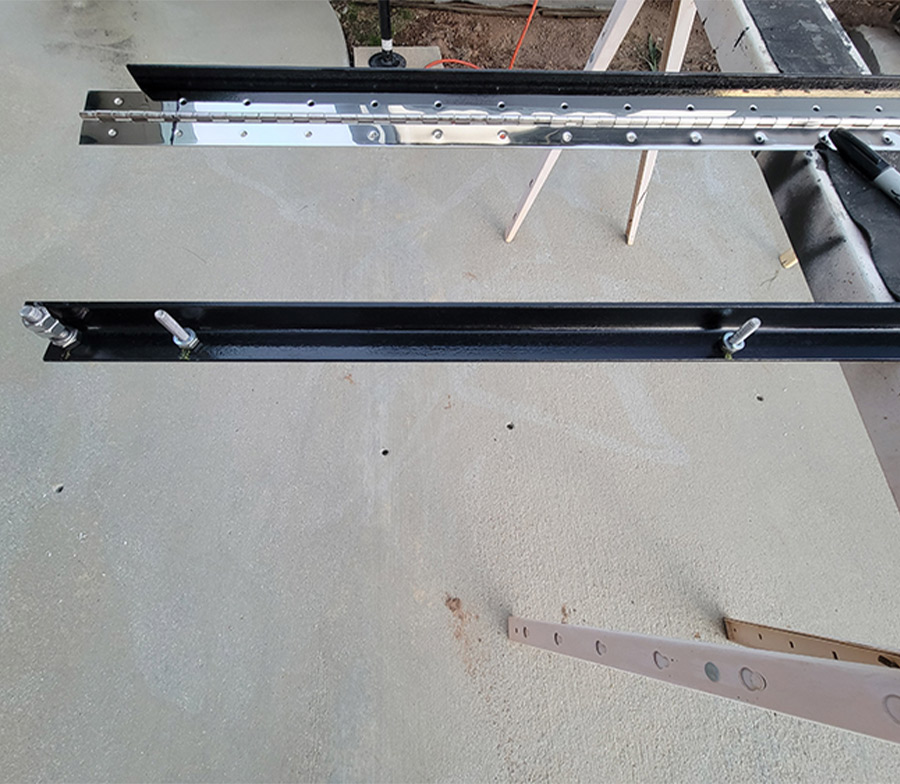
With the parts placed on the sawhorses,” the angle iron and hinge were tested for proper fit—and to make sure the bolts and rivet nuts were in the right place.
center punch being used to mark the locations for lining up the edges of the diamond plate with the rivet nuts
drill being used to create holes on a a diamond plate
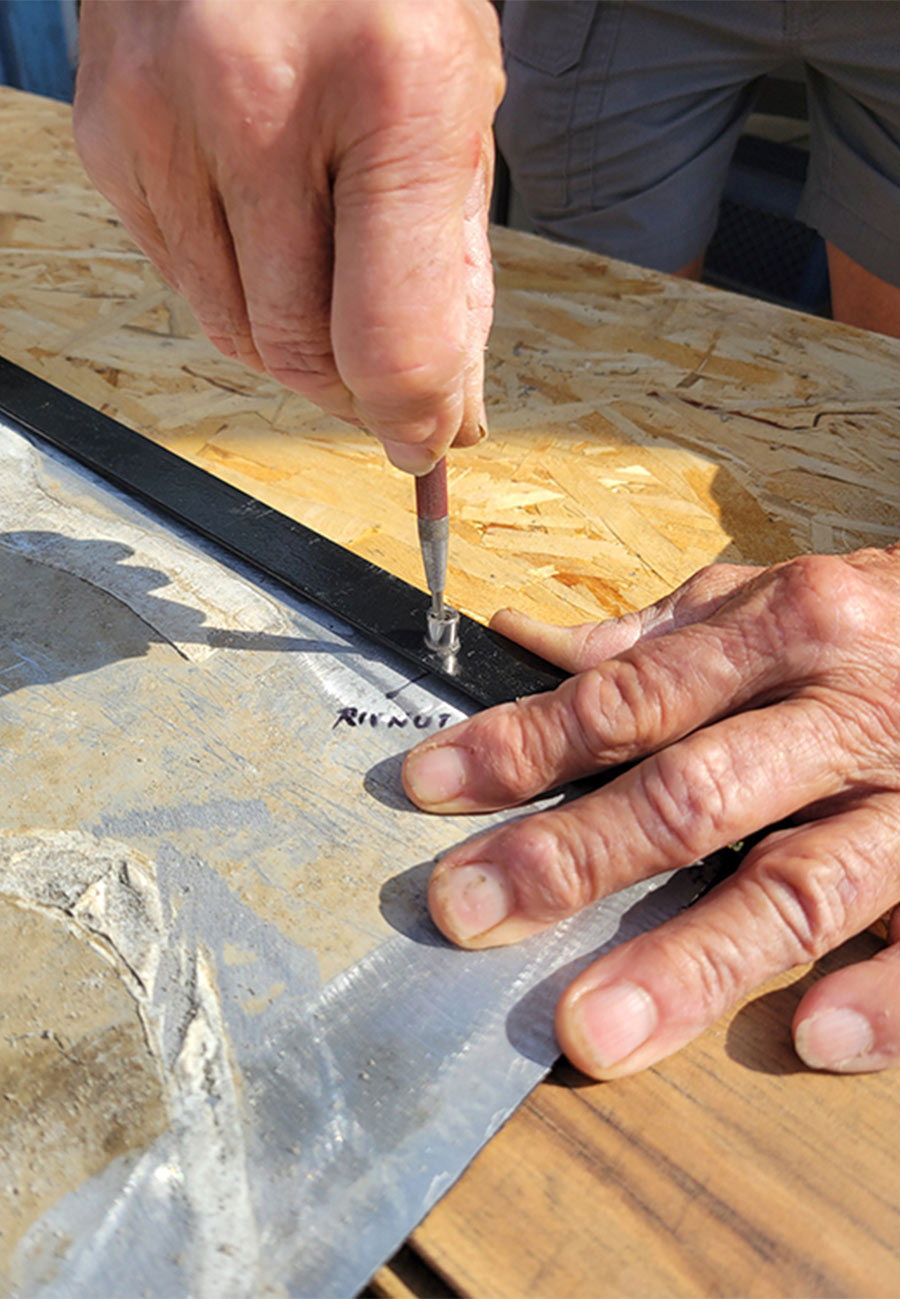
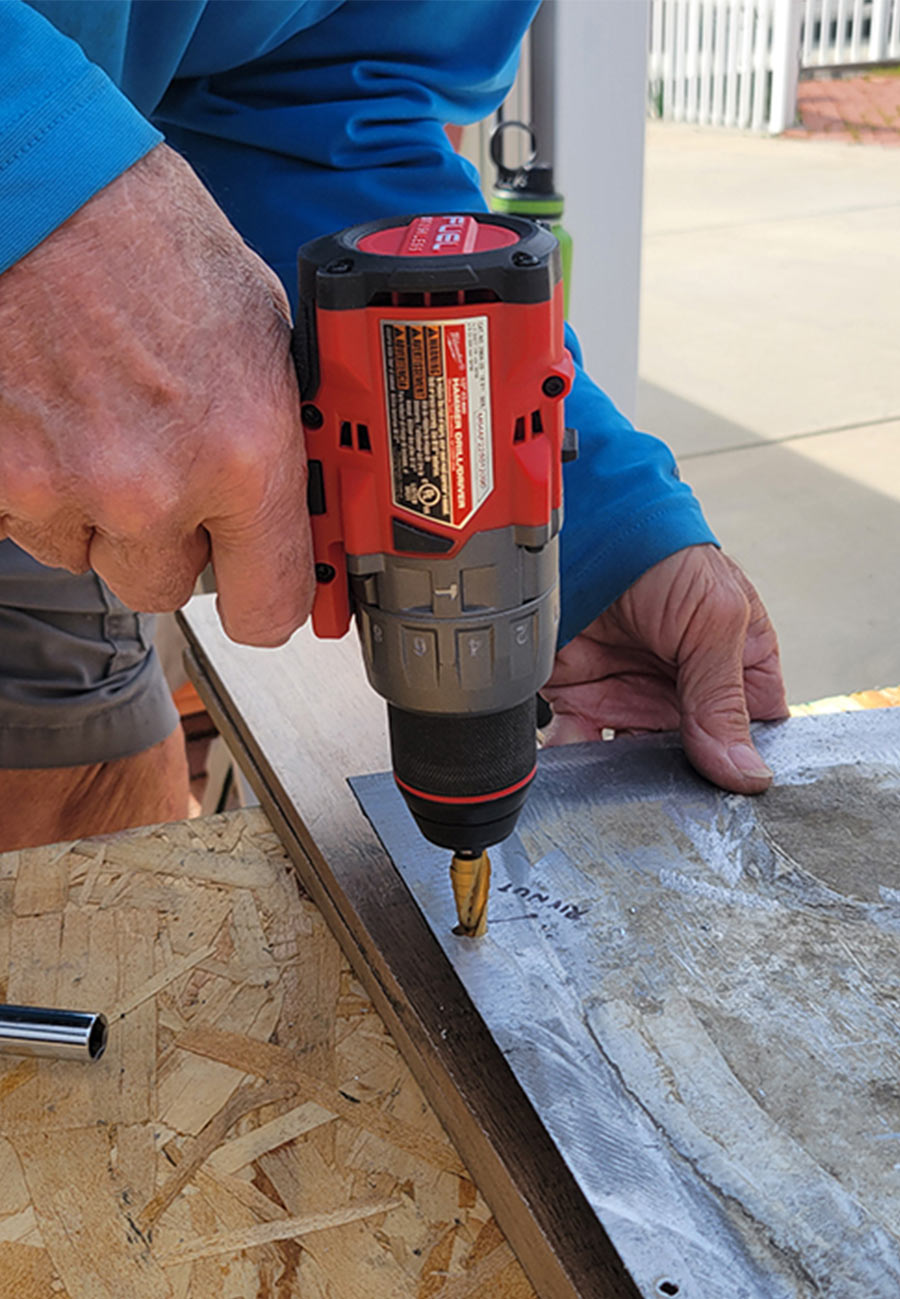
The locations for lining up the edge of the diamond plate with the rivet nuts were marked with a center punch. Once all the positions were marked, holes were drilled and then enlarged slightly with a uni-bit for a little wiggle room.
ruler being held up to a pipe
circular saw being used to create notches in a diamond plate
It was necessary to provide clearance for the 3-inch termination pipe and the two low-point drains. Once the area was measured and marked, the diamond plate was notched using the circular saw with the carbide-tip blade.
jig saw being used to make a cut in a diamond plate
Later, after refining the location for the notch in the diamond plate to clear the termination pipe, a jig saw was used to make the last cut (after drilling a hole in each corner to accommodate the jig saw blade).
drill being used to create holes through the angle iron
The holes were drilled though the angle iron in relation to the mounting position on the I-beam frame. Thanks to my girlfriend’s sense of humor for bracing the entire assembly on her back, the holes lined up perfectly.
razor knife being used to make a cut along the corrugated plastic on the inside edge of the angle iron
Once the angle iron was in bolted in place, the panel was dropped down and a cut made in the corrugated plastic along the inside edge of the angle iron. This was done with a razor knife.
closeup of the LP-gas-line distribution block
closeup of the LP-gas-line distribution block being mounted
Originally, the LP-gas-line distribution block was removed to accommodate the angle iron. It was ultimately mounted outward from the I-beam using a piece of leftover diamond plate.
piece of rubber roof membrane being mounted onto the diamond plate
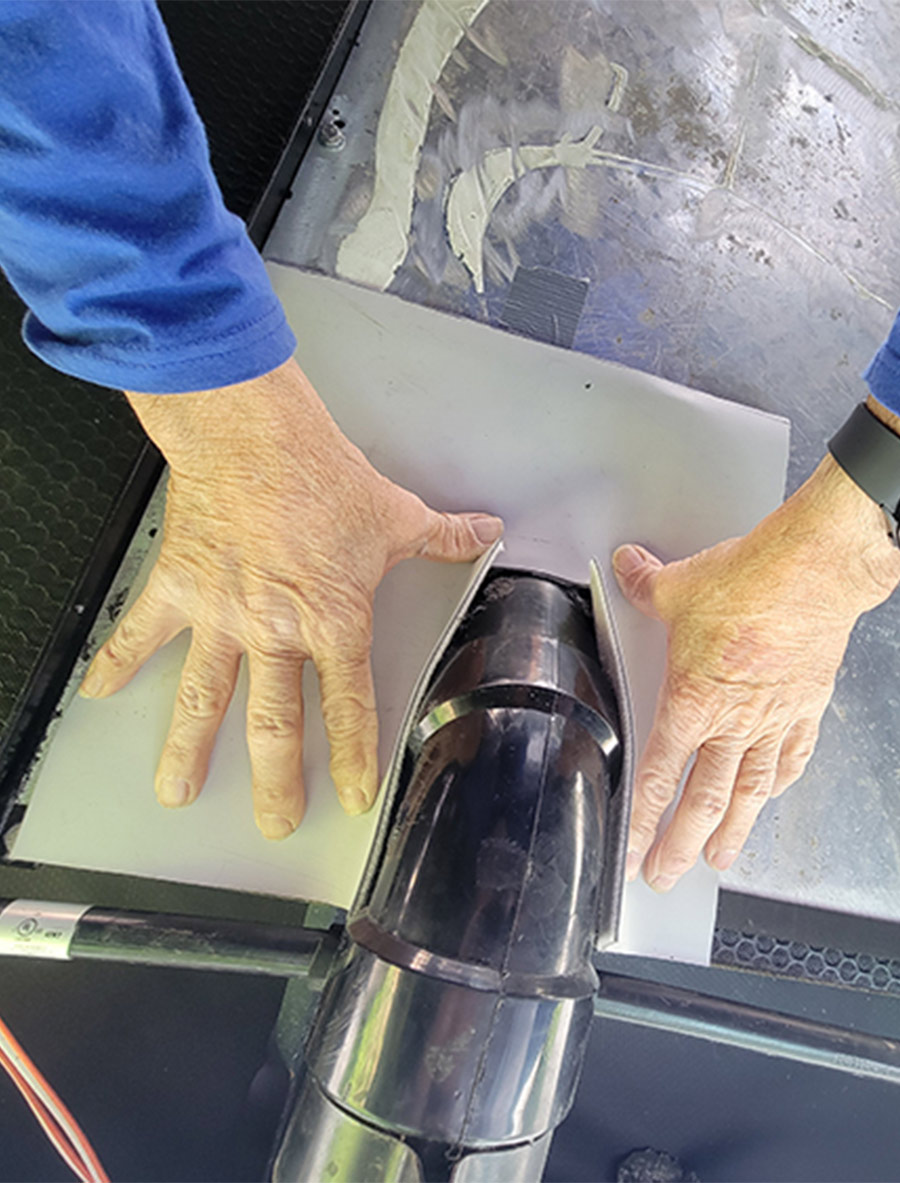
A thick piece of rubber roof membrane (from the housing industry) was cut to mount on the diamond plate so that it would seal around the 3-inch termination pipe. The low-point drains were reconfigured behind belly pan and secured inside, because it was too difficult to wrap around the drains and termination pipe with the rubber membrane. The rubber was riveted to the aluminum, using strips of heavy-duty metal plumber’s tape.
alcohol being applied to the diamond plate using a cloth
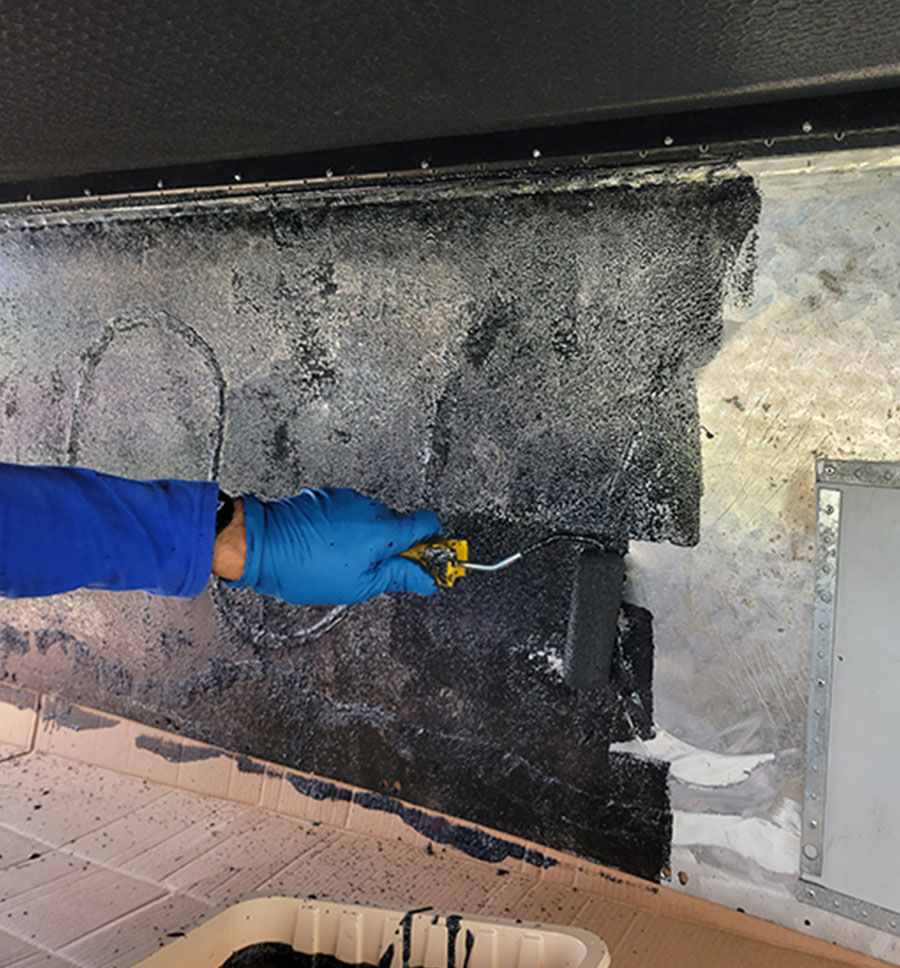
rubberized truck bed coating being applied to the diamond plate
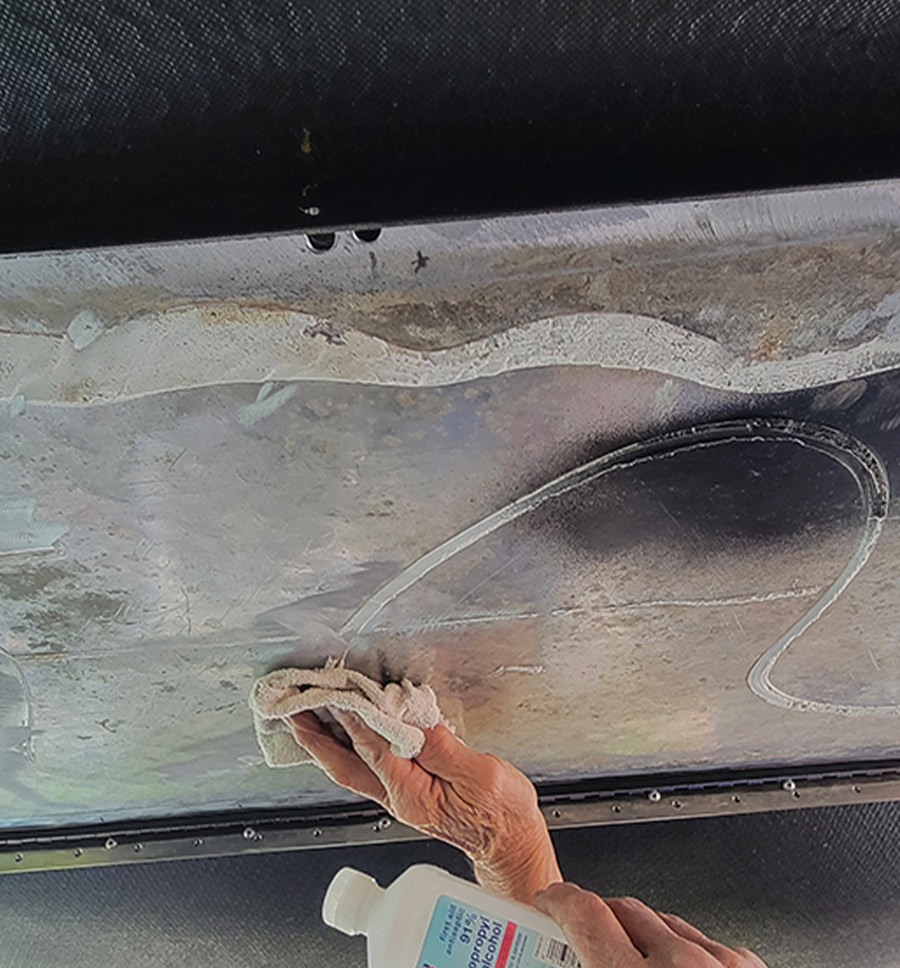
Prepping the diamond plate for a good dose of rubberized truck-bed coating required thorough cleaning with alcohol. This was accomplished after the assembly was mounted and the panel hanging down.
bolts being installed into the rivet nuts
Finally, the bolts were installed and tightened into the rivet nuts to keep the “trap door” in place. When it comes time to access the dump valves, wires and pipes the six bolts are simply removed and the panel dropped on its hinge.
overview of the new panel
The final installation of the new panel looks like it came from the factory. No doubt it will be greatly appreciated when dump valve service is needed.