

Belly Pains
[maghub_sidebar]
Belly Pains
The one-piece corrugated material that covers the bottom of a trailer or fifth wheel chassis can be a beautiful thing until it comes time to access the dump valves or other components. Here’s a project to provide access panels without the creating an eyesore and a place for critters to find shelter.
By Bob Livingston / Photos by the author
A

trailer or fifth wheel underbelly is a wonderful addition. It conceals the “spaghetti bowl” of wires, tubing and tanks, and offers a smooth — and aesthetically pleasant — finish to the underside of the chassis. It also allows for ducted heating from the furnace as part of a factory-offered cold weather package. All-in-all, you wouldn’t want a trailer without a one-piece belly pan — until it becomes necessary to make a plumbing or wiring repair. Then it becomes a nightmare.

Removing the entire belly pan to access a dump valve, for example, is a lot of work — and the chances of replacing it to factory conditions are slim. Then, there’s the mystery of where everything is located without having precise blueprints, which typically is just fantasy. It would be nice if the factory provided strategic access panels — or at least marked the location of the holding tanks and dump valves — but that doesn’t happen. So, mechanics and do-it-yourselfers simply make blind guesses and hope for the best.

The first time we needed to repair a dump valve, a large section of the underbelly was removed at the place we figured the valves should be. We got lucky, but we were faced with consulting our Rube Goldberg manual for makeshift repairs to conjure up a system to patch the hole while allowing for future access. Using a number of galvanized bolts, washers and nuts, the cut panel was jury-rigged in place and, surprisingly, the patch job held up much better than expected, enduring thousands of road miles — but it was ugly! The only caveat was having the remove the big chunk of Coroplast sheeting every time we needed to access the dump valves. That not only got old, but also fatigued the holes for the fasteners.

Last fall, Technical Director Bill Gehr and I concocted a system that we felt would offer simple — and fast — access to the valves. It was one of those projects on the fly, meaning changes were made frequently to the “design.” In the end, the project was wildly successful, but it took a lot of time — in fact, most of a week. So buckle up: here’s how this crazy project turned out. Since we previously opened the belly pan to make valve repairs, we started the project by unbolting, cutting and discarding the crude, homemade access panel. For those of you doing this for the first time, plan on being covered with mounds of sawdust and wayward pieces of plumbing, wiring and fasteners when the belly pan is opened. (Actually, if you want to record a slapstick moment, have someone take a video of the “grand opening.” It will make great Internet fodder.)
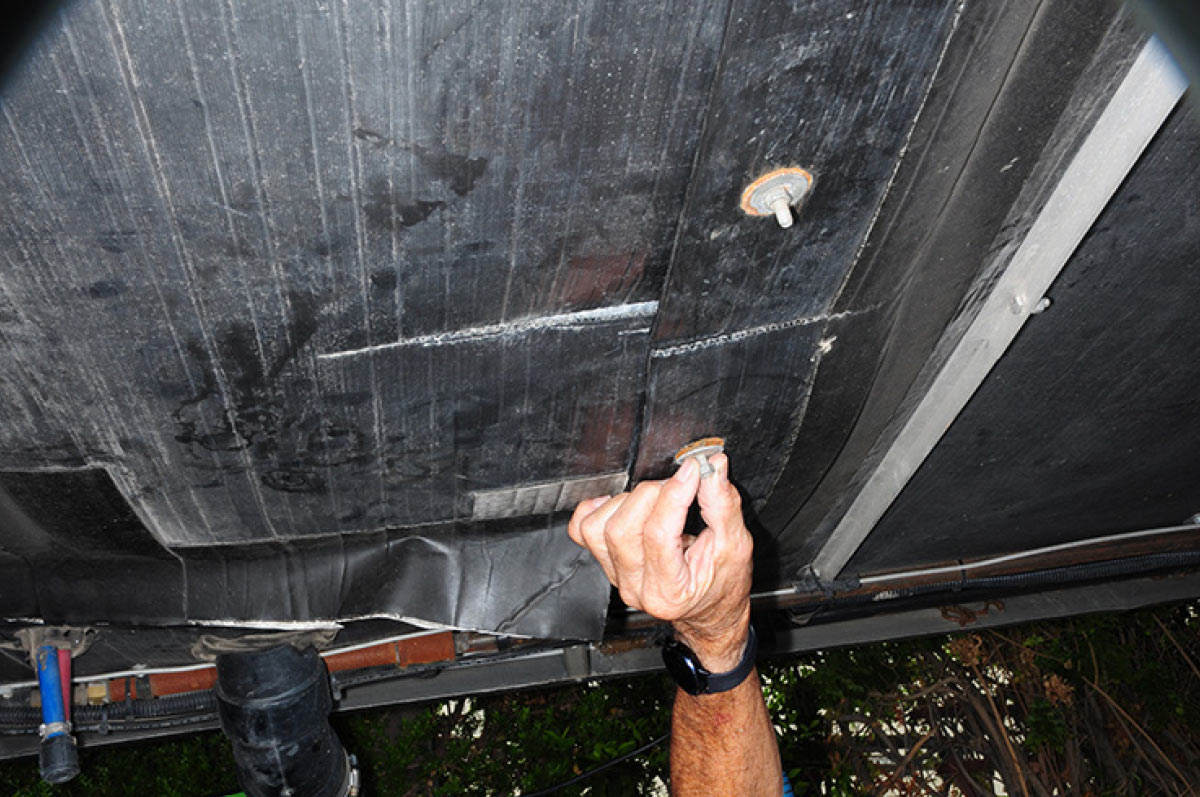
A crude patch job was initially devised after cutting the belly pan for the first time
A crude patch job was initially devised after cutting the belly pan for the first time. Eternabond tape, along with makeshift brackets, cable ties, galvanized bolts, washers and nuts, worked — but it was not pretty to see or use.
The next step was measuring the entire area to be covered with new belly pan material. In this case, we purchased two 4 x 8-foot sheets of corrugated plastic (Coroplast) from a local sign shop for around $35. This stuff is stiffer than the original belly pan, which was perfect for covering the entire area and cutting accessing panels. Once the access panel locations were established, a diagram of our plan was drawn — and just as quickly discarded when we realized that everything was backwards when viewed while lying on the ground. A few giggles later, we had the plan ready to go.

Cutting the Coroplast panel large enough to cover the entire open area was easy, but care must be taken to assure straight cuts. A razor knife cut through the material like butter. The panel was cut specifically to facilitate securing the edges to the chassis using self-tapping lag screws in the same manner as the original material was mounted. We also decided to use ¾-inch angle aluminum to combat sagging that would likely develop after mounting to the frame. Actually, we learned this trick when looking for a way to secure the hydraulic tubing that was connected to the disc-brake calipers when they were installed years ago. Trying to secure the tubing using tape proved futile. Later, we discovered that even Eternabond tape releases over time, succumbing to road elements, heat and the pressure exerted by the bends in the tubing. Installing a network of ¾-inch angle aluminum that was bolted to the chassis and spanned the width of the trailer provided reliable locations to cable-tie the tubing in place while preventing the belly pan from sagging. Thus, we used the same procedure to provide stability for the new access panels (more on this later).

Based on our new plan, the new Coroplast was marked for cutting the access panels and the area around the termination pipe from the holding tanks. After marking the locations for the cuts and checking out the dimensions on the ground, the entire panel was reinstalled temporarily to confirm that the lines were not backwards. We actually repeated this step a number of times throughout the process to ensure we didn’t do something stupid. There is no way to reverse the cuts and we didn’t want to make another trip to the sign shop.
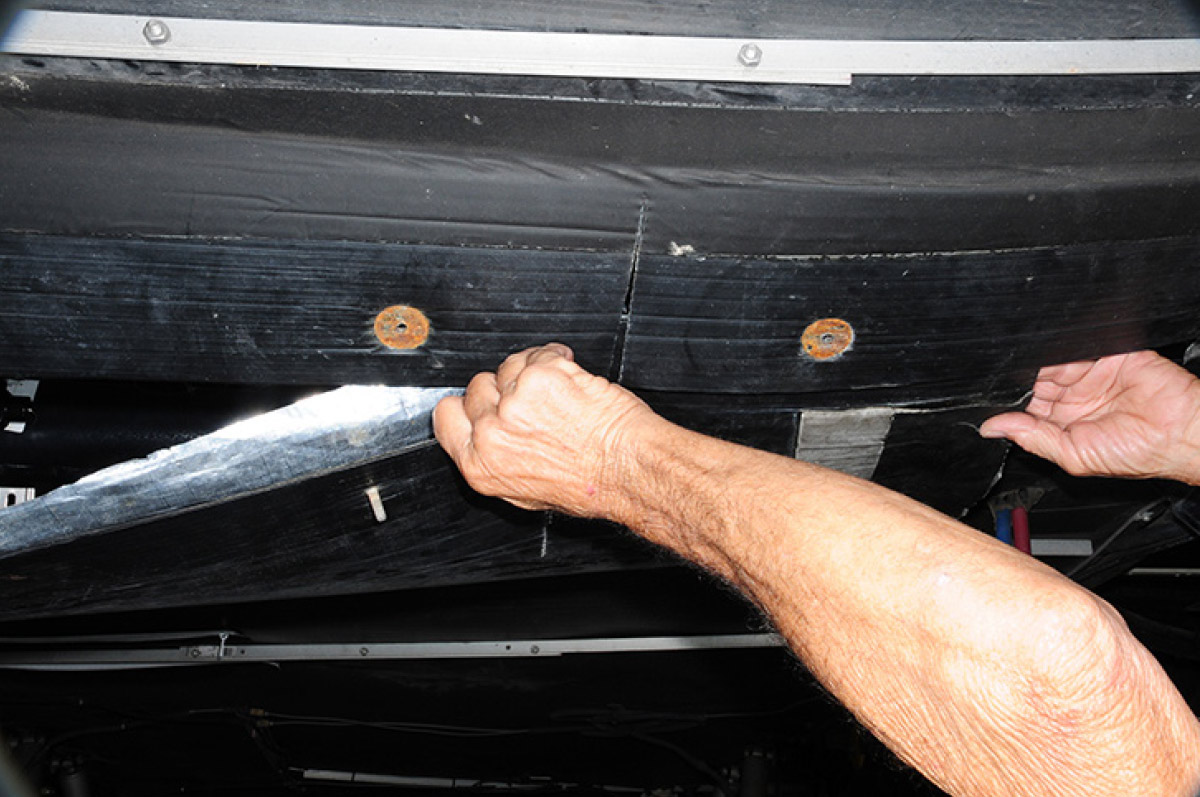
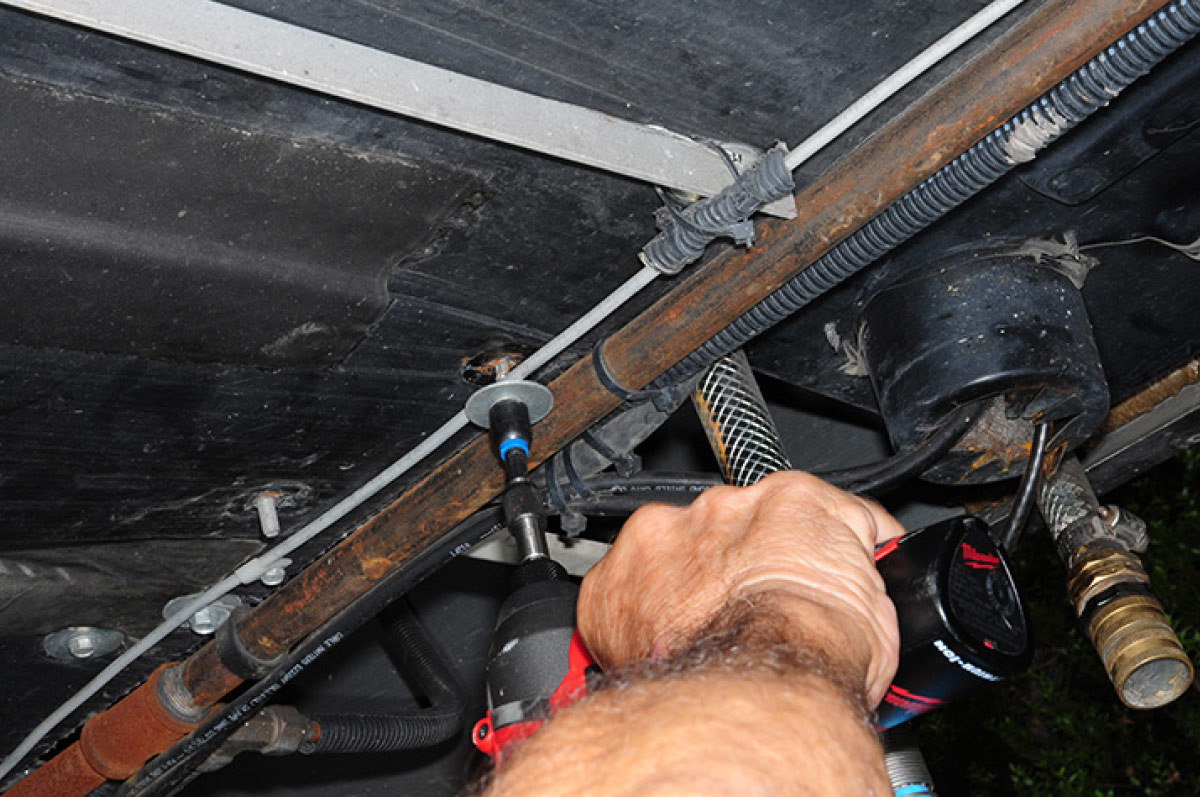
Opening the original access flap in the belly pan required unbolting the seam
It was also necessary to unbolt the edges of the material from the chassis, which was not fun
Opening the original access flap in the belly pan required unbolting the seam and pushing the old insulation out of the way. It was also necessary to unbolt the edges of the material from the chassis, which was not fun.
The theory behind creating panels that can be easily removed and re-installed was primarily to allow access to the dump valves, which needed prodding periodically to open. Enough space was allowed to remove and reinstall the dump valves, if needed, and open/close the blade inside the valve when stuck. There was also room to reach the level-monitor sensor wires, the black-water-tank rinse fitting and the other pipes in the system.

One we were happy with the access points, the entire panel was removed again to build the frames needed to hold the “doors” in place. There are a few ways to build frames, including the use of wood and screws, but we wanted something that will last for a long time and eliminate stripping after the screws were removed and re-installed repeatedly. While more expensive, we decided to use 1-inch x 1/8-inch flat aluminum stock and fit the pieces with nutserts that accommodate machine screws that would hold the access panels in place.

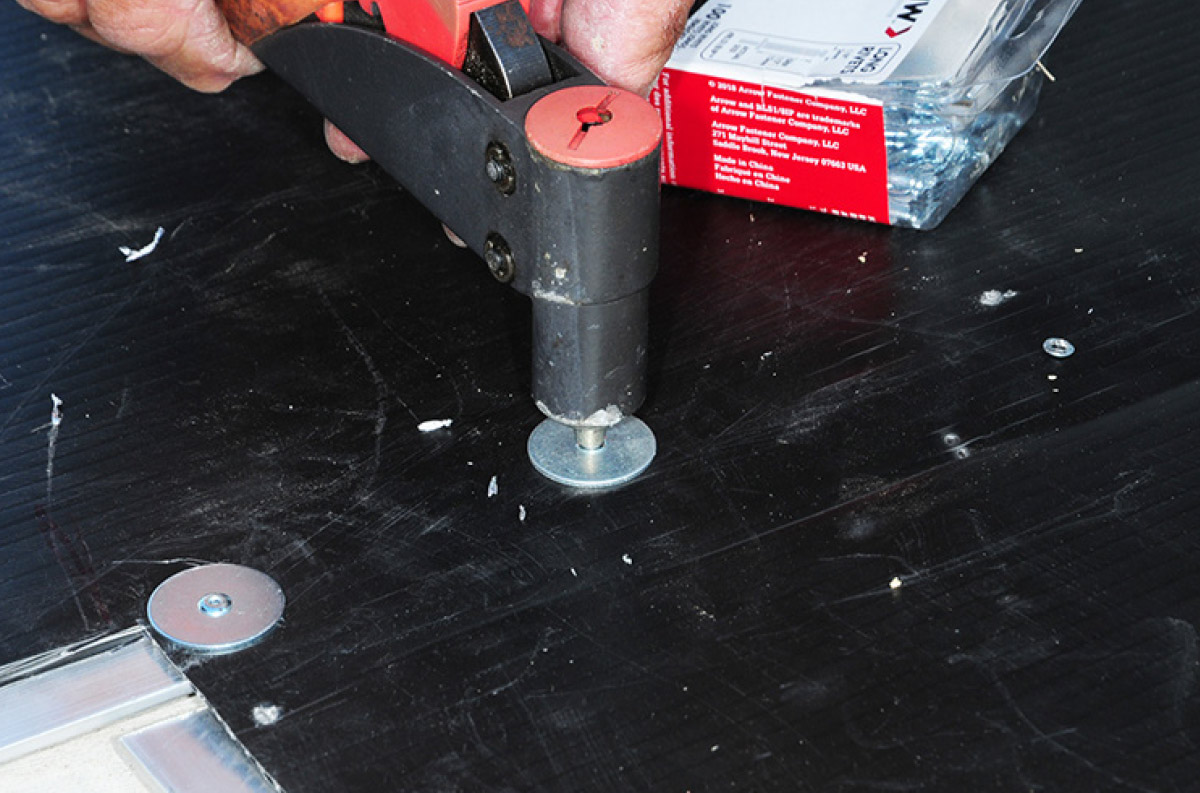
My professional nutsert kit was in storage at the time, so a Hifeson Rivet Tool with mandrels was procured from Amazon for $27.88. Admittedly, this tool required more work and the use of wrenches to install the rivet nuts (rather than squeezing a lever on the gun) into the aluminum strips, but it worked better than expected. Along with the tool, a 25-pack of 10-20 x 1 ½-inch truss head, full thread, Phillips drive, stainless-steel machine screws were purchased ($9.49), along with a bag of stainless-steel ¼-20 rivet nuts ($11.99), both from Amazon. Large (fender) washers were found at a local hardware store.
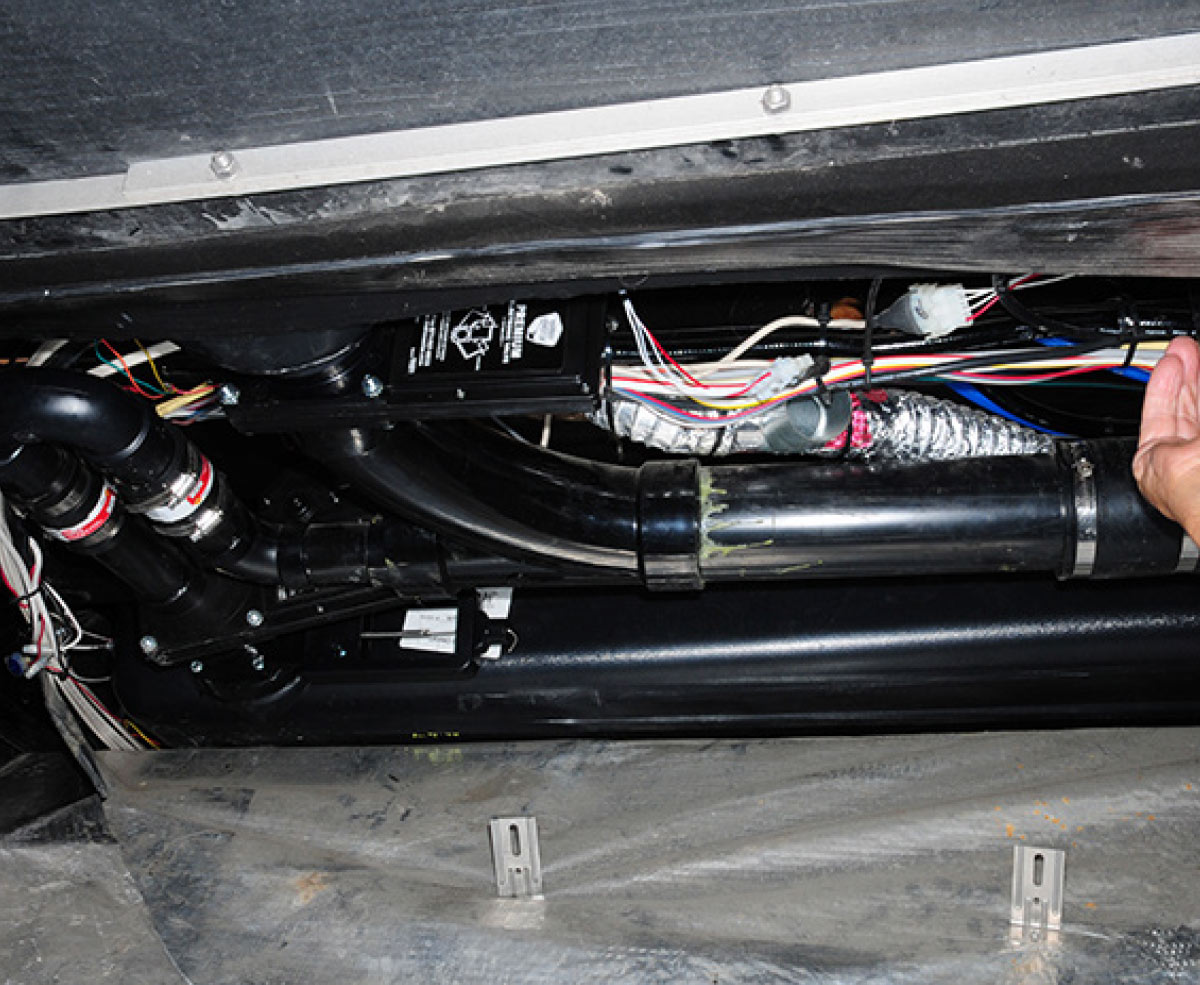
While there was access to the dump valves using our earlier method
While there was access to the dump valves using our earlier method, more belly pan material had to be folded out of the way than necessary.
Once the aluminum framing around the opening for access panels was in position and the pieces marked for location, holes were drilled to accommodate the rivet nuts, which took quite a bit of time to install. The flat aluminum strips were then riveted to the underside of the sheet of Coroplast. Fender washers were added on the visible side to provide a grip for the rivets. Next, the access panels were screwed in place, again using fender washers for support, and the entire panel was insulated with an aluminum-backed material. That allowed us to pull out the loose insulation, which only got in the way when accessing this area previously.

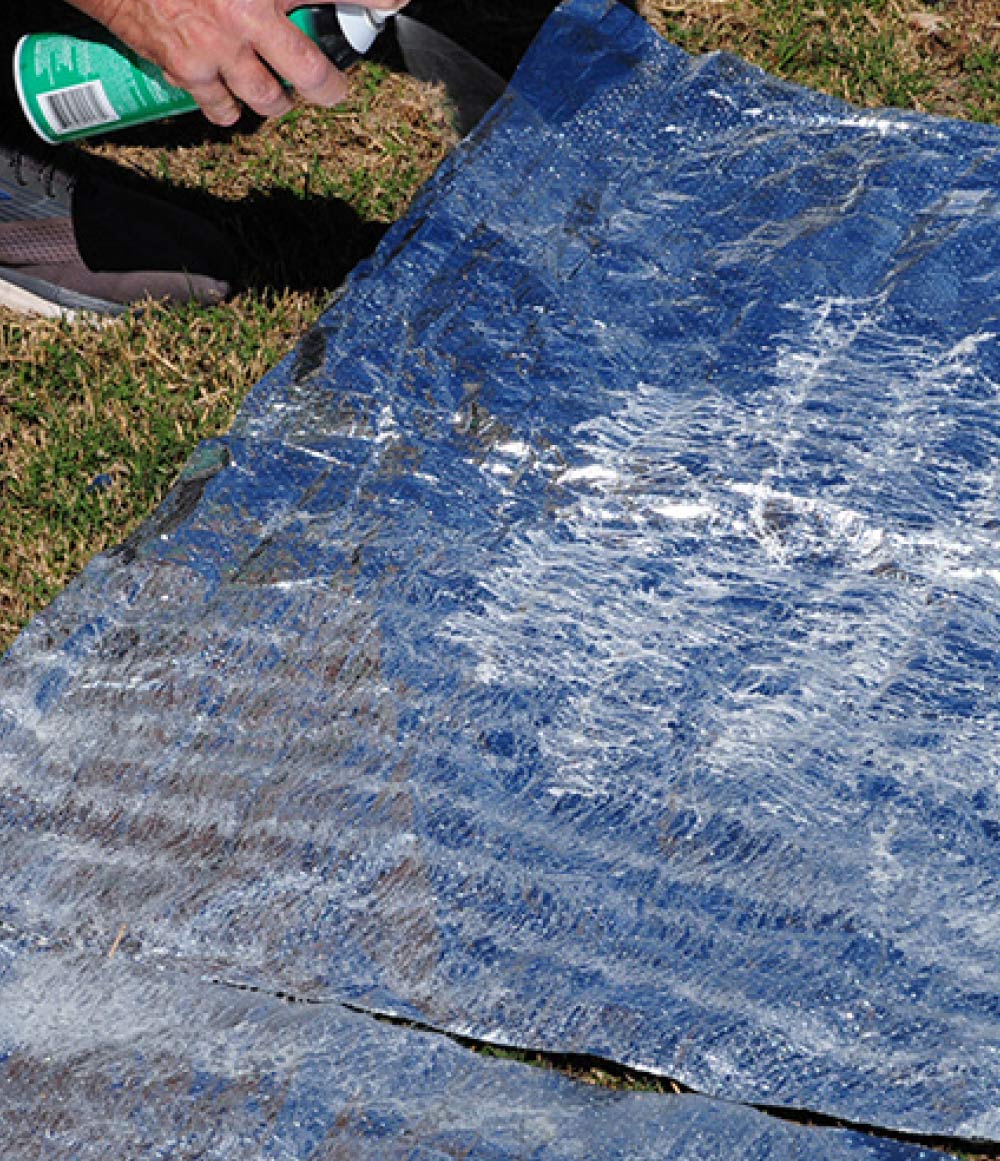
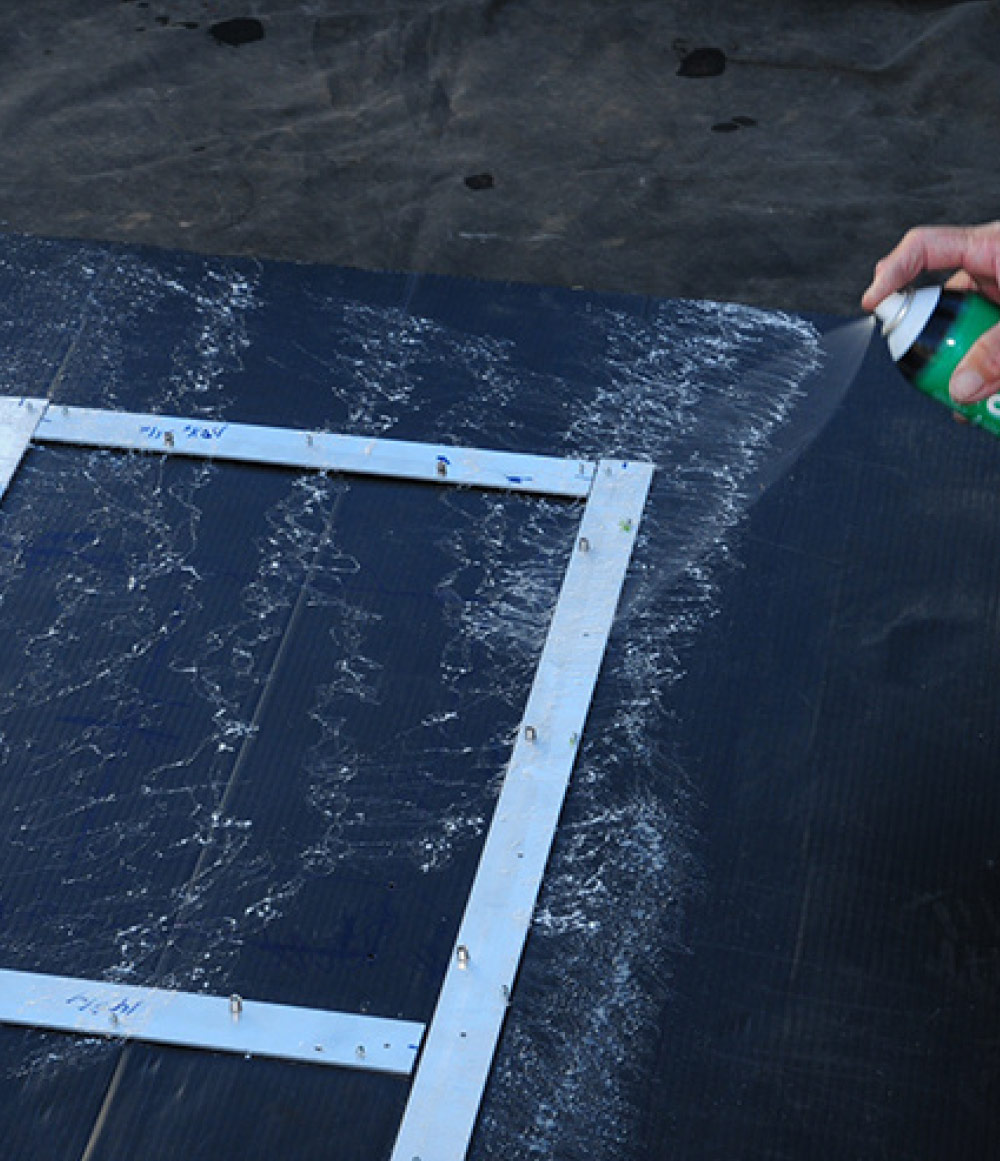
Spray adhesive, available at any hardware store, was applied to the Coroplast panel (with the access panels in place) and one to side of the insulation and allowed to dry (in contact cement form) before mating the surfaces. The openings for the access panels were cut carefully to isolate the insulation from the rest of the material, and the entire section of Coroplast was bolted to the chassis using the existing holes in the frame.

The first step was to cut away the old access flap and surrounding belly pan to make way for the new Coroplast
Those starting the project from scratch will have to pull back parts
The first step was to cut away the old access flap and surrounding belly pan to make way for the new Coroplast and access panels. In this case, the dump valves and pipes were located when the belly pan was first cut a while back; those starting the project from scratch will have to pull back parts of the belly pan to locate the valves and other components. It’s pure guesswork at this point.
The aforementioned network of angle aluminum was then bolted to the edges of the chassis and to themselves, which supported the new Coroplast panel nicely and eliminated any sagging in the material. Finally, any seams and gaps around the existing termination pipe were sealed with special tape designed for Coroplast or similar corrugated material. While there are a number of woven polyethylene tapes on the market, we found a roll on Amazon for $22.49 — just Google “4’ x 45’ Mobile Home Flex Mend Belly Bottom Repair-Patch Underbelly.” It was way more than we needed, but the remaining roll went into our RV repair kit.

Not long after the underbelly project was completed, we experienced an issue with the black-tank valve. The corresponding access panel was removed in a few minutes and the repair was made with little fanfare — confirming the validity of the project. Not having to wrestle with a wayward section of Coroplast when repairs are necessary was well worth the time and effort expended for this unique but practical project. Eat your heart out Rube.
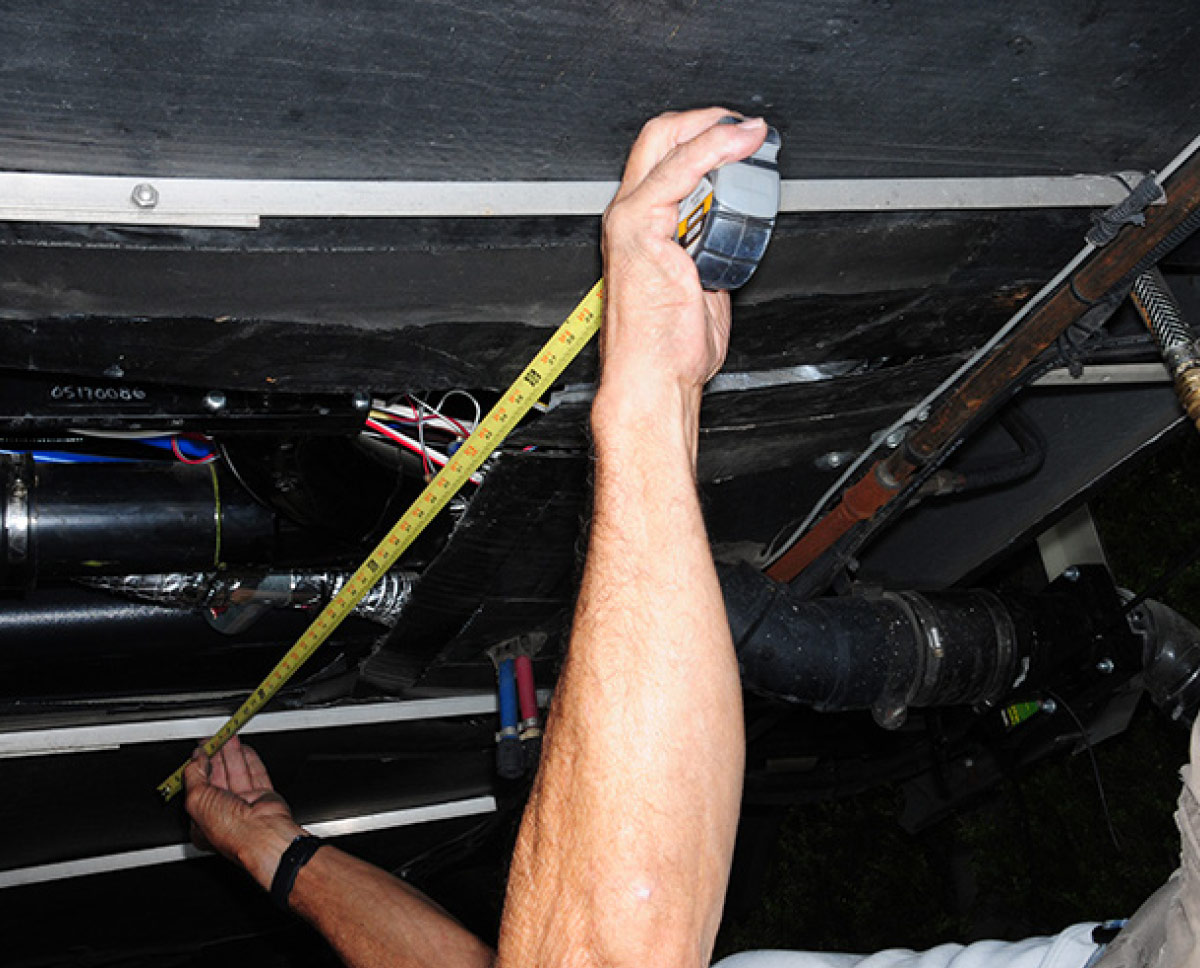
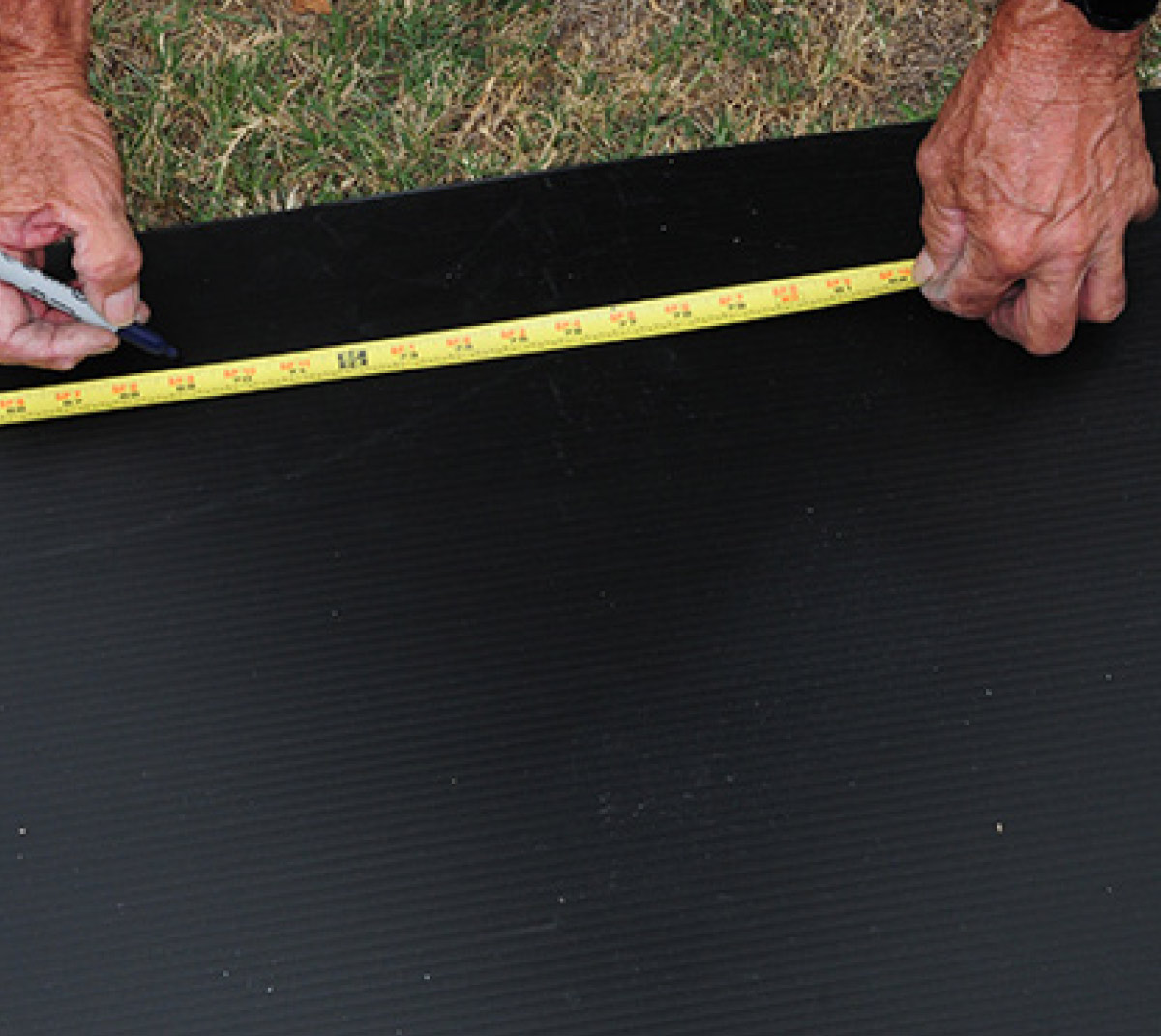
A number of measurements were made to establish the size of the new Coroplast
A number of measurements were made to establish the size of the new Coroplast. This took some head-scratching after we realized we had originally had the location for the access panels backwards since we were viewing the tanks and valves from the ground. Note that we had originally installed angle aluminum to prevent belly-pan sagging.
Using the written diagram, the large piece of Coroplast was marked for cutting
The Coroplast was procured at a local sign shop
Using the written diagram, the large piece of Coroplast was marked for cutting. The Coroplast was procured at a local sign shop. It’s a little heavier than the stock belly pan but that made it easier work with and cut access panels.
The 4 x 8-foot sheet of Coroplast was placed on the grass for drawing the cut lines
Cutting the Coroplast is easy using a razor knife
The 4 x 8-foot sheet of Coroplast was placed on the grass for drawing the cut lines. Cutting the Coroplast is easy using a razor knife, but it’s important to get it right the first time unless you want to make numerous runs to the sign shop and shell out more money. Before making the access door cuts, the material was once again placed in position under the fifth wheel for us to mull over.
While the new section of Coroplast material was pretty much a simple rectangle in shape
While the new section of Coroplast material was pretty much a simple rectangle in shape, we had to accurately measure for cuts to clear the water-system drainpipes and the termination pipe from the holding tanks.
Once we confirmed that the cut lines to clear the drain and holding tank pipes were good
Once we confirmed that the cut lines to clear the drain and holding tank pipes were good, pieces of material were cut out on the ground. Again, the new material was placed under the fifth wheel to make sure the clearances were right.
Two panels were cut in the material to allow access to the dump valves
Two panels were cut in the material to allow access to the dump valves, level-monitor sensors and black-tank rinse fitting. We decided to create two panels rather than just one larger “door” to make handling less bulky and reduce susceptibility to damage when removing and replacing. Once the access panels were cut out, the sheet of Coroplast was again placed under the fifth wheel to confirm they were in the right place.
With the access panels cut, it was time to build the frame
With the access panels cut, it was time to build the frame that makes it possible to remove and re-install the panels multiple times without fatiguing the fastening system. A frame was fabricated from 1-inch wide by 1/8-inch thick aluminum flat stock, which proved to be quite stout without adding excess weight.
Before attaching the frame to the Coroplast
Before attaching the frame to the Coroplast, multiple holes were drilled in the aluminum to accommodate the rivet nuts (nutserts). There was no exact science here; we simply eyeballed spacing based on experience with such fasteners.
A Hifeson Rivet Tool
aluminum strip
A Hifeson Rivet Tool was purchased on Amazon for $27.88. While it’s not as efficient as our professional nutsert gun, it got the job done using a rachet and wrench. It did take quite a bit of time to get all the rivets seated. Once in place, the rivet nuts are wedged into the aluminum strip, providing non-movable blind threads for the screws holding the access panels in place.
The aluminum frame was temporarily attached
The aluminum frame was temporarily attached (to restrict movement) around the access panel openings using painter’s tape. Again, using gut instinct, a series of holes were drilled in the frame to accommodate the rivets that will permanently attach the framing to the Coroplast.
The flat aluminum strips framing the openings for the access panels
The flat aluminum strips framing the openings for the access panels were riveted to the underside of the Coroplast. Washers were added on the material side to provide a strong grip for the rivets and ensure that the aluminum frame cannot be torn away from the Coroplast.
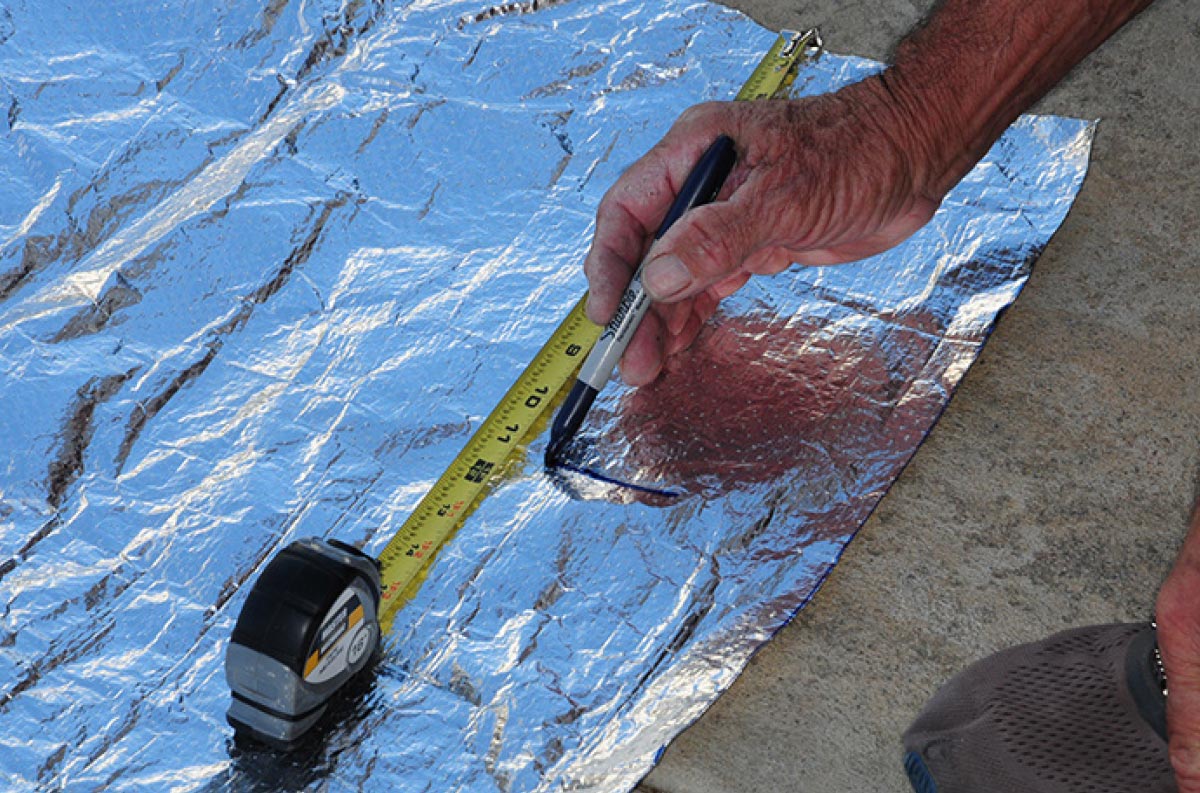
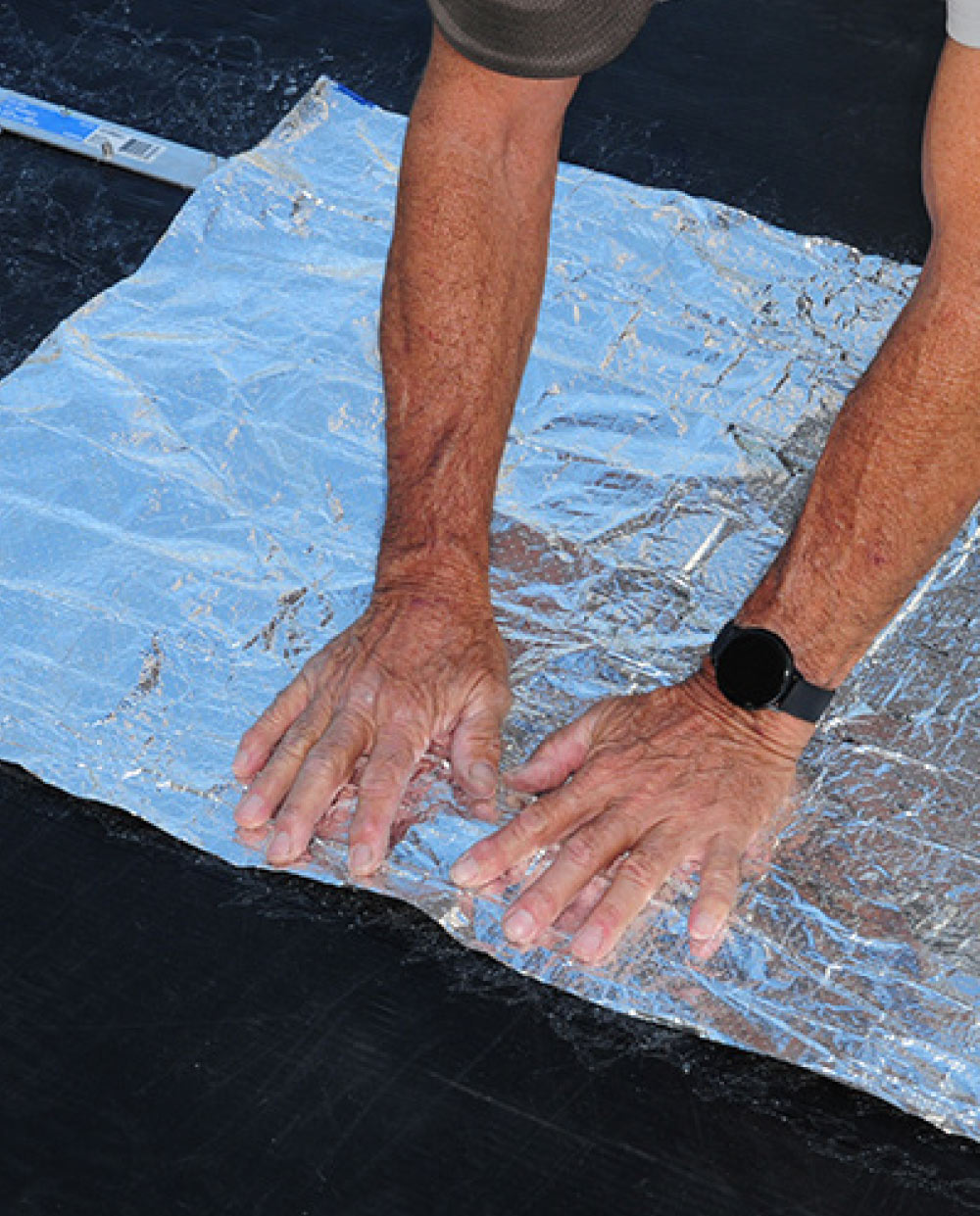
Aluminum insulation was cut to fit the entire underside of the Coroplast material
Aluminum insulation was cut to fit the entire underside of the Coroplast material.
Rather than stuff the insulation back in place, we decided that gluing the aluminum
The adhesive was sprayed on one side of the insulation
Rather than stuff the insulation back in place, we decided that gluing the aluminum insulation to the underside of the Coroplast was not only a cleaner approach, but it also eliminates the need to wrestle with loose material when removing the access panels. Spray adhesive, sold at just about all hardware- and auto-parts stores, was employed to glue the aluminum insulation material in place. The adhesive was sprayed on one side of the insulation and the inside of the Coroplast.
In contact cement fashion, the spray adhesive was allowed to dry before mating the insulation and Coroplast surfaces
The spray adhesive provides a strong bond
In contact cement fashion, the spray adhesive was allowed to dry before mating the insulation and Coroplast surfaces. The spray adhesive provides a strong bond, with little chance of material separation.
The final steps were to cut the insulation accurately around the access-panel openings
The final steps were to cut the insulation accurately around the access-panel openings and punch holes (with an awl) through the nutserts to establish locations for drilling holes to accommodate the machine screws that hold down the access panels (not shown). The insulation will now stay in place when the access panels are removed.
As we discovered from an earlier project, the use of a network of ¾-inch angle aluminum
As we discovered from an earlier project, the use of a network of ¾-inch angle aluminum does a good job of preventing belly-pan sagging. A similar network of angle aluminum was bolted to the edges of the chassis and to themselves, providing strong support for the new Coroplast with the access panels.
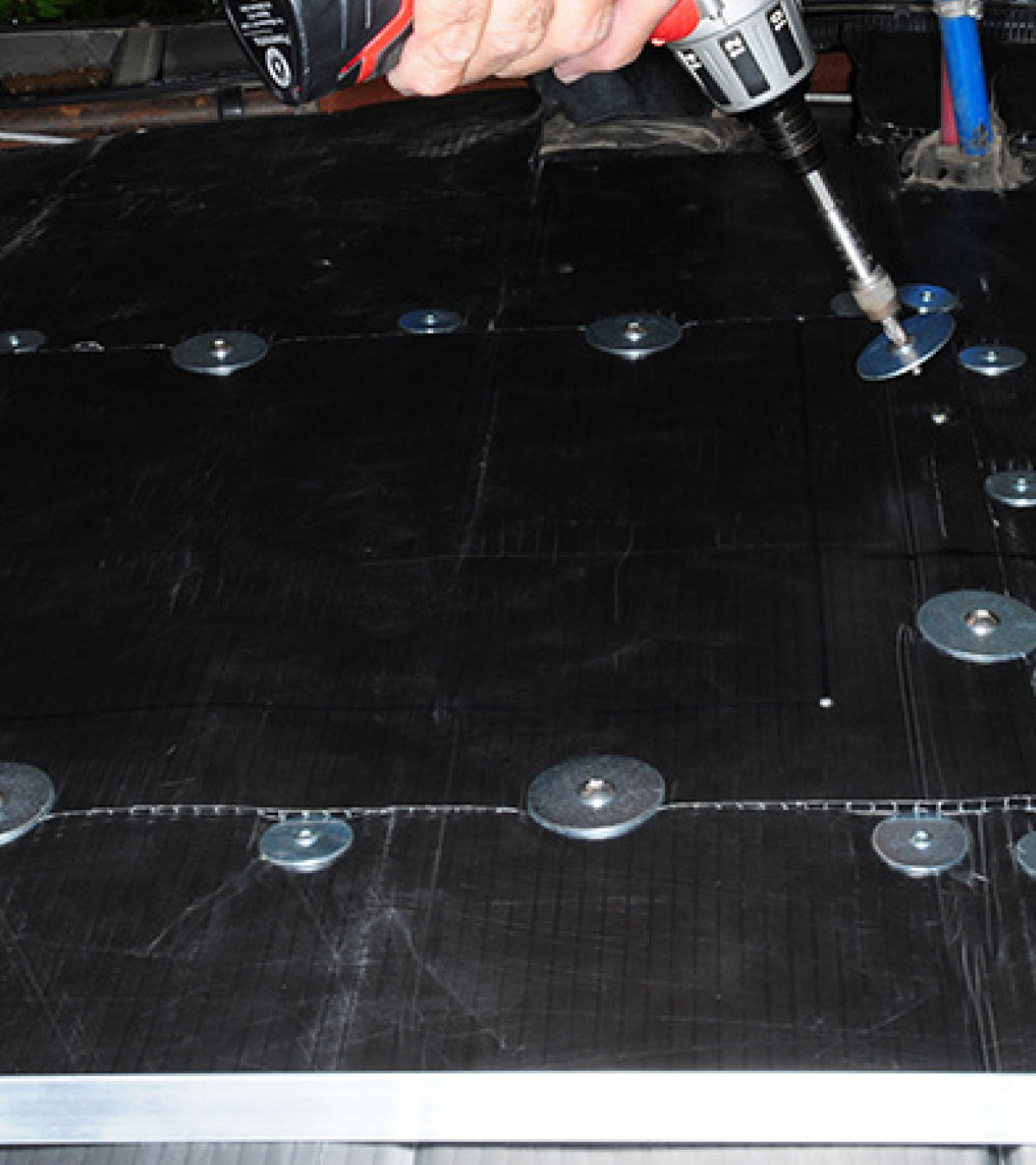
The new access panels are held in place with multiple truss head, stainless-steel
Overtightening can loosen the rivet nuts, so it’s best use a screwdriver
The new access panels are held in place with multiple truss head, stainless-steel, full thread, machine screws. It’s possible to use a screw gun to remove and replace the screws, but make sure the torque is set to its lowest position. Overtightening can loosen the rivet nuts, so it’s best use a screwdriver to make any final adjustments. A painted line was later added to indicate positioning of the access panels to make it easier to re-locate.
The access panels are easy to remove and provide plenty of room for working on the dump valves and nearby components
The access panels are easy to remove and provide plenty of room for working on the dump valves and nearby components.
All the areas around the seams and gaps were cleaned with alcohol to prep for taping
We acquired a 45-foot roll of woven polyethylene tape
All the areas around the seams and gaps were cleaned with alcohol to prep for taping. Not much will stick to this type of corrugated plastic material; even Eternabond peels off over time. We acquired a 45-foot roll of woven polyethylene tape on Amazon that is designed to repair mobile home belly pans. Make sure all seams and gaps are completely sealed off to prevent critters from setting up camp. The largest gaps here were around the water-tank drain and holding-tank termination pipes.
When the project was completed, the new Coroplast material
When the project was completed, the new Coroplast material was free from sagging and held in place solidly. Access panels are now easy to navigate — without the stress associated with removing large sections of belly pan material to facilitate repairs. Aesthetically, all those washers, screws and angle aluminum may not qualify as a work of art, but the result is a darn sight better than dangling flaps and tape.