
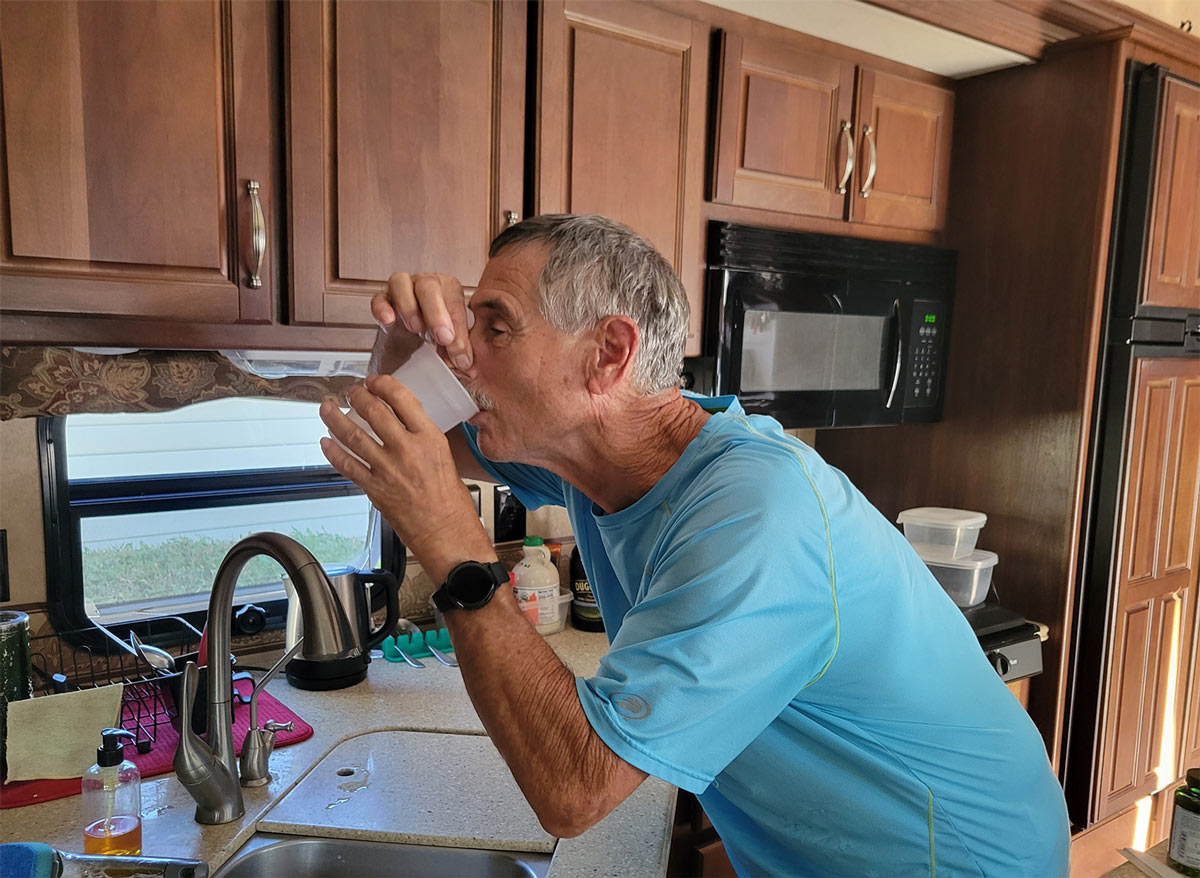
ater system maintenance is one of those obscure tasks that either RVers don’t know about or promise themselves to get done before the next outing — but by then it’s usually too late. All kinds of bacteria or other contaminants begin growing inside the tank, leading to smelly water and health hazards. Unless you’re a full-time RVer, the potable water and the integrated system of pipes and water heater in your RV could end up sitting full (or partially full) for months if the system wasn’t drained beforehand — which will undoubtedly lead to contamination. And even if you take care of the water system, there’s still the risk of contamination from questionable sources while on the road.
Fortunately, sanitizing your water system is not that difficult, requiring maybe an hour of your time. Classic procedures suggest the use of bleach and water to sanitize the tank and lines, but bleach is a poison and misuse can lead to even worse problems, including burning of your skin, damaging clothing and that awful lingering taste — even after thorough rinsing, which is mandatory. A better solution (pun intended) is to use Purogene, which has been around for more than 50 years and has the EPA’s blessing for use in drinking water. The liquid is 2% chlorine dioxide, which has no free chlorine and can successfully sanitize and deodorize RV water systems without the aforementioned negative issues related to using bleach.
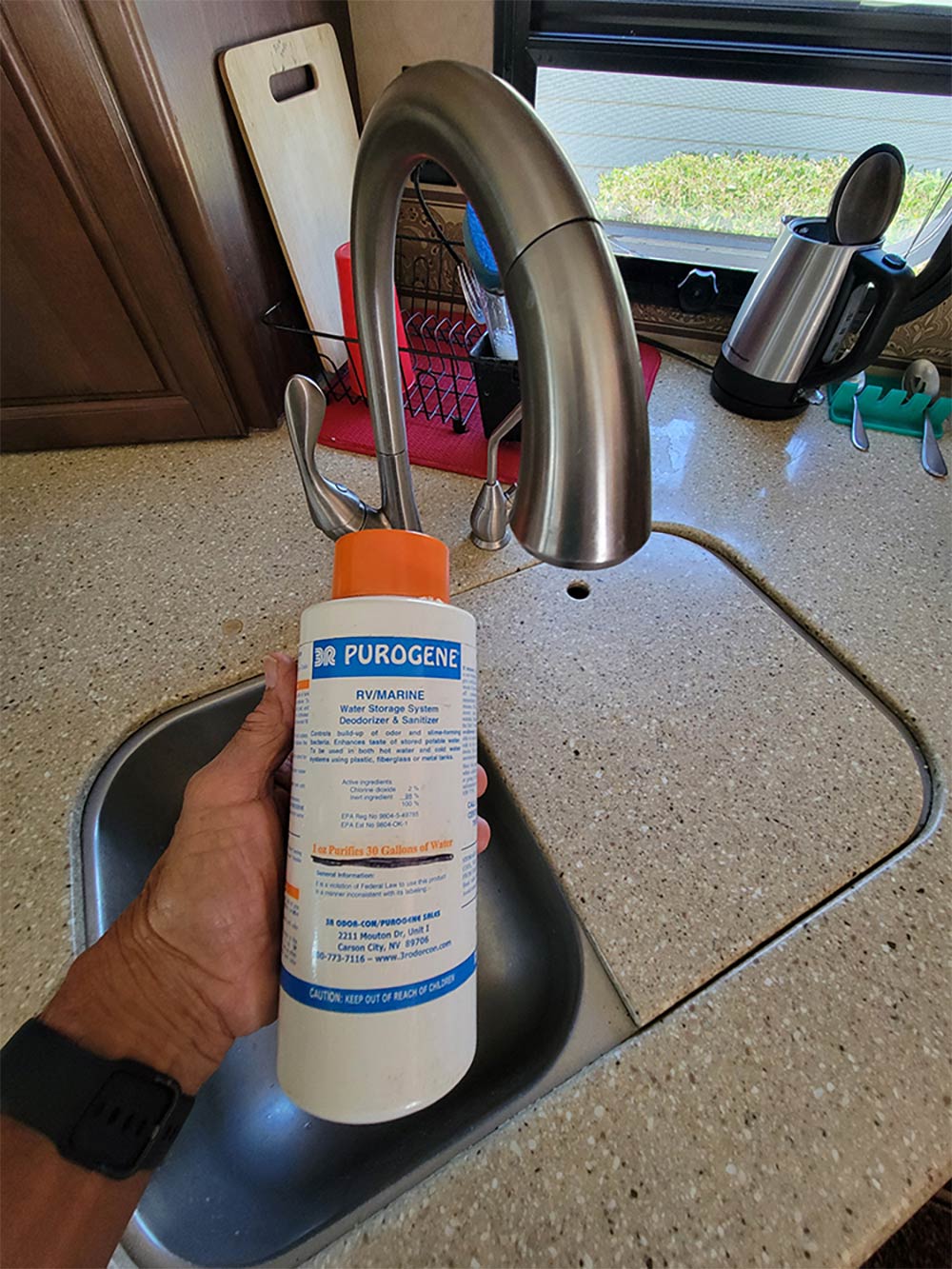
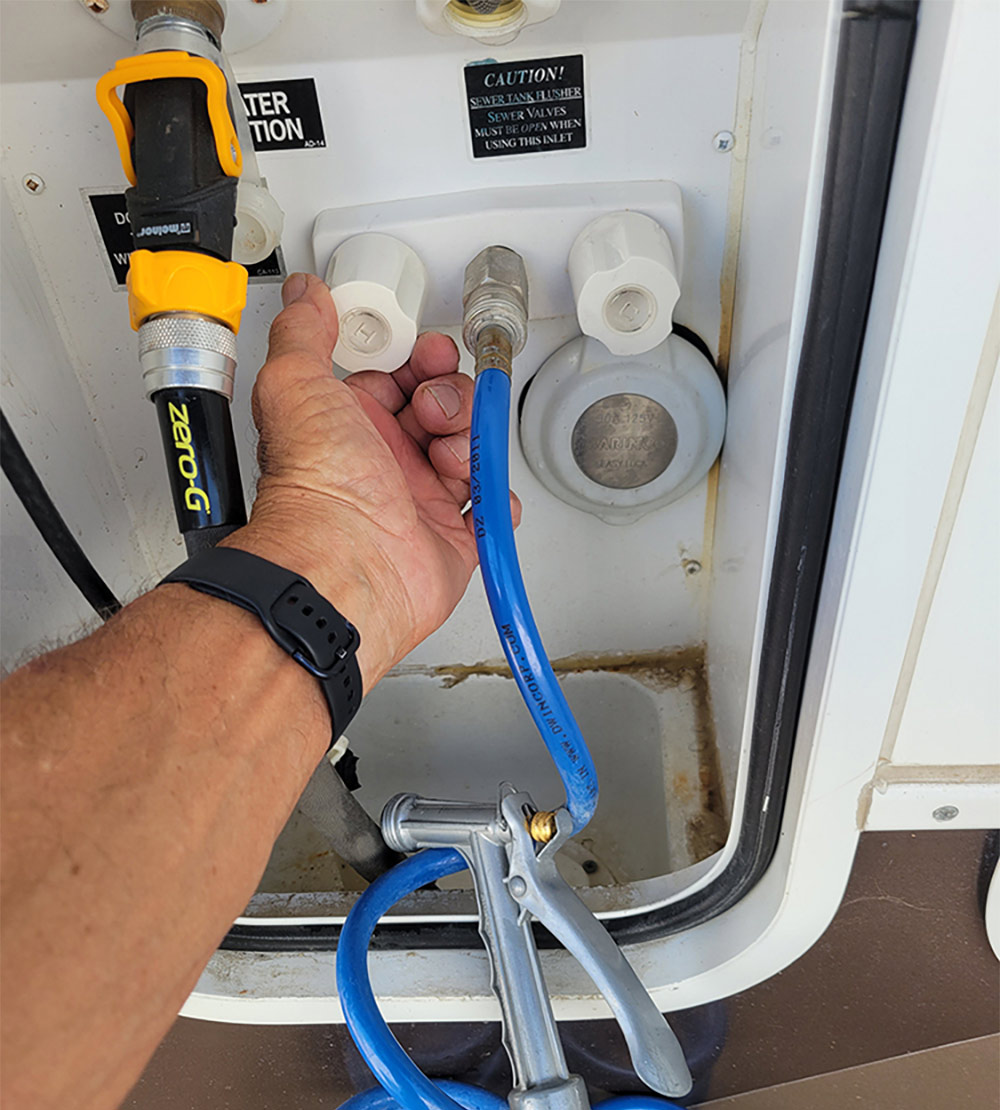
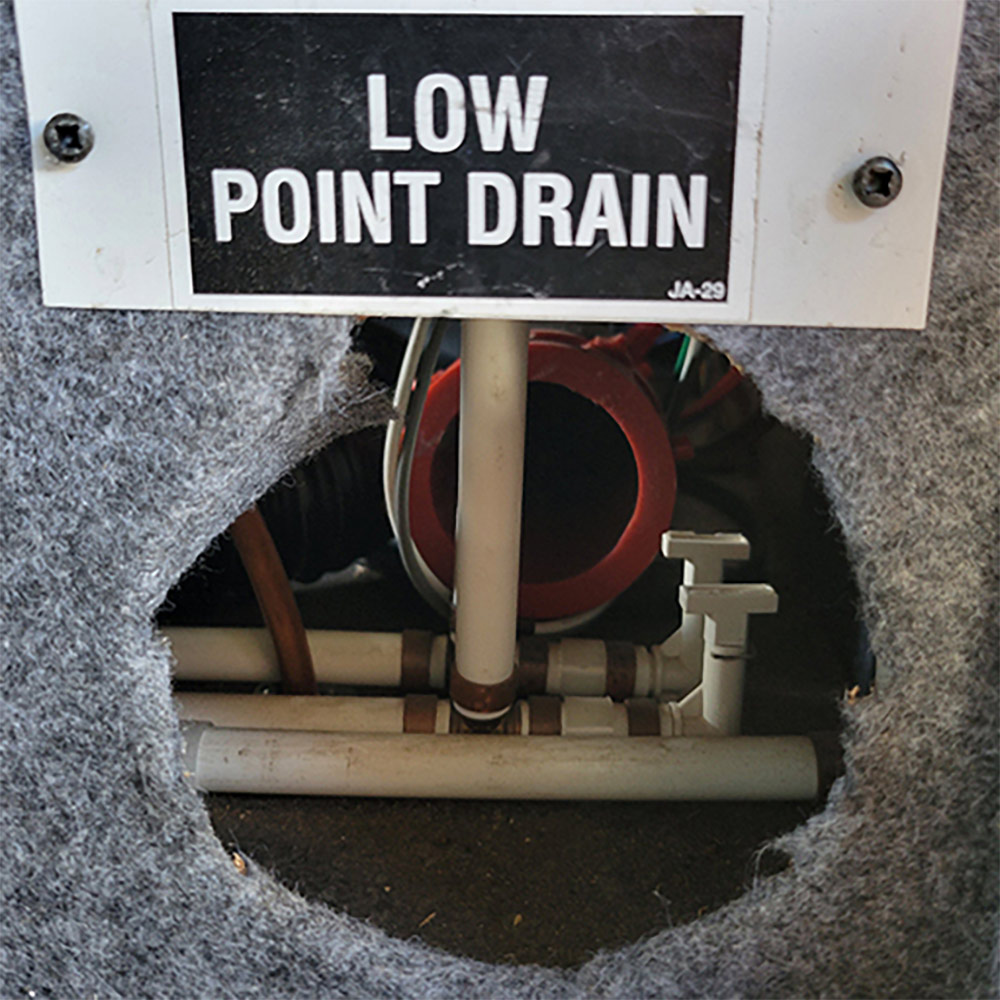
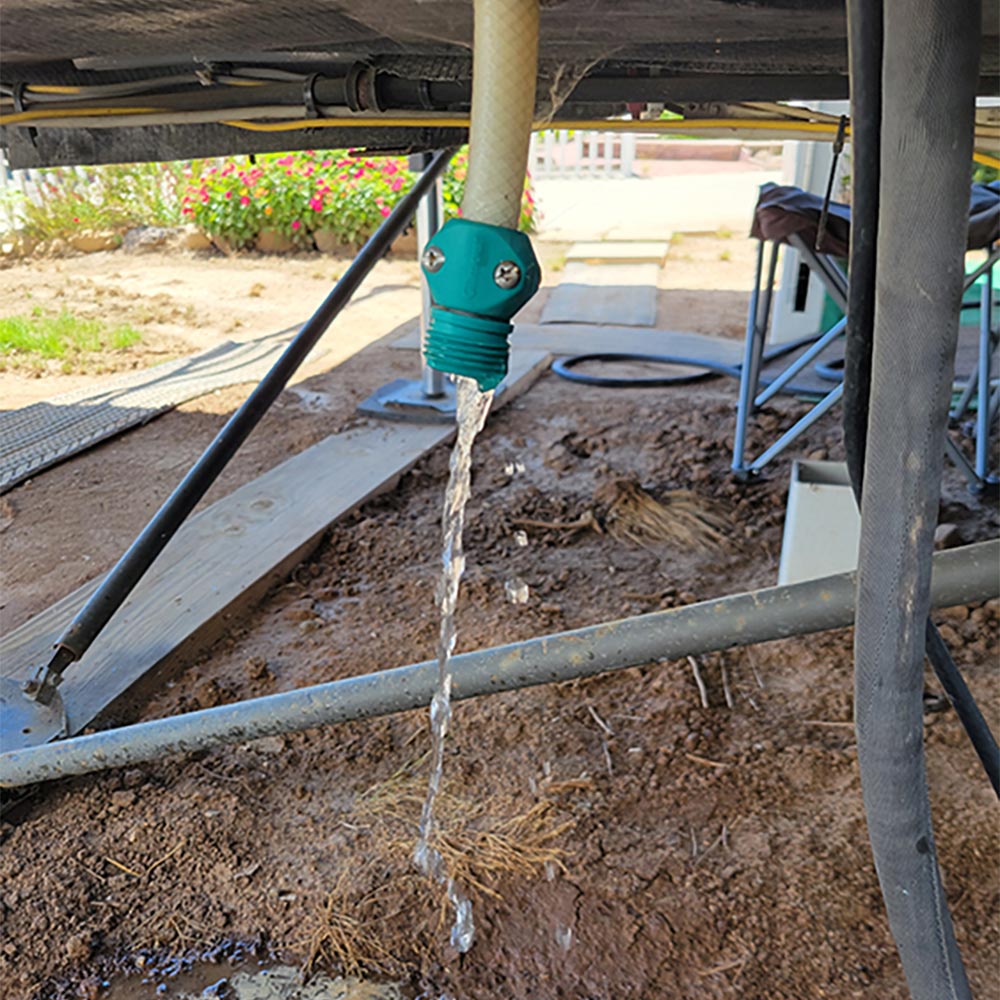
Start the cleaning process by draining the freshwater tank and all the lines via the low-point and tank drains. Remove the drain plug or the anode rod from the water heater and drain that tank as well. Next, close all the low-point and tank drains and replace the plug or anode rod in the water heater. Depending on the size of the water storage tank, calculate the correct amount of Purogene and pour it into the water tank. Many water tanks do not have a gravity fill for adding water using a hose, relying instead on a valve to direct water from the hookup (or home) spigot into the tank. If this is the case, you will need some type of a siphon device at the end of your hose; clean (never used for anything but this purpose) garden sprayers work well for this process.
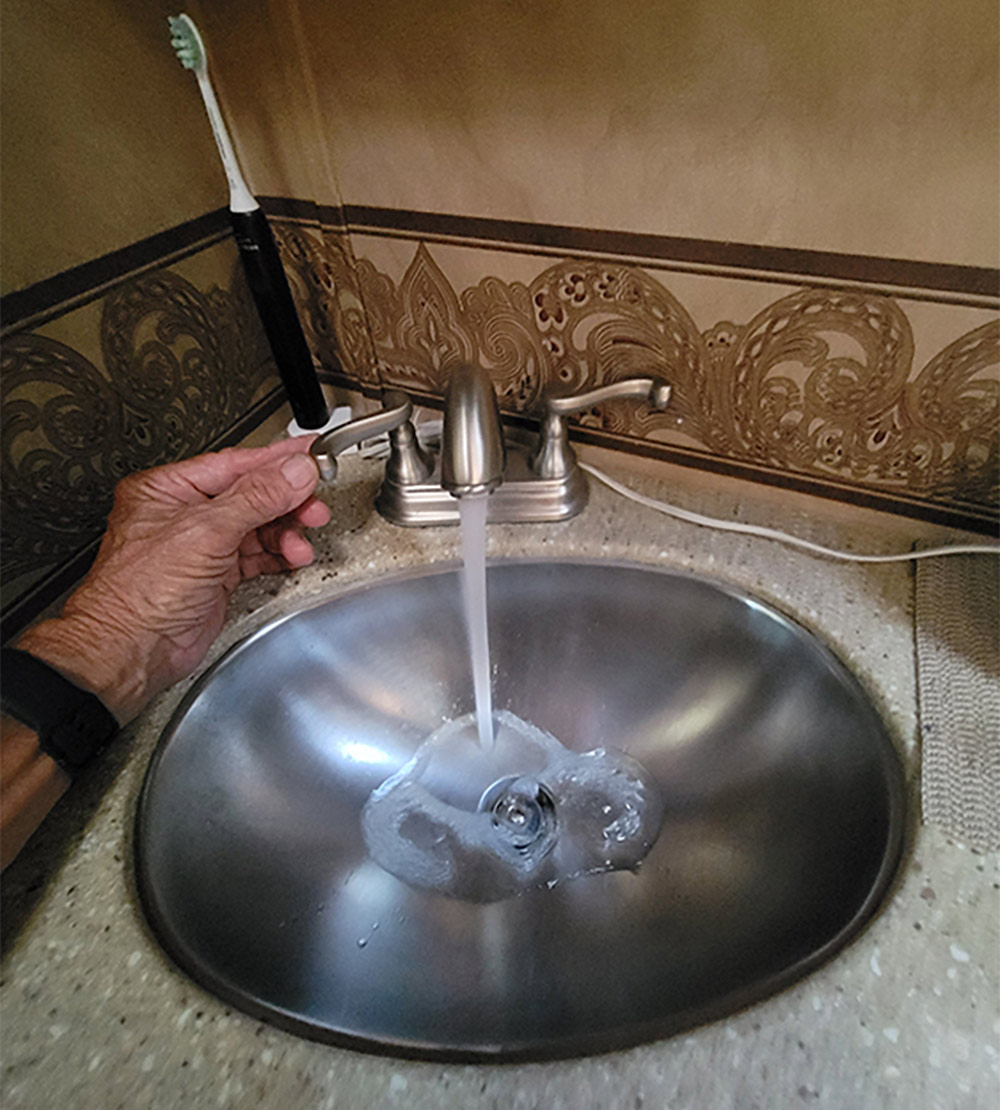
Make sure you fill the freshwater tank to capacity with the mixture of water and sanitizer. Turn the demand water pump On and open a hot water source (like the galley faucet) until the air bubbles are purged from the lines, filling the water heater. Run the water through all the faucets and showerhead(s) until it runs freely — and keep in mind that larger RVs will require more time for the water and sanitizer mix to reach the faucets and showerhead(s). If you have an outside shower, be sure you run the hot and cold there, as well.
At this point you could either flush your system with fresh water or leave it as-is — and gain the peace of mind knowing that bacteria and other nasty contaminates will have to find a home elsewhere.