

f you’ve been paying attention, you’ve noticed that virtually all the suspension enhancements covered in this “Suspended Animation” section have dealt with improving handling and driving comfort derived from leaf-spring underpinnings. Well, they aren’t used exclusively for travel trailers and fifth wheels. For decades, a wide variety of add-on devices have been marketed to improve the ride and road manners of the leaf-spring suspension for the Ford F-53 motorhome chassis, the mainstay of the Class A gasoline-powered motorized industry.
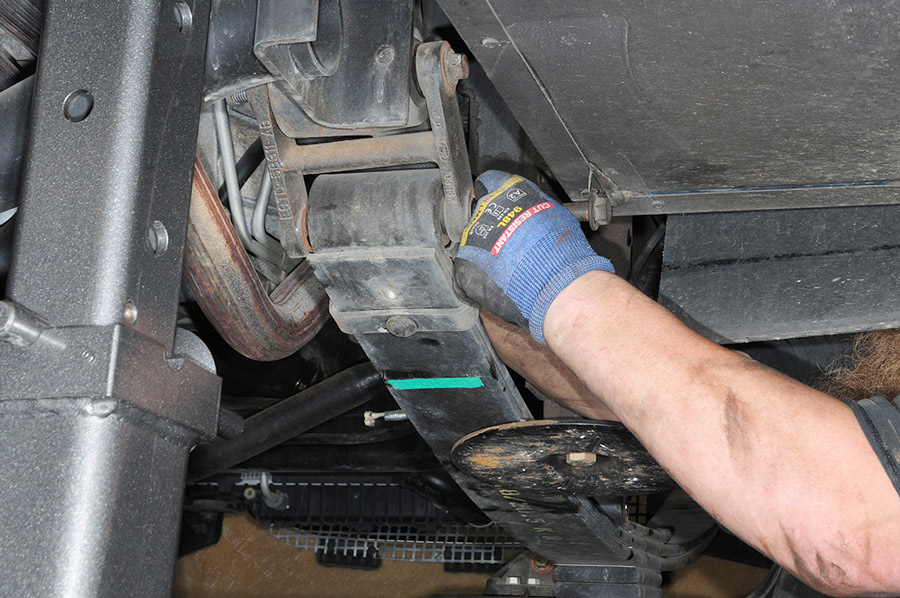
But while many of the add-ons developed by various companies in the aftermarket have tempered the Ford’s road manners to a certain extent, the Ford chassis continues to be known for its stiff ride and, at times, less-than-stellar handling. That’s why Lafayette, Indiana-based LiquidSpring opted to go in another direction. Rather than attempt to “fix” the Ford’s shortcomings by bolting parts to the otherwise stock suspension, LiquidSpring designed a computer-controlled compressible-liquid “smart” suspension system that is installed in place of the Ford chassis’ steel leaf springs and shock absorbers. The system is available for F-53 chassis with 16,000- through 26,000-pound gross vehicle weight ratings (GVWR), dating back to 2011. (Applications for other vehicles also are available.)
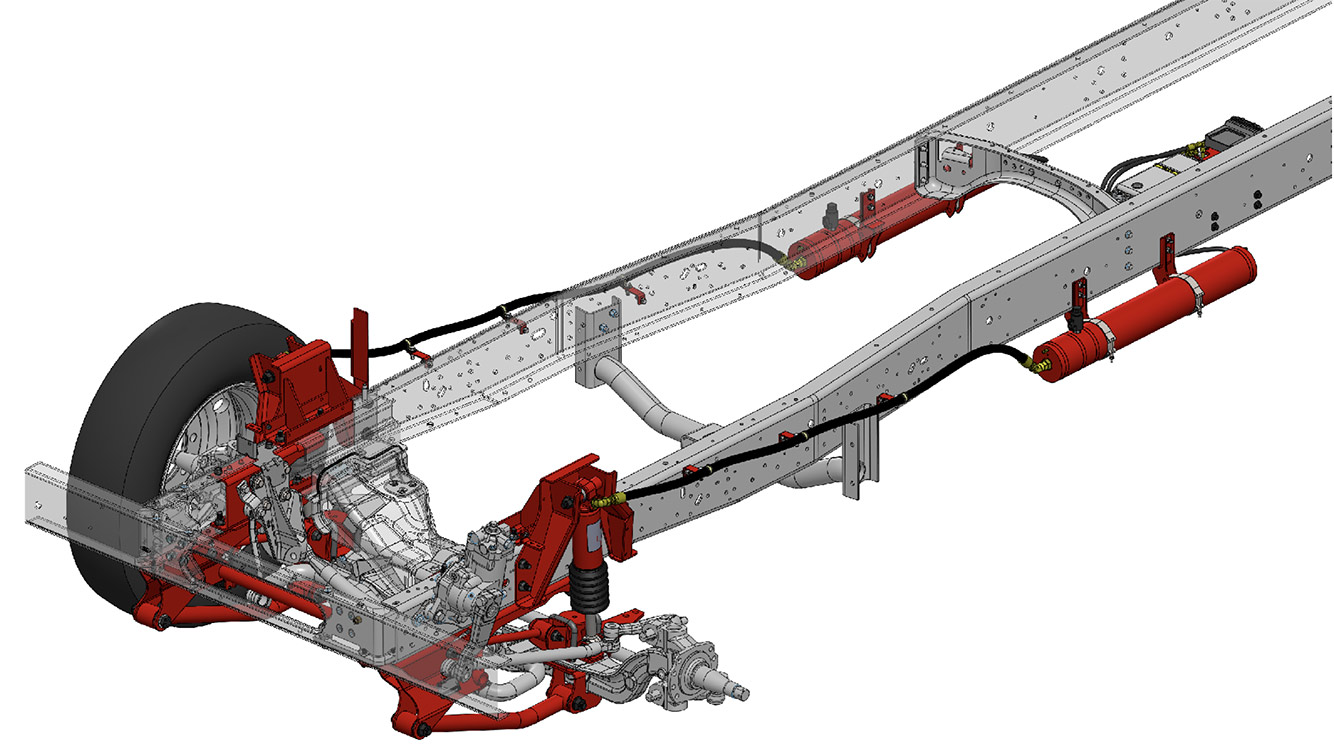
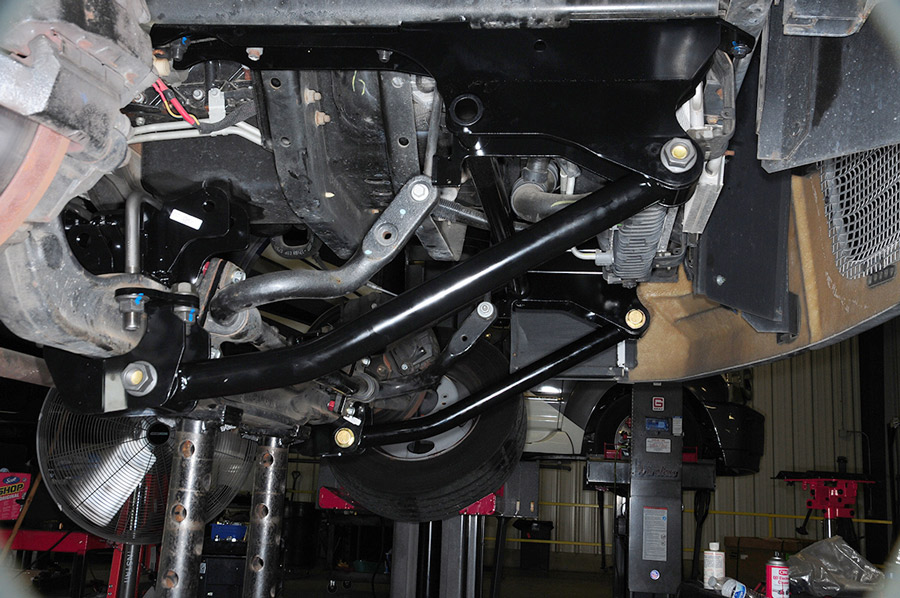
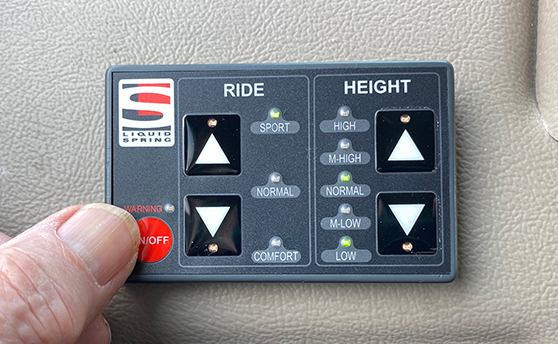
The “liquid” in the LiquidSpring system is silicone-based and compressible under high pressure. Struts (a piston in a cylinder) replace the steel leaf springs. Instead of leaf springs flexing and loading under varying road conditions, the silicone-based liquid is compressed at a variable rate determined by an onboard computer that analyzes suspension movement in milliseconds and changes pressures (2,200 to 4,000 psi) in the struts as road conditions vary. The liquid serves as load support as well as shock absorbing; hence the variability the system provides is a radical transformation of the stock F-53 suspension system. We followed along as the system was installed on the pictured 2016 30-foot Winnebago Itasca Sunstar with an 18,000-pound GVWR chassis.
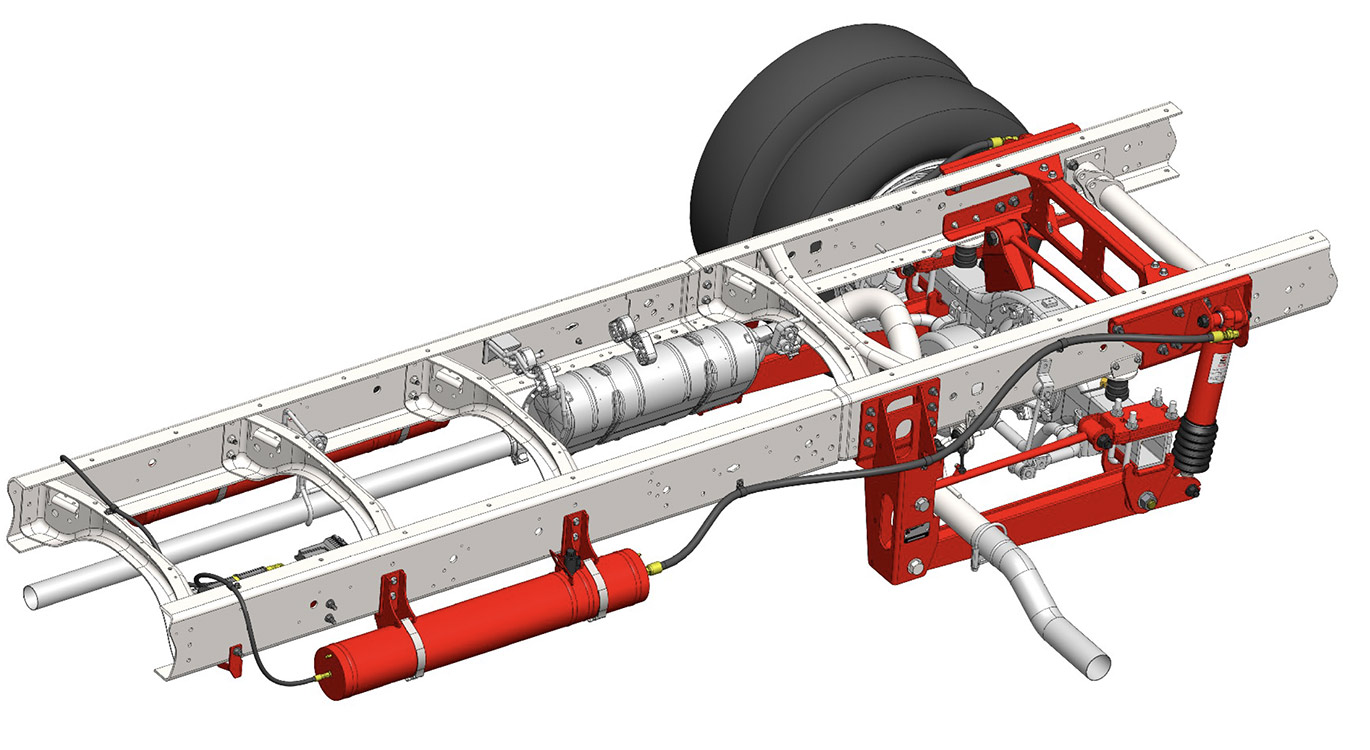
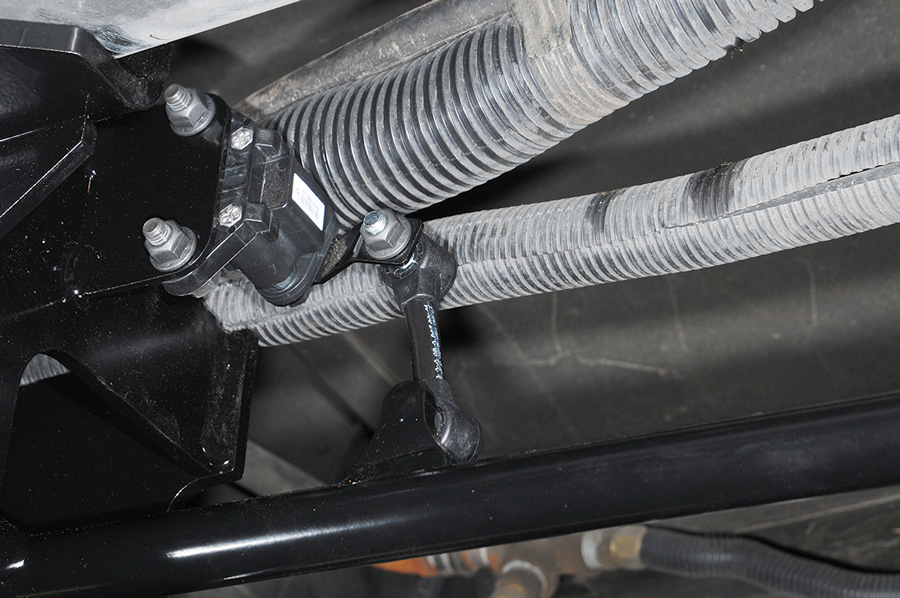
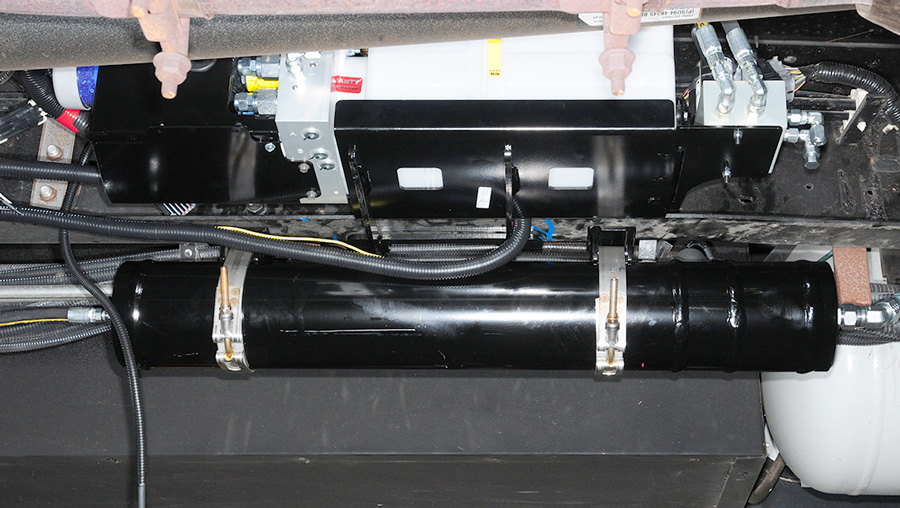
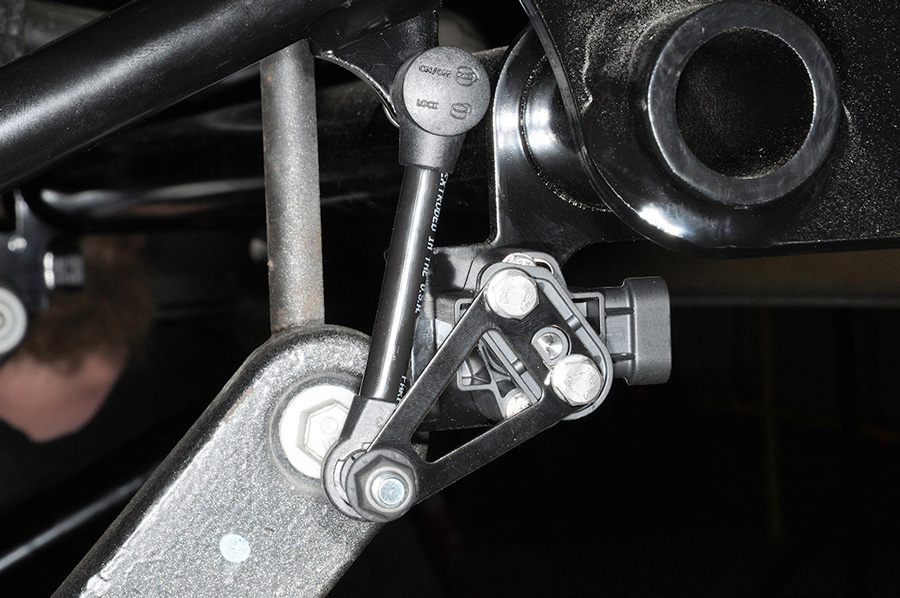
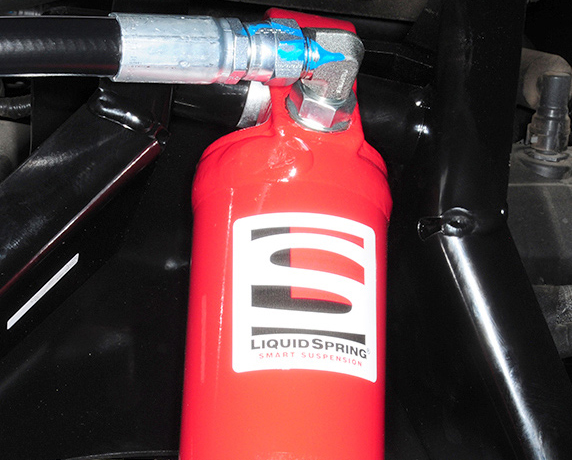
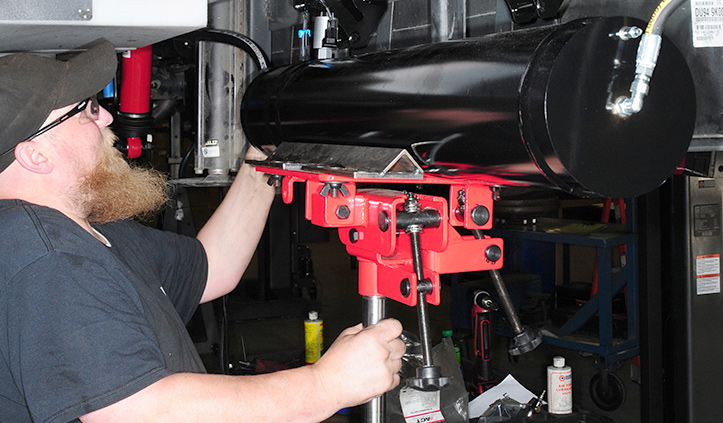
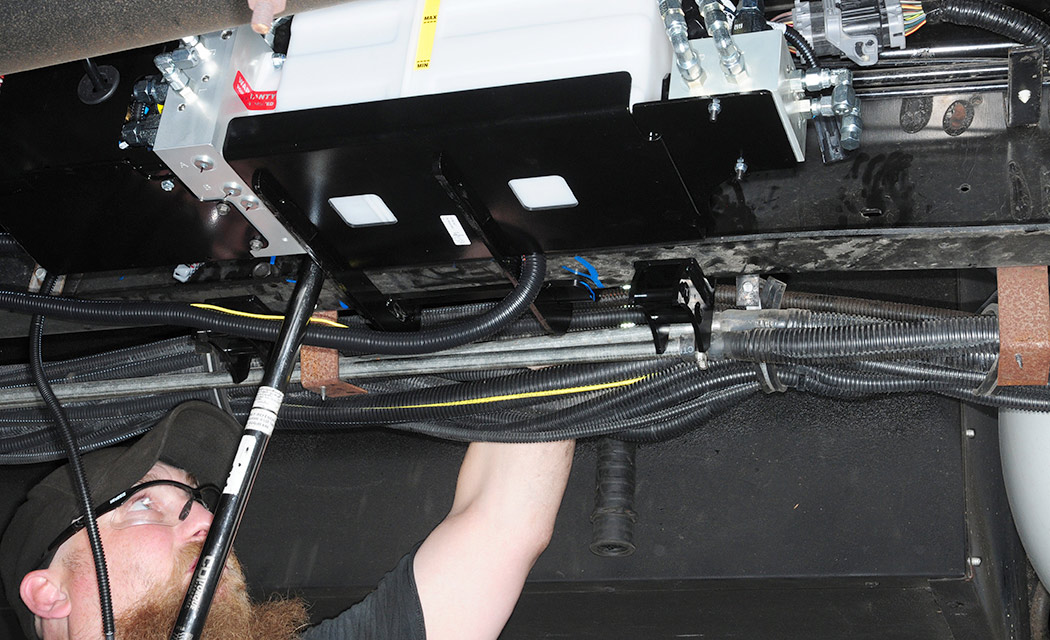
As noted earlier, the actual “spring” in the LiquidSpring system is a strut consisting of a tube and piston. Each wheel strut is connected by a high-pressure hose to a volume, and the pressure in that volume is controlled via another high-pressure hose to the control module. The 12-volt-DC-powered module includes a high-pressure pump, computer-controlled valves and a reservoir for the compressible liquid. Pressure in each strut is controlled individually and instantaneously by the module based on data from height sensors at each wheel and a steering sensor. It adds up to an all-wheel variable/adaptive suspension.
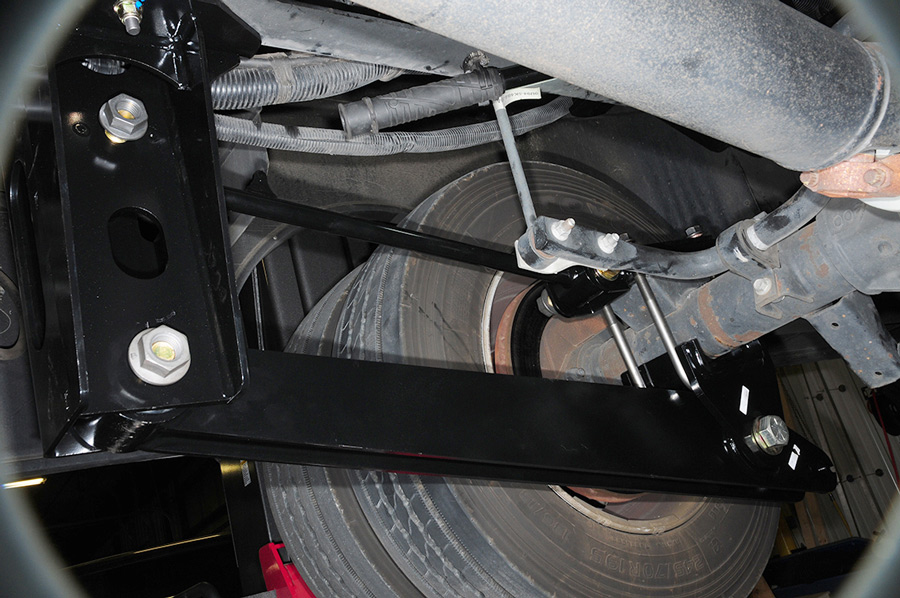
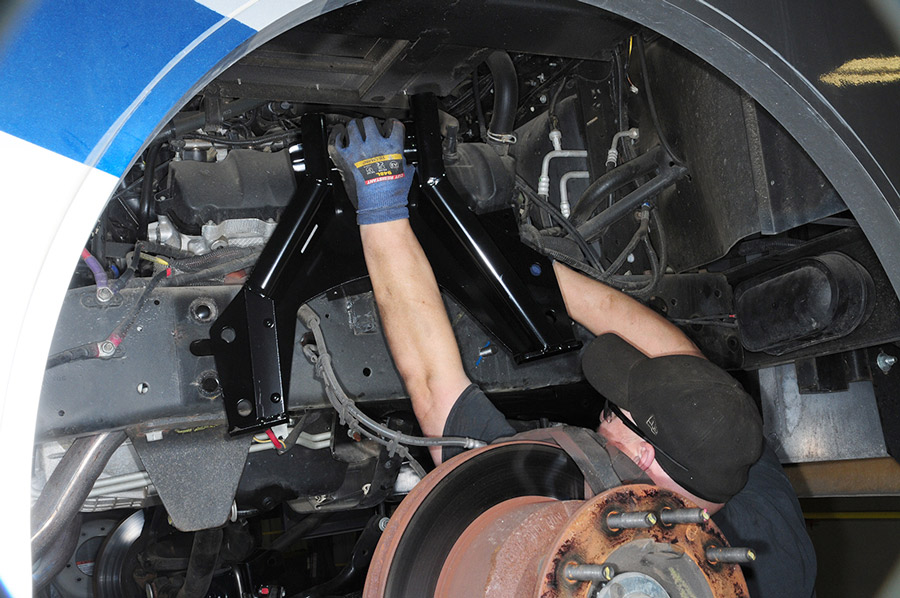
Granted, the LiquidSpring’s suspension did contribute a net increase of 450 pounds to the motorhome, but it was still well within parameters. Curb weight went from 17,160 pounds, loaded (water/fuel propane full, supplies aboard) prior to the LiquidSpring installation to 17,610 due mainly to the weight of the four volumes, the struts and four very substantial control arms front and rear. Ford’s gross axle weight ratings (gawr) for this motorhome were 7,000 pounds front and 12,000 rear; gvwr was 18,000 pounds. Motorhome owners who are considering this installation should acquire accurate weight figures, possibly on one of the many CAT scales at truck stops, because LiquidSpring may decline the installation on a motorhome that already exceeds one or more of its weight ratings.
This is neither a quick nor inexpensive transformation. This installation spanned four days at the service department at the LiquidSpring factory in Lafayette and involved the use of four-corner lifts to provide access underneath the Ford chassis. Total parts and labor price for the LiquidSpring smart suspension conversion of the Winnebago Sunstar was $20,000. While this price is obviously more than you’ll pay for one of the many other F-53 upgrades available, the investment may not seem as daunting once the full scope of benefits are realized.
The owner reported back that ride was dramatically smoother and controlled even on broken pavement riddled with repairs and potholes. The LiquidSpring system substantially reduced the repeated shock impulses transmitted by the stock leaf springs on rough pavement, and it muted the noise. On curves, the motorhomes did not heel over and yaw, even during aggressive maneuvering. It stayed mostly flat on the pavement; a winding road became a pleasurable drive. Rough approaches to highway bridges were no longer feared. Rapid lane changes produced very little body roll and yawing effect.
Essentially, the LiquidSpring system transformed the Ford F-53 suspension into something more akin to an air-suspension system on a diesel-pusher coach — and, let’s face it, ride quality is oftentimes one of the reasons buyers opt for more expensive rear-diesel coaches.