

o one likes to think about the downside of the RV lifestyle: That excruciating moment when something — quite often, something either very necessary, very hard to replace or very expensive — breaks. Proper and continual maintenance goes a long way to limiting such damage, but it doesn’t eradicate it. No matter how fastidious you are about the care and upkeep of your rig, years of use and one too many potholes taken at 60 mph virtually assures that replacement parts are in your future.
That’s not always a bad thing. If, for instance, the cooling unit on your refrigerator decides it’s had enough, opting for a replacement fridge often brings with it the technological advancements made since your RV was assembled. On the other hand, as RVs age the manufacturers often move on from the materials they used in the construction of particular models, from wall paneling to cabinet doors, switch panels, vinyl graphics, lighting — the list goes on. Eventually, those components will also disappear from the shelves of the manufacturer and its dealer network — oftentimes, leaving owners of these rigs in a lurch when something goes awry. Yet another frustration among hands-on RV owners is locating the myriad “small parts” that go into the building of a typical RV, be it a headlight or taillamp bucket, a gauge, a cabinet part or a body panel.
Sometimes, however, you can still find a ready replacement. All you have to know is where to look. Usually, that means locating an RV surplus store.
Akin, perhaps, to a home-improvement center that focuses on the “nuts and bolts” of RV construction, RV surplus and salvage warehouses exist from coast to coast. For the most part, they tend to exist in centers — or former centers — of RV manufacturing. Eugene, Oregon-based Northwest RV Parts, for example, isn’t far from a manufacturing area that was once home to such marquee brands as Monaco — in fact, the company bought most of Monaco’s components when the company closed its doors in 2009. Of course, there are exceptions to every rule: One of the biggest purveyors of RV surplus parts on the East Coast is Tim’s RV in Erving, Massachusetts — and the last time we looked, Massachusetts isn’t exactly a hub of RV activity.
Northern Indiana, on the other hand, is. It’s estimated that about 80% of all RVs built in North America are sourced from Elkhart County, so it’s not surprising that the area known as “Michiana” — an amalgamation of Indiana and Michigan that encompasses counties straddling the state line on either side — is home to a number of companies dedicated to filling an RVer’s “wish list” of replacement parts. And by far the biggest of these is Bontrager’s RV Surplus.
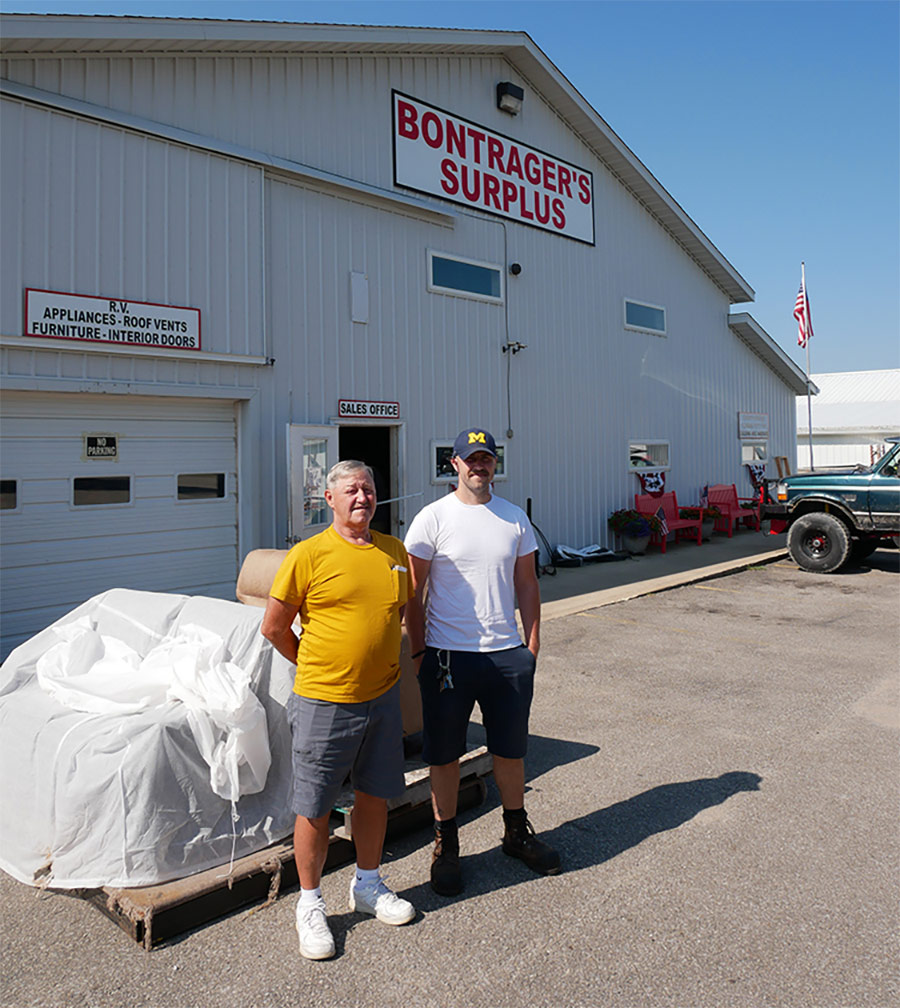
According to Larry Bontrager, who runs the expansive location in White Pigeon, Michigan, with his sister, brother-in-law, son, niece and a half-dozen other employees, the company never originally set out to corner the market on RV parts. Founded by his father, Henry, in 1970, Bontrager’s was originally intended to be a cabinet shop. “That didn’t last very long,” Bontrager recollected. “Some of the companies he was building cabinets for asked if they could bring their salvage to his location and he could sell it while he was building cabinets. After a while, he saw there was more money in the surplus side of things.”
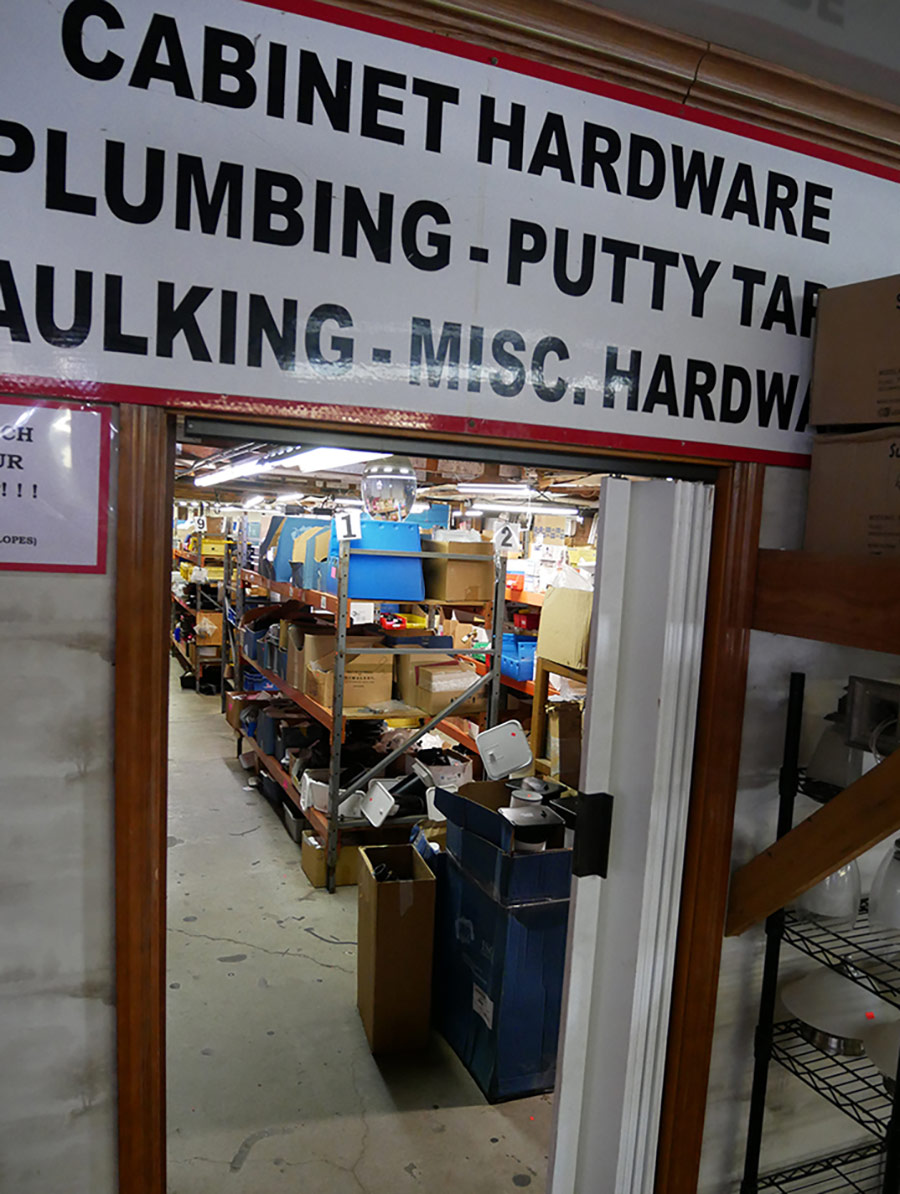
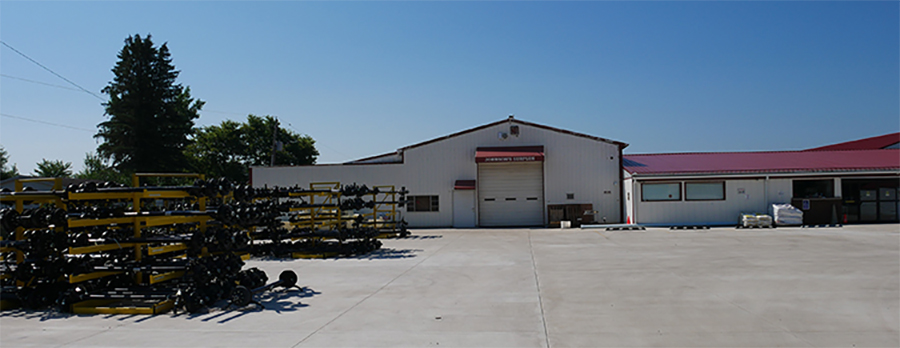
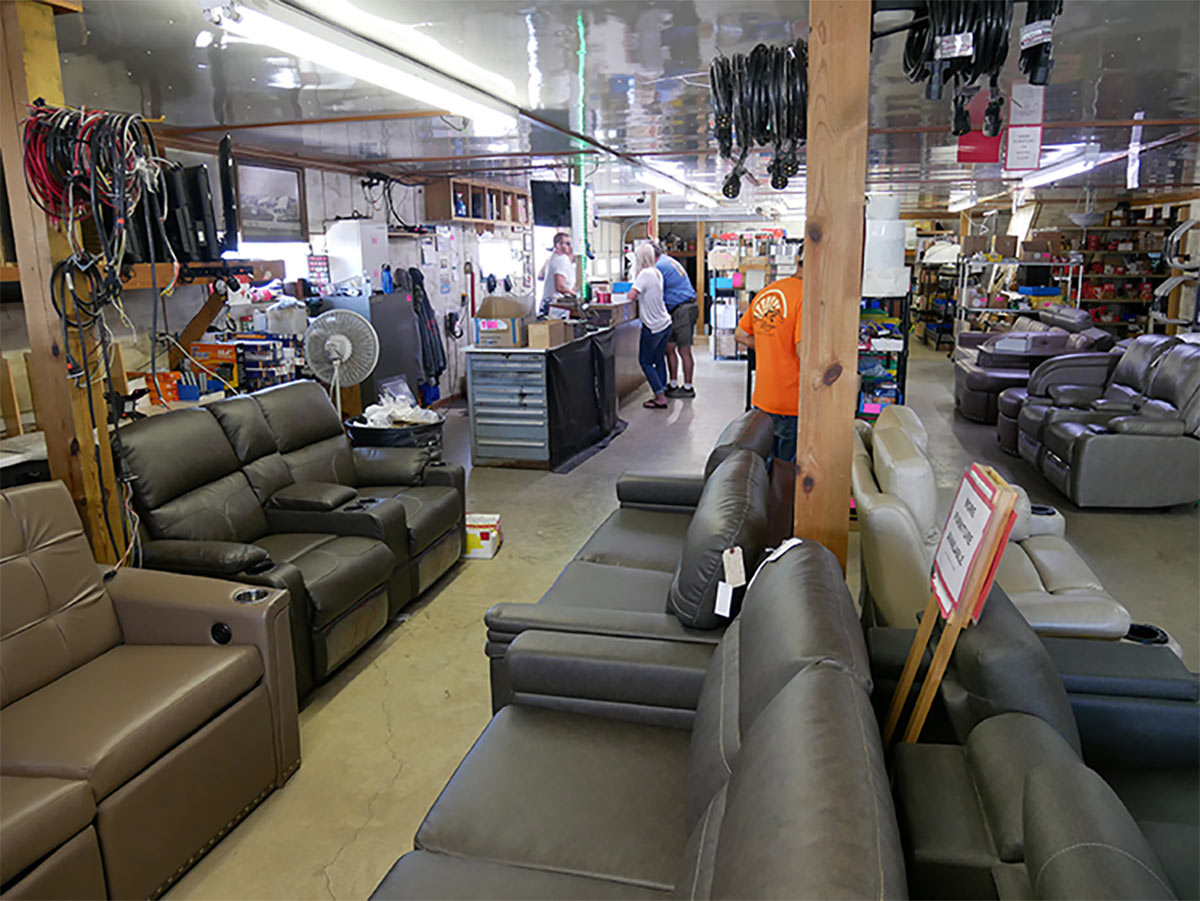
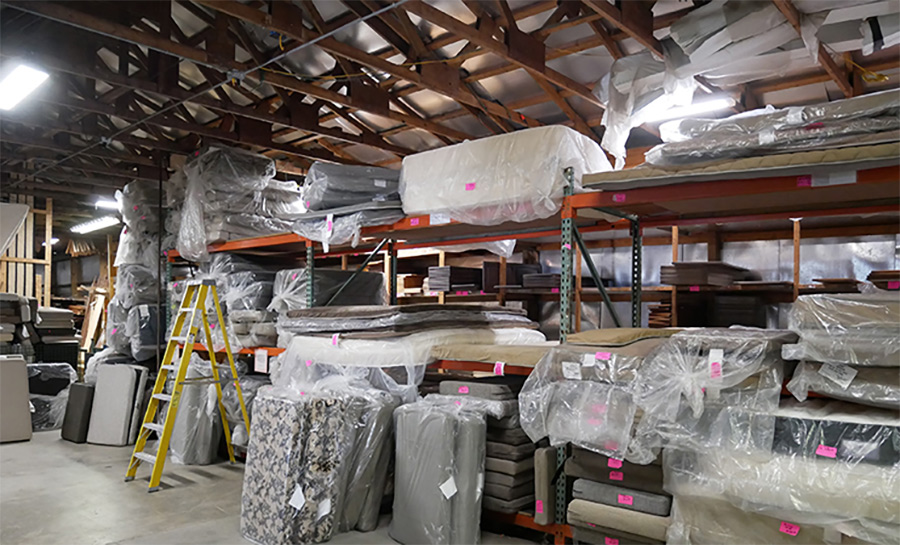
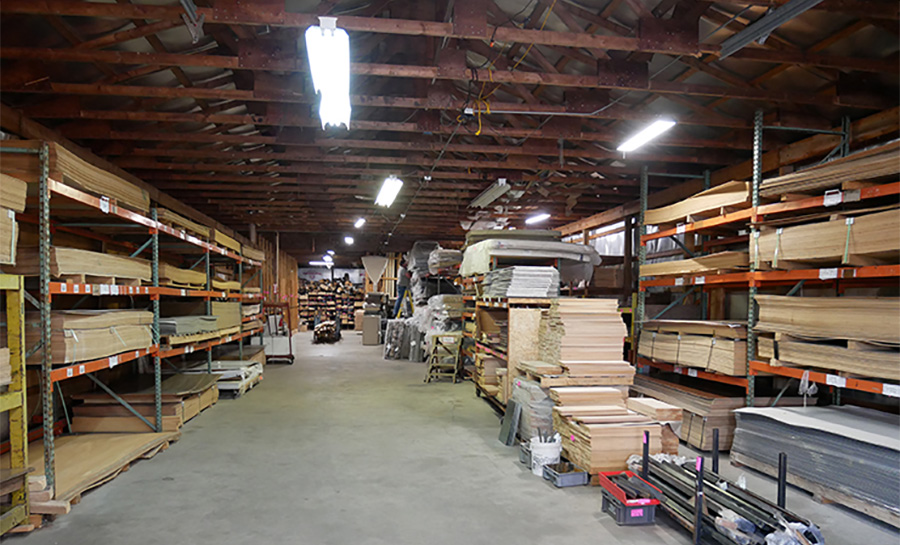
The footprint of the company has likewise evolved. To first-time visitors, Bontrager’s RV Surplus might appear as a haphazard collection of interconnected buildings — “We just added on as we needed the space,” Bontrager said — but after getting over the feeling of being overwhelmed, it becomes apparent that parts have been grouped in specific locations. All wood products, for example, are found in one building, while other rooms are set aside (more or less) for furniture, lighting, plumbing, hardware and more. While even Bontrager hesitates to “guesstimate” at the size of the facility, the location appears to provide upwards of 30,000 feet or more to RV surplus.
At that, it’s just the tip of the iceberg. Few customers know that just across Bontrager’s location on U.S. 12 and east a few hundred feet are five additional warehouses — each filled with components destined for the company’s retail location.
“Everything goes to those warehouses first, and then the staff goes through it,” Bontrager said. “It can come over here (to the retail side, which also houses the company’s offices) or, sometimes, to the hopper — not everything we buy is in a shape to be resold. When you’re buying surplus parts by the trailer load, you can’t inspect every single item.”
And those purchases occur frequently. While Bontrager noted that he still attends auctions on occasion — it’s not unusual to see a local auction house advertising an upcoming sale of surplus RV parts — most of the company’s legwork has already been done.
“We’ve been doing this now for so long, we’ve developed contacts throughout the industry,” he said. “They usually call us when they have surplus, whether it’s because of a model-year change or what have you. Sometimes, it’s just because of something that happened during shipping — they can’t build a brand-new RV with a scratch on the stove, for example.”
While Bontrager wouldn’t say how many parts the company sells annually — “It changes for us, just like it does for the RV companies” — he did note that big-ticket items are among the most popular components to leave its doors.
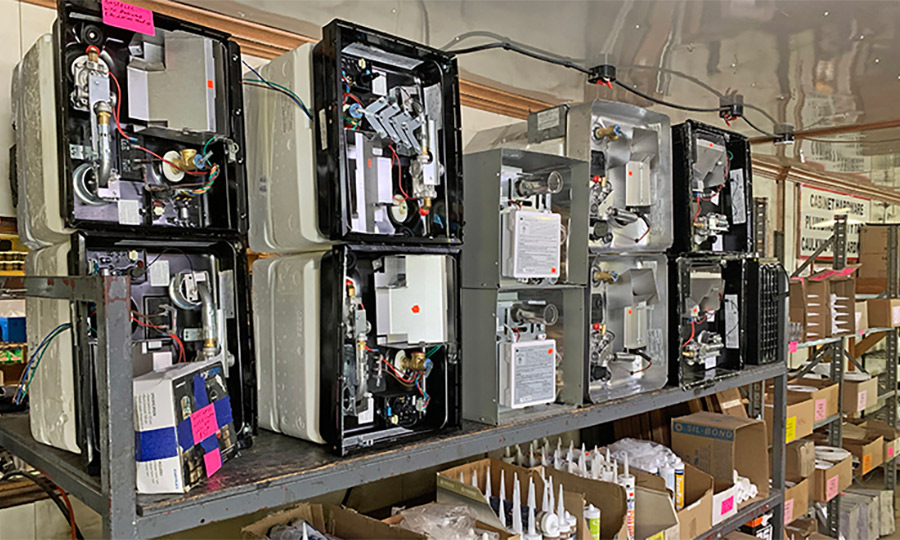
As an example, Bontrager explained the difference between purchasing a refrigerator at the family’s RV surplus center versus full retail.
“There could be as much as $1,000 difference,” he said. “That’s not always the case — some people just don’t want something considered ‘salvage’ even though it looks brand new and works as a brand-new product — so we also carry new parts and so have different prices. But there might be a substantial difference in cost, just because of a cosmetic flaw. For example, refrigerators have a thin metal frame around them, and they get damaged all the time. It might be just a little bend, but you can’t straighten it out to make it look perfect. You can’t paint the scratch to make it look perfect.”
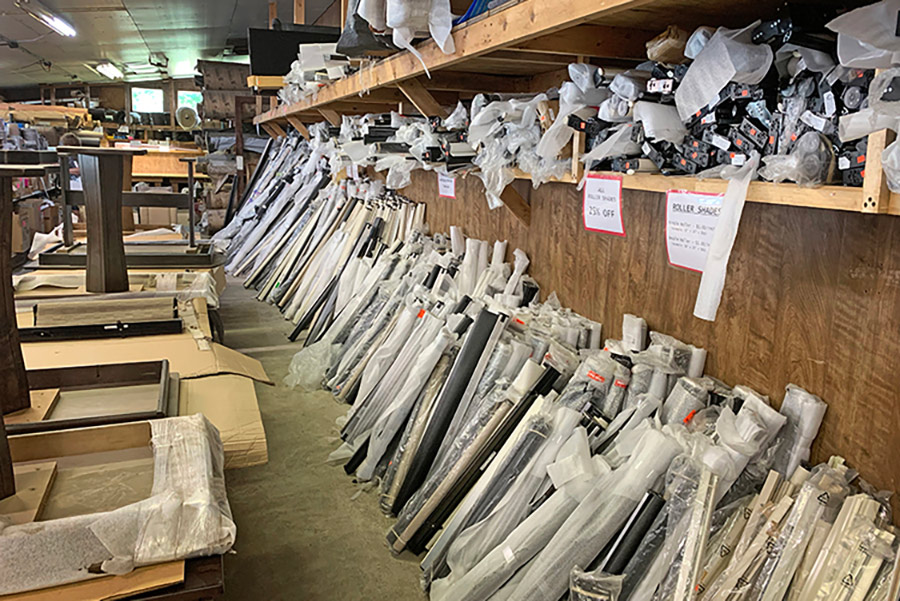
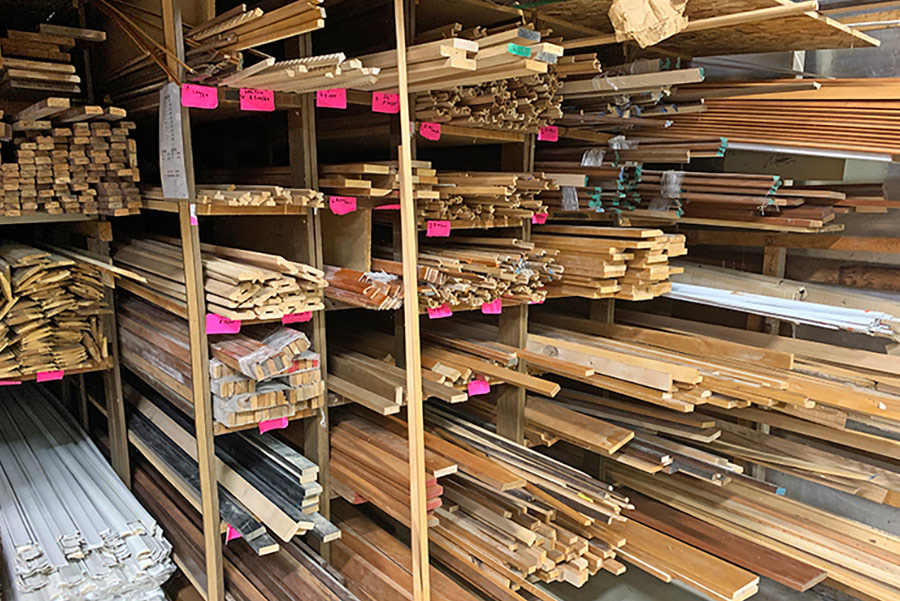
“By the time we crate it up and ship it, buyers are paying double what we sell it for,” Bontrager said. “So we just tell them, ‘pick it up here.’
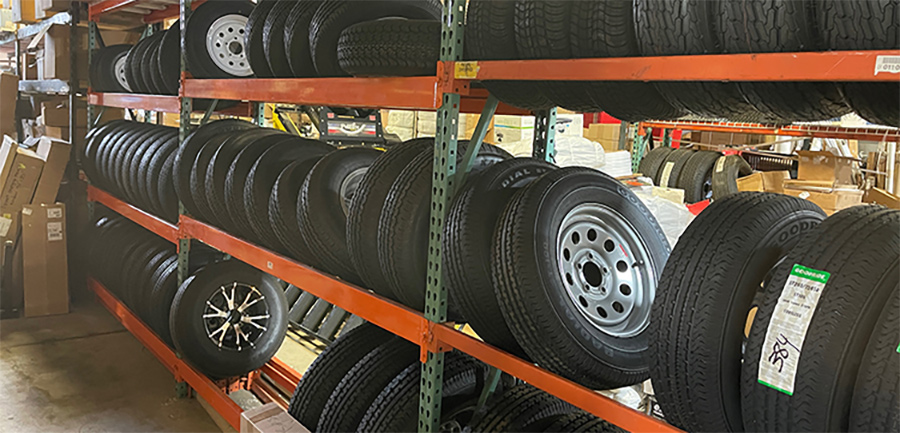
Meanwhile, Tim Christenson has built Tim’s RV into the go-to place for RV parts on the East Coast. Christenson, too, has established a pipeline with RV OEMs to keep the dealership well-supplied with surplus parts that range from faucets to tires.
“You have to be prepared,” he said. “Sometimes, there may be 500, 1,000, even 10,000 of one item that might be purchased. They are new parts but are no longer considered usable for the current lineup or market.”
Along with the surplus, Christenson said the company also stocks a lot of commonly sold parts that are normally needed on a regular basis — from Max-Fans to Fan-Tastic vents, power converters, power inverters, battery disconnects — and basic RV supplies including water hoses, sewer hoses and the like.
“We do get a lot of customers that come in that are converting their own school buses and tiny houses or renovating an old RV who buy RV windows, entry doors, appliances, electrical and interior lighting,” he said. “We have a large selection of lighting, both interior and exterior.”
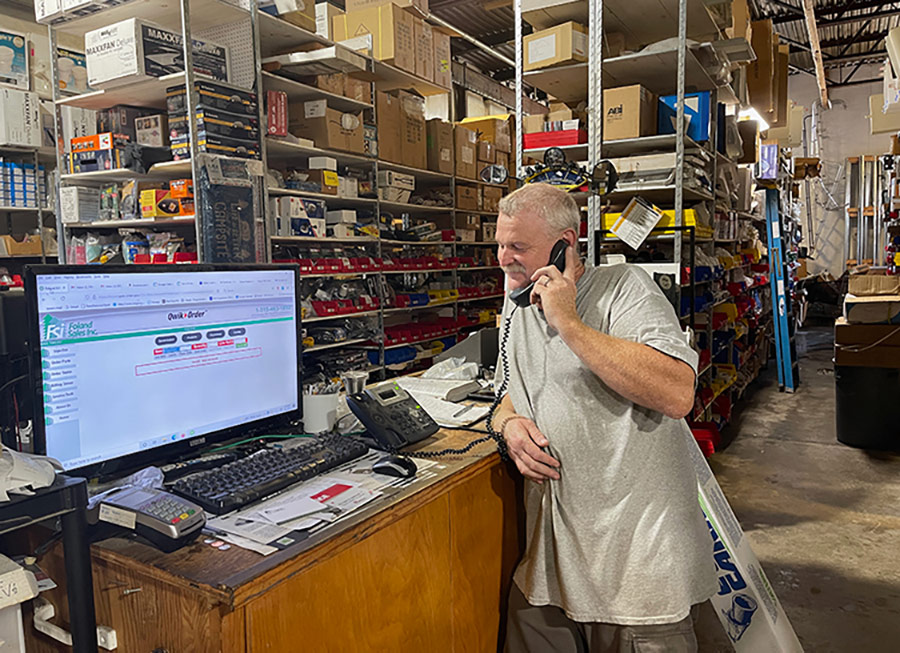
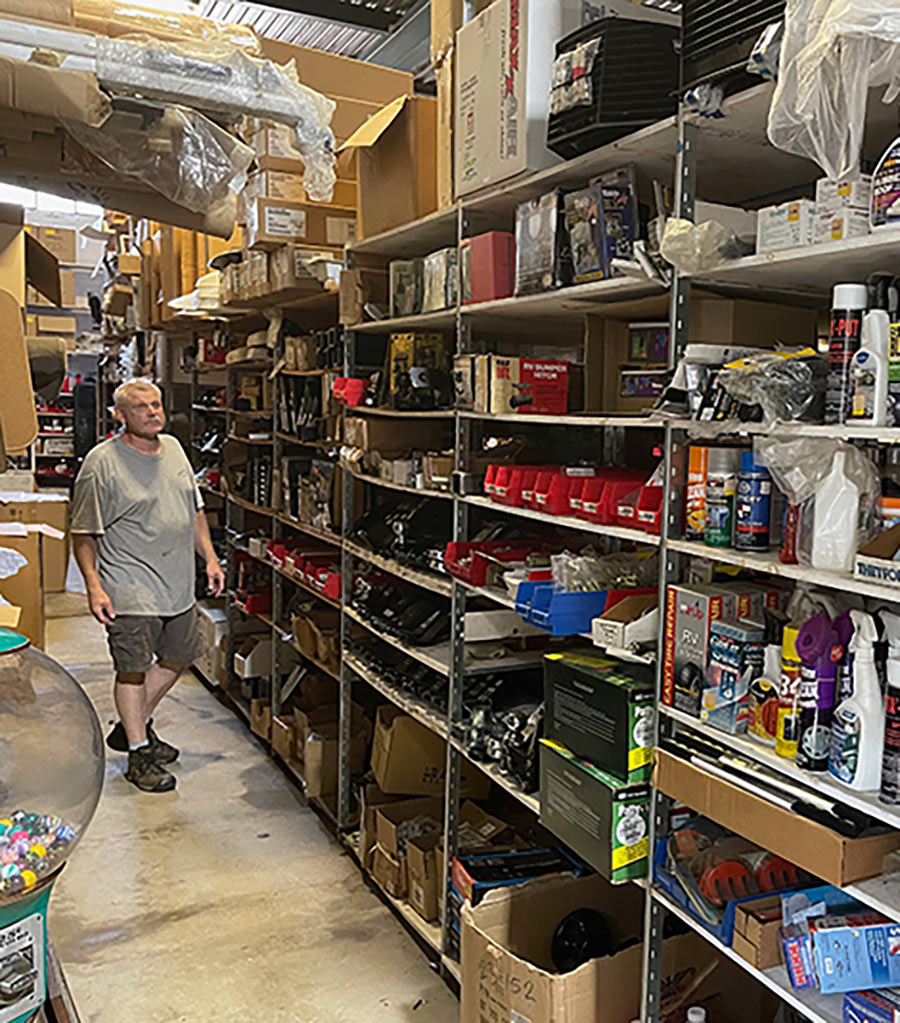
Because not all items are surplus, some of what’s sold at Tim’s RV “is going to be fairly close to retail,” he said. On surplus parts, however, discounts of 20% or 30% are common.
There are other sources for RV surplus, to be sure. The accompanying chart lists more than a dozen we know of. In fact, yet another major source, Johnson’s Surplus, isn’t far from Bontrager’s in White Pigeon and bills itself as “Michigan’s largest trailer and RV parts yard.”
“Salvage is just something that the RV companies can no longer use, for one reason or another,” Larry Bontrager said. “I’d say 99.9% of every product we carry is brand new. I can’t think of anything we carry that’s used.”