

Okay, so there’s a bit more to translating dashboard “telltales” than that. Let’s take a look at the various dash icons and explain the meaning of the different telltale functions so coach owners can better understand what they can do to eliminate the issue for a variety of popular diesel engines.

Cummins ISL and L9 engines:
When the ambient temperature outside is around 50 degrees F or colder, the intake grid heater on the engine will activate. This is an aid in starting the engine and reduces white smoke (cold unburned diesel fuel) after starting. The grid heaters will pulse on and off until the engine is at proper operating temperature. Because of the high amp draw of the grid heater, it’s not unusual to see the voltmeter move. If it’s cooler outside, the engine may automatically go to high idle to reduce soot build up in the diesel particulate filter (DPF).
Cummins ISX and X15 engines:
There are no grid heaters on the ISX and X15 engines. The engines generate enough heat to burn the fuel when they are started normally.

Operation of ATC: ATC is designed to assist the driver in the event of excessive wheel slip. When the ATC detects a wheel on the drive axle spinning faster on one side, it reduces throttle input first. If the wheels keep spinning faster, the ATC will pulse the brake to help with traction. The light on the dash will illuminate whenever the ATC is activated. ATC switches are designed for use on extremely slippery surfaces, like wet grass or loose gravel, that require extra wheel spin to move.
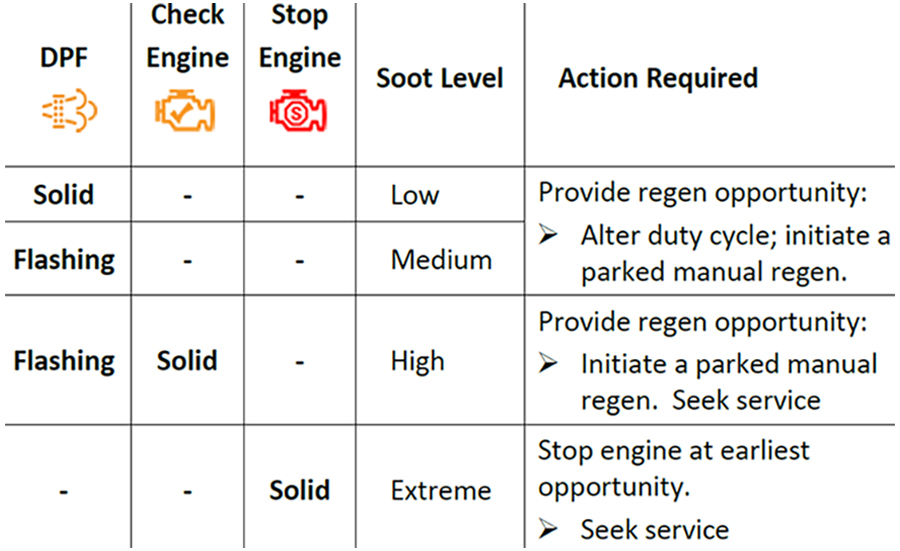

When this telltale comes on, the operator needs to increase the duty cycle load, or the amount of time the cycle is active. If you’re on a highway, keep driving until the telltale goes out. If you’re on city streets, the operator should downshift to increase engine RPM. The length of time it takes for a periodic soot removal cycle (also known as a regeneration) to complete is determined by the amount of soot that needs to be removed. If more heat is produced, the cycle will be faster.
The only way to initiate a “parked manual regeneration” is with the engine manufacturer’s software.
To keep regenerations to a minimum, avoid idling whenever possible. If you need to idle, use the high idle feature to maintain heat in the engine. Low RPM operation can also cause frequent regenerations.



If this telltale light comes on, make sure you’re in a safe location, such as a rest area or parking lot. With the engine off, find a suitable container to drain the water/fuel mixture into. Open the small valve, or petcock, on the fuel water separator and drain until normal-colored fuel is flowing into the container. Shut the petcock and go back to the driver’s seat. Turn the key to the on position without starting the engine. The engine fuel lift pump will run for 60 seconds then shut off. Recycle the key switch three or four times to bleed the air out of the fuel lines. Start the unit and make sure the WIF telltale goes out. If the WIF light comes on again, call for service. Excess water in the fuel can cause damage to your fuel pump.




Diesel engines are made to last for hundreds of thousands of miles — indeed, their longevity is one reason RV owners opt for diesel pusher motorhomes (along with “diesel only” upgrades they also provide, including higher GVWR, air suspension and air braking). But even diesels need a helping hand on occasion; by knowing what the dash icons mean and how to react to them, diesel coach owners can help extend engine life.

In addition to training coach owners for more than 25 years, Mike has also trained thousands of motorhome and fire truck technicians. He often represents Spartan RV Chassis at major events and rallies to present seminars for OEM and industry support.