
Security Guard
[maghub_sidebar]
Security Guard
Security Guard
Safe & Secure
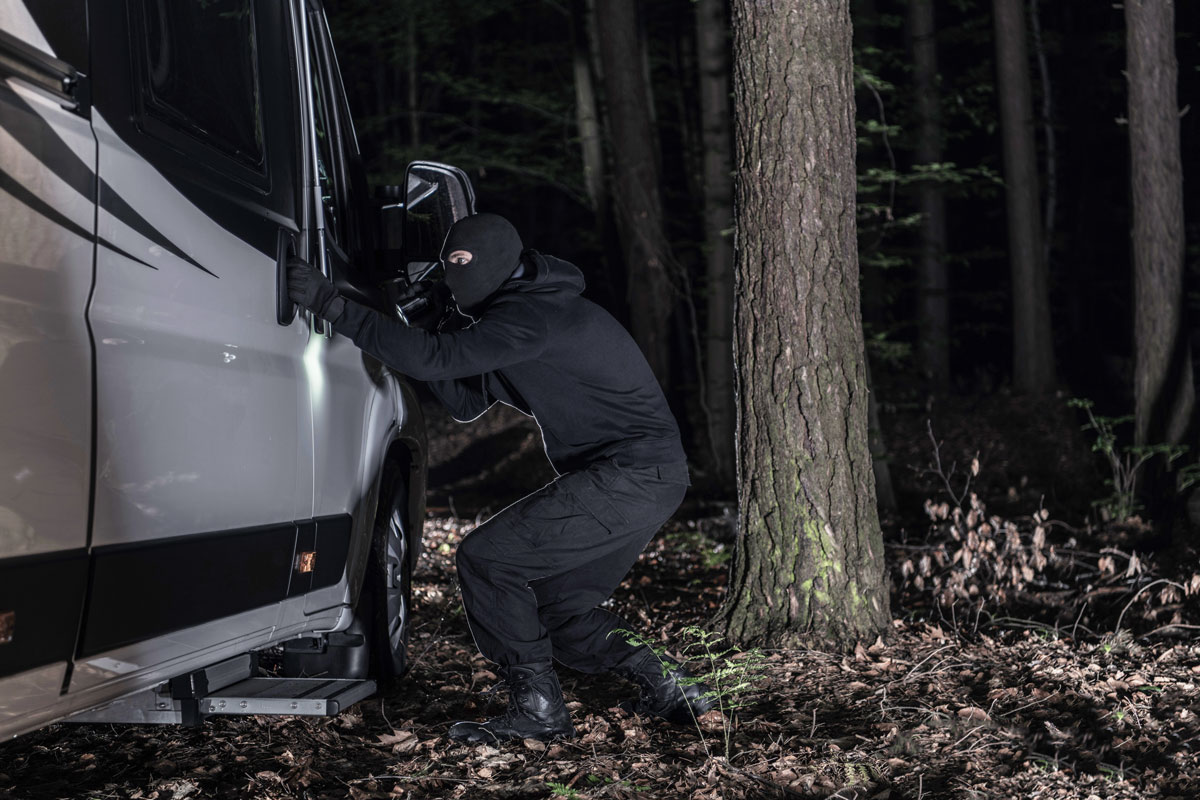
burglar breaking into an RV
Safe & Secure
Installing and upgrading a Ring alarm system in a fifth wheel
By Chris Dougherty
G

o online and you’re sure to find many people espousing their favorite alarm systems for RVs. The reason is simple: RVs are faced with the same need for security as their brick-and-mortar counterparts. Not surprisingly, the more popular systems are those designed for homes. Some are portable, while others are hard-wired into the residence — but they all have one common denominator: offering homeowners protection from “bad actors.”

We’re of the same mindset. We first installed a Ring alarm system in our house in 2020 and have been pleased with its performance, so when it came time to adding security to our fifth wheel, we first looked to Ring’s features. What cinched the deal? It has the benefit of being completely wireless — and therefore very easy to install in any RV — and comes with a number of optional sensors that can be added to the system at any time.

Living in our mobile real estate also encompasses other day-to-day hazards that we commonly protect ourselves from in our fixed-base home, including smoke and fire detection, carbon monoxide alarms, LP-gas alarms, flood detection, temperature alarms and so on. While RVs are required to have smoke-, CO- and LP-gas alarms, modern technology now allows us to enhance these standard offerings to provide more comprehensive protection and notification.
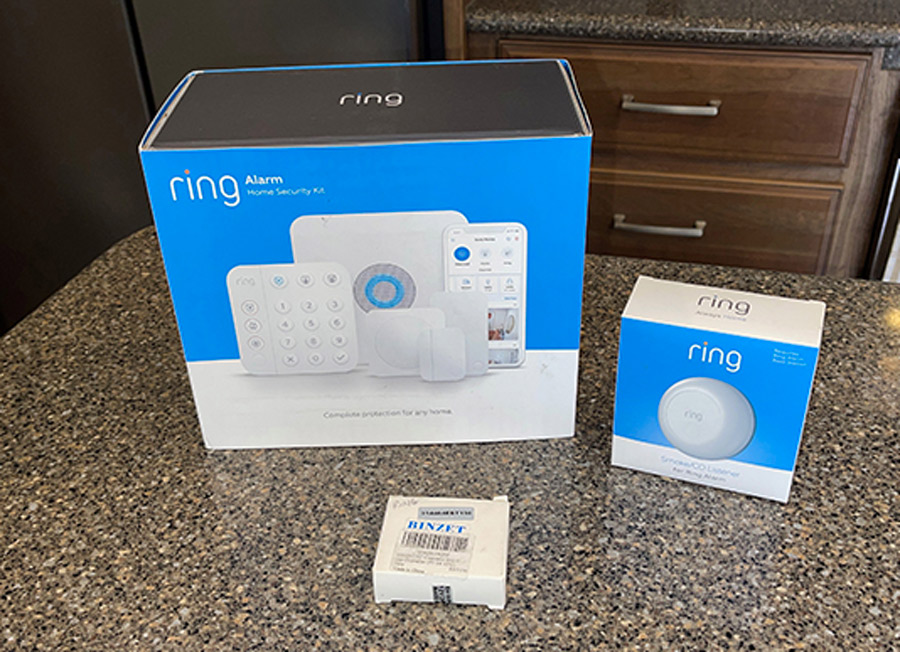
Ring Home Security Kit
For our 2015 Montana 3710FL, we initially chose the Ring Home Security Kit, one smoke detector listener and a power supply to convert the unit to 12-volt DC. We later added two more listeners for the LP-gas and CO detectors.
Ring kit
The Ring kit comes with the base station, keypad, motion detector, four door/window mag switches, a network extender (not needed in this installation), sticker and power supplies. We added the power supply converter and smoke/CO detector listener.
The Ring alarm system starts with an entry-level five-piece kit, available through the Ring website or Amazon.com, and then additional components can be added as necessary. Ring systems work on Z-Wave wireless technology (z-wave.com) and are — at least in part — compatible with most Z-Wave products on the market, depending on the type of component. Amazon’s purchase of Ring has led to the platform being fully compatible with Alexa, and the system can be purchased with an Echo Dot Alexa device for $10 (see below for a special offer from RV Enthusiast).

The kit, which reportedly protects 1,000 square feet, includes:

  • Base station: This is the communications hub for the system, which includes Wi-Fi and cellular connectivity and acts as the router for all the sensors in the system. It also has built-in 24-hour battery backup in the event of power failure. In RV-Land, connectivity for this unit is the same as with a smartphone; it should connect to an RV access point like WiFiRanger or Winegard Connect 2 or similar system. A cellular booster can help the unit maintain its own optional cellular backup, if subscribed to the Ring Protect Plus plan. It will operate off the RV’s 12-volt DC system with the addition of a Tobsun 15-watt DC-DC Converter (EA15-5).
  • Motion sensor: The single motion sensor, designed for a single room, is adequate to protect an RV interior when the unit is vacated. The motion detectors do have a pet setting, which works at home, but we haven’t tested it with a pet in the RV yet.
  • Contact sensor: Using VHB tape, the contact entry-door sensor works well with a little finessing.
  • Range extender: Larger RVs may benefit from this when basement compartments are equipped with sensors; however, we didn’t use it in this installation.
  • Keypad: Control the system and sound panic alarm at the touch of a button.

In addition to the above, we added three listening devices, placed within 24 inches of each alarm in the RV. Alternatively we could add special Ring-integrated First Alert combination smoke and CO detectors. We did not add any window sensors or compartment door sensors, although they or motion detectors can be put in each of those areas for additional protection.
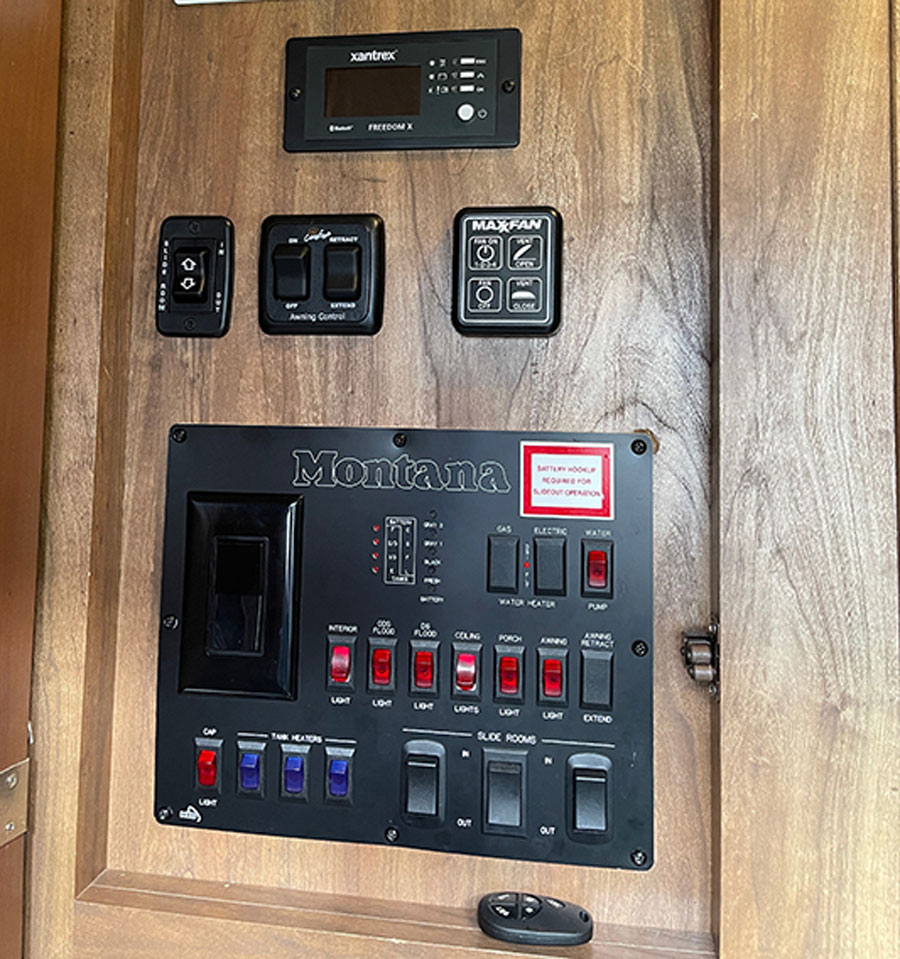
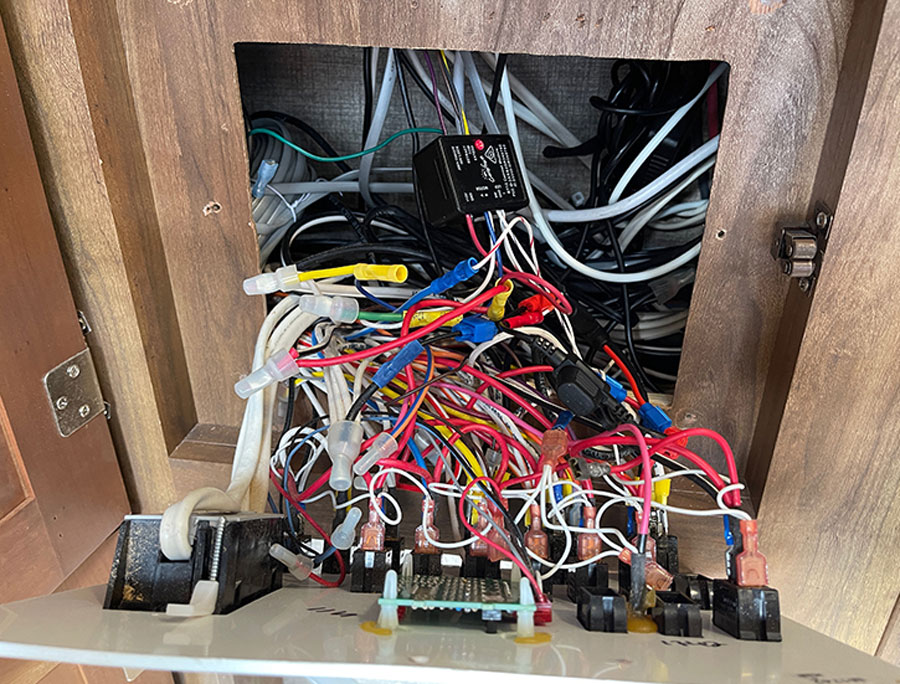
Installation of the base unit
Installation of the base unit is very simple and fit in the cabinet with the switch panels. This makes sourcing 12-volt DC power easy, muffles the siren slightly, and keeps it out of sight.
main control center
The main control center is a bit confusing. We had previously installed electronics and solar in this unit, so we knew which circuits we wanted to hit to run the Ring system.
Ring’s security cameras can also be added, if desired, including doorbell cams. The doorbell cams have the option of a solar charger mounting base to keep the battery up. Some RVers swear by their use, while others have gotten frustrated by the doorbell cam’s sensitivity — default settings will oftentimes pick up a car driving by a user’s brick-and-mortar house. If you opt for one, be sure to dial it down; sensitivity levels can be adjusted down to as little as five feet. Also, the doorbell cams’ auto-sense features can get annoying while on the road. Granted, the mobile alerts can be snoozed through the app, but the constant activity will drain the battery on the doorbell cam quickly — and the optional solar charger backplate doesn’t charge the unit very well in our residential experience.

If you don’t have the need to record video or have professional monitoring (which isn’t workable in a mobile RV environment anyway) there is no additional cost. You will be able to receive notifications from your system and access it remotely with the app or website for free. The Ring subscription, however, provides a number of good benefits — including 60 days of recorded video history for all cameras with the ability to share the video, extended warranties for all devices, and cellular backup if your main Wi-Fi connection is lost. You’ll also get rich notifications with photo preview of the alert on your smart device without having to open the app. Campsite cams are popular with RVers and Ring’s portfolio of battery or hardwired cams with lighting provide plenty of choices. The Plus subscription mentioned here includes 24/7 professional monitoring (again, not for RVs and may be restricted by local municipalities) for $10/month or $100/year. Consider it cheap protection.

There are numerous other add-ons available, many of which are battery operated, including a remote siren (your neighbors will love that but it will dissuade criminals), door chimes, smart lighting (solar) for your campsite, flood and freeze sensors (great to put in plumbing bays and other sensitive areas), remote panic buttons, deadbolt locks with keypads that allow remote access (via the app), solar step lights and a bunch of other options. It also integrates with Alexa, including Alexa Guard, which can alert in the event of glass breaking or other sounds of distress, according to the company.
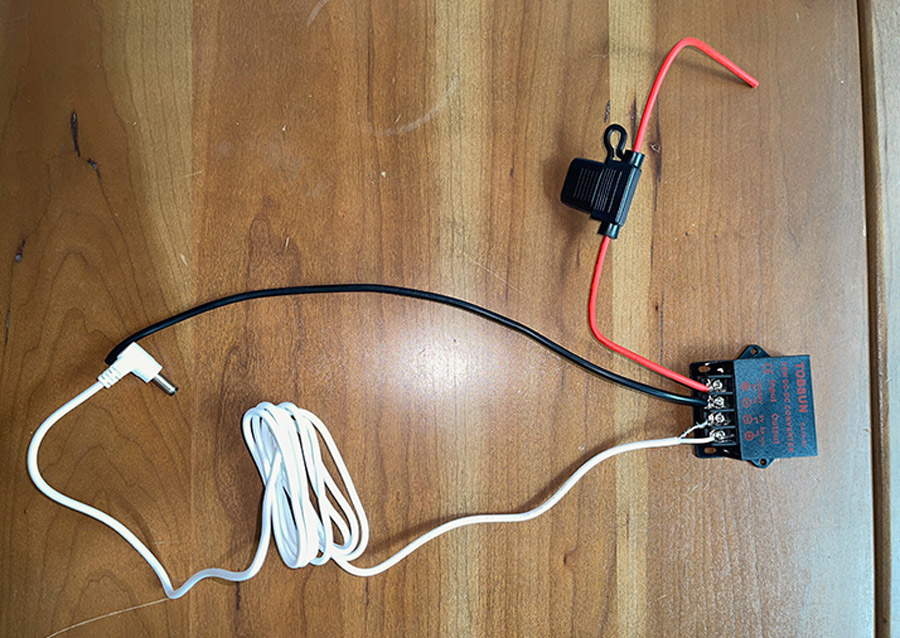
surgery on the power supply for the main unit
We performed surgery on the power supply for the main unit so we could connect it to the Tobsun 15-watt DC-DC Converter (EA15-5) https://amzn.to/3zlpNr4. Alternatively, you could source the proper plug and make your own. We left enough cable to reconnect the powerpack, if needed later. We added an inline ATC fuse holder and 5-amp fuse.
design of the converter
The design of the converter prohibited using solderless terminals. We were able to make solid connections here, tinning the wire ends and later securing them, and taped off the converter and wires.
Heavy-duty hook-and-loop fastener
Heavy-duty hook-and-loop fastener was applied to the back of the main unit so it could be easily removed to access wiring, reset and Bluetooth buttons and the internal backup battery.
A common question is: Will the system suffer from interference from close neighbors in RV parks and while traveling around the country? Not only will there not be interference, according to the company, but the system can benefit from the Amazon Sidewalk Network interface which, when activated by you and other Ring customers, allow Ring systems to support each other and still function if, say, your internet connection should fail and theirs is still active. Since all the connected devices are digitally encoded and protected, the company says only you can see what is happening in your system. With the system connected to the Internet through our Winegard Connect 2.0 and Verizon Wireless, I have full control of the system from anywhere — the fifth wheel is in storage 20 miles from home during the winter and the system works great. The Connect 2.0 shares our Verizon data plan for an additional $10/month.

Complete 5-piece kits start at $199 and go up from there. System components can be bought ala carte if desired.

SPECIAL OFFER: If you buy the 5-piece system, the Echo Dot is FREE on Amazon. For details: https://amzn.to/2X3602m

Ring Your Tow or Towed Vehicle
forthcoming Ring Car Alarm
The forthcoming Ring Car Alarm will send an alert to the Ring app when it detects an event — be it a break-in or bump — or an attempt to open a door. Operators can check the last-known location and trigger a built-in siren.
Ring has announced a new security line designed for cars and trucks that should be released later in 2021, according to the company.

Ring Car Alarm is a module that plugs into the vehicle’s OBD-II port and uses the vehicle’s computer and sensors to detect motion and attempted thefts, when connected to Wi-Fi or Amazon’s Sidewalk network sharing service. When at home (RV in this case) it links to your other compatible Ring devices to increase effect, such as turning on lights and recording video in the event of an alarm activation. Of course, you’ll be notified via the Ring app.

The device can work with most cars and small trucks built after 1996 that have an OBD-II port. Most new vehicles have sensors that can work with the system, but not all of them. Class A gassers and some cutaway chassis won’t work with the system and diesel chassis motorhomes also may not have connectivity, so you should check the product against your own chassis or tow vehicle to make sure it is compatible.

Ring Car Connect similarly ties your vehicle’s own system of cameras into your Ring account via Wi-Fi or, optionally, LTE service. Ring Car Connect will be rolled out in upcoming vehicles but is currently available in some Tesla models.

Finally, Ring Car Cam is a dual HD camera setup installed inside your vehicle and can record the bumps, break ins and so on like the Car Alarm system. Like their other cams, you can see a live image, record video, see the vehicle location and sound the siren all from your Ring app. Further, it has two features for use on the road. First, the Emergency Crash Assist feature automatically calls first responders for assistance. Second, if you’re getting pulled over, the Traffic Stop feature, along with Alexa, starts the cameras, recording the interaction and can notify others you want advised of your status.

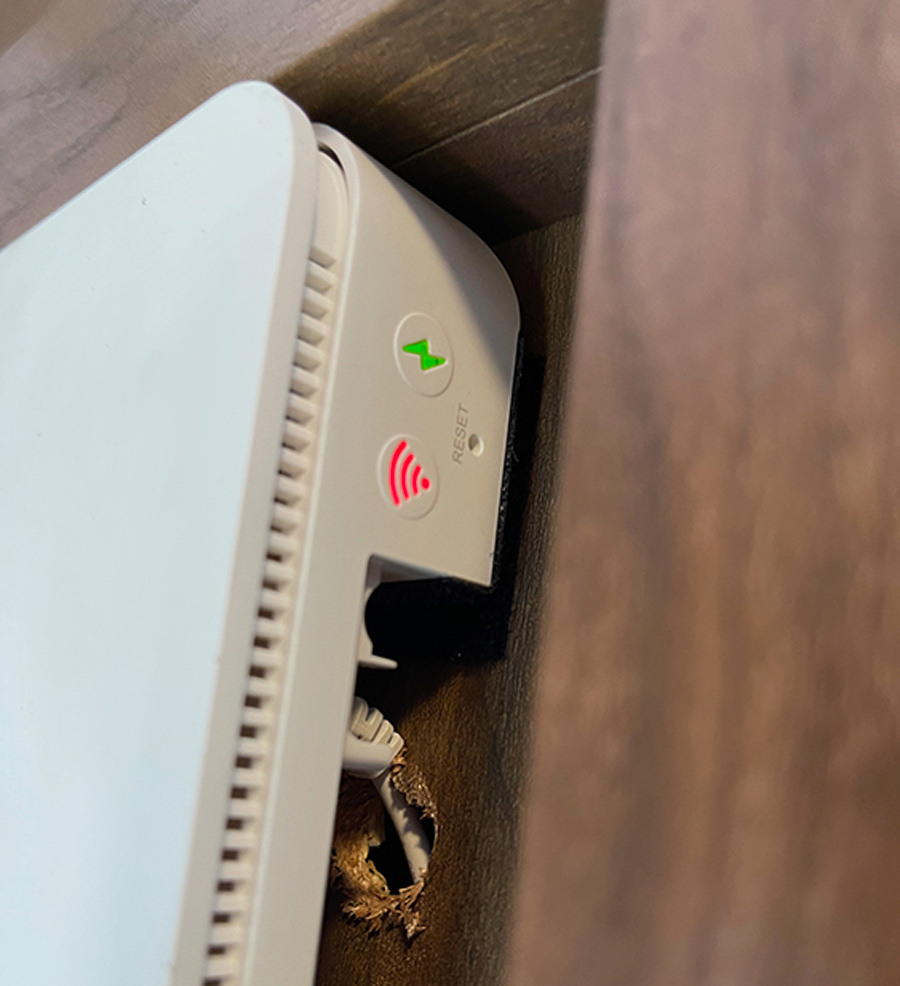
hole was drilled beneath where the cable connects
unit was mounted to the panel
A hole was drilled beneath where the cable connects and main unit was mounted to the panel. The unit was positioned to the left in order to access the buttons and get a visual on the Wi-Fi and power indicators without removing the unit from the wall.
entire system is set up automatically in the iOS or Android app
The entire system is set up automatically in the iOS or Android app. It is super simple and all the kit components are already associated with the app, so pull the tab and it starts connecting. Others can just scan the QR code on their device. Note that you will have to enter an address, which was the same for our other system. That is OK — but it will show two systems under your city name. Simply pick the one for your RVs system and change it to “RV” and you’re in business. While this is simplified, just follow the step-by-step instructions in the app, which even have videos. Later, each sensor setting and behavior can be customized in the app.
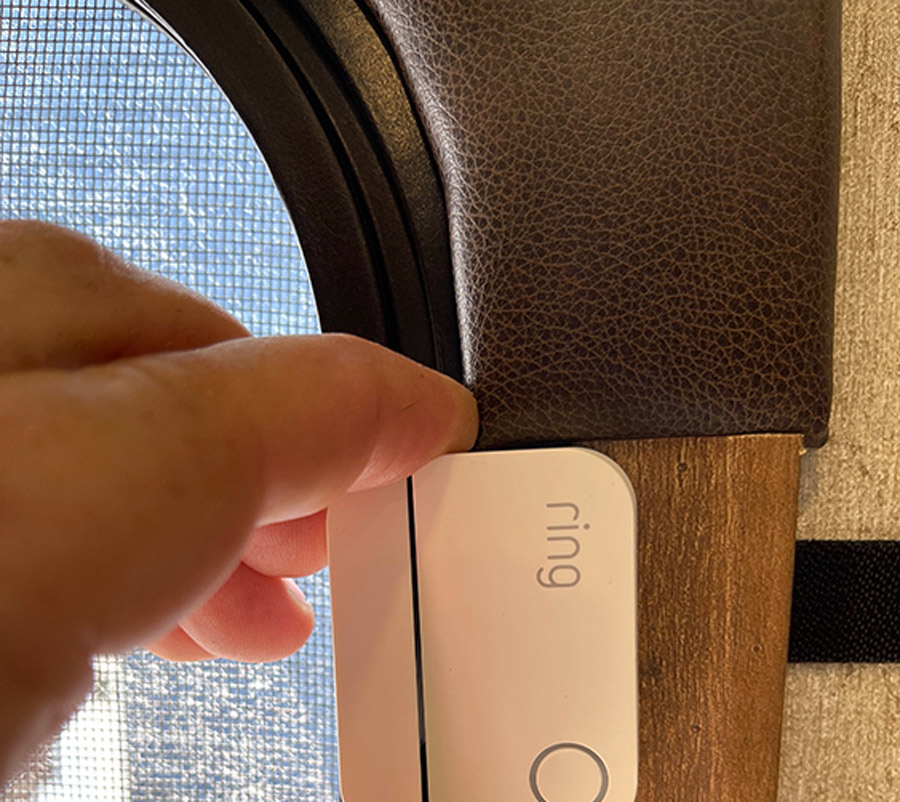
Two door sensors, one on each entry door, were installed
sensor
Two door sensors, one on each entry door, were installed. Others can be added to compartment hatches as needed. A recess in the door trim was cut and stained to install the mag switches. The sensors attach with double-sided tape, and the magnet fit the screen door perfectly. Of course, there are many designs of RV doors, and you might have to get more creative.
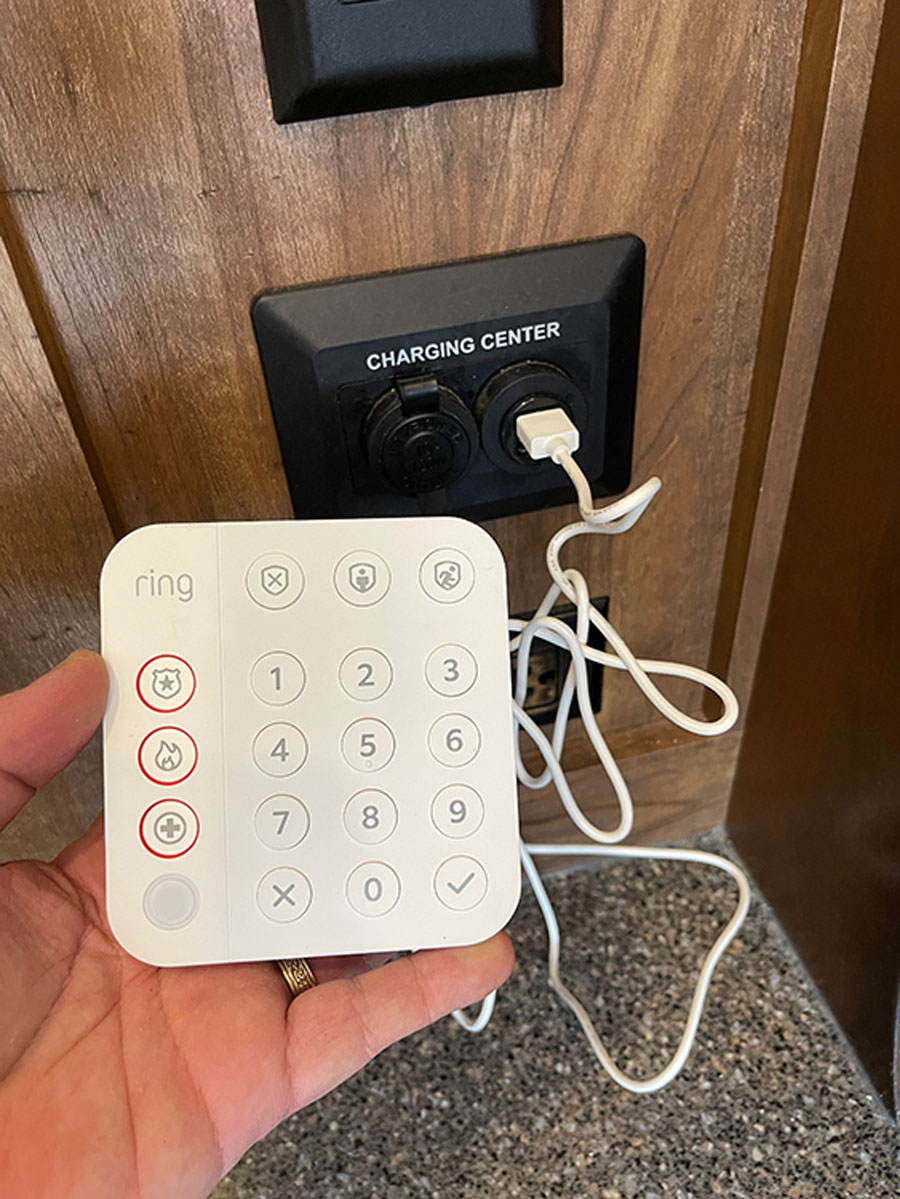
keypad
The keypad is activated when plugged into its adaptor or a USB port, which also charges it. It comes with a slide-in wall mount, which we placed next to the main entry door.
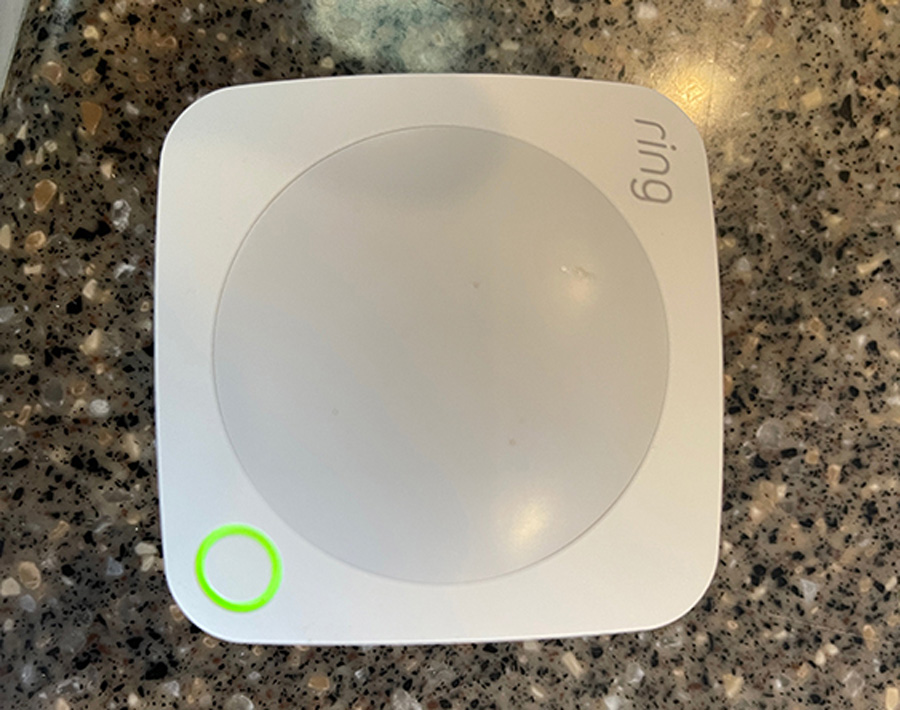
motion detector
Mounting the motion detector will vary depending on the RV; for this project it was mounted on the end molding on one of the forward living room slides, which provides visual access throughout the RV. Again, double-sided tape is used to attach it. Because an RV is a tight space, usually only one will be needed, but others can be added, say, to a garage in a toy hauler or in large compartments in lieu of mag switches on every door. These can be adjusted in the app to ignore pets. This feature works fine in a home but was not tested for this installation.
detector
The detector listener must be mounted within six inches of the detector, which explains the need for three in this RV. A special Z-Wave combination detector is available, which would eliminate the need for one of them in many applications.
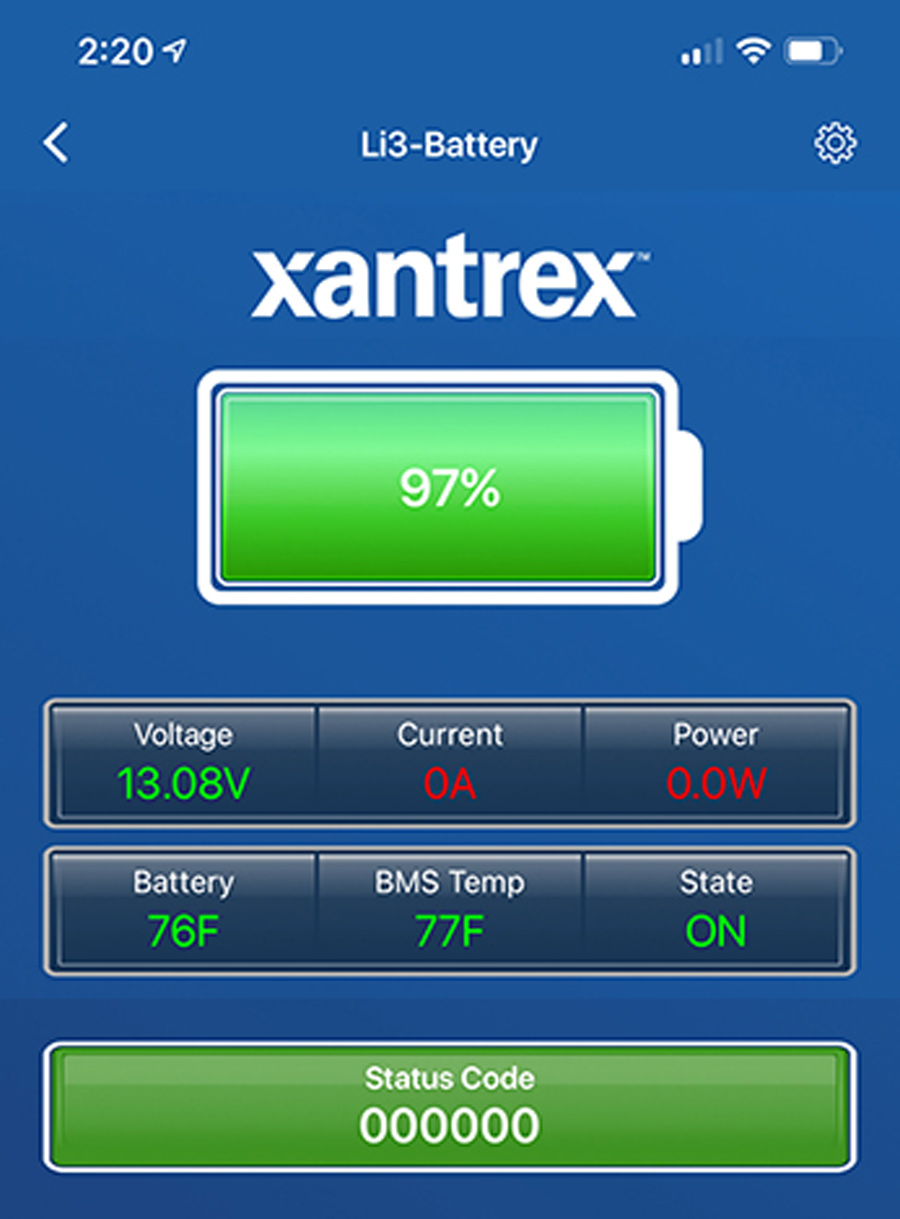
Xantrex battery app
What does this Xantrex battery app have to do with this article? The Ring system was connected to the Internet via a Winegard Connect 2.0 with Verizon wireless. The solar panels were temporarily disconnected to monitor the power draw using the Ring system and the Winegard Connect 2.0. The fifth wheel has a bank of two Xantrex lithium batteries that record, among other things, the draw on the system. Less than a one amp draw from the bank was noted. The draw, along with other loads, will be monitored over an extended time connected with a DC amp clamp to establish some baseline data. So far, it looks like the 350 watts of solar panels and lithium batteries will keep this unit protected even while in storage.