

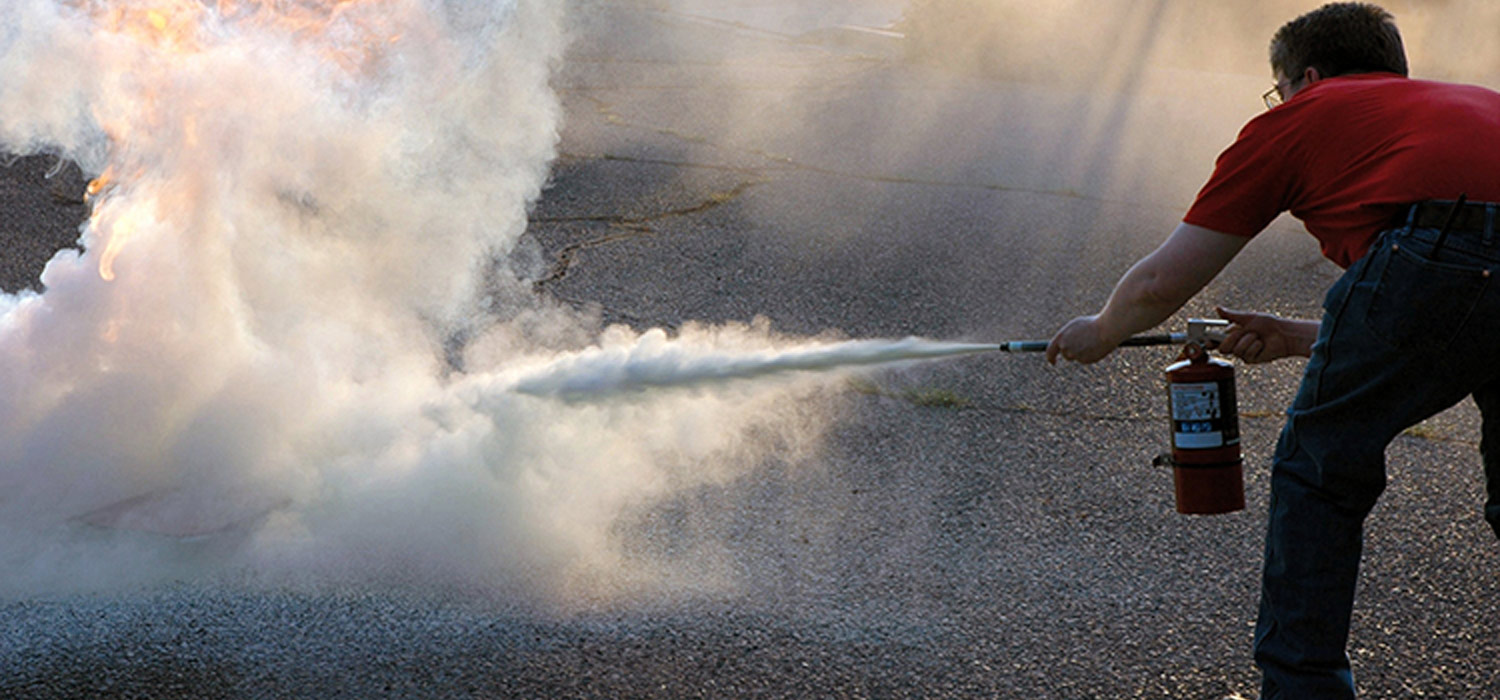
o one likes to think about the possibility of fire in their RV, but accidents happen — and in the confines of an RV, a small fire can mean big danger in just seconds. A fire extinguisher should always be on hand, but the question is: Do you have the right one, and are you prepared to use it?
Know, too, that fire extinguishers are not like fine wine — they do not get better with age. You must inspect your fire extinguisher every month and it’s recommended that a tag with the inspection date is attached to each extinguisher (you’d be surprised how fast a month goes by). Even if the pressure has not leaked down, after a few years dry chemical compound may pack up to the point where the fire extinguisher will not perform when needed.
Every year we all hear and read of RVs that were damaged or destroyed by fire. The damage occurred because the occupants were unable to stop the fire from spreading. Perhaps they were not in or around the unit when the blaze began, or perhaps an explosion forced them to flee to safety. However, if you are in or sitting outside your RV when a fire starts, there are ways to safely fight the fire and perhaps save your RV. I remember when I was in grade school we would have fire drills. Like those drills in school and in offices, a surprise drill can be exercised to practice getting everyone out of the RV, operating the emergency exit window, unclasping the fire extinguisher and determining a designated area of where to meet. The fire department should be notified as soon as a fire is discovered, of course.
Frequently, though, an RV can be saved and/or damage minimized if you have access to the proper fire fighting equipment — and if you possess the knowledge and strength to use that equipment while waiting for the fire department to arrive. Just remember: the most important goal in fire fighting is the protection of human life. No matter how much you value your RV, do not endanger your safety or that of others if you are ever confronted with a fire. You can always get another RV, but you can’t get another you.
Although RVs come equipped with fire extinguishers, some owners either replace or supplement the original fire extinguishers with one or more additional units. But if the new fire extinguishers are not of the correct type or size, they can result in a false sense of security. You may not know it, but the NFPA 1192 standards for the size and type of fire extinguishers required in RVs have changed. The old standard stated that towables were to be equipped with a 5BC fire extinguisher and motorhomes were were to be equipped with a 10BC extinguisher — but now all RVs should be equipped with a 1A-10BC extinguisher. All RVs should be equipped with at least one 1A-10BC extinguisher, mounted within 24 inches of the main entry/exit door. Adding extinguishers to other areas, including sleeping areas, the galley, outside kitchen and an outside storage compartment should be considered.
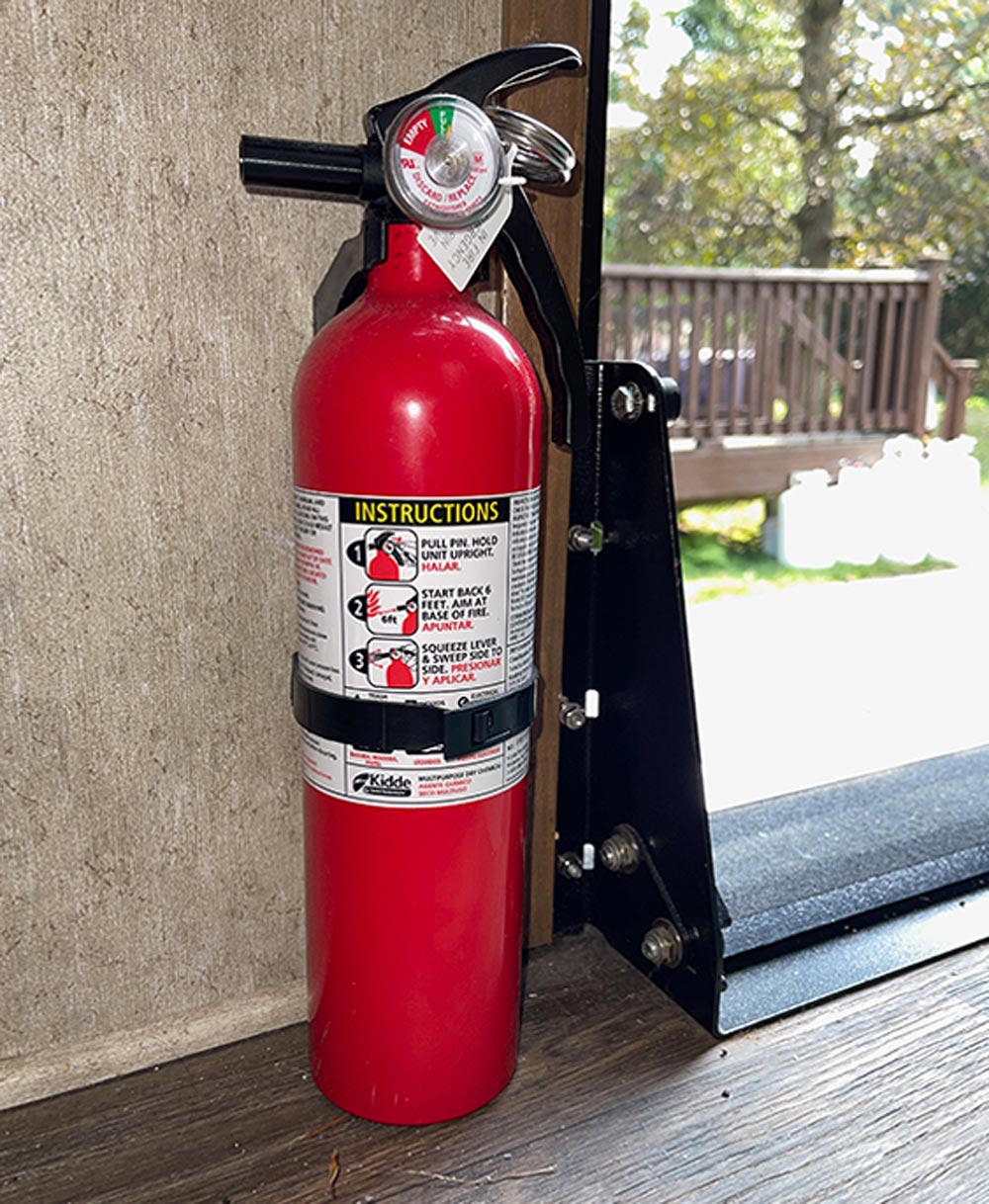
Fire Extinguisher Size Ratings
You will come across fire extinguishers with different nomenclature on them, for example, one labeled 2A:10B:C. The numbers indicate the size rating of each extinguishing agent. Here’s how to decipher them:
- The Class A size rating represents the water equivalency. Each number represents 1 ¼ gallons of water. For instance, 2A means the extinguisher is just as effective as 2 ½ gallons of water.
- The Class B size rating indicates the square footage the extinguisher can cover. 10B means that as long as you sweep the nozzle side to side, there is enough extinguishing agent inside the canister to provide 10 square feet of coverage.
- There is no size rating for Class C. A Class C electrical fire is nothing more than a Class A or Class B fire with energized components requiring a non-conductive extinguishing medium. To effectively fight Class C fires, choose fire extinguishers based on the Class A and Class B size ratings.

Use and Maintenance
As with any other safety equipment, fire extinguishers require periodic inspections and maintenance. Examine the fire extinguishers regularly to ensure that they have not lost pressure. Visually inspect them to confirm that they are not physically damaged and that the nozzles are not plugged by insects or dirt. A dry chemical fire extinguisher should be turned upside down periodically and shaken, thereby preventing the extinguishing agent inside to pack at the bottom, which could render it useless. To determine whether the pressure remains satisfactory, check the pressure gauge or test pin. Do not “test” the unit by partially discharging it. This will cause most dry chemical units to lose pressure completely, thus requiring recharging or replacement. If you discharge any fire extinguisher, even momentarily, you need to have it professionally examined immediately — or just replace it. Yes, larger units are expensive and well worth maintaining, but most RVers tend to equip their units with several smaller extinguishers which can be purchased for about $20 each.
Finally, a fire extinguisher is of little or no help if it is not used properly. This means that all potential users should know how to operate it. Follow these steps to make sure you’re ready to use your extinguisher:
- Periodically review the instructions printed on the fire extinguisher. You will not have time to read these instructions when you need to use them.
- Be sure you can manipulate the device. Although large units are available, it’s useless if it is too heavy to be maneuvered into place and utilized. Most RVers, however, tend to locate smaller extinguishers in various locations inside their units with perhaps a larger 10-pound bottle kept in outside storage.
- Keep it accessible. A fire extinguisher is useless if you store it out of reach in a closet or cupboard and consequently cannot grab it quickly.
- Consider purchasing an extra extinguisher to be used as a training tool that can be used to practice extinguishing small fires that have been started in a safe location, such as a fire pit. The knowledge gained from this experience will be far greater than the purchase price of the fire extinguisher. Be sure to follow all fire safety rules during this test, and take proper precautions to prevent the fire from spreading if the portable unit is unable to extinguish it.

- Keep it accessible. A fire extinguisher is useless if you store it out of reach in a closet or cupboard and consequently cannot grab it quickly.
- Consider purchasing an extra extinguisher to be used as a training tool that can be used to practice extinguishing small fires that have been started in a safe location, such as a fire pit. The knowledge gained from this experience will be far greater than the purchase price of the fire extinguisher. Be sure to follow all fire safety rules during this test, and take proper precautions to prevent the fire from spreading if the portable unit is unable to extinguish it.
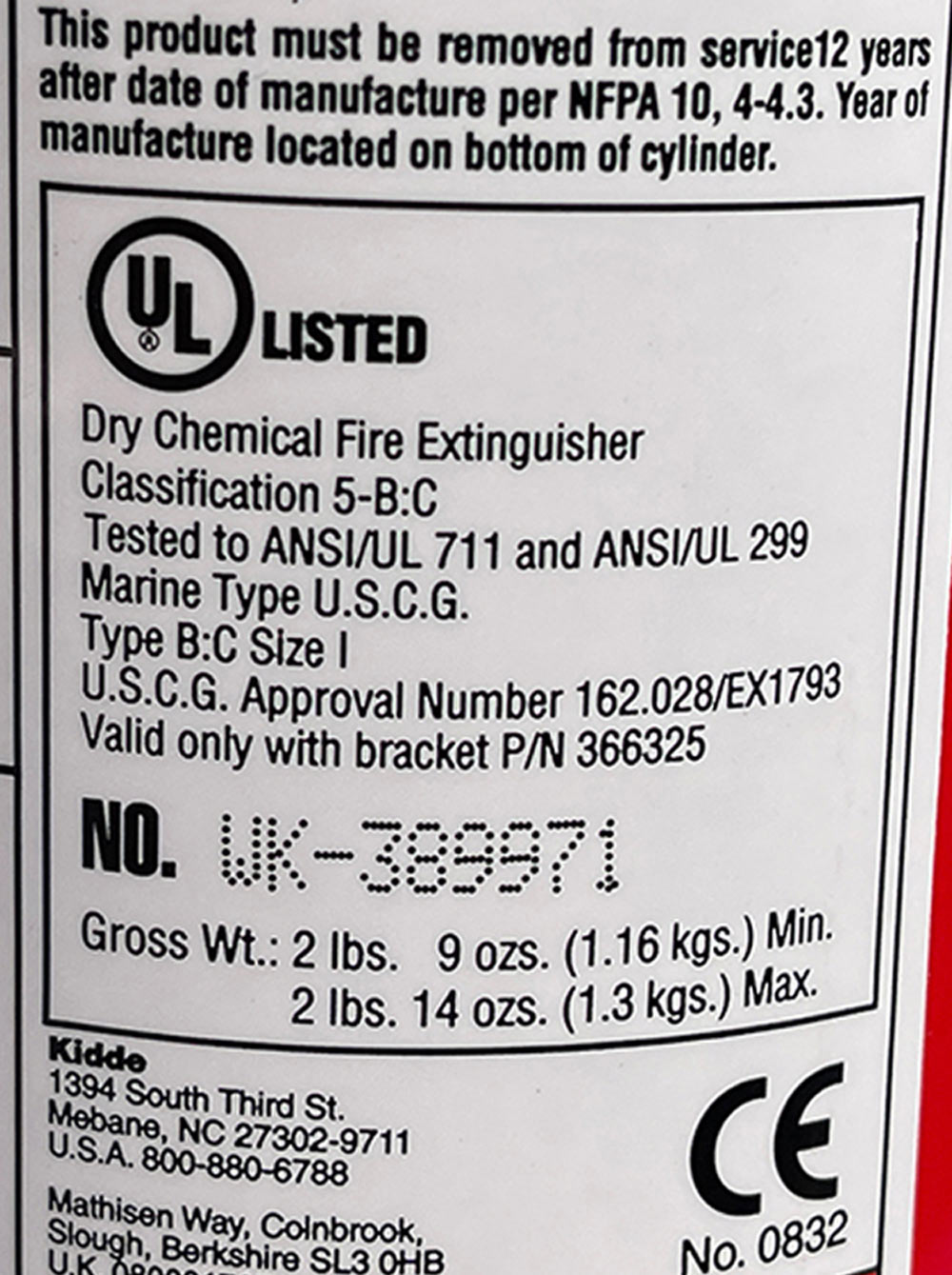
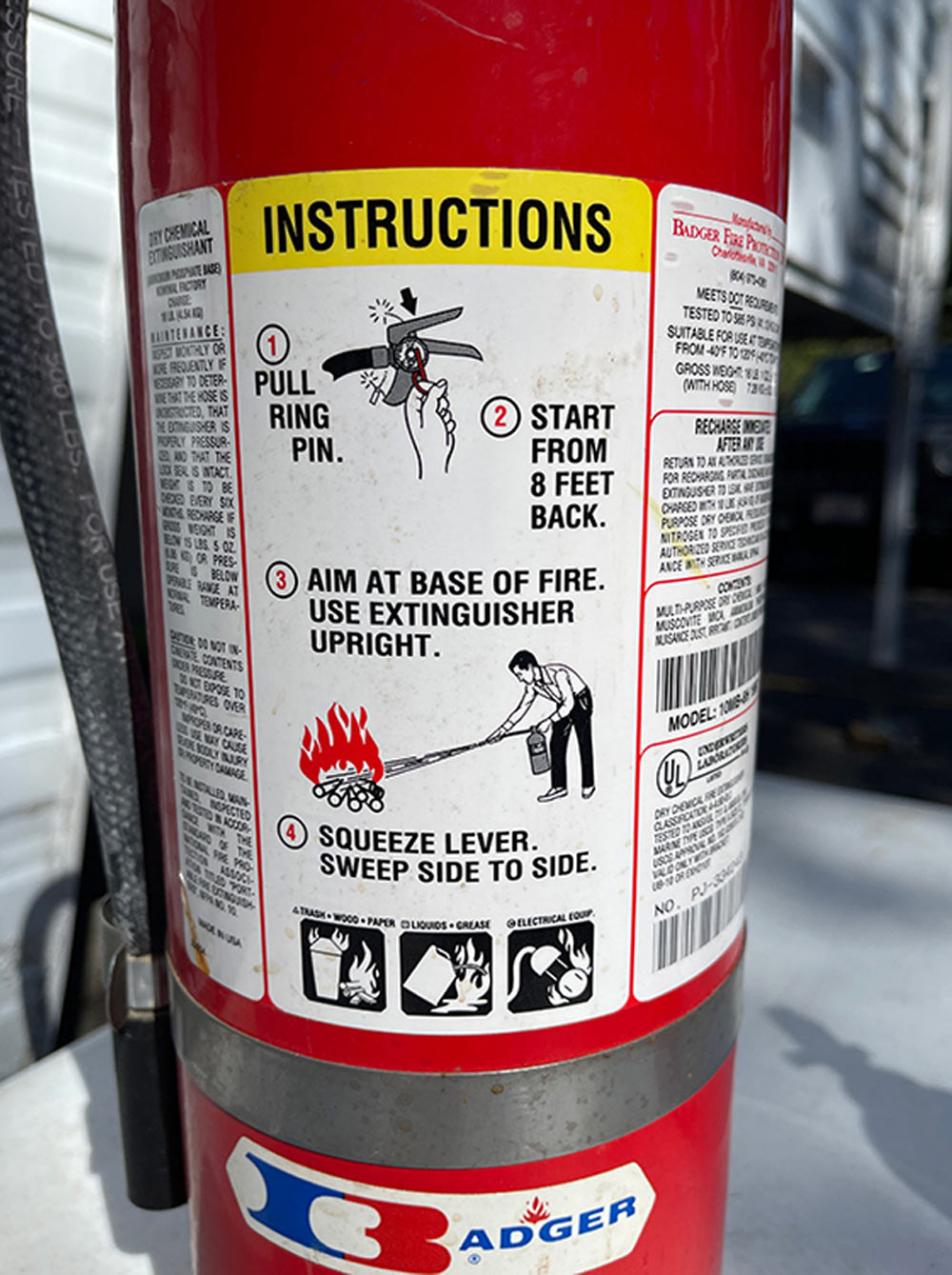

Most fire extinguishers have a gauge to show condition. The extinguisher should be inspected annually, at a minimum, to ensure condition and charge. If the pin seal is broken it must be recharged. Sometimes extinguishers can lose charge while just sitting. This one is low on charge and out of service awaiting repair.
Don’t allow your family to be unpro- tected, or even under-protected, at home or in your RV. Fire extinguishers are like insurance policies — we buy them and then hope that we never need to use them.

- Smoke Detector: RVs will be equipped from the factory with a single ionization-type smoke detector, powered by a 9-volt battery in most cases. While these work fine, there are upgraded models available that have features like dual sense (photoelectric and ionization), a silence button for nuisance (burnt toast) alarms, 10-year batteries, and Z-wave connectability for use with a Ring alarm system (See “Security Guard” elsewhere in this issue). Smoke detectors should be tested on a weekly basis while the RV is in use. Consider using smoke detector testing spray, available online and at most home-improvement stores, in lieu of the test button to verify operation. Detectors must be replaced 10 years after manufacturer date.
- CO Detector: Fuel-burning appliances and equipment have exhaust that produces carbon monoxide, a colorless, odorless gas that is deadly if inhaled over time. Portable RV generators also are known to create CO problems in RVs when used improperly by pointing the exhaust into a neighbor’s RV. CO detectors must be replaced after 7-10 years in operation, or as the manufacturer directs. After 2009, all CO detectors have an end of life alert.
- LP-gas Detector: RVs that are equipped with propane systems will have an LP-gas detector that is wired directly into the RV’s 12-volt DC electrical system. Generally, LP-gas detectors will last 5-7 years, depending on the manufacturer. A date will be stamped on the back of the unit that is either the expiration or manufacture date (will be marked as such). Check the detector’s manual for details of the replacement schedule. Most newer models will have an end of life warning. Some LP-gas detectors (in motor-homes) will also have an electronic valve connected to them that will cut off the gas supply when the detector activates.

