

Eye

he first thing someone asks when you tell them you’ve been in an accident is, “Are you okay?” The second is usually, “Were there any witnesses?”
In today’s litigious society, that’s an important detail. If no one saw what happened (or at least no one who will come forward) it’s your word against theirs. Certainly, there are still some honest people out there who recognize an accident as just that — but there are others who see property damage as an opportunity to dig deep into your pockets and those of your insurance company.

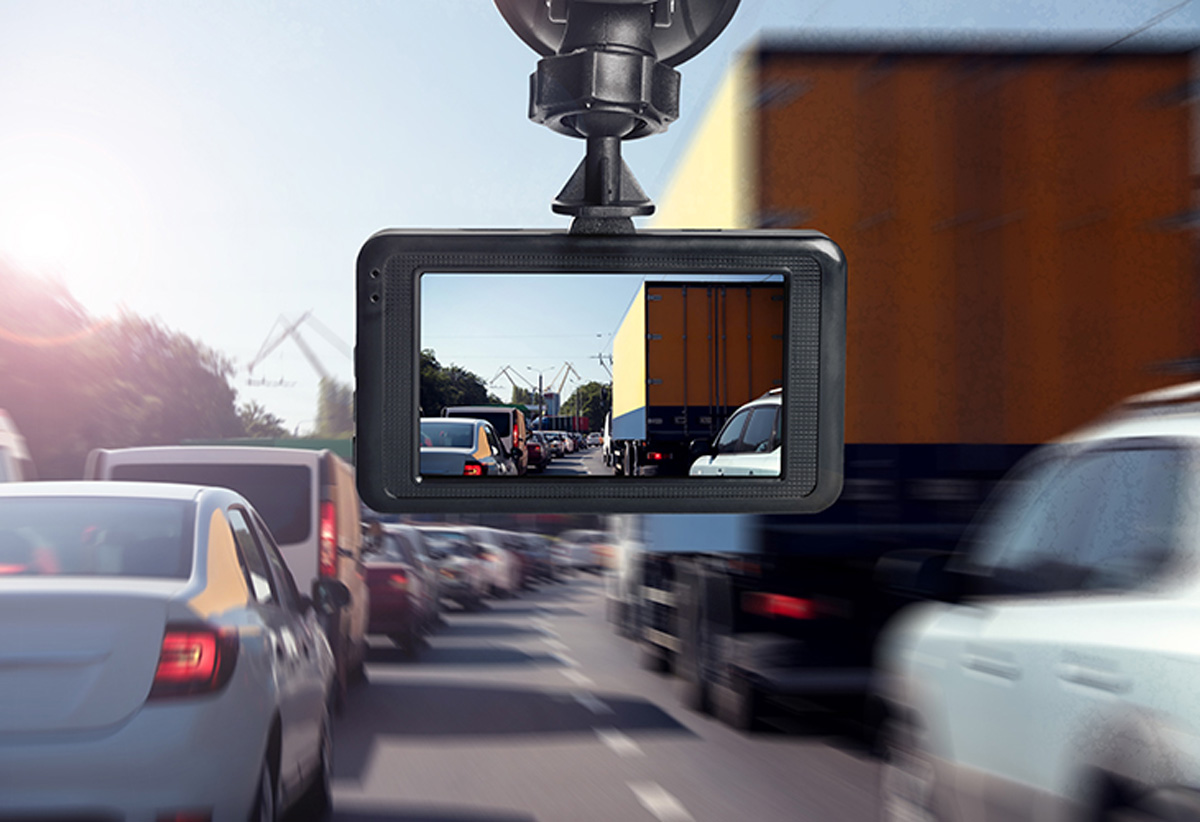
A dash cam is a great way to protect yourself — especially when driving or towing an RV, vehicles which, like semi-tractor trailers, often tend to be on the losing end as auto drivers carve through traffic lanes. Attached discreetly to the top of your tow vehicle or motorhome windshield, these small cameras act as ever-vigilant eyewitnesses to your travels, recording high-resolution video in a loop that automatically stops on impact, capturing the accident event. Most dash cams also record at night, so even if the offender is a wayward deer or falling tree branch, you can provide all the details. Dash cams can also be a useful tool for bearing witness to someone else’s driving mishaps, hit-and-runs and more. Just search “dash cam accidents” on YouTube, and you’ll see what we mean.
The decision to purchase a dash cam is the easy part — deciding on which one is what can be daunting. There are dozens of dash cam manufacturers on the market, each with several models to choose from. To help you narrow your search, we’ll discuss dash cam features and benefits in general, followed by 10 solid dash cam choices. These should be considered a “jumping off” point for your dash cam purchase, not necessarily recommendations. Also, keep in mind that many of the companies featured here have several dash cam models to choose from, so if you see one that interests you, be sure to visit that company’s website. Oftentimes the flagship (or newest) cam will get all the accolades, but the company may offer other, lower-priced models that may suit you just fine.

Like many other types of electronics, dash cams range from the basic to the high-tech. The more feature-rich they are, the more expensive they become. The question is, what features do you really need and what others can you do without — or simply don’t fit within your requirements?
Resolution
Possibly the first thing you’ll want to consider is resolution, or the clarity of the image recorded. All dash cams, even the least expensive models, shoot in 720P or 1080P, which is more than enough resolution to capture the essentials: What happened and the license plate of the offender (provided it is close enough to see). However, there are now dash cams on the market that record in higher resolution — all the way up to 4K Ultra HD, which is cinematic-image quality. This may be a consideration if you want to be sure you can see detail almost to the granular level, like license plates, road signs, lane markings, etc. Recording in 4K provides improved contrast and color range compared to HD footage for unbeatable recording quality. The only thing to consider with a 4K camera is that you will need a larger memory card and the file sizes will be considerably larger than those of a 720P or 1080P camera.
To Screen or not to Screen
The next thing to consider is the screen…or not. Most full-featured dashcams have a screen size of about 3 inches and touchscreen controls for various features. However, some drivers find the screen distracting, especially when it is displaying the road in front of you. Some only display this in the beginning so you know the recording is live, then turn off; others continue to display, but give you the option to turn it off if desired. Models with no display will only have an indicator light and connect via Bluetooth to your smart phone if you want to view, manage or share a recording (some screen models also have this feature). The advantage of these screenless models, however, is that they’re smaller, less expensive (apples to apples) and more discreet, which may be of interest to you if, for example, you plan to leave the camera in the vehicle and don’t want it to be a target for theft.
GPS
Another feature you’ll see in many dash cam offerings is GPS. GPS helps record important data like date, time, direction of travel, location and how fast you were driving prior to impact. None of this is good if you were actually breaking the law, but if you weren’t, the GPS feature will prove your actual location and speed, while the camera footage will prove that you were driving sensibly. GPS isn’t necessarily a must-have feature, but most dash cameras have it now.


Installation
How does the dash cam you’re considering mount? Many models use a suction cup mount and get their power from a 12-volt DC accessory receptacle. These may seem like the easiest to install, but keep in mind it will still take some time to neatly route the cord from the dash cam at the top of your windshield down to where the power outet is located. Some dash cams have their own mounting systems that do not incorporate suction cups, and many offerings have “hard wire kits” that allow you to wire the dash cam directly to the vehicle battery, leaving the 12-volt DC outlet open for other accessories.
The four features above are what we think should be your primary considerations based on our personal experiences with dash cams. But as we mentioned earlier, dash cams are becoming more advanced and feature-rich with every passing year, so it’s good to know what’s available to suit your own needs. Here are a few of the latest features worth contemplating when shopping for a dash cam:
- Front and rear: Some dash cams can record what’s happening in front and behind you, either with a dual-lens setup or with optional cameras that can be added to the main unit at the time of purchase or afterward. With a truck and trailer application, you may elect to add a rearview camera on your tow vehicle, but when you’re towing a trailer or dinghy vehicle, a cable long enough to reach the back of your rig won’t be available. You could rig up your own, but the manufacturers we spoke with said that image quality can suffer if the cable is too long. Instead, it might make more sense to purchase a second, less-expensive dash cam that could go inside your trailer or dinghy vehicle and record the action behind you.
- Parking monitor: Wouldn’t you like to know what happens to your tow vehicle, motorhome or trailer when you’re not there to protect it? Who, for example, backed into it while parallel parking and didn’t leave a note? With a parking monitor feature, you might just find out. If your vehicle is bumped, many dash cams on the market can start recording to capture the perpetrator in action, but this feature usually requires a hard wire kit that allows the camera to draw juice even when the ignition isn’t on (although some units have internal batteries or optional external batteries that will allow them to record without tapping into your vehicle battery). Don’t worry; hard wire kits are designed with a battery saving feature that turns off the power supply a short time after the incident.
- Audio recording: Some dash cams also allow you to record audio, which could be useful after an incident, during a traffic stop, or when encountering an aggressive driver. Keep in mind, however, that audio isn’t always a good thing — one dash cam reviewer on Amazon commented that his dash cam recorded the argument he and his wife had after an accident, and it was played in all of its glory in court. If you do get audio, make sure it can also be switched off.
- Additional features: Some dash cams also offer a number of features that, frankly, have little to do with being a dash cam but can nonetheless be very handy for some drivers. These include driver assist aids (like lane departure warning), Amazon Echo (Alexa) integration and more. These all pile on to the price tag, however, so think about what features you can/will actually use rather than being swayed by a multitude of cool features that may never be taken advantage of.

One of the least-expensive dash cams on the market, the Apeman C450A records in full 1080P resolution and features a 170-degree super wide field of view, built-in G-sensor and infrared night vision. It can also be hardwired to take advantage of the 24-hour parking monitor mode. The company also offers several other models, including the C860, with both front and rear-facing lenses. The C450A retails for $39.99. apemans.com

The DR750X-2CH is the only dashcam bundle we found designed specifically for heavy vehicles, which makes it a perfect option for motorhomes and trucks towing large fifth wheel trailers. A waterproof infrared rear camera connects to the front unit via a 49-foot, waterproof coaxial video cable, with an option for a 65-foot cable. The system shoots in full 1080P at 60 fps, and rear at 30 fps. Like dash cams designed for automobiles, this system incorporates a lot of useful features, like Intelligent Parking Mode (which is hardwired into the fuse panel or an available battery pack), Sony STARVIS image sensor for improved detail day and night and built-in impact and motion detection. GPS-enabled, the DR750X-2CH also features Wi-Fi so you can connect to the unit with a smart phone or tablet; LTE connectivity is optional with an available module. The free Blackvue app, meanwhile, allows you to change settings and review videos, sorted by time and type (normal, event, parking). And with the Blackvue app connected via Wi-Fi to your dashcam, you can retrieve videos on the spot. MSRP: $499-$659.99. blackvue.com
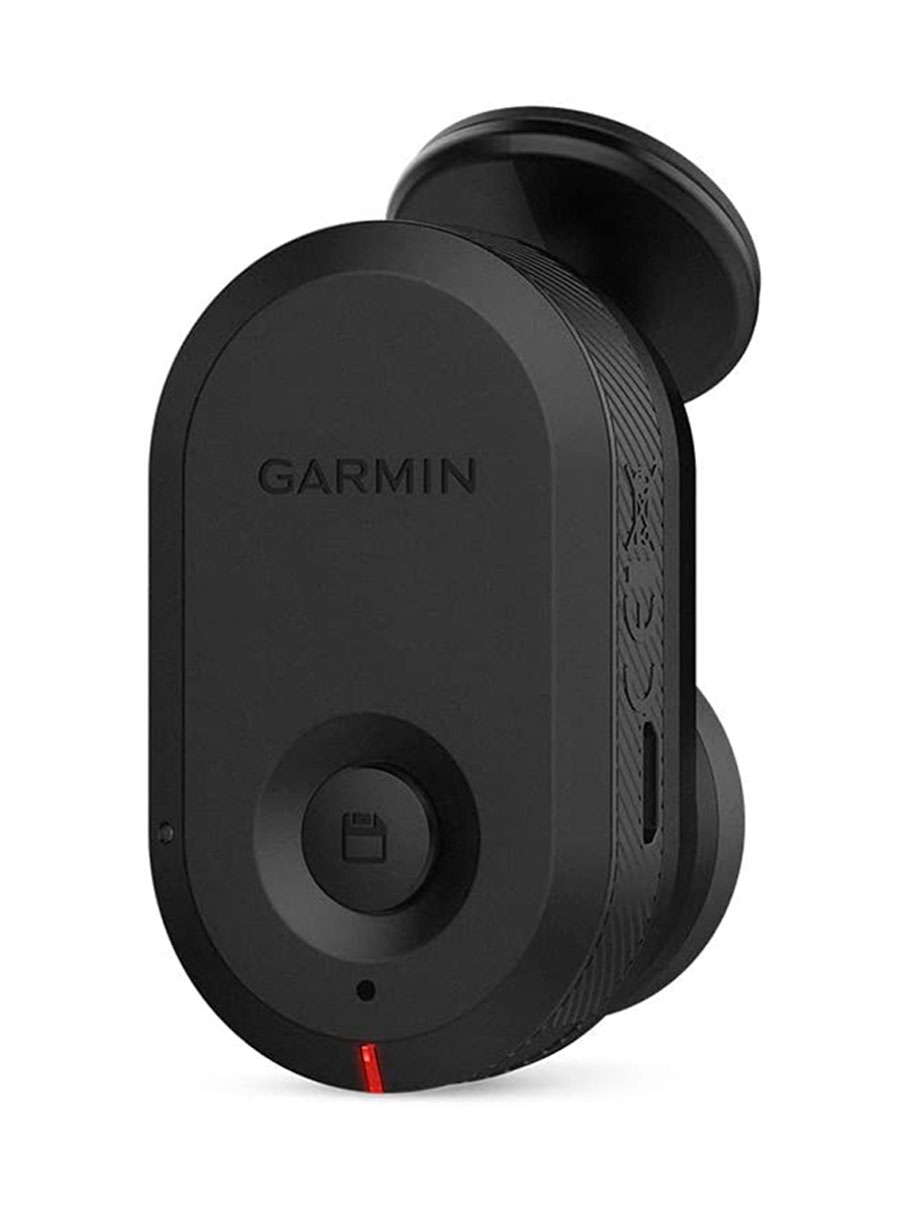
About the same size as a key fob, the Garmin Mini 2 is a tiny, discreet dashcam with some big camera benefits, like 1080P resolution with 140-degree field of view, hands-free voice control and Parking Guard feature. Another thoughtful touch is the extra USB port in the unit’s charger, so you can power up the dash cam and charge your phone at the same time. The Garmin Drive app for compatible smart phones allows the user to access the camera remotely for Live View monitoring from anywhere (requires an active Wi-Fi connection and constant power supply, which will require the use of the Constant Power Cable, sold separately). The app also allows the user to share video clips with others by sending a link and passcode (again, with a Wi-Fi connection) and saved videos can be accessed via the secure online Vault for 24 hours from the time of upload. Garmin also offers extended storage plans via paid subscriptions. The Garmin Mini 2 retails for $129.99. garmin.com/en-US/

The Garmin 67W is the company’s full-featured dash cam that is still incredibly tiny. In addition to 1440P HD video resolution and a super-wide 180-degree field of view, the 67W features incident detection with GPS, voice control for a variety of commands (“Okay Garmin save video,” for example) and driver aids like forward collision and lane departure warnings, available red light and speed camera warnings (not available in all regions; requires subscription) and “Go Alerts,” which let the driver know when the traffic in front of the vehicle begins to move again (a great benefit in big city driving). And, like other dash cams in the Garmin family, the 67W features Parking Guard, Live View monitoring, and a charge cord with extra USB port. It even includes a microSD memory card. MSRP: $259.99. garmin.com/en-US/

Kenwood is one of the most recognizable brands in audio and electronics, so it stands to reason that it offers a very capable dashcam in the DRV-A601W. Recording in 4K Ultra HD, this unit features a 3-inch touchscreen display and wide dynamic range that records clear footage in light or dark situations without over or underexposing. A polarizing filter is included, which attaches to the lens to reduce windshield glare or reflection and has a rotating bezel to adjust the lens for optimum results in your vehicle. Handy features include a G-sensor with built-in GPS, Parking Mode Recording (automatically powers on and records 30 seconds of video when physical impact is detected — requires an optional hard wire kit) and a super capacitor, which prevents the recorded video file from being corrupted by allowing the video file to close properly. The Wireless Link App allows the user to share recorded videos, and the Kenwood video player desktop software allows easy viewing of video. The DRV-A601W can also be connected to the optional KCA-R200 rear camera, providing simultaneous recording in the front and rear of the vehicle. The kit includes two mounts: A 3M-tape style and suction cup, while the camera connects via a quick-release magnetic mount. MSRP: $199.99 (Best Buy). kenwood.com/usa/car/dashboard_camera/
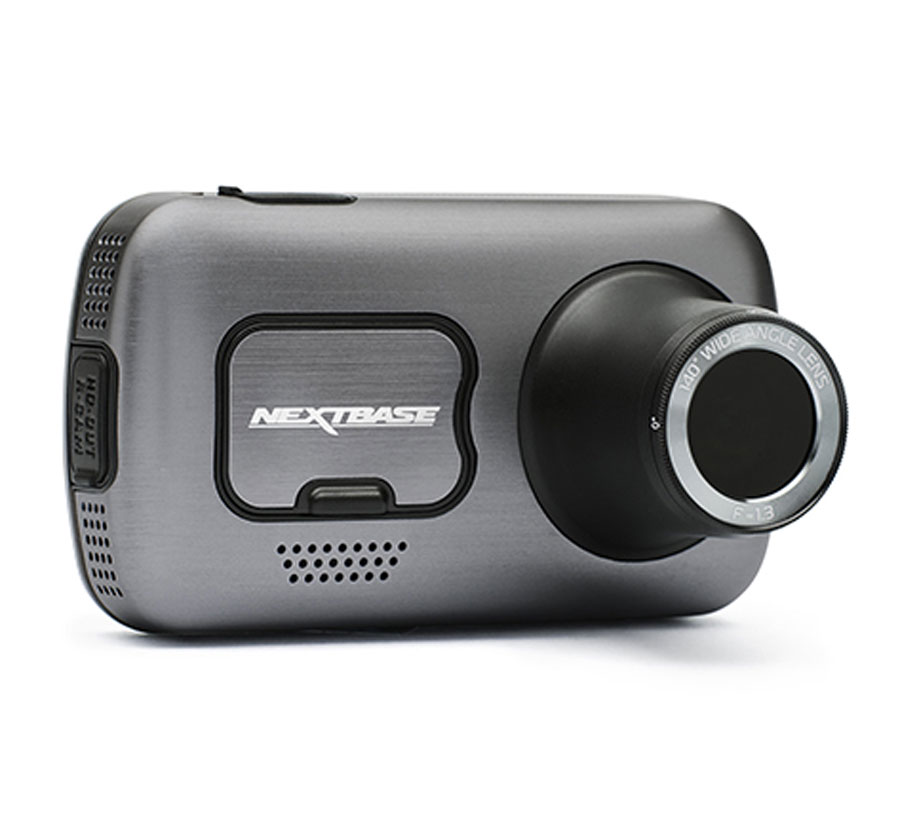
Introduced just last year, the 622GW is Nextbase’s flagship product, and it’s packed with a number of features. First and foremost, the 622GW shoots in 4K Ultra HD at 30 frames per second (FPS) for maximum detail and clarity — and built-in digital image stabilization helps minimize vibration. The prominent lens features a 140-degree viewing angle and is even equipped with a built-in polarizing filter to minimize glare (us photo geeks appreciate that kind of thing). Enhanced Night Vision is designed to pick up all the critical details even on dark roads, and Intelligent Parking Mode automatically records any bump or physical movement when the vehicle is unattended. The 622GW also has some uncommon features, like Super Slow Motion playback ability and Extreme Weather Mode, which helps cut through the fog to provide the clearest possible image. Convenience and safety features include voice command Alexa integration, Emergency SOS (automatically dispatches emergency services in the event of a major crash) and what3words, an extremely useful app that can provide your location inside a 10-foot square (anywhere on the planet) without a data connection, making it easy for loved ones or EMS to find you. The 622GW can also be easily fitted with a rear window camera (which physically attaches to the rear window) a rear view camera (rear facing) or a cabin view camera (wide angle to view occupants), each of which simply plug in to the main unit and cost $99. The 622GW retails for $399.99. nextbase.com/en-us/

At the other end of the spectrum in Nextbase’s line-up is the 222, the company’s budget-priced dash cam that still records in 1080P HD at 30 FPS. A “new and improved” 6G lens captures the critical details with a 140-degree viewing angle, while a Click&Go PRO mount makes it easy to attach and detach the camera thanks to integrated neodymium magnets on the mount and dash cam that attract themselves together. Intelligent Parking Mode is standard, and the lens is compatible with a polarizing filter if desired. MSRP: $79.99. nextbase.com/en-us/

Another offering from an audio/visual legend, the Pioneer ND-DVR100 is a small, discreet dash cam with a 2-inch LCD screen that records in 1080P HD. Featuring a built-in G-sensor, this unit will record an impact event then save the video file in a separate Event Folder to prevent being overwritten and to provide later access to the video. A 27.5-fps frame rate was specifically chosen by Pioneer to accurately capture LED traffic lights, which often operate at 60Hz — especially helpful in the case of a traffic signal related video. In addition to recording HD video, the ND-DVR100 has the capability to capture still images so that in the event of an accident, the driver can detach the camera and take detailed photos from outside the vehicle. Using its built-in GPS receiver, the ND-DVR100 can also display and record the time and GPS position (longitude and latitude) directly onto the recorded video and still image files. MSRP: $150. pioneerelectronics.com/PUSA/

The Thinkware U1000 is the company’s flagship model that records in 4K resolution in a 150-degree field of view and includes a comprehensive suite of driver assistance systems — including forward collision warning, front vehicle departure warning (lets you know when the vehicle in front of you begins to move in traffic) and lane departure warning, plus red light and speed camera alerts. Super Night Vision technology with high dynamic range (HDR) is capable of recording high-quality video in low-light conditions, while Parking Mode 2.0 helps you keep tabs on your vehicle when you’re away. The system can be upgraded with an available radar module for added protection and an external battery to extend parking-surveillance duration. Thinkware Cloud keeps you connected to the vehicle even when you’re not in it, with notifications sent directly to your compatible smartphone. These include impact notification while parked, vehicle location, remote live view and a geofencing feature which will notify the user if the vehicle travels outside of a pre-selected geographic zone. Finally, the U1000 can also be accessorized with a 2K resolution rear camera with a 156-degree field of view and is available in a front/rear camera bundle. MSRP: $399.99. us.thinkware.com

This compact dash cam offers a lot of good features at reasonable price. For openers, the S1 is a front and rear camera system with full 1080P resolution with a 170-degree field of view front, a 160-degree field of view in the rear and Sony night vision. The system automatically switches to Parking mode when it senses no movement for five minutes, after which both cameras will automatically begin recording when people or objects come close to the front of the vehicle. GPS with live Speed Display tracks your movement, which can be played back on Google Maps via the Vantrue GPS player. Those who live in extremely hot or cold climates will appreciate that the S1 features a built-in supercapacitor instead of a battery, which the company says can withstand temperatures from -4 to 158 degrees F. MSRP: $179.99. vantrue.net