

Magnificent 7
[maghub_sidebar]
Magnificent 7 typography
Ride and handling problems in popular gas motorhome chassis can usually be improved — or even solved — with one of these bolt-on items
By Chris Hemer
I

t’s often said that life is a journey, not a destination. This is particularly true for those who travel by motorhome. We all know where we want to go and what we want to see, but it’s the mountain vistas, verdant meadows and roadside attractions along the way that make driving across America so enjoyable.

Unless your motorhome is plagued by ride and handling issues.

When freeway expansion joints sound like muffled explosions reverberating through the chassis, 18 wheelers nearly push you out of your lane or the steering wheel requires constant adjustment just to stay in a straight line, the journey loses some of its cachet. Now, instead of enjoying the passing scenery you’re focused on just getting to your destination so you can put this stretch of highway behind you.
gas-chassis motorhome on the road
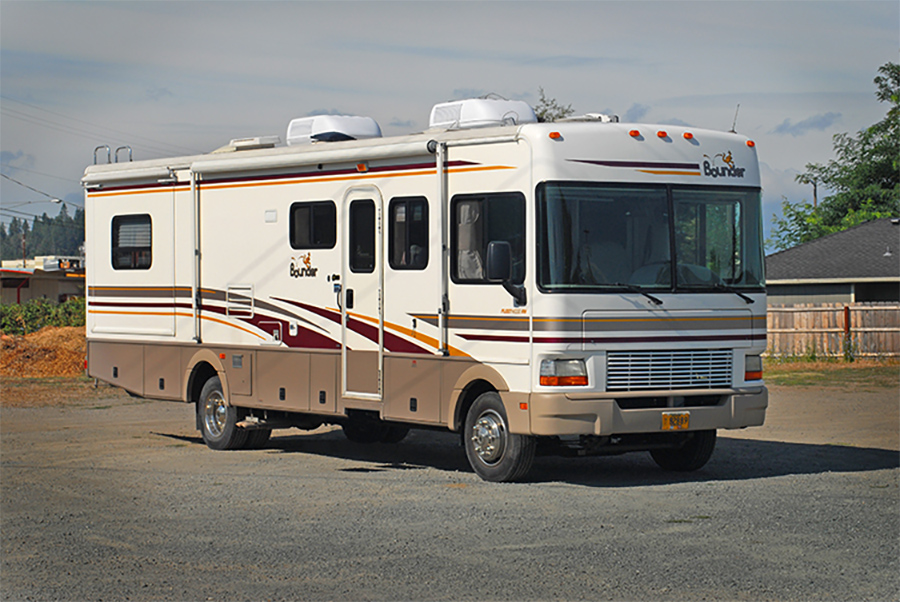
There are tens of thousands of gas-chassis motorhomes on the road — and they all suffer, in varying degrees, from poor ride and handling.
You’re certainly not alone. In fact, poor ride and handling are among the most common complaints RVers have abo their gas motorhomes which, unlike their diesel counterparts, don’t benefit from things like air suspensions. Fortunately, the aftermarket has come up with very effective solutions that can improve or even eliminate the issues you’re experiencing. Obviously, there are different chassis types on the road today, and some solutions are application-specific, so for the purpose of this article, we’re going to focus on the most common gas chassis — Ford and GM — and the “Top 7” products you can install (or have installed) to make your RV manageable again. These are unscientifically ranked based on popularity, effectiveness and cost (not necessarily in that order). Of course, your own motorhome may have issues that shift your suspension priorities.
First Steps
CAT scale at gas station
CAT offers a nationwide network of three-platform scales. The company’s website (catscale.com) offers a scale locator to find one near you, and has helpful instructions on how to weigh a tow vehicle/trailer and a motorhome.
In order to solve your suspension/handling woes, it’s helpful to know exactly what is causing them. That may sound obvious, but unlike a car or truck where you probably can “feel” what’s wrong, the origin of a motorhome problem may not be so plain. For example, excessive weight over the front or rear may cause sagging, which may be a problem with improper weight distribution and overloading rather than the suspension itself. Similarly, bad handling response may not be caused by the shocks or springs, but by a problem with the steering — or even the rear suspension.

The first step should be weighing the motor-home full of water and LP-gas and all supplies on board (something we continually remind RVers to do because, yes, it’s critical). This will tell you if the motorhome is overloaded in general or has too much weight over the front or rear axles. We should point out here that overloading or unbalance isn’t necessarily caused by the owner; we’ve tested some motorhomes in the past that were at, or near, chassis gross vehicle weight rating (GVWR) right from the factory. Motorhome building is all about compromise; the number and size of the slideouts and appliances, as well as furniture and holding tank size/placement can all have an effect on weight and balance.
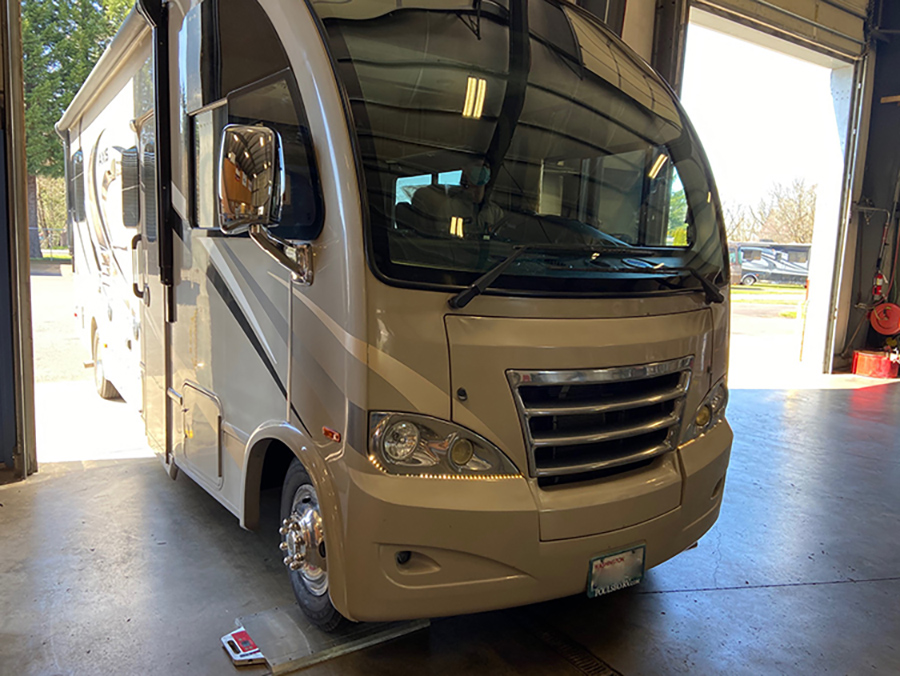
RV being weighed by wheel position
Weighing by wheel position is the most accurate way to not only determine axle weight, but the weight on each individual wheel. This is important because while an axle may not be overloaded as a whole, one side of the axle may be overloaded if the RV is not correctly balanced. A scale is placed underneath each wheel and the weight is recorded on a worksheet, which is provided to the customer.
A CAT or other public scale will provide front, rear and total weight, which is a good start. Better yet, seek a suspension and alignment shop that handles truck/RV chassis, and ask them if it has individual wheel scales, which will help ascertain weight at each wheel position. Too much weight, or improperly distributed weight, should be addressed first before selecting chassis components. And with that said, let’s take a look at the possible upgrades.
Shock Absorbers
We rank shock absorbers as the Number One chassis update for three reasons: One, the factory shock absorbers usually aren’t adequate even when new; two, shock absorbers are a relatively inexpensive addition; and three, they’re easy to install. Depending on a car and the way it is driven, a set of shocks may not make that much of a difference, but on a heavier vehicle that requires a robust suspension, the addition of quality shock absorbers can really make a difference, reducing bounce and restoring ride comfort. Bilstein and Koni shocks are available for both GM and Ford motorhome chassis and are a fairly economical solution with a price range of around $140-$175 per shock.

Bilstein shocks are OEM equipment on many vehicles, but are available through the aftermarket as well. Bilstein was the first company to offer the monotube, high-pressure gas shock, which incorporates a separate, high-pressure gas chamber that exerts compression on the hydraulic fluid inside the shock absorber to prevent cavitation or shock fade. Each shock is tuned specifically for the application, resulting in improved ride quality, comfort and handling — and most Bilstein products available in the North American aftermarket are backed by a Limited Lifetime Warranty to the original owner. You can conduct a quick search to find out the correct shock absorbers for your application at cart.bilsteinus.com/

Bilstein shocks
Bilstein shocks
Koni FSD shocks
Koni FSD shocks
Koni is one of the most widely recognized shock brands in motorsports, and its Frequency Selective Damper (FSD) shock is a popular choice on Ford and GM motorhome chassis. The FSD employs a special valve that stays open while driving over expansion joints and other small impacts, allowing the oil to pass freely around the piston without generating much force — but if you hit a larger bump or start to sway, the small valve closes, forcing the fluid to pass through the piston itself and dramatically increasing rebound force. Put simply, the FSD feature acts like a hydraulic amplifier that delays the build-up of pressure, according to the company. Since the FSD is mechanically self-adjusting, it doesn’t require any wires, sensors or other equipment — just bolt them in and go. koni-na.com/en-US/NorthAmerica/Products/Motorhome/
Panhard Bar
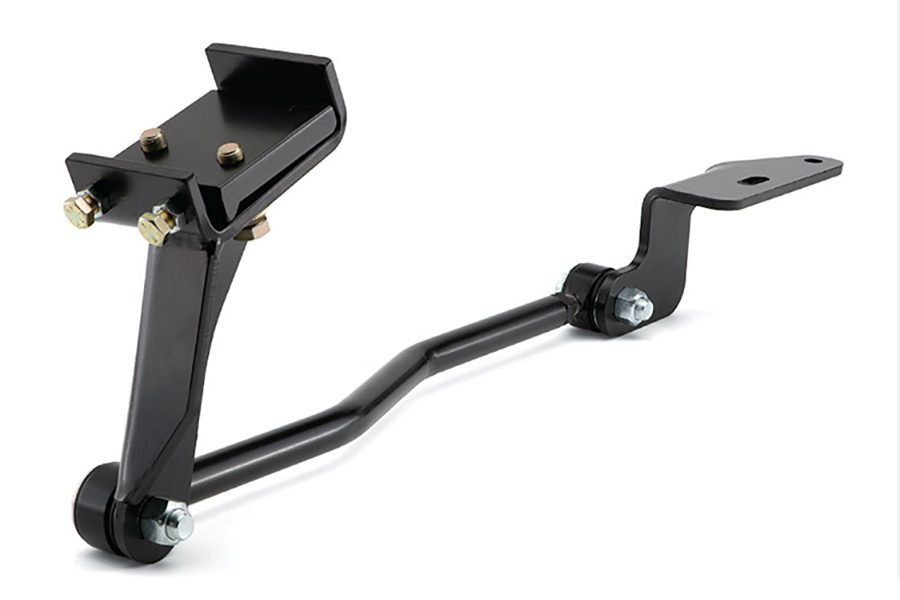
For as long as cars have been in existence, controlling axle side-to-side (lateral) movement has been an essential step in chassis tuning. In vehicles with coil springs in particular, there is nothing to stop the rear axle from “walking” from side to side under lateral loads (like sharp corners), which creates instability. Cars and trucks with leaf spring suspensions generally don’t require a Panhard bar, because the leaf spring packs bolted to either end of the rear axle prevent it from walking. However, large Class A and C motorhomes, with their substantial weight and high center of gravity, can still suffer from rear axle lateral movement, which contributes to that uneasy tail happy feeling.
SuperSteer 402 Trac Bar
TigerTrak Rear Trac Bar for Ford E-450 chassis
A Panhard bar is, arguably, the single best thing you can add to a Class A or Class C motorhome (right up there with good shocks) — particularly those with a lot of rear overhang. The Panhard bar bolts to the rear axle at one end (the mounting point depends on the application) and to the frame at the other along the same plane, preventing the axle from moving from side-to-side. With the rear axle rigidly located, steering input is dramatically improved.

SuperSteer Parts (supersteerparts.com) and Ultra RV Products (ultrarvproducts.com/) both offer kits for a wide range of GM and Ford gas-powered motorhome chassis, and pricing is usually in the $500-$600 range.
Anti-sway Bar
Roadmaster RSS Anti-Sway Bar
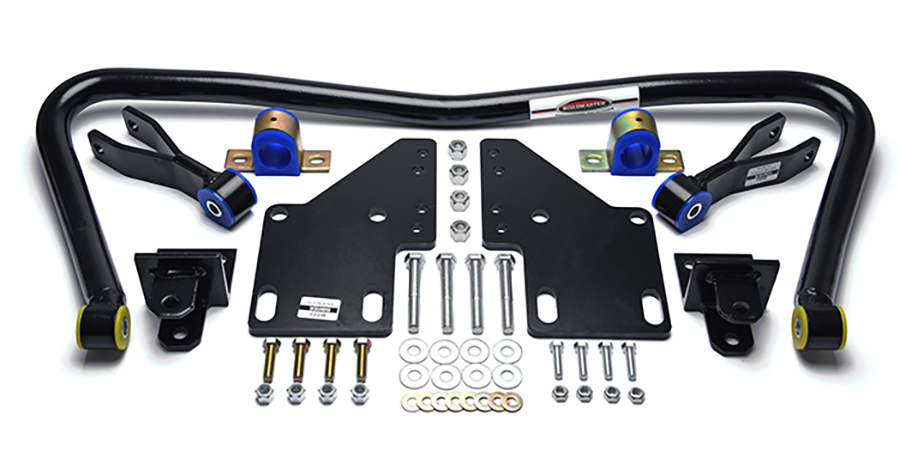
Often referred to simply as “sway bars,” an anti-sway bar works by resisting the force applied to it when weight is transferred from one side of the vehicle to the other, as when entering a turn. As you may well imagine, a motorhome can impose a lot of such force — and if your motorhome doesn’t have one or more anti-sway bars, you’re likely accustomed to excessive sway and body roll that can make for unpredictable handling. Depending on the chassis, your motorhome may already have an anti-sway bar, but its handling could be improved with a larger replacement bar, an auxiliary bar (which bolts on in addition to the existing anti-sway bar) and/or a front anti-sway bar kit. Roadmaster (roadmasterinc.com/) and SuperSteer Parts offer several kits for a variety of applications, from pick-ups and vans to large Class A motorhomes. Check out their websites for more information, available kits, and pricing.
Steering Stabilizer
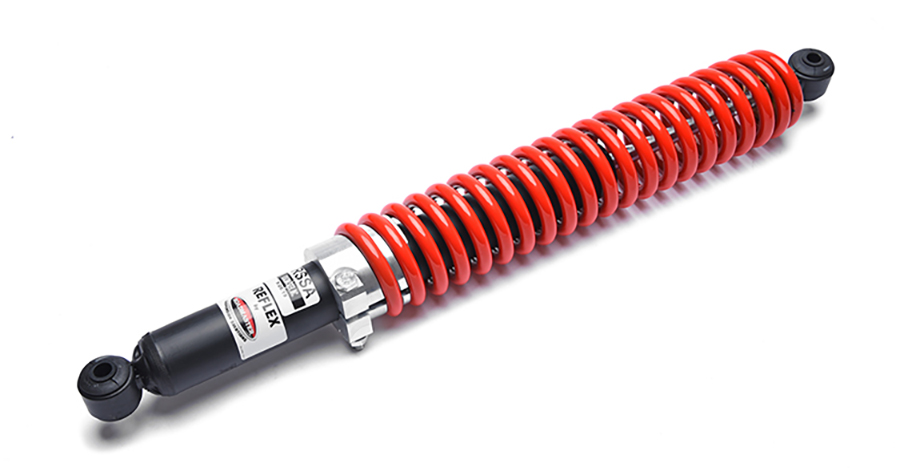
Some motorhomes can make you wonder if the steering wheel is actually attached to anything as you drive down the road; you feel like you constantly have to saw at the wheel just to keep the motorhome in its own lane, and on-center feel is practically non-existent. That’s bad enough — but if one wheel drops off the pavement, you get pushed by a side wind or experience a blowout, the negative characteristics of the steering system will be compounded in a hurry. That’s why a steering stabilizer should be considered a must-have in your motorhome. A steering stabilizer like the Safe-T-Plus (safe-t-plus.com/) or Roadmaster Reflex (roadmasterinc.com/products/rss/reflex.php) help solve steering issues by applying increasing force as the steering center link goes off center (either by the driver’s steering input or due to unexpected conditions), encouraging the steering wheel to always return to center. These stabilizers can be installed in an hour or less with common hand tools and yield a tangible difference in steering control.
Roadmaster RSSA Reflex
Safe-T-Plus 41-230 Steering Control
Springs
SumoSprings F-53 urethane springs
We ranked springs in fifth place simply because not all motorhomes need help in this area — but depending on the situation, springs may rank higher on your wish list. For example, if the front of your GM P30-P32 chassis bottoms out, sags or the chassis appears to lean to one side, it could be that one or both front springs are worn out and in need of replacement. SuperSteer Parts offers its own coil springs based on the motorhome’s front axle weight: Up to 4,300 pounds; 4,400-4,900 pounds; 5,000-5300 pounds; 5,400-5,900 pounds; and 6,000 pounds or more. You must have the actual front axle weight before ordering. The right springs will not only correct the aforementioned issues but also can improve handling and ride quality.

For the rear of the P30-P32, SuperSprings International (superspringsinternational.com) offers its SSR-290-54 SumoSpring kit, which consists of a pair patented, micro-cellular progressive urethane springs designed to enhance (or restore) load carrying capability, reduce sway and improve driver control, according to the company. These SumoSprings boast 2,800 pounds of load capacity at 50% compression and install easily in place of the jounce bumper, over the center of the leaf spring pack.

The Ford F-53 Class A chassis utilizes leaf springs for the front axle, not coils, but SuperSprings offers SumoSprings kits for both ends, as well as its original SuperSprings, a type of overload or “helper” spring that features dual-roller shackles to help facilitate movement. Like the SumoSprings, these SuperSprings are designed for easy bolt-in installation in about an hour and do not require the disassembly of the rear leaf springs.
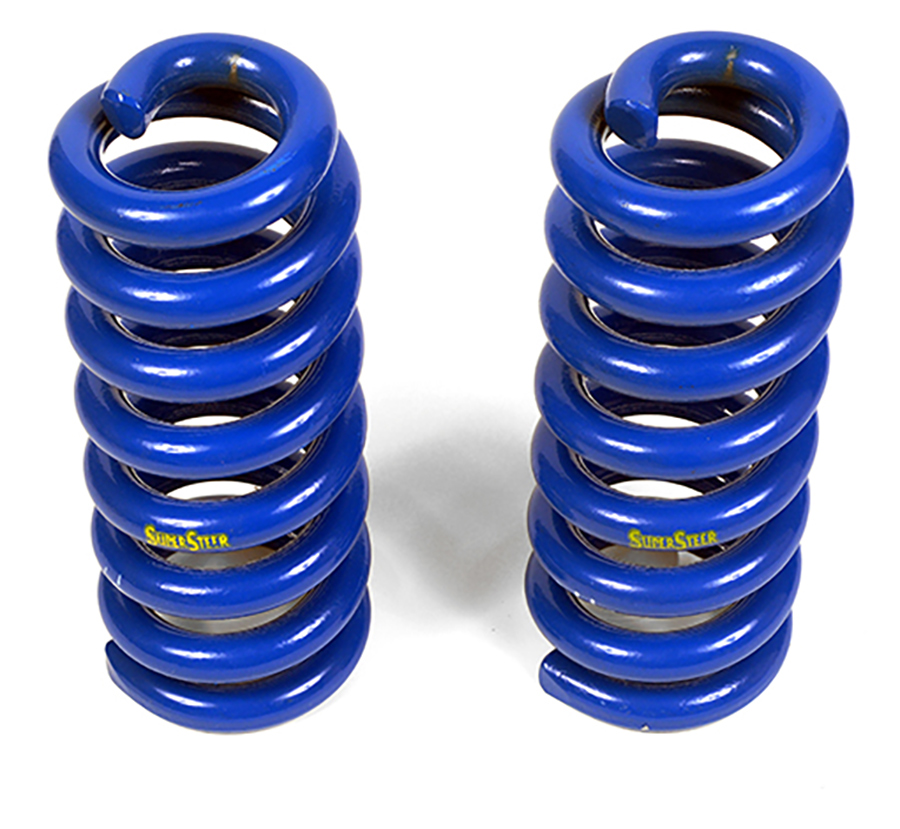
SuperSteer coil springs
Bushing Kit
From the factory, motorhome chassis come equipped with rubber bushings on the anti-sway bar(s), which do a satisfactory job when the chassis is new — but over time, they wear out and allow deflection (movement under load), which reduces the effectiveness of the anti-sway bar. Replacing the rubber bushings with a polyurethane bushing kit from Roadmaster is an inexpensive way to optimize the performance of your existing anti-sway bar(s) on Ford and GM motorhome chassis, and retail in the $120 range, depending on the application.
Anti-sway bushings
Anti-sway bushings
Bell Crank/Bell Crank Arm (GM chassis)
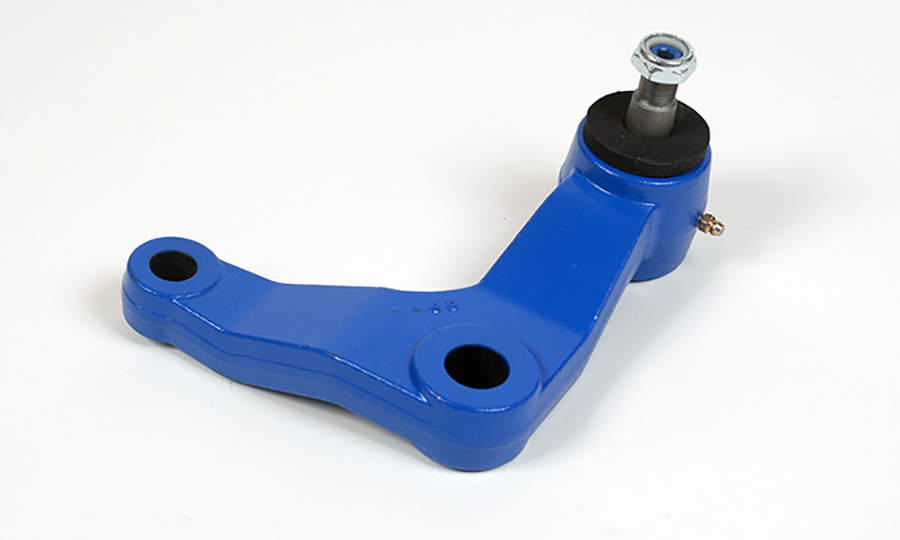
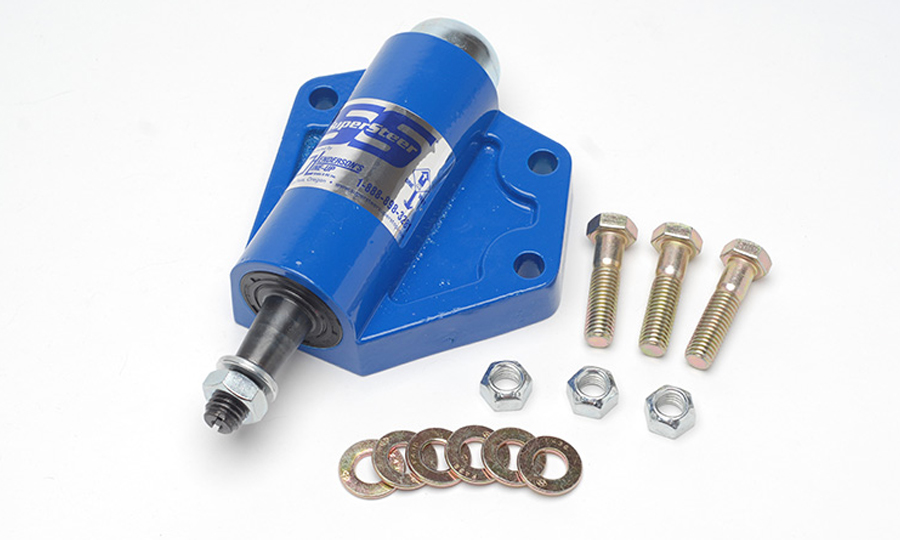
The GM P30-P32 chassis, in particular, can suffer from sloppy steering, so in addition to a steering stabilizer, you should consider a SuperSteer Bell Crank, also known as the steering support assembly or “idler.” The factory bell crank bears a considerable load while turning, causing the bushings to wear out, resulting in sloppy steering. The SuperSteer Bell Crank is a bolt-in replacement for the factory part, featuring a high-strength cast body, steel spindle and tapered roller bearings. The SuperSteer Bell Crank retails for $285. While you’re at it, you may as well replace the factory bell crank arm with a stronger SuperSteer replacement, for $332.
SuperSteer Bell Crank
replacement bell crank arm
SuperSteer Bell Crank and replacement bell crank arm