


Go with the Flow
[maghub_sidebar]
Water illustration
Go with the Flow
Water illustration
Lippert’s Floe 636 Induratec allows winterizing on-the-go
By Chris Dougherty
Winterizing the plumbing in an RV involves blowing out the system with low-pressure compressed air, then — especially on larger RVs in very cold areas — drafting antifreeze into the system. That said, blowing out the system requires an adaptor fitting, air hose and compressor, which can be difficult for some people to carry in their RV — not to mention a pain to do.

Lippert’s Floe 636 automatic winterizing system simplifies the process — a lot. First designed and distributed in Ireland for caravans, the system is basically a small air compressor system with a pressure switch and isolation valve that is permanently built into the RV’s plumbing system.

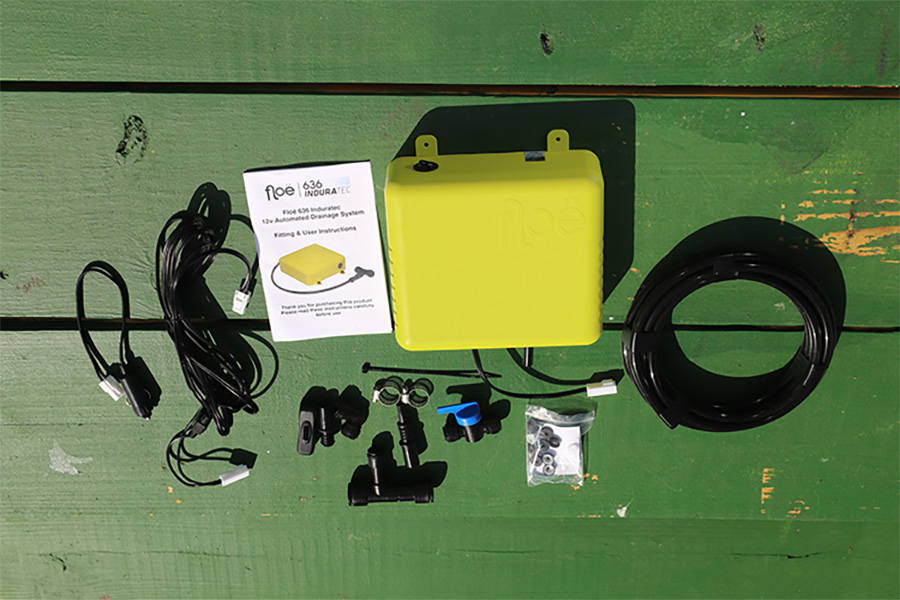
Lippert’s Floe 636 Induratec
The benefit to the system is obvious; open a valve, flip on the switch, then walk around and open each valve one at a time, including low point drains. The pump turns on and pressurizes the plumbing, then shuts off until a valve is opened. This pushes all the water from the system.
Lippert’s Floe 636 Induratec contents
The Floe 636 Induratec kit includes just about everything you need to install the system.
If you’re in a more moderate climate and only plan to blow out the system, you’re done (except for P-traps and tanks). However, if you’re in a much colder climate and/or you have powered valves for washer drains, ice makers and the like to protect, then you’ll want to follow up with RV antifreeze. The water heater should be bypassed and drained externally before you blow out the system. If the water pump is fitted with the plumbing to route antifreeze and a Floe 636 is installed, you have everything on board for winterizing.

Installation is straightforward with a few changes in the procedure depending on the RV, so we won’t go into all the details of installing it in our 2015 Montana. However, it’s simple, and there are videos online that demonstrate how it’s done (including this one by Lippert: support.lci1.com/videos/floe-integrated-water-drain-owners-video). It’s entirely up to you how sophisticated you get with the installation, but the basics include a 12-volt DC connection and a plumbing fitting. Everything you need is included in the kit.
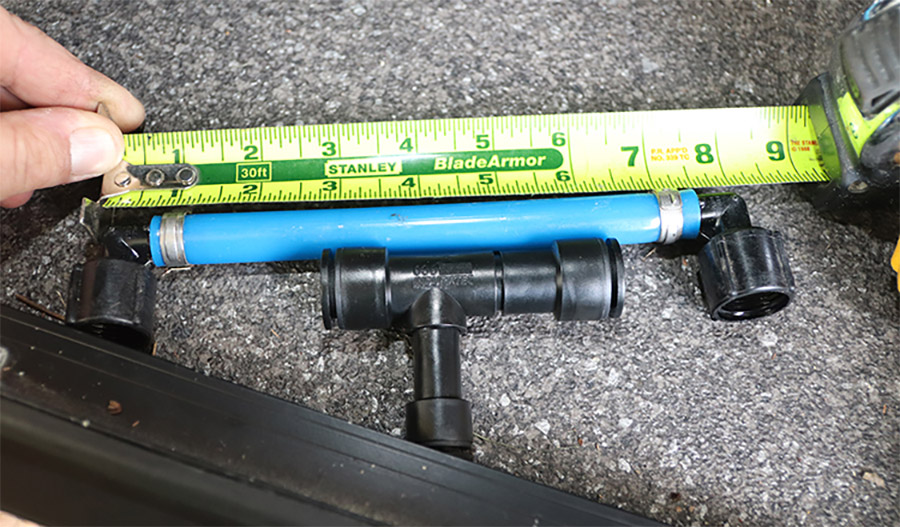
Lippert’s Floe 636 Induratec Measurements
The pipe connector between the city water inlet and the fresh tank fill valve was removed to make way to cut the pipe precisely and put the pieces together so they would fit behind the panel.
We installed the unit in the Montana’s passthrough rear wall near the back of the plumbing center. This gives us access to the switch and valve, but it is possible to mount the unit in a concealed location. Theoretically, you could have a dedicated switch and valve installed on the plumbing panel for a complete custom, out-of-sight installation.

The system, which retails for about $200, works as advertised and is quite a convenience. It can be found at your favorite RV store or on Amazon (https://amzn.to/2ZiQyjS). Northerners who drive South to flee winter’s cold weather will appreciate the ability to dewinterize on the road, and then when returning, continue to use plumbing normally until they get closer to winter weather.
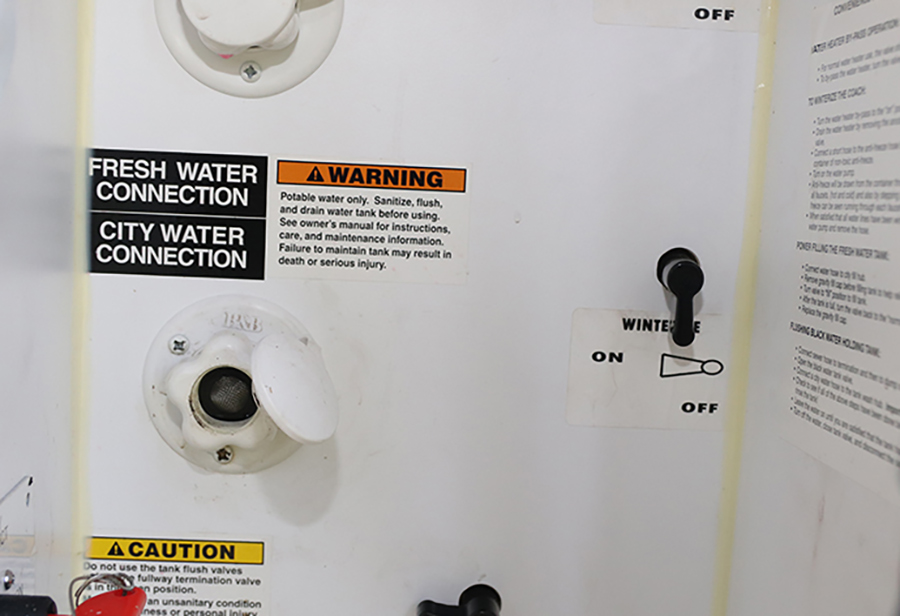
Instructions
Locating where to install the system is the first step. The injector fitting should be installed in a cold-water feed pipe. In this case, the city water inlet on the Montana’s utility panel was located and then opened up the space to access the plumbing.
If you’re into winter RVing, the ability to winterize on a moment’s notice is comforting in the rare case that the furnace was to fail or, in the case of snowbirds, as they return to still-cold weather. For instance, when I was last in Florida returning to New England, I stopped at a Flying J in New England and winterized right there. No muss, no fuss.
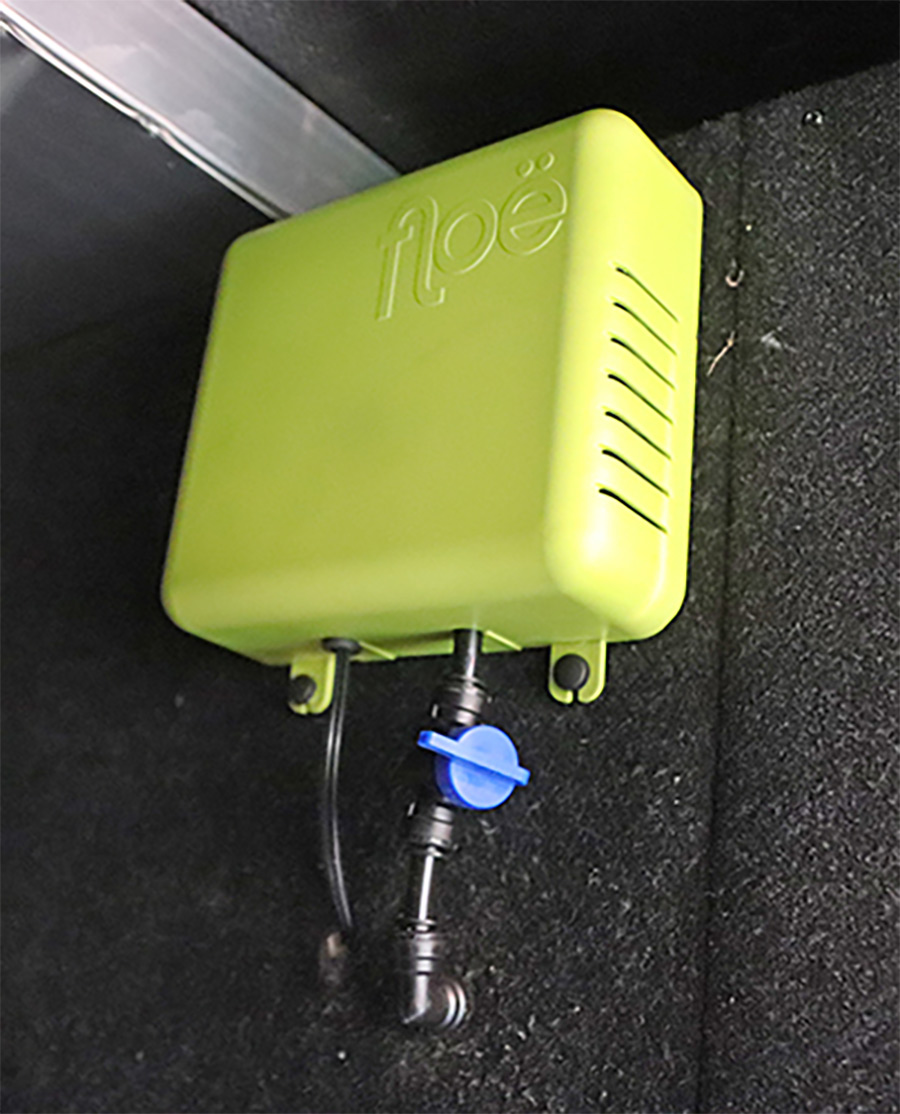
Lippert’s Floe 636 Induratec Installed
For this installation, the Floe 636 was located on the wall of the passthrough, and carefully marked so holes could be drilled where the tubing and wiring would pass through. The switch on top of the unit operates the unit and there’s good access to the valve. An optional remote switch on the power lead allows the unit to be installed in a hidden space, but it is still necessary to reach the valve, which prevents pressurized water from entering the Floe unit.
Source:
Lippert
(432) 547-7378
lci1.com