

Image credit: Hildene.org
iving in eastern New York for many years presented many opportunities for me to visit nearby Vermont, a state that boasts a wide variety of exciting travel destinations. Rather than focusing on just one city, a driving tour through Vermont will give visitors a much bigger picture of what this state has to offer. This driving tour through the Green Mountain state covers approximately 170 miles and would make a nice day trip for those staying in nearby RV parks — and provide memorable material for more extensive journeys into this popular region.
Manchester, Vermont
Our driving tour through Vermont begins in Manchester, near the southwest corner of the state about 60 miles northeast of Albany, New York. The city, which lies between the Green Mountains to the east and the Taconic Range to the west, with the Battenkill River flowing through the town, was chartered in 1761 and was primarily an agricultural or farming area for almost a hundred years. Farmers struggled to grow crops in this area, and eventually found that the land was best suited as a grazing area for cows or sheep.

Another historical site to visit in Manchester is Hildene, the estate of Robert Todd Lincoln (son of President Abraham Lincoln and his wife, Mary Todd Lincoln). Hildene was the summer home of Robert Todd and Mary Harlan Lincoln, and among its 412 acres encompasses the Lincoln’s Georgian revival mansion and 14 historic buildings. The estate is open to the public for self-guided tours, Thursday-Monday, 10 a.m.-4:30 p.m. Admission is $23 for adults.
If you are an outdoors enthusiast, consider stopping at the Equinox Preserve in Manchester. This 900-acre preserve is on the slope of Mount Equinox (the highest summit in the Taconic Mountains at 3,850 feet). Some of the best walking and hiking trails can be found here. Be sure, too, to check out Mt. Equinox Skyline Drive, the longest privately owned, paved toll road in the United States, ascending 3,248 feet to the top of Mount Equinox. The cost to drive up Skyline Drive is a bit steep at $10 per car plus $2 per passenger, but the spectacular views are well worth the cost. And be sure to fish the Battenkill River in Manchester, which offers some of the best trout fishing in the world.

With the advancement of mining techniques, miners could reach deeper into the mountain, harvesting thicker, more compact marble, which could be transported over longer distances. The arrival of the Bennington-Rutland Railroad in 1852 in Dorset allowed marble to be shipped across the U.S. By 1900, the marble mill was operating 24 hours per day, six days a week, and employed hundreds of laborers to quarry, transport, cut, polish and finish the marble. The town of East Dorset grew to include a hotel, schoolhouse, two churches, two general stores, a post office and a train depot. Additional businesses came to East Dorset, including a lumber mill, sawmill, blacksmith shops, a doctor’s office and an attorney. The town was thriving for about 20 years until the introduction of cement in the 1920s. Cement took the place of marble in building materials, and the marble quarries shut down and were abandoned. Within 10 years, all of the businesses in East Dorset closed down and the workers moved away. Today, these quarries have become a popular swimming spot in the town.
The Bill Wilson House is a historic 19th-century hotel located in East Dorset. Built in 1852, it is the birthplace and living memorial to Bill Wilson, co-founder of Alcoholics Anonymous. The building is listed on the National Register of Historic Places and is open to the public daily. The Griffith Library, located at the Bill Wilson House, houses artifacts and documents about Bill Wilson’s life and the history of alcoholism and its effect on families over the years. This historic house draws thousands of visitors each year from around the world.
Dorset includes thousands of acres of public and conserved lands and is an excellent location for outdoor activities including hiking, fishing, swimming, horseback riding, mountain- and road bicycling and skiing.
In 1800, an elite liberal arts institution was established and named Middlebury College. The town of Middlebury was also the birthplace of some famous people, including Emma Willard who was a founder of schools for women and an activist for women’s rights. Poet and author Robert Frost also grew up in Middlebury.
Today, people visit Middlebury to shop in the downtown Marble Works District and to dine in its many restaurants. The Vermont Folklife Center is another popular attraction, located at 88 Main Street. This nationally known facility studies the cultural fabric of Vermont communities and provides exhibits that depict the legends and lore of the area. The center is currently open to the public Tuesday-Thursday, 11 a.m.-4 p.m.
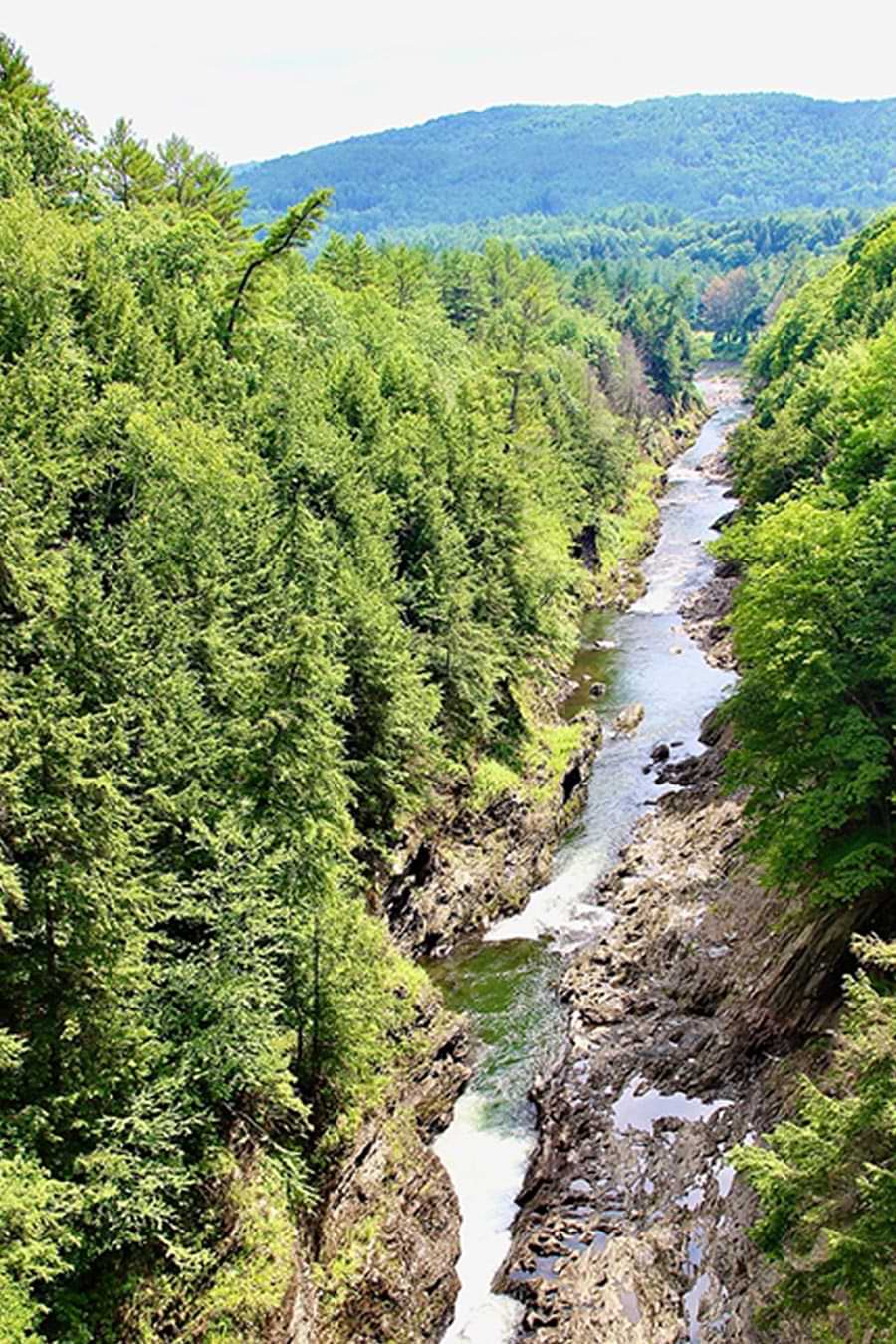
From Middlebury, continue the drive east across the state to the town of Quechee, best known for Quechee Gorge, at 165 feet deep the deepest gorge in Vermont. Carved out by a glacier thousands of years ago, the gorge can be viewed from the U.S. Route 4 bridge and is a popular tourist attraction.
The Vermont Institute of Natural Science (VINS), located in Quechee, was created to educate individuals and communities to care for the environment. VINS operates New England’s premier avian wildlife rehabilitation clinic and also promotes environmental science field research. The Nature Center is open to the public 10 a.m. to 5 p.m. daily. Admission fees are $17.50 for adults; $16.50 for seniors. VINS is a great place to visit and you could easily spend several hours touring this facility.

Covered bridges, like this one near the town of Quechee, are iconic in Vermont. It is popularly believed that the purpose of the roof on these bridges was to keep snow off the road and to provide shelter for travelers during storms; however, the roofs were actually designed to protect the bridge itself.
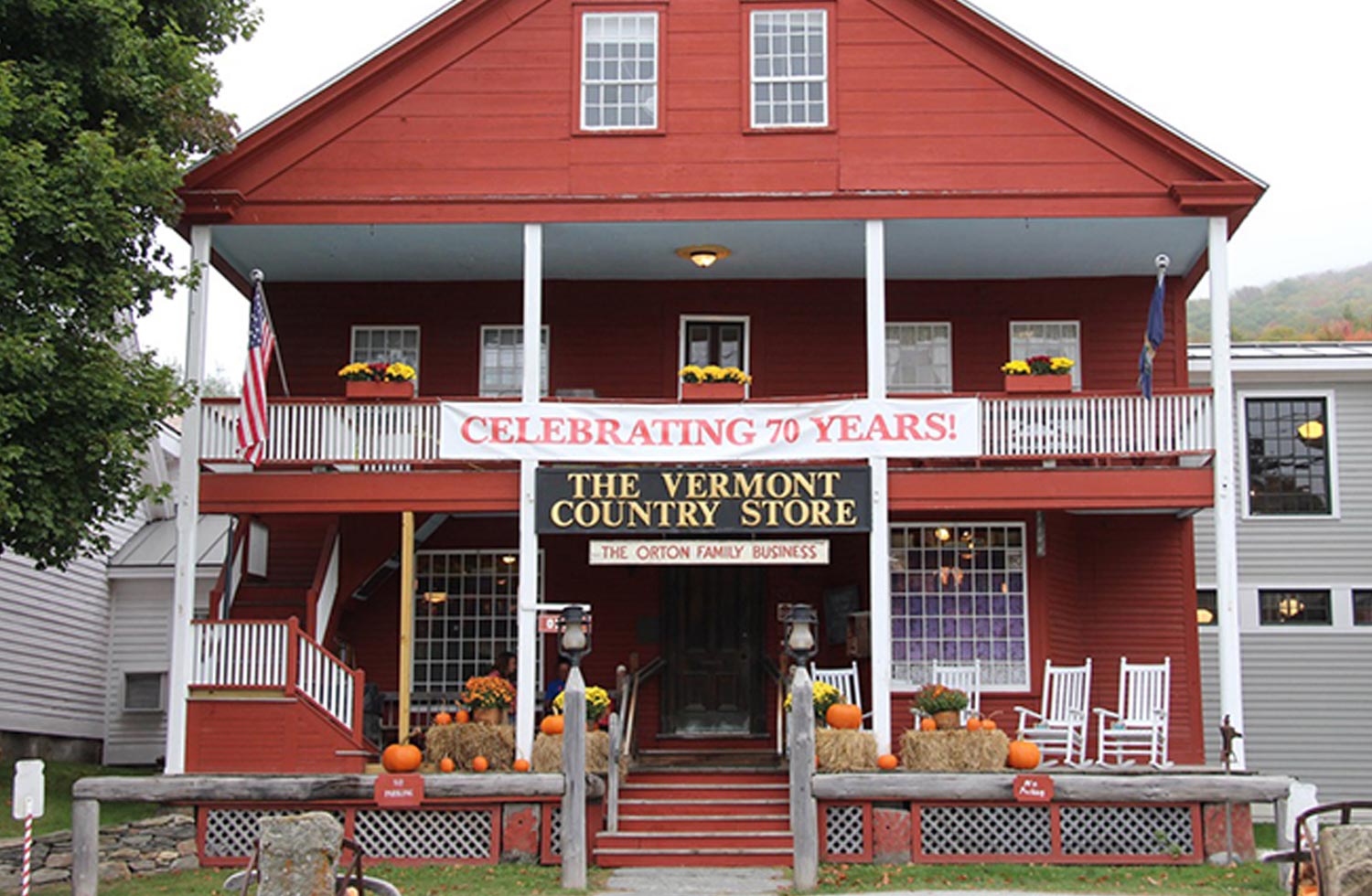
The Vermont Country Store, a catalogue and retail business located in Weston, was opened by Vrest Orton in 1946 and became the first restored rural general store in Vermont. Orton was inspired by memories of his father’s general store that once operated in North Calais. The Vermont Country Store continues to do business today — it’s owned and operated by Lyman Orton and sons, fourth- and fifth-generation storekeepers — and is a purveyor of the practical and hard-to-find merchandise.


Because this driving tour covers almost 170 miles and many sites to see along the route, you might want to park your RV for a night or two along the way to give yourselves enough time to see all the sites you are interested in. There are several nice RV parks in the area:
- Dorset RV Park, Dorset (dorsetrvpark.com): This RV Park is open May through October and offers full hook-up sites with 50-amp electric at $49 per night. Full hook-up sites with 30-amp electric are $45 per night and sites with no hook-ups are $28 per night. Pull-through sites are available; free Wi-Fi and cable TV are provided.
- Branbury State Park, Brandon (vtstateparks.com/branbury.html): The park offers RV sites with no hook-ups for $20 per night. The sites are gravel and there are clean bathrooms and showers. Branbury State Park is approximately 11 miles from the town of Middlebury.
- Camping on the Battenkill, Arlington (campingonthebattenkill.com): Approximately eight miles from Manchester, this park offers RV sites with full hook-ups for $48 per night. Open April through October.
- Horseshoe Acres Campground, Andover (horseshoeacrescampground.com): The campground offers full hook-up sites with 50-amp electric for $53 per night and full hook-up sites with 30-amp electric at $47 per night. This campground is located about six miles to Weston.
Vermont is well-known for its beautiful fall foliage and is the largest producer of maple syrup in the United States. There is a lot to see in this small state, so it’s best to spread this driving tour over several days. Give yourselves lots of time to explore the sites, take in the colorful scenery, and make memories of your own in the Green Mountain State.
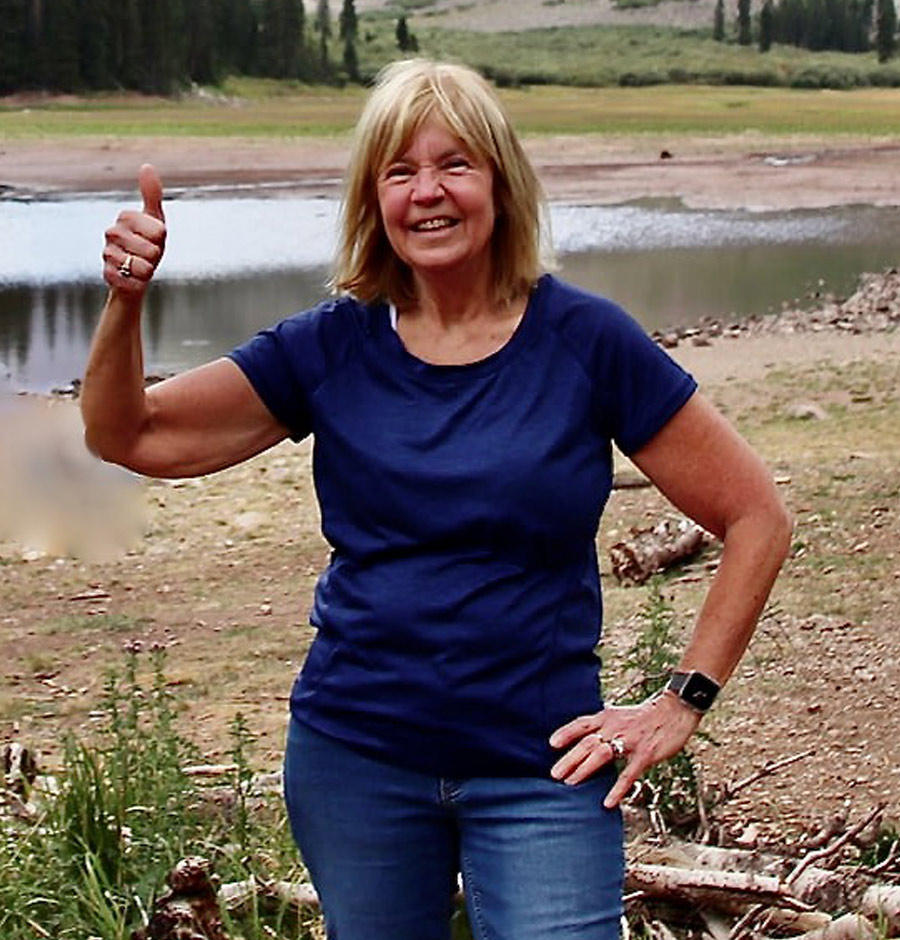
Suzanne Strauss and her husband, Rich, have been full-time RVers for about four years. They started out camping on weekends in a pup tent; eventually, they bought a small single-axle travel trailer to “test the waters” and fell in love with RVing. Now living full-time in a motorhome, they ply the roadways in search of interesting and “off the beaten path” places. She can be reached at: RStrauss22@gmail.com