

Sponsored Content
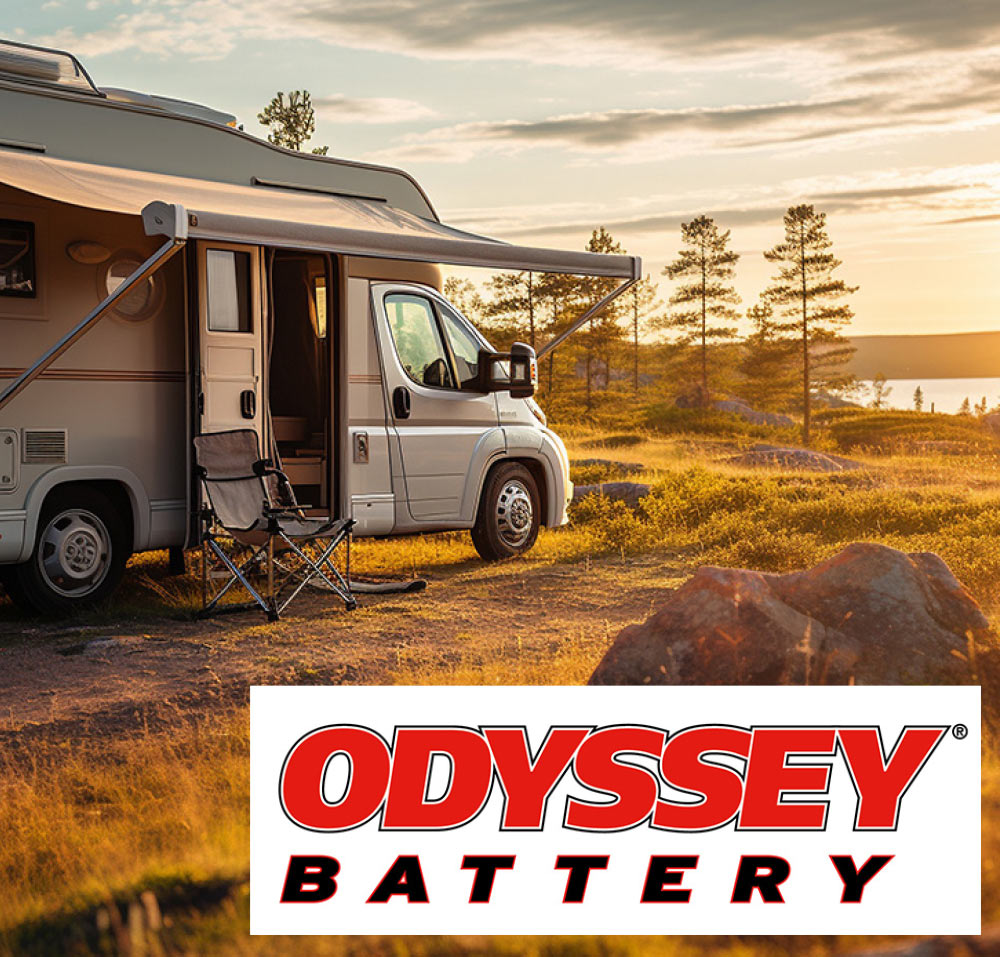
Also commonly referred to as “hotel loads,” house loads can include anything from entertainment centers, appliances and climate control to state-of-the-art safety and security equipment. In theory, these added amenities are nice — but they require much more energy to ensure long-lasting, dependable operation. It’s times like this where reliance on the battery system is high because it’s not only responsible for keeping the various onboard electronics up and running but it also must get the RV started when it’s time to head back to the hustle-and-bustle of normal civilization.
To remain off-grid in contentment and have a truly authentic camping experience with minimal interruptions, consider the following three battery tips for RV boondocking:

- Measure or calculate energy needed and understand the range (and how that may change)
Extended boondocking is all about energy management. One of the important aspects to energy management is appropriately sizing the components. Evaluate the range and types of onboard accessories you’ll be utilizing during your trip to determine how much energy you’ll need. Most RVs have some form of energy storage integrated into the design in which the capacity can and will likely need to be modified.
- Determine location of onboard components and balance out ROI based on usable space
Understanding where things will go, how much space they will take and what they cost relative to how much you will use them are the keys to a Return on Investment (ROI) in your energy storage and management. Additionally, not everyone who RVs boondocks, and it may be difficult to get any return when you go to upgrade your RV, so make sure you buy what you need and not a lot more.
- Optimize between nominal use and worst case
Extending on the ideas above, determine if you really need to size for worst case scenario or closer to nominal use (always size above nominal), as well as understanding alternatives. For instance, using a stove-top coffee maker versus an electric one can really save on the amount of power and energy required at the lowest energy reserve part of the day (morning).
There are lots of areas where tradeoffs that improve reliability and reduce cost are possible and allow for minimized space consumption. One of those areas is battery chemistry choice. Thin Plate Pure Lead batteries, like the ODYSSEY® battery from EnerSys®, have great cyclability, great energy capacity, work with the existing RV electrical infrastructure, can be placed just about anywhere in the vehicle and have a great price point.
ODYSSEY® Dual Purpose batteries from EnerSys are engineered to provide deep-cycle reserve power (rated at 400 charge/discharge cycles to 80% Depth of Discharge DOD) and plenty of cranking capacity to start the engine. With up to a 10-year service life, ODYSSEY® RV batteries also offer slower self-discharge rates and are capable of 100% recharge in as little as four hours. Backed by an industry-leading warranty, they can be stored for two years at 77°F (25°C). They can also perform in extreme temperatures as low as -40°F (-40°C) to as high as 176°F (80°C).
If you’re planning an upcoming excursion where there is no grid connection, consider ODYSSEY® Dual Purpose RV batteries to help get you there reliably, keep you content throughout your stay and ultimately get you back on the road when it’s time to return home.