
A Solid Hook-Up
[maghub_sidebar]

A Solid Hook-up

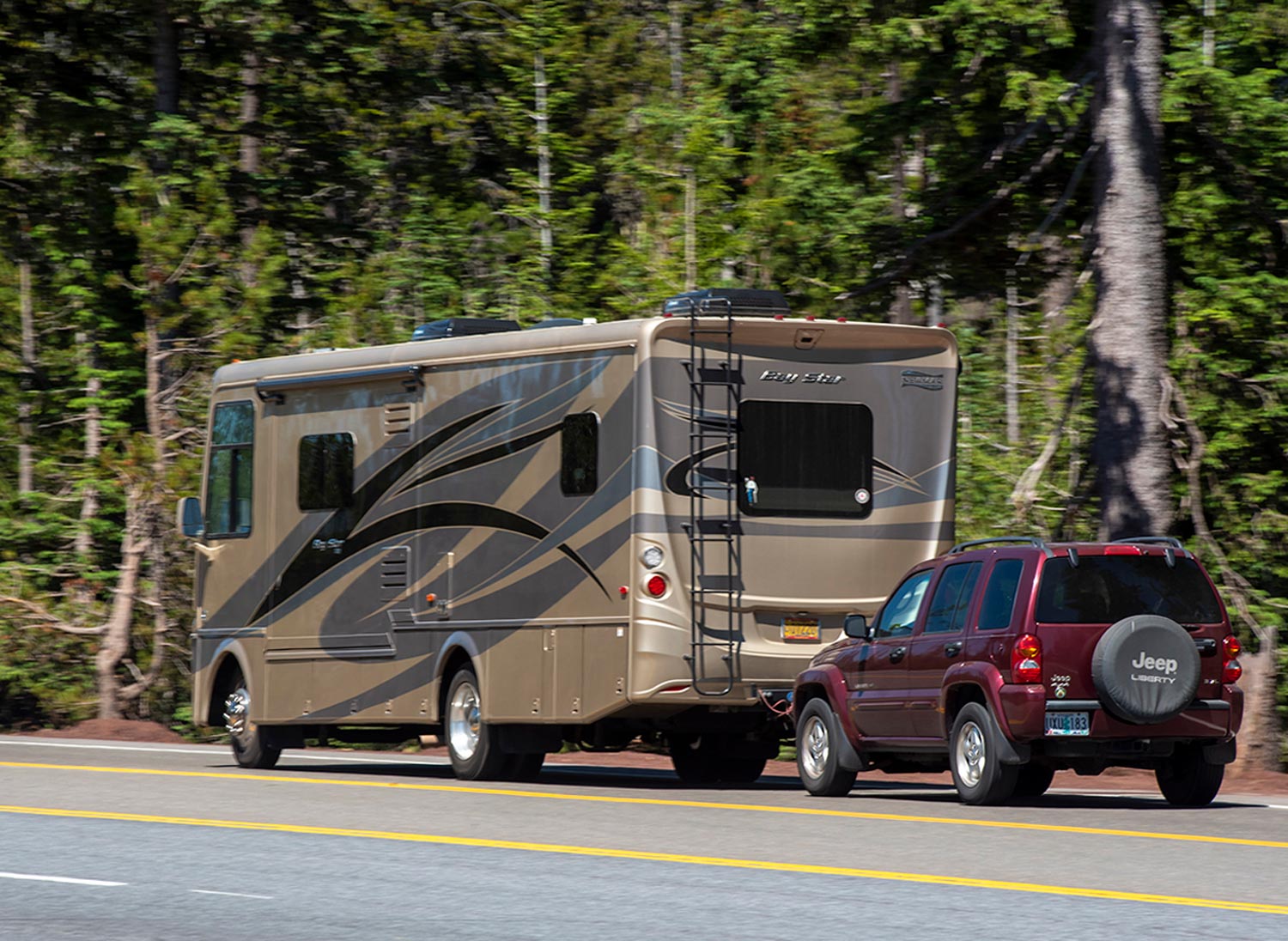
an RV towing an SUV down a road lined with trees

A Solid Hook-up

Towing your car behind a motorhome looks easy at first glance — but you must have the right equipment installed before hitting the road
By Bruce W. Smith
S

etting up a vehicle properly for flat-towing behind a motorhome seems so simple. Slide the ball mount into the receiver on the coach, connect the tow bar to the ball mount and the vehicle you’re towing, plug in the lights and off you go.

If it were only that easy.

Safety on the open road should be the Number One priority of every person behind the wheel of an RV because the lives of the loved ones riding along are literally in the driver’s hands. That may sound melodramatic, but it’s true. Hook up a towed vehicle behind the motorhome and you add yet another element to those safety concerns.

If you want to flat-tow (all four wheels on the ground) a “dinghy” safely and confidently behind your motorhome, going the cheapest route on the tow setup probably isn’t in your best interest — especially if you plan on towing the vehicle for thousands of miles over varying road and weather conditions. According to the expert installers at Bish’s RV in Meridian, Idaho, a flat-tow setup requires an investment of between $3,500-$5,500 — depending on the vehicle, tow-bar and braking products used and whether you do it yourself or have a pro do the work. Yet many RV owners concentrate on price first, with safety and quality of product second. However, when it comes to towing a vehicle behind any motorhome, price should always play a secondary role.

“Think about it. Regardless of which tow bar you use, you need a baseplate. Regardless of which tow bar you use, you need the vehicle being towed wired for lighting. Regardless, of the wiring you use, you’ll need safety cables and a secondary braking system. Regardless of the brands you use, you’ll have the same amount of labor installing all of this equipment,” said David Robertson, vice president of Roadmaster, Inc., a leading manufacturer of flat-tow systems and towing-related products. “So, when you add up the total package, the difference in total cost between an entry-level tow bar and a premium tow bar may only change the total installed package price by 10 to 15%,” he added. “When you look at it that way, it really doesn’t make sense to shave pennies on the tow bar.”

The same applies to the supplemental braking system for the towed vehicle. Most state towing laws require the dinghy have a braking system just like a trailer — if the vehicle isn’t occupied, it will not apply the brakes on its own accord. You have to install a supplemental or independent brake system for the vehicle that is activated by the RV’s braking system.
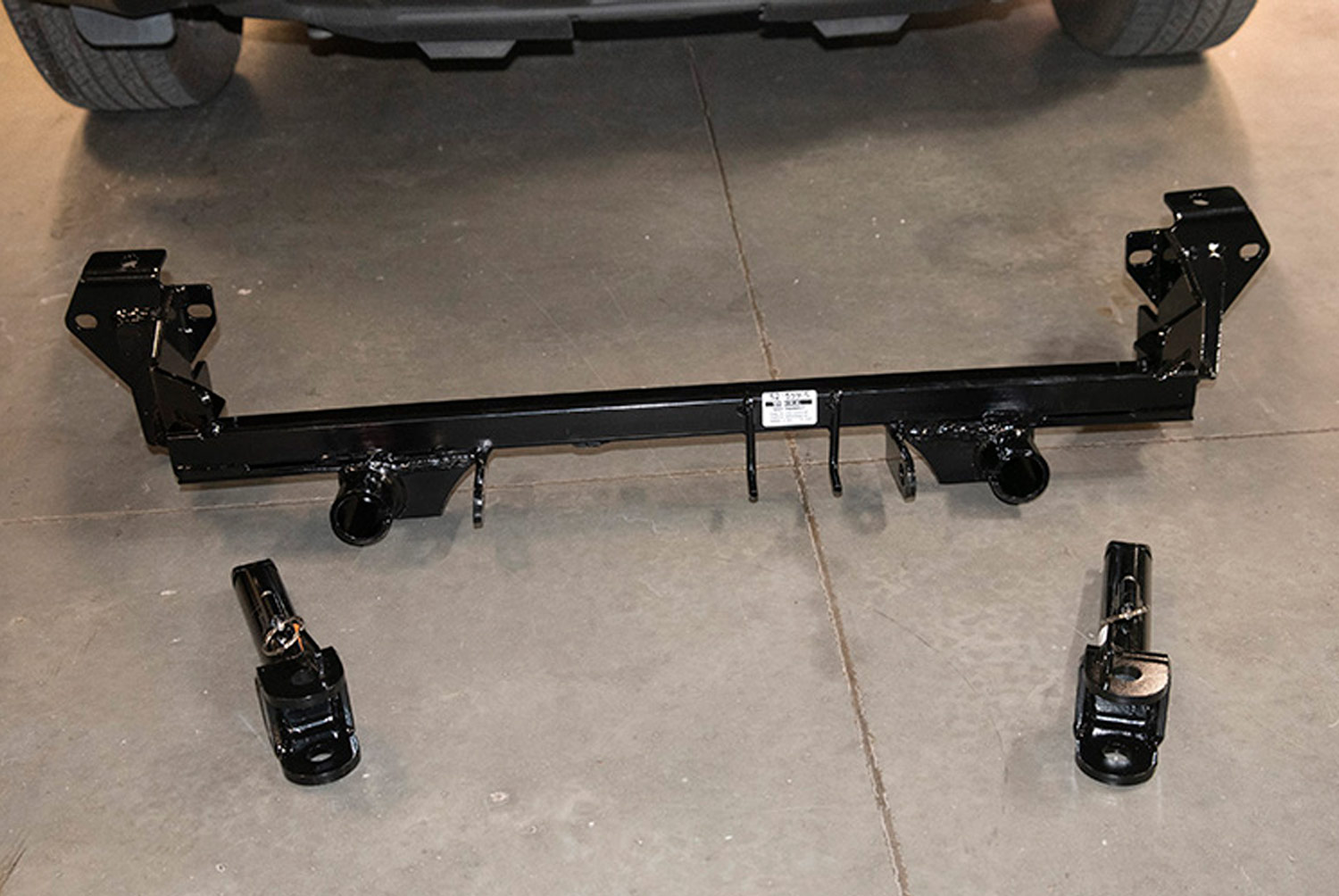
parts from a flat tow set up kit from Roadmaster
Setting a vehicle up to flat-tow, like Bish’s RV did for this customer’s 2007 Honda CR-V, requires more than just installing a baseplate and connecting brackets like this kit from Roadmaster. It also requires a supplemental braking system, time and patience.
There are a number of ways to skin that cat, but one of the top supplemental vehicle braking systems, and one Bish’s RV in Meridian, Idaho, highly recommends to all of their gas-powered RV customers, is the Stay-IN-Play DUO by Demco Products. One kit covers all applications.

The Stay-IN-Play DUO uses Demco’s patented technology to create a dual-signal system (brake lights and inertia) for progressive brake activation, which helps the motorhome slow down smoothly. This results in faster, more precise signals between the motorhome and towed vehicle for additional safety, longevity and easy handling.

Setting up a vehicle for flat-towing behind motorhome is one of the more tedious tasks the DIYer in an RVing family will probably ever undertake. It requires a basic understanding of vehicle body work, the ability to make minor installation adjustments on the fly and a solid understanding of vehicle wiring and braking. There’s no room for mistakes or doing sloppy work when it comes to setting up a vehicle to be towed behind a motorhome — the last thing you want when towing a dinghy is to have its brake system fail in some manner or, in a worst case scenario, have the vehicle come loose from your motorhome while you’re tooling down the road. The quality of the products used and how they are installed are of the utmost importance for a flat-towing setup.

When RV Enthusiast visited Bish’s RV to follow along as dealership technicians properly prepared a 2007 Honda CR-V for flat towing, Brandon Awe, a Master Certified RVTI Technician at the dealership, made no bones about the difficulty level and the importance of being OCD when it comes to paying attention to detail setting up a flat-towing system.

“If a do-it-yourselfer isn’t exceptionally confident in their vehicle wiring abilities and they don’t pay attention to the smallest detail, this is one of those installations you don’t want to undertake,” said Awe as he laid out a mass of wires, connectors, control box, diodes, and other hardware needed to install a Demco Stay-IN-Play Duo supplemental braking system on the Honda.
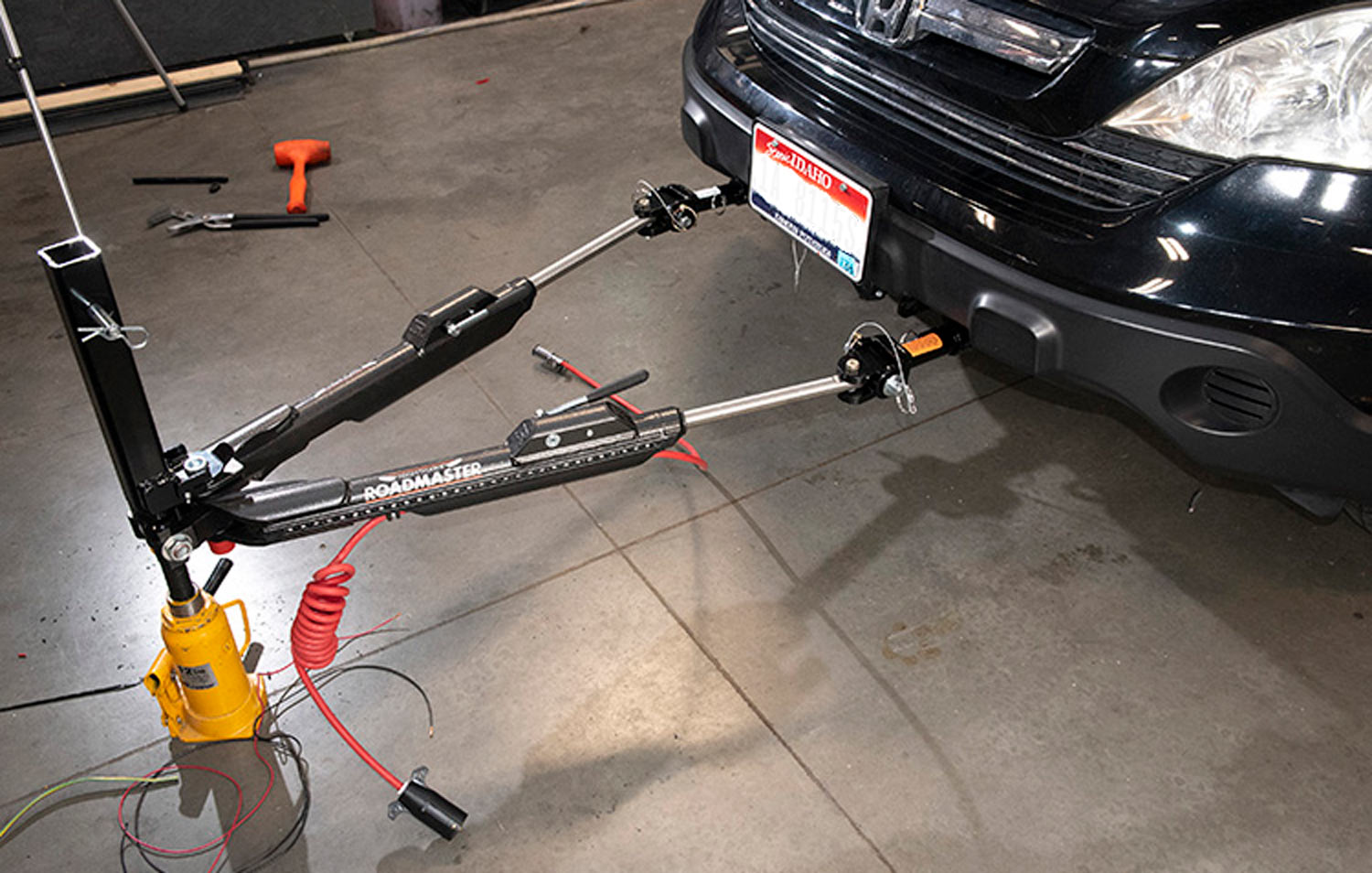
Roadmaster’s USA-made, “non-binding” Falcon All-Terrain flat-tow bar system on an SUV
Higher-end tow bars are not only stronger, they also work better and last longer. Roadmaster’s USA-made, “non-binding” Falcon All-Terrain flat-tow bar system uses solid stainless-steel inner arms, which combat rust and corrosion.
“I’ve literally installed more than 500 flat-tow systems during the last eight years. Even for an expert technician like myself, an installation takes six to eight hours — and I have all the tools at my disposal in case something doesn’t fit exactly as it should,” said Awe. “This (Demco/Roadmaster) install would probably take the typical DIYer a full day or day-and-a-half to complete so everything looks factory and (will) provide years of trouble-free service. But when it’s installed, there’s not a better, more reliable flat-tow setup.”

What takes so long to set a vehicle up to be flat-towed? We followed Awe as he prepped the Honda, knowing that while not every motorhome owner will undertake the process personally it’s always a good idea to understand the process. Awe tackles every flat-tow install in three parts: 1) installing the Roadmaster baseplate, which is where the tow bar from the RV attaches to the dinghy; 2) wiring the towed vehicle’s brake lights to the 7-pin plug that connects to the RV’s lights and charge power; 3) and installing the Demco Duo supplemental braking system on the dinghy.

To install the tow-bar baseplate you have to remove the dinghy’s front bumper/facia and, on vehicles such as the Honda CR-V, the factory crash bar, which is located right behind the bumper. Then the baseplate is bolted into place and the wiring begins.

This part of the flat-towing installation requires hours of time and patience. There are no plug-and-go pre-made wiring harnesses like is often the case when installing aftermarket lights, stereo systems, a trailer plug or many other vehicle accessories.

You have to measure, cut, splice and run new wiring from the baseplate to the taillights. You’ll also need to wire in special diodes to protect modern vehicles’ sensitive electronics (as well as those of the motorhome.)

That’s when the focus turns to installing the Demco supplemental braking system, which entails mounting the compact DUO operating unit (air compressor/air tank) inside the engine compartment, installing a G-Force controller kit (it activates and controls the braking force as needed) under the dash, and mounting the DUO air cylinder to the vehicle’s brake pedal. More time. More patience. More attention to details.

The beautiful part of this flat-tow installation is when done properly, the on-the-road operation is smooth and flawless. The towed vehicle and motorhome brake as one. The vehicle can also be quickly and easily disconnected because of the way Roadmaster designed its non-binding Falcon All-Terrain tow bar.

“When the time comes to change the flat-tow components from one towed vehicle to another, or to put the towed vehicle back to factory (stock) configuration, it’s easy because of the way we do these installs,” said Ryan Penny, operations manager at Bish’s RV in Meridian.

“The diodes unplug and the factory wires plug back into themselves,” said Penny. “The wiring and DUO components are easily removed. The only thing that needs to be replaced before setting up your next vehicle for flat-tow behind an RV is the baseplate, because they are specific to each vehicle.”
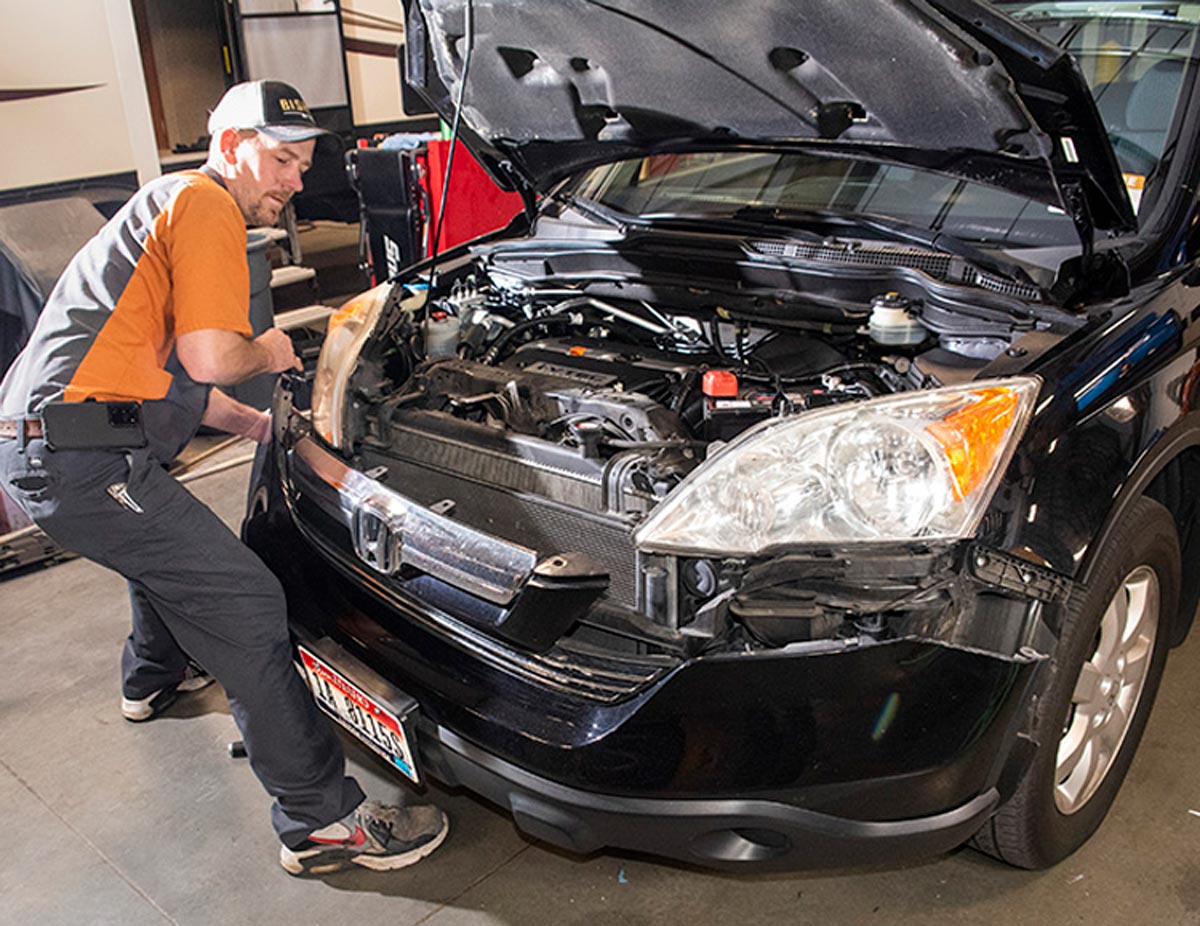
Master RV technician Brandon Awe removes the front bumper of the dinghy
the tow bar sitting in place on the front of the SUV
While many RV DIYers may not be comfortable removing the front bumper of their dinghy — which has to be done to install the tow-bar baseplate — Master RV technician Brandon Awe has installed more than 500 flat-tow systems, so he knows all the attachment points and has the correct tools for easy removal. Roadmaster fabricates each baseplate to fit a specific make/model vehicle. The tow-bar baseplate provides more impact protection than the factory crash bar that is removed for this install.
mechanic makes some “adjustment” to get all the baseplate mounting holes to line up
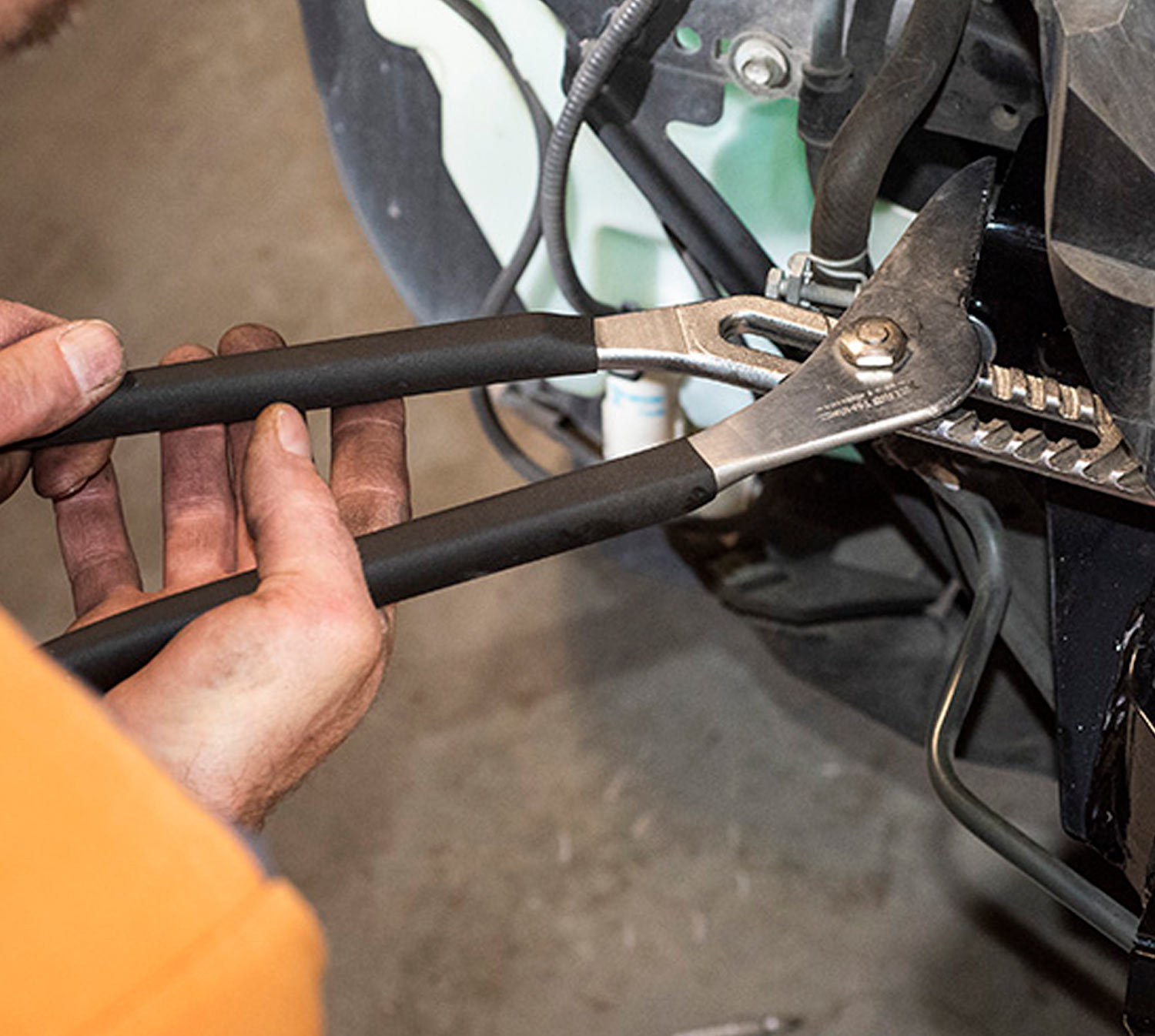
Body flex in higher-mileage unibody vehicles, like this Honda CR-V, can sometimes require some “adjustment” to get all the baseplate mounting holes to line up. Having the proper tools on hand speeds up the installation process.
mechanic uses a drop of red Loctite on all the baseplate mounting bolts to ensure they don’t loosen over time and miles
Awe uses a drop of red Loctite on all the baseplate mounting bolts to ensure they don’t loosen over time and miles.
mechanic uses a drill to punch a hole through the Honda’s unibody frame on each side of the baseplate mounting brackets to insert a ½-inch bolt
the ½-inch bolt on the mounting bracket
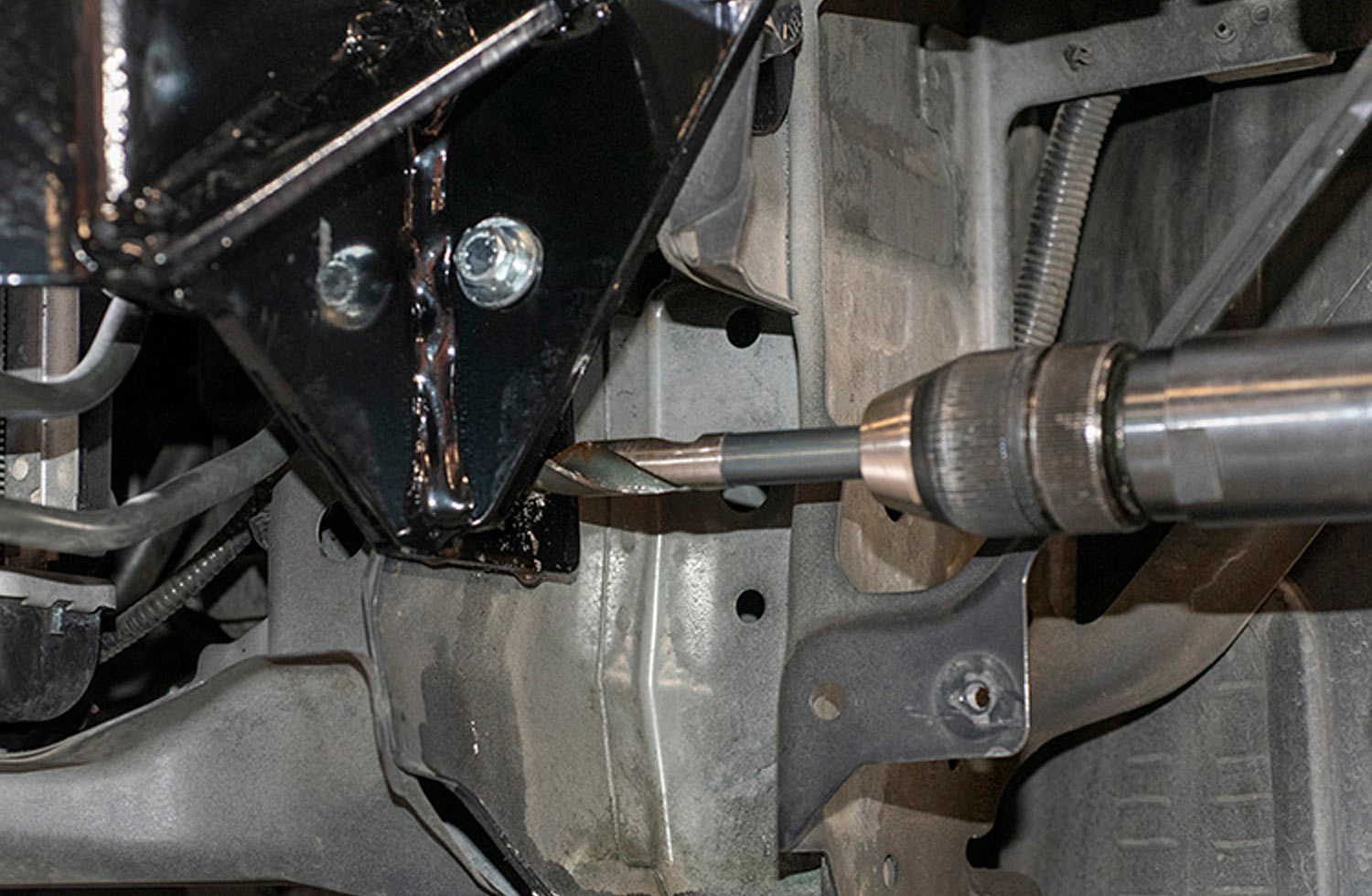
The only drilling required in this entire install is to punch a hole through the Honda’s unibody frame on each side of the baseplate mounting brackets to insert a ½-inch bolt. The instructions show the exact location. (Be very careful not to drill a hole through the side of the radiator or damage the cooler lines!)
the Roadmaster flat-tow baseplate installed
The Roadmaster flat-tow baseplate installed. It’s essentially a “bolt-on” product, with just the lower rear mounting bolt on each sideplate requiring a hole be drilled. This steel baseplate is super strong and well designed.
a 16-gauge, 100% copper “flat-four” RV/trailer wire roll sits in preparation for installation
The wiring part of the installation requires running new wiring. Awe uses 16-gauge, 100% copper “flat-four” RV/trailer wire to run from the front of the vehicle to the taillights. The wire is run along the frame (above the skid plates) following the brake and fuel lines. Plastic zip ties hold it in place.
mechanic removes a taillight
mechanic holds the taillight wiring diodes in hand
The Honda taillight assemblies are unbolted so the wires running to the 7-way connecter at the flat-tow baseplate can be wired in. This installation also requires installing Roadmaster Hy-Power diodes (P/N 794) to prevent any “back-feeding” of the towed vehicle and motorhome’s sensitive electronics. Awe cuts six-inch “jumpers” so he can place the Roadmaster Hytech Hypower diodes (which have adhesive backing) anywhere in the brake light assemblies. The diodes prevent electrical issues caused by “back-feeding” between tow vehicle and RV. The wire connectors were set up so the taillight wiring can be easily put back to stock without any wire cutting or splicing.
The Demco DUO supplemental braking kit parts laid out
“The Demco DUO supplemental braking kit is designed for dual-signal operation to provide real-world braking,” said Doug Northcutt of Demco Trailer Components and RV. “Meaning the system needs the taillights and inertia to activate braking. This creates a smoother and quicker transition between intermediate stopping and panic stopping, while reducing over-braking that occurs in most single-signal operation brakes.”
mechanic uses a time-saving trick by running the air line in the DUO kit between the interior and the engine compartment via the factory Honda wiring harness opening in the upper firewall
the Demco controller with the wiring taped to the air line
A time-saving trick Awe uses is to run the air line in the DUO kit between the interior and the engine compartment via the factory Honda wiring harness opening in the upper firewall. Then he tapes the wiring from the Demco controller to the air line and uses it to pull the wires back into the engine compartment.
Demco’s G-Force Controller II
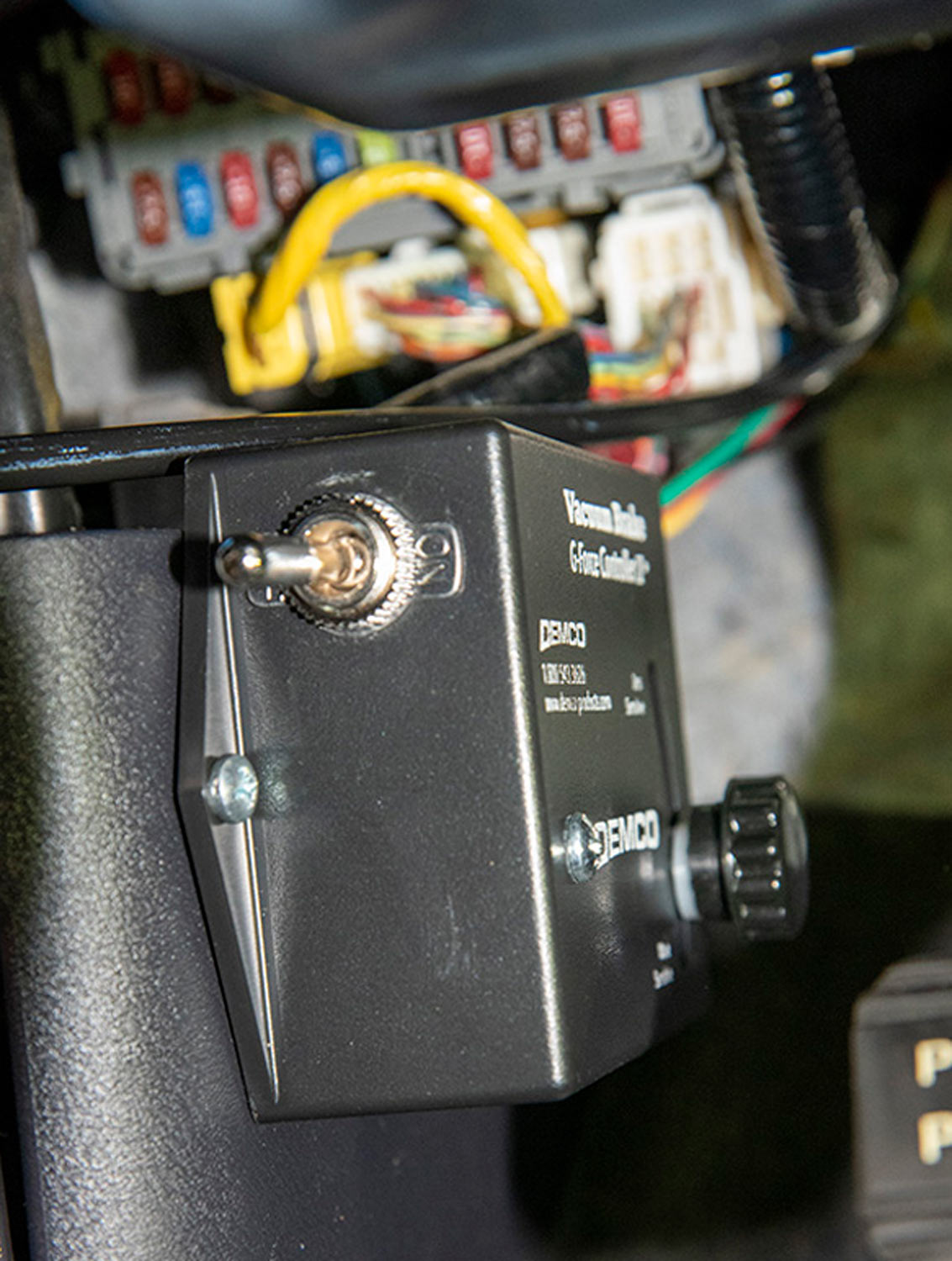
Demco’s G-Force Controller II has a pendulum inside that uses both taillights and g-force to signal the compressor the amount of progressive braking to apply. The dial on the side of the black box is the fine-tuning adjustment. The toggle switch turns system On/Off.
mechanic holds wiring flush to compare colors
When installing yourself, pay particular attention to the wiring: White is ground and red is power to the LED light strip; brown and blue route to the break-away box. Inside the wide gray cable are the black and white wires for the battery charge line from the RV. Green and yellow wires are the left and right turn signals, respectively, while the brown wire is for the running lights.
the Demco opertating unit is placed on top of the engine cover in the small engine compartment of the Honda SUV
The engine compartment on this Honda is small, so the only place to mount the Demco operating unit (compressor/air tank) was on top of the engine cover. Awe has found using self-tapping screws makes the installation easy.
the Demco DUO system T’s into the vehicle’s brake vacuum hose
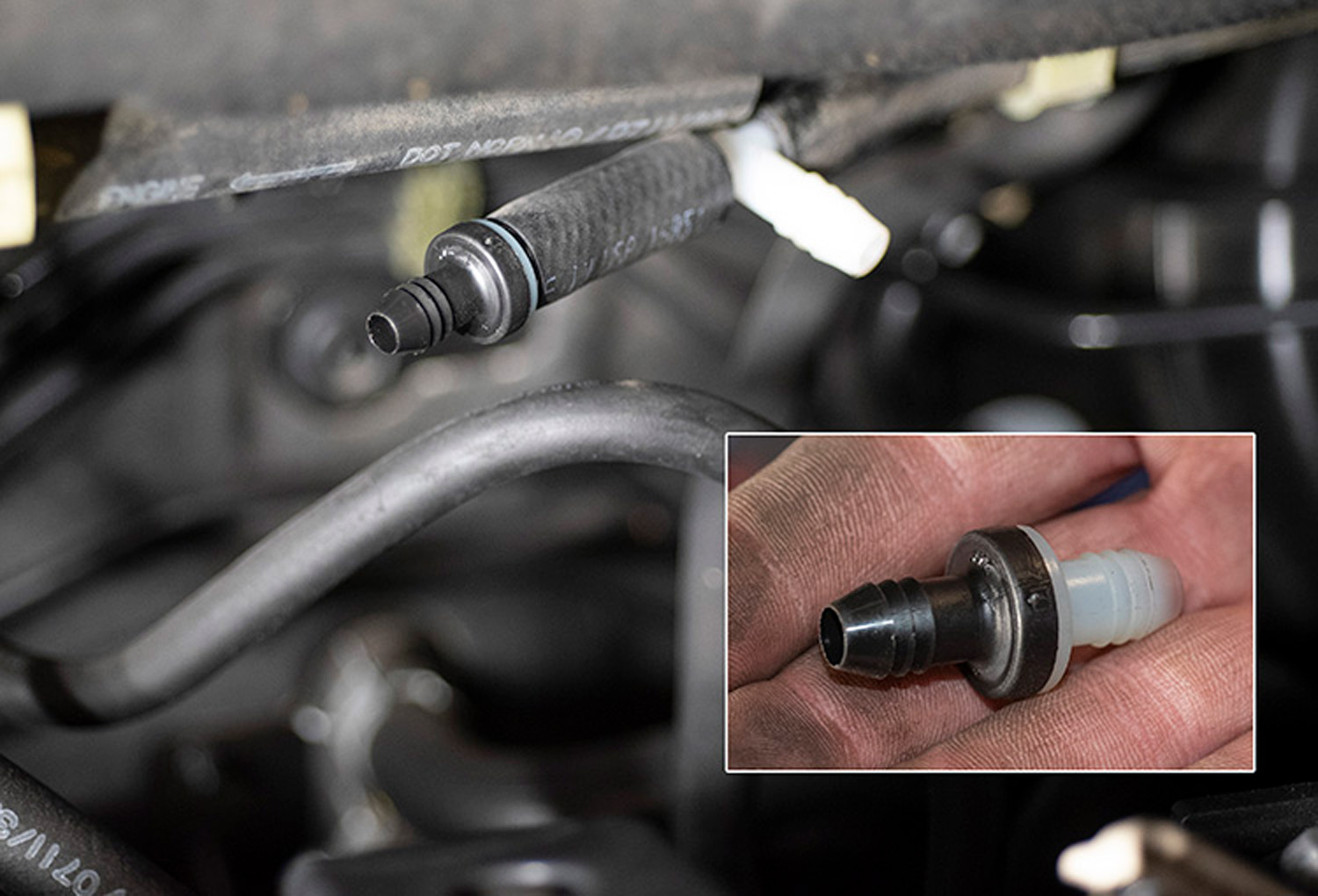
The Demco DUO system T’s into the vehicle’s brake vacuum hose. Supplemental vacuum is applied by the compressor to help ease and smooth the application of the air-activated brake cylinder attached to the brake pedal as if the engine were running. Note the position of the one-way valve’s black end (inset) — it points toward the engine.
view under the dash at a little air cylinder
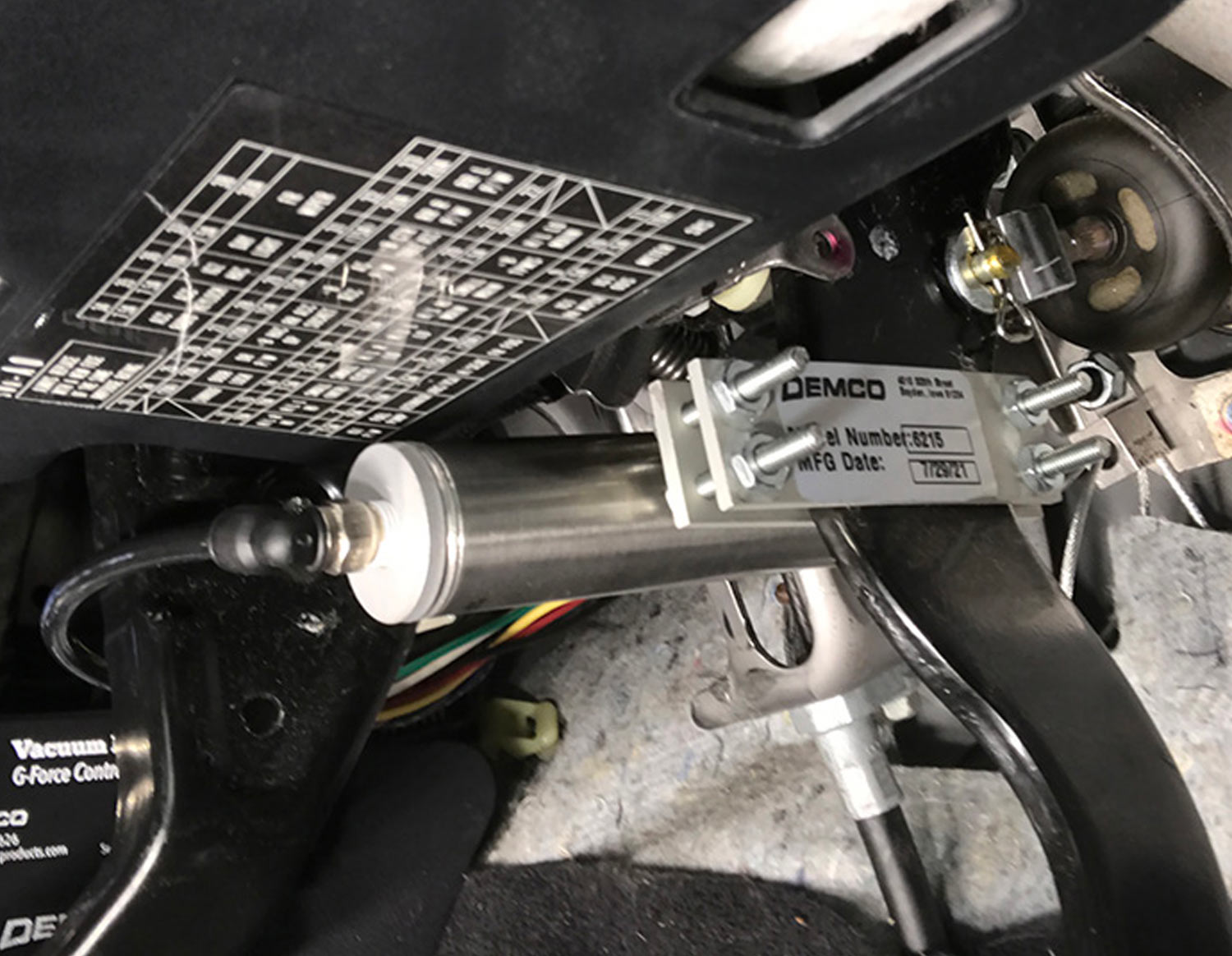
Air from the Demco compressor unit goes into this little air cylinder under the dash. It’s attached to the dinghy’s brake pedal. As the ram is forced out, it pulls the brake pedal down via the aircraft cable bolted to one of the studs on the firewall.
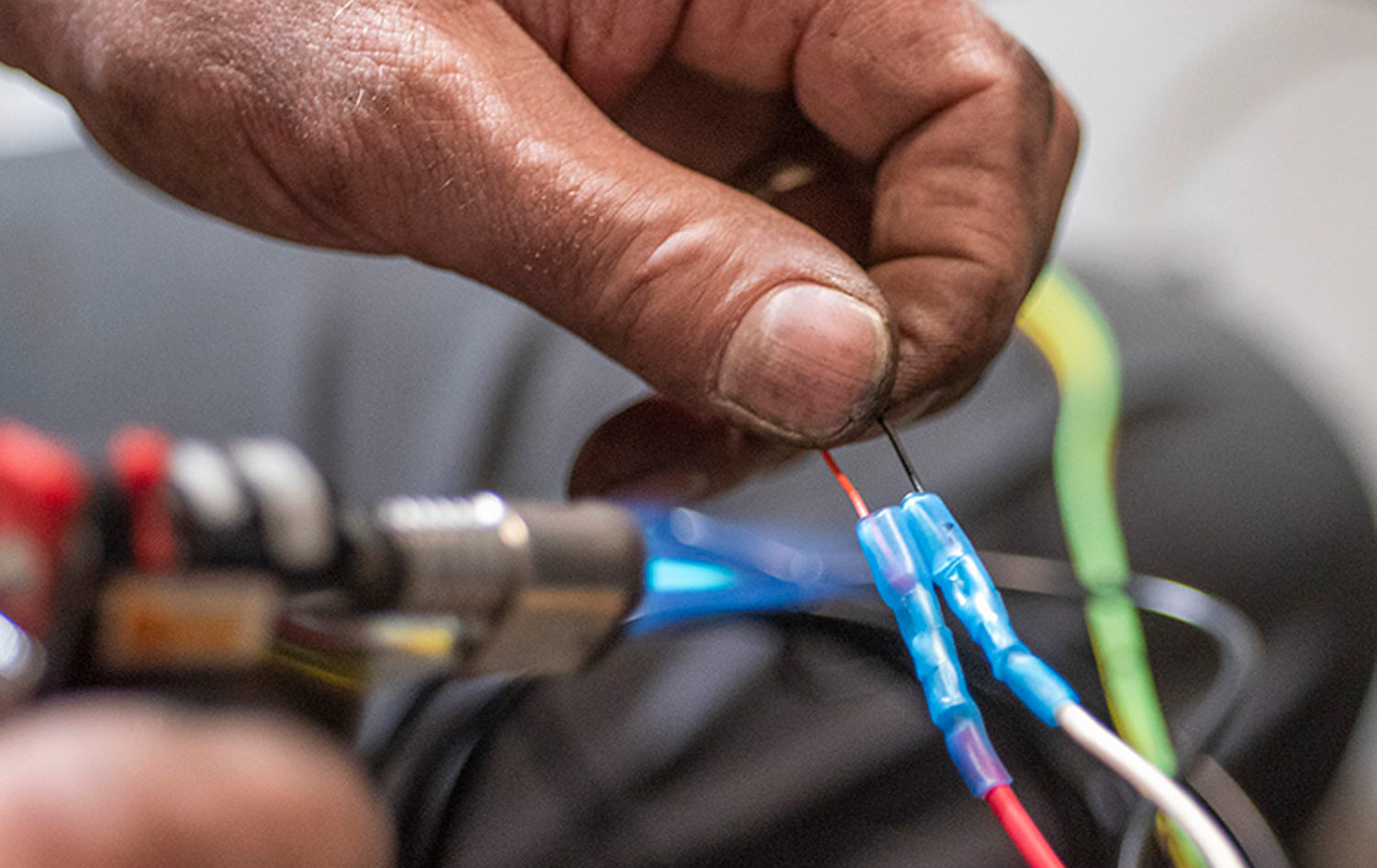
mechanic uses heat-shrink connectors on wiring exposed to the elements
Always use heat-shrink connectors when wiring is exposed to the elements. Awe tosses all the connectors that come with these kits and uses the highest-quality wiring components he can get for any flat-towing installation he handles.
mechanic applies a liberal amount of dielectric grease to wiring
Another tip Bish’s top tech passed along is to use a copious amount of dielectric grease to cover the baseplate 7-way plug’s wires. This prevents them from corroding over time from water/salt intrusion.
mechanic uses split loom and electrical tape to protect all the new wiring
Awe always uses split loom and electrical tape to protect all the new wiring he installs. The finished wiring job looks factory.
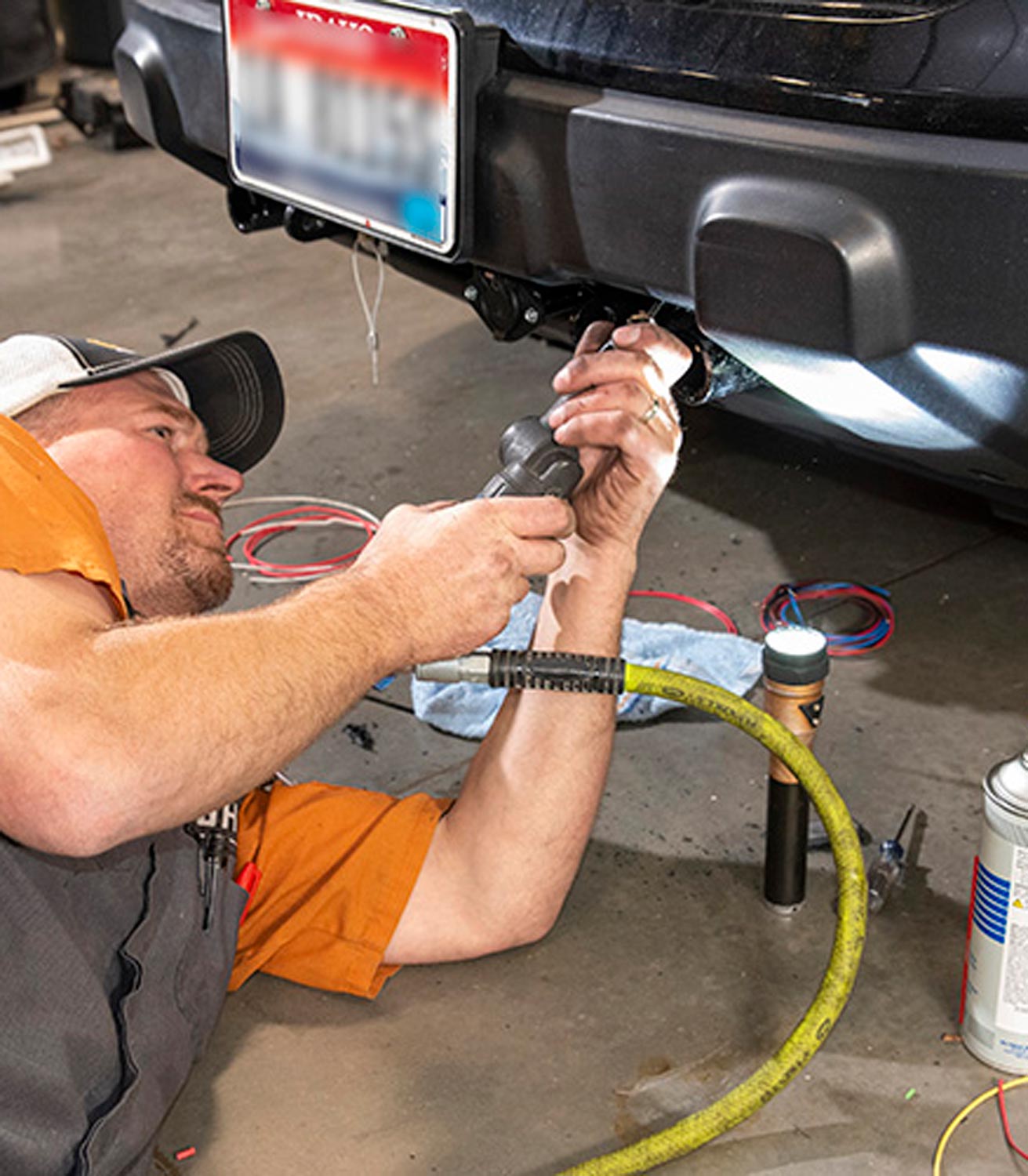
mechanic lays on the garage floor, trimming the plastic bumper/facia so it matches the contours of the new baseplate and connections
The final step in this flat-tow install is to carefully trim the plastic bumper/facia so it matches the contours of the new baseplate and connections. Awe also makes sure the transmission cooling line is not touching the baseplate.
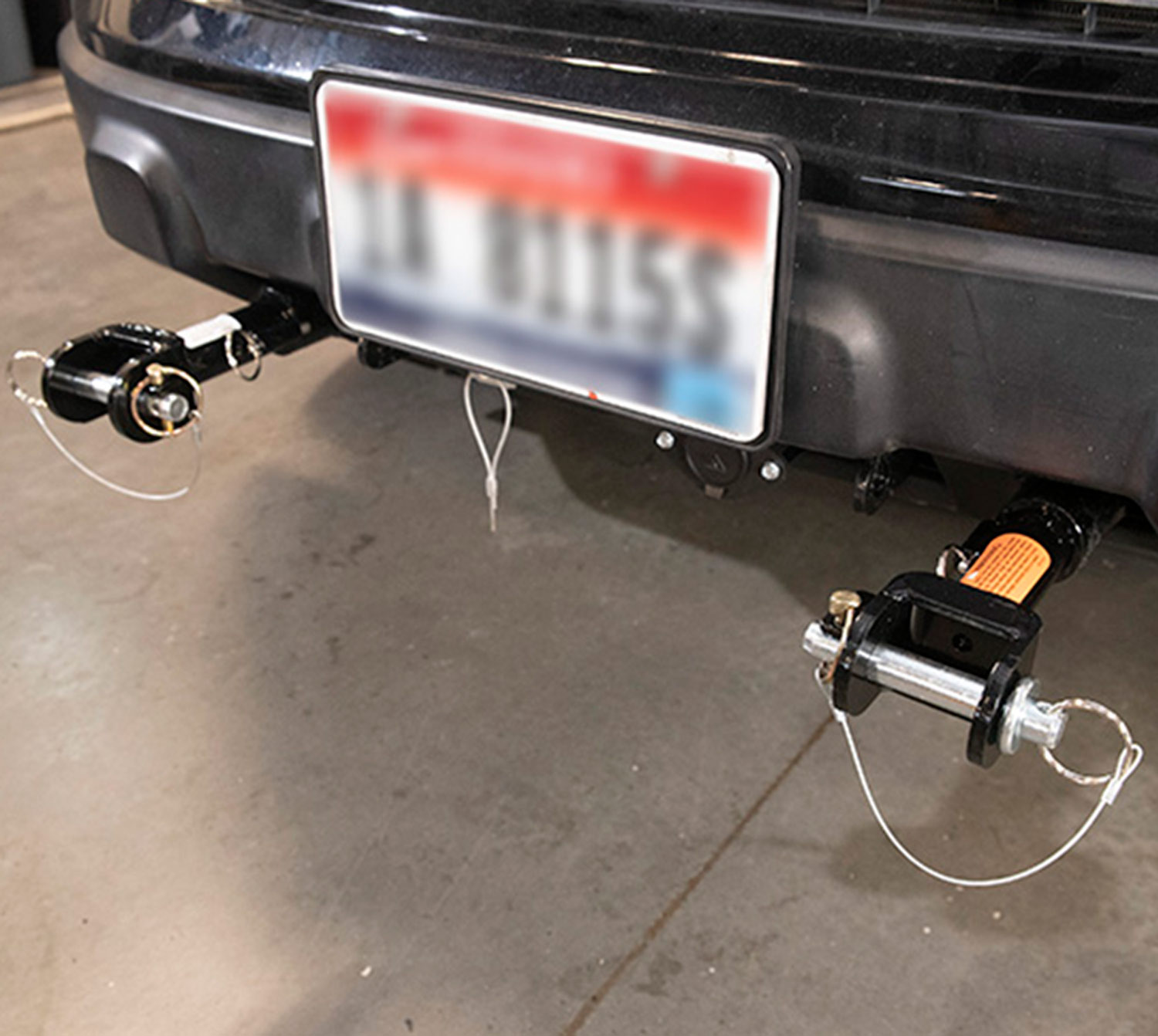
The Roadmaster Flacon All-Terrain tow bars connected
The Roadmaster Flacon All-Terrain tow bars disconnected
When the Roadmaster baseplate kit is installed it matches the vehicle perfectly. When the connecting arms are removed, it’s almost invisible. The Roadmaster Flacon All-Terrain tow bars are ‘non-binding’ so they are easy to disconnect. With some lower-priced tow bars, the more the towed car is out of line with the RV, the harder they are to disconnect.
Sources:
Bish’s RV / 208.271.4479
www.bishsmeridian.com

Demco Products / 800.543.3626
www.demco-products.com

Roadmaster, Inc. / 800.669.9690
www.roadmasterinc.com