

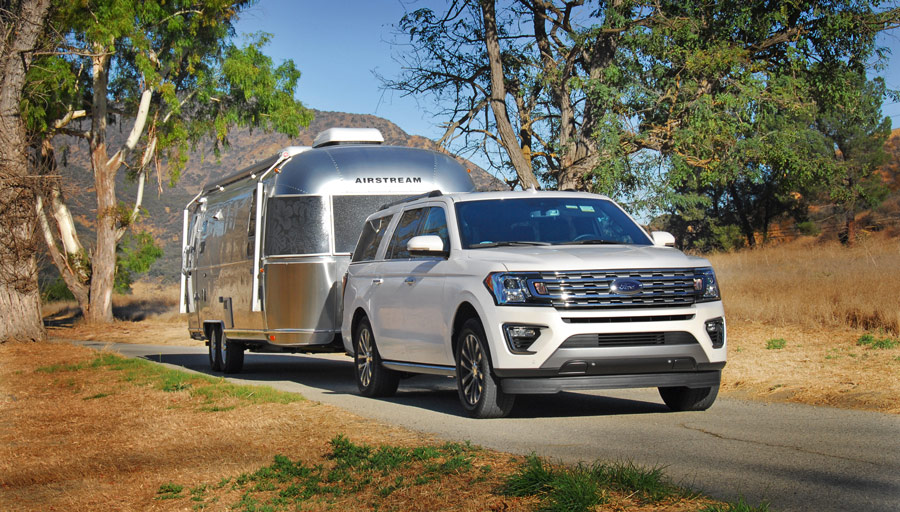
railers are by far the most popular RV choice, simply because many people already own half of the equation: the tow vehicle. However, that doesn’t mean that creating the perfect tow vehicle/trailer match is easy; balancing your needs and wants with what a vehicle is engineered to tow can often be a challenge, particularly when the whole family is taken into consideration. However, once you have the correct information in hand, narrowing down your best choices will make it easier for you to find the right trailer, tow vehicle or both.
Know Before You Tow
Let’s begin with the beginning. If you’ve already got a truck or SUV and you’d like to find a trailer that’s a good match, the first step is to determine your vehicle’s tow rating (if you don’t know it already). Most vehicles designed for towing list this information in the owner’s manual under “towing” or “trailer towing,” and the rating may vary depending on how the vehicle is equipped. Factors that may influence the tow rating include the engine, transmission, drive system (RWD/FWD or 4WD/AWD), the final drive ratio and whether or not it was ordered with a towing/payload package.
Owner’s manuals for most popular brands built in the last 10 years or so are also available for free online — simply enter the make and model of the vehicle in your favorite search engine, followed by “owner’s manual.” Most of the time, this will lead you to an owner’s site, for example, https://my.chevrolet.com/how-to-support or https://www.mopar.com/en-us/my-garage/select-vehicle.html. If you own a Ford product, you’re in luck — Ford publishes comprehensive towing guides going all the way back to 2004: https://www.fleet.ford.com/towing-guides/. Honda, Hyundai, Nissan and Toyota also have sites that will let you download owner’s manuals.
If you can’t find the tow rating in the owner’s manual, a dealership service department should be able to help you find out how the vehicle is equipped by looking up the Vehicle Identification Number (VIN). A word of caution here: Don’t rely on one of the tow rating calculators or formulas that you may find online, because these typically only display the highest available tow rating for a given model and don’t break down tow ratings based on your vehicle’s specific equipment.
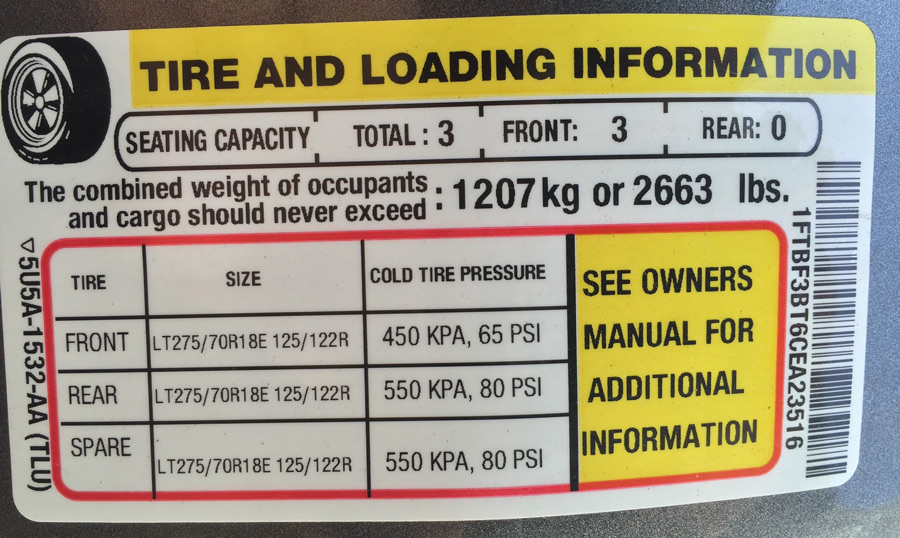
The other consideration is the tow vehicle’s payload rating, which is calculated by subtracting the vehicle curb weight from its gross vehicle weight rating, or GVWR. Contrary to popular belief, the payload isn’t just how much stuff you can carry — it’s the maximum allowable weight for both cargo and passengers. This is important information that can also affect what the vehicle will be able to tow. The payload capacity of the vehicle can be found on a “Tire and Loading” information decal inside the doorjamb or edge of the driver’s door, or in the vehicle owner’s manual.
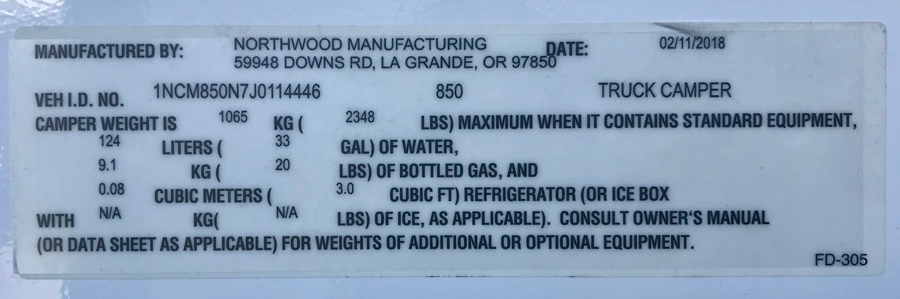
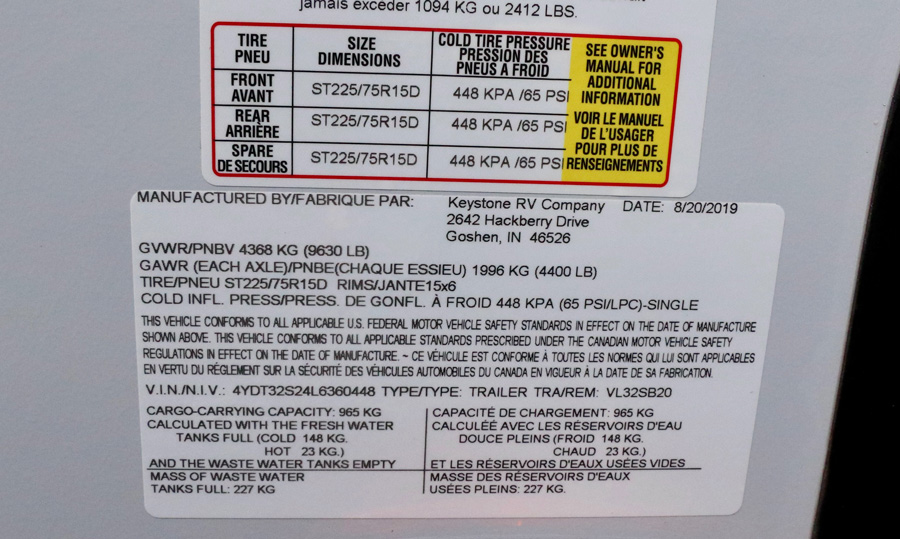
Once you know the vehicle’s tow and payload ratings, you can begin shopping for a trailer. Whether you’re looking at travel trailers or fifth wheels, the most important consideration is how much it weighs. All trailers should have a yellow label that displays the unloaded vehicle weight (UVW), the gross vehicle weight rating (GVWR) and the cargo carrying capacity (CCC), which is established by subtracting the UVW from the GVWR. It’s important to note here that the UVW may vary depending on how the trailer is equipped, and you can’t determine its actual weight until it’s full of water (if you travel with a full freshwater tank) and all supplies you normally carry (learn more in “Worth the Weight” elsewhere in this issue).
Whether you’re shopping new or used, it’s unlikely that you’ll be able to weigh the trailer in its loaded condition before purchase, so your safest bet is to use the GVWR as your guide. As with the tow vehicle, the GVWR represents the maximum allowable weight — so if the trailer GVWR is within the tow vehicle’s maximum tow rating, it should be capable of towing it. Also, since it’s unlikely you will load the trailer to its maximum (though it is possible), using the GVWR as your guide can help you make sure that the tow vehicle has capacity to spare.
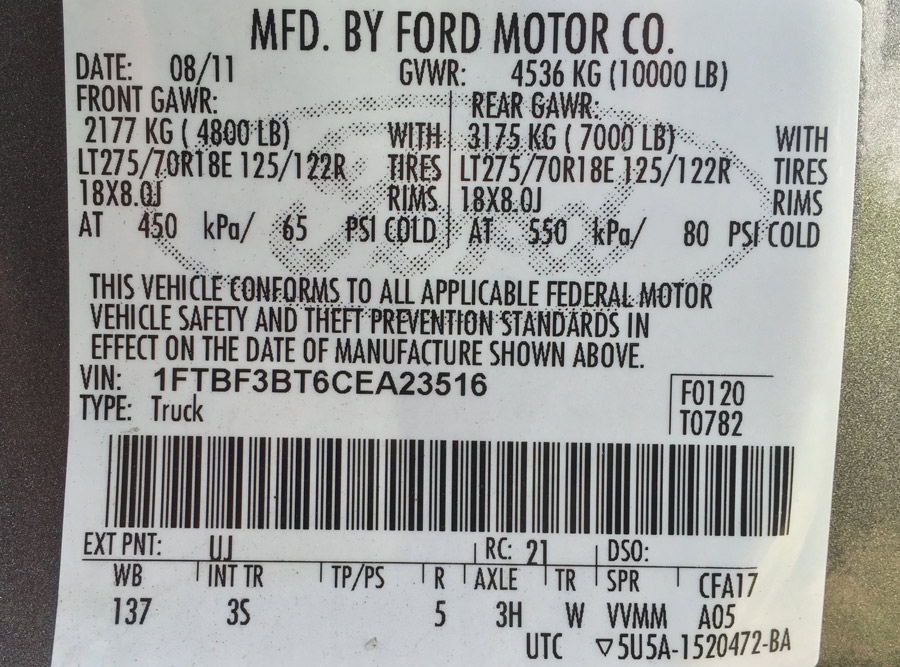
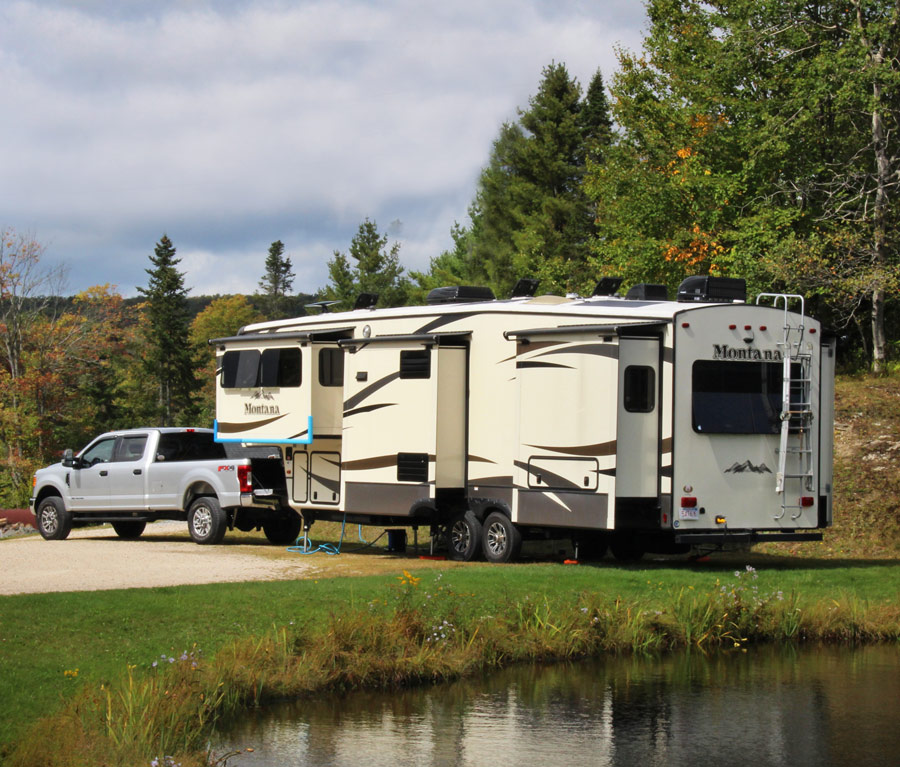
A travel trailer places at least 10% of its weight on the vehicle’s hitch (known as hitch or tongue weight), while a fifth wheel will put around 20% of its weight in the bed of your truck (pin weight). Calculate that figure on the trailer you’re considering as if it were at maximum weight, then add up the passengers and typical cargo, and make sure the payload rating isn’t exceeded first. The next thing to consider is the vehicle’s gross axle weight rating (GAWR), which is the maximum weight the axle(s) is designed to carry. Unless you plan to haul a lot of weight in the bed of the truck, like a couple of quads, a generator and some firewood, exceeding the GAWR with a travel trailer usually isn’t a concern. However, because fifth wheel and gooseneck trailers carry more weight in the bed, directly over the truck’s rear axle, it’s important to make sure the GAWR is within range, especially when using a “half-ton” pickup to tow a fifth wheel.

So far, we’ve discussed choosing a trailer when you already have a tow vehicle. However, some RVers begin their towing odyssey by selecting the perfect trailer, then finding the right vehicle to tow it with. In this scenario, it’s important to consider what tow vehicle will be required to tow your dream trailer, especially if you are new to towing. The heavier the trailer, the more capable the tow vehicle will need to be. A bigger, more powerful engine option, heavy duty towing/payload package and factory towing aids will raise the price tag — and if you’re shopping for a fifth wheel, you should also think about how comfortable you (and perhaps your partner) are with driving a heavy-duty truck or dually on the highway, in the city or even as a second family vehicle. Heavy-duty-labeled trucks are longer, require more room to turn and can ride relatively rough when they’re not towing/hauling anything. They are also more expensive than lighter trucks, get poorer fuel economy and may cost more to maintain.
With that in mind, once you’ve settled on a trailer, shop for a tow vehicle that is more than capable of towing it. If your new fifth wheel trailer has a GVWR of 20,000 pounds, you’ll want a vehicle that can tow at least that much. Due diligence falls squarely on the buyer’s shoulders here — don’t rely on the word of a salesperson who may or may not understand tow or weight ratings.
The good news is, it’s easy to do your own research on a new tow vehicle, as mentioned earlier. As part of your research, you’ll also want to check out the tow vehicle’s GVWR, GAWR, gross combined weight rating (GCWR = the maximum allowable weight of the truck and trailer) and payload to make sure it’s up to the task of towing your new trailer. Usually, a vehicle that has a sufficient tow rating will also have enough capacity in these other areas, but not always. For example, a half-ton truck may be rated to tow more than 12,000 pounds, but a fifth wheel weighing that much may exceed the payload and/or GAWR of the truck.
Once you arrive at a fifth wheel that weighs north of 15,000 pounds, you may find yourself wondering if a dually is necessary, or if you can get by with a single rear wheel (SRW) heavy-duty truck. While it is true that there are SRW trucks on the market today that can tow more than 20,000 pounds, a dually offers more than just a higher tow rating. The truck’s extra set of rear wheels gives it substantially higher payload and GAWR ratings, keeps the truck more stable in sidewinds or when being passed by semi tractor-trailers and gives you a greater safety margin in the event of a rear tire blowout. Choosing a dual-rear wheel option doesn’t add much to the price tag, either.
In 2008, the Society of Automotive Engineers (SAE) published its J2807 standard, designed to level the playing field when it came to tow ratings. It was expected to be adopted by all truck manufacturers by the 2013 model year, but it wasn’t until 2014 that all manufacturers came to the table to adopt it for 2015. The standard is extremely detailed but includes driving repeatedly up a 12% grade for a specific distance with trailer attached in both forward and reverse; an acceleration test in which the tow vehicle and trailer must be able to reach 0-30 mph and 0-60 mph in a specified period of time; and towing a steep grade (or simulated dynamic grade) at 100 degrees ambient temperature with the air-conditioning on full blast without any cooling system or other component failures. There are also braking and handling tests involved. Once testing is completed and a truck/SUV meets all of the necessary criteria, the basic calculation for the SAE maximum tow weight rating is: GCWR minus tow vehicle total weight (TVTW), which includes the weight of the driver, passengers and equipment.
With J2807 in place, you can be assured that a vehicle really can tow what the manufacturer claims.
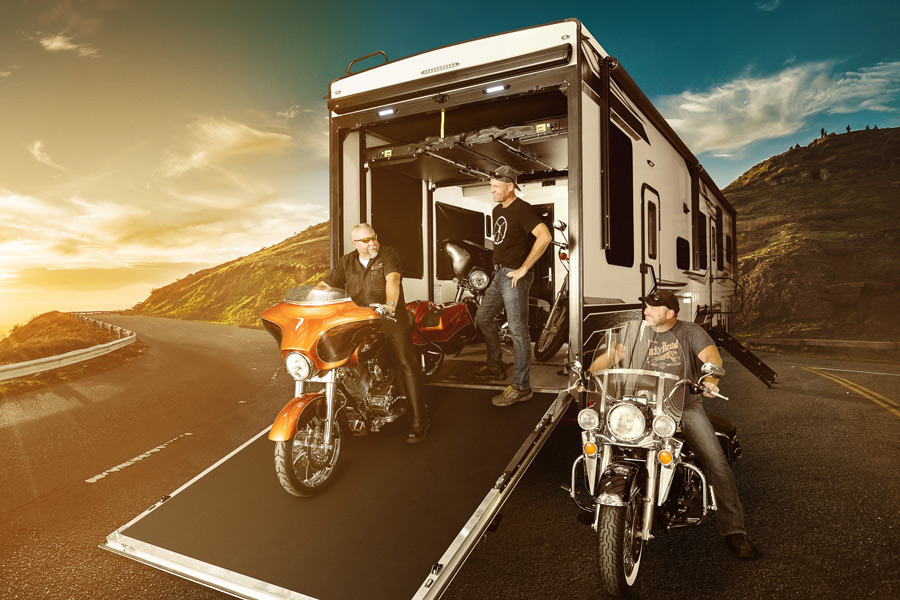
“We maintain a heavier starting range on travel trailer and fifth wheel toy haulers in anticipation of the offloading that will occur when the garage area is loaded,” explained Mark Bullock, senior vice president of engineering for Keystone RV. “Instead of the normal 10% – 15% for travel trailers, we specify an initial build range of 13% to 17%, anticipating that the loading in the rear garage area by the customer will place the final hitch percentage within the accepted normal range of 10% – 15%. For fifth wheels, we specify an initial build range of 22% – 25% rather than the normal 15% – 25%, expecting the same result. Leaving a starting hitch range at 10% for a toy hauler travel trailer (for example) can mean a loaded hitch percentage of 2% or 3%, depending on the load rating of the rear garage area, location of the water tank, whether it is filled or not, etc. That isn’t safe.”
Since the trailer axles act as a fulcrum, or point at which the trailer pivots, toy hauler owners should be aware that the load placed in the rear cargo area is actually going to off load, or lighten, the total weight on the hitch or pin, which can dramatically change the hitch weight — more so than in a conventional RV. “This presents a design problem that can be difficult to overcome,” Bullock said. “If the cargo area has a rating of 1,000, 1,500, 2,000 or even 3,000 pounds, and that area can either be fully loaded, or not loaded at all, that kind of variability is difficult to design for.
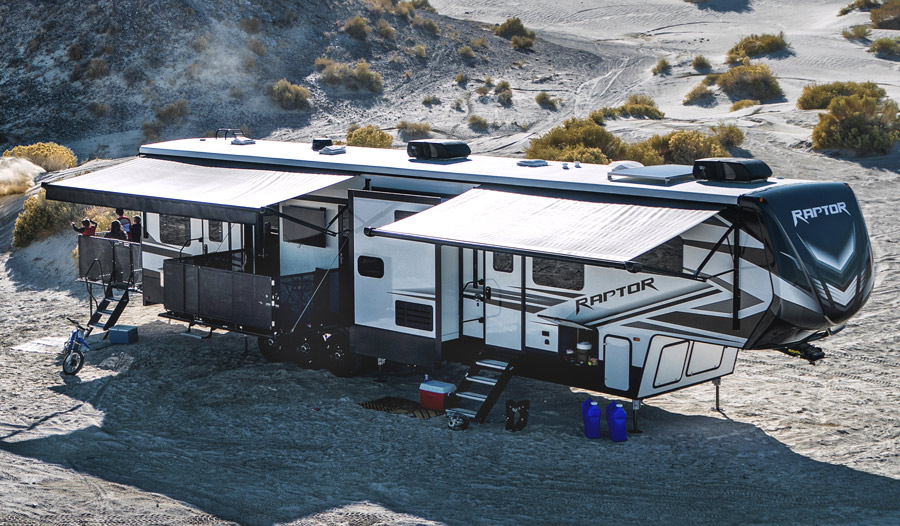
As with conventional trailers, Keystone (and other manufacturers) provide labels that specify the maximum load capacity of the cargo area, and also include a detailed explanation of how to properly load the cargo area in the Owner’s Manual.
“What we see most often when it comes to cargo is that the customer typically underestimates how much weight he or she is adding,” Bullock continued. “This goes for conventional trailers and fifth wheels as well, but the problem is exacerbated with a toy hauler due to the larger cargo areas provided. A lot of time the perception is ‘if it will fit inside let’s take it.’ But there is no easy solution to knowing how much you’ve added without weighing the loaded trailer.”
Once the trailer is in your possession, take it to a scale, loaded and ready for travel to determine the exact overall and hitch weight of the rig. Better yet, call a shop that specializes in RV/truck/trailer alignment (and other services) and ask if they can determine individual wheel weights (see “Worth the Weight” elsewhere in this issue for more information). This will not only tell you overall weight, but also how that weight is balanced, which can be a useful reference when loading.