


erforming recommended service of wheel bearings and brakes are two of the most important tasks for owners towing a travel trailer or fifth wheel. Maintenance is the key to safe travels because, unlike your truck or car, many trailers sit for long periods of time — allowing the grease to cake or attract condensation, depending on the climate where the RV is stored. Most manufacturers recommend an annual service after 10,000 to 12,000 miles of travel, whichever occurs first. Without proper inspections, a defective or broken part may not be detected, leading to a possible catastrophic failure on the road.
A defective wheel bearing will put a serious damper on any outing, especially when a failure occurs on a weekend when repair shops may be closed. Wheel bearing failure can cause extensive damage to the spindle (axle end) and a total loss of the hub and brake components. A replacement axle could take weeks to arrive, since it is usually a special-order item.
Cleaning and re-packing wheel bearings is a dirty job at best, and the grease seems to get all over everything during the process. As always, preparation is the key to success; be sure to have all of your tools, supplies and replacement parts ready for installation. A dirt-free environment during the repacking of the wheel bearings would be ideal — if the environment around you is dusty with debris strewn around, the bearings can become contaminated, which will lead to early failure. It’s best to pack the wheel bearings inside a garage or inside of one of your cargo compartments using protective material that will prevent grease from getting all over the floor. (We’ve found that doggy training pads absorb moisture and will prevent grease from getting all over the place.)
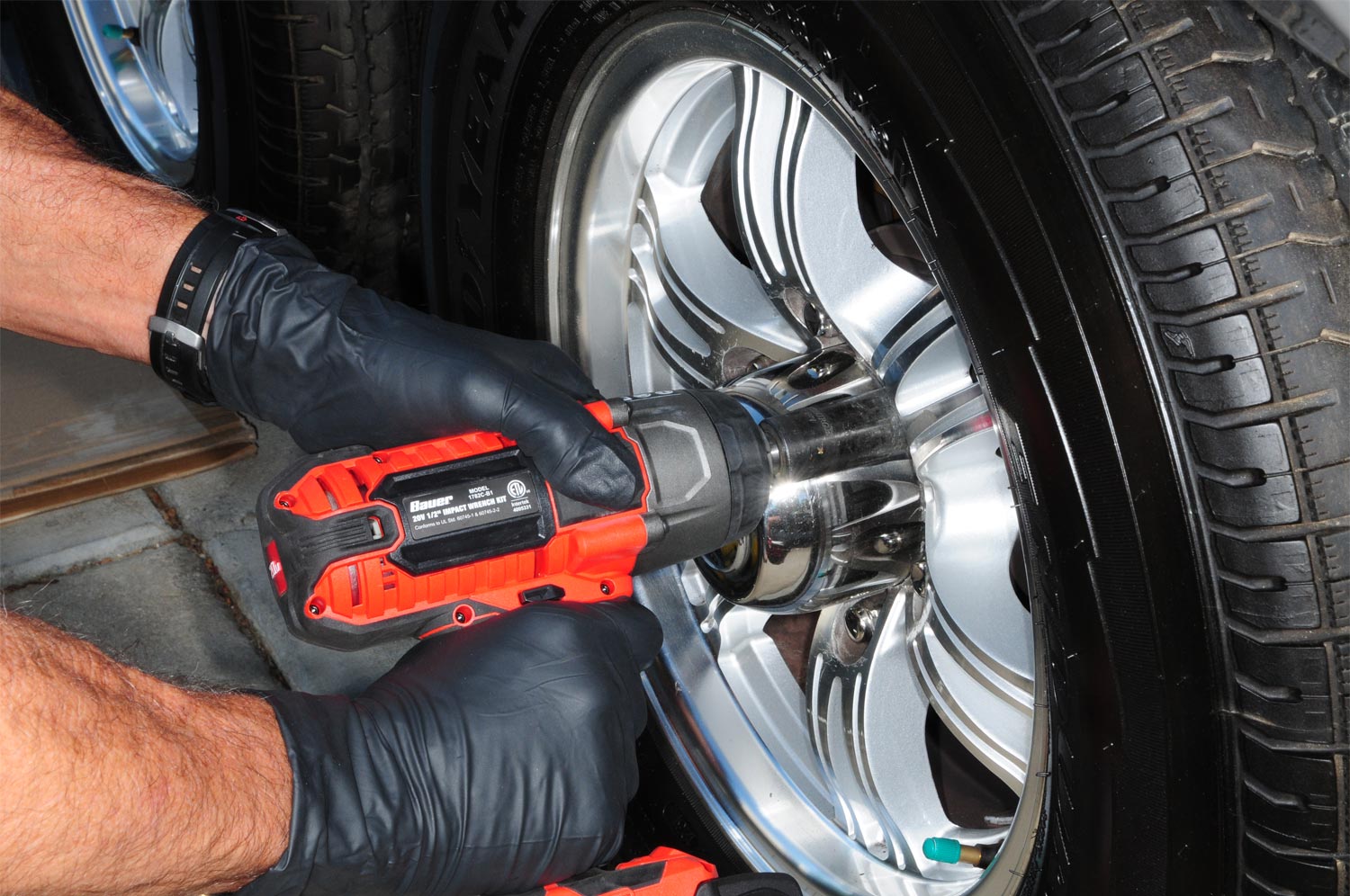
A hydraulic jack at the frame was used to lift the trailer wheels off the ground. Do not position the jack on the axles. Once jack stands were strategically placed, a battery-powered impact wrench made lug nut removal easier and faster.
We recently documented the process for re-packing the bearings on a fifth wheel trailer with disc brakes. The procedure is similar with drum brakes. The common denominator to both operations is that you take your time. Properly packing wheel bearings yourself will not only save you time and money, but also will save you from experiencing bearing failure on the road — the shoulder of the interstate is not where you want to spend your vacation.
Inspection and Disassembly
To get started, raise the trailer one side at a time using a hydraulic jack at the frame; do not jack up the trailer on the axles; those axle tubes aren’t designed or intended to support thousands of pounds of concentrated weight and you can crush them. Before removing the tires and wheels, be sure to use proper size jack stands for safety. Once the wheels are removed, inspect the calipers/pads/rotors on a disc brake system or linings and magnet assembly on electric brakes. Check the rubber brake hoses and fittings for oil leaks or deterioration. Remove the dust cap, cotter pin, hex nut, flat washer and outer bearing. Pull evenly on both sides of the rotor/drum while carefully removing the hub assembly to avoid damage to the threads on the axle spindle and keep in mind that these components are heavy. Use a race and seal driver or seal puller to carefully remove the inner bearing and clean the excess grease out of the hub assembly with paper towels. Keep all of the bearings with the respective hub assembly to ensure they will be re-installed in the same location. It’s best to match the bearing with the same race or cup that it was removed from.

The fifth wheel for this project was outfitted with disc brakes and, as you can see, it was not moved during the winter and the rotors collected a coating of rust. Don’t worry, it goes away after few miles on the road.
Cleaning
Clean the bearings, castle nuts and washers — including the bearing race — with paper towels, which seem to absorb better than most rags and they’re disposable. Yes, you’ll need lots of them. Carefully inspect the roller bearings and the cage they are mounted in, making sure that they have not pitted from possible moisture or condensation or discolored from extreme heat. If the bearing is deemed defective, replace it with a new race/cup. It’s possible to remove the old race with a cold chisel or heavy steel punch, but you’ll need to press the race in with an appropriate tool for this purpose. If you will be using the exact same grease that’s in the bearings, you may be able to wipe them clean and pressure-pack the new grease while squeezing out the old. If the grease is severely contaminated, clean the bearings with oil-based paint thinner or a parts cleaner spray and make sure to use air pressure and paper towels to ensure that they are clean and dry before pressure packing.
If you have electric trailer brakes, you may want to service them while the hub is off as part of the earlier inspection process; if there is wear, replace parts or the whole backer assembly. Auto adjusting brakes won’t necessarily need adjustment at this point, but manually adjusted brakes will have to be adjusted before the trailer is lowered to the ground following the manufacturer’s procedures.
Packing the Bearings
I remember the old days when the axle industry actually used ball bearings instead of roller bearings and you could literally put grease in the palm of your hand and effectively pack the ball bearings. Unfortunately, this process is far more difficult with roller bearings — not impossible, but tough. It’s far more effective if they are pressure-packed, leaving no question whether the grease has reached the inside part of the bearings. There is no need to fill the inside of the hub assembly with grease, as it serves no purpose and may cause problems down the road. If your axle is equipped with a Zerk grease fitting, do not use it to fill the inside of the hub assembly with grease. Over a period of time, the grease will get past the seals and contaminate the brake pads. Wipe a small amount of grease on the surface of the spindles where the bearings will ride, and a small amount of grease on the bearing race inside the hub before inserting the bearings. Using a grease gun and a portable wheel-bearing-pressure packer will ensure that the grease is squeezed through the bearing and out the top of the bearing cage. Remove the bearing from the pressure packer and apply a small amount of grease to the outside of the roller bearings. Install the inner bearing while the hub assembly is on a solid surface, install the grease seal and use in a block of wood or a seal driver to make sure that the seal is flush with the top of the hub assembly.
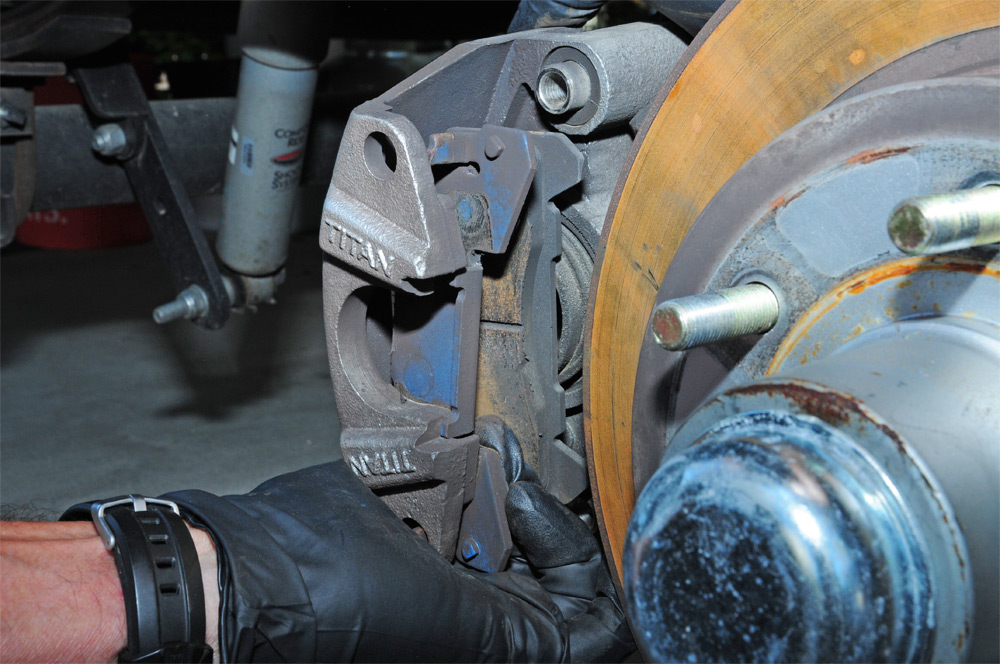
The brake caliper is unbolted and pulled away from the rotor. Make sure the caliper is properly supported to avoid damage to the brake line; technicians often use a piece of wire coat hanger and hook it to the frame or other secure area.

Now is a good time to inspect the pads (or brake shoes on a drum system). In this case, one of the pads was dislodged from the backing plate and destroyed the rotor. Consequently, the rotor was replaced along with all the pads. Lesson learned: Don’t buy inferior pads.
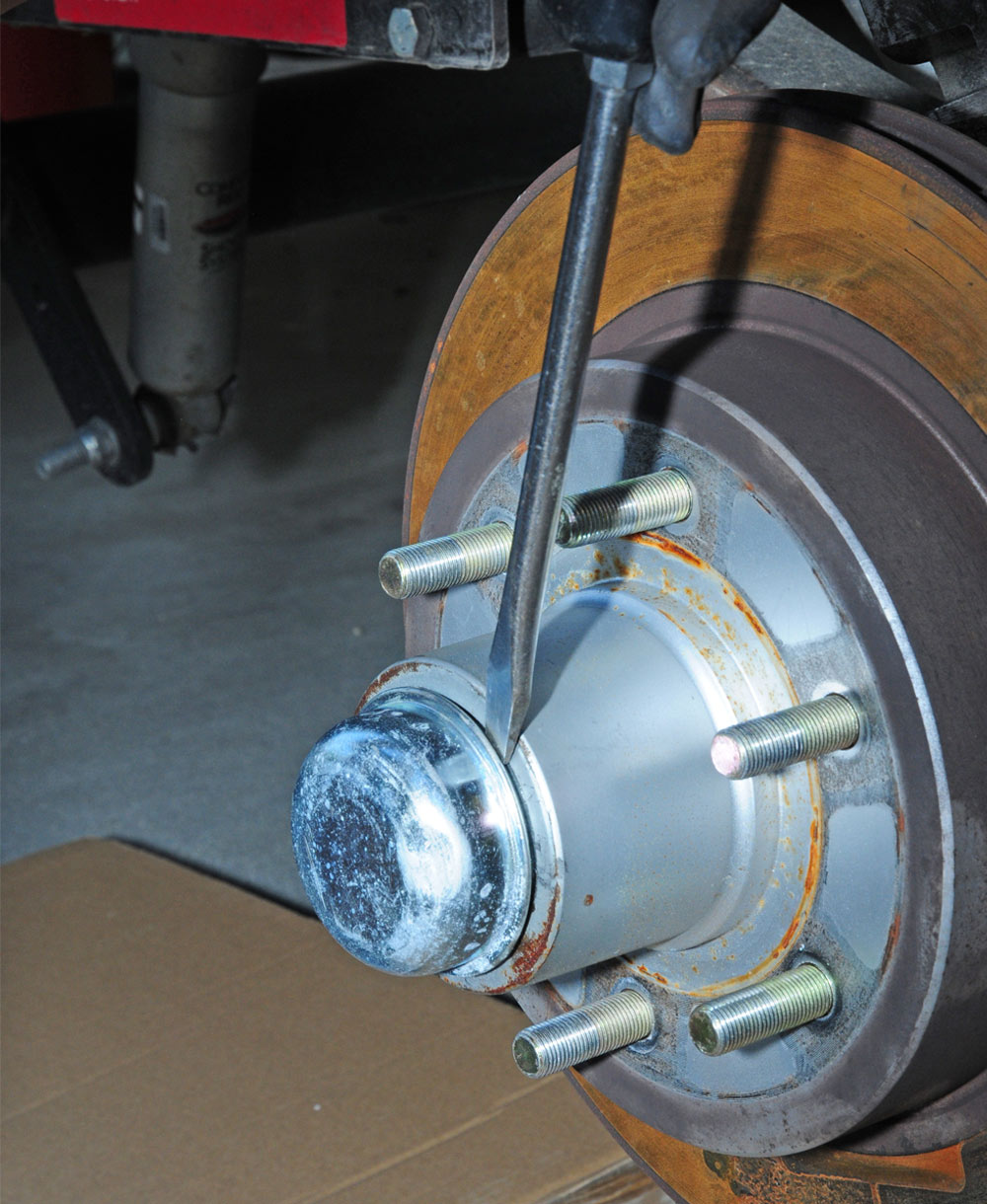

The dust cap is popped off hub using a long screwdriver, after which the cotter pin is straightened and removed from castle nut. While there is actually a tool made for this purpose, Vice-Grip, needle nose pliers or standard pliers work fine.
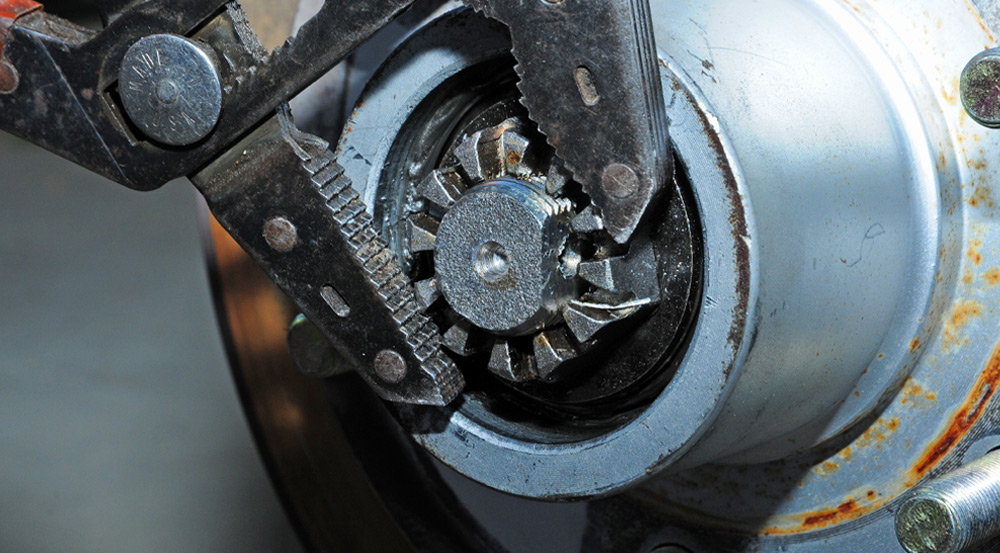
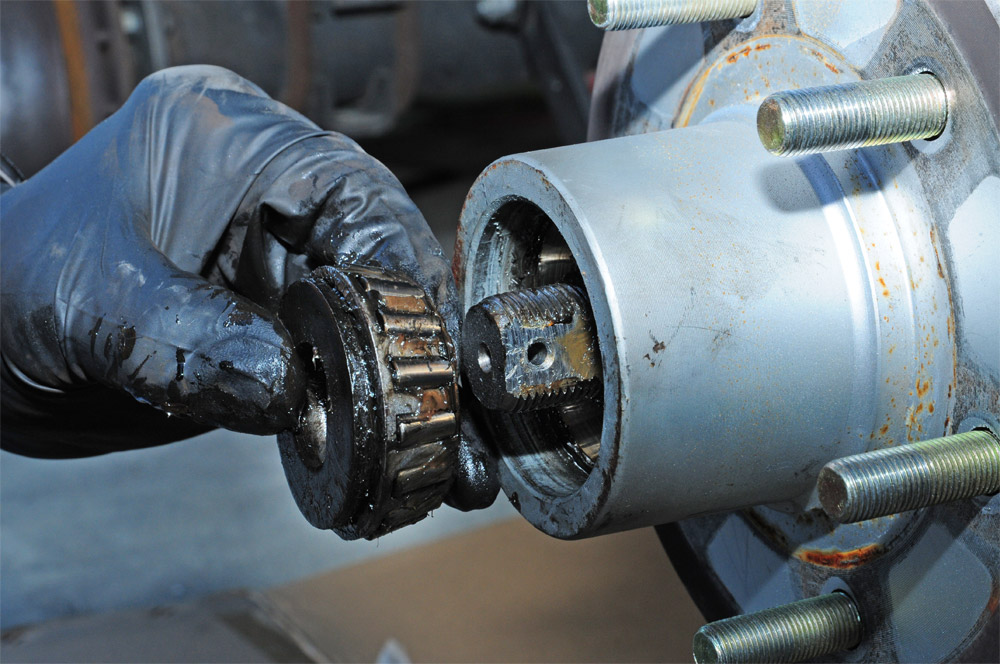
(TOP) The castle nut is removed from the axle spindle with off-set pliers. It’s best to allocate a box or tray to keep all the small parts together. Tug on the rotor (or drum) to loosen the outer bearing. (BOTTOM)When pulling the outer bearing, use caution not to drop it to avoid damage, which may not visible to the naked eye.
Next, place the hub/rotor assembly or drum back on the same spindle bracket it was removed from. Tighten the castle nut to approximately 50 ft.-lbs. while spinning the brake hub backwards until the hub barely turns. Then, slightly loosen the castle nut to remove the torque without rotating the hub. You want the castle nut just snug. Finally, back the castle nut off to the next slot so you can install a new cotter pin to keep the nut from moving. Last but not least, be sure that the dust cap is installed properly so it does not come loose. Spin the rotor/drum a few times to make sure that it’s not over tightened. Inspect and install the tires and wheels. By the way: Now is a good time to rotate the tires, using an X pattern (right front to left rear, etc.). If you have a tire pressure monitoring system (TPMS) you will need to switch the sensors if the tires are rotated.
Before lowering the trailer back to the ground, spin the wheels; properly adjusted electric brakes will just lightly scrape on the hub. To test the brake circuit, have somebody pull the breakaway switch while spinning the tires and wheels to make sure that the brakes lock up solid. If the brakes do not lock up again, the brakes could be out of adjustment or the breakaway switch could be defective and will need to be replaced. In any case, further diagnosis of the disc-brake actuator or wiring will be necessary.
Be sure to torque the lug nuts to manufacture’s specs and make yourself a note to check the lug nuts every 50 miles for the first 300 miles.

Remove the rotor (or drum) from the spindle and safely place it out of the way. The rotor/drum is heavy, so take care not to damage the spindle as you pull it away.

All traces of old grease must be cleaned off the spindle. A blue mechanic’s towel or heavy-duty paper towels will work. Paint thinner can be used if the grease is stubborn to remove.
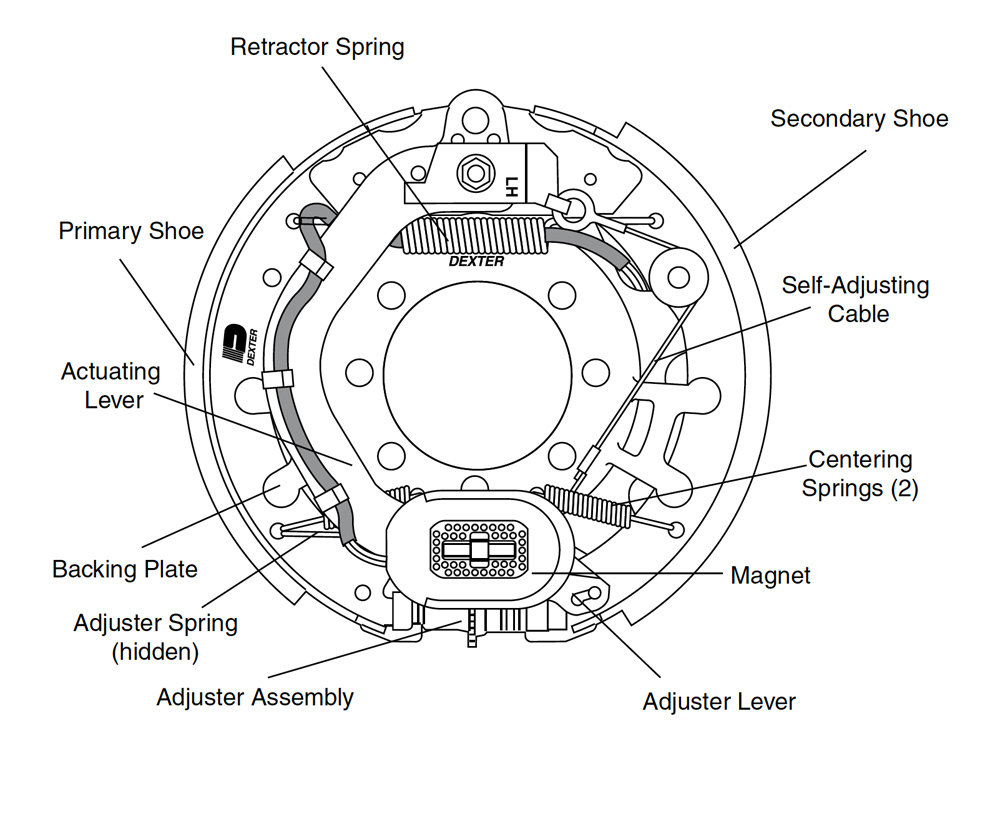
The electric brake assembly should be cleaned and inspected, and parts (or the whole plate) replaced as needed (this diagram from Dexter Axle shows the parts makeup of a typical electric brake assembly). Brakes should be tested and adjusted before trailer is lowered to the ground. Line art: Dexter
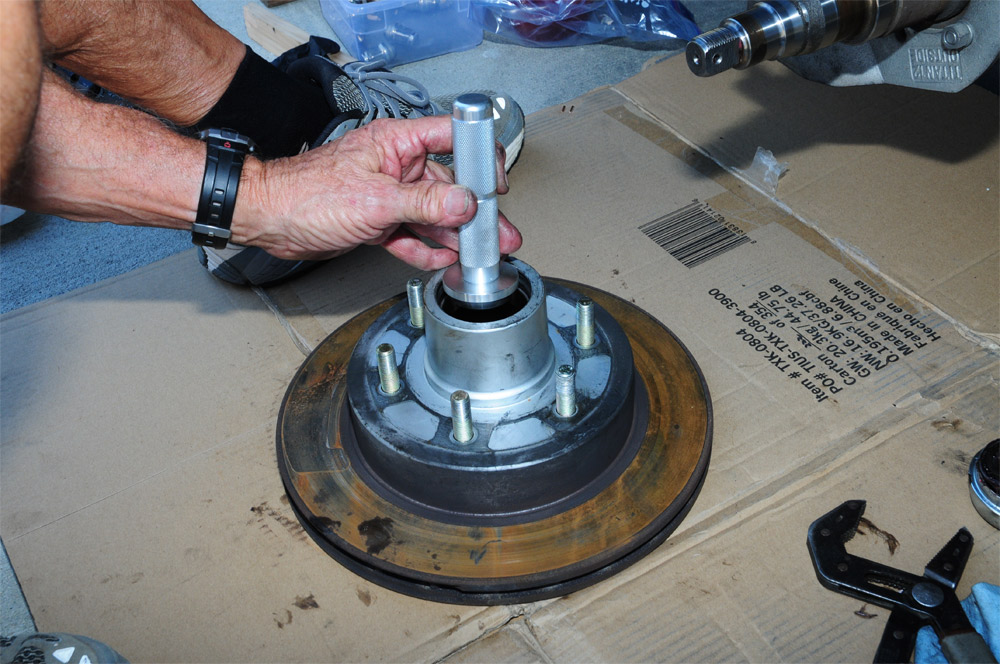

(LEFT) The correct tool must be used to remove the inner bearing. Here a commercial bearing punch was obtained at a local auto parts store. (RIGHT) A hammer is used to punch out the inner bearing.
(TOP) The correct tool must be used to remove the inner bearing. Here a commercial bearing punch was obtained at a local auto parts store. (BOTTOM) A hammer is used to punch out the inner bearing.
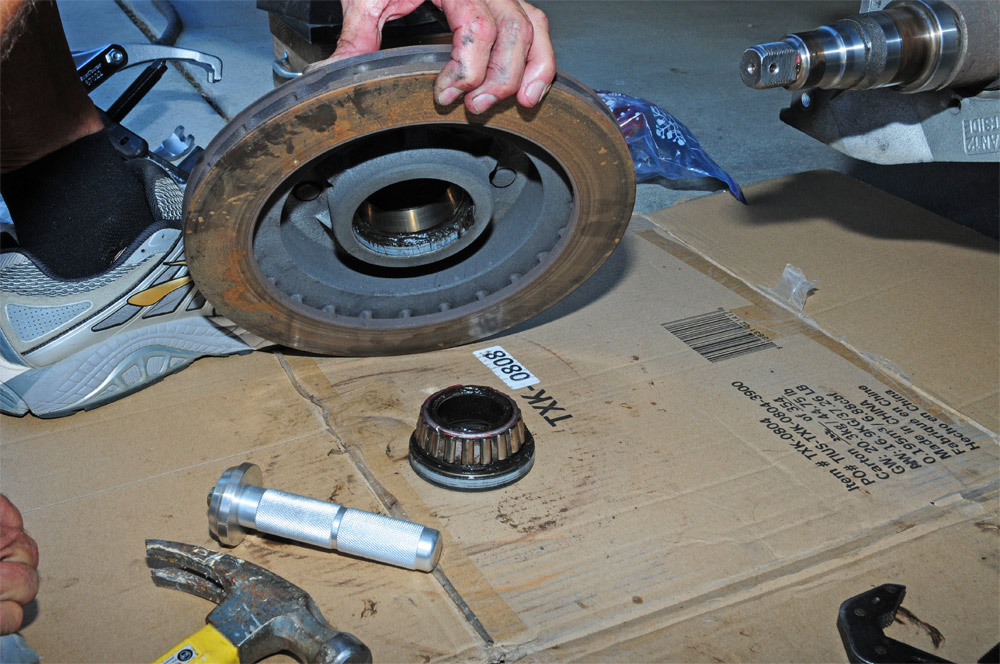
The inner bearing is removed and placed on a clean surface. It might be a little difficult to punch out the inner bearing if you’re also pushing a grease seal that has become stuck from old grease and heat.
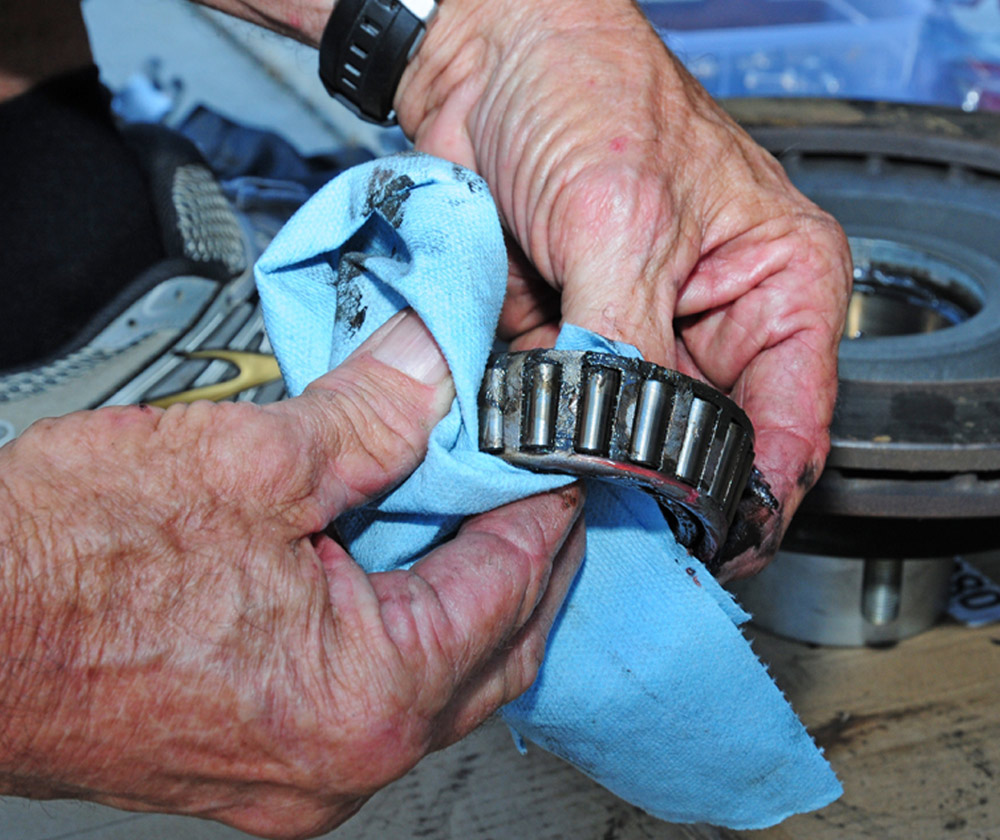
Clean the old grease off the inner bearing and inspect it for damage. Normal wear and tear is to be expected, which can make the bearing loose in the race. Discoloration and/or gouging from overheating and dirt will require replacement, as was the case here.
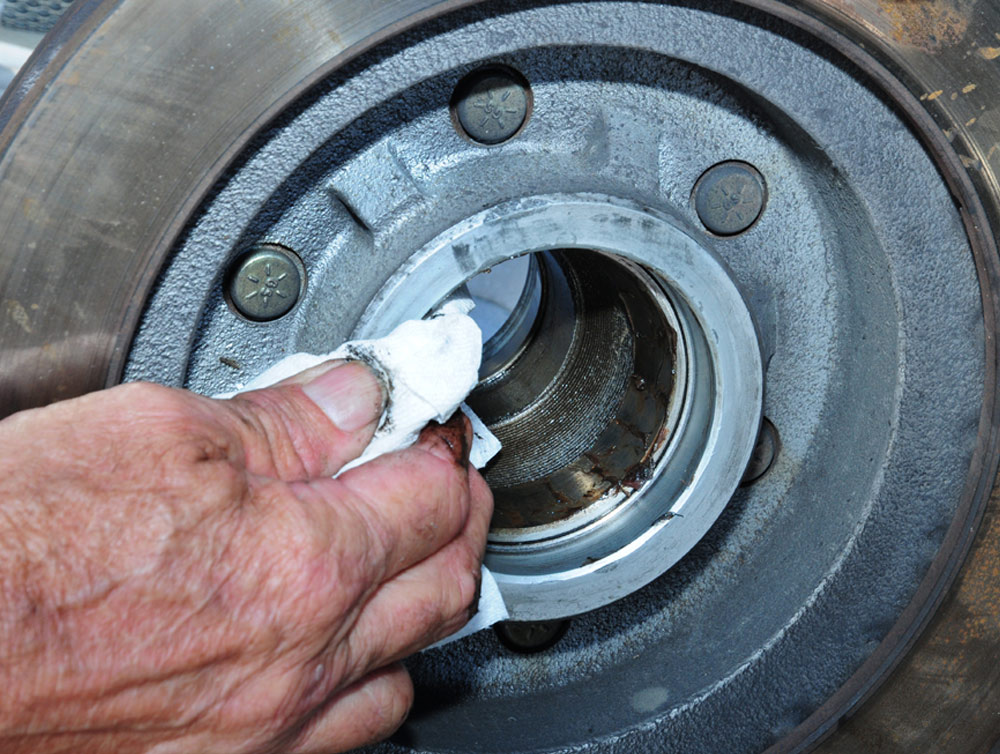

(TOP) The old grease is cleaned out of the hub with paper towels. Make sure the cups are super clean, then use a flashlight (BOTTOM) to inspect the cups for damage due to overheating or lack of grease. The cups can be replaced if damaged.
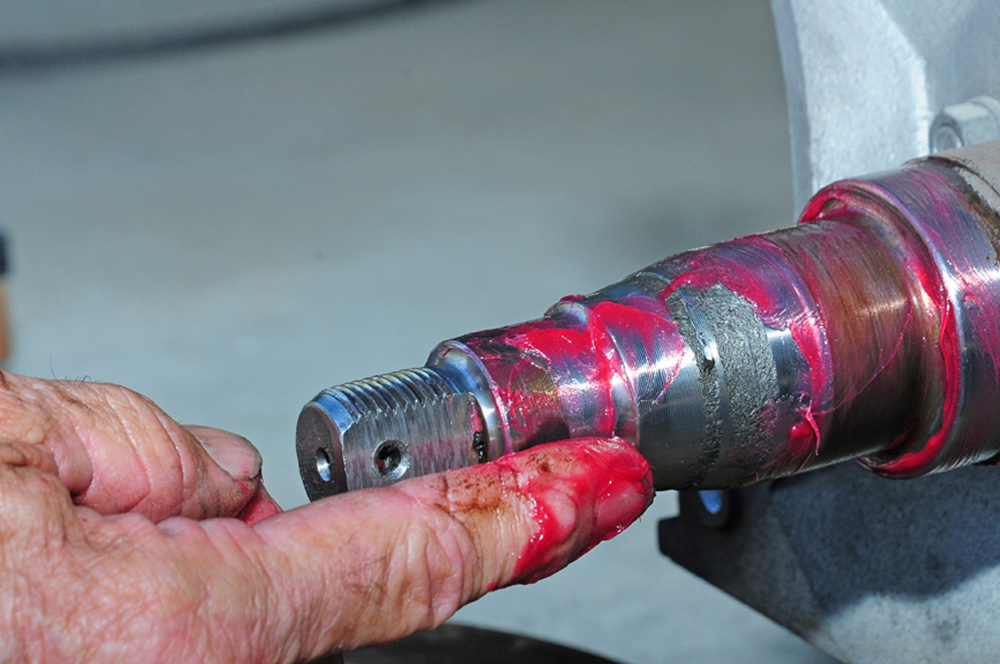
Add a thin layer of grease to the axle spindle before re-installing the hub and rotor/hub and drum assembly.

It’s best to use a pressure packer to push the grease into the bearings. Here, a small gun is loaded with the appropriate grease for use with the pressure packer.
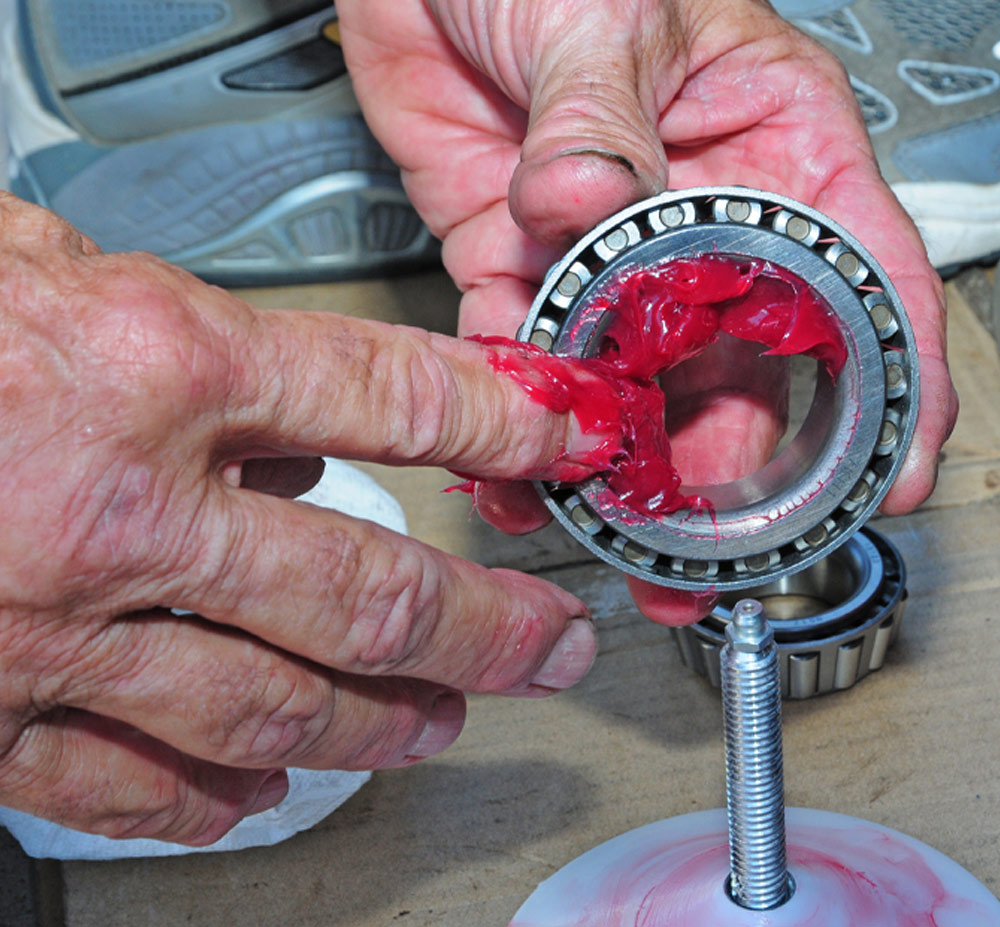
To conserve grease from the gun (loading the grease into the canister is a pain), fill the insides of the bearings with grease by hand before inserting in the pressure packer.
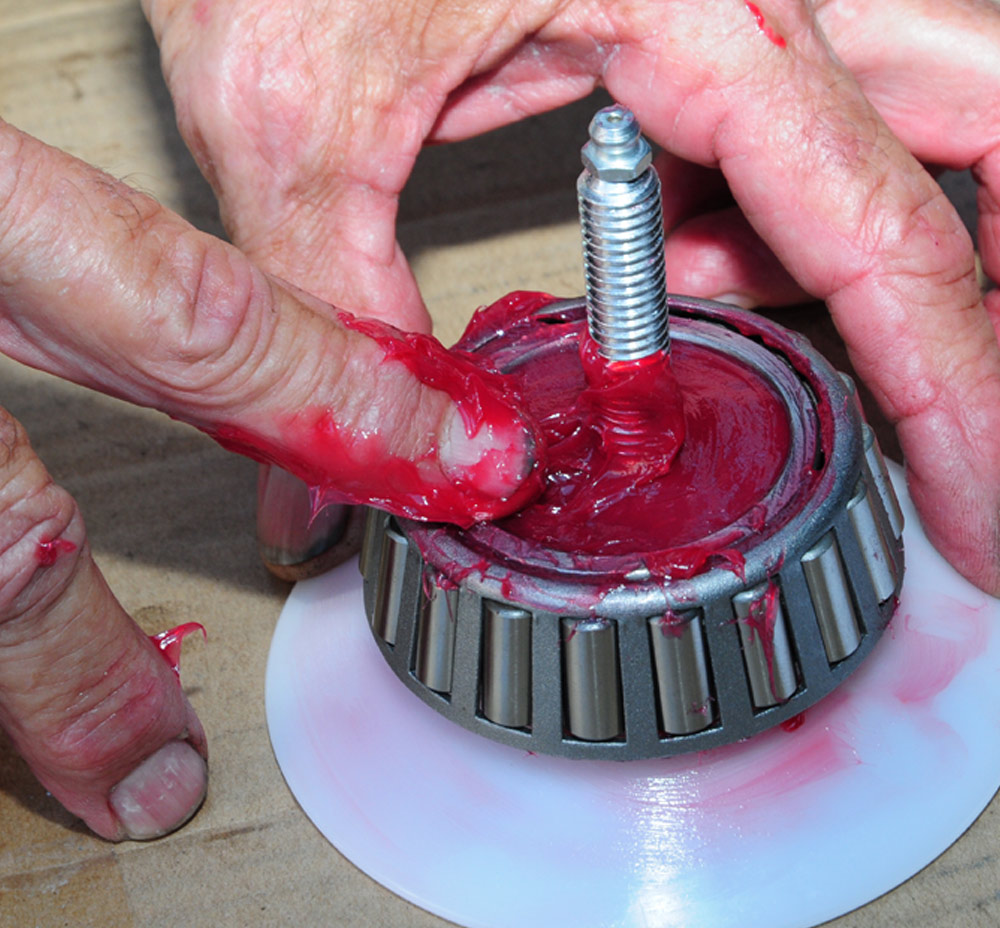
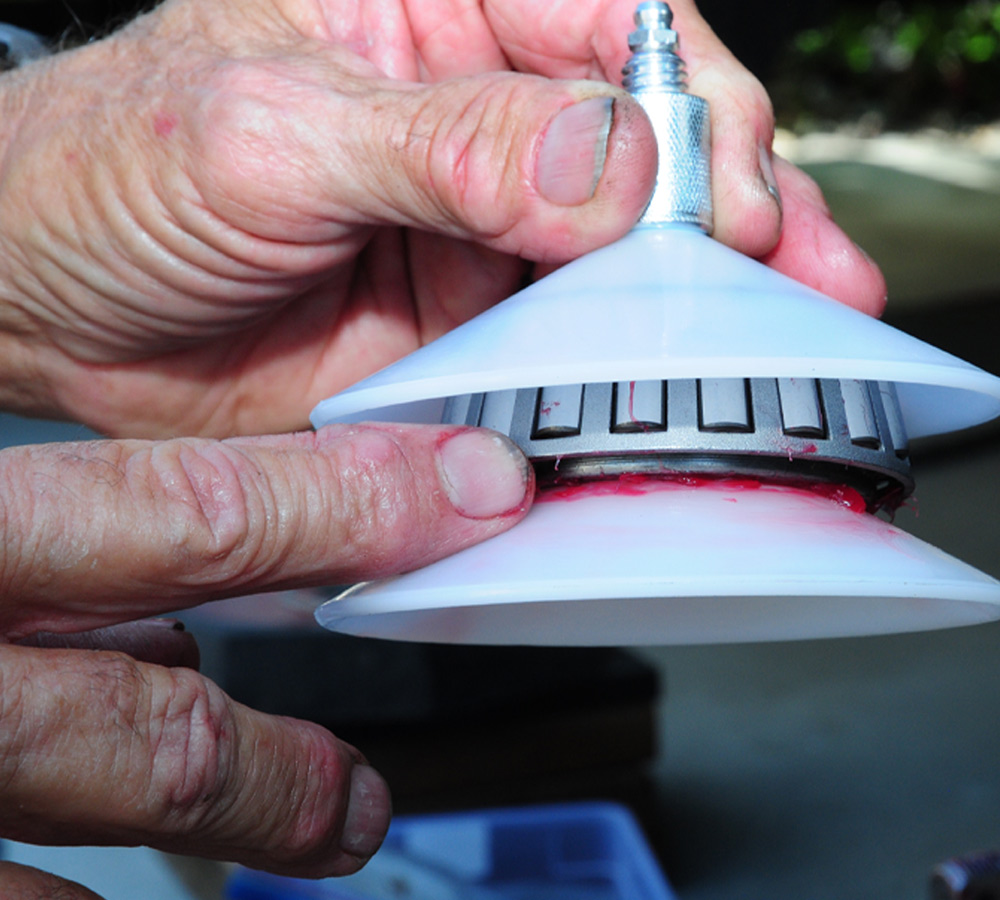
(TOP) The loaded bearing is placed on the base of the pressure packer and the top (BOTTOM) is set on top of the bearing.
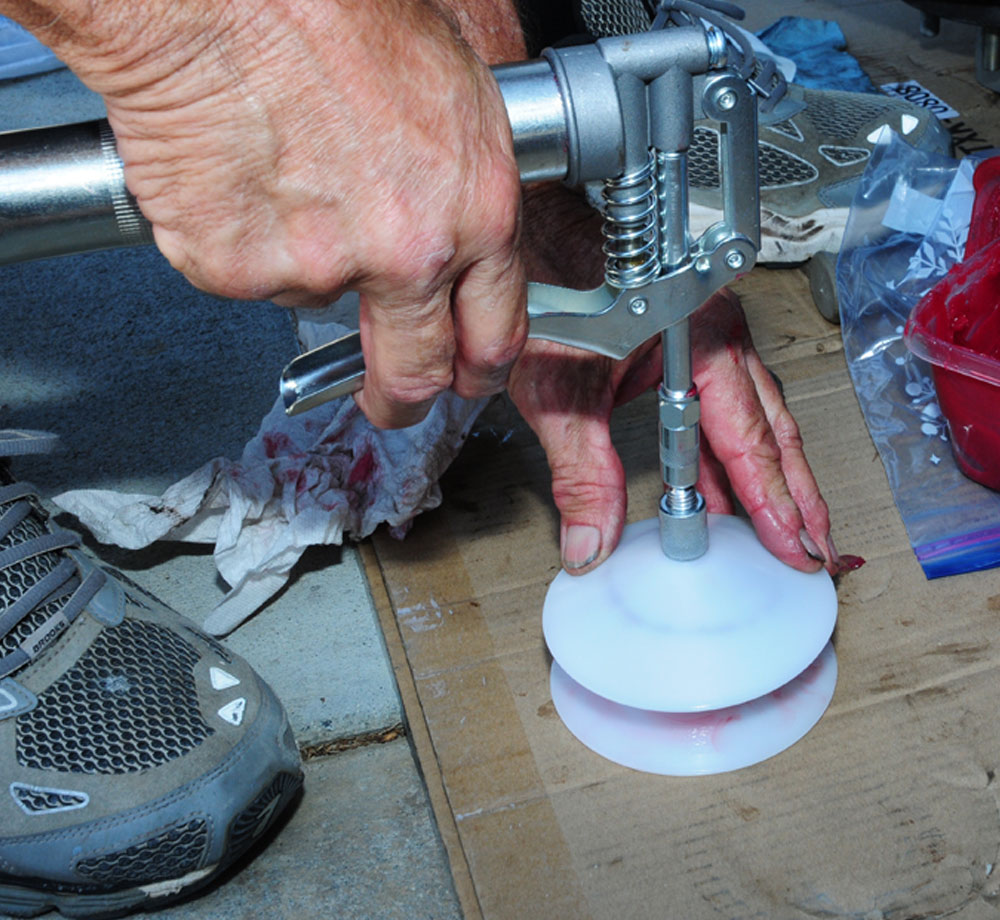

(TOP) A grease gun presses grease into the bearing, which is sandwiched between two pressure packer cups.
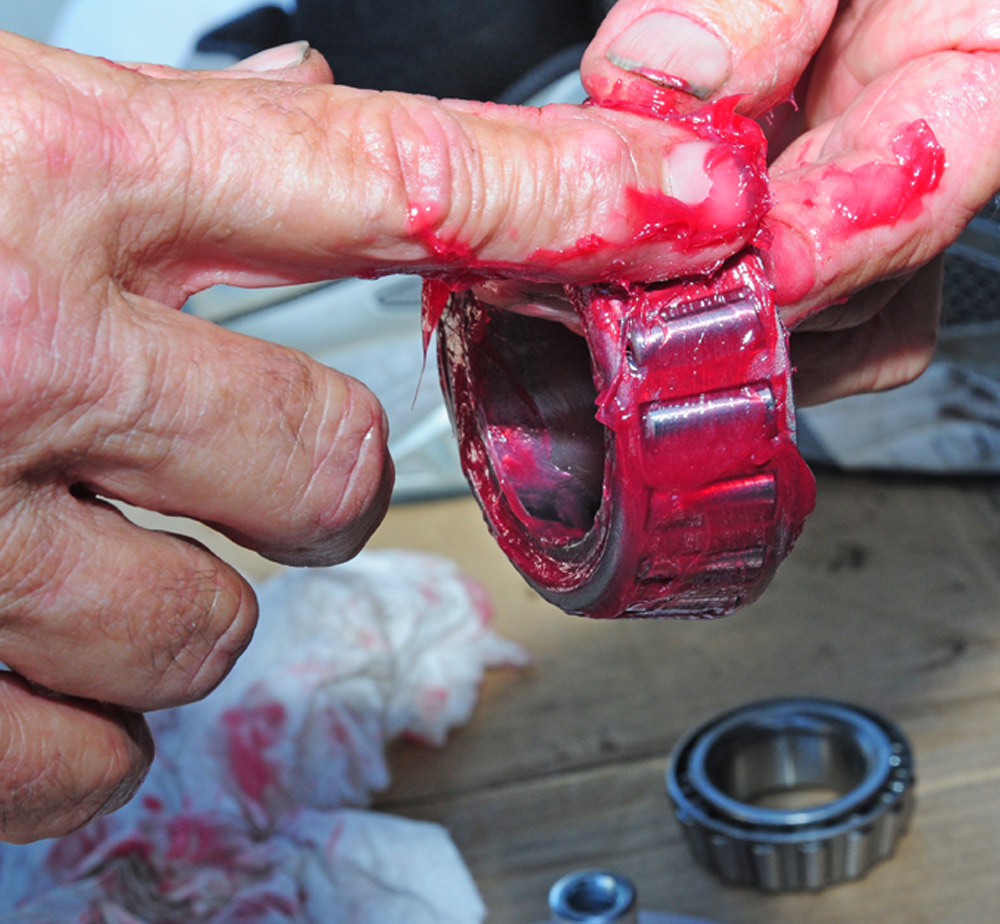
Once fully loaded and removed from the pressure packer, add a layer of grease by hand around the roller bearings.
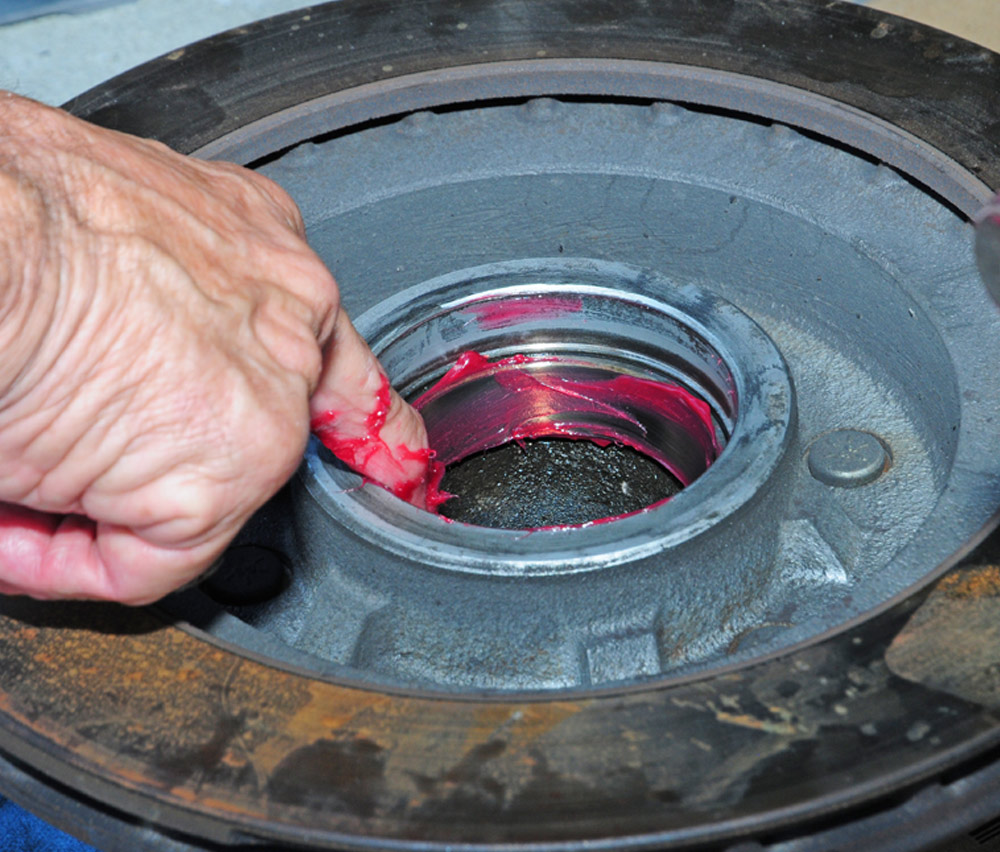
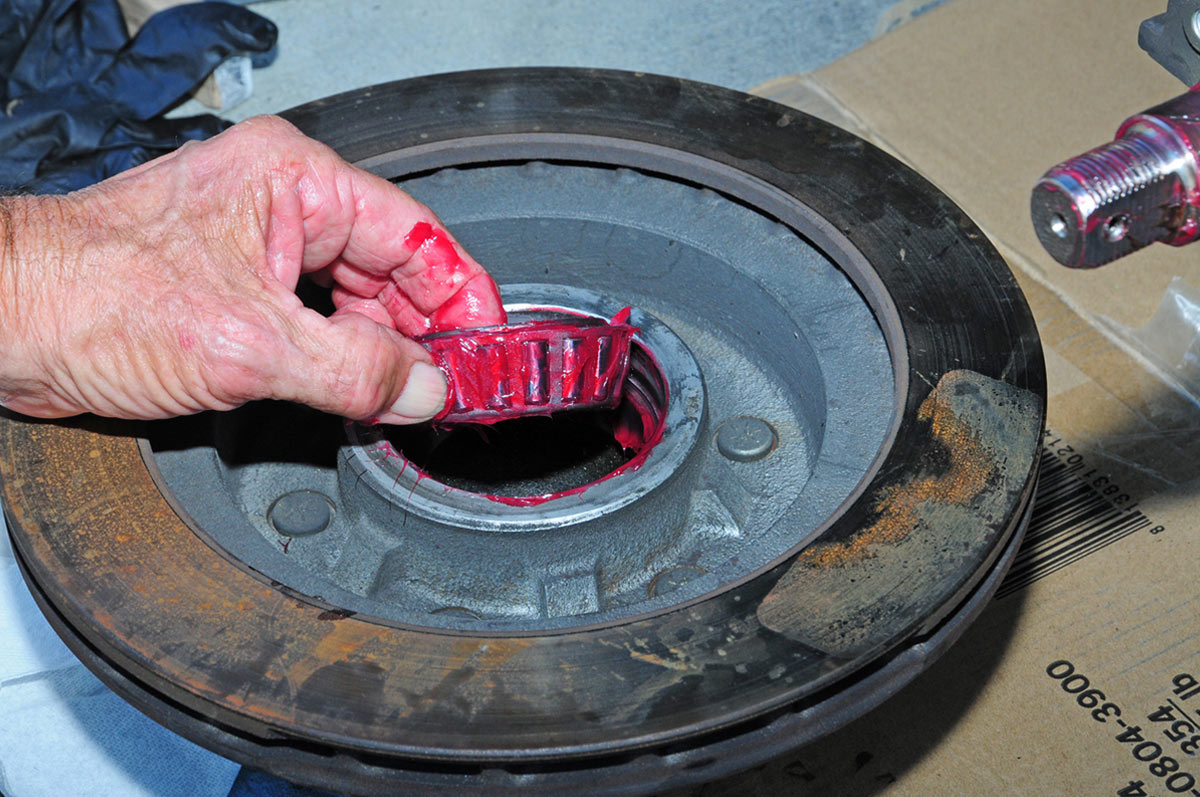
Put a thin layer of grease on the inner and outer cups inside the hub before installing the bearings. This will provide a bit of extra insurance to avoid allowing the bearings to roll on a dry surface initially. The inner bearing is carefully installed into the hub (see lead image). Turn the bearing with your fingers to make sure it’s moving freely.
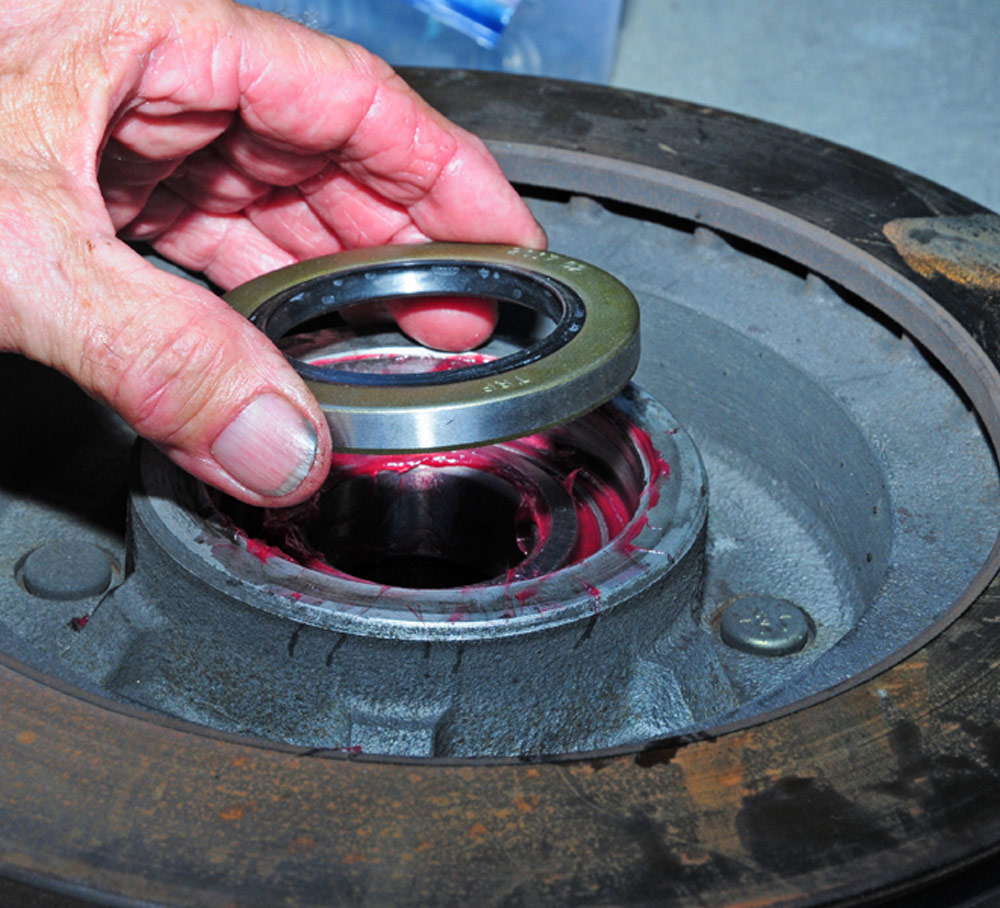
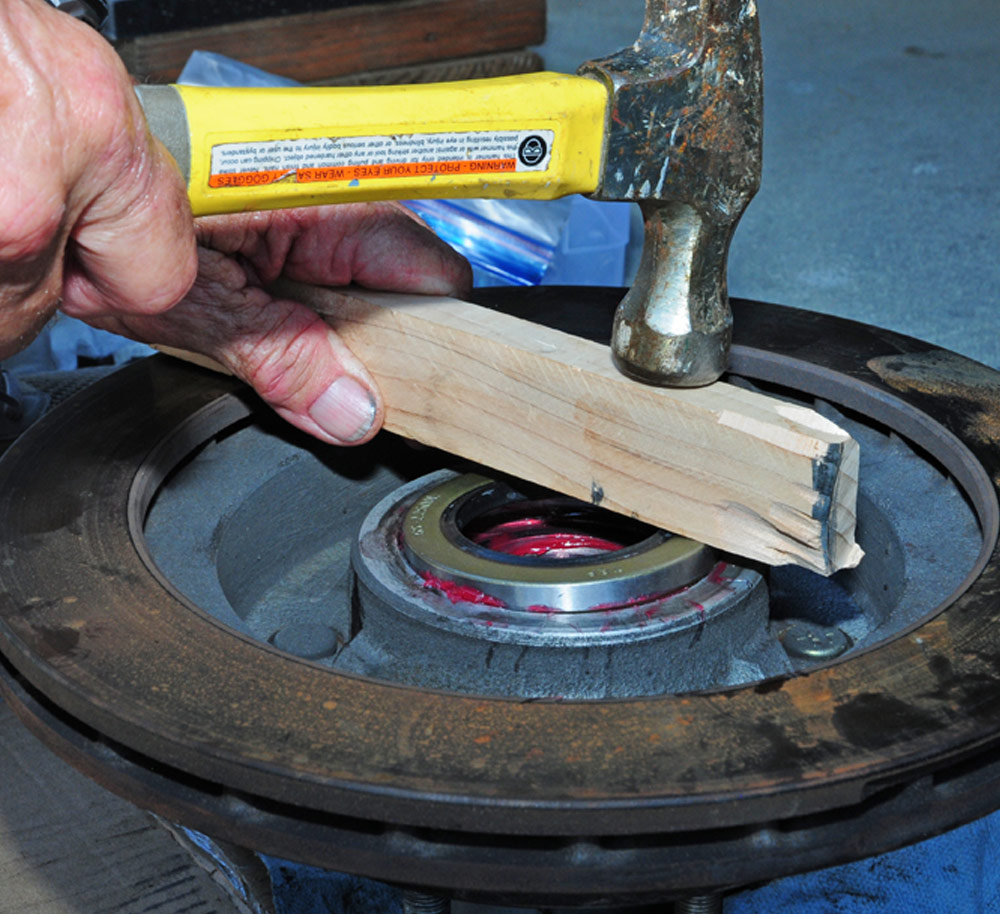
(LEFT) Carefully install the grease seal as level to the rotor/drum surface as possible. Always replace the grease seals when re-installing the bearings. (RIGHT) If an installation tool is not available, a block of wood and hammer can be used with caution to seat the seal. Old-timers have been doing this for years and it usually works fine.
(TOP) Carefully install the grease seal as level to the rotor/drum surface as possible. Always replace the grease seals when re-installing the bearings. (BOTTOM) If an installation tool is not available, a block of wood and hammer can be used with caution to seat the seal. Old-timers have been doing this for years and it usually works fine.
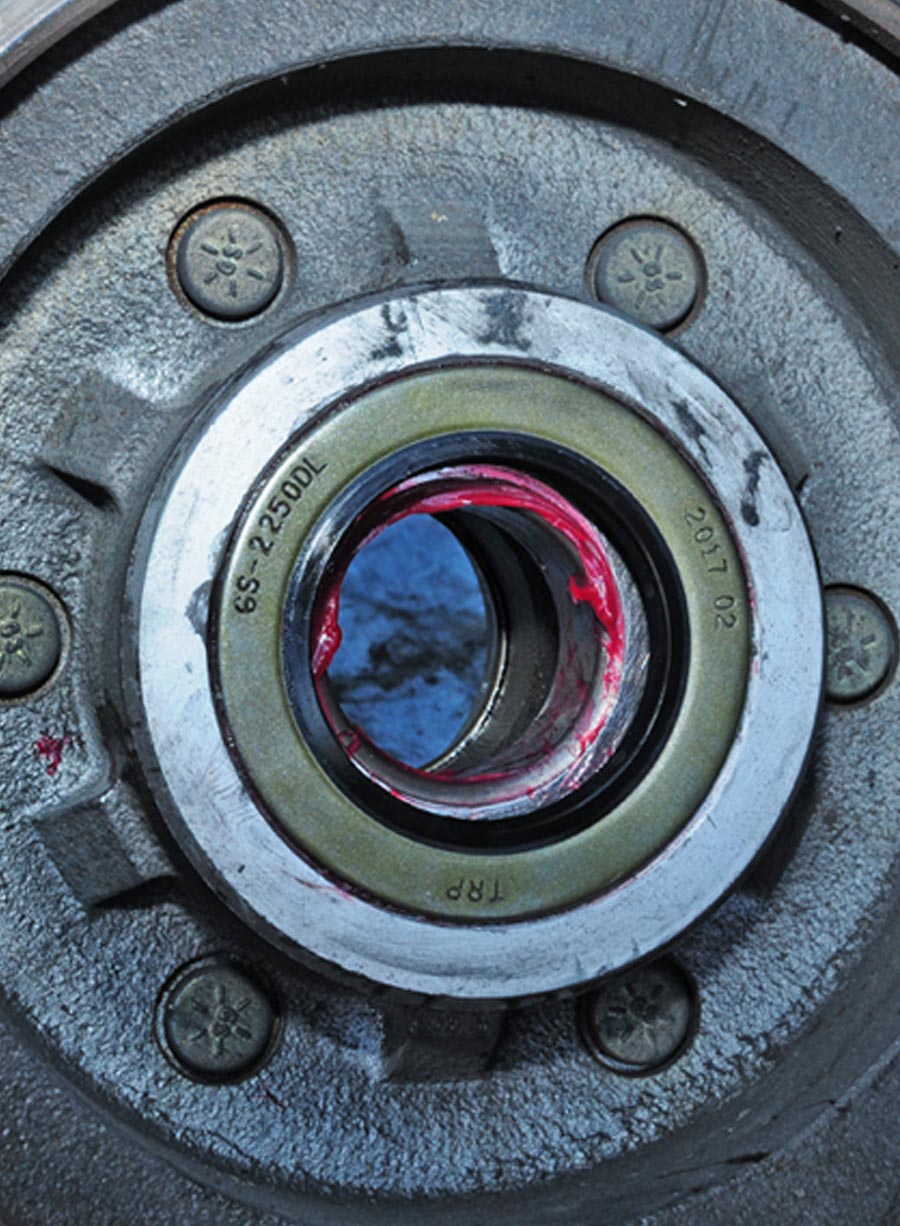
Once you are confident that the inner bearing and seal are in place properly, the rotor/drum assembly is ready to go back on the spindle. Make sure the seal is flush with the top lip of the hub assembly.
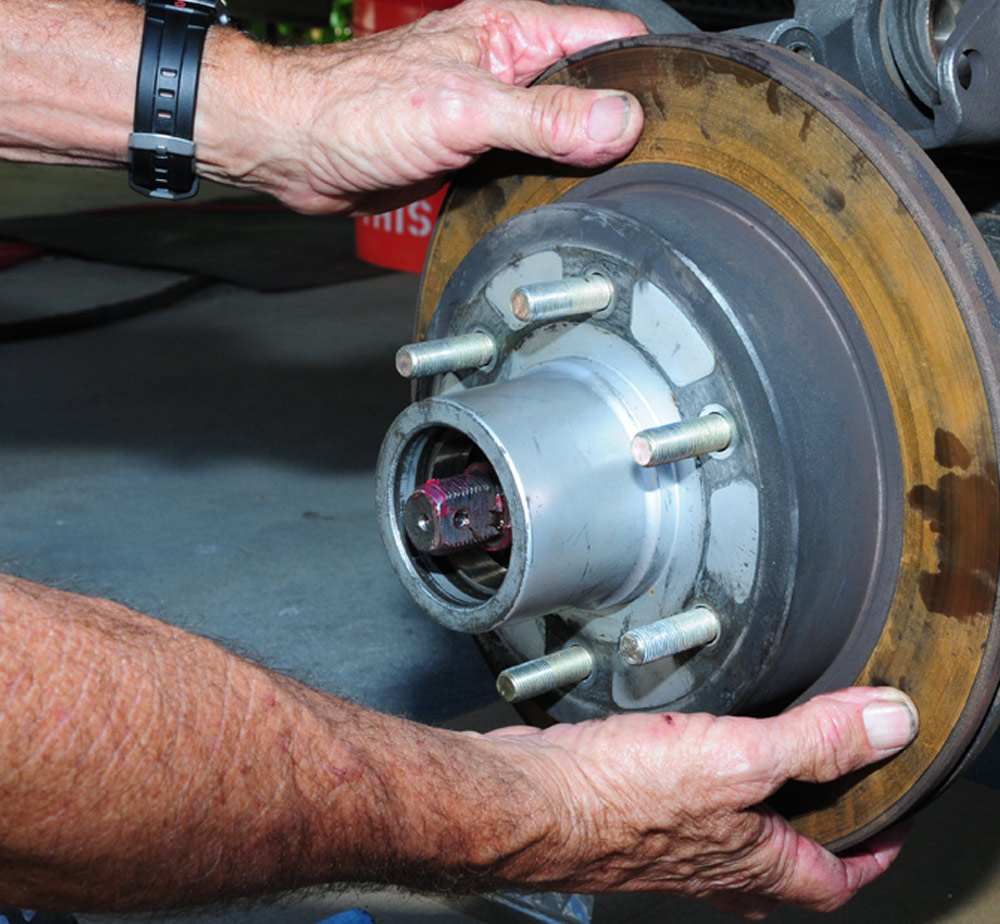
Here, the rotor is re-installed with care not to damage the spindle/threads. Remember, the rotor/drum is heavy so take the time to mount it squarely.
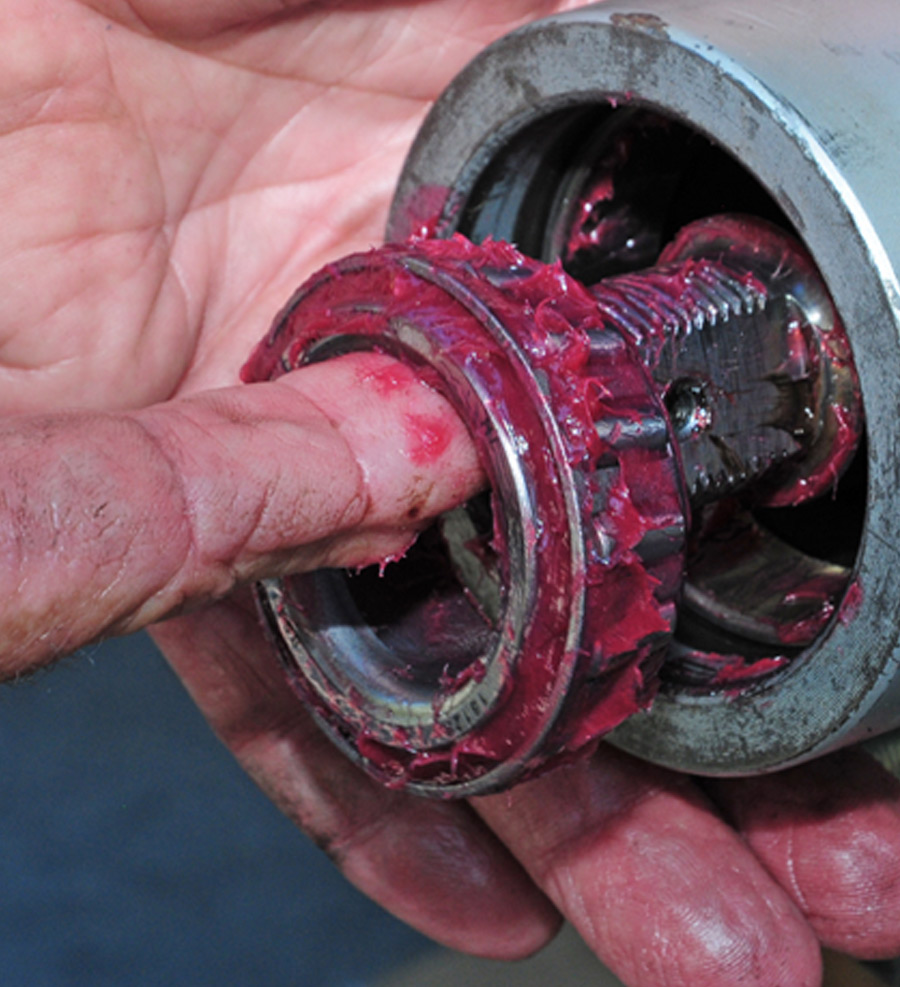

(LEFT) Jiggle the rotor/hub assembly while carefully inserting the outer bearing. It’s possible to get the bearing cockeyed inside the hub, so take your time to make sure it is seated fully. If the bearing is not seated properly, it can be damaged when replac- ing the castle nut. You won’t know that until it too late. (RIGHT) The washer must be seated against the outer bearing properly. There is usually a tang or flat spot to assist with alignment.
(TOP) Jiggle the rotor/hub assembly while carefully inserting the outer bearing. It’s possible to get the bearing cockeyed inside the hub, so take your time to make sure it is seated fully. If the bearing is not seated properly, it can be damaged when replac- ing the castle nut. You won’t know that until it too late. (BOTTOM) The washer must be seated against the outer bearing properly. There is usually a tang or flat spot to assist with alignment.
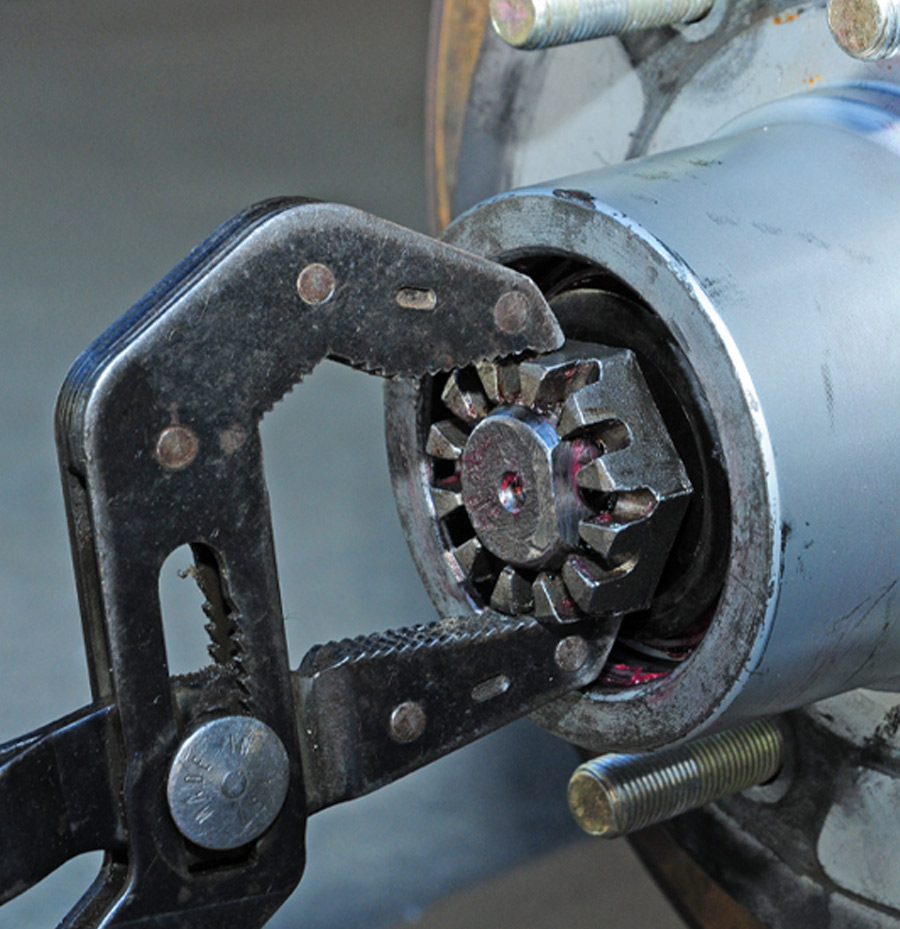
Replace the castle nut and tighten. Then, loosen the nut and tighten again. This should be done a few times to make sure the outer bearing is seated correctly. The final torque is specified by the axle manufacturer, and once seated, should line up with the holes for the cotter pin. Spin the rotor/drum a few times and double check the final castle nut torque.
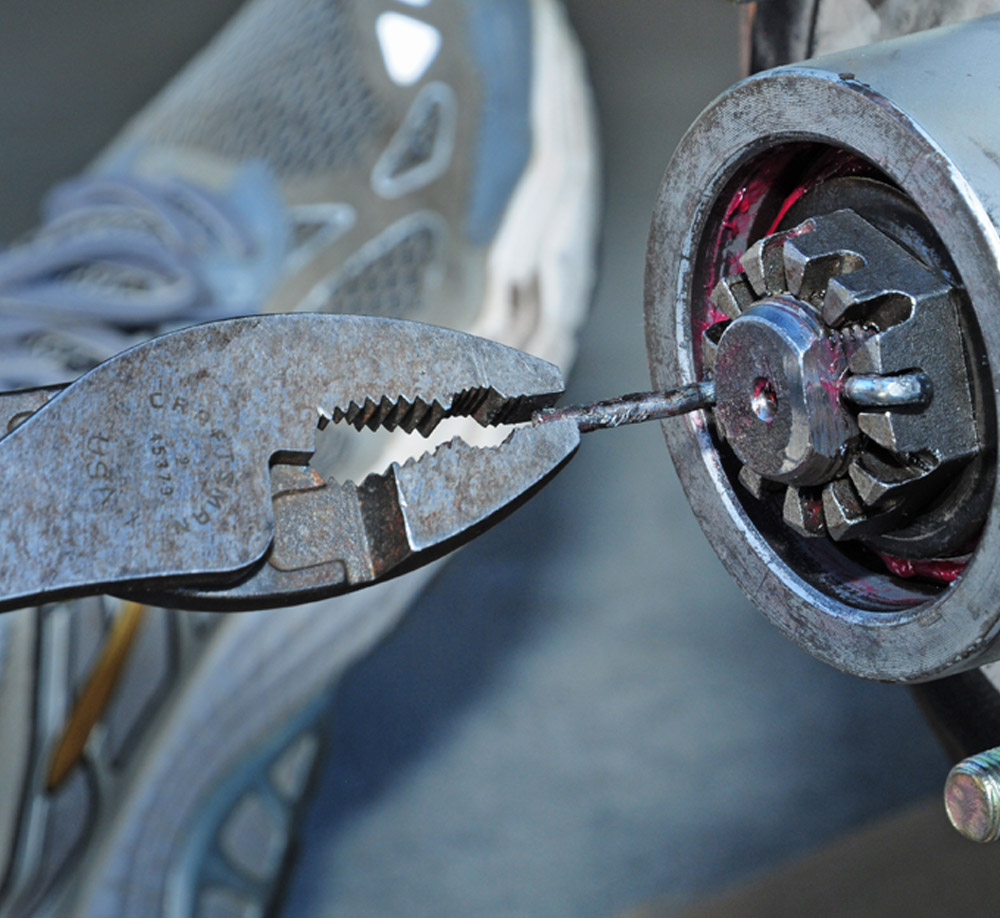
Install a new cotter pin through the castle nut and spindle. Bend the end with pliers.

Carefully install the dust cap using an ordinary hammer. Rubber mallets really don’t work well. Just make sure to tap the cap with a hammer lightly in a circular motion until seated. You’re done with this wheel!
- Race and seal driver, pressure packer, grease gun, recommended type of grease, shop supplies and latex or rubber gloves.
- A pressure packer such as the Lisle 65250 or 34450 (https://amzn.to/3supJBL) from Amazon. The latter keeps the grease contained for RV storage purposes. For disc brakes: Use a large C clamp or a caliper piston tool to compress the piston back into the caliper should the brake pads need replacing.
- Grease seals, recommended bearing grease, paint thinner, cotter pins, thread locking fluid, Dot 3 brake fluid (for disc brakes). Miscellaneous replacement parts as needed.
During this process we learned that O’Reilly’s Auto Parts will loan you the tools for free. You’ll have to pay for them in advance, but a refund is applied when the tools are returned.