

e’re all accustomed to replacing our tires as they wear out — that’s a given. However, RV tires aren’t always run to the point where the tread is nearly gone. Because of the way most outdoor enthusiasts use their RVs — on weekends and for extended trips during warmer weather — our rigs usually spend more time sitting than moving. As a consequence, the tires aren’t impacted by wear-and-tear; they are instead subjected to the sun’s heat and harsh ultraviolet rays.
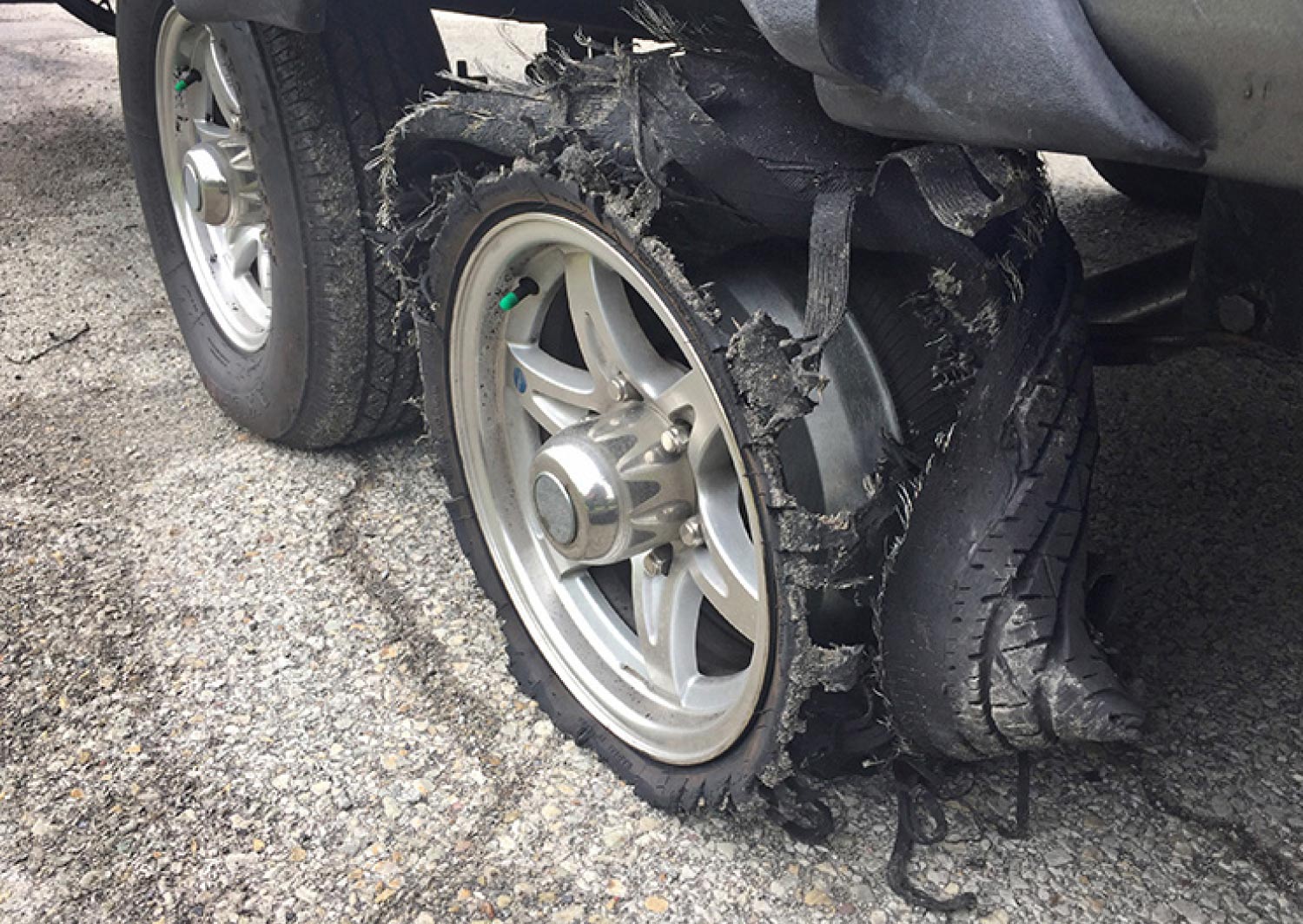
The end result, however, can be the same: you’re driving down the highway and suffer a premature tire failure.
What happened? Like the asphalt when a vehicle is moving, the sun — and weather — will eventually degrade the tire to the point where it’s unsafe. That’s why most tire manufacturers recommend that RV tires be replaced every six years no matter how much tread is left.
The problem is that most RVers don’t know how old their tires are — especially if they bought a pre-owned vehicle.
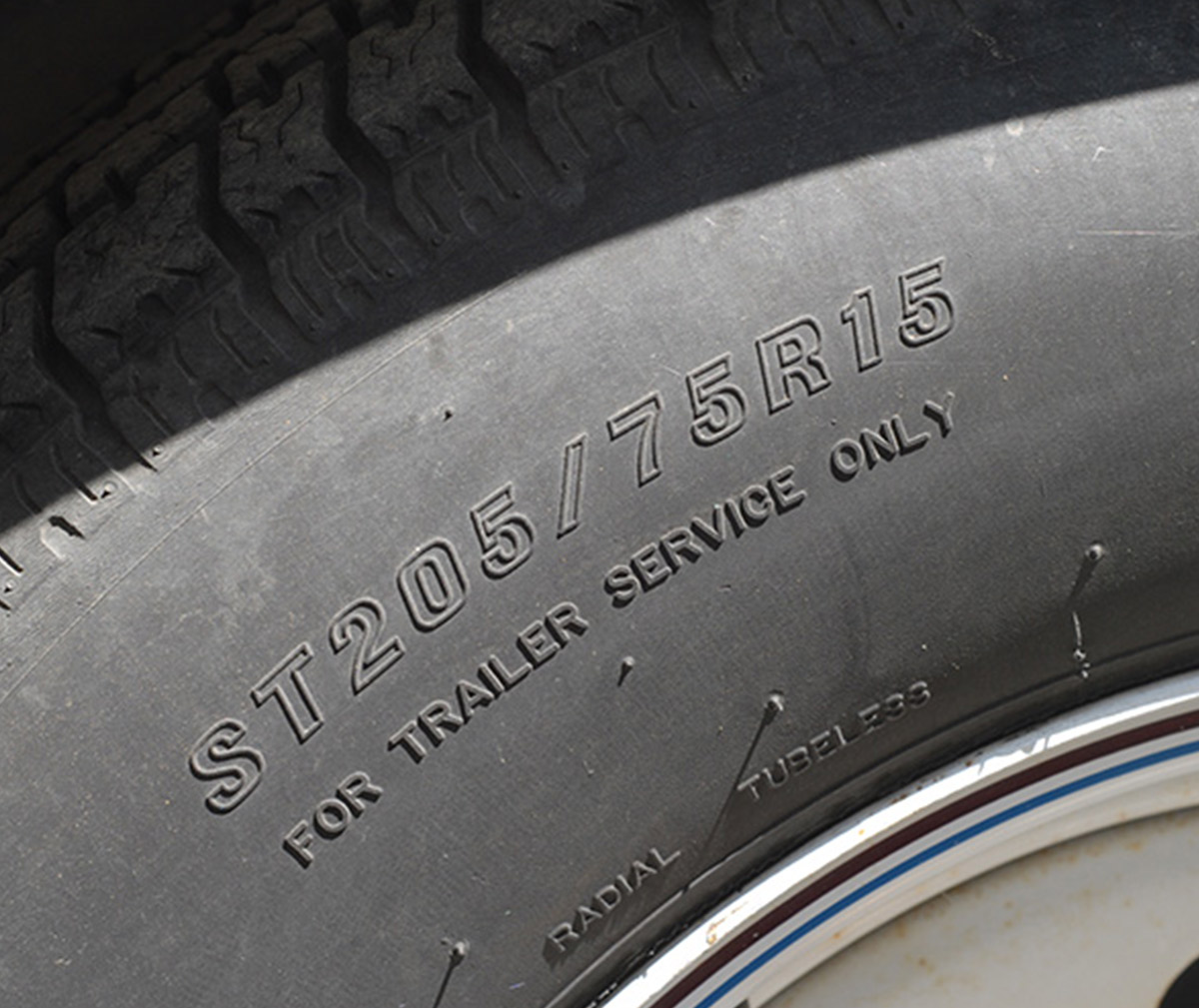
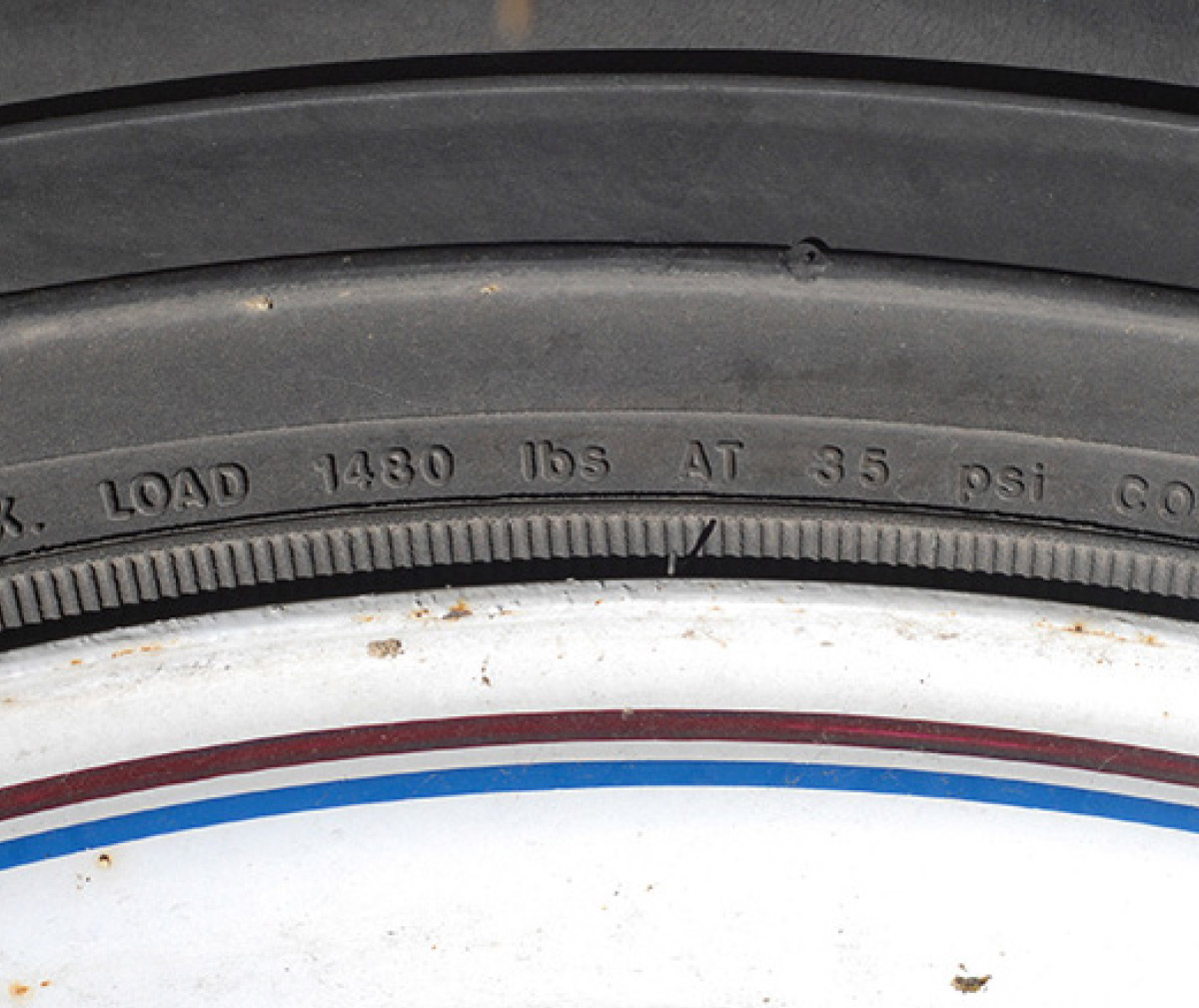
That’s okay: All the information you need is right under your rig. Tire sidewalls are stamped with a wealth of information, including the wheel size, sectional width, load rating, maximum inflation pressure and the date of manufacture. All of these are important — especially the last one. By knowing how to decipher these hieroglyphics and adhering to industry standards, you’ll increase your chances of traveling without suffering an unforeseen tire problem, and the expensive collateral damaged associated with blowouts.