

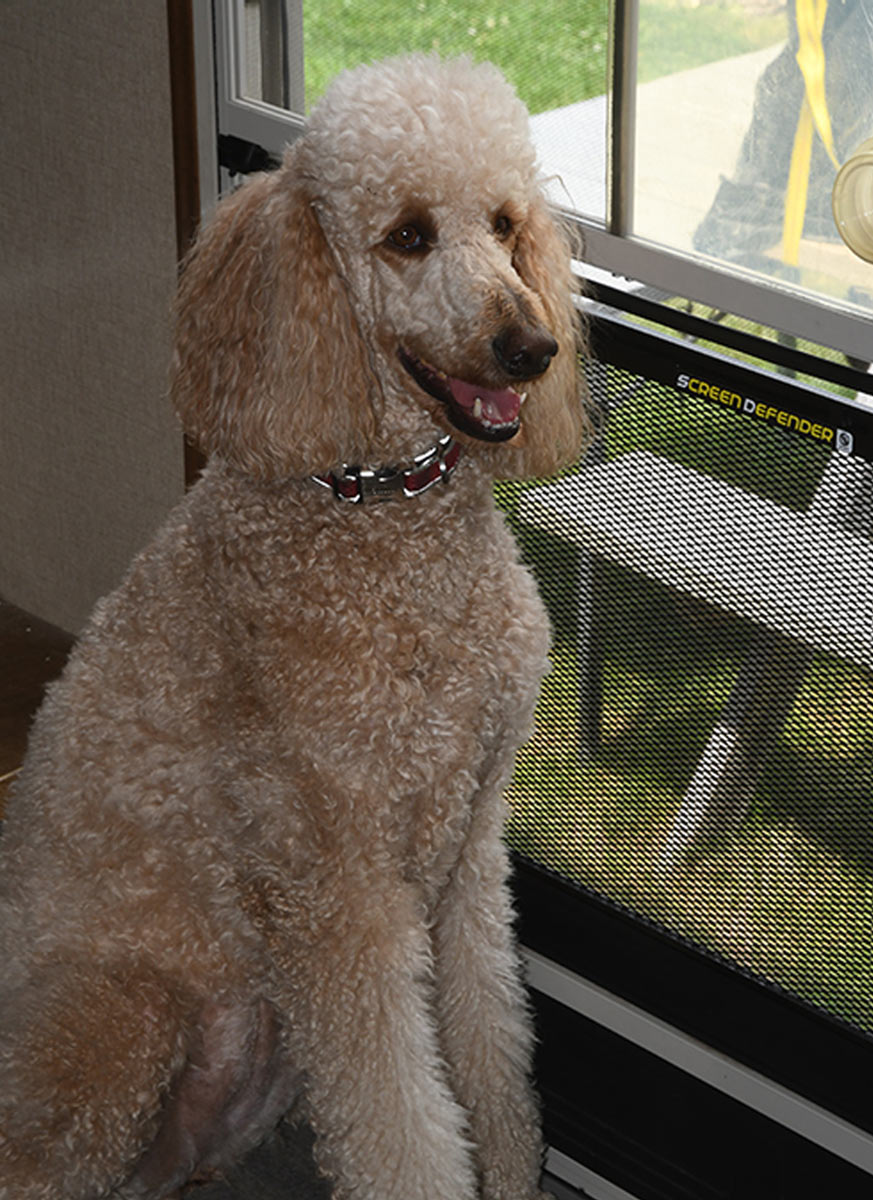
ogs love to gaze out the lower section of an RV’s screen door when the entry door is open — and when not scanning the outdoors, they also love to lay down against the screen, typically stretching out against the material. More mischievous dogs and cats also enjoy irritating owners by scratching at the material until it rips.
Screen protectors are not new to the RV world, but Lippert’s Screen Defender ($65.97 at Amazon) reinvented the installation process to make it simplicity personified — without the use of any tools, except possibly a tape measure.
The Screen Defender is a metal mesh insert that attaches to the bottom portion of the screen, so long as this area is more than 20 inches high. Don’t get overwhelmed by the seven pages of instructions: The process is exceptionally easy, taking only a few minutes to accomplish.
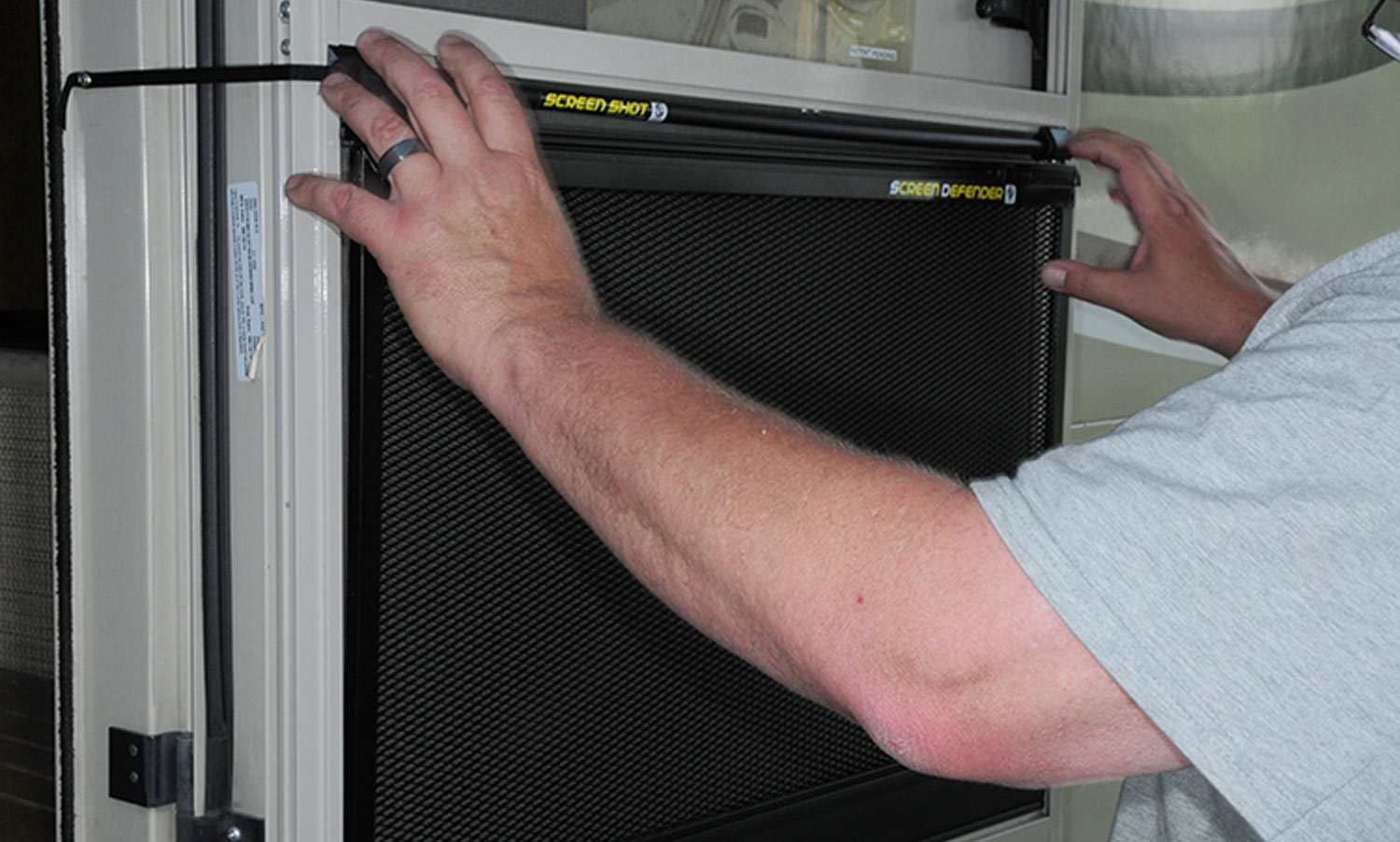
First, a determination must be made whether the provided extrusions are needed to fill any gap between the center bar of the screen door and bottom of the frame. To establish the need for extrusions, the metal mesh insert is pre-fit on the screen and any visible gap is measured. We had to put two extrusions together to make a 2-inch gap filler. This is done by sorting through the provided extrusions and finding the right combination. For this project, two pieces were pressed together, setting the barbs that are used as fasteners.
ogs love to gaze out the lower section of an RV’s screen door when the entry door is open — and when not scanning the outdoors, they also love to lay down against the screen, typically stretching out against the material. More mischievous dogs and cats also enjoy irritating owners by scratching at the material until it rips.
Screen protectors are not new to the RV world, but Lippert’s Screen Defender ($65.97 at Amazon) reinvented the installation process to make it simplicity personified — without the use of any tools, except possibly a tape measure.
The Screen Defender is a metal mesh insert that attaches to the bottom portion of the screen, so long as this area is more than 20 inches high. Don’t get overwhelmed by the seven pages of instructions: The process is exceptionally easy, taking only a few minutes to accomplish.
First, a determination must be made whether the provided extrusions are needed to fill any gap between the center bar of the screen door and bottom of the frame. To establish the need for extrusions, the metal mesh insert is pre-fit on the screen and any visible gap is measured. We had to put two extrusions together to make a 2-inch gap filler. This is done by sorting through the provided extrusions and finding the right combination. For this project, two pieces were pressed together, setting the barbs that are used as fasteners.

The Screen Defender is pre-hung on the lower portion of screen door to determine whether extrusions will be needed to fill any gaps
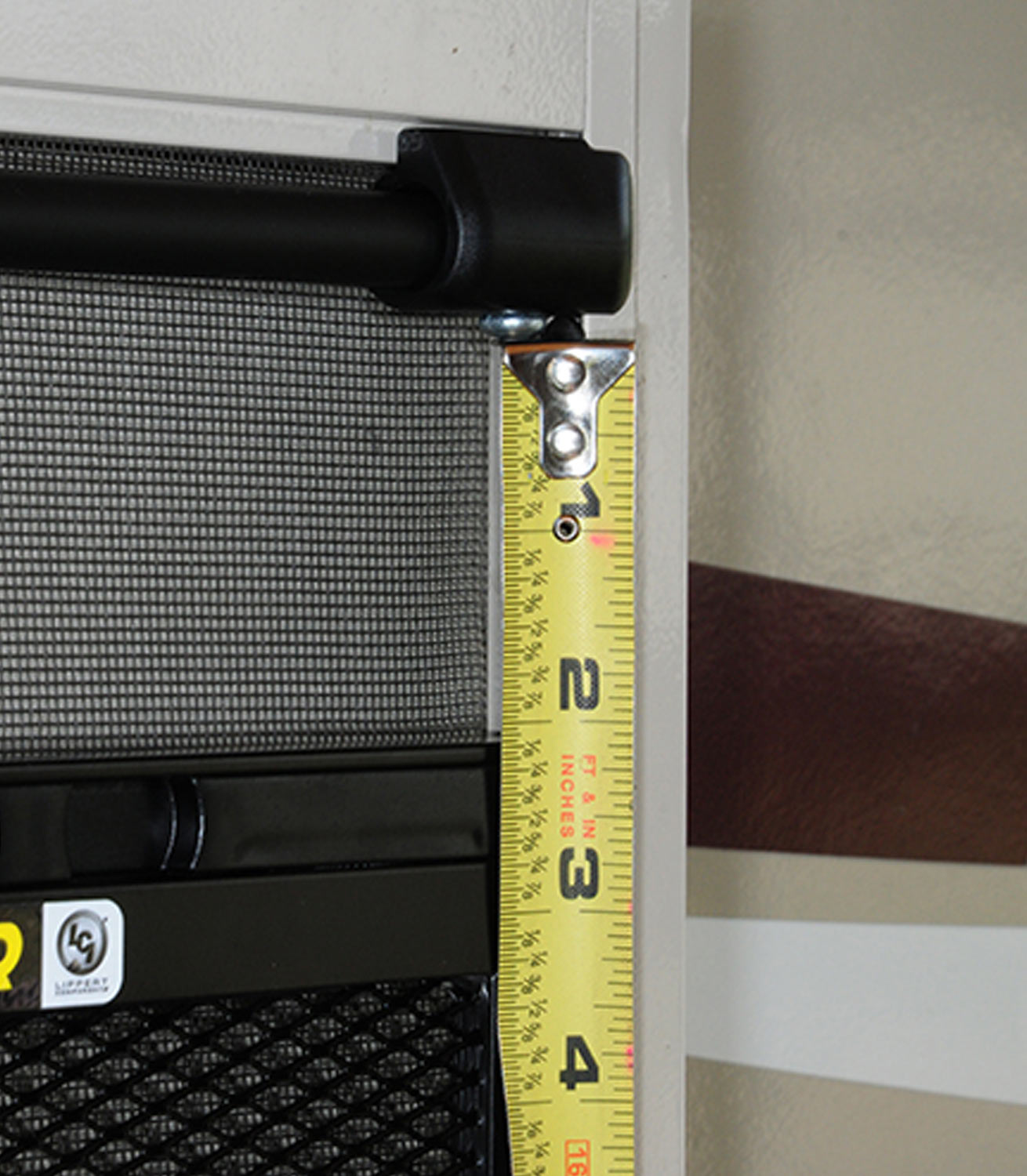

The extrusion was fitted to the bottom of the metal mesh screen protector before placing it in the screen channel.