


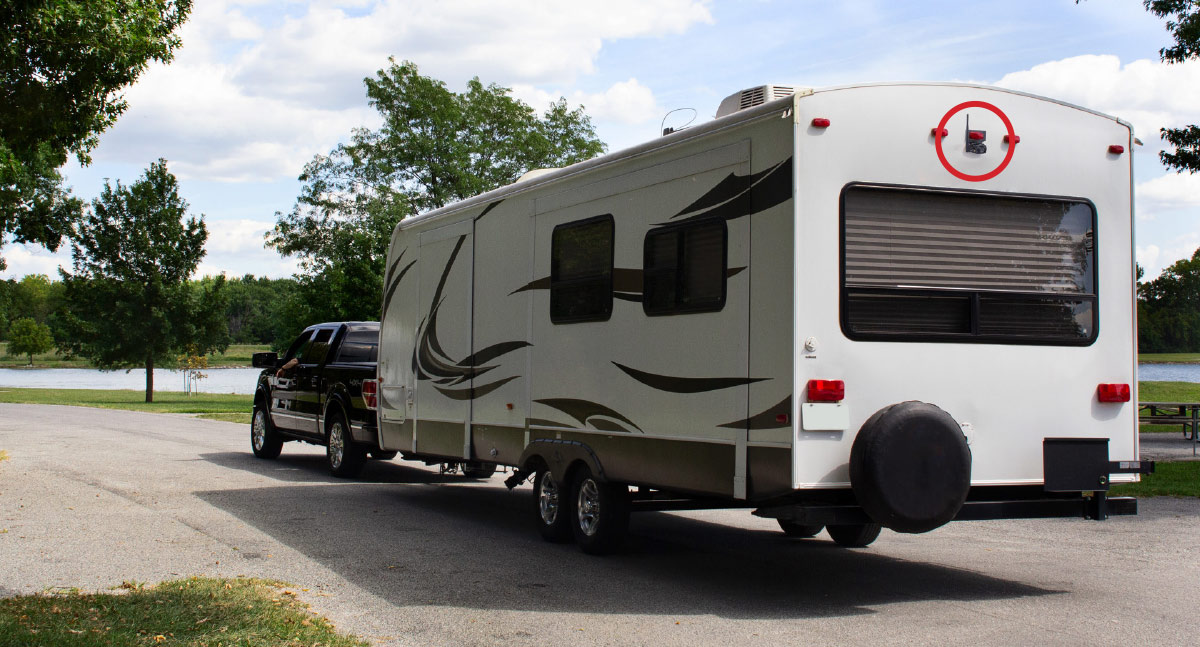

hen it comes to improving vehicle safety, few products have been met with more enthusiasm by drivers than rearview cameras. Also known as backup cameras, these systems tie into a dash display or smart device and provide an extra layer of assurance that a vehicle operator didn’t overlook something before shifting into reverse — or, worse yet, that a person or animal hasn’t inadvertently entered the blind area behind the vehicle.
In fact, rearview-monitoring technology — meaning, essentially, rearview cameras — has been mandated by federal regulations since May 2018 for all new cars, trucks and vans weighing less than 10,000 pounds sold in the U.S.
Unfortunately, rearview camera systems haven’t yet been required equipment for RVs. It stands to reason, however, that if such a system will aid a driver when backing up a 16-foot-long Toyota Corolla, it would prove invaluable when reversing direction in a Ford F-150 pickup towing a 30-foot-long travel trailer. How many times have you had to ask a traveling companion to stand at the rear of your trailer or motorhome and guide you into a campsite?
Here, too, there are different choices; some wireless systems utilize Bluetooth technology while others operate through a Wi-Fi signal.
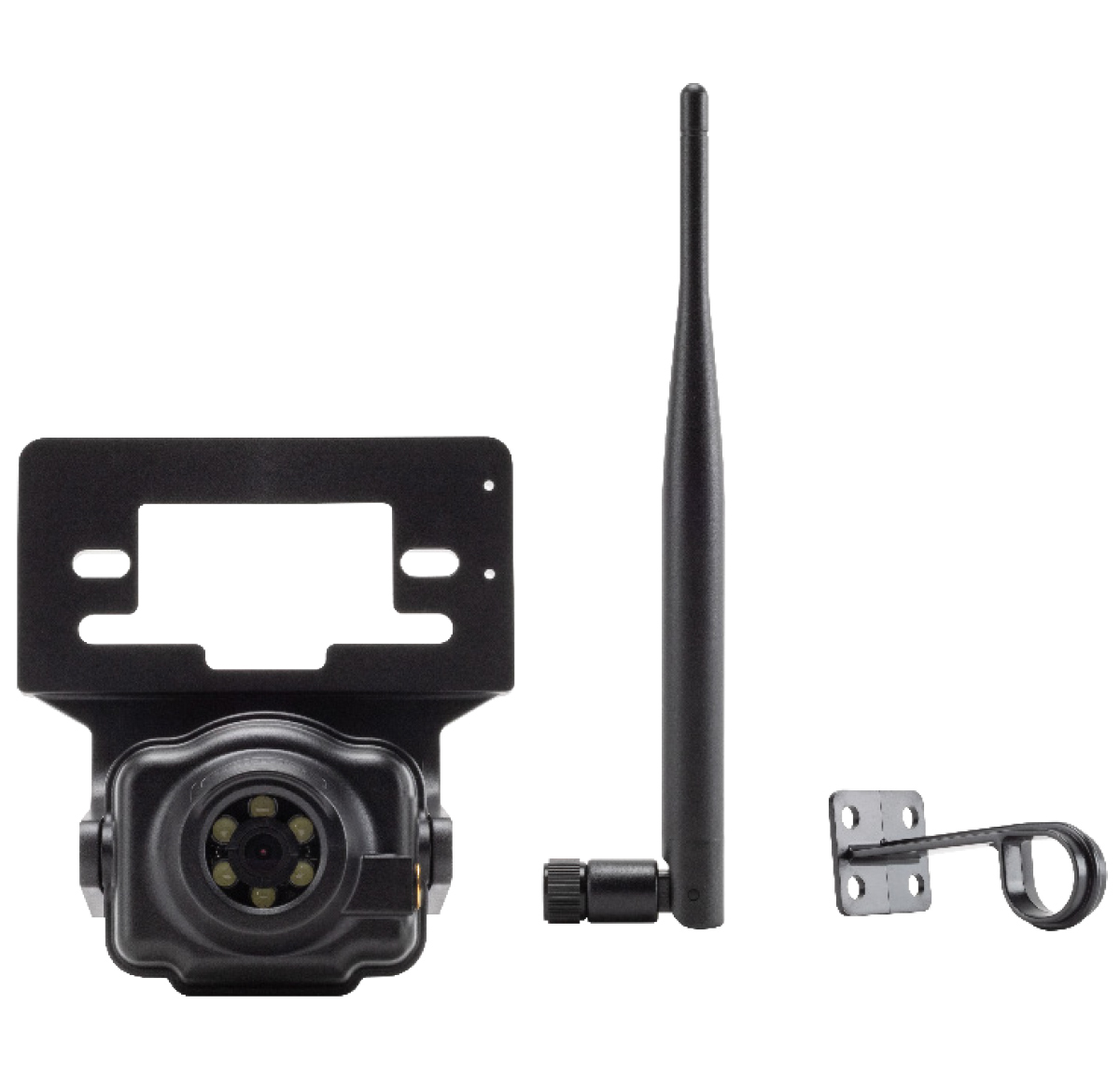
One of the newest to hit the market — and perhaps the easiest to install — is the VueSmart system from Hopkins Manufacturing. In fact, it consists of just four main parts — the camera and universal mount, the antenna and its mount — along with the requisite installation hardware. There’s also an app for Android and Apple smart devices, necessary because the VueSmart intentionally does not include a monitor.
For communication, the VueSmart utilizes Wi-Fi technology to connect the camera and screen. The signal was extensively field-tested and is capable of transmitting far in excess of the longest tow vehicle/fifth-wheel combination. And, according to Director of Product Marketing Dan Scheller, once the app is downloaded and an Internet connection is established, venturing out into terrain without Internet service doesn’t present a problem — the camera has its own Wi-Fi built in and will continue to transmit when powered on.
One big reason for the ease of installation — which, Williams noted, can be accomplished in about 20 minutes — is because the VueSmart is engineered to fit within the existing mounting location for the top clearance light at the back of the trailer (it also can be hard-mounted to the back of the unit). For power, the camera taps into the power supply for the light. The camera and clearance light share the supplied universal mounting bracket, the antenna is installed and the app is downloaded. It really is that easy.


The system, which retails for $129.99, also is waterproof, Williams noted, and is capable of withstanding the use of a power washer employed by many RVers to clean their rigs.
Beyond the safety aspects, though, a rearview camera will eliminate the bruised feelings caused by RVers when they get their backing-up signals crossed.