



etting outdoors and “roughing it” in an RV means different things to different people. Some go all-out and load up the RV for a weekend or more of off-the-grid camping. Others, however, will opt to leave their hectic lifestyle for a few days and find the nearest campground or RV resort that allows them to plug into enough power to enjoy life’s comforts while still shedding the everyday stress that tends to walk in our shadows.
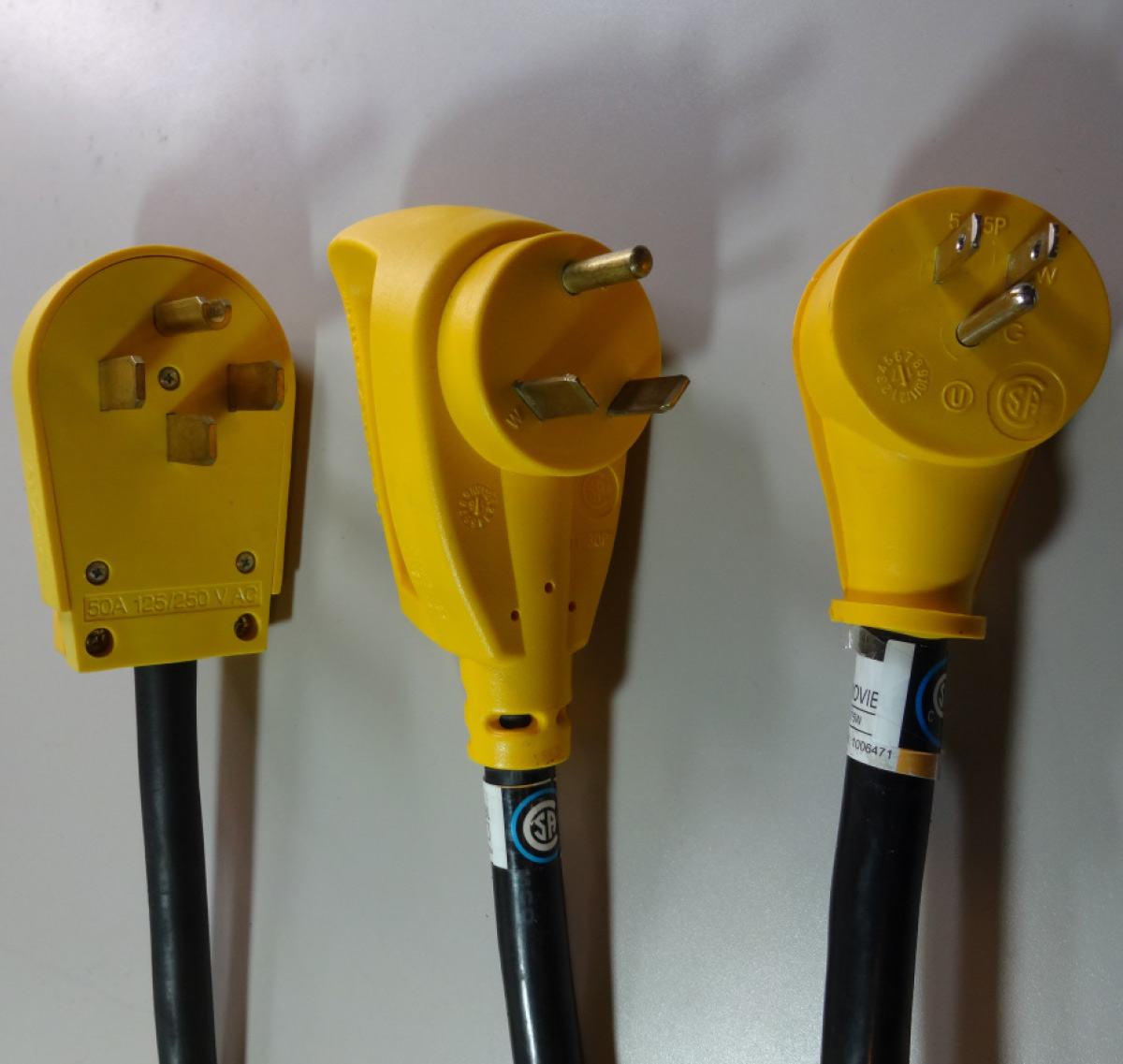
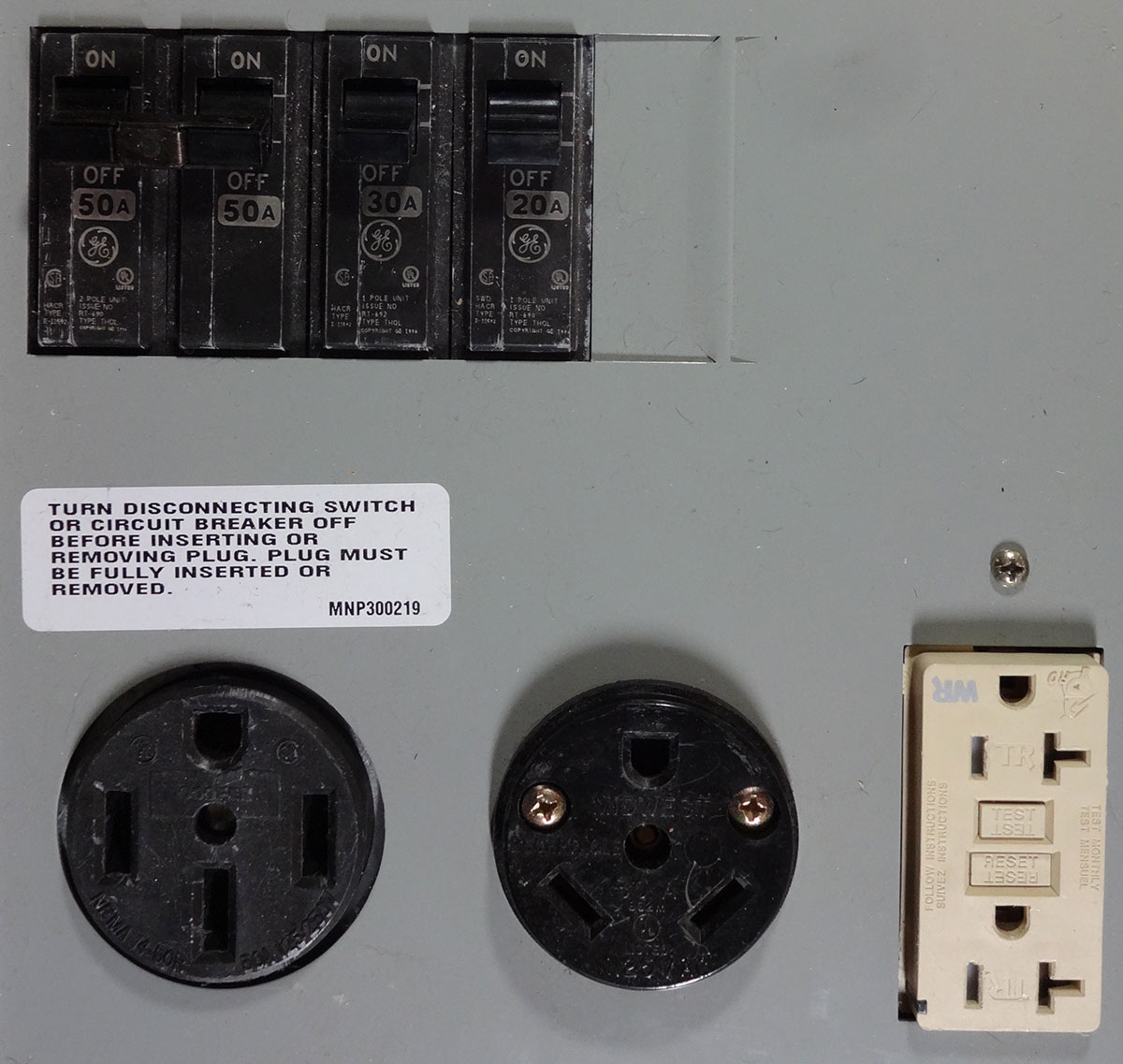
So, you’ll need an adapter.
All modern RVs come in one of two flavors of power service: 30-amp and 50-amp. While a third option of a 20-amp outlet is available, there are no currently produced RVs (that we’re aware of) which have a 20-amp shore power cord. It’s either a TT-30 connector, which is 30 amps at 120-volts AC, or a NEMA 14-50 connector, which is 50-amps at 240-volts AC (split down two separate circuits of 50 amps at 120-volts AC each, for a total of 100 amps of current at 120 volts AC). There are also a few variations of generator outlets available that must be considered when you’re running from a generator rather than shore power.
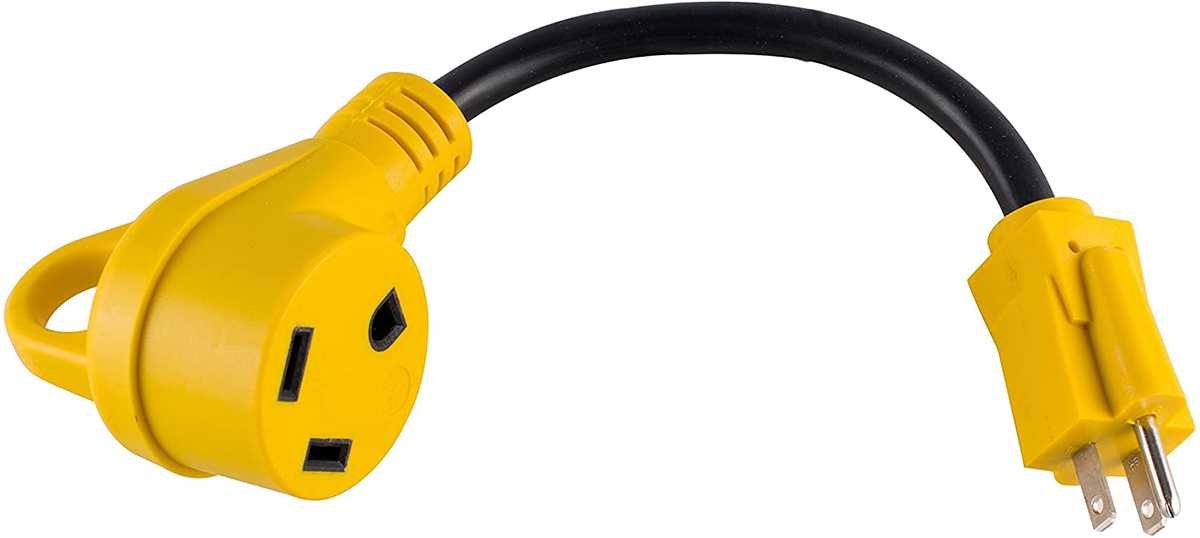
In order to be able to plug your RV into whatever power is available, there’s a plethora of possible adapters you can purchase. Most of them are in “dogbone” style, so named because they look like a cartoon version of a big bone held in a dog’s mouth. There are a few versions of adapters that resemble a tall hockey puck, but they tend to put a lot of twisting strain on the outlet they’re plugged into.
Adapters can be divided into three basic categories: 50-amp and 30-amp RV shore power cords, and generator twist-lock connectors. We’ll take a look at some of the most popular connectors; however, keep in mind that this is by no means an exhaustive overview.
Just remember that you can’t get blood out of a turnip. So even if you’re using a 30- to 50-amp dogbone adapter to power your 50-amp RV, you still only have 30 amps of total current to use. The same goes for a 50-amp pedestal to 30-amp shore power dogbone connection: your RV is still limited to 30 amps total current, no matter how much more you wish for. Know, too, that all quality dogbone adapters will properly split 240-volts from a 50-amp pedestal outlet or generator, to the proper 120-volts for a 30-amp shore power cord, or 120/240-volts for a 50-amp RV shore power cord. However, if in doubt, use a meter to confirm anything new before plugging in your RV.
“dogbone” adapter.


Keep in mind, too, that even though your generator will have some sort of ground connector, portable generators powering an RV are NOT required to be connected to any kind of grounding rod. However, any 2,000 to 7,500-watt inverter generator may require a ground-bonding plug if you’ll be connecting it to an EMS/Full-Protection Surge Protector.


Camco Manufacturing Inc.
(800) 334-2004
www.camco.net
Conntek Integrated Solutions
(877) 267-3788
www.conntek.com
Park Power by Marinco
(800) 307-6702
www.park-power.com
SmartPlug Systems
(206) 285-2990
www.smartplug.com
Southwire Co.
(770) 832-4242
www.southwire.com
Valterra Products
(818) 898-1671
www.valterra.com
Voltec Power & Lighting
(866) 486-5832
www.voltec-industries.com