



ne of the challenges of being on the road with your RV is how to perform the occasional repair or troubleshooting when you may be hundreds or even thousands of miles away from home. You’re not about to take along your eight-drawer tool chest to ensure you can address any situation — but with some forethought you can assemble an easily stowable tool tote filled with enough of the right tools to get you out of most jams.
Here’s a look at a list of the tools and meters that, through trial and error and a lot of miles, I learned to take with me on the road. Many of them have saved my bacon — more than once.
3-Meter Kit
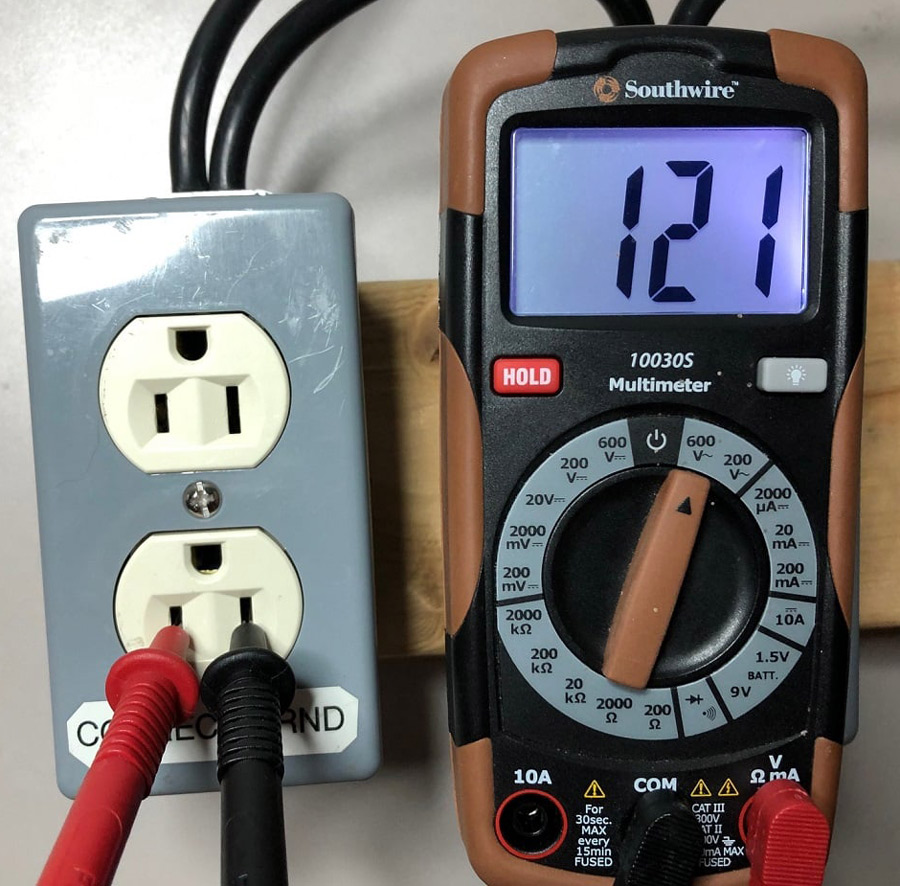
When an electrical failure occurs it’s possible to lose your lights, refrigeration, climate control — even the ability to pull your slides back in so you can break camp and move. I highly recommend that every RVer carry a basic 3-piece meter kit. This $30-$40 investment will let you accurately measure your RV battery’s charge level, find a blown fuse in your slide motors, determine if the outlet you’re plugging into has proper voltage, polarity and grounding and even do a quick check to confirm that your RV is properly grounded and doesn’t have a hot-skin condition (see “The Shocking Truth” elsewhere in this section).

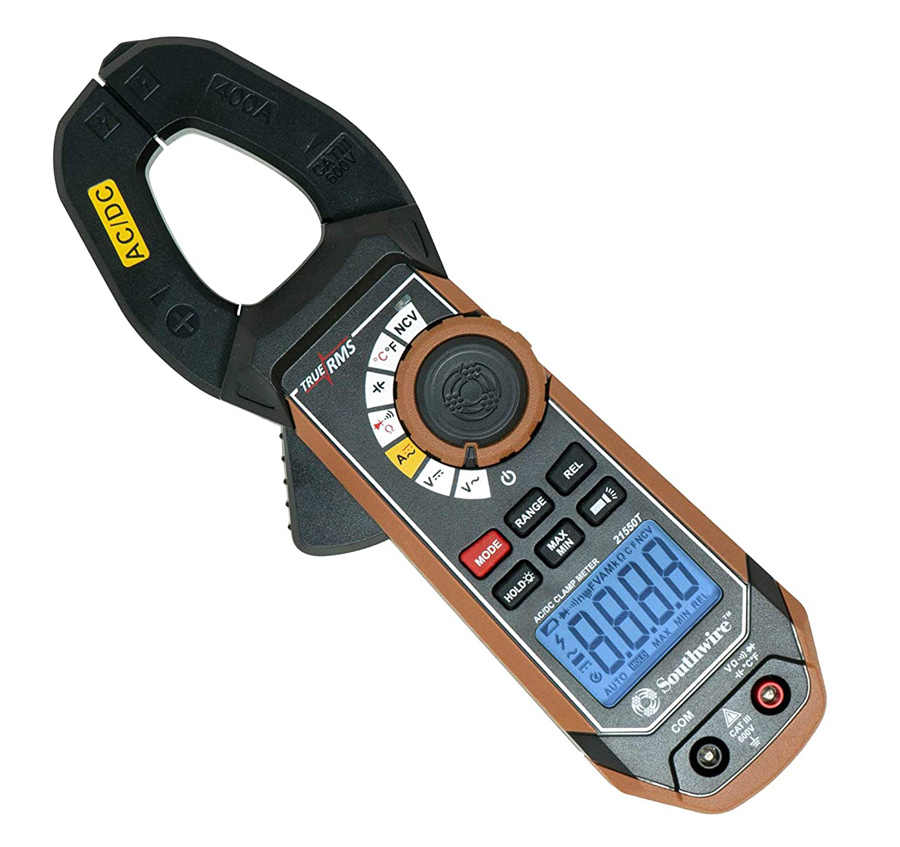
While voltage measurements are an essential part of troubleshooting any electrical system, there’s an even even handier way to measure actual current flow in the circuit: the clamp ammeter. This cool tool will let you confirm things like charging amperage going to your batteries, how much current your inverter is using, why a circuit breaker is tripping and lots more. However, be aware that the least-expensive clamp ammeters can only measure AC current in their jaws. You want one that’s listed for both AC and DC current using the clamp. With an AC only version, you won’t be able to measure 12-volt DC amperage — and that’s really what you need to troubleshoot any converter or battery circuits.
Current Splitter
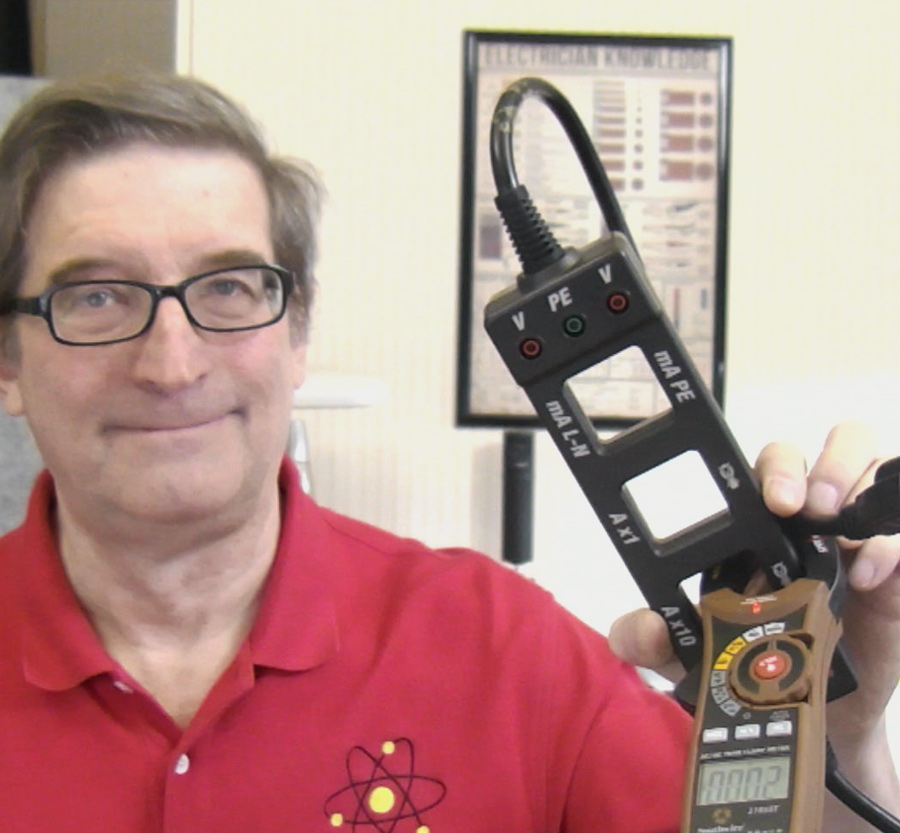
For anyone who has never used a clamp amp-meter, you can’t just put the jaws around the entire wire and expect it to read the amperage. That’s because the current flowing in the line and neutral (or plus/minus) conductors cancels out. You need a way to separate the conductors, and the easiest way is with a current splitter. I recently found a version from Italy that not only splits out the hot and neutral wires, it measures leakage current from either the “Line to Neutral” or “Line to Ground.”

You can’t fix what you can’t see, so pack a headlamp as well as stick light. These designs leave both of your hands free so you can work more safely, and the modern LED lights run for many hours on a few AA batteries or a USB charge. A Klein Tools headlamp is a great choice, with its rubberized strap to keep it in place, plus spotlight and floodlight functions.
A Cat Work Light, meanwhile, is versatile in that you can hang it off your shirt pocket or use its magnetic base to stick it on any ferrous metal. It even has a tilt function and low/high brightness levels. Working on anything electrical in the dark can be very dangerous, so please use a light.
Contact Spray
The best contact cleaner out there in my opinion is called DeoxIT D5 by Caig Labs. While $15 for a little spray can may seem like a lot of money, it only takes a short spritz on your 7-pin connector or shore power plug to remove oxidation and leave a lubricating layer that makes plugging/unplugging easier. It dissolves corrosion, improves connections and protects surfaces. Yes, there are cheaper contact cleaners, but this is what I’ve used for decades on every important connection I’ve had to deal with. Never use WD-40 or Vaseline on an electrical connection. I carry a lot more tools than we’ve discussed above — and, eventually, you will to — so consider this a starting point. You don’t need to buy a $1,000 meter when a $30 version will work just fine. However, the cheap giveaway tools generally are worth what you pay for them, so avoid junk tools if possible. Of course, make sure you carry batteries for tools and meters that require them. It’s also a good idea to learn the basics of how to use any meters in the comfort of your home before you find yourself troubleshooting a blown fuse in the middle of the night. Just remember that you can never have too many tools — or too much knowledge on how to use them.

You can’t fix what you can’t see, so pack a headlamp as well as stick light. These designs leave both of your hands free so you can work more safely, and the modern LED lights run for many hours on a few AA batteries or a USB charge. A Klein Tools headlamp is a great choice, with its rubberized strap to keep it in place, plus spotlight and floodlight functions.
A Cat Work Light, meanwhile, is versatile in that you can hang it off your shirt pocket or use its magnetic base to stick it on any ferrous metal. It even has a tilt function and low/high brightness levels. Working on anything electrical in the dark can be very dangerous, so please use a light.
Contact Spray
The best contact cleaner out there in my opinion is called DeoxIT D5 by Caig Labs. While $15 for a little spray can may seem like a lot of money, it only takes a short spritz on your 7-pin connector or shore power plug to remove oxidation and leave a lubricating layer that makes plugging/unplugging easier. It dissolves corrosion, improves connections and protects surfaces. Yes, there are cheaper contact cleaners, but this is what I’ve used for decades on every important connection I’ve had to deal with. Never use WD-40 or Vaseline on an electrical connection. I carry a lot more tools than we’ve discussed above — and, eventually, you will to — so consider this a starting point. You don’t need to buy a $1,000 meter when a $30 version will work just fine. However, the cheap giveaway tools generally are worth what you pay for them, so avoid junk tools if possible. Of course, make sure you carry batteries for tools and meters that require them. It’s also a good idea to learn the basics of how to use any meters in the comfort of your home before you find yourself troubleshooting a blown fuse in the middle of the night. Just remember that you can never have too many tools — or too much knowledge on how to use them.