
Dealing With Dirty Laundry
[maghub_sidebar]
Photos by Bob Livingston
Dealing With
Dirty Laundry
Installing a Splendide stacking washer and dryer in a closet pre-prepped at the factory will take the sting out of keeping clothes clean and fresh during extended travels
By Bob Livingston
T

raveling in an RV gives one a sense of freedom to explore and the ability to leave the hubbub of daily routines. While it would be nice to chuck all responsibilities and chores, reality suggests that one of our regular routines — washing clothes — follows us like a lovesick puppy. The majority of owners likely rely on laundry facilities in RV parks and local communities. While making use of a laundromat has its social benefits, there is a lot to dislike when using public facilities, from dirty or broken equipment to long wait times for available washers/dryers. Having your own washer and dryer inside the RV adds “loads” of convenience to any trip, and if the trailer, fifth-wheel or motorhome has been prepped for such equipment, Splendide has a stacker washer/dryer set-up that will bring smiles to whoever is responsible for keeping clothes clean.
First things first: The door opening to the bedroom was measured to make sure the washer and dryer would fit
1
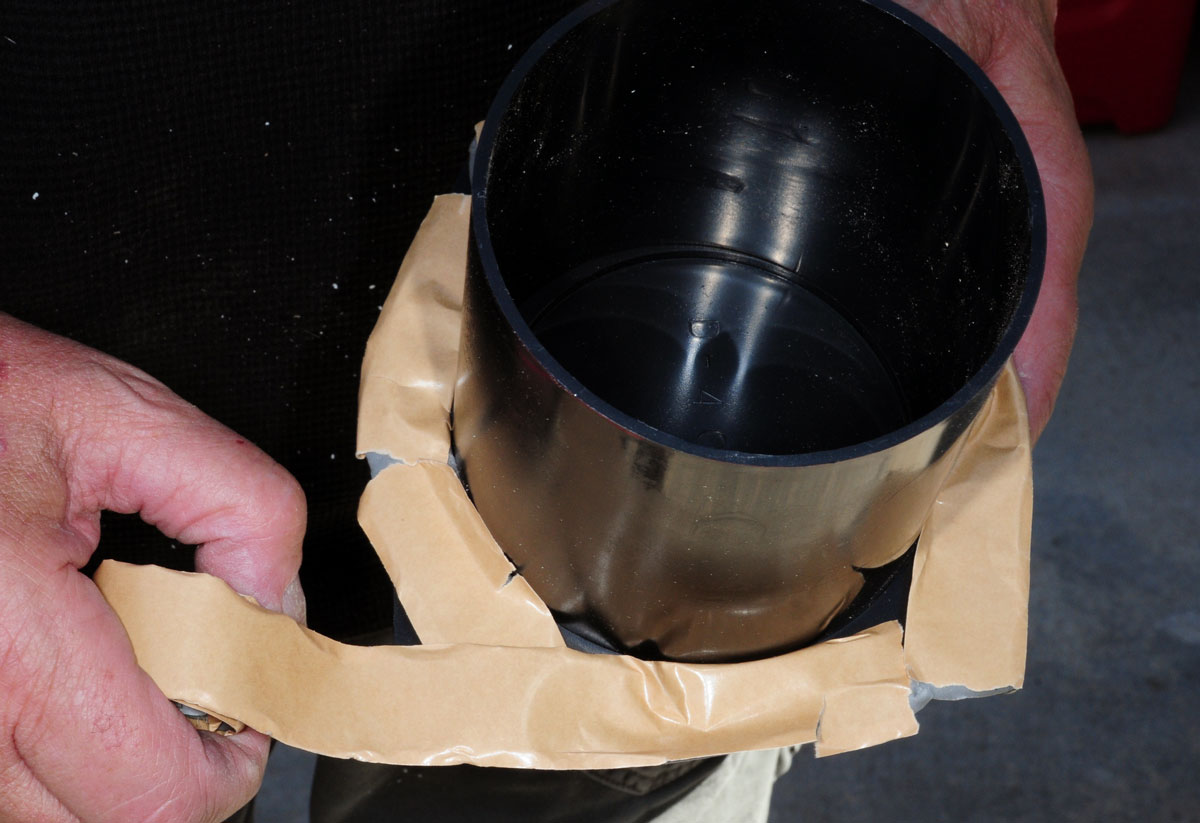
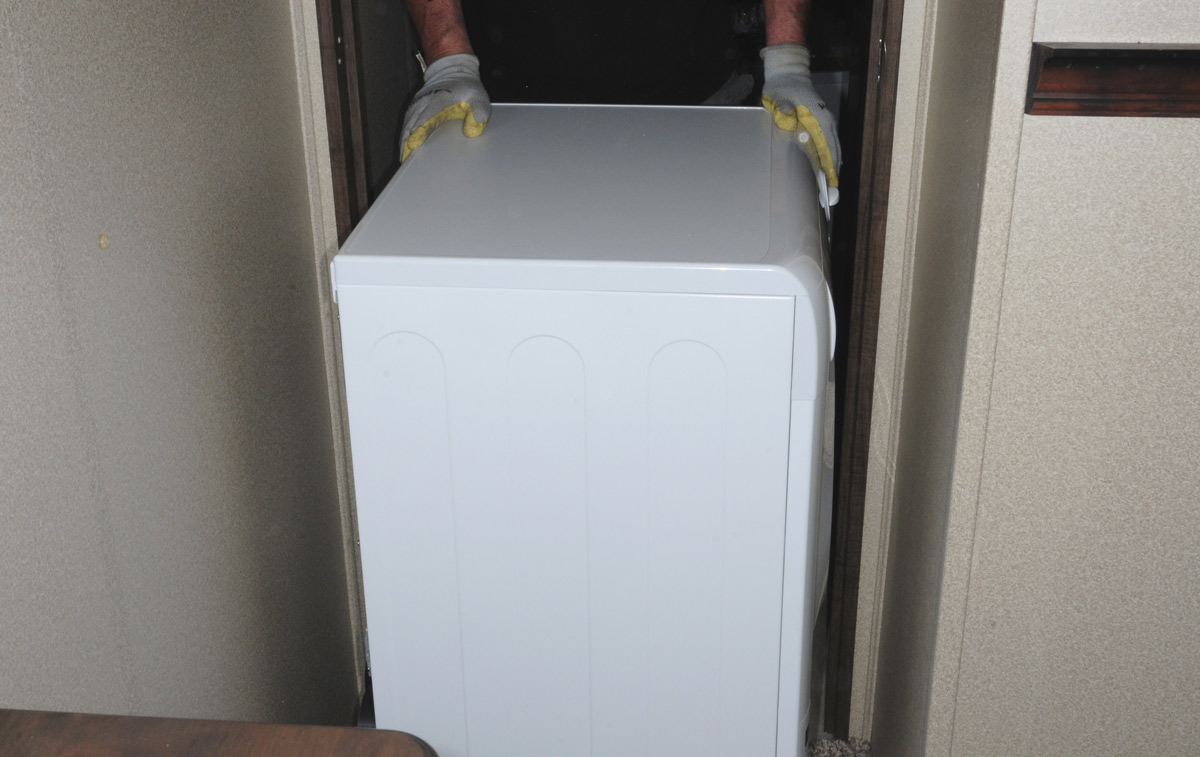
First things first: The door opening to the bedroom was measured to make sure the washer and dryer would fit. While the proper clearance was expected because the fifth-wheel was prepped for a washer and dryer, it never hurts to confirm the fit.
Stock, plastic faucets were cut off using a hack saw blade
2
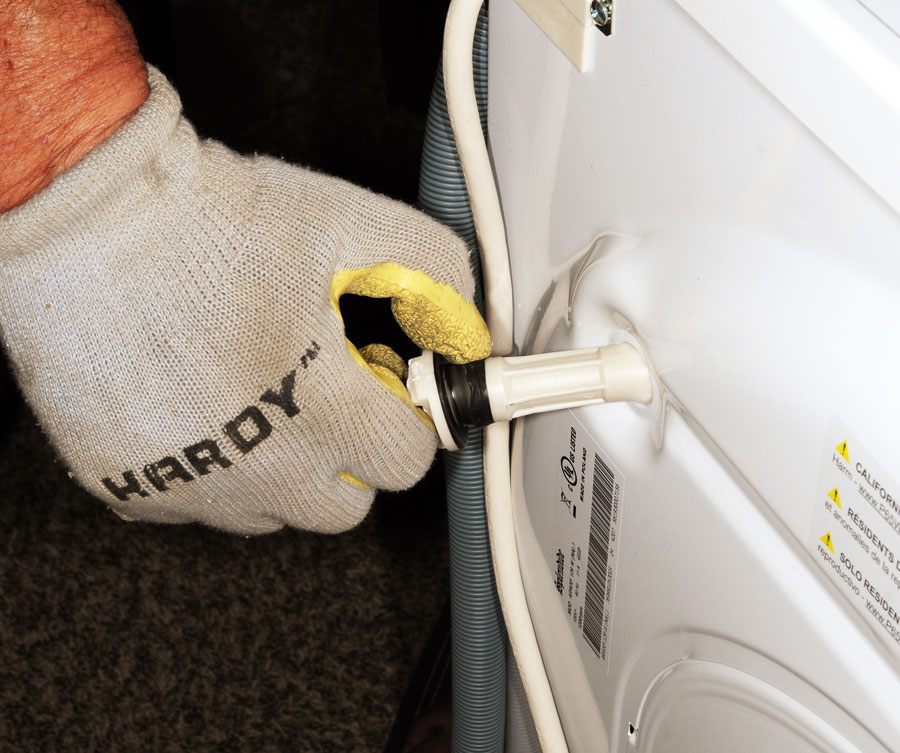
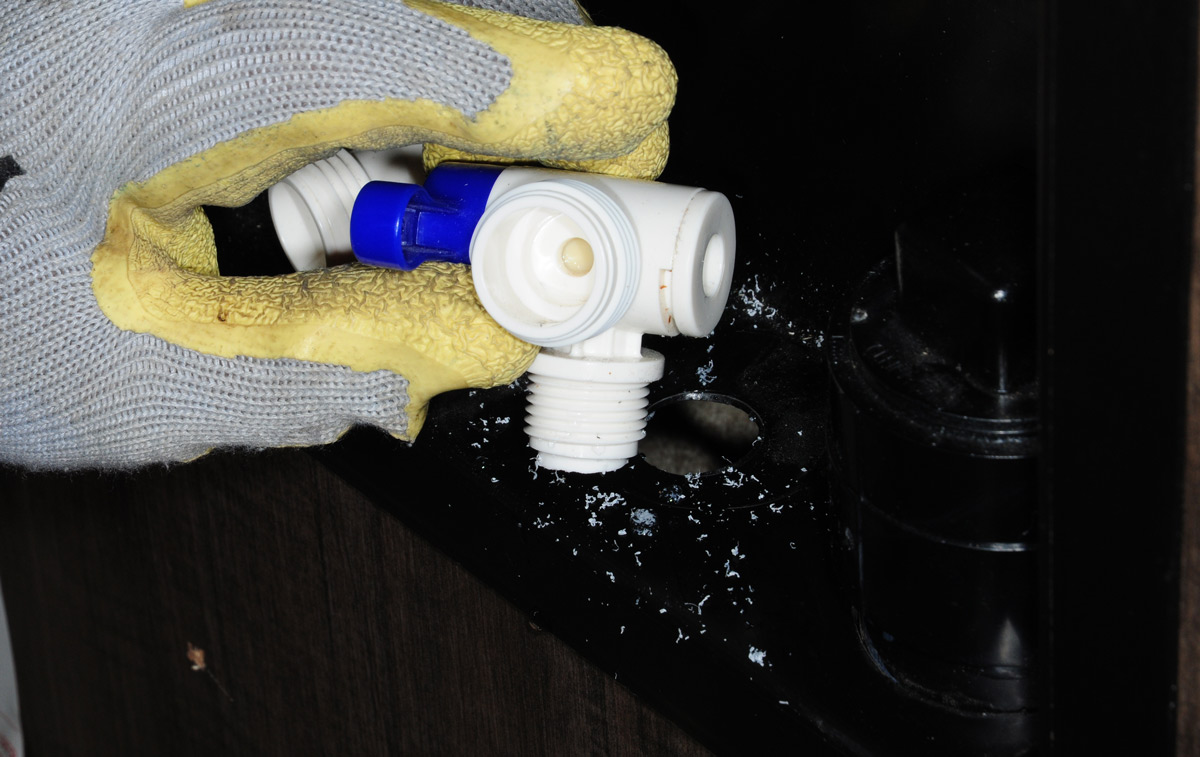
Stock, plastic faucets were cut off using a hack saw blade. There was not enough slack in the Pex tubing to pull up through the mounting plate in the wall to cut off the faucet below the hose clamp. Once separated from the hose, the plastic faucet was discarded.

A washer and dryer (or combination unit) are typically offered as a factory option in many larger RVs, and even more models offer “washer/dryer prep,” with all of the necessary plumbing and electrical connections already in place. While it may be tempting to modify an existing RV without washer/dryer prep, such a project is not recommended without tons of experience, the stomach to tear things apart and monumental patience. In most cases, it simply cannot be done — but if the RV is factory prepped for a washer and dryer, the project is achievable for those with a decent mechanical aptitude.

For this project, a 24-inch Splendide Ariston model washer and matching dryer, the most widely used units in the RV industry, were installed in a 40-foot fifth-wheel with a closet in the front bedroom that was washer/dryer prepped. Even though the closet was designed to house these appliances — and a tape measure confirmed that they would fit within the allocated space — closer examination before starting the project revealed that the tight closet dimensions would create an installation side show, requiring precise choreographing to successfully complete the project.

In other words, the appliances would fit in the allocated space, but there was little “wiggle room” for tools and hands needed to connect the water, drain and dryer vent hoses. Discovering that there was not enough room to turn the water faucets on and off after the washer was in place drove us to replace the less-durable plastic faucets with brass counterparts. Appropriate brass fittings were used to connect the factory water lines to stainless-steel braided hoses, and then to the new faucets. The installation was sweet, and maybe a little overkill, but when you come from the “let’s do this only once” school of thought, the more reliable hardware just raised the fifth-wheel owner’s comfort level.
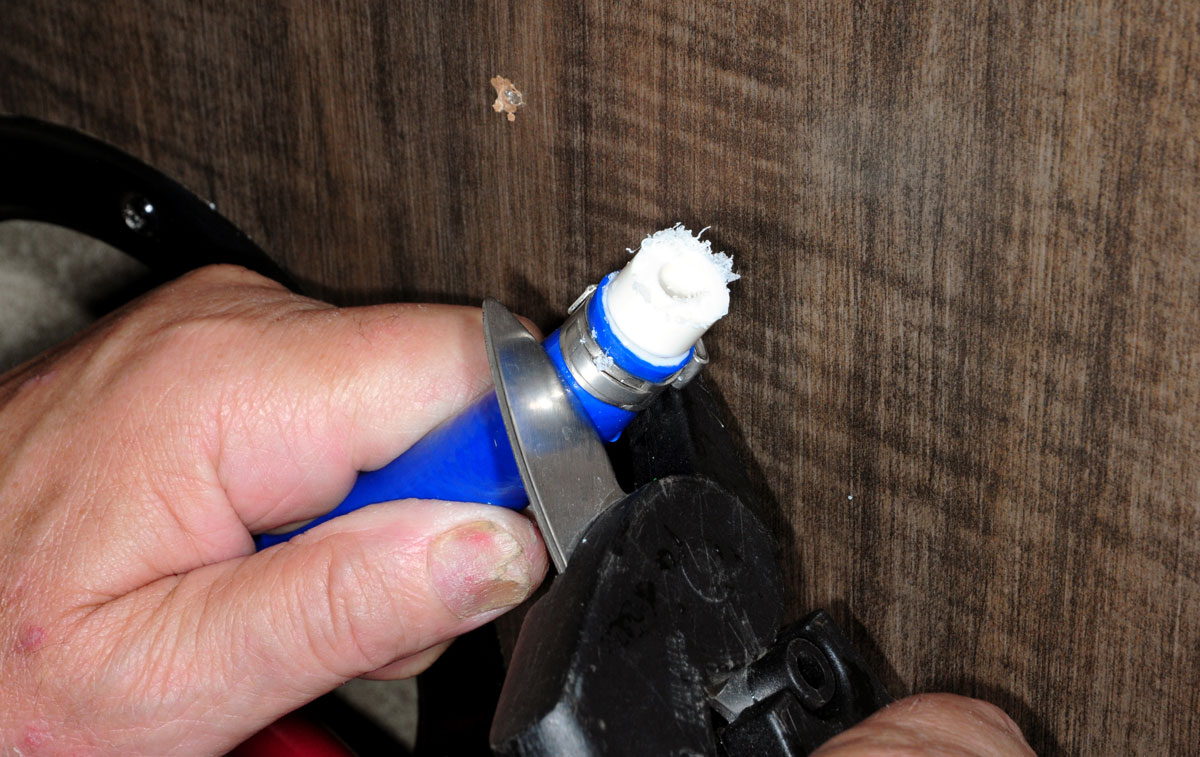
Ends of the Pex tubing were accessed through a round plate in the lower wall, giving us plenty of room to cut off the remaining faucet barb
3
Ends of the Pex tubing were accessed through a round plate in the lower wall, giving us plenty of room to cut off the remaining faucet barb.
A brass, barbed fitting was installed in the end of each Pex tubing. This fitting allows attachment of the new faucets (turn-off valves)
4
A brass, barbed fitting was installed in the end of each Pex tubing. This fitting allows attachment of the new faucets (turn-off valves). Adding stainless steel hoses made it easy to attach the new faucets and mount them back in the original housing in the wall. Replacing the faucets is not mandatory, but the added reliability of the brass fixtures, and the fact that they could not be opened and closed once the washer and dryer were in place, instilled greater confidence for the owner of the fifth wheel.
Routing for the dryer vent was marked on the back wall so the panel could be cut out to make room for the larger diameter, heavier duty hose
Cuts were made with an oscillating cutting tool that was purchased at Harbor Freight specifically for this job
5
Routing for the dryer vent was marked on the back wall so the panel could be cut out to make room for the larger diameter, heavier duty hose. This step is also not necessary but requested by the owner who was looking for a more durable set up. Cuts were made with an oscillating cutting tool that was purchased at Harbor Freight specifically for this job. Inexpensive tools are not designed for daily use by professional mechanics but are certainly reliable enough for most do-it-yourselfers. Lightweight paneling was easy to cut and remove to make way for the heavier dryer vent ducting.

Drilling a 4-inch hole in the side of the fifth wheel for the dryer vent can be disconcerting for some do-it-yourselfers, but we’ve done this a number of times, which helped us avoid a major potential mistake. That said, the factory provided a “drill-here” label that made no sense. After scratching our heads for a while, we decided to reach out to the fifth-wheel manufacturer for direction and learned that we needed to shift the hole location. Once we were comfortable with the location, a small drill was used for a pilot hole to confirm we were in the right spot before cutting the bigger hole, which went very smoothly. (Remember, you only get one shot for this step, and mistakes will lead to costly repairs.)

From here, it was a simply a matter of mounting the vent hardware to the exterior wall.

The next step was to route the dryer vent hose. The dryer comes with a suitable hose, but the owner wanted one that was on steroids. In order to make the bulkier hose work when the dryer was in place, a channel needed to be cut in the back panel.

Once the location for the dryer vent tube — which goes through the wall — was determined and marked, a pilot hole was drilled to show where to cut the 4-inch hole from the outside
6
Once the location for the dryer vent tube — which goes through the wall — was determined and marked, a pilot hole was drilled to show where to cut the 4-inch hole from the outside.
Painters tape was applied liberally around the pilot hole location on the outside wall
7
Painters tape was applied liberally around the pilot hole location on the outside wall. A new, high-quality hole saw was used for this project to make sure the cut was clean; you only get one chance to cut the hole properly.
Butyl tape, provided with the kit, was placed around the flange that rests against the surface of outside wall
8
Butyl tape, provided with the kit, was placed around the flange that rests against the surface of outside wall.
The vent tube fit perfectly. To prevent moisture intrusion self-drilling screws were coated with a silicone sealant before securing the flange of the vent tube against the outside wall
9
The vent tube fit perfectly. To prevent moisture intrusion self-drilling screws were coated with a silicone sealant before securing the flange of the vent tube against the outside wall.
A chrome cover finishes off the installation of the vent tube and provides a clean look
10
A chrome cover finishes off the installation of the vent tube and provides a clean look.
Pre-assembly of the Drain-A-Way pan PVC plumbing made it possible to determine the exact location for the drain pipe that was routed through the floor
11
Pre-assembly of the Drain-A-Way pan PVC plumbing made it possible to determine the exact location for the drain pipe that was routed through the floor. Since the raceway had a large open space and a second “floor,” a long wood drill bit, also purchased at Harbor Freight, was used to cut the holes for routing the drainpipe. We rarely use this type of bit, so the inexpensive set made perfect sense.

Available space behind the dryer was limited and even the vent hose that came with the dryer would require some head scratching to facilitate routing and the connection. We made the heavier vent hose work, but it added quite a bit of time to the project. After routing the vent hose, aluminum-clad insulation boards were used to cover the raceway and clean up the back wall.

Before placing the washer and dryer in the closet, we mounted an optional Drain-A-Way pan on the floor. This allows water to be routed outside in the event of a leak, which also played to the owner’s comfort zone. Not all RV manufacturers use the pan when installing the washer at the factory, but we think it’s worth the small $60 investment and additional installation time. A drainpipe had to be routed to the outside; for this installation it was placed through the floor, existing in the vicinity of the kingpin box. A threaded PVC fitting was added at the exit point so it could be sealed with a plug when the fifth wheel is not being used. Of course, the owner has to remember to remove it before running the washer in order provide the benefits of the pan.

Once the closet prep was complete and the stacking brackets mounted (using the provided template), it was time to shoehorn in the washer and dryer into the closet following a precise order. It was not possible to connect the water and drain hoses after the washer was in place. Fortunately, there was enough hose length to make the connections before moving the washer onto the drain pan. After placing the washer and dryer, the front lip of the drain pan was secured using the provided putty tape and screws.

Mounting the Drain-A-Way pan was like working a jigsaw puzzle
PVC pipe and fittings were assembled to construct and route the drain through the floor. The fit needed to be perfect before gluing the pieces together
12
Mounting the Drain-A-Way pan was like working a jigsaw puzzle. PVC pipe and fittings were assembled to construct and route the drain through the floor. The fit needed to be perfect before gluing the pieces together.
The Drain-A-Way pan was premeasured for location of the hold-down screws, which were driven by a screw gun after a hole was first drilled into the pan
The optional pan will route water to the outside in the unlikely event of developing a leak. It’s cheap ($60) insurance to protect from water damage
13
The Drain-A-Way pan was premeasured for location of the hold-down screws, which were driven by a screw gun after a hole was first drilled into the pan. The optional pan will route water to the outside in the unlikely event of developing a leak. It’s cheap ($60) insurance to protect from water damage.
Having your own washer and dryer inside the RV adds “loads” of convenience to any trip.
A longer-than-needed PVC pipe for the Drain-A-Way pan was routed through the floor, exiting near the kingpin box
14
A plug is screwed to seal the pipe when the fifth wheel is in storage
14
A longer-than-needed PVC pipe for the Drain-A-Way pan was routed through the floor, exiting near the kingpin box. A hacksaw blade was used to cut the pipe so that a pipe-to-threaded fitting could be glued to the end while providing a close fit against the exterior fiberglass. A plug is screwed to seal the pipe when the fifth wheel is in storage.
The dryer vent is connected to the tube that goes through the wall using a standard hose clamp
The vent ducting was then routed through the opening cut in the forward wall and connected to an articulating elbow purchased at a home improvement store
15
The dryer vent is connected to the tube that goes through the wall using a standard hose clamp (top). The vent ducting was then routed through the opening cut in the forward wall and connected to an articulating elbow purchased at a home improvement store.
Four screws and the plastic hardware provided by the washer manufacturer for unit protection while shipping were removed from the washer and the holes plugged with plastic fittings
These shipping parts should be saved and replaced before moving the washer to another RV later on, if desired
16
Four screws and the plastic hardware provided by the washer manufacturer for unit protection while shipping were removed from the washer and the holes plugged with plastic fittings. These shipping parts should be saved and replaced before moving the washer to another RV later on, if desired.

Since we employed a more robust vent hose, there was no way to connect it before positioning the dryer on the washer stacking brackets. An access hole was cut in the adjacent wardrobe closet to allow an arm and hand to reach the vent elbow, jockey it in place and tighten the hose clamp. A few choice words were blurted after dropping the ratchet wrench and socket behind the washer, but a telescoping magnet saved the day. The hole was also necessary to reach the rear stacking bracket and tighten the fastener.

Dealing with the tight fit required a lot of forethought before making cuts and drilling holes. Consequently, we took our time to contemplate the procedures and prevent costly mistakes. Overall, the job was not that difficult, but taking the additional steps like we did for this installation is not for the squeamish.

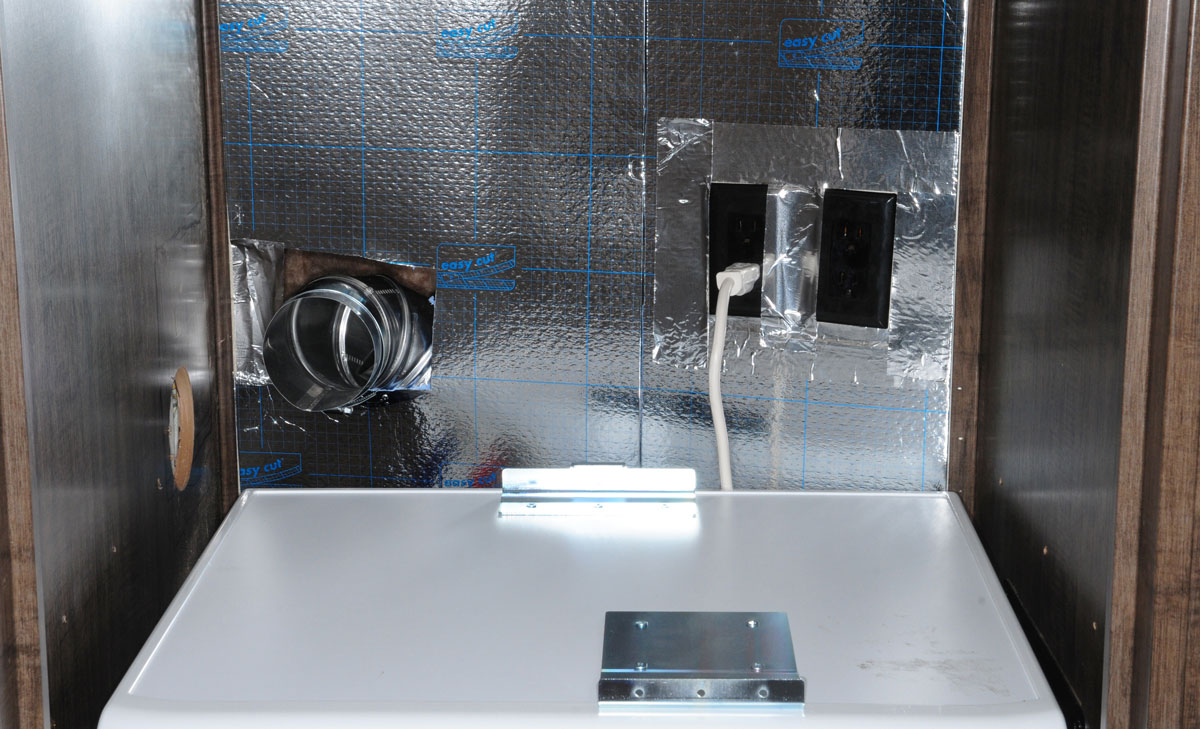
Metal stacking brackets are mounted to the top of the washer. A template, provided with the kit, is used to confirm location for drilling pilot holes to accommodate the screws.
17
Metal stacking brackets are mounted to the top of the washer. A template, provided with the kit, is used to confirm location for drilling pilot holes to accommodate the screws. Drill bit depth must be marked to prevent penetrating too far into the washer.
Aluminum-clad foam insulation panels, cut to size and mounted on the front wall inside the washer/dryer closet, cleaned up the holes cut for the dryer vent
18
Aluminum-clad foam insulation panels, cut to size and mounted on the front wall inside the washer/dryer closet, cleaned up the holes cut for the dryer vent. Here, the washer is in place, ready to have the dryer stacked on top.
The hot- and cold-water lines are long enough to make the connections before mounting the washer on the Drain-A-Way pan
19
The hot- and cold-water lines are long enough to make the connections before mounting the washer on the Drain-A-Way pan. There was no room to do this after the washer was in place. The washer drain hose was installed at the same time. Chrome-plated brass faucets (1/4-turn valves) replaced the stock plastic counterparts. The flexible drain hose was wedged inside the pipe provided with the washer/dryer prep option.
In order to reach the connection point for the vent hose in the rear of the dryer, an access hole, large enough to fit an adult hand and arm, was cut in the closet wall adjacent to the washer/dryer compartment
20
In order to reach the connection point for the vent hose in the rear of the dryer, an access hole, large enough to fit an adult hand and arm, was cut in the closet wall adjacent to the washer/dryer compartment. Not sure if even Houdini could have made the connection without the access hole.
The front hardware in the stacking kit secures the dryer to the washer, once both appliances are in place
21
The front hardware in the stacking kit secures the dryer to the washer, once both appliances are in place.
The final step required the installation of the front lip that completes the Drain-A-Way pan. Butyl tape and self-drilling screws are employed to complete this task
22
The final step required the installation of the front lip that completes the Drain-A-Way pan. Butyl tape and self-drilling screws are employed to complete this task.

By the way, we did measure the door opening to the bedroom before starting the installation to confirm that there’s was enough room to move in the washer and dryer, and the closet doors were removed temporarily to allow adequate clearance.

One final consideration: a washer and dryer can contribute greatly to humidity and heat inside a closet. The closet doors were not louvered, which is common when the washer and dryer are not opted for at the time of case, the owners simply left the doors open when operating the machines.

The washer and dryer retail for $1,000 and $794, respectively. Beyond the Drain-A-Way pan, the owner added the chrome vent kit, 90-degree elbow and clamp for the dryer and the stack kit for mounting the dryer on the washer. That, along with the additional hardware to customize this installation, added about $240 to the overall cost of the project. Those not seasoned with this type of an installation should expect to devote most of the weekend to the project — and even longer if running around for parts consumes additional time.

The convenience of a washer and dryer inside an RV will exceed your expectations and allow the dreaded memories of lugging clothes to and from a public laundry facility to fade quickly. And you’ll save lots of quarters.
Source
Westland Sales
www.westlandsales.com
503-655-2563
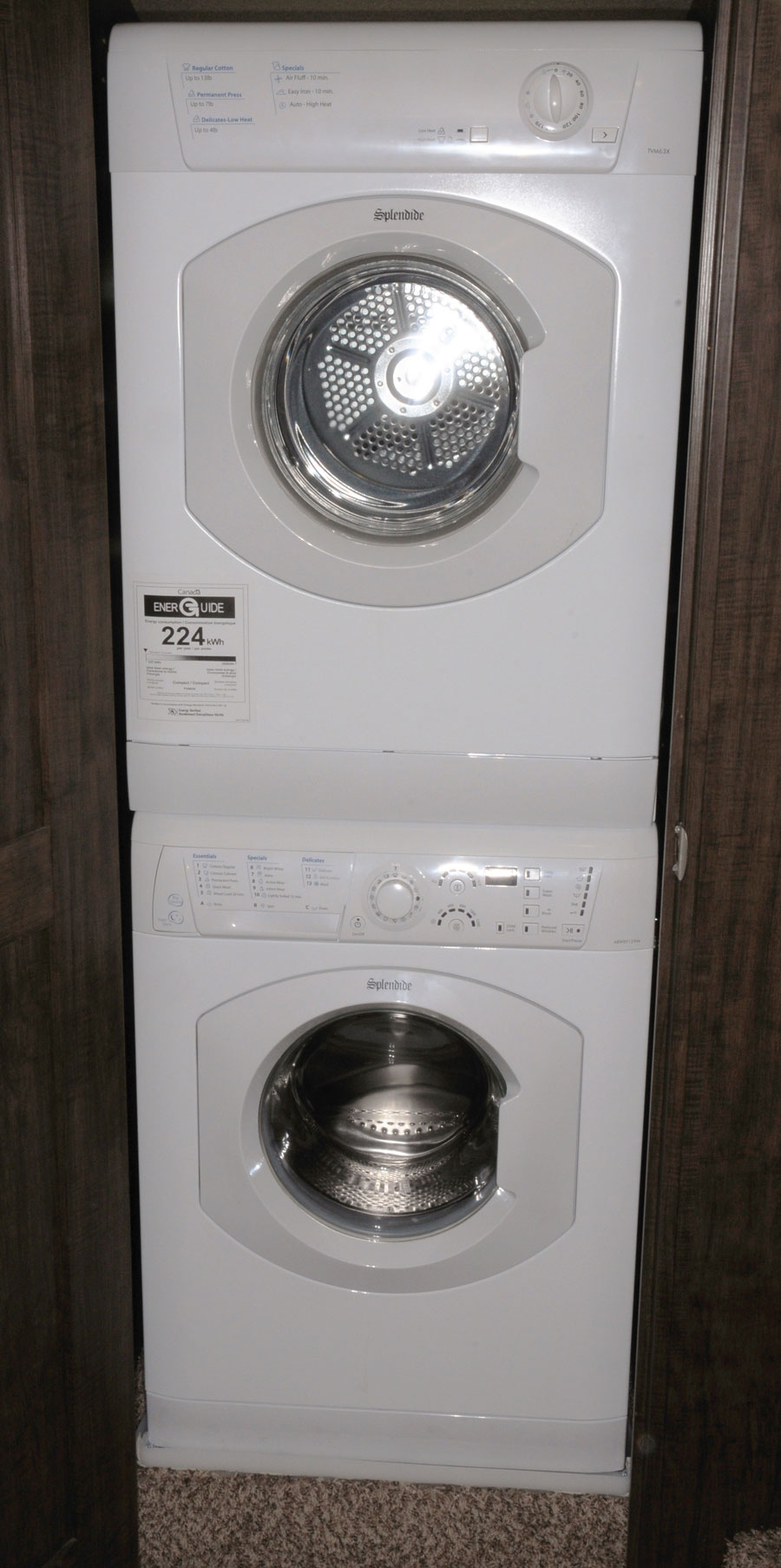
Washer and dryer fit nicely in the front closet and are easy to load and unload. Closet door must be left open when washing and drying clothes.
23
Washer and dryer fit nicely in the front closet and are easy to load and unload. Closet door must be left open when washing and drying clothes. Adding louvers to the existing door (or installing a new louvered door) is an option, but in actual use, leaving the door open presented no issues.
Source
Westland Sales
www.westlandsales.com
503-655-2563
Real World Testing

There is one big difference between the machines at the local campground’s laundromat and the machines you can install in your RV: the park’s washers and dryers are usually “commercial quality” in both size and capacity. Don’t add a washer and dryer combo to your RV thinking it’s a match; what you are really adding is complete convenience.

To provide some insight to the capabilities of the machines, the owner provided an overview of of a few cleaning cycles, documenting what was washed/dried and how long it required. The units provide a number of cycle options and the instruction manual provides sample dry loads, which are very helpful. Splendide-brand powder laundry soap, ordered from Amazon, was used and, based on the small amount needed for washes, should last for quite a while. It’s a good product and cleans the clothes well.

The dryer works very well although it takes a bit longer to dry towels and heavy cotton shorts, but otherwise is very efficient. After using the dryer for a while, the timer was set based on experience, rather than using the automatic feature. High heat was used predominately for the dryer and it seemed to work well without shrinking any clothes. The clothes came out of the dryer without excessive wrinkling and some items could be folded and ready to wear.

There is little to no movement in the RV when the washer is spinning, and the process is relatively quiet.

1. Heavy Soiled Whites and Resistant Colors
Maximum weight allowed (natural fibers — 13 pounds)
This cycle takes 122 minutes
Water temperature pre-set to Hot – RPM MAX
Water temperature changed from hot to warm.

  • 2 bath towels
  • 4 hand towels
  • 3 dishcloths
  • 4 facecloths

This load was put in the dryer on hot setting for 80 minutes and it was completely dry when finished.

2. Mixed Load (30 minutes wash for lightly soiled garments)
Maximum weight allowed is 6.6 pounds
NOTE: This cycle is designed to save energy and time allowing lightly soiled garments of different fabrics to be washed together.
Water temperature pre-set to warm and RPM at 800

  • 4 women’s t-shirts
  • 1 pair men’s shorts
  • 1 tank top
  • 1 pair women’s shorts

Set the dryer to high heat on automatic cycle. When cycle was complete the clothes were not dry. Set the dryer to additional 40 minutes to dry.

3. Jeans
Maximum weight allowed is 6.6 pounds
This cycle takes 55 minutes
Pre-set to Warm water – changed to cold – RPM 800
Reduce wrinkle cycle

  • 3 pairs of women’s jeans
  • 1 pair women’s shorts

This load dried on high heat in 60 minutes.