

inter travel opens up so many new and adventurous opportunities that, at one time, were mostly avoided by RV enthusiasts. Conventional wisdom relegated RV travel to only three seasons, with winter reserved for hearty souls who didn’t mind struggling with nature to stay warm. Times have changed, and RVs are more capable than ever of taking on cold-weather challenges — but they’re not perfect. Proactive winter RVers can protect vulnerable systems and accessorize to make journeys to their favorite winter destinations not only possible, but downright comfortable.
As snowmobile and cross-country skiing/snowshoeing fanatics (somewhat of an anomaly for Southern California residents), traveling to snow country was an annual rite of passage for my family. Early trips were interesting, sans many of the modern technological advancements and accoutrements to keep us warm. Portable generators were not that portable and solar systems were way out of our budget back in the 1970s when we first started traveling to snow country, so we relied on batteries and some “Rube Goldberg ingenuity.” We were early adopters of 6-volt golf-cart batteries; to keep them charged in the field, we ran the tow vehicle at a high idle using a rock to hold the accelerator in place. Crude, but it worked.
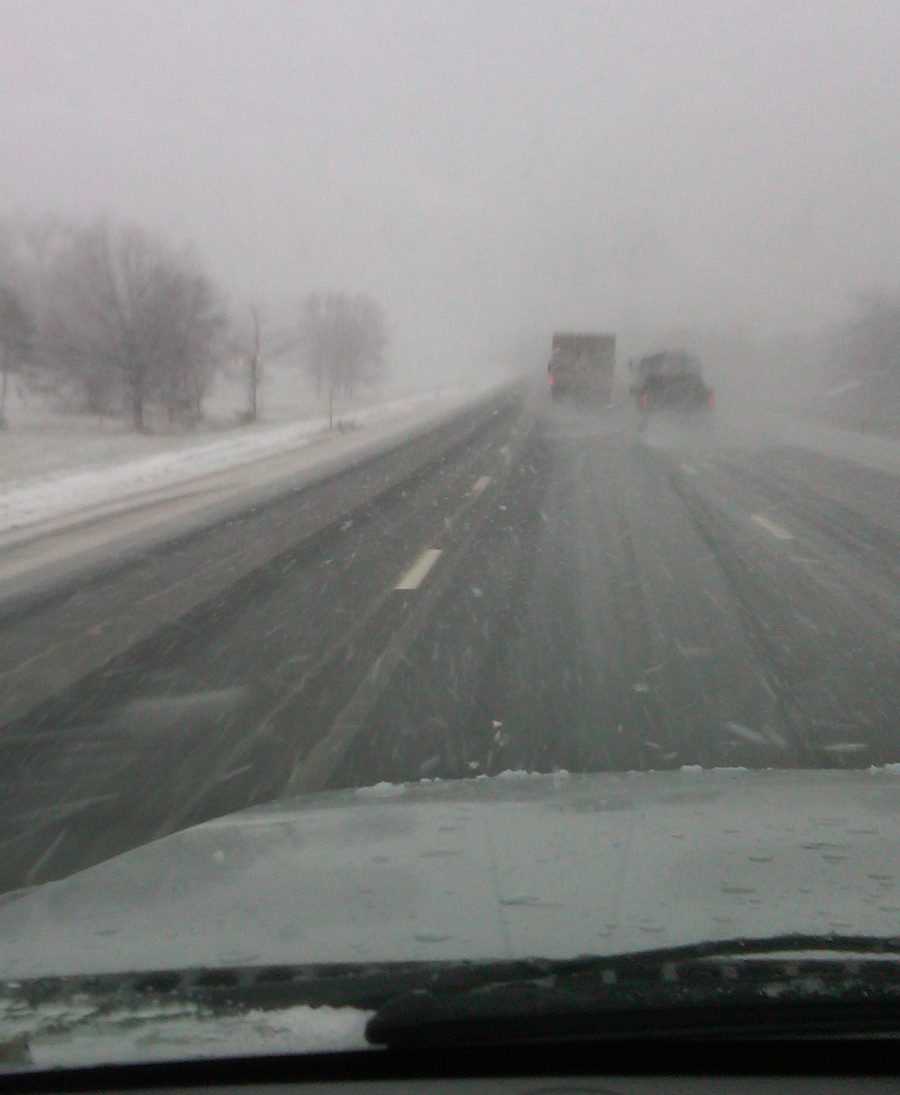
The bottom line: Respect the terrain and road conditions and don’t get in a hurry. I vividly remember one crossing over Donner Summit on California’s infamous Interstate 80, headed for Reno, Nevada. By the time we reached the summit, the weather had turned for the worst. Wind gusts were clocked close to 100 miles per hour, the roads were slick, there was no visibility other than a slight view of clearance lights on the commercial truck trailer we were following — and we were crawling. At the summit check point, I was cleared by the Highway Patrol to continue, but the driver of the truck in front, my only visible landmark, was required to pull over. We arrived at our destination in the wee hours of the morning, and even though I was piloting a four-wheel-drive truck with a camper on board, my fingers, literally, had to be pried off the steering wheel after arriving at the RV park.
The moral of the story: Be prepared for anything when crossing mountain passes by having enough water, food and warm clothing should you become sidelined while waiting for the weather to clear. We’ve had to do this many times and hanging out inside a toasty RV, sipping on hot coffee, is a lot more palatable than being in a passenger car, shivering under blankets.

It’s not practical to retrofit an RV with dual-pane windows, but there are a few procedures that can help with heat loss and sweating window frames. For example, plastic film provided in commercially-available kits from companies including Frost King can be attached to the frames and stretched tight using a standard hair dryer. Adding the second layer provides a decent vapor barrier, without restricting light penetration and the view to the outside. The film can be removed when warmer weather arrives. Adding foam insulation boards and heavier window covers will help, but of course restricts visibility. Foam RV vent/skylight insulators also help and are readily available at RV supply stores and online.
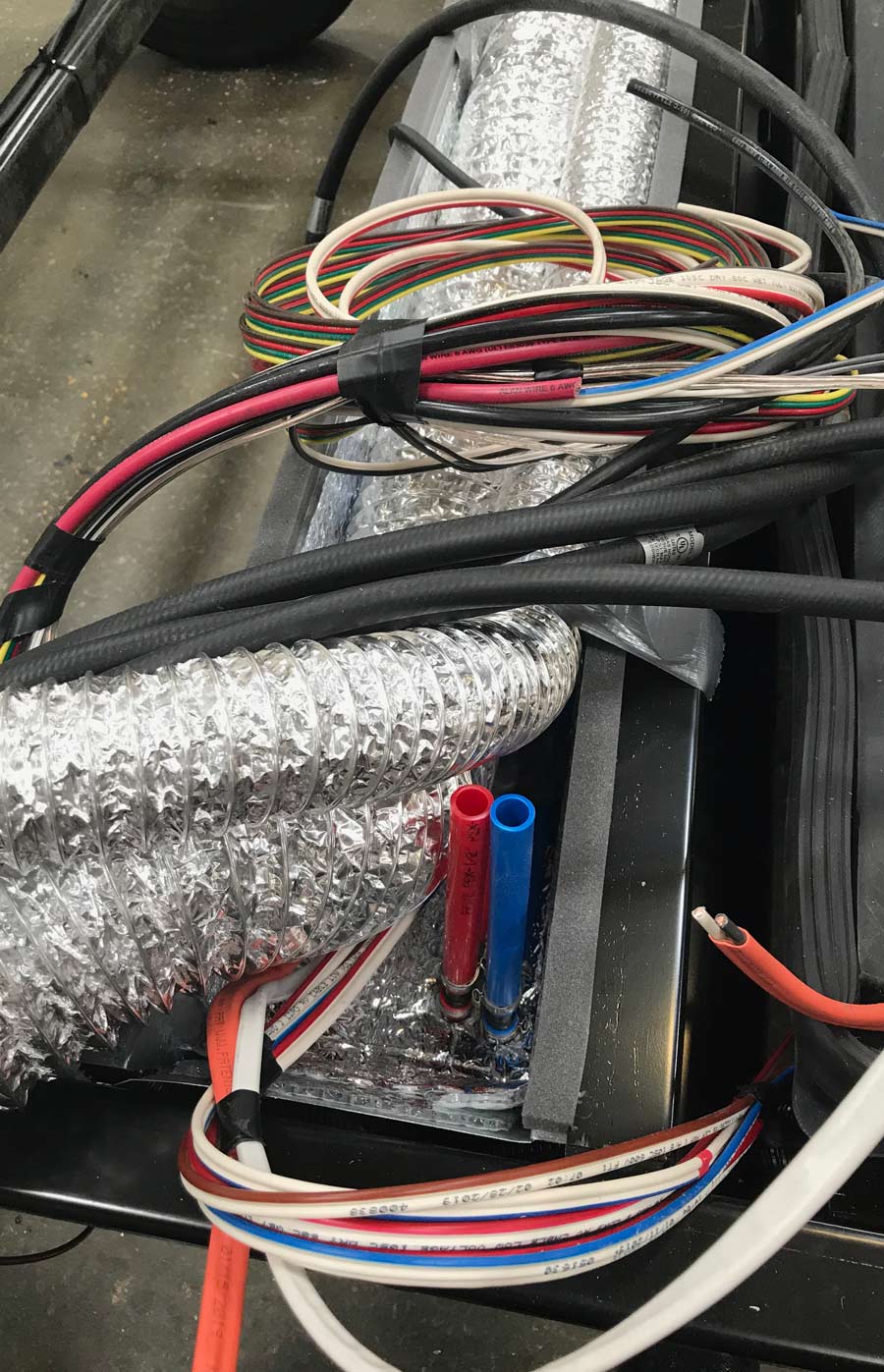
Preventing water-system freeze-ups is just as important as regulating heat loss. Freezing temperatures can burst pipes and fittings, and at the very least, stop water flow. Plumbing routed in heated compartments, usually part of a factory winter package, will usually not freeze as long as warm air from the furnace keeps the temperature above 32 degrees F. Pipes, fittings, valves and the demand water pump exposed to sub-freezing temperatures are susceptible to freezing and must be protected with additional insulation. This is not a difficult job as long as the pipes and pump are accessible. Fiberglass batting, spray-foam insulation (must be fireproofed) and commercial pipe wrappings work well. Electric holding tank pads (12-volt DC and 120-volt AC models) should be added if the tank compartments are not heated and access is possible. Power heat wraps are also available for water pipes, and in some cases are the only defense against freeze-ups.



Energy efficient furnaces from Truma Corp. have added versatility to heating appliances during the last few years. Its Combi and VarioHeat systems operate on LP-gas or 120-volt AC power and provide even heat distribution and are super quiet. Heated floors and hydronic, diesel-fired heating systems found in motorhomes and some higher-end fifth-wheels also provide quiet, evenly distributed heat. And on the more exotic side, Alde’s hydronic radiant heating system keeps interior space and floors on an even keel without temperature fluctuation. The Alde system is usually reserved for smaller trailers and Class B motorhomes.
- Long-handle ice scraper — An absolutely universal tool for those who travel to cold regions during winter. To help melt ice, fill a spray bottle with windshield washer fluid rated to minus 20 degrees F.
- Snow shovel — Goes along with ice scraper. Don’t travel in snow without one and make sure it has a folding handle to make storage easier.
- Snow broom — Helps remove snow from slide-out toppers; look for one with a collapsible handle.
- Fire extinguisher — Make sure the fire extinguisher is mounted properly in its designated location (which is required by code). Check extinguisher expiration dates and condition and recharge or replace, if necessary.
- Traction device — There are two types of snow-country travelers: those who have gotten stuck and those who will get stuck. Sometimes a snow shovel is not enough. Traction boards, which can be placed under the drive wheels, can be a lifesaver.
- Back seat heat — This is a handy device for heating cold spots. It runs on 12-volt DC power and is perfect for small areas like the cab of a truck or motorhome. While truckers use this heater all the time, there’s only enough heat to handle cold spots, not large areas. Just type “Back Seat Heat” into a search engine and you’ll find several vendors.
- Waterproof flashlight — Mandatory equipment for anyone needing more light at night than what a smartphone can provide. Rechargeable models with high lumen ratings work best, but make sure the battery is always charged.
- High-quality sewer hose — The more robust models, like the Camco Viper or Valterra Rhino, can better take the punishment of inclement weather. A bear stepped on a cheap model I was using many years ago. It didn’t make it.
- Fill the freshwater tank — If the hose freezes, you’ll need to draw from the freshwater tank with the demand pump.
- Top off LP-gas before leaving — Propane goes fast in winter, especially when running the furnace. Monitor tank/cylinder levels carefully.
- Diesel fuel additives — Winter diesel blends are more easily found in high-volume truck stops, but they’re not always available. Use a diesel fuel additive to prevent gelling when traveling in extreme cold areas.
- Monitor weather — Pay attention to the media weather person, even though he/she is often wrong. A smartphone and weather apps are your friends (NOAA Weather Live and My Radar Pro are good options).
- Focus on insulation — If possible, use a foam board to insulate roof and outside sidewalls of each slide out. This will help with heat retention. Cut and tape the insulation material into foldable sections, since they can be a pain to store when not in use.
- Elevate the dump hose — Keeping the dump hose off the ground is mandatory in certain areas, and just plan practical when the ground is frozen or covered with snow. Better yet, don’t use the dump hose if the temperature is too cold.
- Don’t be incognito — Staying in touch is very important, especially if you get stuck or suffer a medical emergency. For the most part, a cell phone will save the day, unless there’s no service out in the boonies. In that case, a tracking tool, like the Spot portable rescue device (www.findmespot.com) can inform others that you are in need of assistance.
Fireplace heaters provide comparable BTUs to the aforementioned portable heaters and are quite safe. Just make sure the fireplace heaters are kept clean, in much the same manner as taking care of a portable heater. Never use the oven as a heating source, because it also consumes oxygen. Always make sure the LP-gas and CO (carbon monoxide) detectors and smoke alarm are in good working order, replacing batteries annually if so equipped. A properly working CO detector is especially important when running the generator, as it is possible for carbon monoxide to enter the interior. Be sure the generator exhaust pipe is not restricted by snow buildup. The use of a dehumidifier will help purge moisture from the air and limit window frame and wall sweating. While there are a number of dehumidifiers on the market, moisture-absorbing crystals from Dri-Z-Air and DampRid will help keep the air dryer without requiring a power source.


Remember, patience is a virtue when traveling in cold country. Winter excursions in an RV can be challenging and require a lot more work. But the rewards can be breathtaking, especially for those who enjoy winter sports.
(360) 597-3017
Alde.us
Camco Mfg.
(800) 334-2004
Camco.net
DampRid
(888) 326-7743
Damprid.com
Frost King/Thermwell Products
(201) 684-4400
Frostking.com
Pelonis Technologies
(888) 546-0524
Pelonistechnologies.com
Pirit Heated Products
(888) 747-4844
Pirithose.com
RV Comfort Systems
(425) 408-3140
Rvcomfortsystems.com
Truma Corp.
(855) 558-7862
Truma.net
Valterra Products
(818) 898-1671
Valterra.com