


here’s nothing exotic about airing up tires. No experience is necessary and there is a plethora of tools available to get the job done. The learning curve — which is short — started for most of us by putting air in our bicycle tires when we were young kids. The process hasn’t changed much, other than the availability of more sophisticated and accurate methods for checking pressure. So, what is there to say about inflating tires other than maintaining the proper pressure for the load?
Well, nothing — unless you own a dually truck.
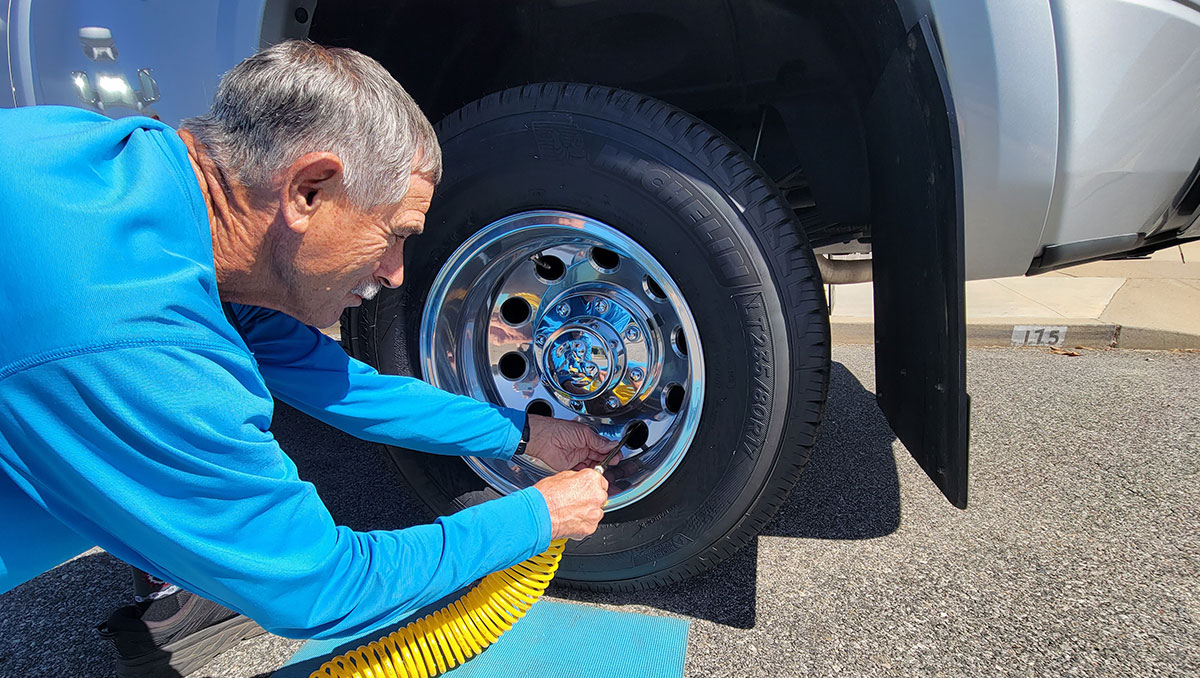
Reaching the inner valve stem on dual-rear-drive trucks and motorhomes can be frustrating, especially if the stems wiggle around when trying to push an air chuck onto the Schrader valve. Using a dual head air chuck helps, but losing more air than you put in during the process can produce a colorful vocabulary — not to mention the discomfort of squirming on the ground, front and center with your wheels. A good solution is to install Borg Dually Valve extensions, which will change your prospective on airing up dual-rear-wheel tires — and you’ll lose the potty mouth.
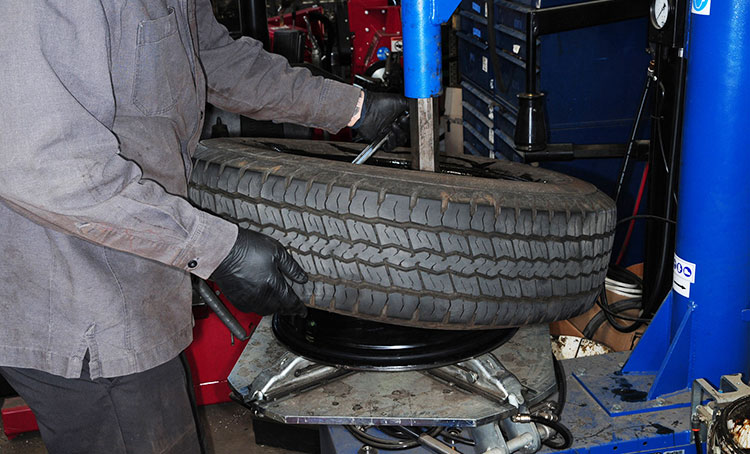
While there are a number of solid valve extensions on the market, with many of these products sold on Amazon, the Borg brand is one that we are most familiar with, having logged more than 100,000 miles of experience on two dually trucks without even a hiccup. Installing these extensions on the wheels requires dismounting the tires (and re-balancing when mounted), which will need to be accomplished by your local tire dealer. The best time, of course, to install the valve extensions is when new tires are needed, but waiting on existing tires to wear out will only allow the frustration to fester.
One hurtle to clear is finding a method of retaining the internal factory tire-pressure-monitoring system (TPMS). The sensors for the factory TPMS are attached to the valve stems — and when they are removed to make way for the extensions, so goes the sensors. It’s possible to use an aftermarket TPMS with sensors screwed onto the end of the new valve extensions or mounted internally on the wheels, but we figured out a way — with the help of Redlands Truck and RV, in Redlands, California — to retain the factory sensors and in-dash monitor/alert feature found on new vehicles since 2008. Redlands Truck and RV has been one of our project partners since the inception of RV Enthusiast magazine. Banking on years of experience working on trucks and RVs, Redlands has gained a reputation as one of the premier service centers in the country and is not afraid to tackle creative repairs and projects, sometimes more difficult than expected.
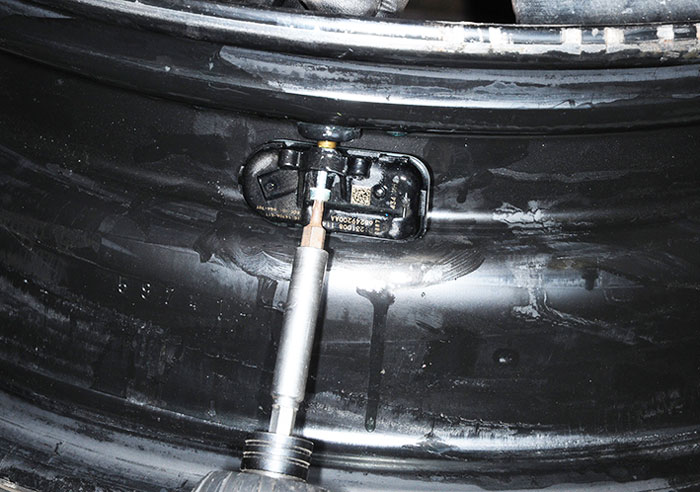
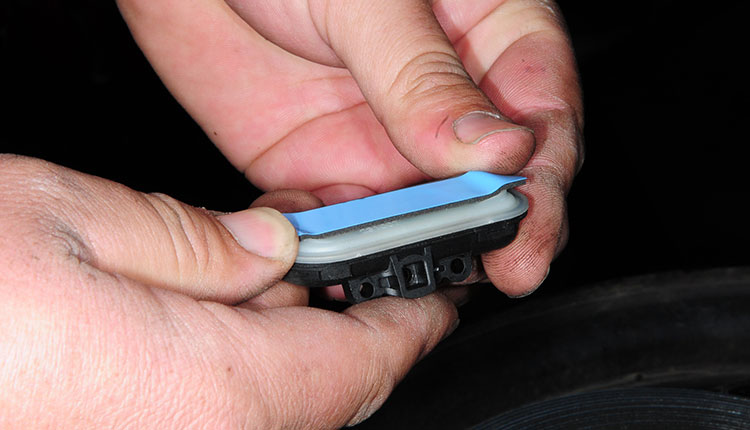
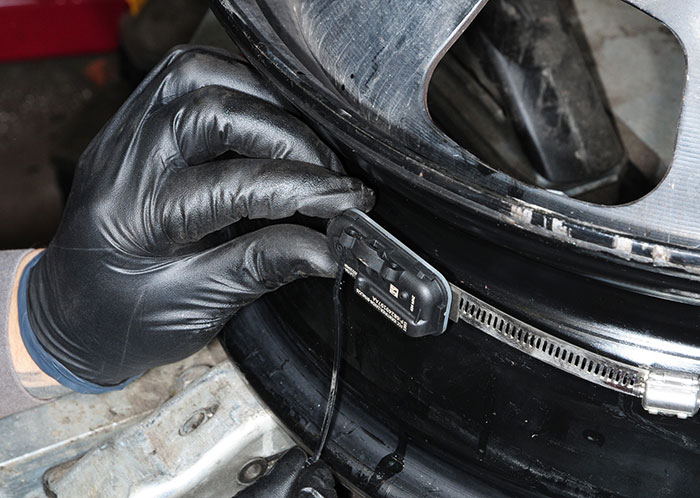
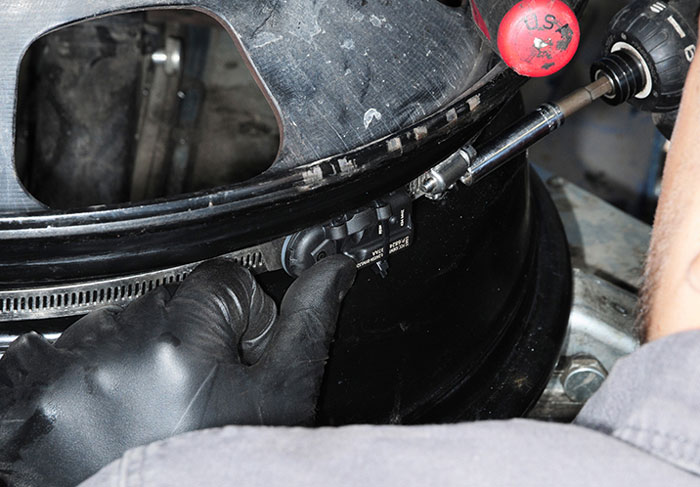
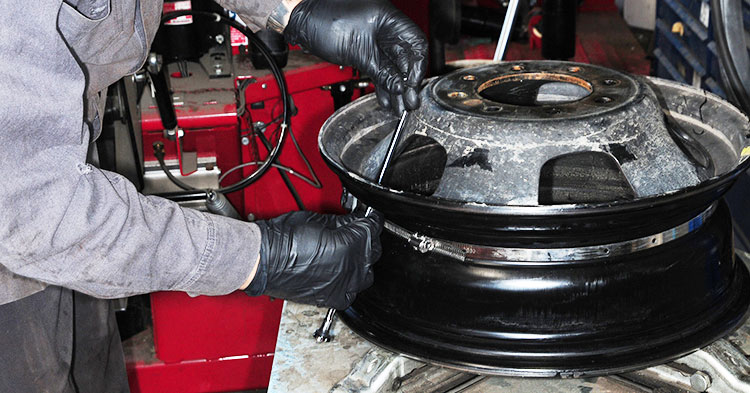
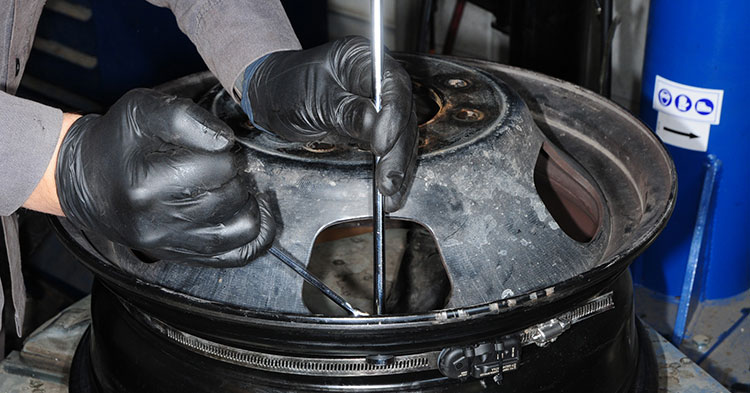
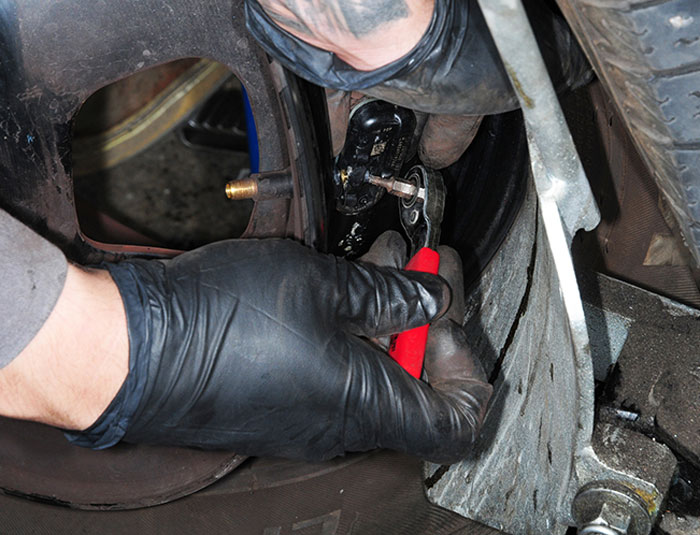
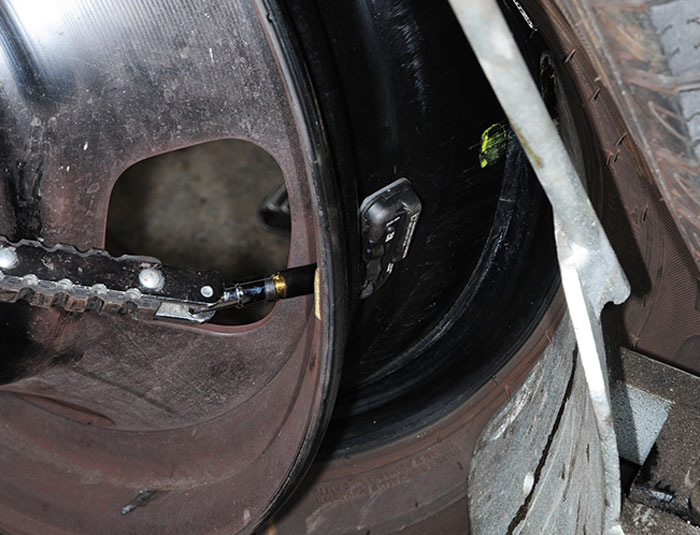
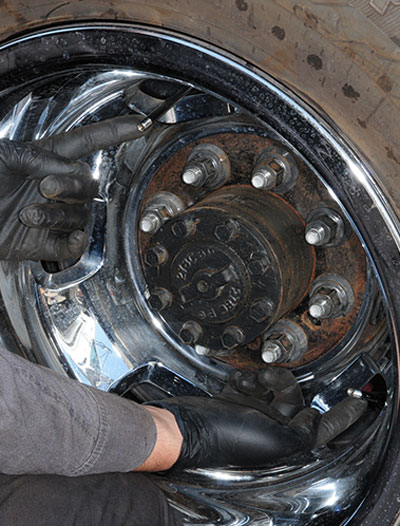
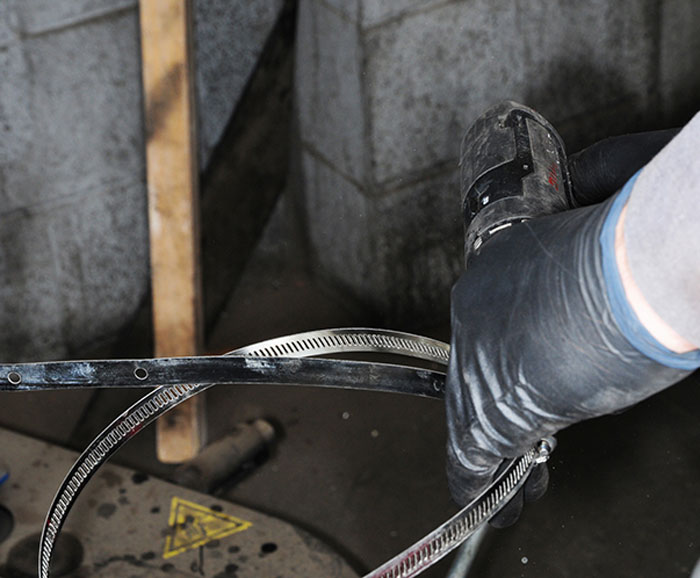
Before embarking upon the extensions/sensor modifications, the rear wheels were removed from the truck and the tires dismounted; the rest of the job is straightforward. First the original pressure sensor was unscrewed from the inside of the wheel and the valve stem was removed. As mentioned earlier, there is no provision for installing a factory sensor on the valve extensions, so a little creativity resulted in a surprisingly easy, but reliable method for securing these sensors. Generic metal bands — which look like oversized hose clamps — were used to attach the sensors inside the wheel with 3M VHB tape and small cable ties (two for each sensor). The band is first loosely tightened around the logical channel near the center of the wheel using a screw gun, leaving a few inches of extra band so that there was enough “wiggle room” for installing the cable ties. When the sensor was secure, the band was tightened to eliminate movement and the end trimmed to size with hand snips.
Since the project truck was five years old with 40,000 miles on the odometer, it was decided to replace the original factory sensors. Factory sensors are available at the Ram dealership, but they are very expensive. Rather than go that route, we found replacements with the exact specifications on Amazon. It took a little searching to find the ones we needed because there are literally dozens of these sensors on the market, and very few are interchangeable. In true long-description fashion, we found the sensors under BDFHYK TPMS Sensor 433 MHZ Programmed Tire Pressure Sensor Compatible with 2014-2020 Cherokee, Ram 2500/3500, 2014-2020 Ram 1500. They are priced at $32.99 for a pack of four sensors, so we purchased two packs to handle the six tires, giving us two spares.
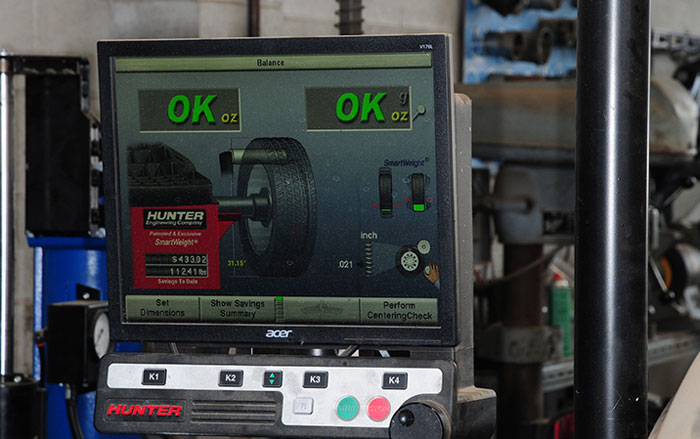
Once the sensor install was complete on an individual wheel, we turned our attention to the valve extension. The new extension was pushed through the hole and the inside nut tightened to secure the valve. It’s important to make sure the extension is fully seated. The process is repeated for all four rear wheels; the longer extensions are designed for the inner wheels. These extensions were adjusted (bent carefully) when the tire was put back on the wheel. Once satisfied with the work, each tire was re-mounted and computer balanced.
Installing the sensors in the front tires only required breaking the bead on the tire machine to gain access to the edge of the wheel to pull the old sensor and valve stem and replace them with the new parts. These wheels were also re-balanced.

As it turned out, replacing the sensors was a good move. One of the factory sensors in the first project truck failed with 42,000 miles on the odometer. New tires were mounted last year — at which time we should have replaced the sensors.
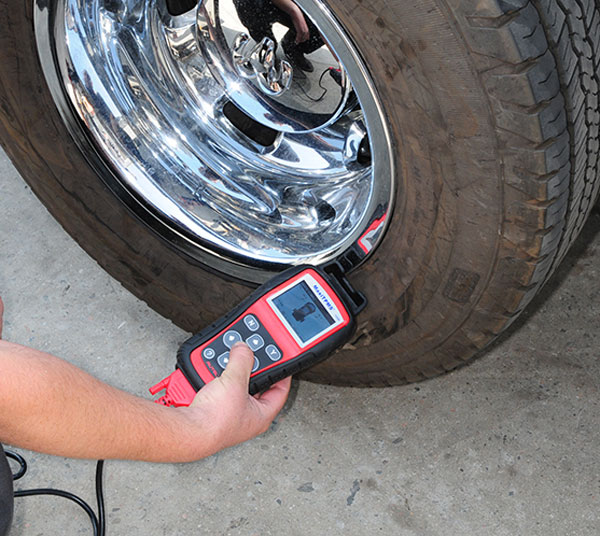
The last step after replacing the wheels and torquing the lug nuts to specification was to reprogram the new sensors. A programming tool was connected via the OBD II port under the dash and each sensor was paired to the appropriate icon on the read-out in the dash. The same device was held at each tire to verify that the sensors were indeed sending a signal. The truck had to be driven for at least 20 minutes at 60 mph or faster to set the programming. By the time we reached our destination, pressures were showing up on the readout in the instrument panel.
The cost of installing the Borg Dually Valve Kit will run $595, which includes the parts and labor for dismounting the tires and re-balancing (filling the tires with nitrogen was included). Figure on $180 for the labor to replace the pressure sensors, plus $22 for each band, when done in conjunction with the installation of the Dually Valve Kit. You’ll be almost giddy about the conversion after airing up the tires for the first time — and not having to dread this chore when the air pressure is adjusted.