

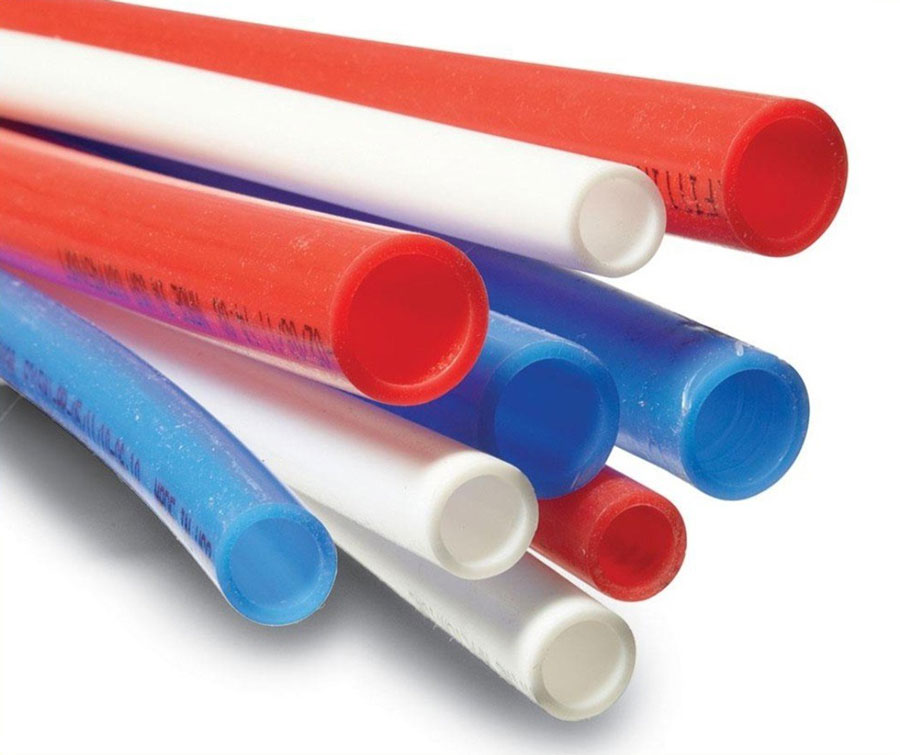
he modern amenities we enjoy in today’s RVs almost always follow the trends found in residential applications, from design aesthetics to electronics and, yes, plumbing. During the past 100 years, plumbing technology in RVs has progressed from using copper and galvanized pipe and tanks to today’s cross-linked polyethylene, or PEX, plumbing, residential style fixtures and instant, on-demand, endless hot water.
he modern amenities we enjoy in today’s RVs almost always follow the trends found in residential applications, from design aesthetics to electronics and, yes, plumbing. During the past 100 years, plumbing technology in RVs has progressed from using copper and galvanized pipe and tanks to today’s cross-linked polyethylene, or PEX, plumbing, residential style fixtures and instant, on-demand, endless hot water.
Fortunately, the water systems in RVs are still pretty simple for the most part. Higher-end motorhomes and some fifth-wheels add complexity in the form of manifolds, pressurized or macerating toilets, dishwashers and clothes washers. However, the basics of system care, maintenance and repair remain the same.
In this article, we’re presenting information about the freshwater plumbing system. We’ll delve into the waste system in a later issue.
The Parts
All modern RVs are equipped with PEX plumbing, just as many fixed homes are built with PEX plumbing systems. The pipe itself is super easy to work with and is almost indestructible. It comes in various diameters and colors, but in RV land, ½-inch-diameter is the most common size, with blue for cold water and red for hot. Some still use plain white and some RVs will, rarely, mix sizes for specialty applications.
Unlike metal and old-school PB (grey polybutylene) pipe, PEX is flexible and can stretch, making the material impervious to freezing. The fittings, not so much, but should the system suffer a hard freeze, at least the pipe itself should be okay.
PEX parts manufacturers offer a couple of grades of connectors — and this is where the weakness in the system can be found, sending a clear message as to why water-pressure regulation is so important. Most RVs are equipped with plastic PEX connectors that are crimped in place using ratcheting rings or crimped brass rings. If the connection is under too much stress from movement or freezing, it can break; high water pressure can exacerbate this problem.
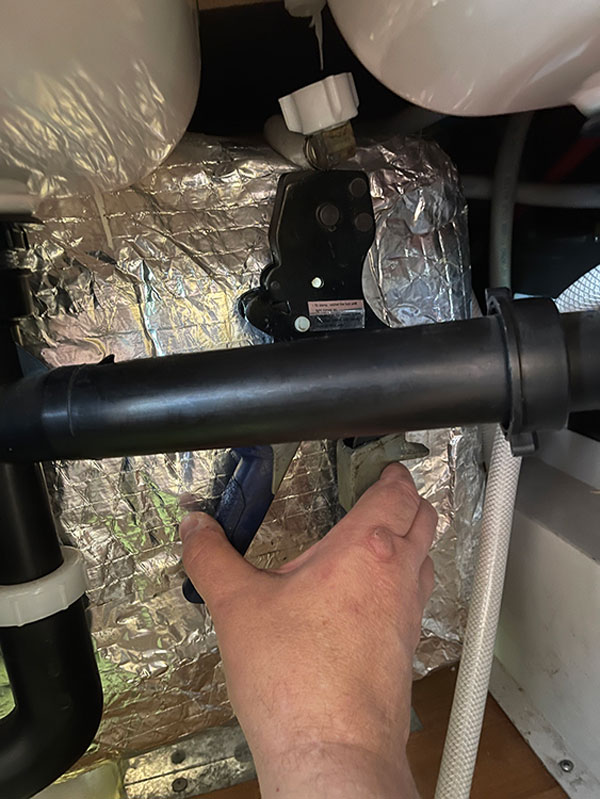
Most connectors sourced at a local home center are made of brass, held in place using the same type of rings or crimps. In either case, repair requires the purchase of a specialized tool which is expensive, but there are new options (more on that subject later.)
The freshwater system will include a holding tank made of polyethylene, either inside the RV or underneath it. Appropriate fittings are spin-welded into place for fill ports, pick-up tubes, vents and sensors. A drain is also included as part of the system; on some RVs this is a 1 ½-inch pipe with quarter-turn valve, but most RVs only have a ½-inch pipe with a valve or cap under the rig.
The tank is plumbed to a 12-volt DC, demand-style, self-priming diaphragm water pump. While there are a number of models available, most RVs use a pump that can produce up to 55-psi and flow around 2 to 3 gallons per minute.
Fixtures in RVs tend to be lighter in weight than typical household models, including the plastic shower valves. This is done to help meet gross vehicle weight ratings as well as for economy. Many such fixtures can be easily replaced with new, higher-end models from your local home center, with the exception of shower and tub faucets or valves.

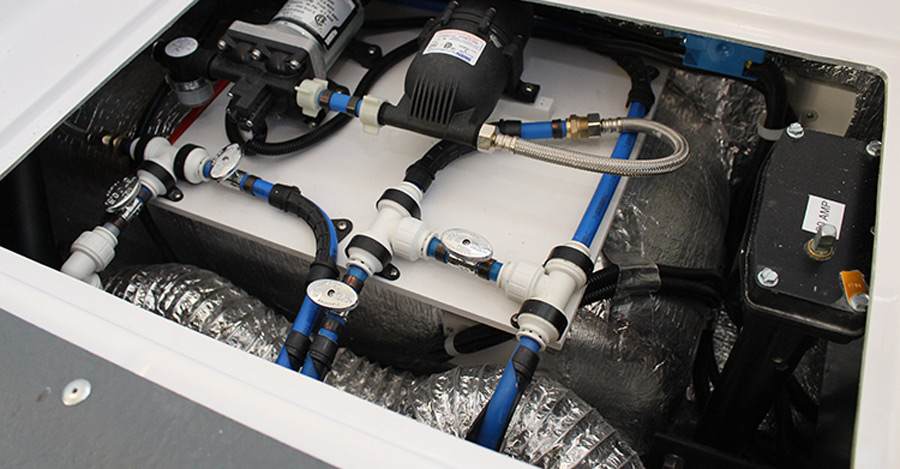
Plumbing System Design
As a rule, it’s desirable to keep the RV plumbing system as basic as possible — but again, some higher-priced RVs will have added complexity for a more advanced feature set and more flexibility.
It’s always important to know roughly where the plumbing runs in the RV and how you can access it, if needed. When you first purchase an RV (or when you’re emptying things out to clean cabinets and compartments), take the time to search out how the plumbing is routed in the unit in case you run into an issue while you’re on a trip.
Some motorhome manufacturers provide plumbing diagrams and other system schematics for owners to use as a reference if they need to work on a system, but such resources are rarely, if ever, available in the towable and truck camper space. Check with the manufacturer to see if they’re available. However, most manufacturers will be able to guide you over the phone as to where some plumbing is routed.
Many RVs also come prepped for accessories that are not installed at the factory, like washing machines and dishwashers. These water-using appliances require additional plumbing, which dead-ends where the appliance would be installed.
These dead-ends, including the low-point drains in the system, can hold stagnant water and anti-freeze, which can foul the fresh water if not properly flushed and sanitized. People also tend to forget to winterize them, which can lead to finding expensive damage in the spring. Get or make some washing machine-connection hoses that will allow you to flush these lines. Some motorhomes with water-circuit manifolds will allow those circuits to be bypassed and always remain empty.
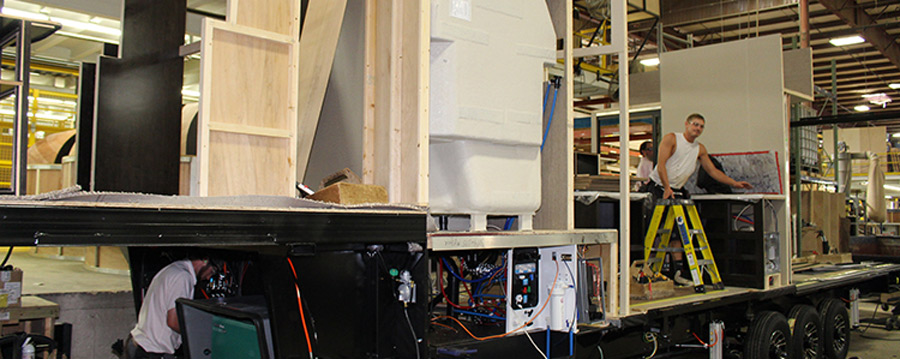
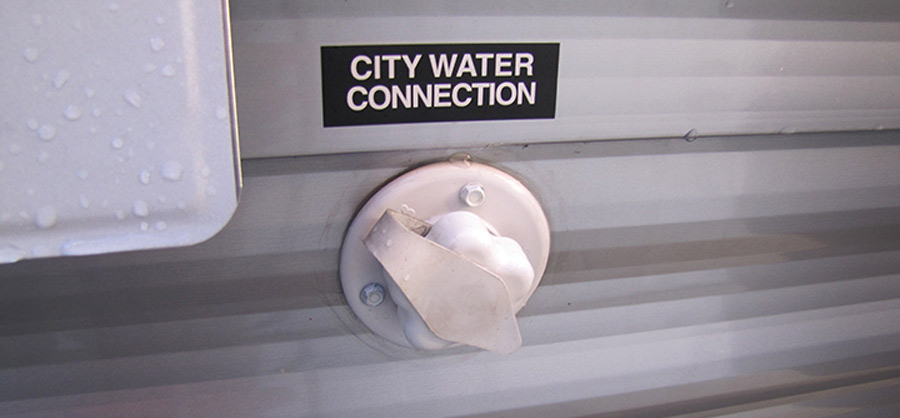
Many newer RVs are built with “4-season” use in mind. Some manufacturers are claiming specific temperature limits, such as “Usable down to 0 degrees F” suggesting they have tested the RV to those limits, and they may design the utilities with cold weather in mind.
Troubleshooting, Additions and Repairs
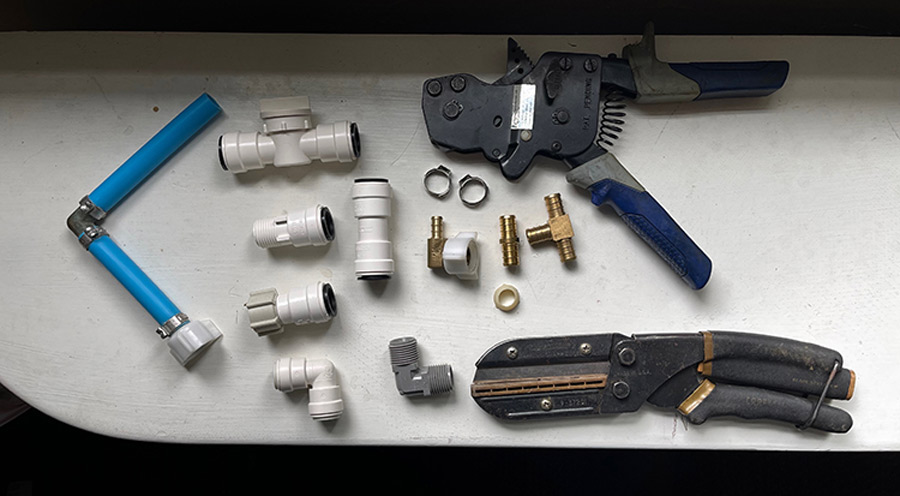
As suggested earlier, PEX plumbing is really easy to repair and maintain, and with the advent of push-on fittings, all that is really needed to make repairs and mods is a pipe cutter and a selection of parts.
Water is an RV’s mortal enemy. If you end up having a leak, it needs to be handled as soon as possible and the RV thoroughly dried out. Do not allow moisture to remain in the RV. Use one or more fans to circulate air throughout the area, and take apart anything where standing water is suspected and not exposed to ambient air. If this means cutting out the underbelly material because it’s making a pool of water, do it. They make repair tape for that! Sometimes it may seem counter-productive to “do more damage” by cutting holes, but you’re actually preventing more serious damage later. If you know you have a hidden leak that you’re trying to locate, gravity drain the entire water system and pressurize it with compressed air. A hiss will likely give away the leak, and a leak check solution of soapy water can be used to locate a problem. Just use low pressure; 50 psi is more than adequate. Be sure to bypass the water heater (unless you think it’s the source of the leak), as some on-demand water heaters can be damaged by compressed air. A tank-style water heater that has failed will make plenty of noise with compressed air being injected into it.
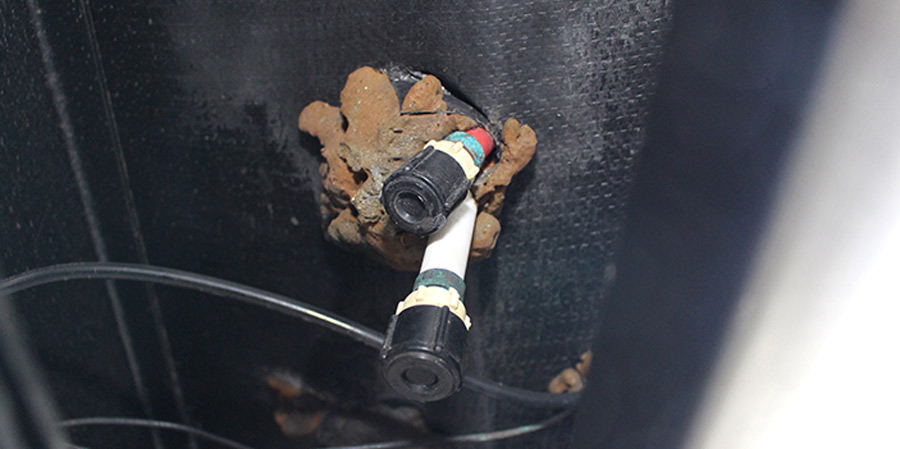
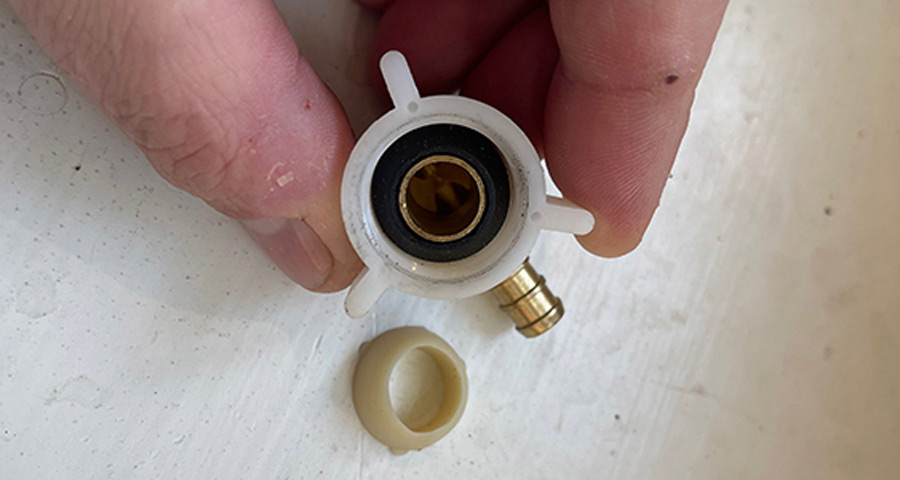
Because things oftentimes break when least expected, it’s recommended that you keep some plumbing repair parts in your RV tool kit. The most common problems can be traced to unions, tees, loose connector fittings and missing or deformed PEX fitting cone-gaskets. Your local home center or RV service facility will likely have a selection of ½-inch parts. As we mentioned earlier, there is a newer option for repairs and mods. Push-on fittings are available on Amazon including, for example, a female swivel elbow (https://amzn.to/3tyygED) that can make replacing a fitting a 5-minute job. If it’s just a bad cone washer, you can get a 10-pack (https://amzn.to/3euIS2X) to keep in the toolbox for a quick swap out.
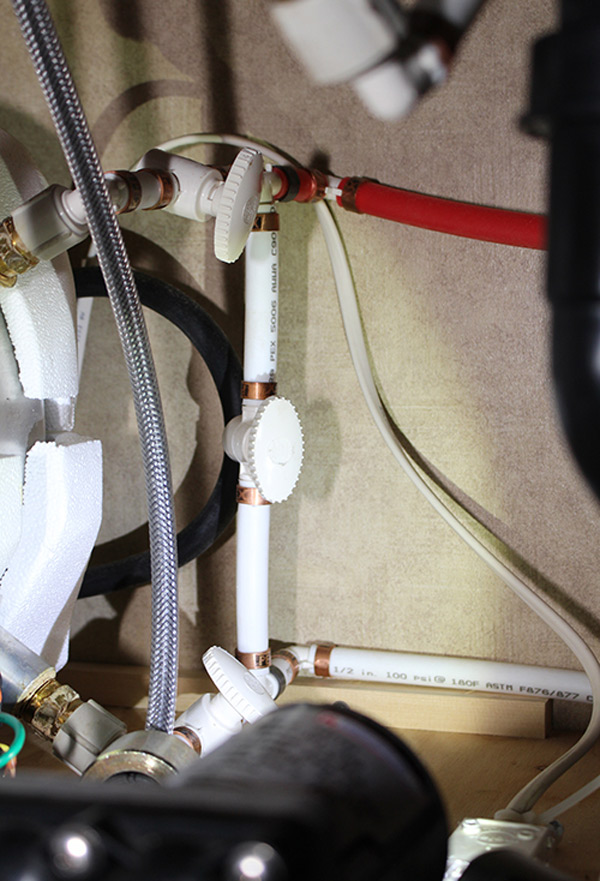
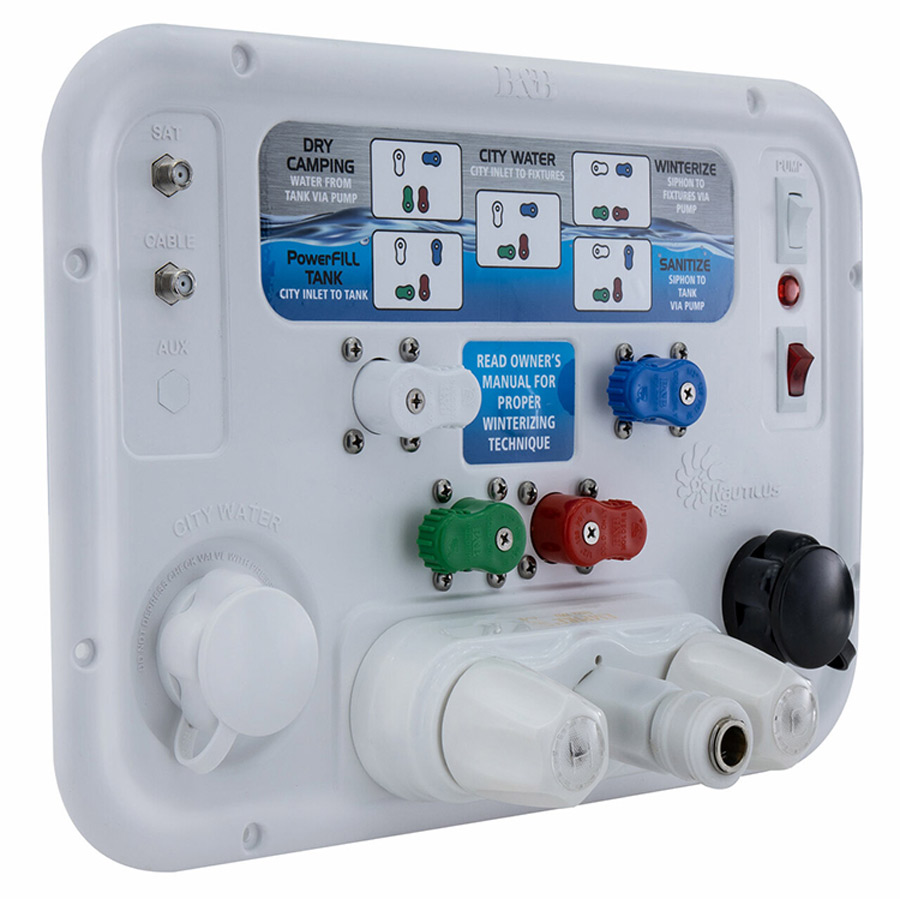
Many RVs also are equipped with a valve board that allows the user to direct the flow of city water, bypass the water heater, and allow the city water connection to become a suction port for RV antifreeze. Most likely these are plastic valves, so treat them with care; there’s more involved in making repairs in this area. If one of these valves fails, you’ll need an exact replacement. However, a union from your tool kit might save your trip.
The evolution of RV plumbing systems hasn’t just made the system more efficient, it’s also made it easier to troubleshoot and repair — but you have to do your part. Having the right supplies and tools on board can make difference between a quick fix and a trip ender.
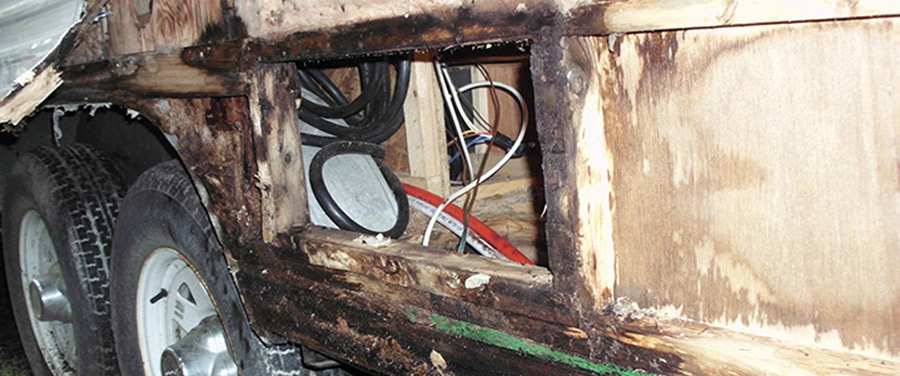
True story: A family took their trailer out for the first camping trip of the season. They arrived at the campground, hooked up the utilities, including water, opened the awning and cracked open a couple of cold ones. All was good in the world until water started pouring out the open door and from under the trailer…everywhere under the trailer. During the winter, mice had chewed through the pipe to the toilet, unbeknownst to the owners. The ensuing rot and damage required replacement of the back corner of the trailer.
Lesson Learned. It’s always best to look and listen when applying water to the system for the first trip of the season. Make sure there are no leaks and be prepared to shut down the water, immediately open the low-point drains and clean up the water — then you can make the repair. Using press-on repair fittings, it’ll take longer to clean up the mess than fix the problem. That’s why all service technicians recommend keeping mice and other critters out of your RV at all cost.