
Dinghy Accessories
[maghub_sidebar]
Dinghy Accessories
Handy products that solve both common and uncommon problems while towing
By Chris Hemer
How to Tow Anything! Part 2 - Motorized
Dinghy Accessories
Handy products that solve both common and uncommon problems while towing
By Chris Hemer
How to Tow Anything! Part 2 - Motorized
E

lsewhere in this section, we’ve covered the key components you must have in order to tow a dinghy vehicle safely and legally: A baseplate, tow bar, supplementary braking system and modifications to the vehicle’s electrical system. But beyond these must-haves, there is a wide range of accessories available that are designed to make towing your dinghy vehicle more convenient and enjoyable.

Newer vehicles, in particular, require an increasing number of steps to prepare them for towing, most of which involve extra time and can result in some real hassles. For example, many new vehicle owner’s manuals specify that the negative battery cable be disconnected every time you tow, which means that all of your data (time/date, radio presets, etc.) will need to be re-set once you arrive at your destination. In addition, a battery that is disconnected can’t power up a portable braking system, which can create another set of problems. In other cases, the manufacturer may specify that certain fuses be removed before towing — and you can just imagine the fun of breaking or losing the fuses for your vehicle when you’re miles away from anywhere on a Sunday afternoon.

There are a multitude of other issues that can arise as well, like electrical incompatibilities between the motorhome and tow vehicle, a dinghy battery that always seems DOA and other annoyances like dragging vehicle brakes, damaged body/paintwork and slow tire leaks that you wished you’d known about before the tire(s) were irreparably damaged.

Happily, there are solutions to all of the above scenarios and more. In this guide, we’ll cover some of the most annoying issues, followed by at least one solution that can mitigate your frustration. Also, remember that, if you are experiencing a specific problem while towing your vehicle, make sure to reach out to the manufacturers listed in this guide for help. These companies wrote the book on dinghy-towing products and between them have experienced just about every issue you can imagine. With a quick phone call, you might find they have a product to solve your problem or can provide you with advice on how you may be able to fix it yourself.
PROBLEM
The dinghy vehicle battery is always dead or nearly dead by the time you get to your destination.
SOLUTION
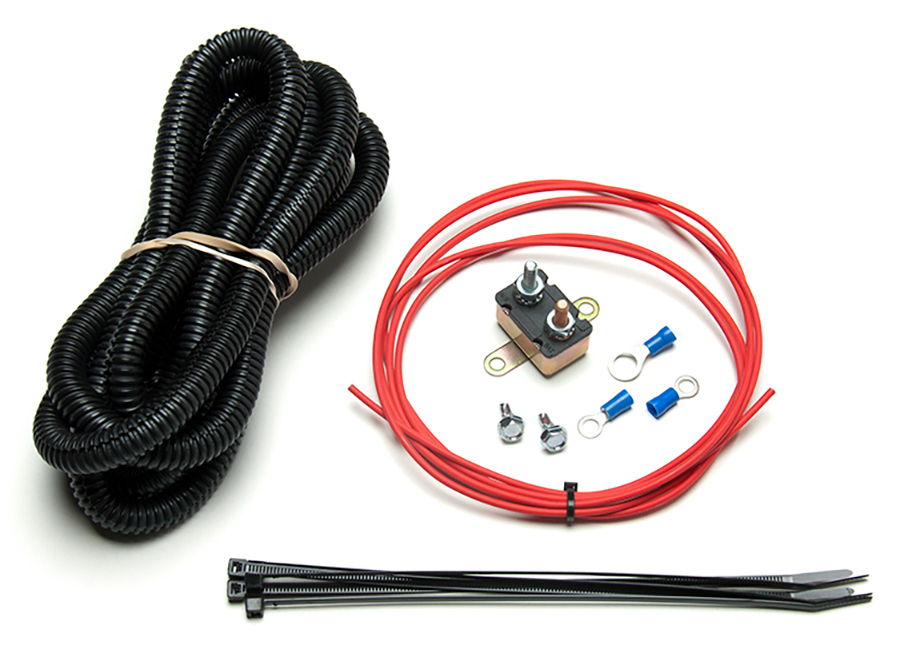
Install a charge line from the motorhome to the dinghy vehicle. A charge line kit like this one from Roadmaster leverages power from the motorhome’s charging system to help maintain the vehicle’s battery condition while in tow, providing up to 15 amps of current. The Roadmaster kit includes 14-gauge wire and thermal circuit breaker.
Roadmaster Charge Line Kit, part #156-2
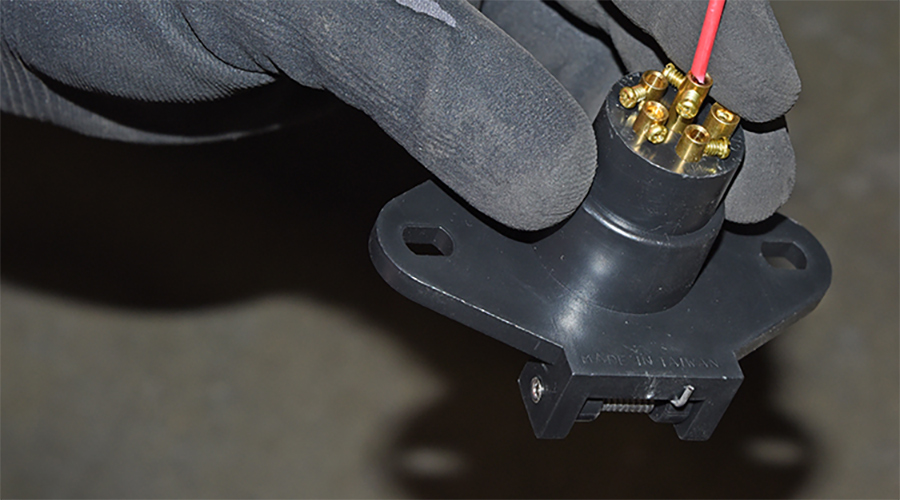
a charge line kit being installed
Installing a charge line kit is relatively simple, even for those with limited electrical experience. The first step is to attach the included length of red 14-gauge wire to the center pin on the back side of the towed vehicle’s power cord receptacle, as shown.
supplied split loom being used
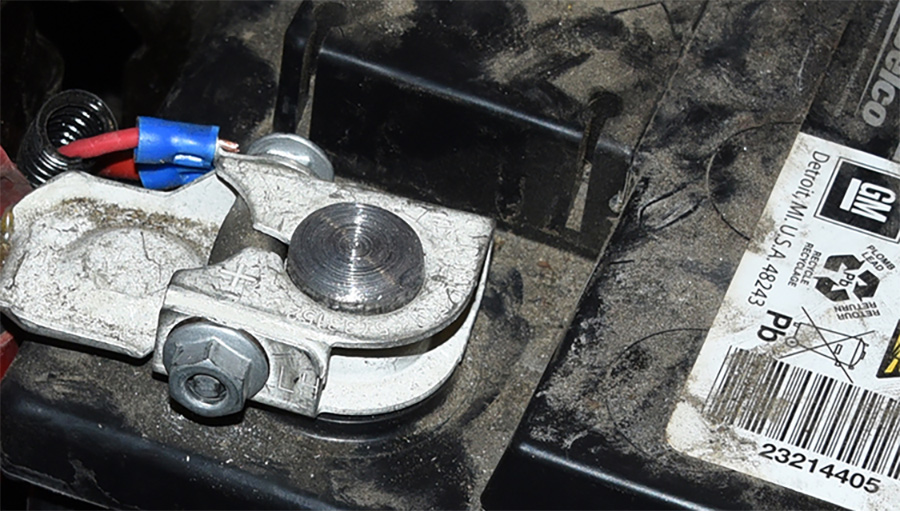
Route the wire to the vehicle’s positive battery post. Use the supplied split loom to protect the wire from sharp edges, vibrations, etc.
the thermal circuit breaker in a suitable location
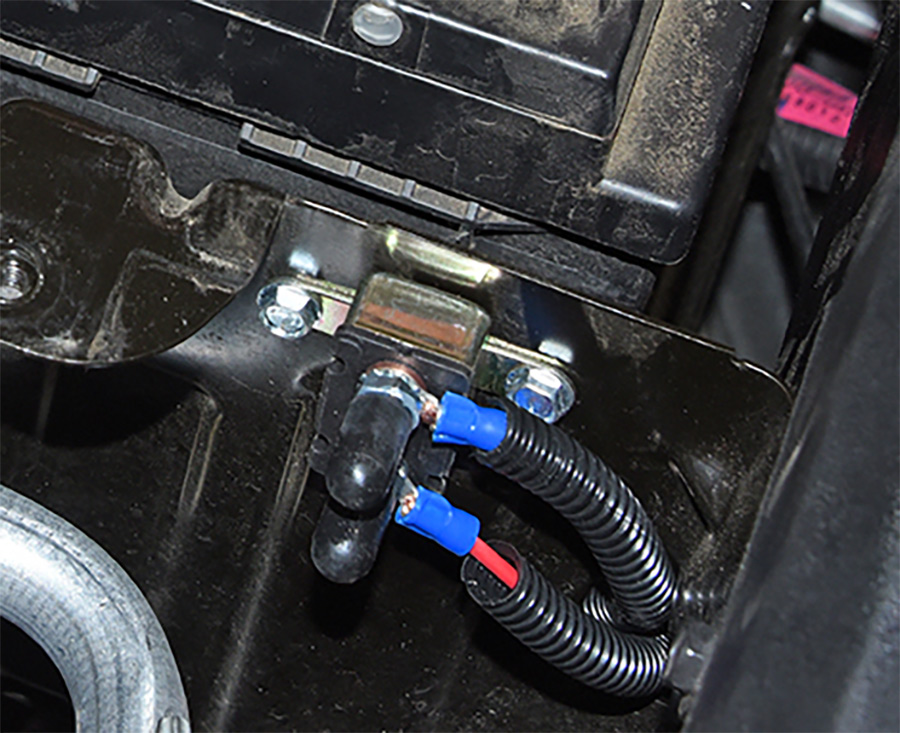
Find a suitable location for the thermal circuit breaker. Roadmaster specifies that it must be mounted on a flat surface and within approximately 6 inches of the battery. Using the two self-tapping screws, attach the circuit breaker. Then, route the red 14-gauge wire to the circuit breaker and cut it; strip about ¼-inch of insulation from the end of the wire and crimp it into one of the supplied #10 ring terminals. Attach the red wire to the gold post (BAT) with one of the included nuts. Attach one end of the remaining length of red 14-gauge wire to the silver post on the circuit breaker (AUX) in the same manner. Route this wire to the positive post and cut to length.
PROBLEM
The vehicle owner’s manual says that the negative battery terminal must be disconnected every time you tow.
SOLUTION
Roadmaster and others offer remote battery disconnect kits. Roadmaster’s #766 kit activates via a remote switch, which can usually be mounted in the vehicle’s passenger compartment. At the same time, the kit provides a positive current source for breakaway systems, portable dinghy brakes or other accessories that must be connected to the battery.
Roadmaster battery disconnect kit parts out and displayed
Roadmaster battery disconnect kit
PROBLEM
The vehicle owner’s manual requires that one or more fuses have to be removed every time you tow.
SOLUTION
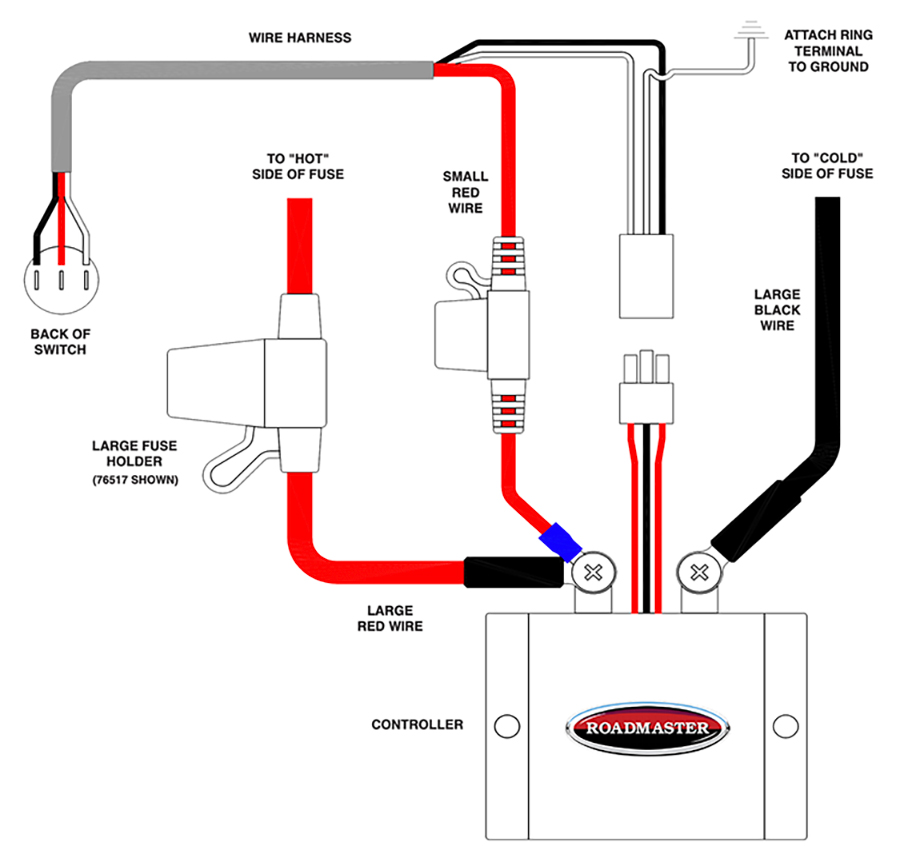
One of Roadmaster’s FuseMaster kits, which holds the fuse remotely and allows it to be effectively disconnected with the flip of a switch. Kits are available for multiple fuses.
Wiring schematic for Roadmaster FuseMaster Kit PN76517
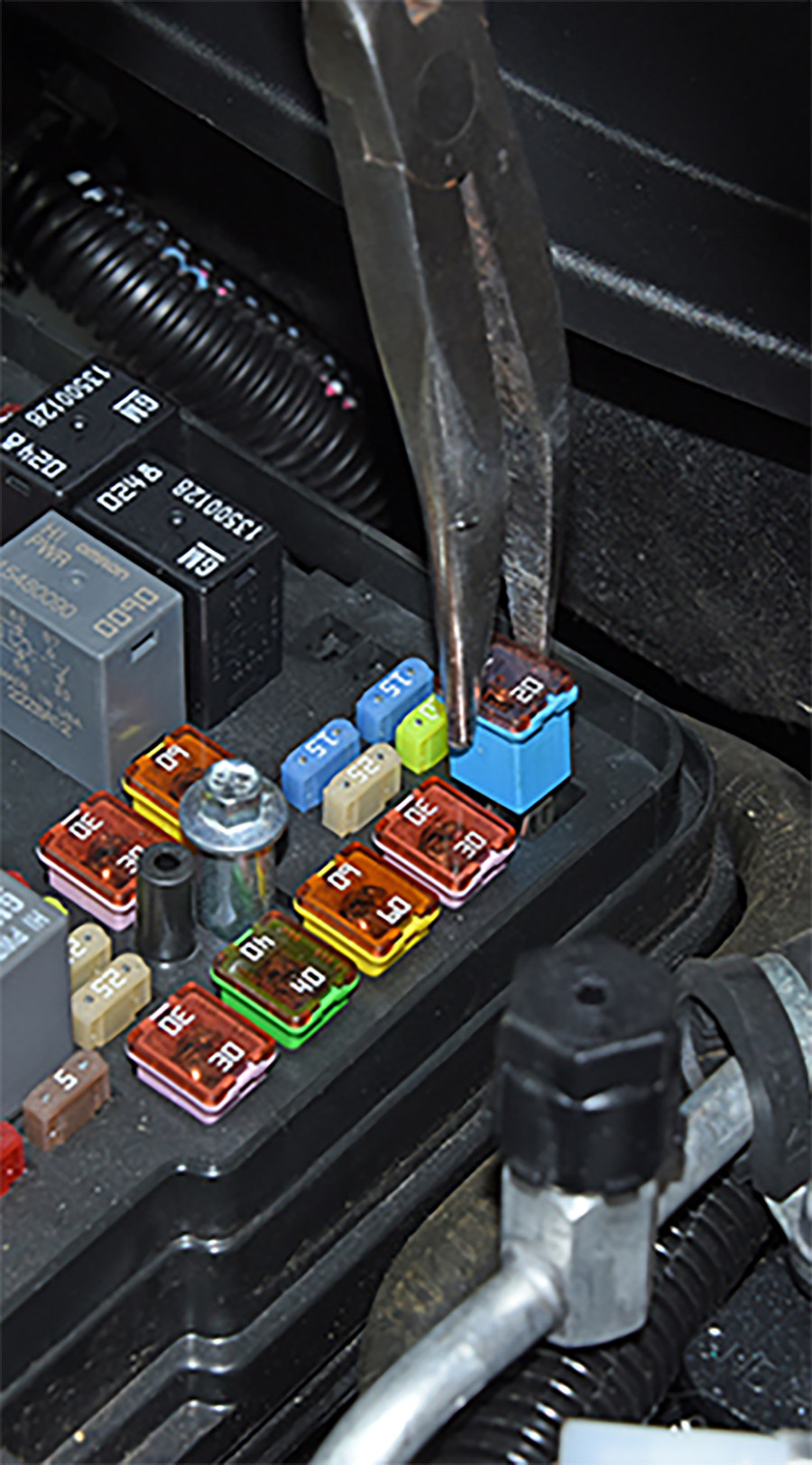
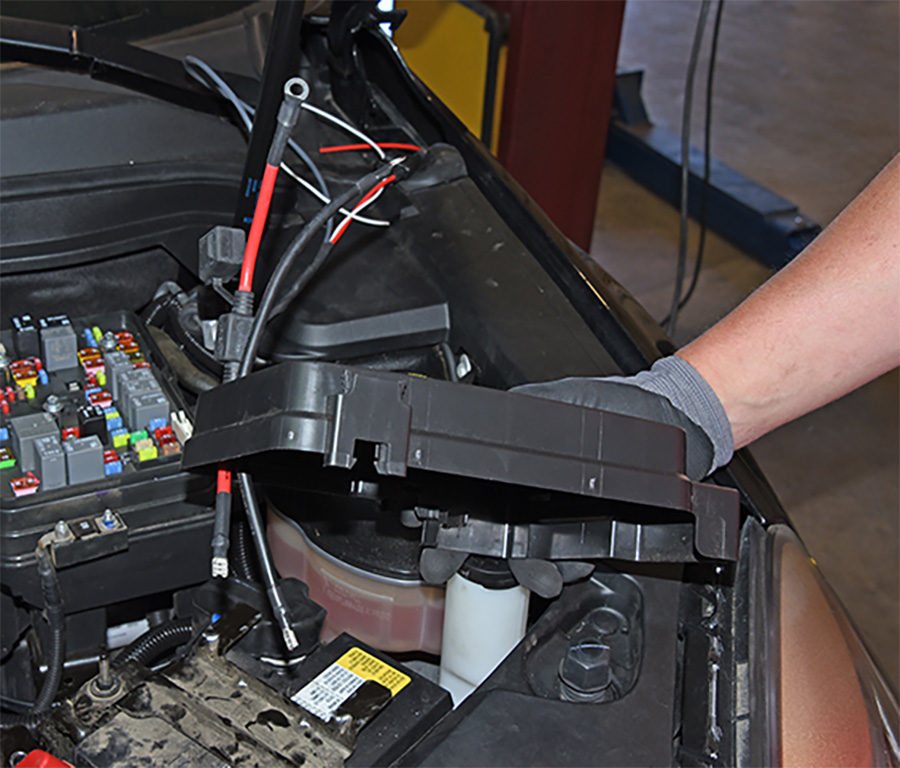
the fuse(s) that must be pulled per the owner’s manual instructions
Locate and remove the fuse(s) that must be pulled per the owner’s manual instructions.
the fuse panel cover needing to be drilled
In this application, the fuse panel cover needed to be drilled and fitted with grommets to allow the FuseMaster to pass through. The two silver pins at the end of the FuseMaster harness plug into the sockets for the fuse that was removed. It doesn’t matter which pin goes into which socket. The fuse(s) are then placed in the fuse holder(s) in the FuseMaster harness.
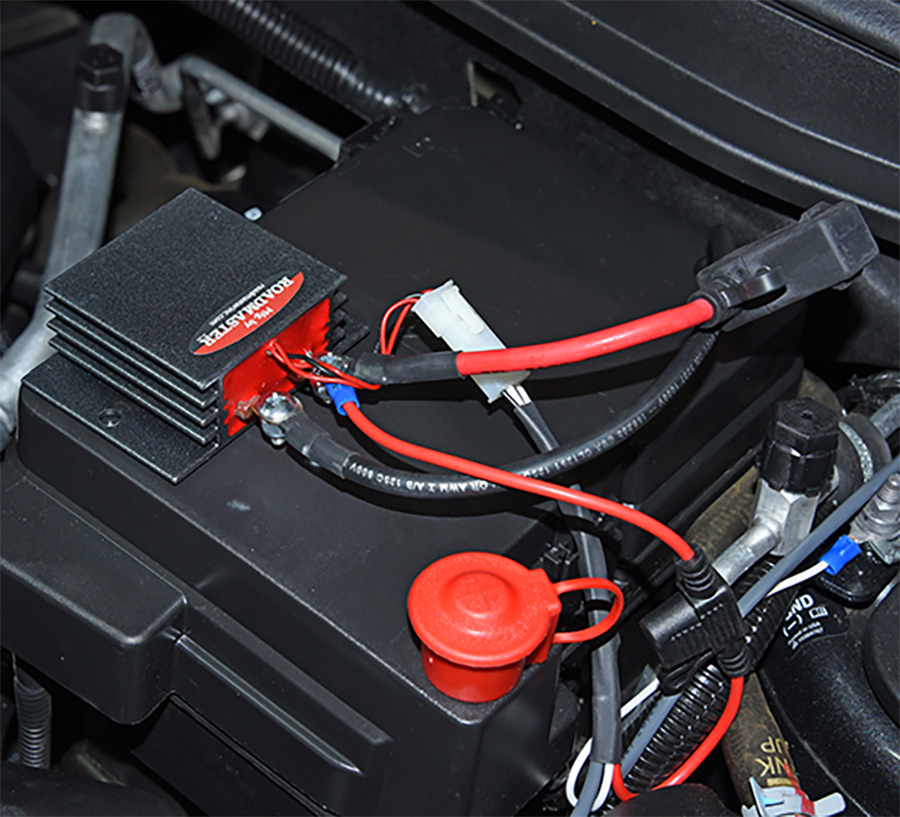
fuse controller being mounted in the engine compartment
The fuse controller in this kit must be mounted in the engine compartment, close to the fuse block. The switch harness is run through the firewall to the fuse controller.
switch flipped to Tow mode
When it’s time to tow, simply flip the switch to “Tow” mode.
PROBLEM
You don’t know when your dinghy brakes are being applied, or if they are releasing.
SOLUTION
Roadmaster’s Universal Supplemental Braking System Monitor (#9530). The system’s transmitter is quickly installed in the dinghy vehicle with only positive, negative and brake signal leads, while the receiver plugs into the motorhome’s 12-volt DC (cigarette lighter) socket.The system works on any dinghy braking system that depresses/releases the brake pedal, and features low battery, extended braking (drag) and break-away alerts.
Roadmaster Universal Supplemental Braking System Monitor parts out and displayed
Roadmaster Universal Supplemental Braking System Monitor
PROBLEM
The diodes in your electrical kit don’t work correctly—more than one light circuit comes on at a time.
SOLUTION
Some newer vehicles use a multiplex wiring system, whereby multiple electrical signals may be sent down a single wire (brake and taillights, for example). If an ordinary diode is used in these applications, it can result in several light circuits activating instead of only the one that’s desired. Roadmaster’s new Smart Diode correctly modulates the voltage to activate only the intended circuit. Popular towed vehicles that use multiplex wiring systems include 2018-2019 Equinox (some trim levels) 2014-2019 Malibu (except LTZ) 2012-2019 Sonic, 2016-2019 Spark, 2015-2019 Edge (SEL only) Ford Fusion (2013-2019, SEL).
Roadmaster Smart Diode closeup
Roadmaster Smart Diode
PROBLEM
The brake lights and turn signals on your motorhome and dinghy work fine on their own, but if you’re braking and turning at the same time, the brake light from the dinghy will override the turn signal from the motorhome.
SOLUTION
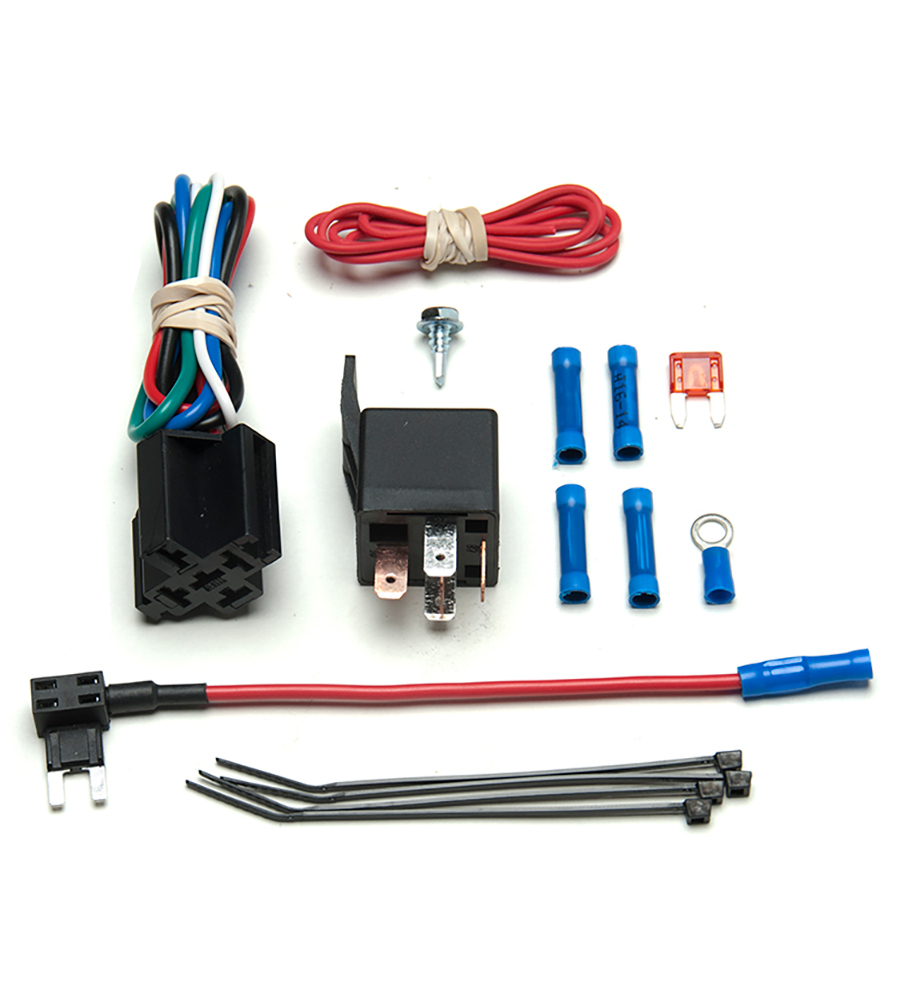
The Roadmaster Brake-Lite Relay restores full brake light/turn signal functionality to these motorhome/dinghy combinations, preventing the brake signal from overriding the turn signals. It works on any supplemental braking system that depresses the vehicle’s brake pedal.
Roadmaster Brake-Lite Relay parts displayed
Roadmaster Brake-Lite Relay
PROBLEM
You are new to dinghy towing and it seems like there are so many things you’re going to need — but you don’t know what.
SOLUTION
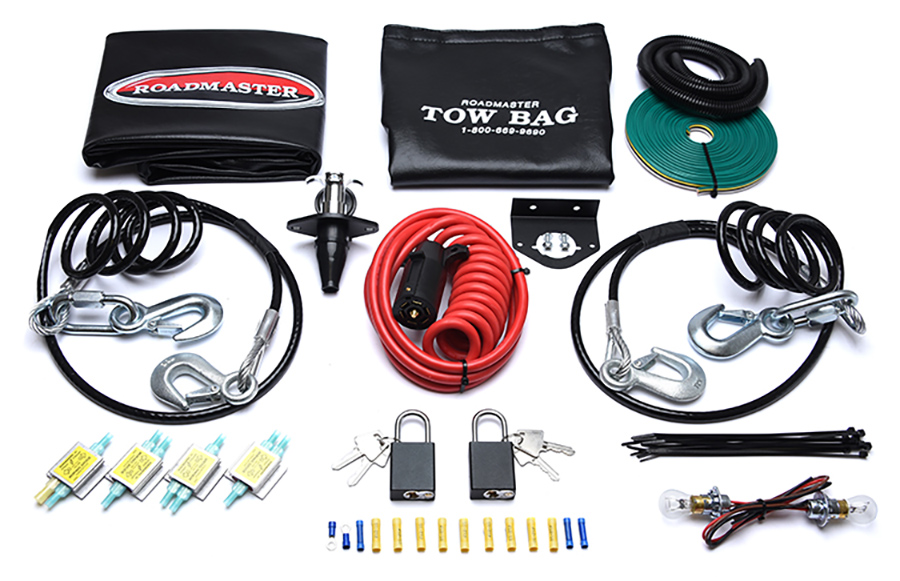
Blue Ox and Roadmaster offer a range of kits that contain just about everything in one bag, including wiring, safety cables, power cord and more. Blue Ox calls its kits Towing Accessory Kits, while Roadmaster calls its product Combo Kits. Either company can tell you what kit will best suit your particular application.
Blue Ox Towing Kit with brown bag
Blue Ox Towing Kit
Roadmaster Combo Kit parts displayed
Roadmaster Combo Kit
PROBLEM
Your dinghy vehicle keeps getting hit with rocks and other debris kicked up by the motorhome.
SOLUTION
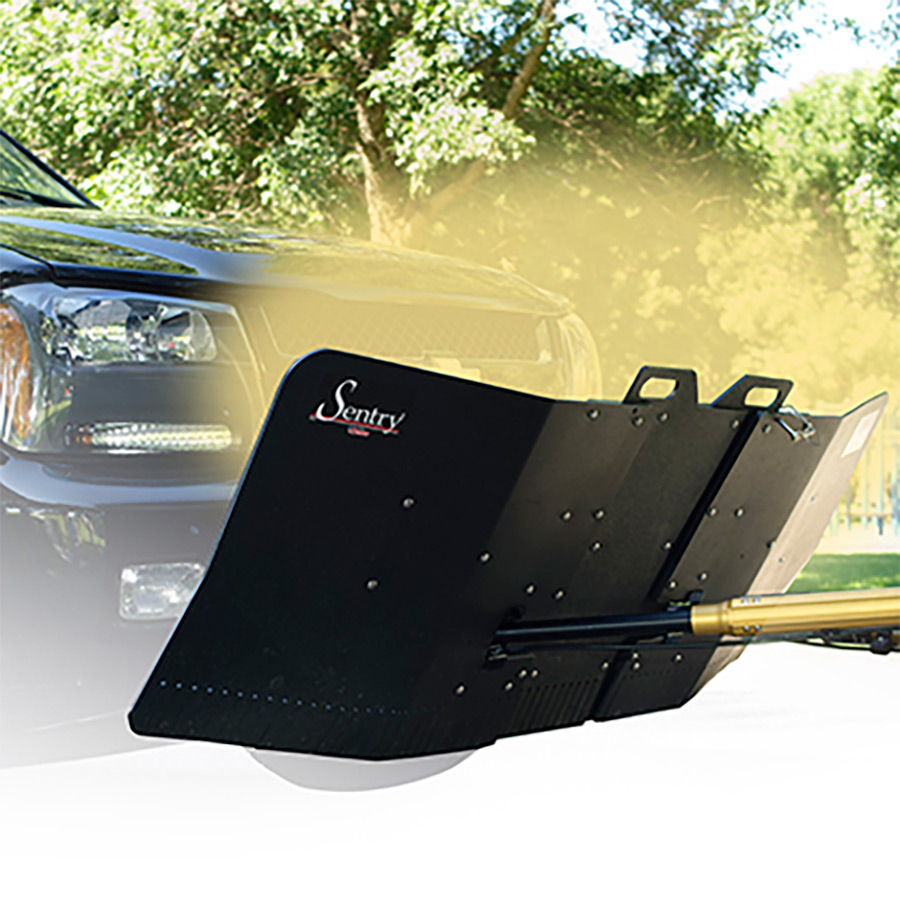
Start with the motorhome, which can be fitted with any number of rock guards. Designs vary depending on the manufacturer, but these generally attach to the frame or hitch receiver of the motorhome and employ a rubber shield or rubber/nylon strips that hang down a few inches from the road surface. In addition, BlueOx, Demco and Roadmaster all offer shields designed to cover the front of the dinghy vehicle. Check with the manufacturer of your choice to make sure the guard will fit with the equipment you already have, because rock shields typically mount to the base plate or tow bar and may not be interchangeable with all equipment brands.

Some vehicles approved for dinghy towing by their manufacturers have a special note in the owner’s manual that cautions against blocking airflow to the front of the vehicle. This is because these vehicles employ a transmission cooler that may not work effectively if it isn’t exposed to steady airflow. As a result, the transmission may overheat and become permanently damaged. Be sure to check the owner’s manual carefully for any cautionary notes about rock shields or other devices that may prevent adequate airflow.
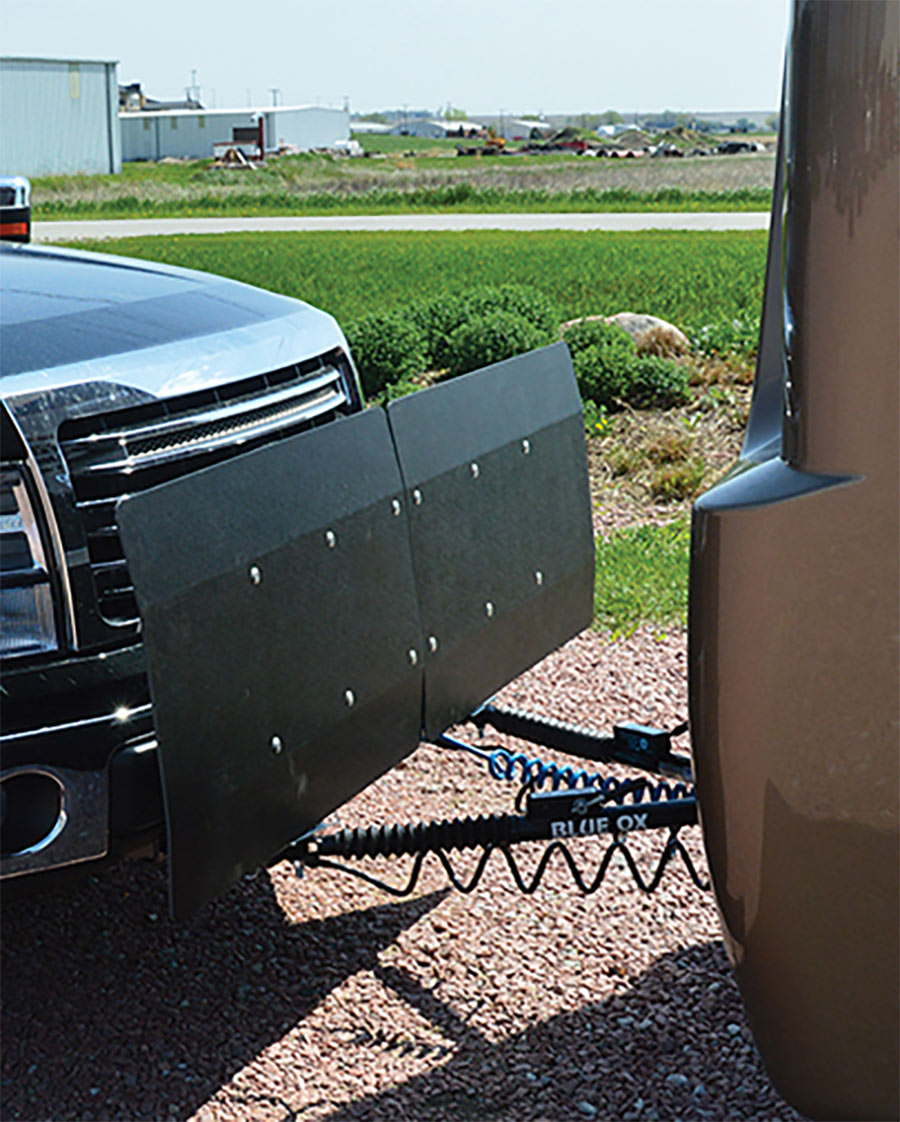
Blue Ox KarGard Protective Shield displayed on a car and trailer
Blue Ox KarGard Protective Shield
Demco Sentry Deflector being used on a car
Demco Sentry Deflector
PROBLEM
You didn’t know one of the tires on your dinghy vehicle was going flat on a trip, and by the time you got to your destination, the tire was ruined.
SOLUTION
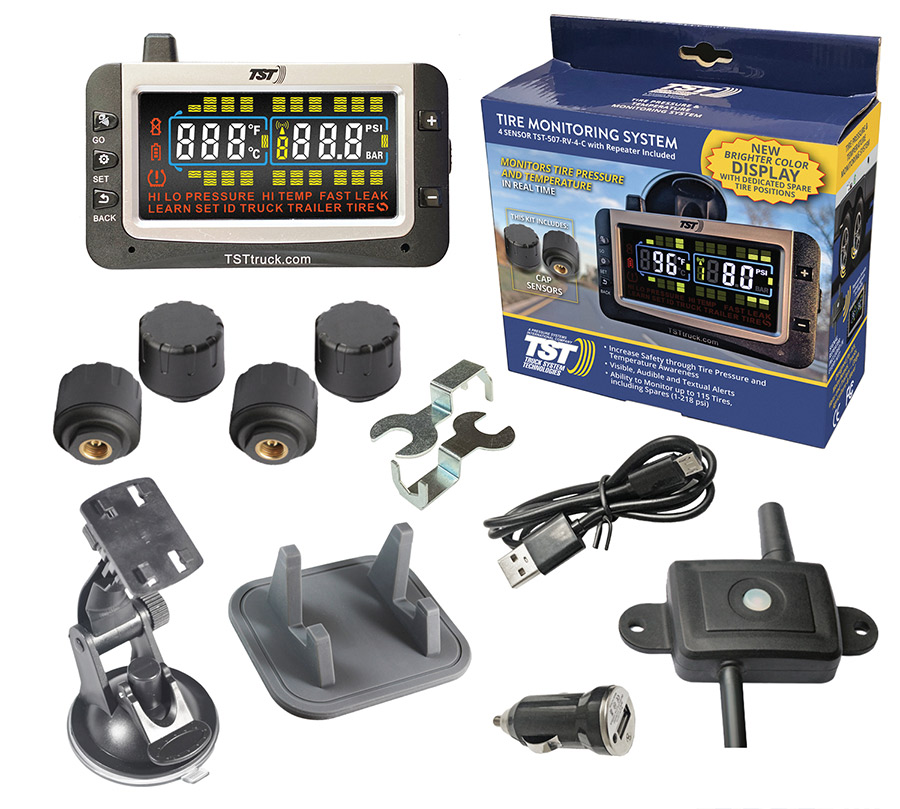
A Tire Pressure Monitoring system, or TMPS. These can be used on the motorhome and the dinghy vehicle. For example, Truck System Technologies offers its 507 Series RV kits with either 4, 6 or 8 sensors. Additional sensors — either cap- or flow-through design — can be ordered separately. The kits include a full-color display, signal repeater and are compatible with metal or rubber valve stems. The system includes both audible and visual alarms and offers high-pressure and high-temperature alerts. For more information, visit tsttruck.com.
A Tire Pressure Monitoring system being used on a tire
507 Series RV kit by Truck System Technologies