

Sponsored Content
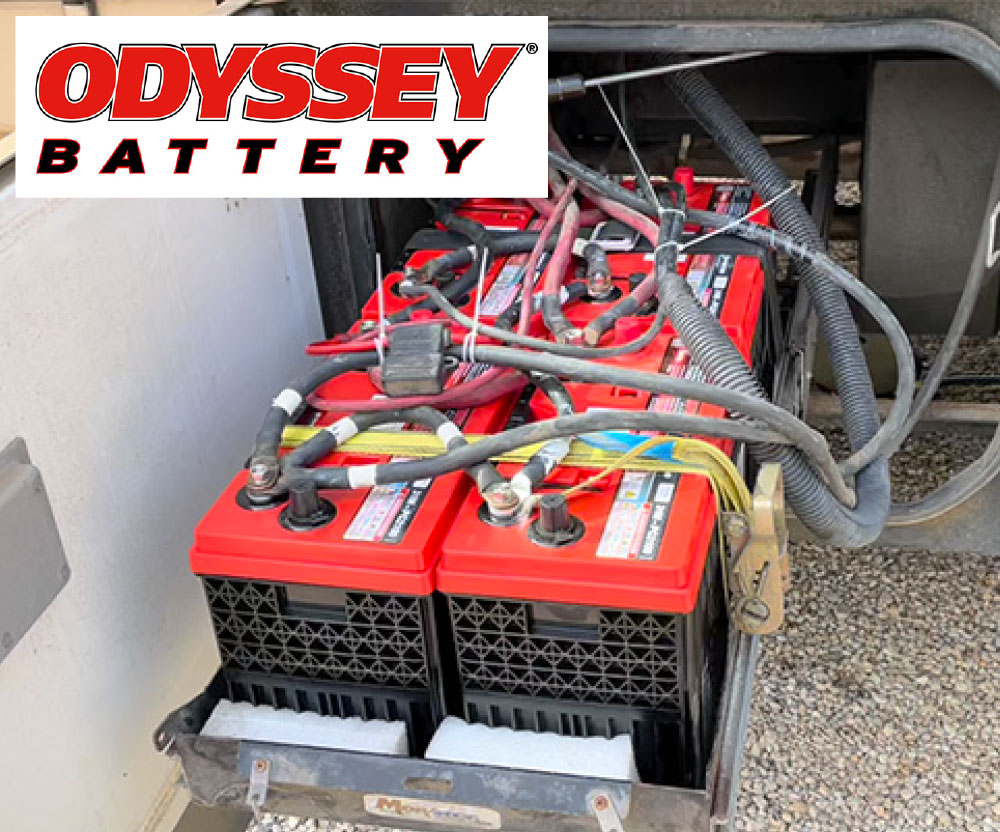
There are a variety of reasons why this could have happened — from improper storage or recharging to a build-up of corrosion on the battery terminals due to a lack of regular maintenance and upkeep. It’s important to recognize some of the most common reasons for your RV battery problems to help prevent premature power failure — and putting a glitch in your plans.
Improper Storage
If you plan to stow your RV during the winter months, it’s important to properly decommission your battery for storage to help prevent damage and keep it in good condition while sitting idle. This includes inspecting the battery for corrosion, worn cables and/or connectors, cleaning away any dirt or corrosion from the terminals, testing the battery’s State of Charge (SOC) and ensuring it has a full charge to help safeguard the performance and longevity of the battery.
Overheating
Depending on your geographical location in the world, the summer can bring temperatures of 100°F (37.8°C) or even higher. Hot weather can also drive up the temperature under the hood — so much so that it can lead to engine overheating and even accelerate the onset of battery failure.
Like the battery maintenance steps you would take when decommissioning or recommissioning your RV, it’s also beneficial to the battery’s health to conduct seasonal maintenance checks so that the battery is better prepared to attend to the tasks at hand — keeping the RV moving and accessories running.
Overcharging or Undercharging the Battery
Not following the battery manufacturer’s guidelines for recharging the battery can significantly impact its longevity and performance. Overcharging the battery can cause it to overheat, while undercharging or insufficient charging could lead to shorter run times and a loss in productivity.
Be Aware of the Vehicle Warning Signs
In addition to the challenges noted above, an RV’s general performance can also provide evidence of the battery’s condition. Warning signs include hesitation or a clicking sound when turning the ignition; dim or flickering lights; dashboard indicators; diminished performance of power windows and door locks; and slow or halting acceleration.
An Innovative Battery Solution
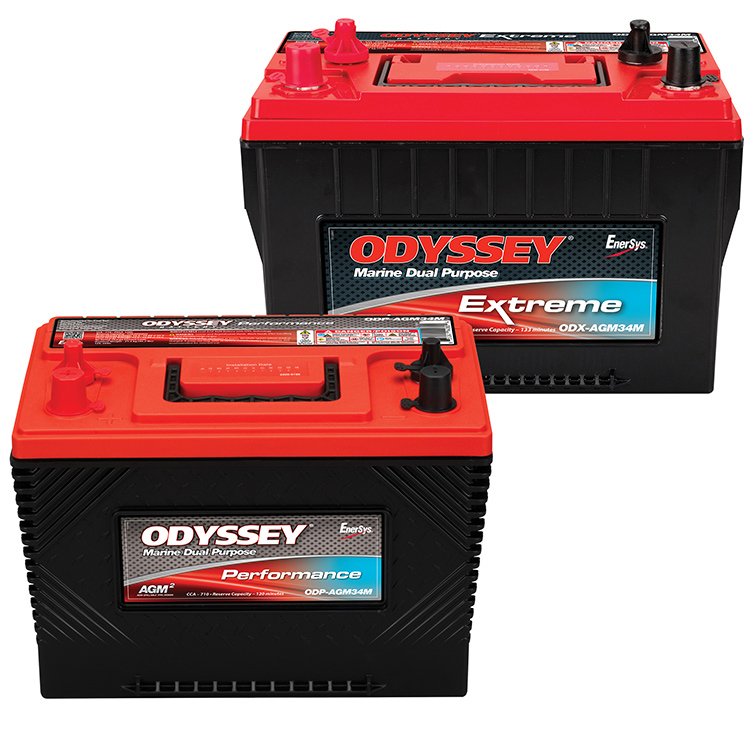
Whether camping close to home or boondocking in a remote location this summer, maintenance-free Absorbed Glass Mat (AGM) ODYSSEY® batteries deliver long-lasting performance, with twice the overall power and three times the life of conventional flooded lead acid batteries — the performance you need to get from “Point A” to “Point B” and back again.
ODYSSEY® batteries are extremely temperature tolerant, with an operating range from -40°F (-40°C) to 140°F (60°C). With the highest recharge efficiency of any sealed lead battery on the market, ODYSSEY® batteries are capable of 100% recharge in just 4-6 hours.
If you plan on decommissioning your RV in the winter months, ODYSSEY® batteries provide an excellent storage life and can be disconnected and stored for up to two years without recharging to help ease start-up concerns between outings.
Read more about what separates Absorbed Glass Mat (AGM) ODYSSEY® batteries from the competition — as well as our wide range of applications, chargers and accessories — at odysseybattery.com.