

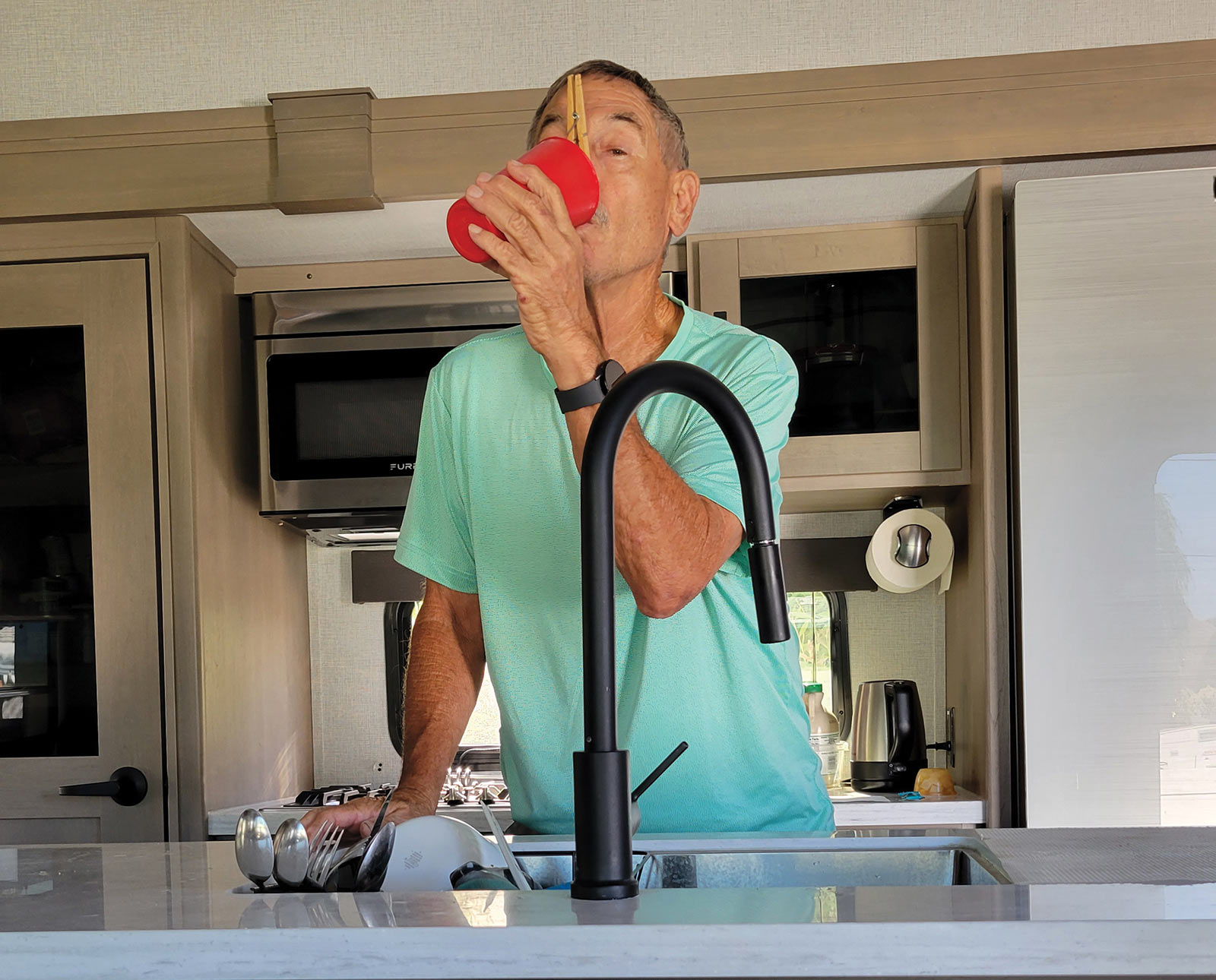
ithout a water system, an RV cannot be self-contained. Water is needed for bathing, cleaning, cooking and, of course, drinking. Many of us don’t drink enough on a daily basis; throw in terribly bad tasting and smelling water and staying hydrated without using a clothespin on your nose can be difficult. No wonder the bottled water industry is so gigantic.
Unfortunately, beyond taste, water contaminated with bacteria, viruses and cysts, to name a few, can lead to medical problems — and such problems can crop up more frequently as RVers embrace boondocking and set up camp well away from campgrounds often fed by city water systems. Fortunately, water purification and filtration systems for RVs have reached new levels in sophistication and conditioning — to the point that even manufacturers are now including effective equipment as standard equipment on some models.
While installing effective systems to combat bad water is readily available in the aftermarket, choosing a filtration system that fits your needs will be an individual process — and there are a number of questions that must be answered before designing a system. RVers should calculate how much water will be used during a typical trip and deciding if that water source will be used for drinking and cooking. If you want whole-house treatment, the requirements suggest the use of a larger system. And if you rely on onboard water and/or hookups for drinking, consider embellishing the system with a true purification component.
Having absolutely pure water in an RV is more complicated. Most filtration systems do not offer purification. For many years the go-to system for purification was reverse osmosis, but these systems are expensive, take up valuable space and use a lot of water. Distillation provides the purest water, but having such a system in an RV is not practical — and all the good stuff is stripped out, leading to no taste. Water softeners, meanwhile, only remove calcium, which is the stuff that makes the water hard and leads to clogged faucets and showerheads.
As you might’ve guessed from all this, there is no one-size-fits-all system; assembling a suitable system requires multiple components and careful consideration on how they will be installed, stored and serviced. What you end up with will reflect your needs and how you approach them, but you don’t have to start at Square One — we’ve assembled the most common options used by the RV community to provide insight as to what’s available and what works, from simple filtration systems to soft-water equipment.

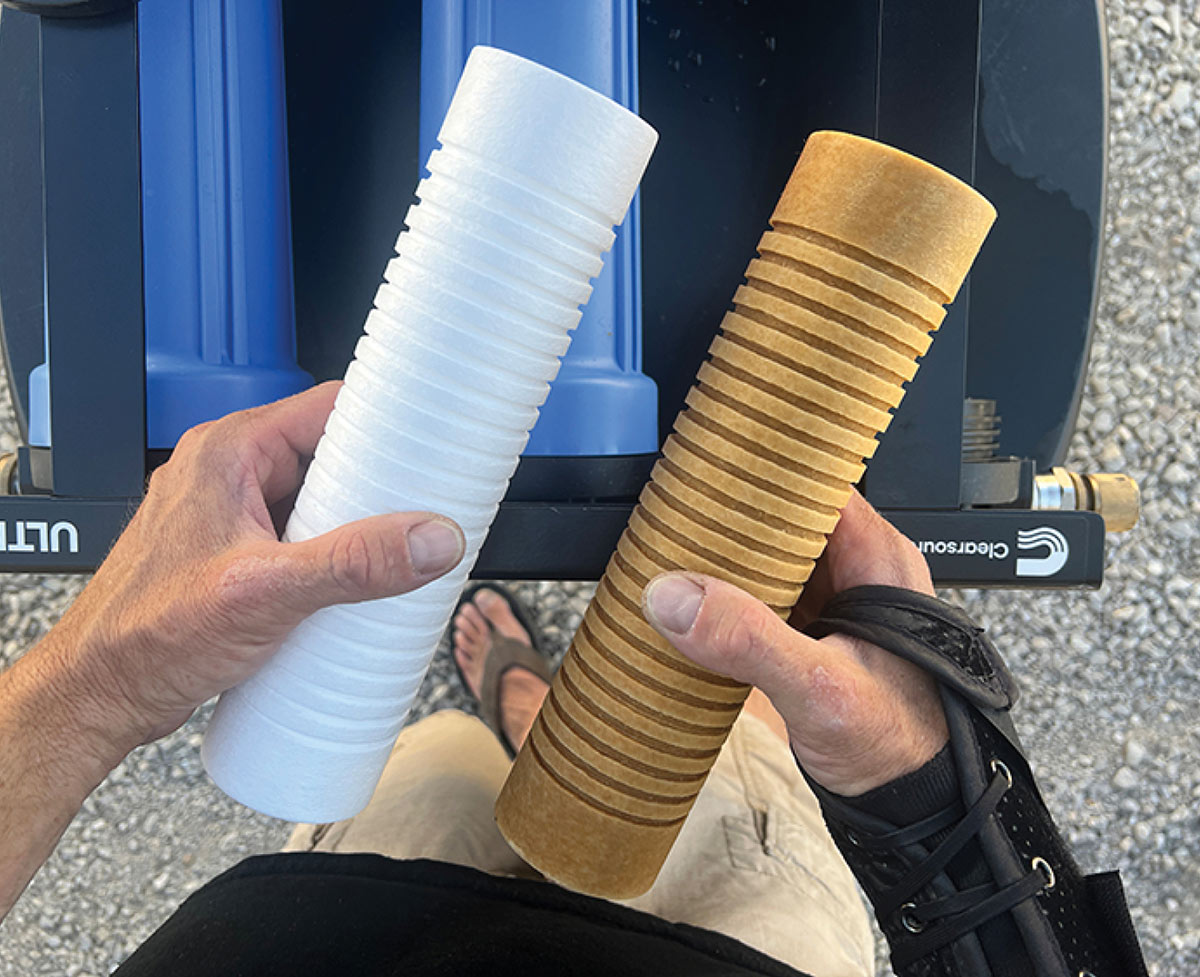
A basic, single in-line filter cannot perform the task that multiple canister systems are capable of, but are an adequate first line of defense. These filters will treat water to a lesser degree and, for some owners, it may be all that is necessary, depending on the water source and how often they use their RV. These types of filters can also be used to fill your water storage tank from a home or campground source, but in many cases may provide a false sense of security.
When shopping for an in-line filter, choose a model with KDF additives. This cartridge will have zinc and copper additives incorporated into the carbon filter that resist bacteria growth. Single, in-line filters are the biggest culprit for diminishing water volume and flow and the problem is compounded as the filter becomes clogged with sediment and particles, so you’ll have to check it regularly. High-quality filtration is not feasible with an in-line filter simply due to its small size. However, these cartridges can help improve taste to a small degree — but will not remove chlorine or other biological contaminants.
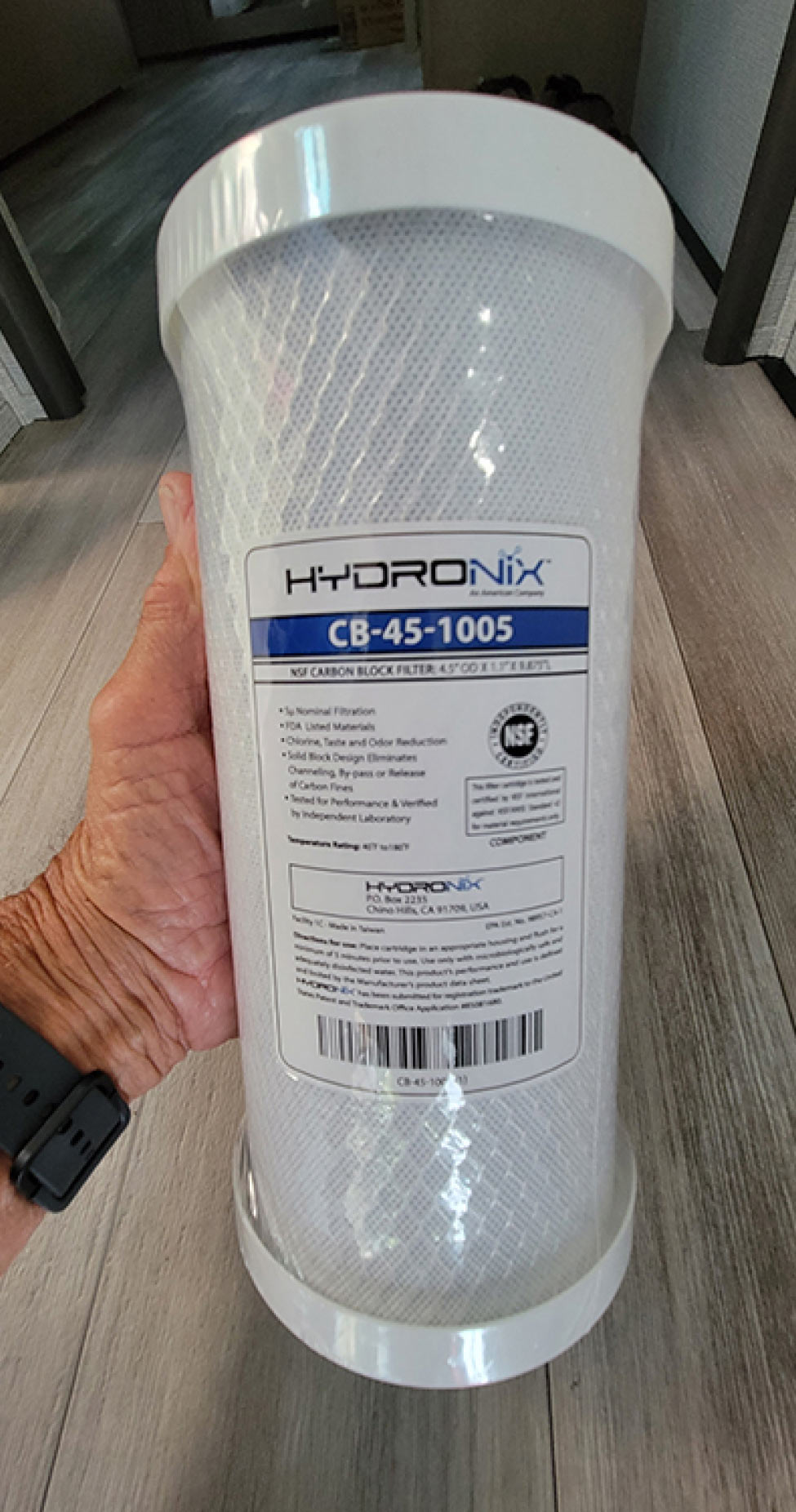
The best first line of defense against bad water is to use a sediment filter placed in front of filters designed to capture biological contaminants and improve taste. These filters are designed to remove dirt, sand, minerals, metals and other similar contaminants that can create problems with the water. However, smell and bad taste will pass through a sediment filter — and so will contaminants. Every RV should have a quality sediment filter. Most sediment filters will capture sediment bigger than 5.0 microns, which is enough to prevent premature clogging of the other filters down the line. The life of these cartridges is dependent on the amount usage, but generally will need to be replaced when the water flow slows down.
Carbon Filters
The second filter in a good two-cartridge system should be carbon. It should be rated at minimum 0.5 microns and capable of removing lead, heavy metals and cysts — all of which contribute to bad taste. Carbon filters can either be a solid block or be granulated. Water that’s forced through a solid block of carbon will be stripped of many more contaminants when compared to water that flows in and around granules. Water that flows through carbon will taste better, generally.
Ceramic Filters
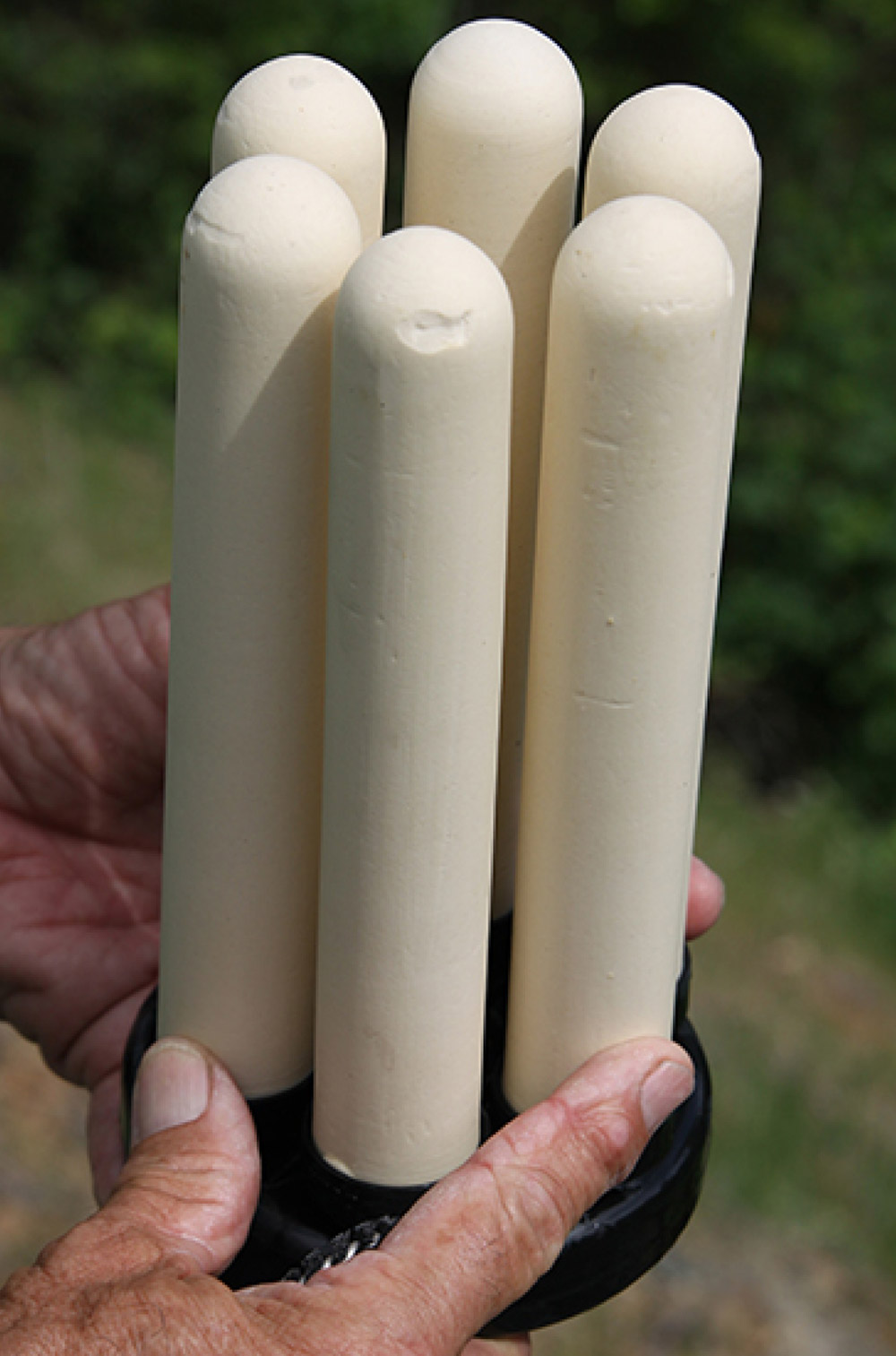
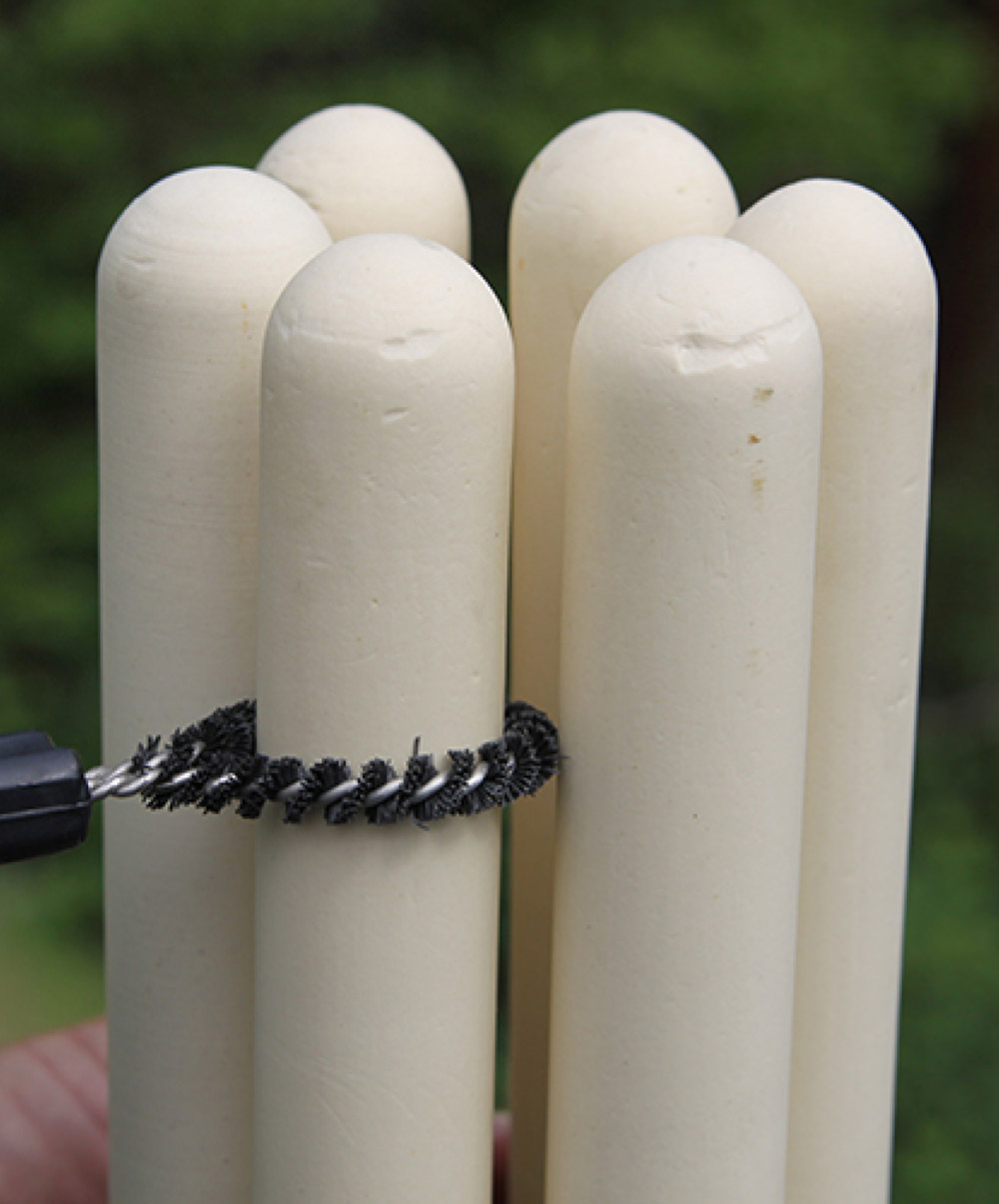
Ceramic cartridges offer exceptional sub-micron filtration (a micron is equal to 1 thousandth of a millimeter). Ceramic filters, in a candle configuration, will remove biological contaminants and chlorine — and they can be cleaned and reused for many years with great success. While there are a number of these filters on the market, the Doulton cartridge (doultonusa.com) is said to be best for purification.
A ceramic filter, used in conjunction with sediment and carbon filters, will provide the good protection against bad water for any RV, even in areas where the water supply is not up to strict quality standards.
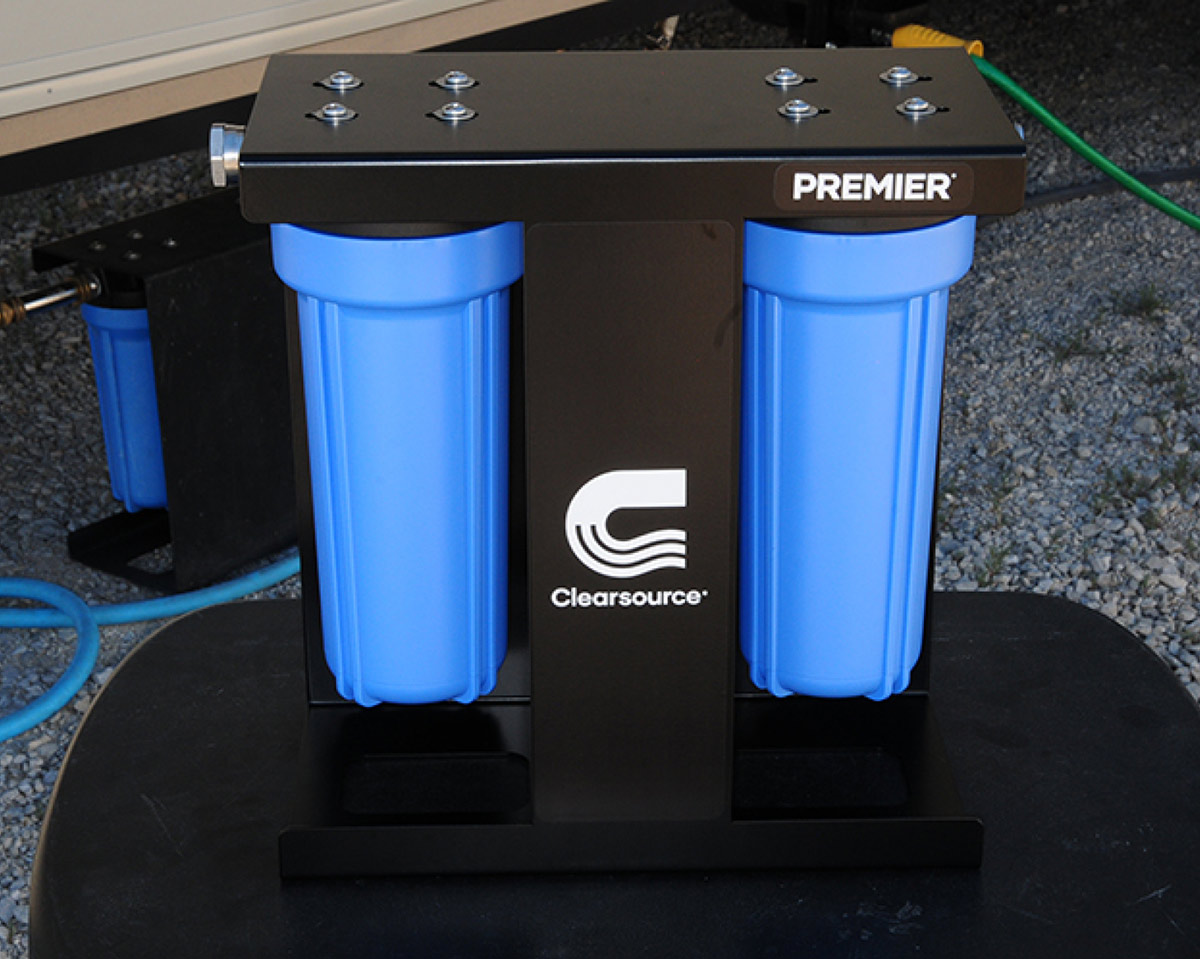
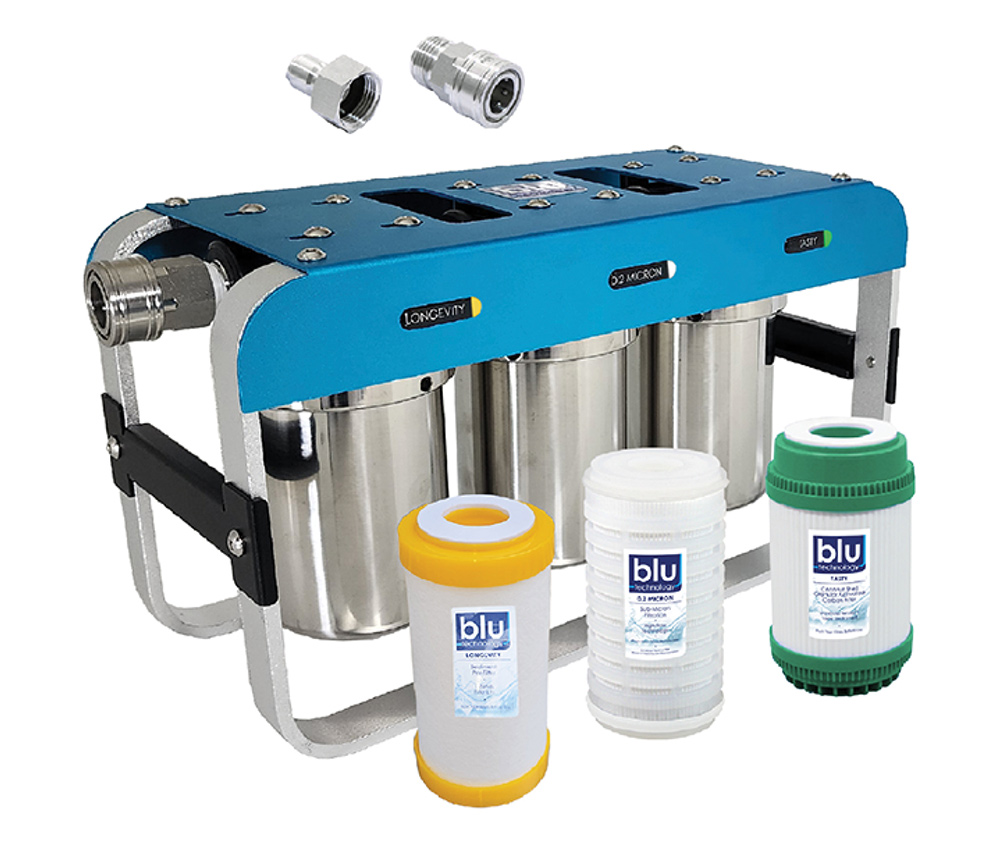
Standard or jumbo canister type systems are typically found on the market. The standard 10-inch versions are available at most home improvement stores, online, and at Camping World and RV supply stores. These are generally the most popular models used by RVers and companies like Clearsource (clearsourcerv.com) offer high-quality mounting systems. A basic, single standard canister can be used with a sediment or a carbon filter, but in today’s world does not do enough to treat water. A double standard canister system can be equipped with the sediment and a carbon filter or even a hybrid ceramic/carbon block filter.
Full timers, or those who spend long periods of time on the road, should consider larger systems like those offered by Clearsource. The company has upgraded its two-cannister system to a Premier system ($399.99). This newer version features a first-stage 5.0-micron coconut shell carbon block that removes sediment while reducing or even removing volatile organic compounds like insecticides and pesticides, as well as solvents, chlorine and chloramines. The second, 0.2-micron filter traps bacteria, cysts, Giardia and E.coli—the stuff than can make you sick.
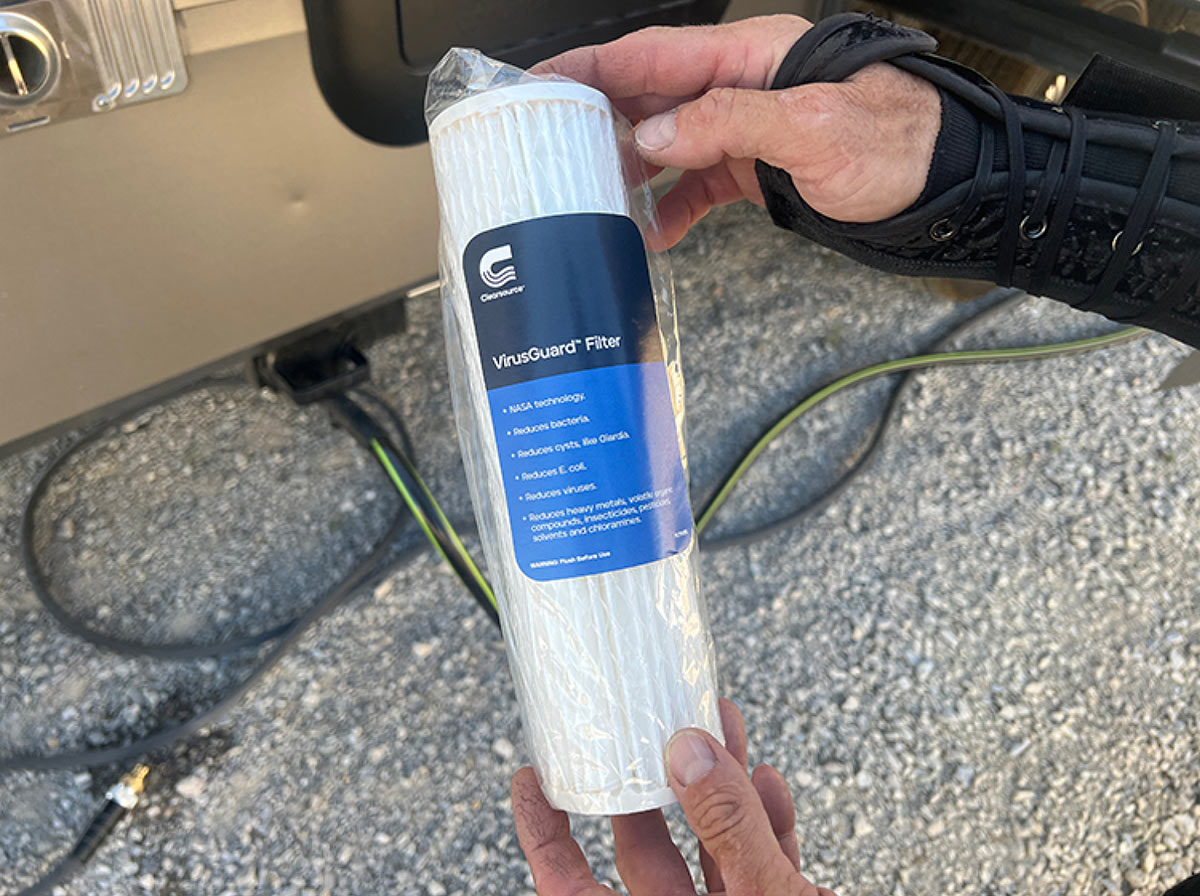
The technology for the system’s third-stage filter, under the VirusGuard nameplate, was developed by NASA and offers advanced protection tantamount to that found in survival and exploration-grade water purification systems. This filter is certified to remove/reduce bacteria like E.coli, cysts like Giardia, and most importantly — and uniquely — viruses. We all can relate to that these days.
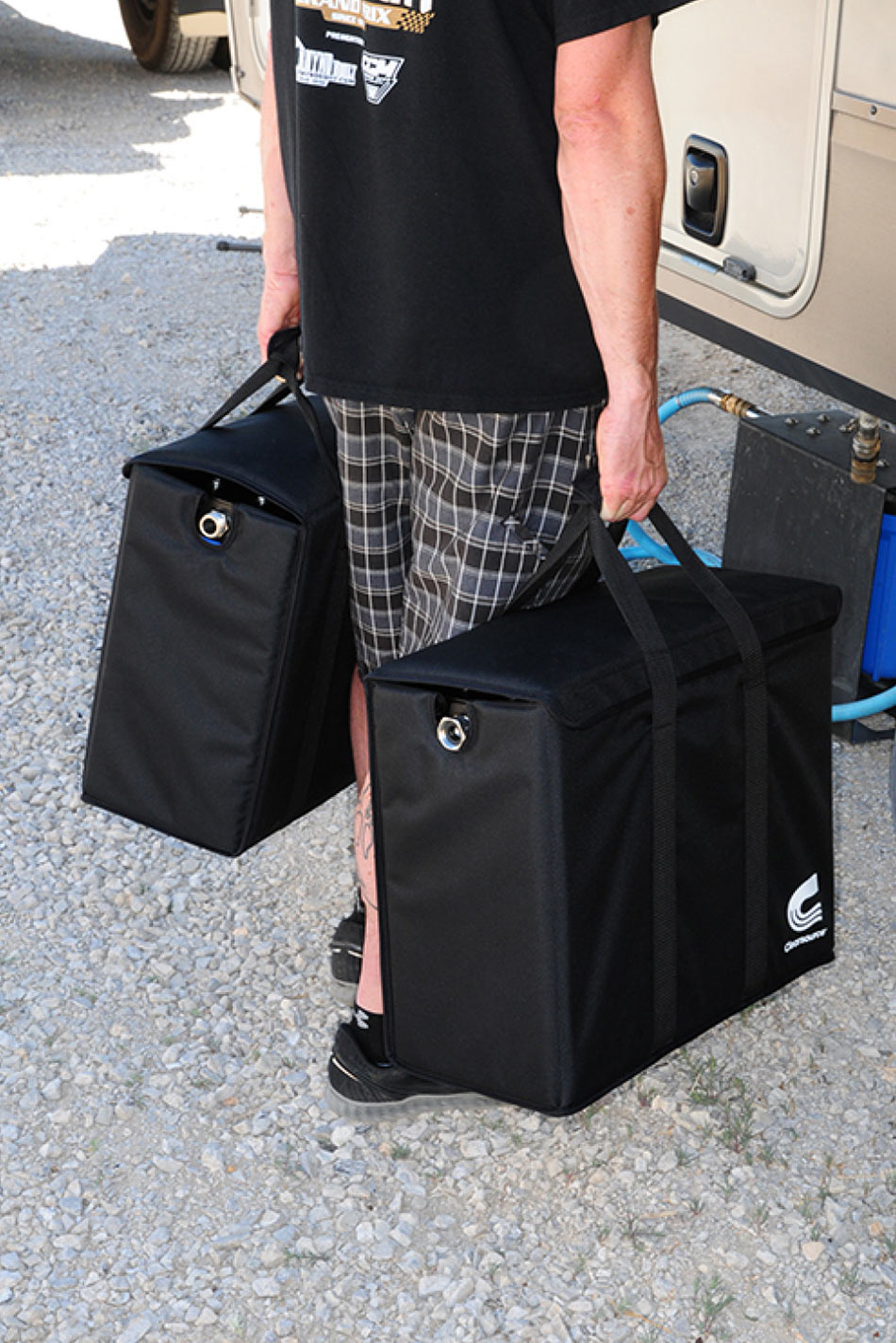
There’s also a WeatherGuard Pro insulated and heated tote ($299.99) that will prevent water freezing down to 10 degrees F. It automatically turns on (120-volt AC power) when the internal temperature drops to 40 degrees F, turning off at 60 degrees F. Specific size totes work with the two or three-canister systems and double as a convenient carry bag. WeatherGuard totes without the heat function are available for both systems ($150). This tote has proved to be invaluable when it comes to handling the filter housing and keeping the components clean.
The Blu Tech ARX+ features an onboard pump that can draw 3 gallons per minute up to 6 vertical feet with no pressure drop. A 25-foot stainless-steel hose is fitted with a 500 mesh (20 micron) prefilter followed by a 2.0-micron sediment filter; the pump operates on a standard M12 cordless-tool battery with enough capacity to pull 90 gallons of water on a single charge.
A key element for this backcountry set-up is an electro-absorbity, 0.2 micron High Flow Off-Grid+ filter that is combined with a carbon block able to remove up to 99.99% of the bad stuff, while improving taste. The system has a unique carrying case for use without removing the unit and a 12-volt DC/120-volt AC charger ideal for solar integrations. Blu Tech’s new systems will be available sometime in August or September.
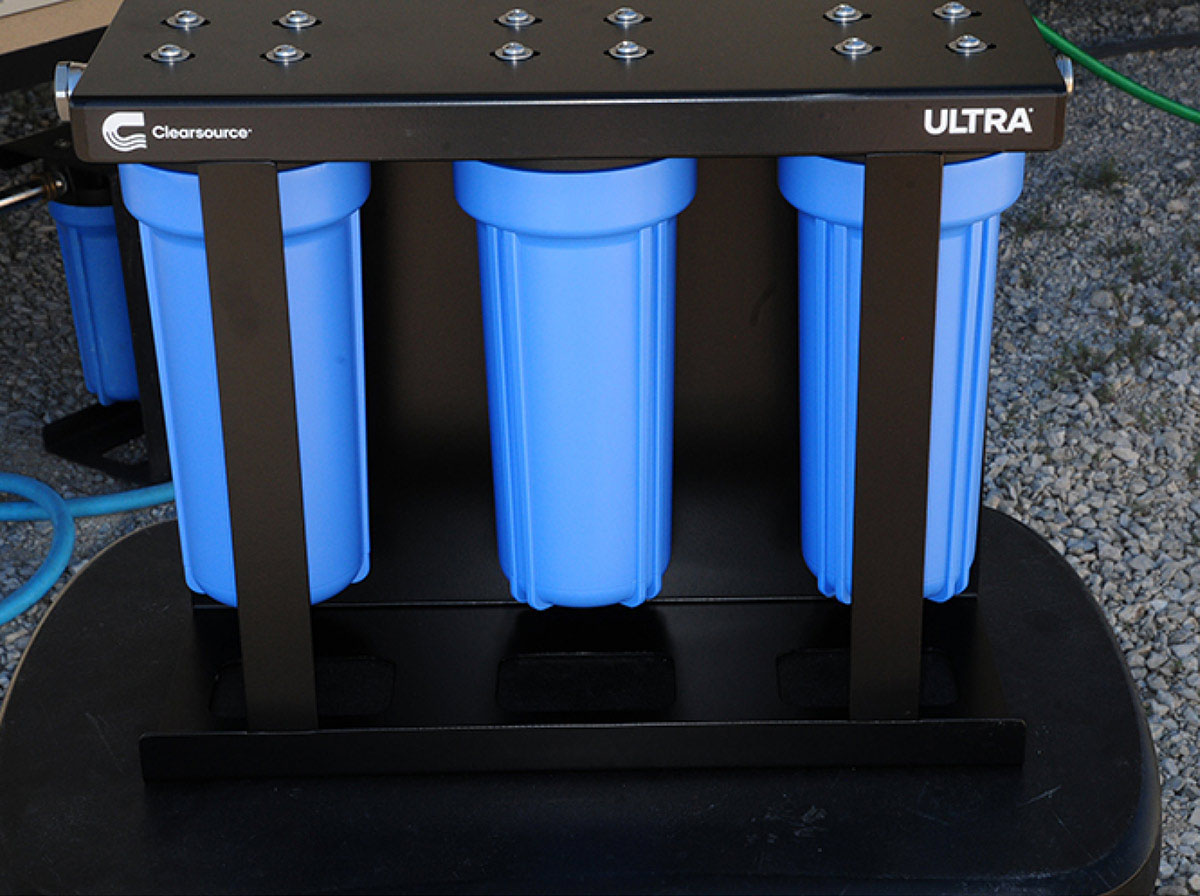
Since water quality is a big topic these days, there are many filtering/purifying systems for RVs on the market. Always look for carbon filters to remove chlorine and bacteria and improve taste. Keep in mind that most systems will not purify the water; filters with purification provisions, like the Clearsource Ultra, will ensure safe drinking water.

Soft Water
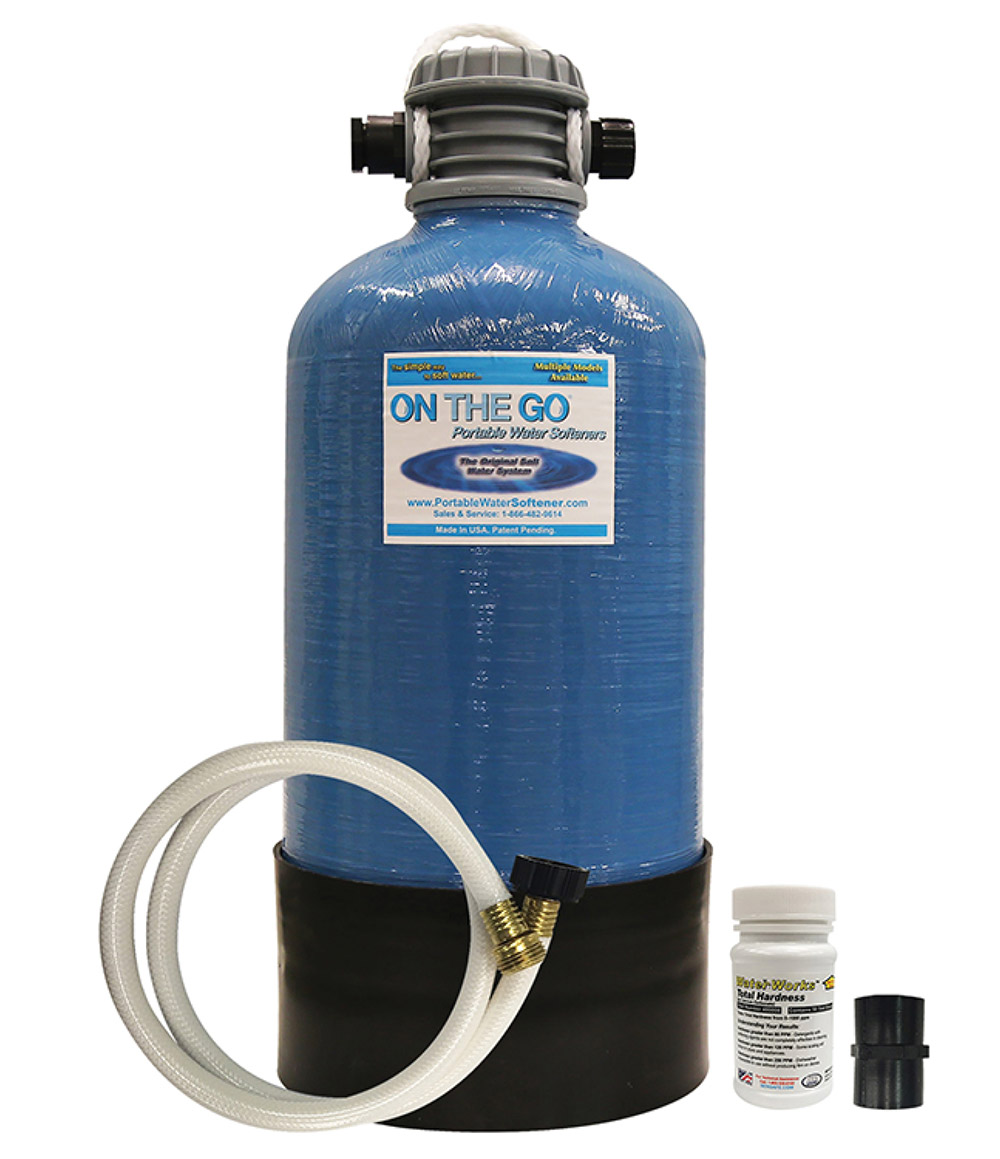
Hard water is the nemesis of any RV system, leaving caked-up calcium deposits that not only restrict the flow but can actually damage faucets, connectors and even pipes. Preventing the build-up of scale in an RV is typically accomplished with a water softener that uses salt, much in the same manner as a residential unit, which is usually too big for an RV. One of the most popular portable water softeners specifically designed for RVs is the ON THE GO cannister system (portablewatersoftener.com) that can be connected to the water system in minutes without the use of tools.
The ON THE GO water softener is packaged in a telltale blue cannister that’s commonly seen in RV parks; it’s a staple product among many full timers. The Double Standard model is best suited for those who spend more time in their RVs, while the Standard counterpart will likely suit more occasional users. Both units are touted to supply at least 20 days of soft water but that number is a moving target, subject to the level of water hardness; the harder the water, the fewer the gallons. Nevertheless, the Double Standard, which supplies double the soft water over the Standard unit, is rated to soften 1,600 gallons of water.
Providing soft water is accomplished through the regeneration of common table salt in about 15 minutes during the charging process. These softeners require backflushing, and the parts needed to do it are provided. ON THE GO water softeners are available online and at most RV supply stores; plan on paying in the neighborhood of $250-275 for the Double Standard. The ON THE GO can also be packaged with a Clearsource filtration system. At 22 inches high with a 9.5-inch diameter, the Double Standard requires sizable storage space.
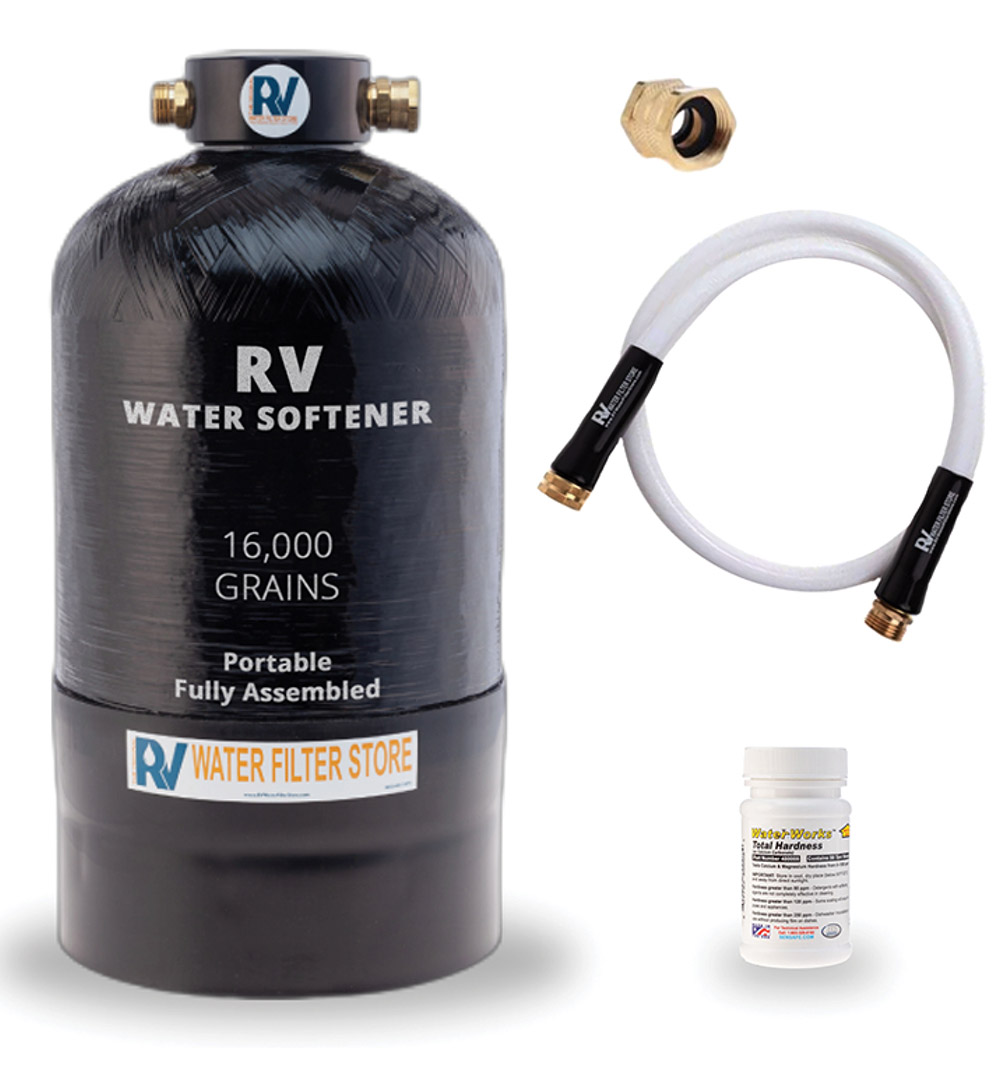
There are other water softeners for RVs on the market, and the Essential RV Water Softener, with similar specifications as the ON THE GO Double Standard model, is very popular. A good source for the Essential RV Water Softener is the RV Water Filter Store (rvwaterfilterstore.com), which carries a large selection of filtration products. Blu Tech also offers a stainless-steel water softener that is smaller and suitable for shorter trips.

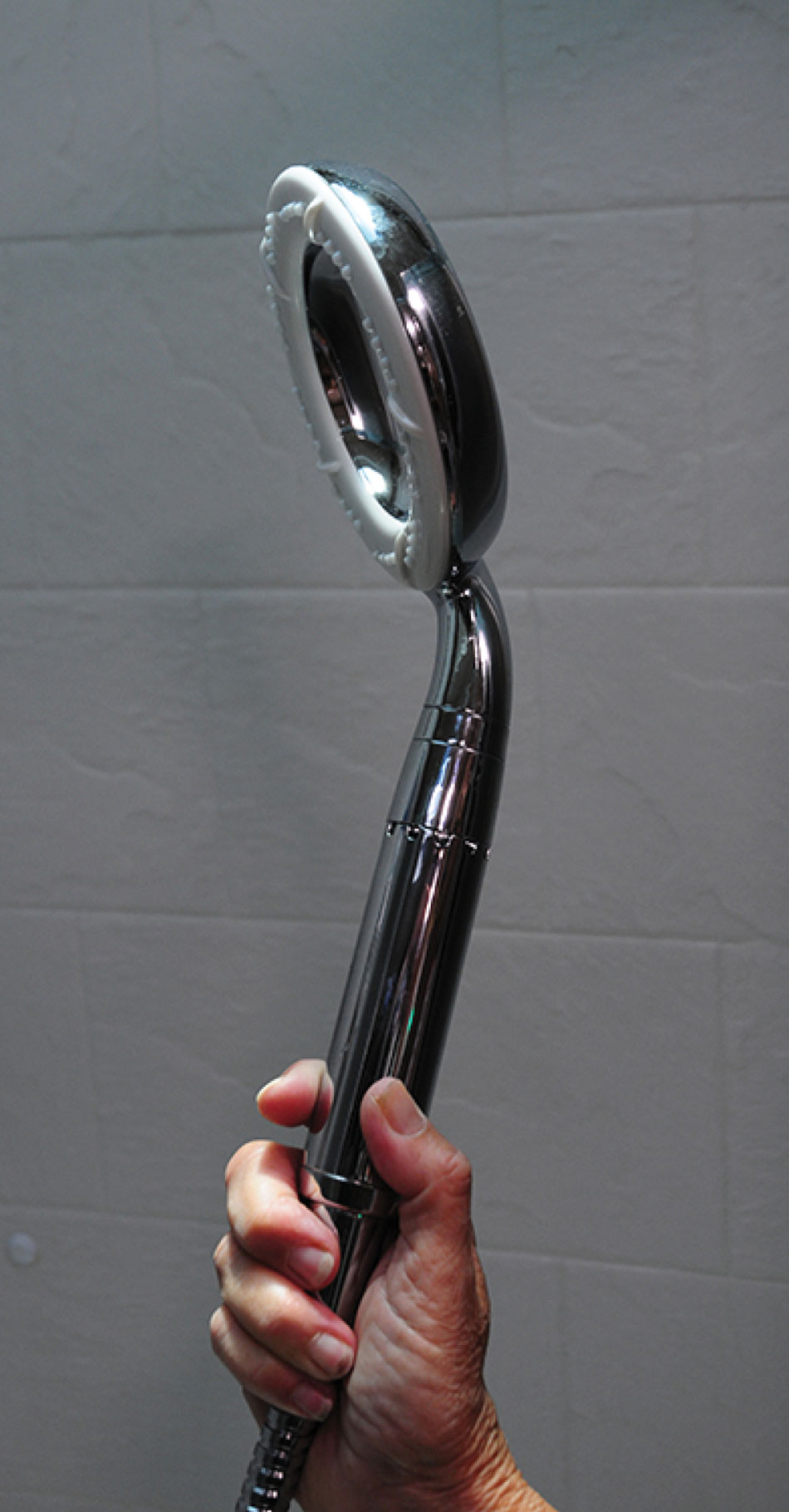
It sounds too good to be true, but it’s the same process used in the Ecocamel (ecocamel.com) Orbit Soft Water Shower Head, which prevents calcium build up and improves water softness. Livingston has been using the Ecocamel shower head for years and has also tested the NaturalSof device extensively. Testing revealed that the calcium build-up had been knocked down substantially; over a long period of time, a small amount of calcium, though, has built up on the end of the water-purifier faucet. The water also feels softer and there’s no issue about the presence of sodium in the drinking water, which is controversial. Some experts feel that drinking soft water treated with salt presents health issues; other disagree.
The NaturalSof device sells for $425, but the company claims it will last, with no maintenance requirements, for 15 years.
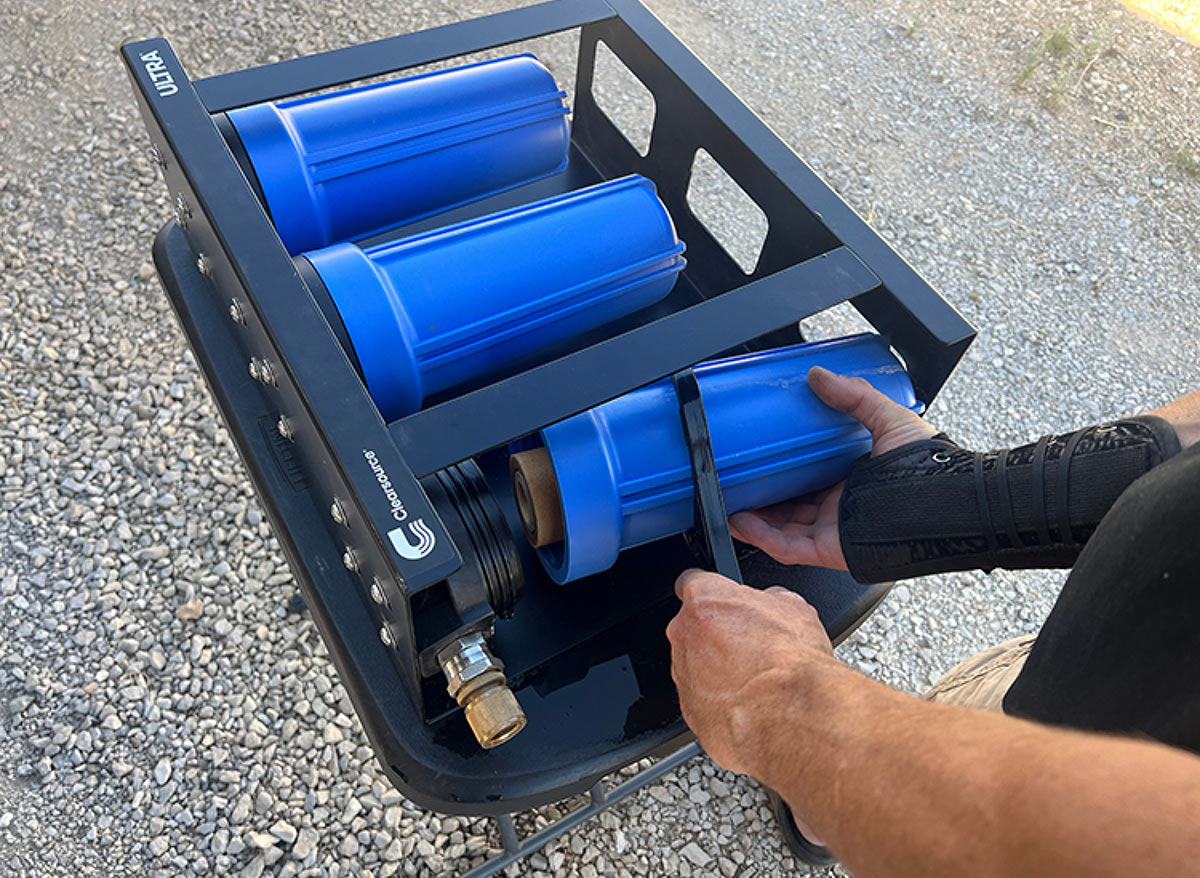
When setting up a system for an RV, most owners position their filters outside, in-line with the water hose. Standard, ¾-inch brass fittings make hookup simple, and the use of good-quality quick connectors will add convenience to the process. Many users build boxes or supports to hold the filters upright, which can be done by modifying milk crates, buckets or anything similar. While this keeps the filters off the ground, it’s not necessary; most filters will do just fine lying on the ground in a horizontal position.
Protection from direct sunlight is more important, however. Filters that are shielded from the sun will last longer and resist growing algae and other similar stuff inside that can plug the cartridge(s) prematurely. This can easily be done by placing the filters under the RV when in service, by building them into a compartment or by placing a cloth or sunscreen material over the filter housings. While it’s best to drain the filters prior to breaking camp, this is not necessary except to keep water from running all over the compartment. Rinsing and drying the canisters and filters before storing the RV is a worthwhile practice.
Tip: Install a strip of masking tape on the canisters and write the date the filters were last serviced. It’s best to service the filters before the water flow becomes too restricted.
When shopping for any type of water filter, check for the National Sanitation Foundation certification (NSF). The NSF thoroughly tests filters for flow rates, chlorine removal, taste, odor and particulates. For example, a Class I filter can remove 75% to 100% of chlorine. A Class II removes 50% to 75% and Class III will remove 0 to 50% of the chlorine. To test chlorine-removal effectiveness, we visited an RV park where the chlorine smell was exceptionally strong, rendering the water almost undrinkable. After running the water through the Clearsource Ultra three-canister system, the smell was gone and the taste was as good as that from purified bottled water.




Ozone treatments work by oxidizing the organic material in bacterial membranes, which weakens the cell wall and leads to cell rupture, causing immediate death of the cell. As an oxidizing agent, ozone is stronger than chlorine and has a kill rate that is more than three times faster — but ozone purification systems aren’t terribly practical for an RV application. They are installed as a point-of-entry treatment system — in other words, where the water would enter your RV at city water hookup.
The trouble is (for now, at least), the flow rate required to properly ozonate the water isn’t compatible with the plumbing system of an RV. The benefit of an eventual ozone water-treatment system in an RV application will be that, once the ozonated water is introduced to the RV’s plumbing, it will disinfect everything it comes in contact with — the plumbing, the freshwater holding tank, every tap in the RV.
For now, a simpler, more practical way to purify your drinking water in an RV is with an LED UV light system. As water passes through a UV water treatment system, living organisms are exposed to UV light of a specific wavelength that disrupts their DNA, making it impossible for the little critters to function and/or reproduce. UV light purification systems install inside the RV and treat the water before it exits the faucet and goes into your glass. The only caveat with an LED UV light system (and it’s a small one) is that the water must be filtered beforehand, or the UV light may not be able to penetrate the water sufficiently for adequate contact time.
Acuva Technologies Inc. seems to have met both demands with its ArrowMAX 2.0 UV-LED Water Purifier (with Smart Faucet). The company designs, develops and manufactures advanced UV-LED systems for water, air and surface disinfection applications around the world and offers products for both OEM (manufacturer) applications as well as purification systems for boat and RV applications.
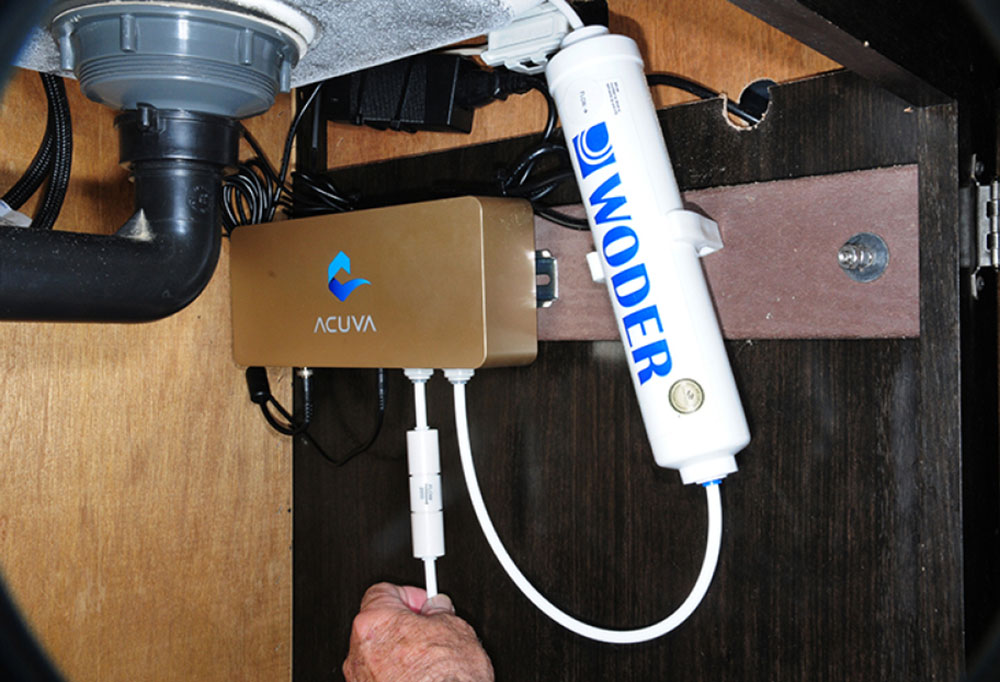
For smaller RVs, or those with only one source from which drinking water would be pulled, the compact ArrowMAX 2.0 ($599) system would seem to fill a void in the RV market. The ArrowMAX 2.0 features a polymer housing and a compact reactor design routes the water through it in a U-shape while subjecting it to the company’s patented IntenseBeam technology. Inside the polymer enclosure is a stainless-steel UV water-disinfection module.
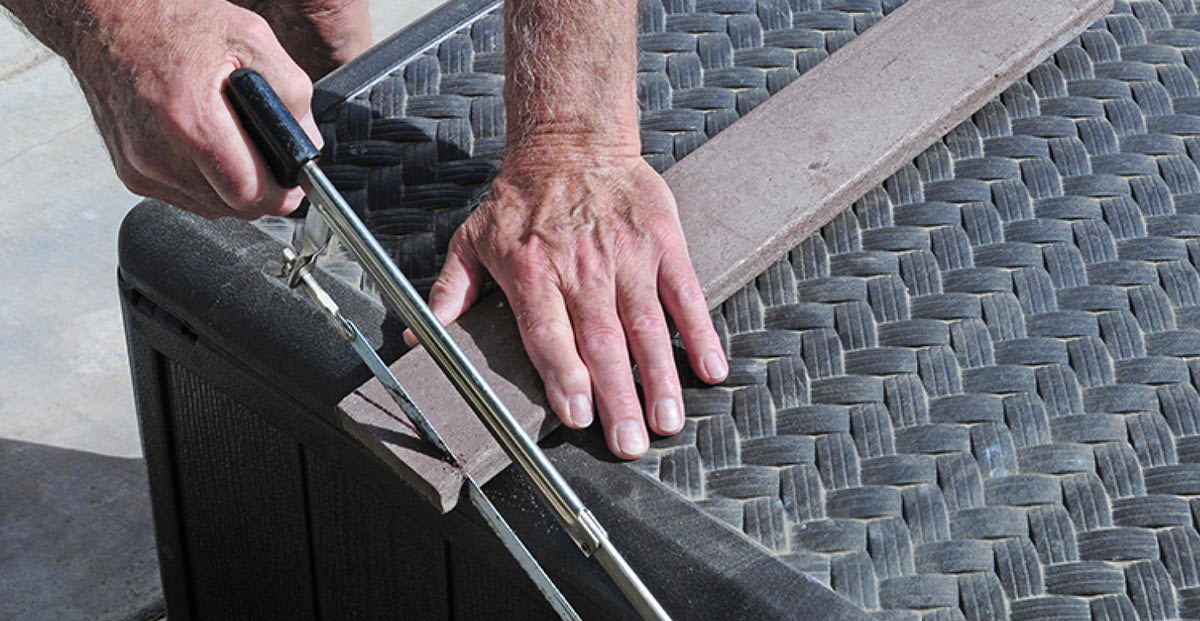
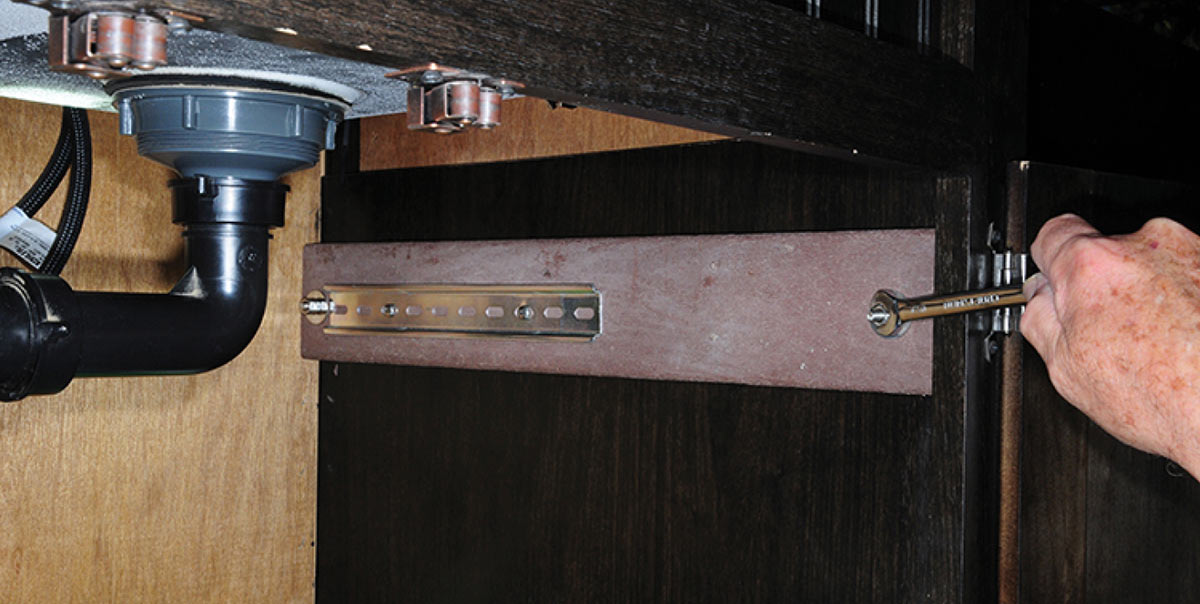
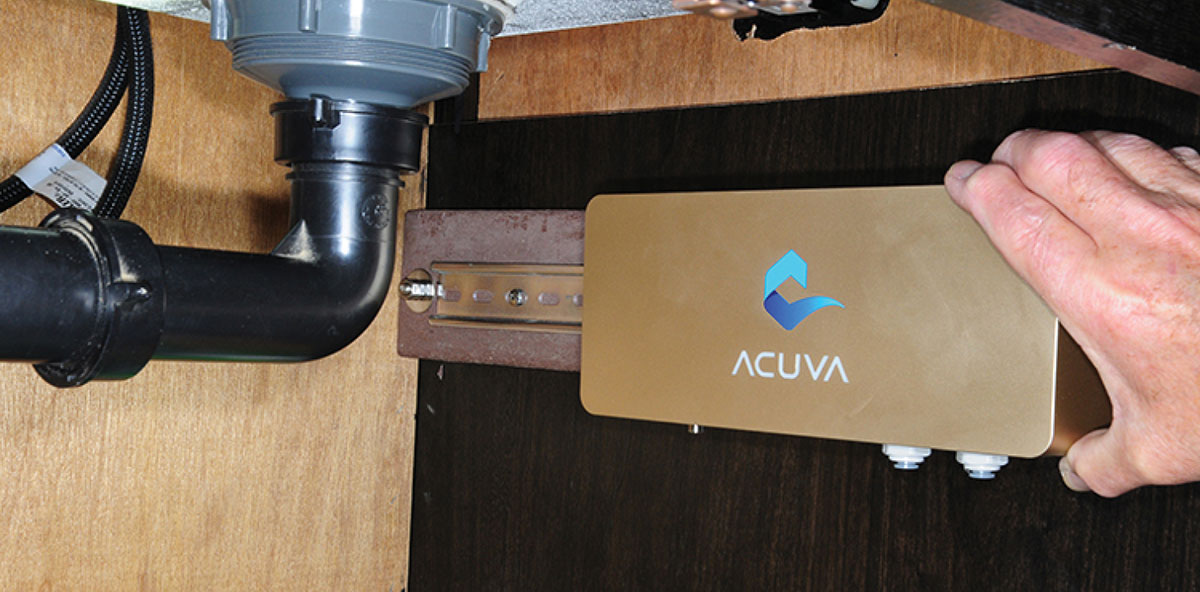
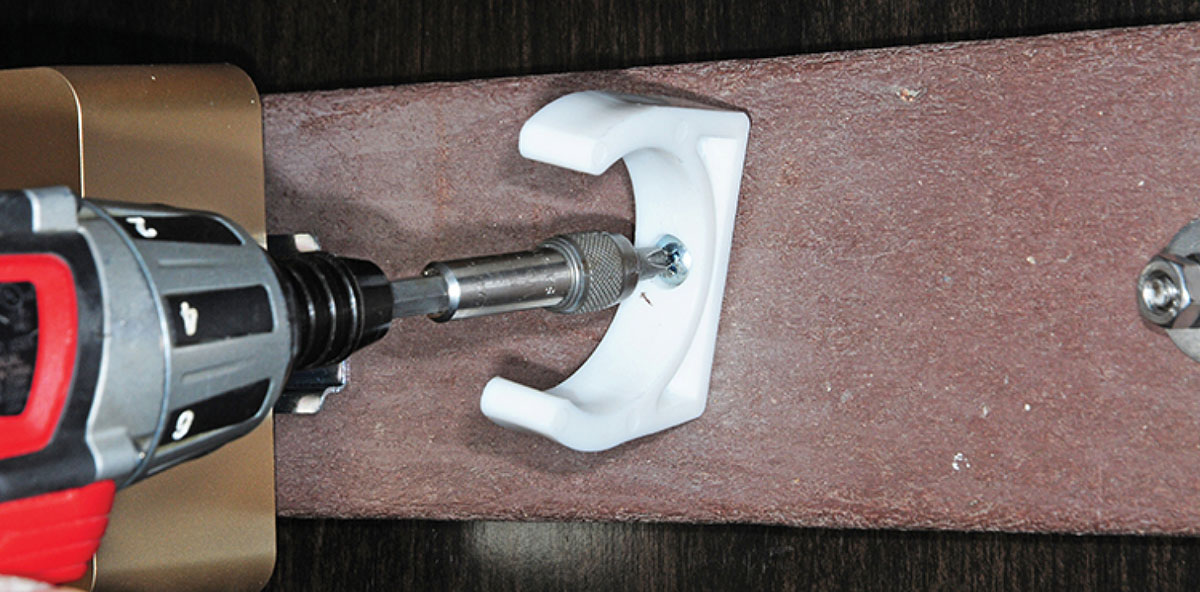
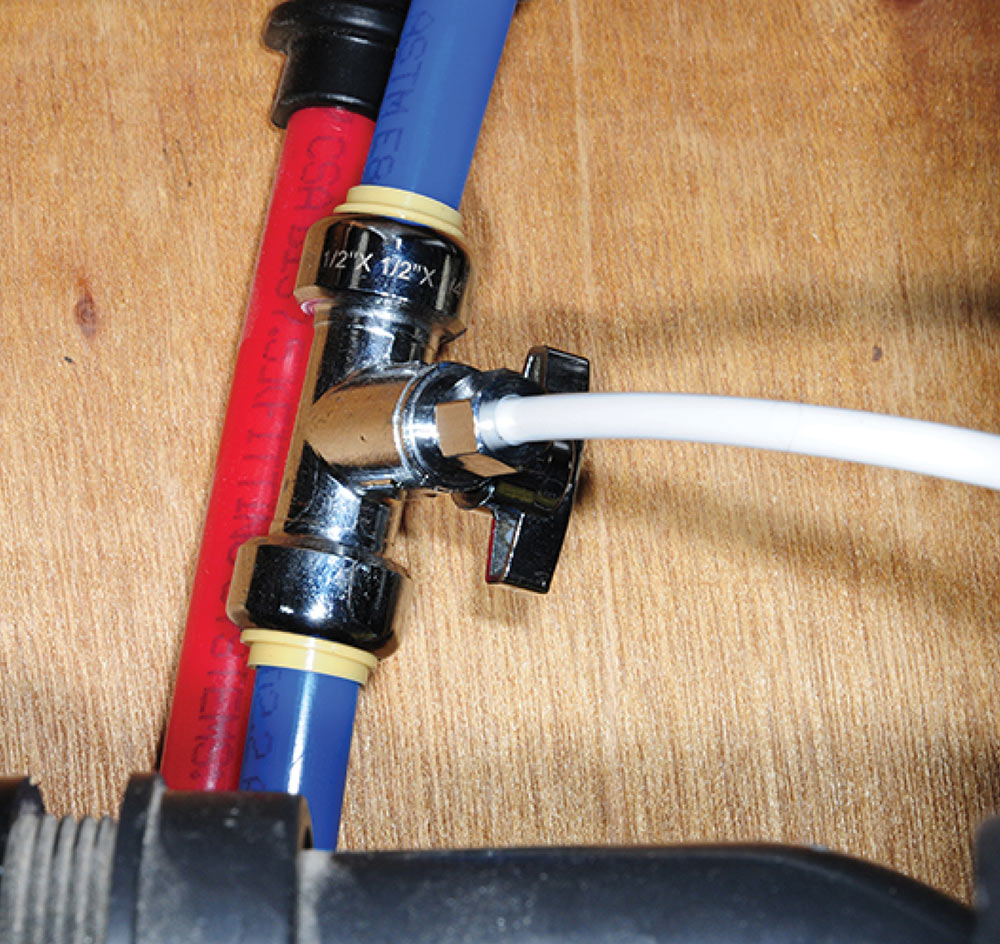
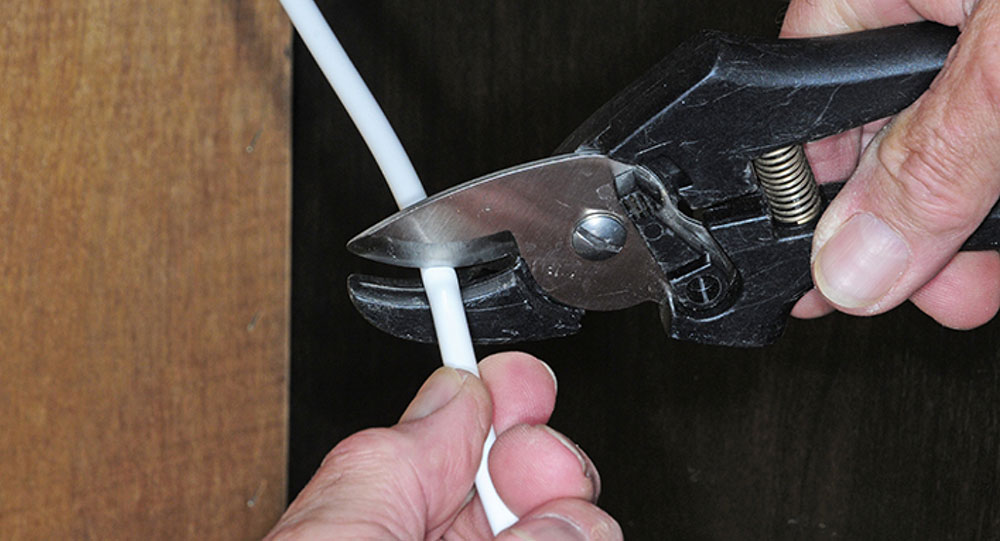
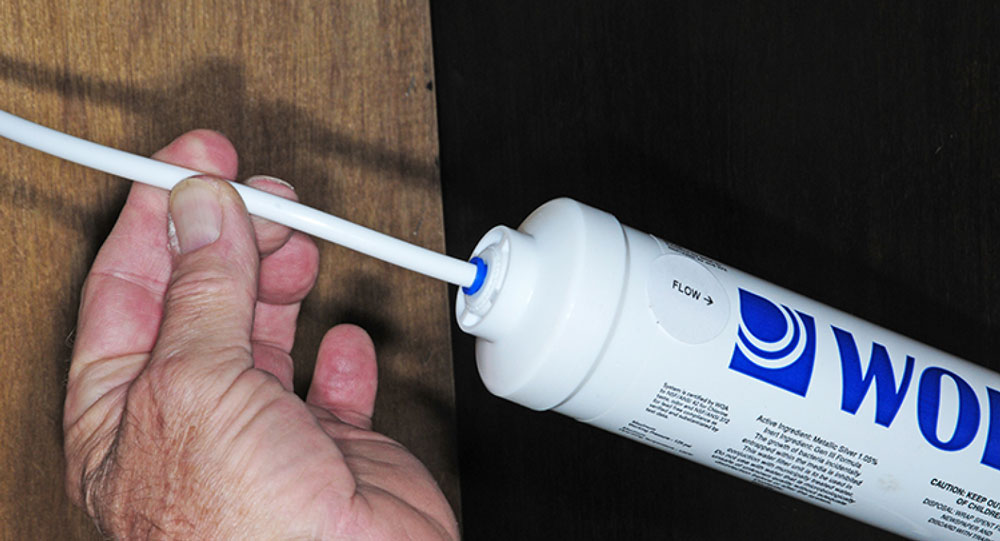
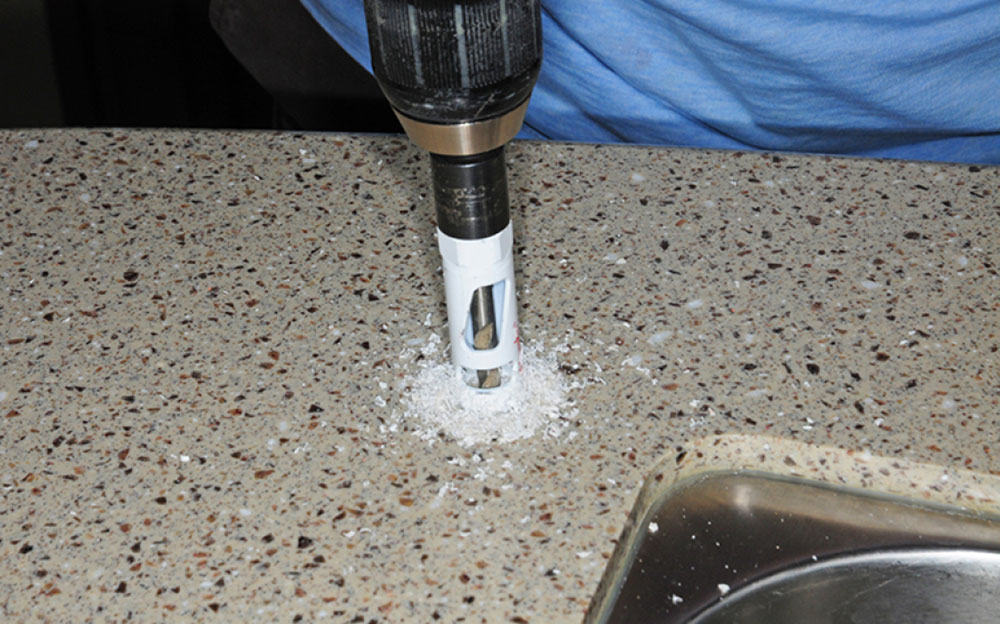
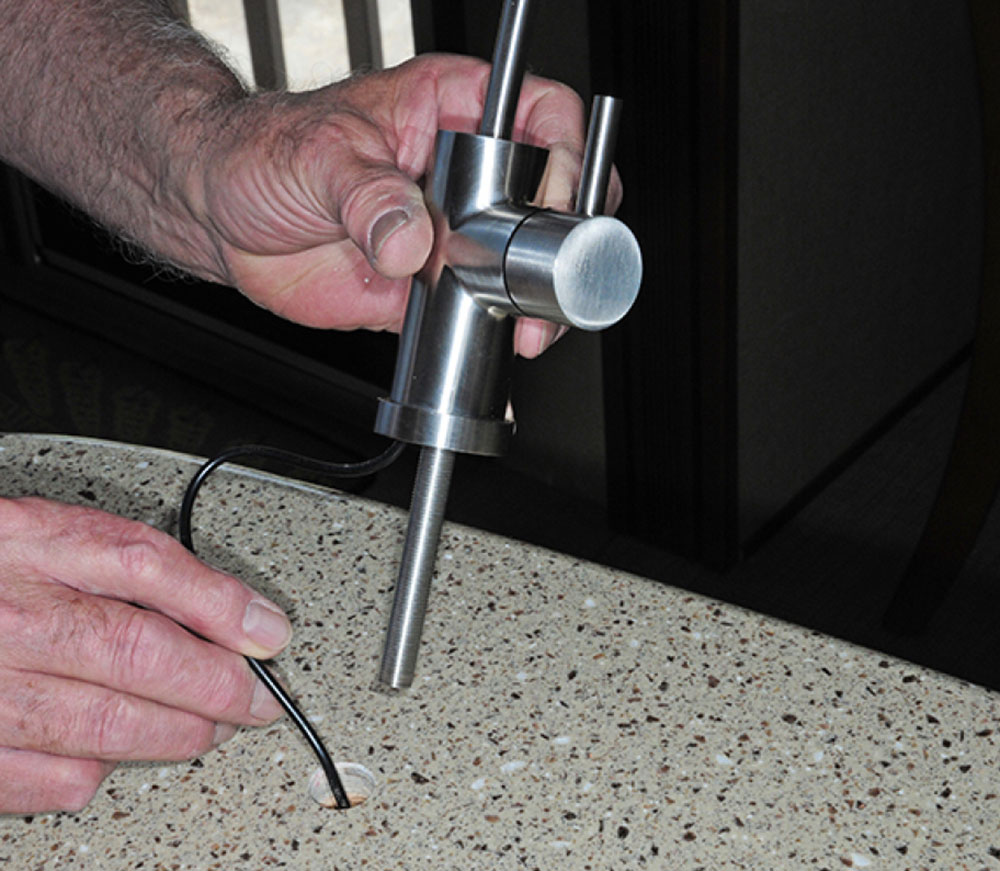
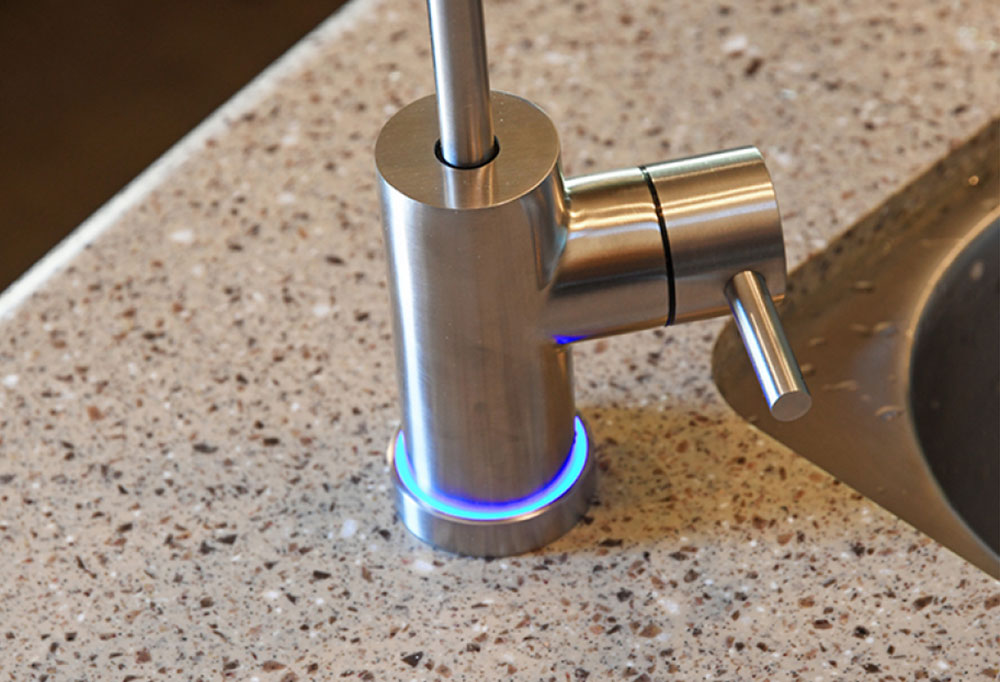
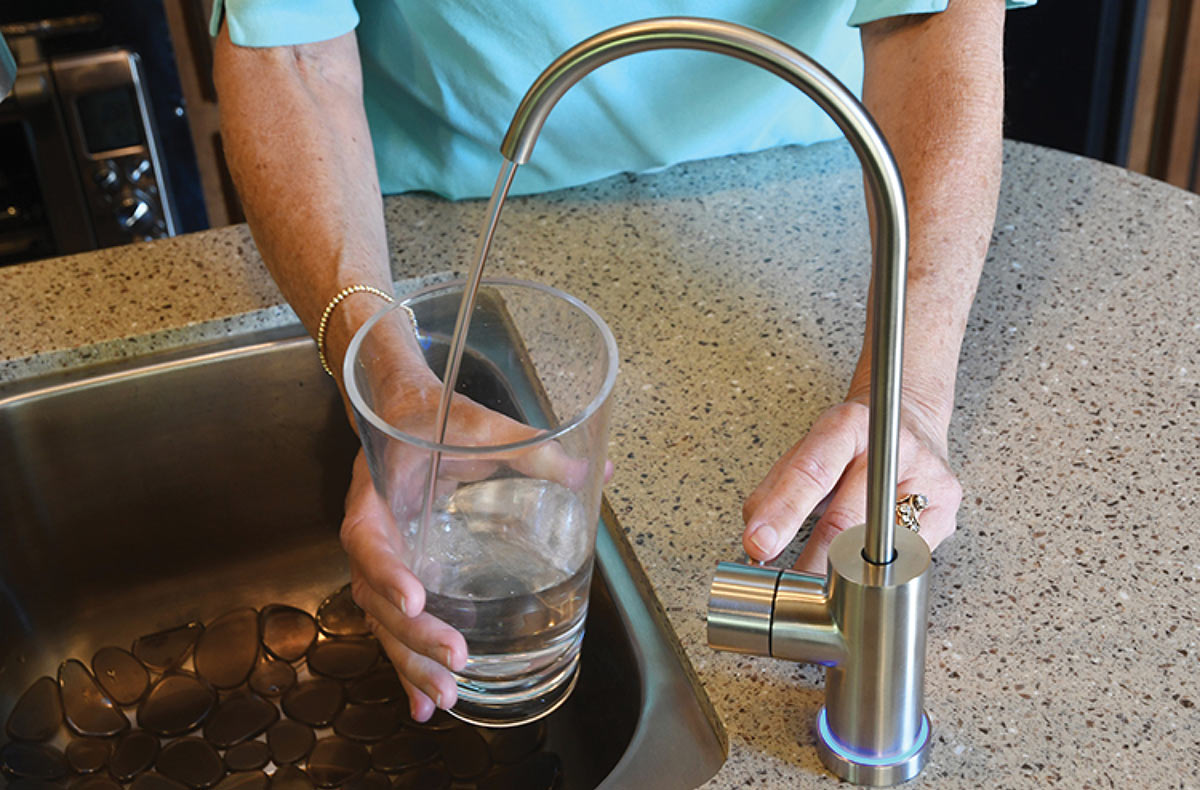
To test, we installed the system in a fifth-wheel trailer with a kitchen island. The kit includes the UV-LED disinfection system, plus the optional Smart Faucet (about $100), which as its name suggests incorporates certain “smart” features. A self-cleaning function activates every 12 hours with a UV burst that ensures all water within the UV-LED unit is sanitized. The system is activated the moment you turn on the faucet, which saves energy compared to older UV-lamp systems that had to remain on to be effective. The base of the faucet also has a blue LED ring light that illuminates to let the user know the system is operating.

The kit also includes mounting hardware, necessary plumbing and a power supply for connecting to 120-volt AC service, or it can be hard-wired to a 12-volt DC source.