


ummer is a wonderful time of the year. The days are longer, there’s plenty of pool and lake time, and your agenda can be packed with outdoor activities that are not only fun but can keep you fit. As romantic as that seems, though, the dog days of summer will usually have you running indoors to beat the heat — and keeping RVs cool is no exception.
Transforming the RV interior from an inferno to a cool environment is relegated to roof air-conditioning in the majority of RVs combing the highways. A few manufacturers worked with basement A/C units, but that has given way to the venerable rooftop units years ago. Today, the plethora of air-conditioners found on RV rooftops are more efficient than ever, with innovations from companies like Truma (truma.net) leading the charge. And technology has advanced the abilities to run smaller RV air-conditioning units (usually in Class B and smaller trailers) powered by sophisticated 12-volt DC systems. Add in improvements in rooftop-mounted and free-standing evaporative coolers and there’s no reason to sweat it out inside an RV any longer.
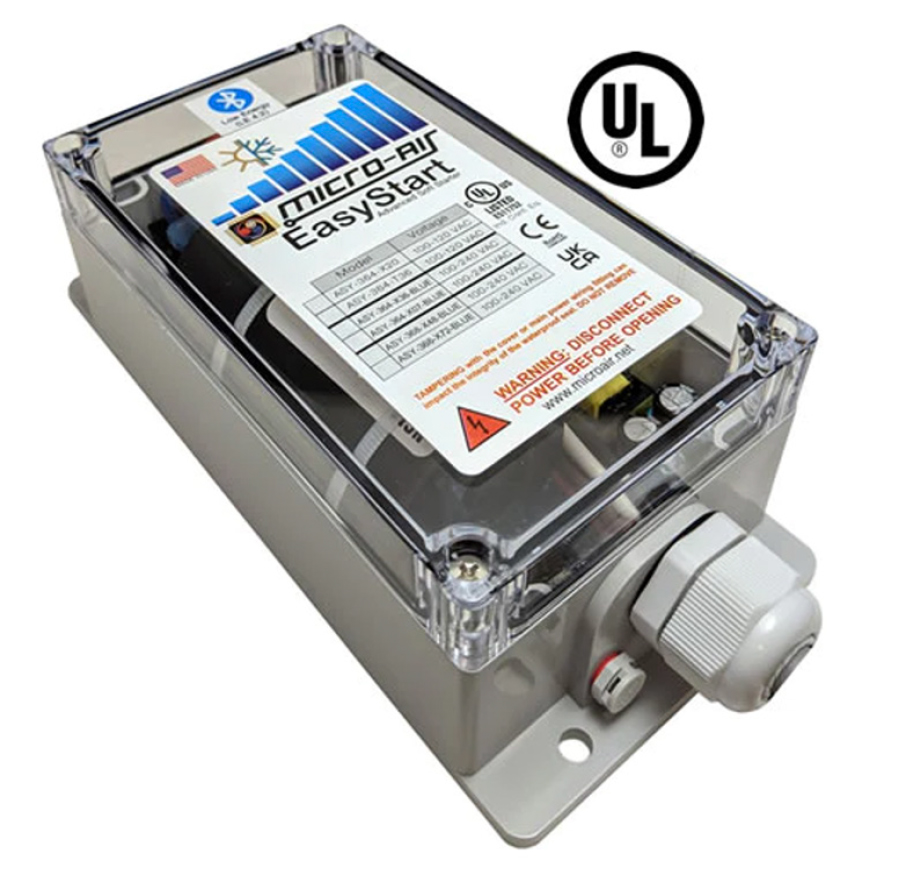
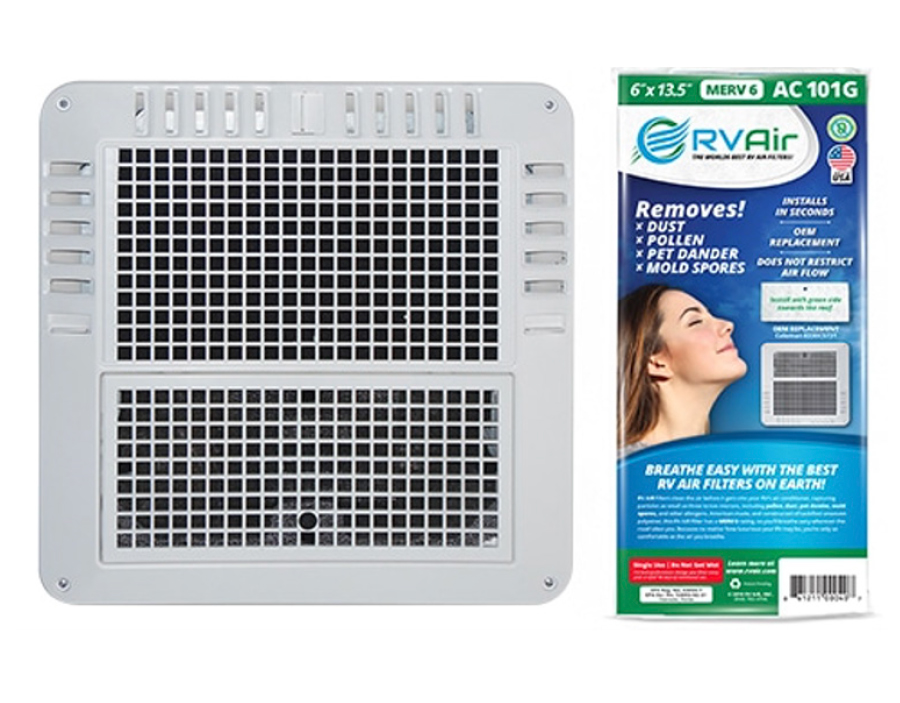
Air-conditioners are no longer just slapped on the roof and connected to a wall thermostat. Systems are now integrated into high-tech controls and monitors, and beyond the internal efficiencies comes new engineering prowess in the design and implementation of more capable air-distribution systems. Aftermarket suppliers, like MicroAir (microair.net), RV Airflow Systems (rvairflow.com) and RV Air with its special filters (rvair.com) offer products that improve efficiency in both power-consumption and air-distribution arenas. Bluetooth and Wi-Fi integration also now make it possible monitor and operate air-conditioners from a smart device — and even allow owners to keep an eye on inside temperatures when away from the RV, which is a boon to pet safety.

The advent of the ducted system with registers strategically placed in the ceiling changed air-flow dynamics. For years all the air-distribution boxes (ADB) allowed for only a direct discharge of air with adjustable louvers to help move cold air to other areas inside the RV. Ducting changed the paradigm and now is the bread-and-butter configuration for the industry (except for smaller RVs). When zones are not created, a ducted system is typically relegated to the rear air-conditioner and a direct discharge unit mounted in the bedroom — usually a lower Btu unit.
A couple of years ago, relative newcomer Alliance RV touted the use of three rooftop air-conditioners sans ducting. It’s a fresh approach and much simpler to manufacture, but the thinking is valid: Rooftop ducting is subject to tremendous heat soak, which impacts air-flow temperature. For example, direct sun on the roof can reach 160 degrees F, which may shut down the air-conditioner but will certainly transfer heat to the ducting that is routed in the roof structure. The theory is to capture as much cool air as possible for direct distribution and adjust the louvers in the ADB to circulate the air. The demise of basement air-conditioning was partially due to heat soak that impacted the duct along the rear cap and roof ducting, which reduced the efficiency of cold air distribution.
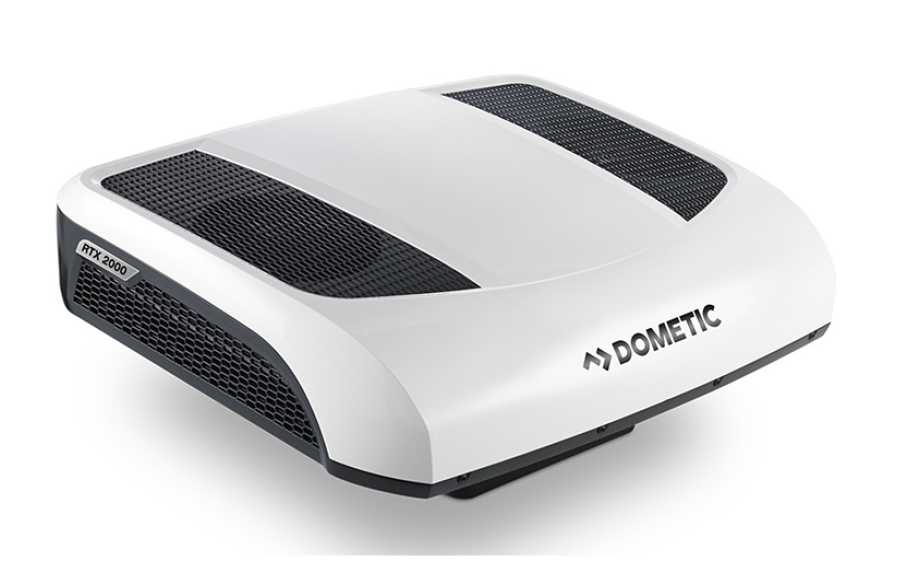
Dometic offers the RTX2000 A/C that is rated at 6,800 Btu and is supported by a variable-speed inverter compressor that makes it unnecessary to connect to an independent inverter that’s installed in the RV.
You’ll need a good-sized battery bank and solar set-up to run the RTX2000 for longer periods of time, but these days, that type of off-grid power supply is easily attainable — and becoming more common. The Dometic unit has a quick cooling mode and a 70-dB noise level.

If you search the Internet, you’ll find other brands of 12-volt DC air-conditioners, but these unknown brands may not have a proven track record. No doubt future development of DC powered air-conditioners will go into high gear as the market dictates more capable off-pavement RVs to a boondocking-hungry demographic.
Much of the concern about direct discharge revolves around noise. Watching TV under the noise generated by the air-conditioner or, more importantly, trying to sleep under the noise in a confined bedroom space has driven development of much quieter air-conditioners. The Truma Aventa, for example, is super quiet inside and out. Just about all air-conditioner manufacturers today advertise lower noise levels and power efficiency.
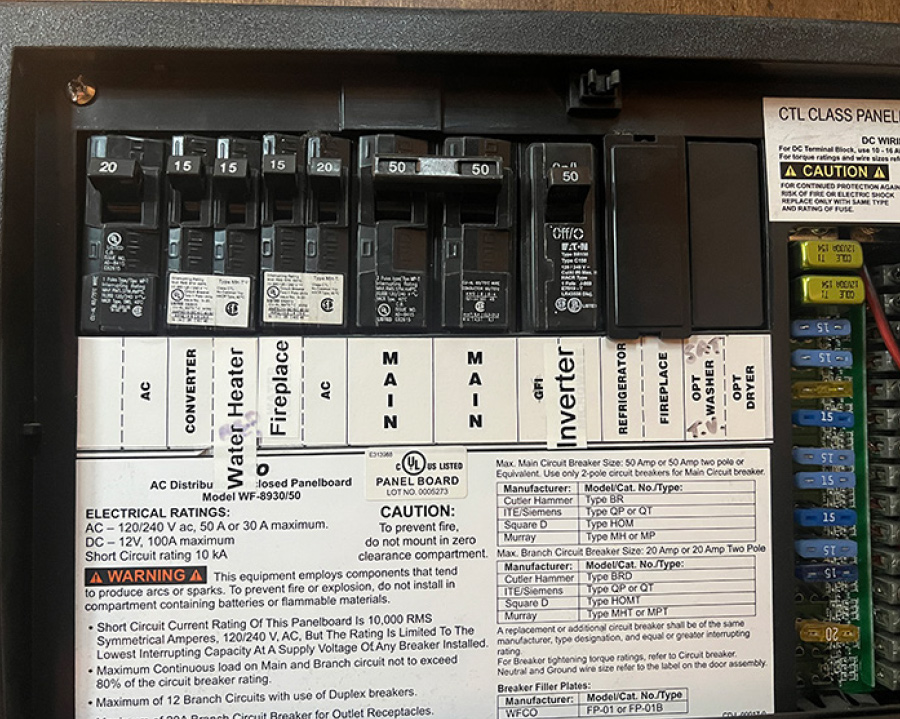
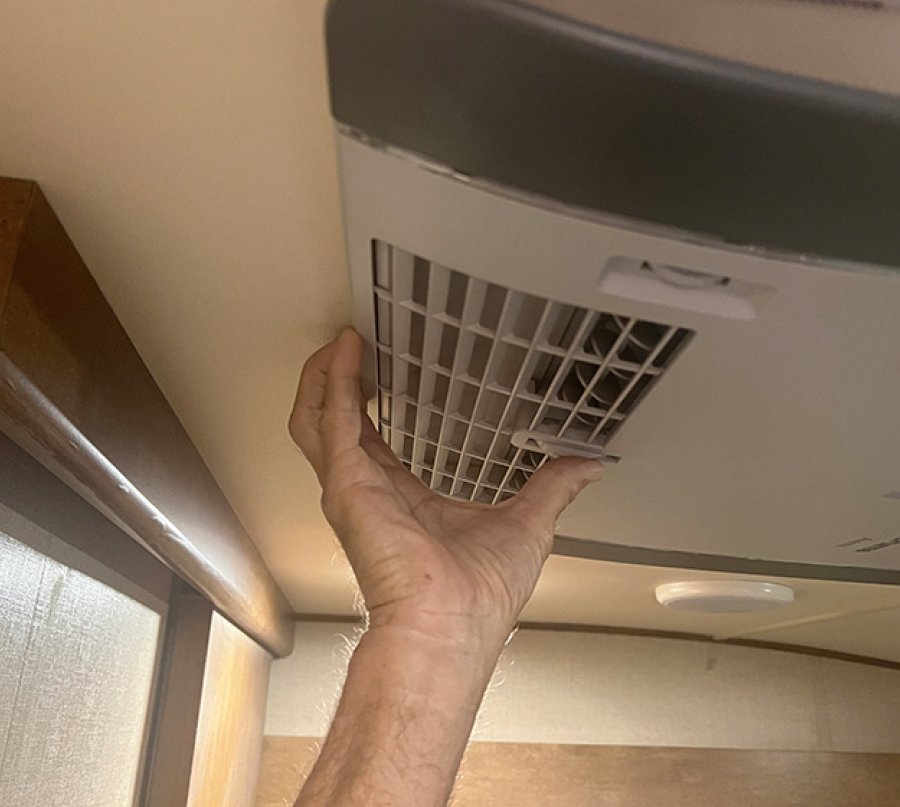
When deciding on a new air-conditioner, a few items must be considered: the type of ADB (ducted or direct discharge), the thermostat connection, whether the new thermostat can accommodate furnace controls, the Btu-rating needed to cool the interior and cost.
One thing’s for sure, there’s a vast variety of air-conditioners on the market today — and technology will continue to improve on power efficiency, cooling capability and, of course, noise mitigation. Trying to track down all the information you need to make an intelligent decision, however, can be frustrating — so we’ve done it for you. The following are the major players in the air-conditioning segment of the RV industry.
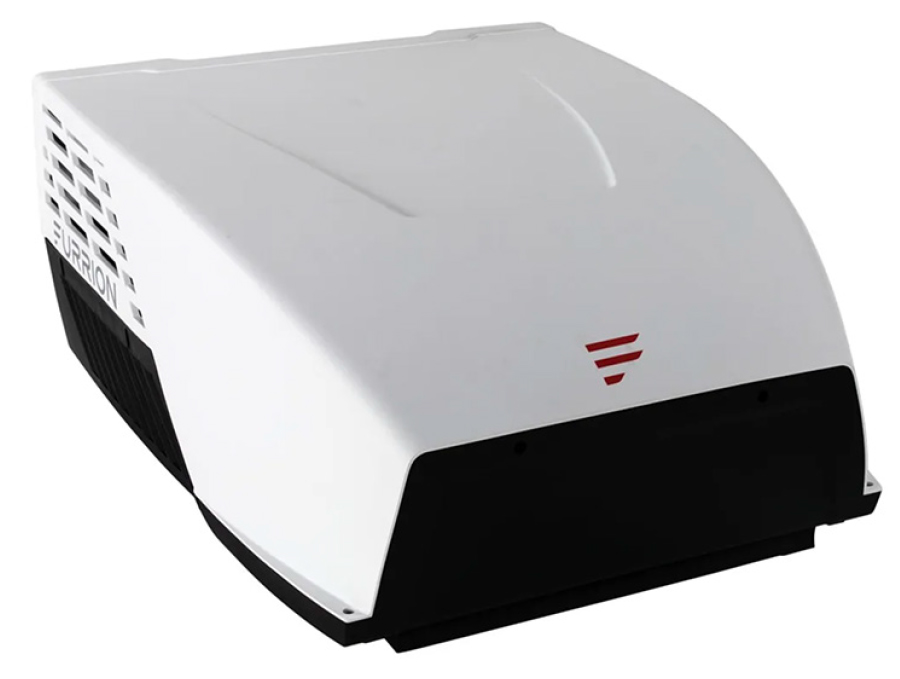
The line of Furrion/Lippert Chill HE branded air-conditioners offers owners high-efficiency units at typically a lower price point. These air-conditioners are fitted with dual motors — one fan pushes cold air from the compressor, the other keeps the primary fan cool. Other features, like vibration control and resistance to the elements — including rough roads — allow Furrion/Lippert (store.lci1.com) to claim 40% better efficiency and 50% higher cooling capacity, all while running at lower noise levels. The Chill A/C has a medium profile and an aerodynamic roof shroud. Models are available in 13,500- and 15,000-Btu capacities and can be configured for single or multi-zones via manual or electronic controls.
A number of modern-looking and easy-function thermostats are available and the Chill series air-conditioners can be upgraded with plug-in heat-pump assemblies. With the heat-pump feature, the air-conditioners can be set from 60 to 86 degrees F for maximum comfort.
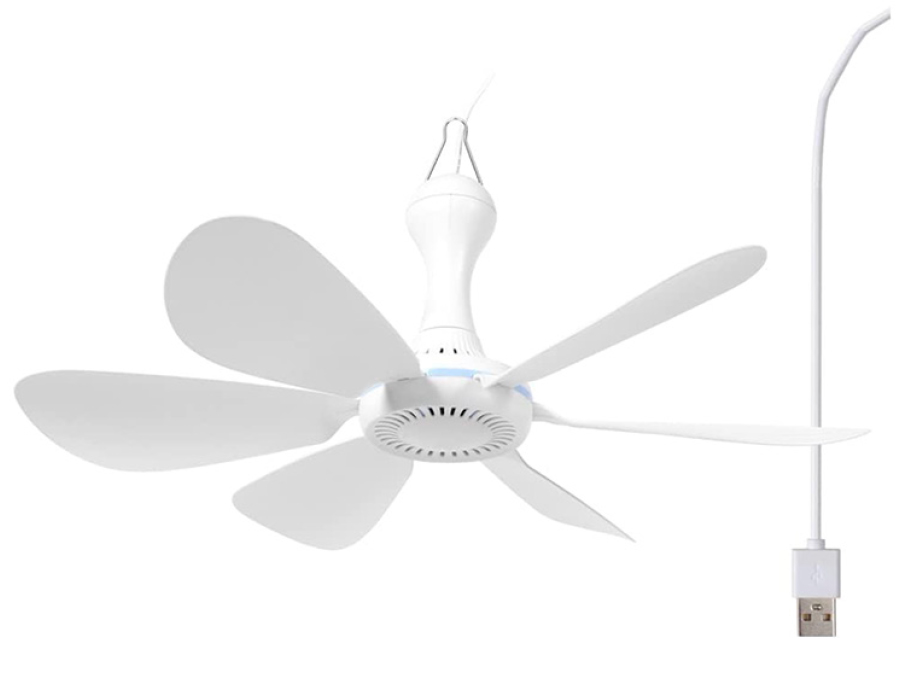

If you need to move some air around, Camping World’s (campingworld.com) O2 Cool 10-inch fan can be powered by the internal rechargeable batteries, 8-D cell batteries or via adapters for 120-volt AC and 12-volt DC service. It’s perfect for boondockers or when a little help is needed distributing cool air from the air-conditioner(s). It sells for $74.99.
If you want to stay cool on hot days, start the cooldown process early in the day and experiment with running the individual air-conditioners. Of course, power availability dictates the use of multiple air-conditioners but experimentation with RV placement on sites, the judicious use of sun/heat deflection materials and properly sized cooling systems will keep the dog days of summer more comfortable — at least inside.
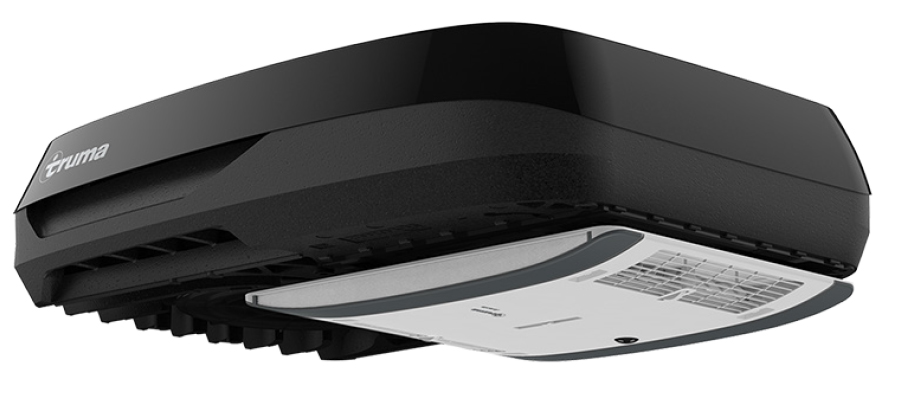
Experience gained as one of Europe’s primary suppliers of RV HVAC systems encouraged Germany-based Truma to modify its products for introduction into North America — and headquarter its operations in Elkhart, Indiana. After bringing to market the tankless AquaGo water heater and Combi and VarioHeat comfort heating systems, Truma Aventa air-conditioners were introduced to the RV industry in 2021. Two models are offered — the Eco and Comfort, with 13,500 and 15,000 Btu ratings, respectively — under the Aventa nameplate and both are benefactors of intense German engineering.
Noise reduction and power efficiency are highlighted in Truma’s innovative approach to RV air-conditioning. From the outside, sound from a running Aventa is almost imperceptible; inside the noise level is amazingly low. To get there, all the components are encased in noise-absorbing foam, while the compressor is mounted on shock absorbers; copper tubing is spaced adequately to avoid vibration. And power consumption is efficient enough to make a big difference in monthly power bills and allow starting/operation on lower amperage.
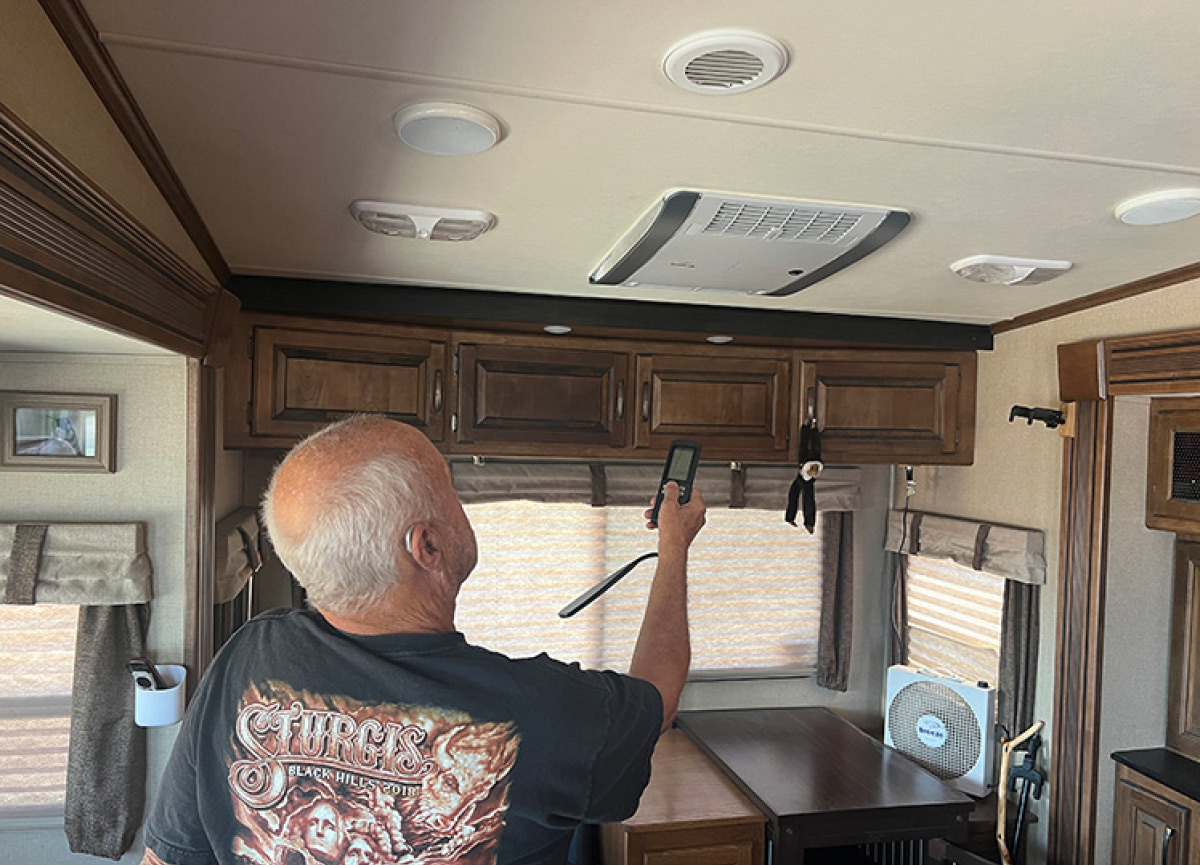
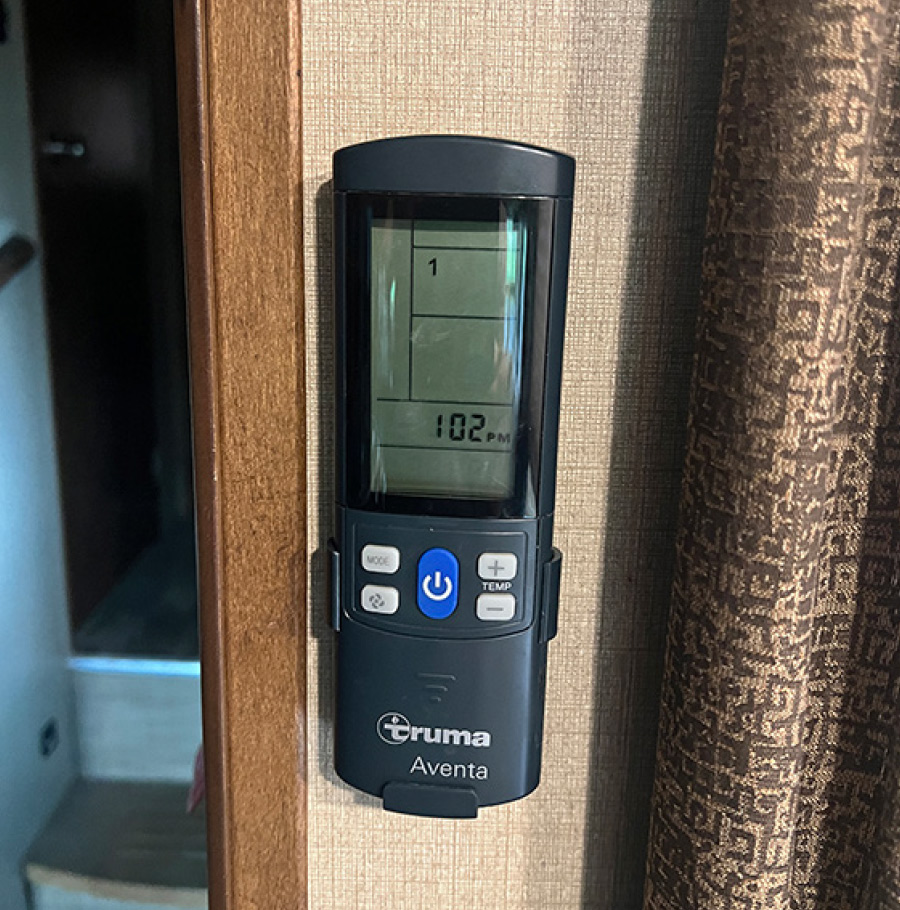
The two models are essentially the same except for the output ratings mentioned above. There are three manual cooling modes and an automatic function, all controlled by a wireless remote that can be mounted on the wall or kept by your side. The elimination of a wall thermostat or panel allows operation anywhere inside the RV. Set temperatures are sensed at the air-conditioner’s return-air intake, above the ADB, which eliminates thermostat placement in areas where the conditioned air is not reached or is impacted to harsh sunlight.
Beyond the efficiency features is a housing that is sleek and nice looking. The exterior shroud is available in black or with a white top half. Also, heat pumps are not available in North America, yet. They are described on Truma’s European website (truma.com); the North American website is truma.net.
One more thing: Aventa air-conditioners are only sold in the aftermarket through certified dealers and must be installed by their Truma-trained technicians.
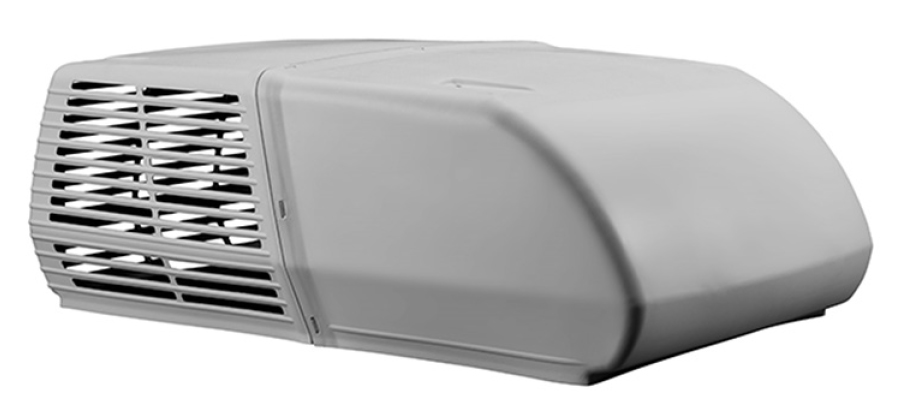

The Coleman-Mach (coleman-mach.com) lineup of roof-top air-conditioners is extensive, offering units for all RVs. There are five series of A/C’s designed specifically for RVs and within each category are multiple choices — no wonder these A/C units are so popular within the RV manufacturing community and the aftermarket. Improvements over the years have focused on exterior profile, energy efficiency and airflow. Models are available in 13,500- and 15,000-Btu ratings, with or without a heat pump.
At the top of the line-up is the Signature Series, which includes the Mach 3 Plus, Mach 8 Plus, Mach 10 and Mach 15. One of the best sellers is the Mach 3 Plus, which has a 13,500-Btu rating and features a large evaporator and condenser coils with raised lance fins to dissipate heat. If you’re looking for a lower profile on the roof, the Mach 10 offers 15,000- and 13,500-Btu models that only add 11 inches to roof line. The Mach 8 Plus is even lower at 8.3 inches tall and features two motors. Look to the Mach 15 for the highest cooling power and best performance in a ducted system.
The Quiet Series concentrates on noise control through three ducted and non-ducted models, while the Soft Start models require less power at start-up and conserve energy when running. Soft Start upgrades are available for existing Coleman-Mach units with the necessary energy saving specifications. Along those same lines, a PowerSaver Series is designed to use less power when operated at the same time as other accessories and appliances.
Air-conditioners atop RVs slated for more aggressive adventures or just end up on very rough roads will benefit from the features afforded by The Roughneck Series. Here the components are fortified to handle rough treatment while providing the same level of cooling performance in a 13,500- or 15,000-Btu A/C. Available in Ultra Low (8.3 inch) or Medium (13.8 inch) profiles.
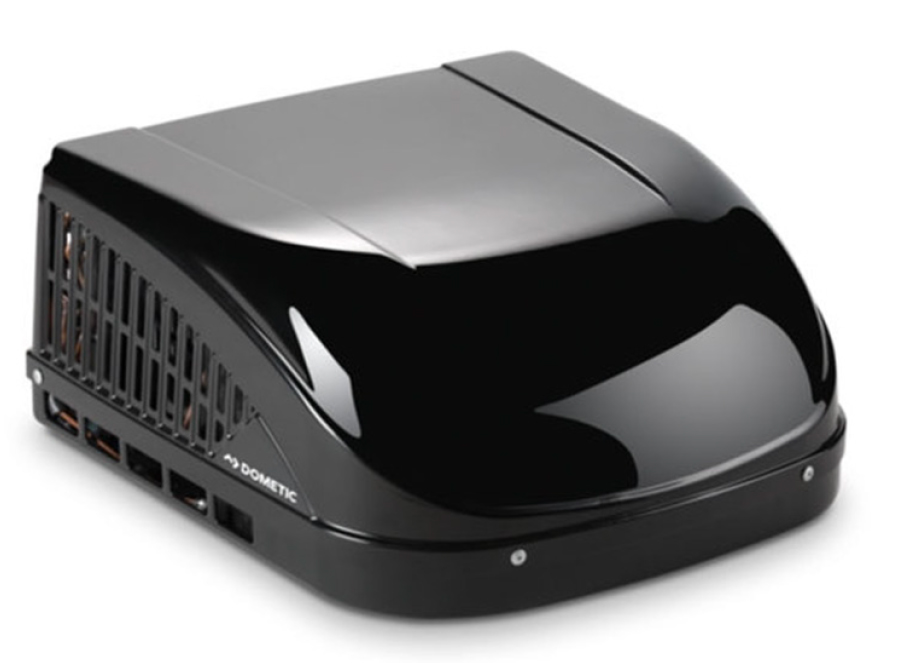
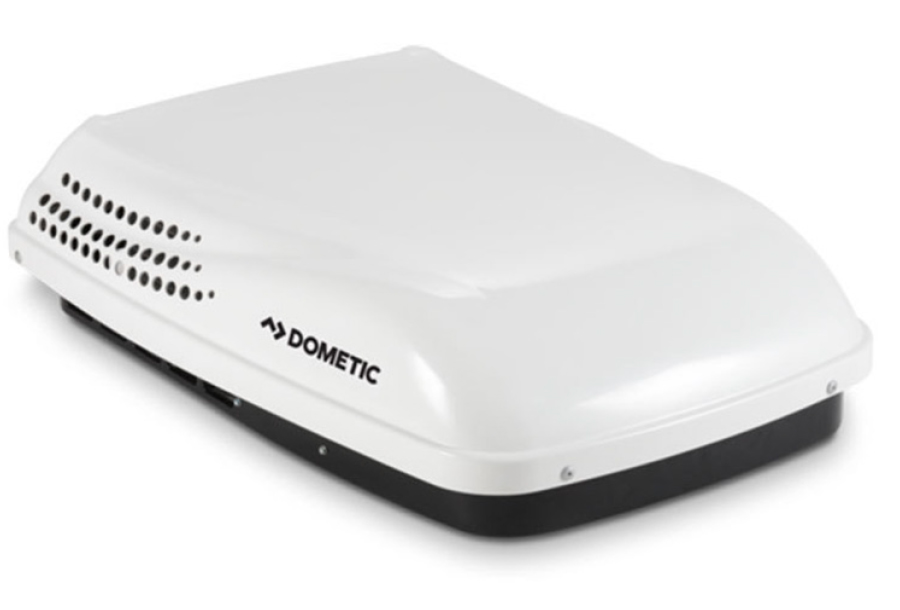

One of the most popular models in the Dometic (dometic.com) A/C lineup is the Brisk II Evolution High Efficiency. It has a standard profile and can be installed in a ducted or direct-discharge configuration. It’s 19% lighter than previous models and the components are in EPP foam for weight reduction and cooling efficiency. It’s available in 13,500- and 15,000-Btu outputs with or without a heat pump option.
The Blizzard NXT is a mid-profile unit with company-line features, including vibration isolation to minimize compressor noise. Its aerodynamic design helps smooth out roof-top aesthetics, but if you want to reduce the profile farther, the Penquin II only adds 10 inches to the roof height. Dometic’s Penguin II can be ordered in 13,500- or 15,000-Btu models, with or without a heat pump; ducted and non-ducted models are available.
Owners of smaller units, like a pickup camper or short travel trailer — or even a tent trailer — will enjoy how the lower profile looks on their rigs.
More recent is the introduction of the Freshjet 3, which can be configured in 13,500- or 15,000-Btu sizes, ducted or non-ducted. Dometic touts the Freshjet 3 as having a 13% higher cooling capacity, 15% more airflow and a reduction in noise by 4dB. And it is said to use 28% less refrigerant.
Dometic’s Atwood-branded AirCommand is rated at 13,500 Btu, but the company claims the dual-motor design provides a 16,000-Btu performance equivalent. The internals are said to deliver cooler air with less power, while controlling noise levels. The AirCommand has a heat pump and set up for ducted air distribution.
Back in the 1970’s we used a Recair roof-top evaporative cooler on our RV and boat. We frequented areas where the humidity was low and this unit did a great job keeping the interiors comfortable, using only battery power and water. Today, that unit is branded the TurboKOOL Evaporative Air Cooler and has been upgraded to modern standards. For one, it uses a non-biological filter, which resists bacterial growth and smell, and weighs only 16 pounds. It provides 750 CFM airflow using only 4.6 amps of 12-volt DC power.
Included with the ceiling assembly, which looks similar to a typical A/C ADB, is a ½-inch Tee fitting and 24-feet of ¼-inch tubing for tapping into the RVs freshwater plumbing system. In the old days, many owners simply ran the tubing up the sidewall and to the roof, which was pretty ugly. It’s best to take the time to route the tubing internally to the roof through an existing raceway. Anyone who has ever run wires for a solar system or other roof-top accessories will know exactly what to do.
Cooling is provided via evaporation of the water that is sprayed on a porous cylindrical filter where dry air is forced through. Under prime conditions, the TurboKOOL unit can reduce inside temperatures 20-30 degrees. Evaporative cooling is not recommended when humidity reaches and exceeds 75%.
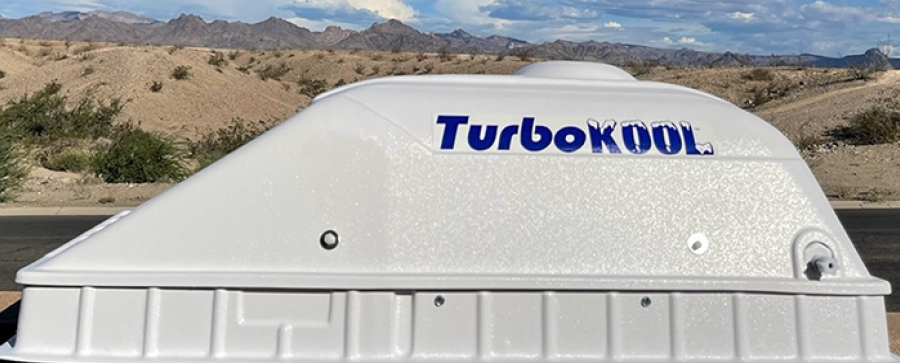

There are dozens of free-standing evaporative coolers on the market; some RV stores, like Camping World, even carry a few. While these units can provide a lot of cool air and take down inside temperatures substantially, keep in mind that noise may be louder than expected. The Internet is also packed with personal evaporative coolers (many times mis-described as air-conditioners) that can be placed nearby — or even on a nightstand.
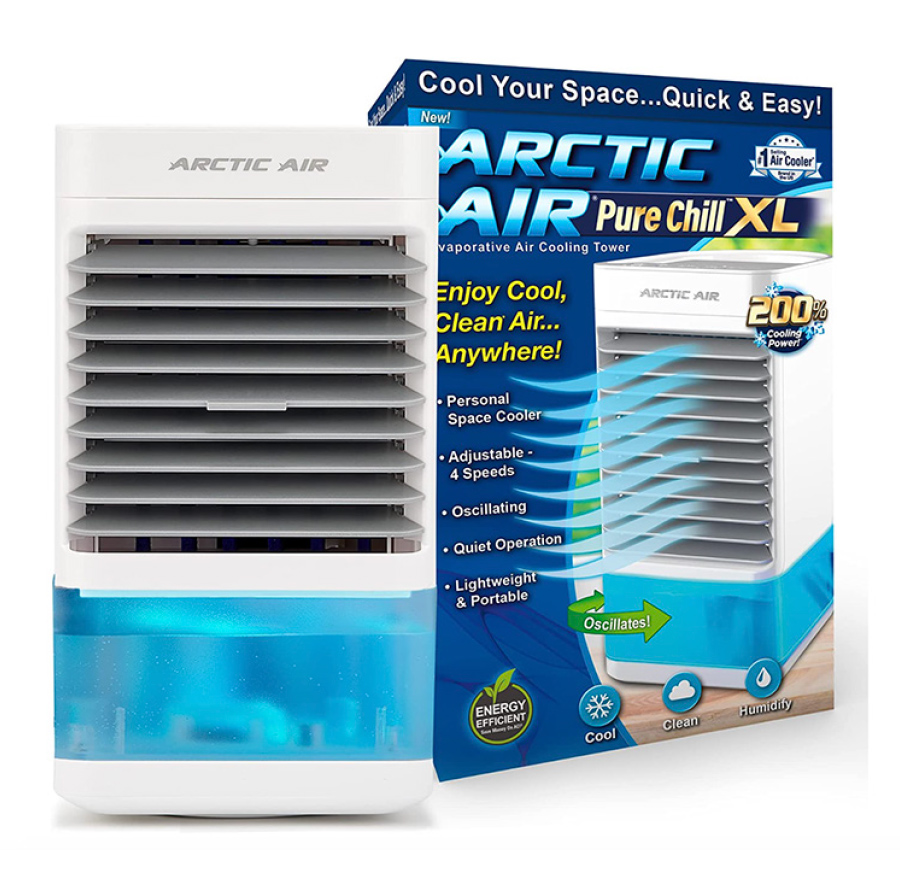
For personal cooling, the Arctic Air Pure Chill XL Evaporative Cooler (on page 32) has mustered decent ratings, but don’t expect miracles. These 6-inch-plus, cube-type coolers will blow cool air on your body or face when placed nearby on a table. This brand, like most of the others, cools air via water evaporation — think of it as a mini evaporative cooler.
The Arctic Air Pure Chill is said to be able to run for 16 hours on one water filling and has four speed settings. The quiet fan sound has been compared to white noise by users. The cooler is powered by a 120-volt AC adapter with a USB connection. Amazon sells it for $49.95 — and there are dozens of other personal coolers online.

Feature-rich RecPro (recpro.com) RV air-conditioners are available in standard and low-profile configurations and are offered in 9,500-, 13,500- and 15,000-Btu versions. The top-of-the-line 15K Quiet AC Unit with Heat Pump and Remote Control is compatible with ducted systems and is said to emit only 59.1 dB sound levels in high-speed mode. Other models are offered for direct discharge of cool air.
Emphasis on power efficiency, humidity control and room-temperature sensing are all part of the benefits touted by RecPro. This model also has a built-in soft-start feature. Black and white exterior shrouds are available, and the remote control eliminates the wiring exercise to a wall thermostat. The unit fits in the standard 14- x 14-inch roof cutout for those thinking of changing brands. Controls cannot be tied into furnace operation.
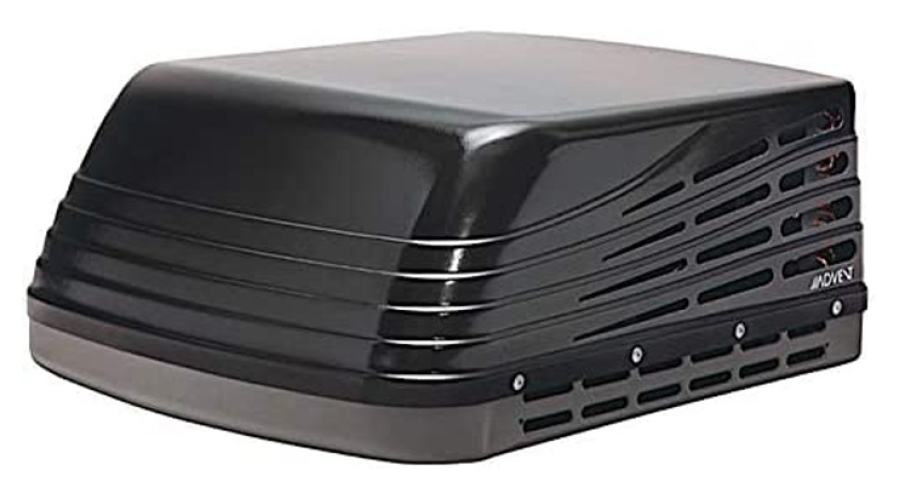
Two roof-top Advent models are offered by ASA Electronics (asaelectronics.com) with common cooling capacities. The ACM135/B is rated for 13,500 Btu, while the ACM150/B has the higher 15,000-Btu rating. Both models are designed for ducted or non-ducted installations via the standard roof opening (may require an adapter kit) and an extra-thick seal gasket, and the ACRG15 ceiling assembly has a large louvered grille for a quick cooldown.
A condensation dispersion cooling system eliminates water run-off, and a heat strip can be added to take the chill out on cool days. The four-wire digital thermostat can also control the furnace.
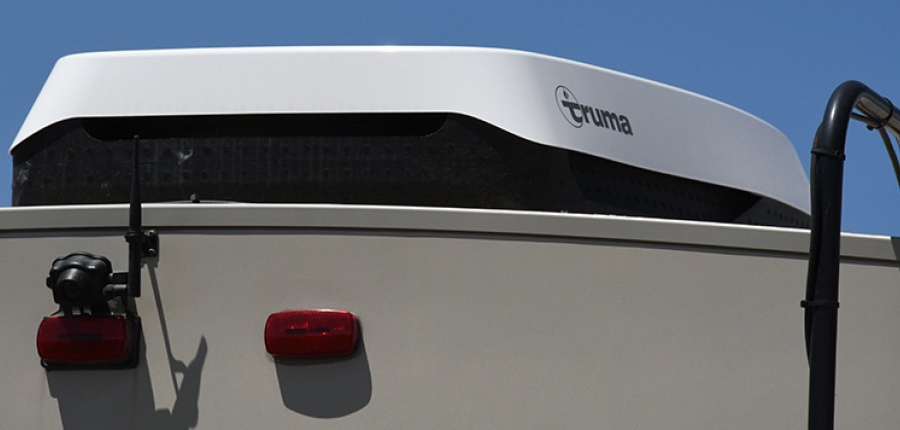
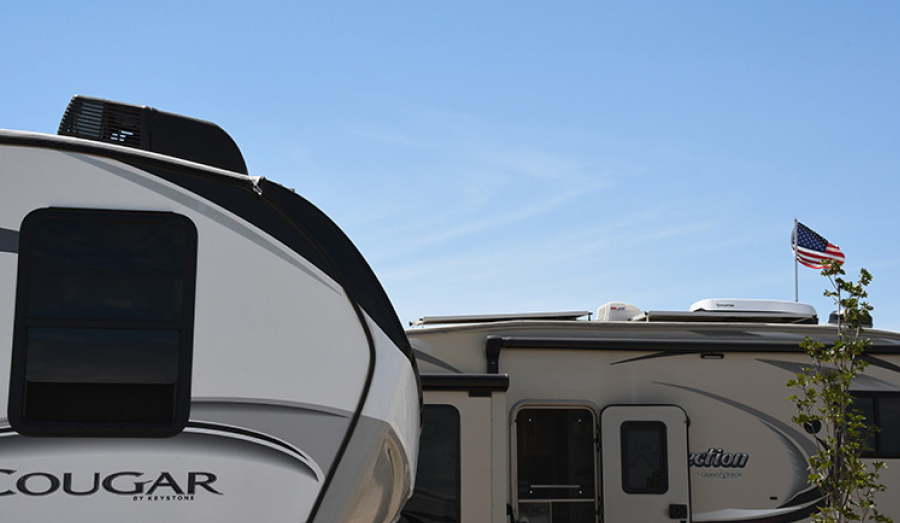
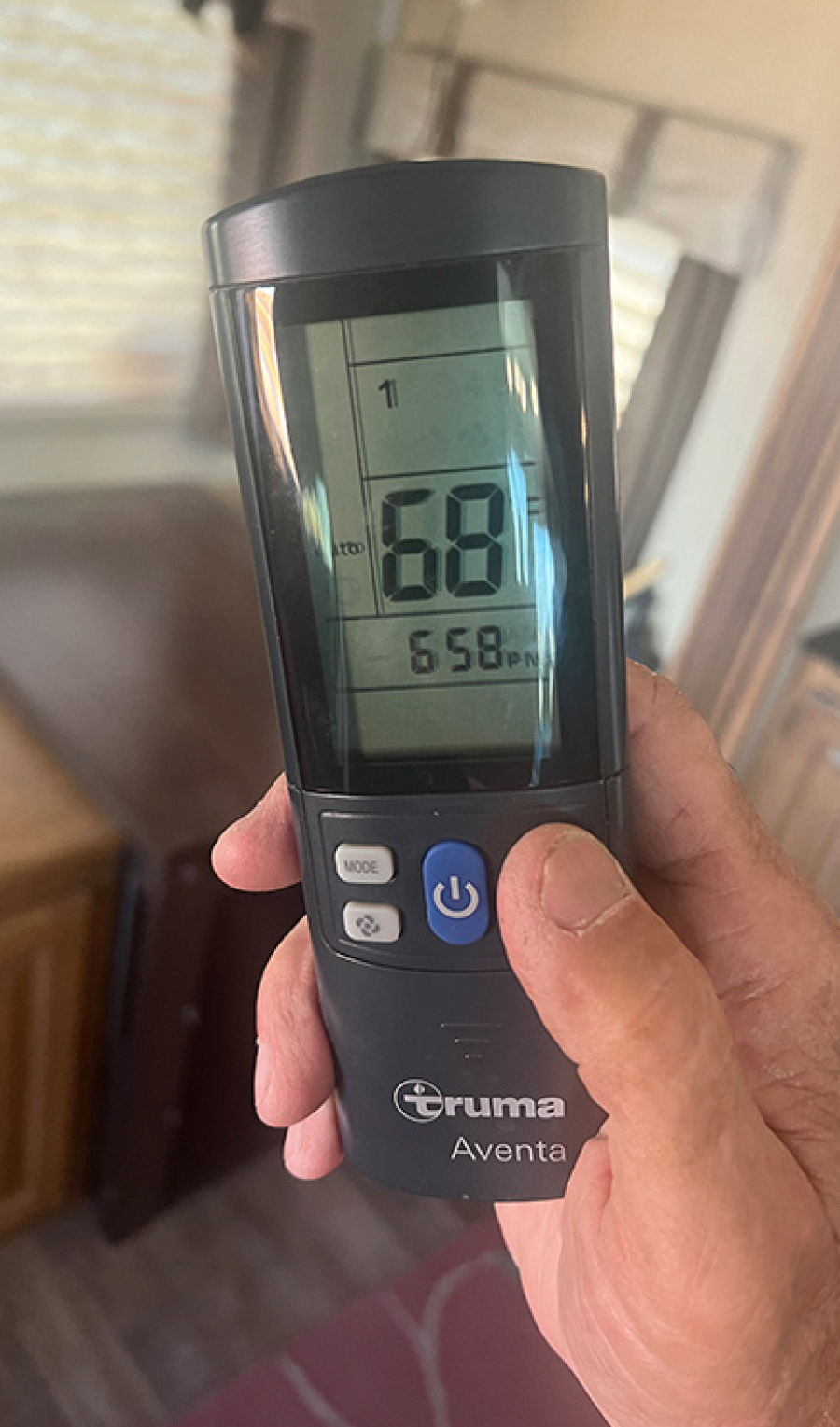
A big test for any air-conditioner is how fast it cools down the interior after traveling all day with the RV locked up tight. When 50-amp power is available both units are set on Auto and the temperatures set at 62 degrees F, once set up in the park; each A/C has its own remote. Initial cool down takes about 30 minutes in temperatures above 90 degrees F inside. From there, the set temperatures can be raised to maintain personal comfort level. Usually one A/C is turned off within an hour, unless outside temperatures are above 95 degrees F. Comfortable conditions (not super cold) can be maintained inside using one A/C in temperatures up to 100 degrees F, as long as it is turned on early in the day and a portable fan is used to move the air more freely.
Power Efficiency
One Aventa can run on common household, 120-volt AC (15-20 amp), power as long as other high-draw appliances are turned off. Testing revealed that one A/C could be operated on a Honda 2,000-watt generator, although it was at full output and ran through gasoline quickly — not an optimal situation and not recommended; a 2,500-watt or larger generator is a better choice for running one A/C. If hooked up to 30-amp power, one A/C can run while cooking in the microwave and powering a wine cooler.
Noise Level
Suffice to say, noise is not an issue. The TV in the living area can be heard while the Aventa is on high and when maintaining a lower fan speed is amazingly quiet — the portable fan is actually noisier. Most visitors are astonished that the A/C (on low) is even running. Of course, the direct discharge A/C in the bedroom is louder, but once the initial cooling is accomplished and the fan speed reduced, the sound is almost like white noise. Outside, the A/C is barely perceptible. At night, unless the temperatures outside are extreme, the A/Cs are turned off. If it gets warm in the bedroom, the remote can be used to turn on the A/C for 15 minutes or so to cool down the area.