
o one brags about how much fun it is to dump the holding tanks, but it’s a necessary evil if you’re going to be an RVer. If you spend most of your time in RV parks with full hookups, the process is somewhat more tolerable, but those of us who like primitive camping have a whole other set of parameters to deal with when it comes to waste management.
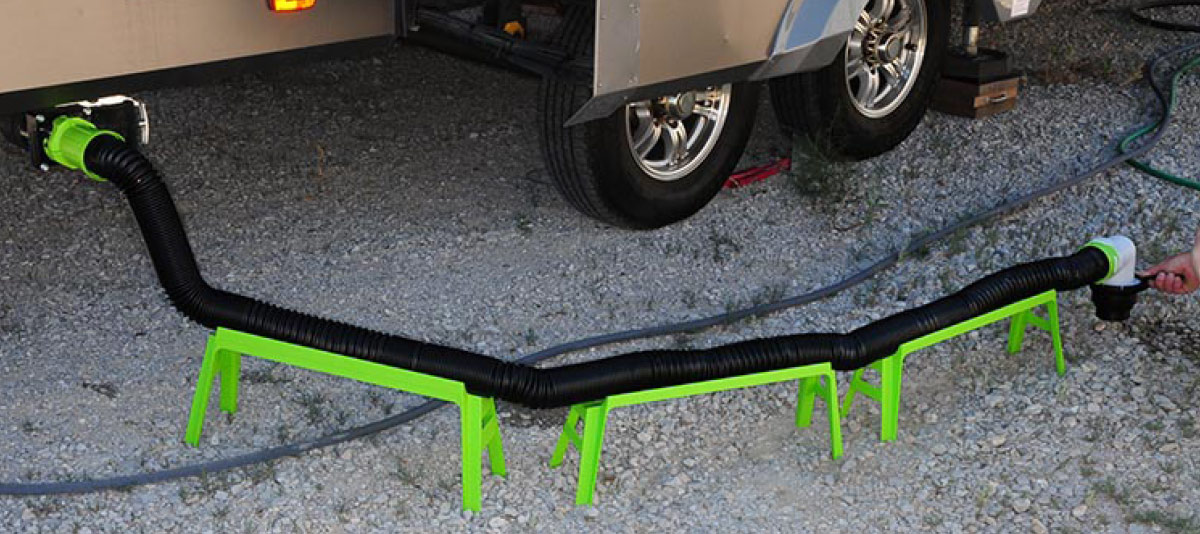
Using the right equipment will make your stay more pleasant and there is plenty on the market to choose from — just don’t substitute quality to save a few bucks. High-quality sewer hoses, preferably those that will “stretch” out and retract into shorter lengths, are typically easier to handle. Screw-on fittings are much more convenient nowadays, but always carry a few hose clamps just in case they decide to leak at some point.
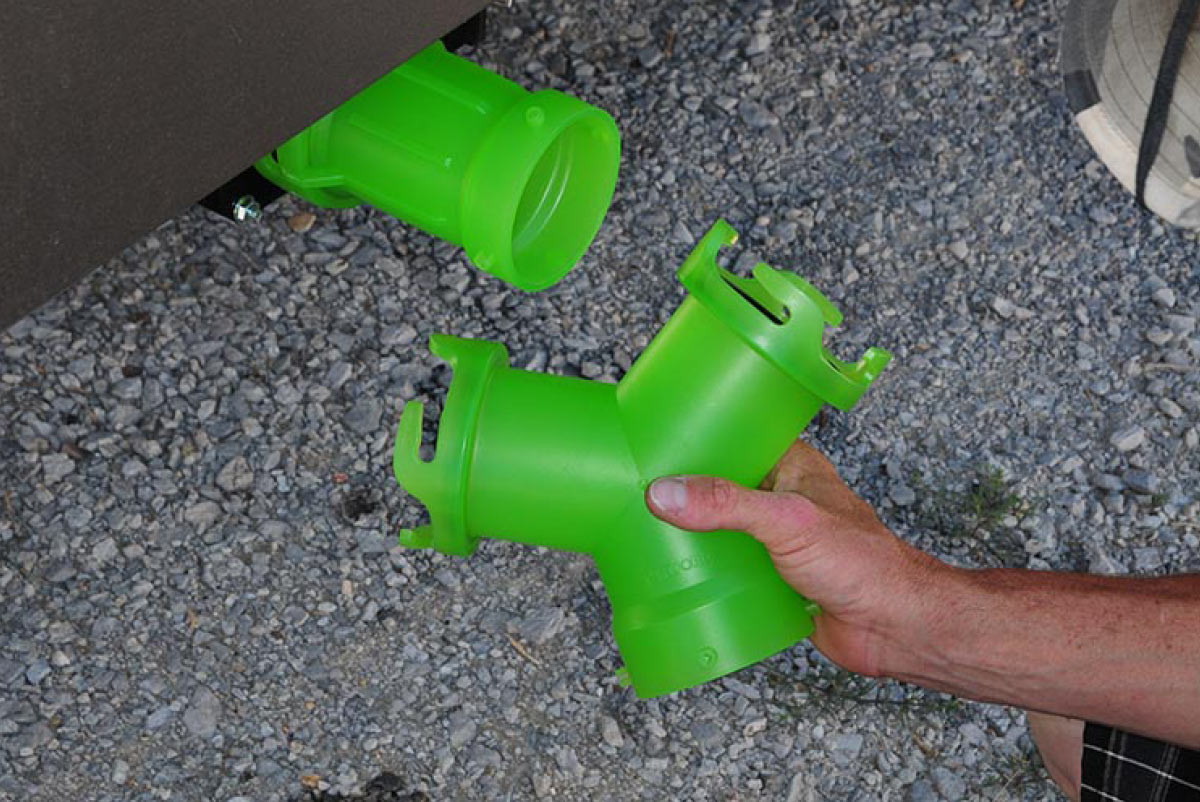
Sewer hoses come in various lengths, but buying two or three 15-footers and maybe a couple of 5-foot sections (if you have the storage capability) is more versatile. Fittings that allow for connecting the hoses are available at most RV supply stores and Amazon. Having the assortment of hoses gives you more hook-up options. There’s no universal placement of the sewer hookup, so you should be prepared to reach long — and even really short — distances to the RV termination pipe. Having too much hose can be just as inconvenient as not having enough to reach distant hookups.
Most RV parks require a tight seal at the sewer connection and there are a number of adapters to make this happen. Step-down threaded fittings, like the Thetford Titan Revolve (thetford.com) are designed to fit into the five most common threads found in dump stations and RV park hookup points. The Titan fitting is part of the company’s premium hose kit or can be purchased separately for around $18. This durable fitting has a built-in handle to ease the process of finding the threads in the sewer station, which many times are bunged up.
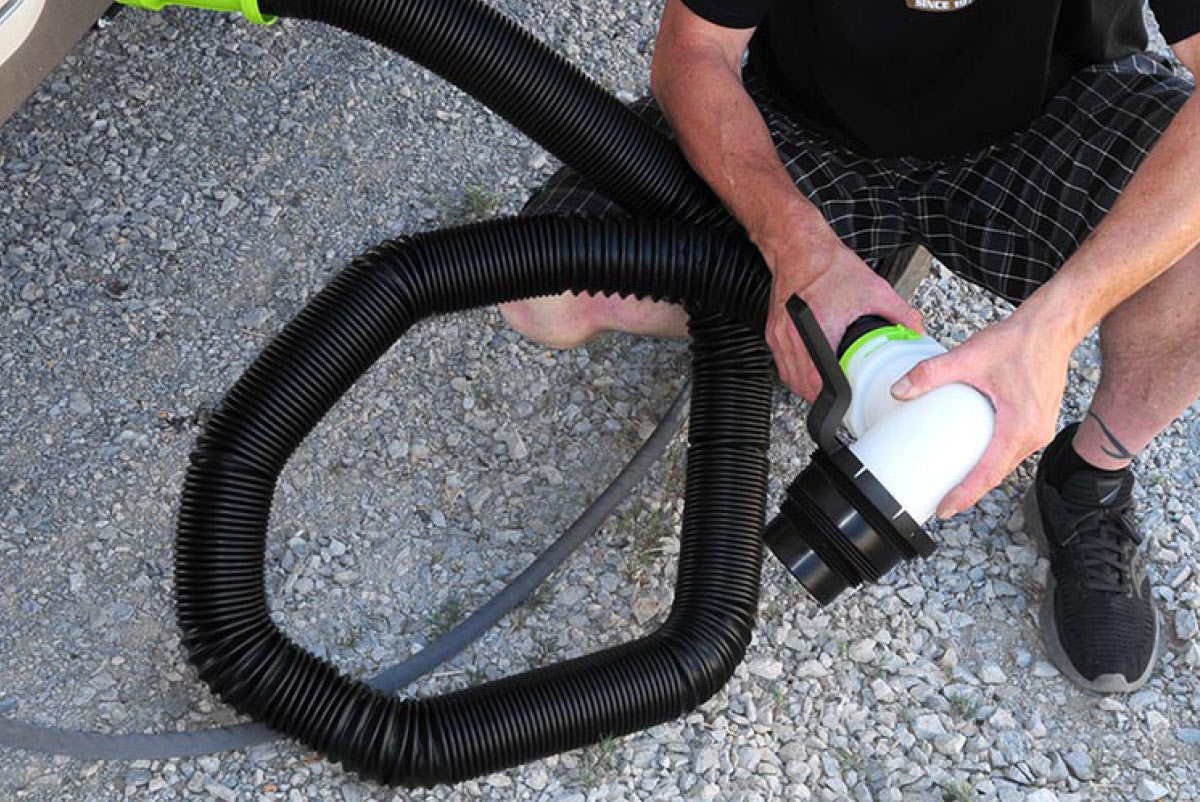
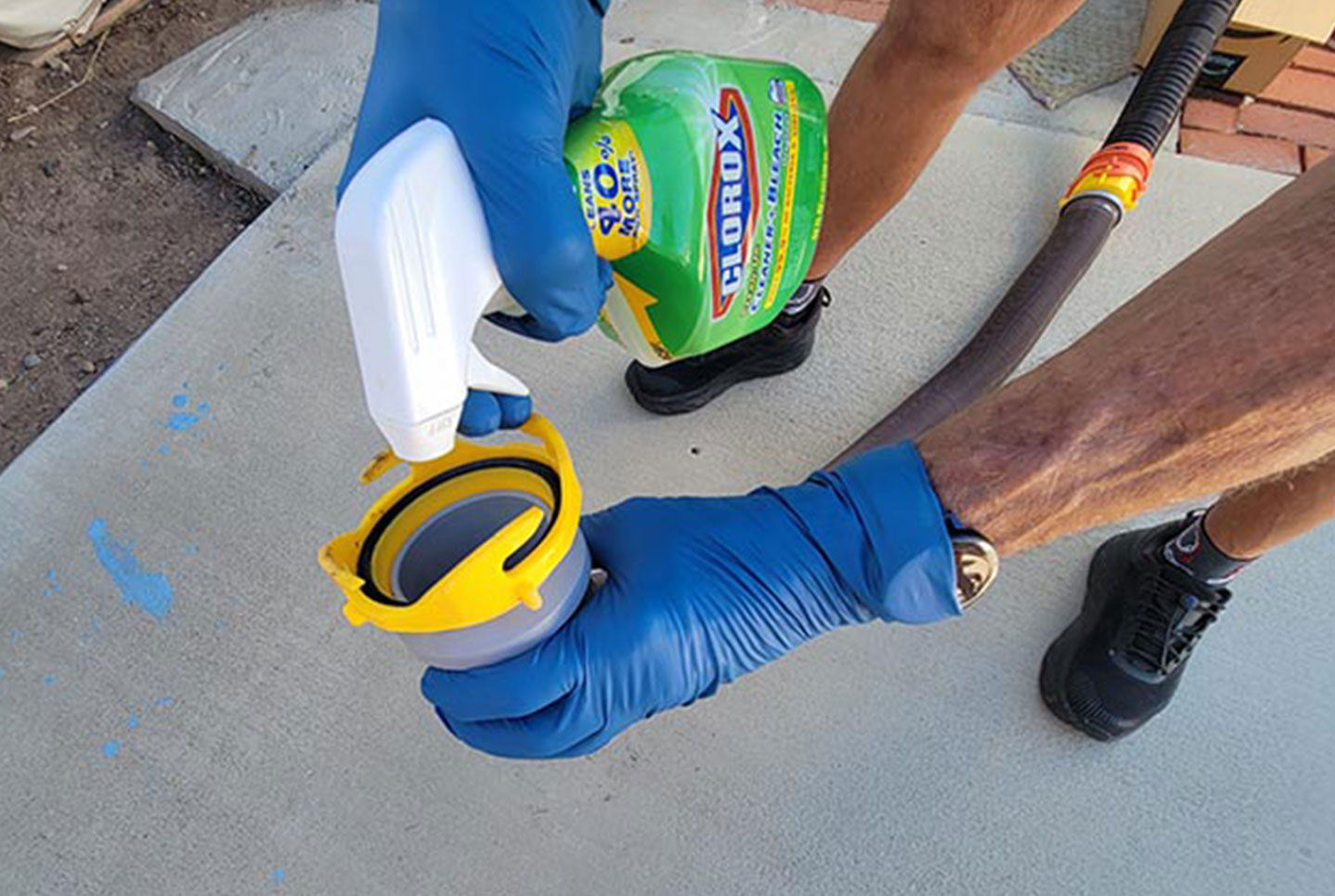
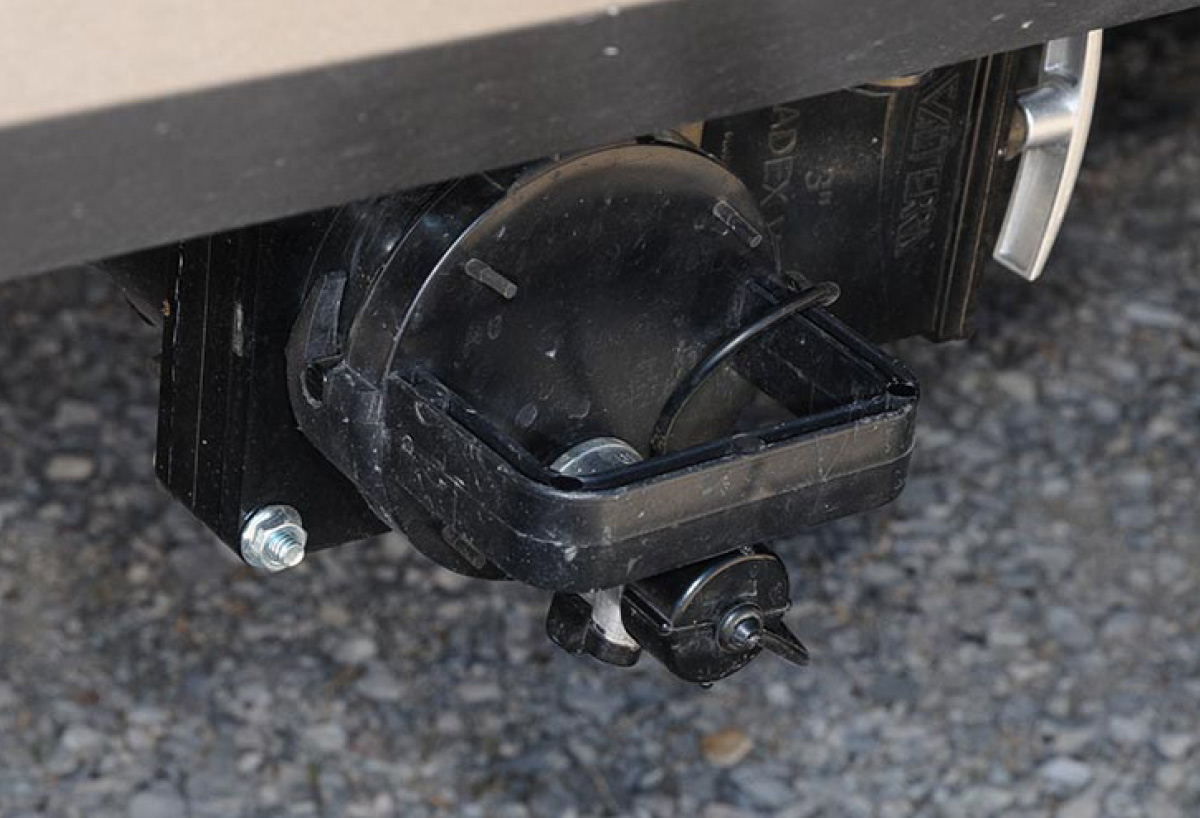
Always flush out the hose after dumping to make sure it’s clean enough for storage — and don’t store sewer hoses with water hoses. Spraying the ends of the sewer hose and fittings with Clorox Clean-Up Cleaner + Bleach will sanitize these components for handling, although you should use throw-away gloves to prevent infections. Allow the hose to dry somewhat before storing (if possible) and seal the ends with bayonet caps, like those offered by Thetford and Camco. Camco also makes a fitting that attaches to a water hose and the sewer hose for flushing before storage. Make sure you only use a dedicated gray water hose for this process and attach an anti-backflow fitting to make sure contaminated water does not reach the spigot.
Enthusiasts who frequent primitive locations do not have the benefit of dumping their tanks in a normal manner. Tote tanks can really come in handy when boondocking for a longer period. These are portable tanks that are designed to be hooked up via a short dump hose so that waste can be transferred from the holding tanks. Once the tote is full, it’s transported to the closest dump station and off loaded.
The standard Titan 2-wheel tote shown on these pages is equally as stout but lacks some of the bells and whistles. It still has the pre-attached dump hose and can be towed to the dump station. All of the models have a AutoStop Level Gauge to prevent overfilling — which can be really nasty — and a large wash-out port. These tanks are available in 21-, 27- and 35-gallon capacities. Tote tanks range in price from around $170 (street price).
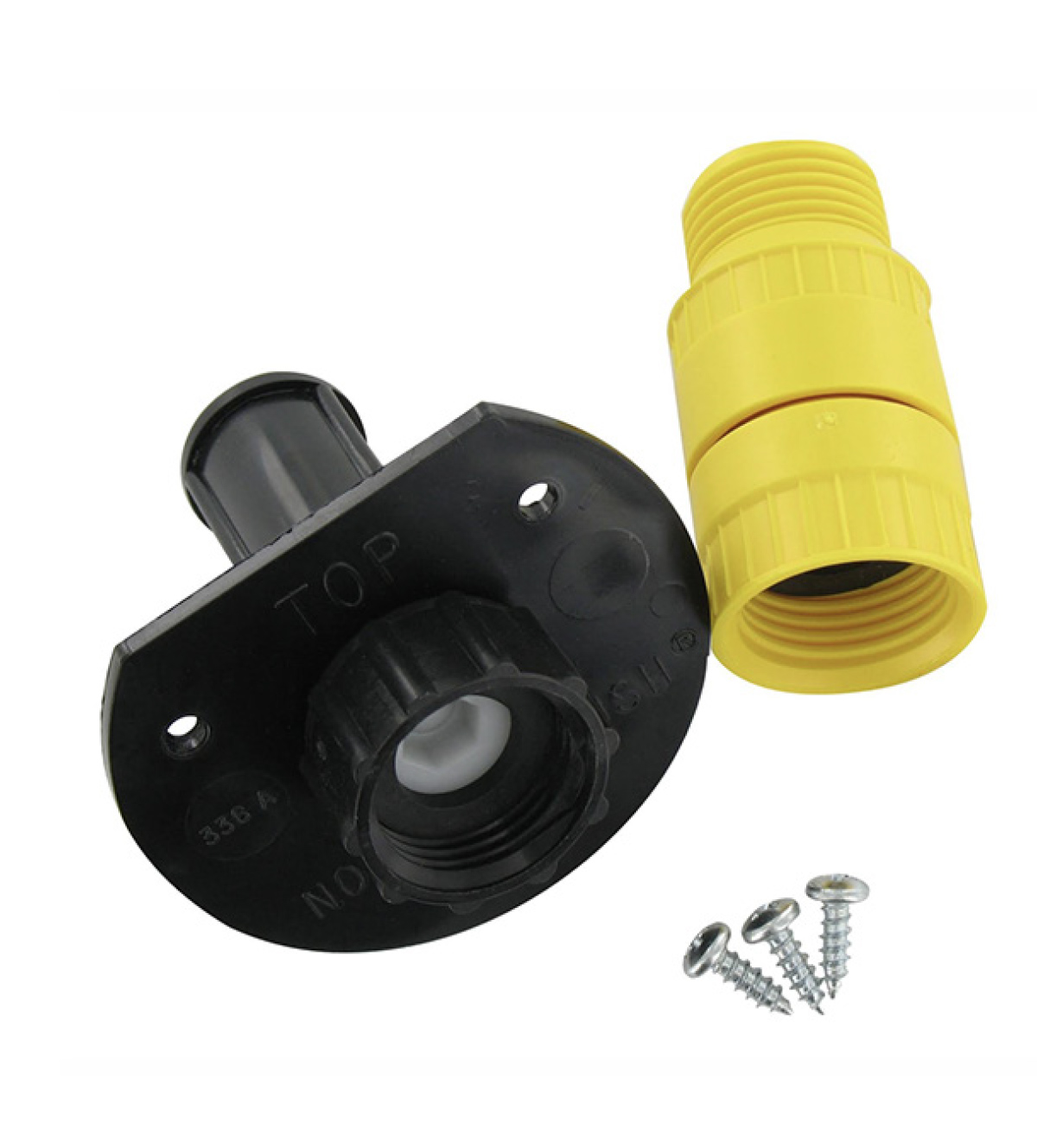
Speaking of flushing, keeping the holding tanks clean will prevent a build-up of solids so the waste can flow smoothly and with enough velocity purge the tanks properly, which helps prevent monitor sensor failure and keeps the stink at bay. Many manufacturers provide built-in flushing fittings for the black tank, but rarely for a gray tank. That can be remedied if you have access to the side of the tank and with the purchase an after-market unit to install into your tank permanently. One favorite product is the Valterra No-Fuss Flush (valterra.com) that can be installed easily on the tank; it’s available at just about any RV parts store and on Amazon for less than $30. Just follow the directions when installing the nozzle for best effectiveness; an anti-backflow device is included with the kit.
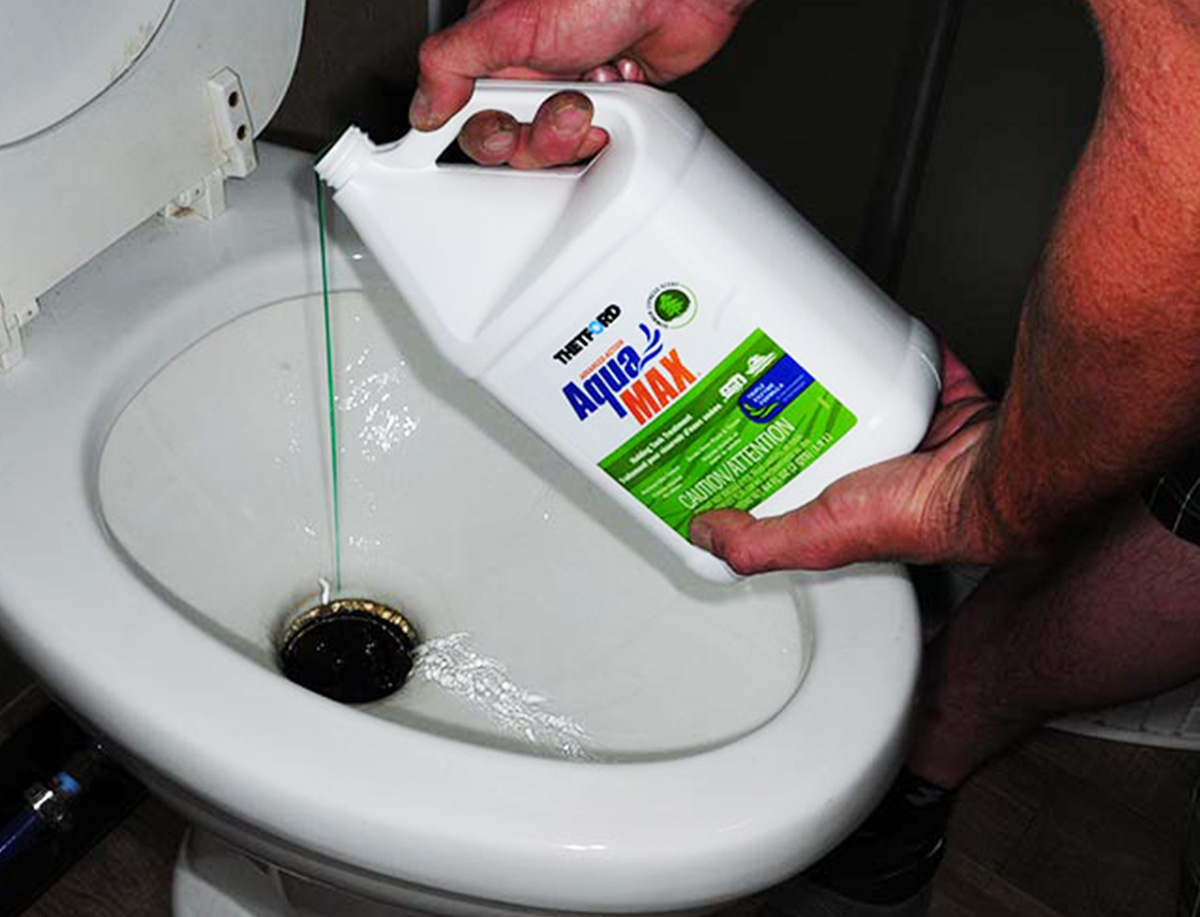
Adding the right holding tank chemicals is one of your best defenses in the quest to break down the solids and neutralizing odor. If you’re out for more than a few days and are camping in hot weather, you might have to add additional chemical to control odors; consider adding chemicals designed for the gray tank, something few owners even think about. If you have the tanks professionally pressure-washed once a year — something we highly recommend — you’ll quickly learn just how gross the gray tank can be.
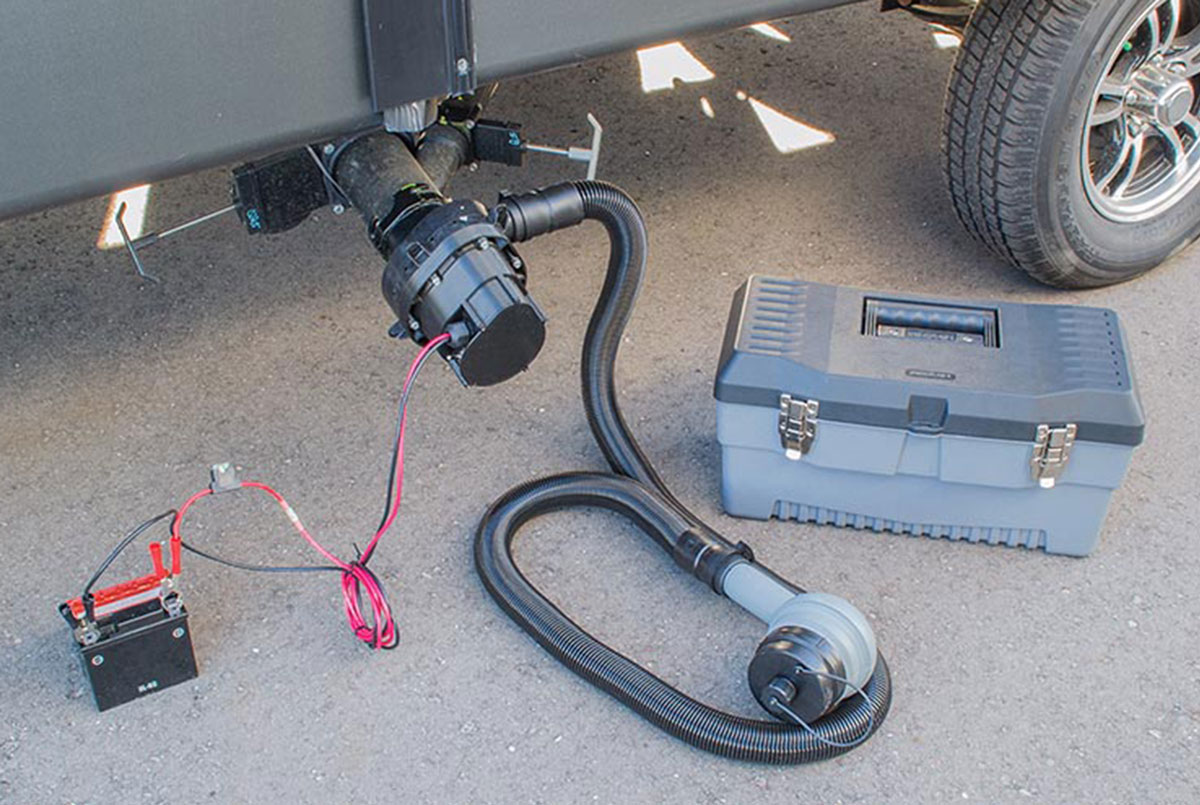
A handy device for those who camp in off-the-grid locations, where a “dump station” may look like a home clean-out, is a macerator, which will grind up the contents and push them up to 150-feet away. Hard-core boondockers have been using macerators for years, providing versatility where a conventional dump hose will not work. In the last few years, some manufacturers have been incorporating a macerator in lieu of the standard termination pipe to which a traditional sewer hose attaches via the bayonet mount. The more popular portable macerators are the Flojet ($272 on Amazon) and the Thetford Sanicon Turbo 300 (around $370 at RV dealers and online). Both units are packaged in handy storage boxes and hook-up to a 12-volt DC source — and hoses can be attached for long distance dumping. Thetford also markets permanently mounted models that use a specially designed 2-inch hose and fitting to move waste to dump inlets.