
Water: An RV’s Lifeblood
[maghub_sidebar]
Home, Sweet (RV) Home: Part 3
Water: An RV’s Lifeblood
Using the right hoses and hookups is only part of the equation. Filters can reduce sediments, improve taste and reduce the possibility of waterborne bacteria and viruses
By Bob Livingston
I

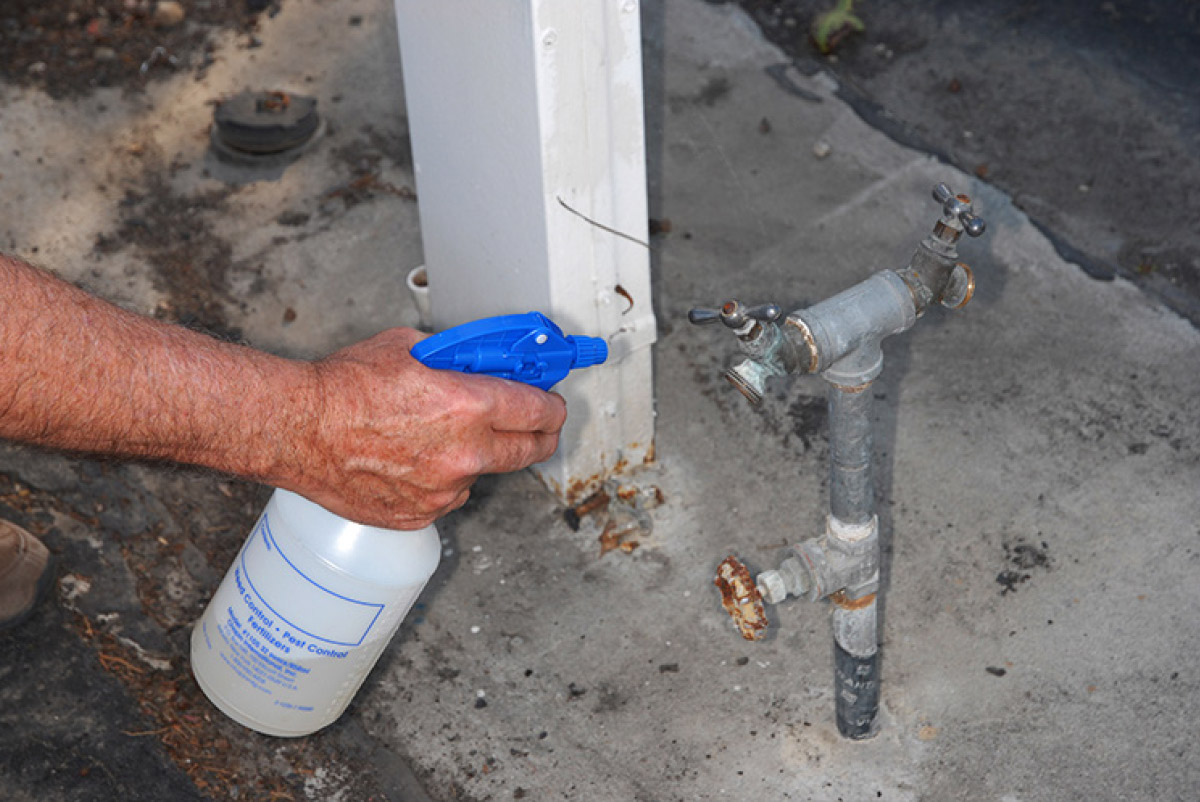
n most cases, the water and sewer hookup in RV parks are in close proximity of each other. There are logical reasons for this, including convenience when building out the sites, but there’s a downside to this arrangement: It’s easy to contaminate the water spigot with wayward waste — especially when the water is used to final flush the dump hose. Before initially connecting a water hose, spray the spigot with at least 70% rubbing alcohol or a mixture of bleach and water.

Always use a hose designed and dedicated for water service to the RV, either via the city hookup or when filling the onboard tank. These hoses, marketed for RV use, are free of polyvinyl chloride, BPA (chemical used for making items out of plastic), lead and other toxic materials. We all drank out of green garden hoses when we were kids, but now that we know better, these hoses should be reserved for draining gray water and/or cleaning out holding tanks. Fortunately, there are numerous hoses — even those not marketed exclusively for RV use — that are clearly marked as safe for drinking.
Before connecting a water hose to the hookup spigot
Before connecting a water hose to the hookup spigot, it’s prudent to sanitize it with rubbing alcohol or household bleach and water. Unfortunately, too many RVers clean their sewer hoses at this same spigot, which can contaminate the water.
For years, most of us have used the white RV/marine hoses, mostly in 25-foot lengths. They work, although most brands tend to get kinked and can be hard to work with when cold. Hoses under the Zero G (Teknor) or Camco Heavy Duty Premium Flexible Water Hose banners are the ones I use for hooking up and adding water. A good combination is to use the 25-foot Zero G from the spigot to the filters and then a 10-foot length of Camco Flexible hose from the filter outlet to the city water hookup in/on the RV. The Zero G hose is super durable and folds nicely into a small container for storage. Zero G and the Camco Flexible hoses are available at RV stores and online.

Water pressure in RV parks can be high enough to burst the pipes and fittings in any RV system, which are designed to handle around 50 psi. Using a pressure regulator will circumvent this problem, but too many of these devices — especially the cheap models and those that come with the starter kits when buying a new RV — can create another problem: low water pressure. That’s because these common pressure regulators cut pressure by reducing flow. A better solution is to use a small residential adjustable pressure regulator and add hose fittings via the use a few adapters. Just about all home pressure regulators are pre-adjusted to 50 psi but can be tweaked as desired.

Many RV parks have water under high pressure
Many RV parks have water under high pressure. Although RVs are pressure tested to 85 psi, sustained high pressure can lead to damaged fittings and fixtures. Always use a regulator that reduces pressure to a maximum of 50 psi; the best ones are those designed for stationary homes. These regulators reduce pressure without reducing flow, unlike most of the RV-specific models on the market, and can be easily modified with common brass fittings.
When you live in a stationary home, water quality can usually be assured or, at least, monitored and corrected if necessary. When you travel, water can be a wild card. Most RV parks have safe water, but in many cases, the taste can be less than desirable. We’ve spent time in a number of parks with exceptionally hard water, which can be less than tasty and leave uncontrolled water spotting. We’ve even had to endure water with too much iron (typically well water), which can wreak havoc on pipes and fixtures, not to mention the terrible smell and awful taste. The remedy is to filter any water that’s hooked up or used to fill the storage tank.

Our filter of choice is made by Clearsource (clearsourcerv.com) and we’ve been using the two-cannister system for many years, which the company has upgraded to a Premier system ($399.99). This newer version features a first-stage 5.0-micron coconut shell carbon block that removes sediment while reducing or even removing volatile organic compounds like insecticides and pesticides as well as solvents, chlorine and chloramines. The second, 0.2-micron filter traps bacteria, cysts, Giardia and e-coli — the stuff than can make you sick.

A 25-foot hose can be rolled up for storage in tight quarters
I’m a big fan of the Zero G hose, which is extremely flexible and strong. A 25-foot hose can be rolled up for storage in tight quarters. I’ve used this hose for almost five years, full time, without any failures. If you want to use a conventional-type hose, make sure it’s safe for drinking water; most garden hoses are not.
We’ve also been using a separate Clearsource rust removal filter in front of the Premier filter system when in areas where rust is a problem. It does a great job of removing the iron from the water, but setting up the system is somewhat unwieldly. To facilitate convenience and easier storage, we upgraded to the three-cannister Clearsource Ultra system ($499.99), which is even more effective.

This three-cannister system, like the Premier two-cannister model, has a solid, powder-coated metal housing and stainless-steel fittings. It’s only 3 ¾ inches longer and a little heavier, but the filter combination offers the utmost in protection. The first stage has a 5-micron filter than reduces rust and sediment; we can attest to the fact that this filter does a very good job of reducing rust, preserving the integrity of the hoses and fittings and preventing deep staining on the toilet bowl and sinks. A 0.5-micron coconut shell carbon block filter occupies the second stage cannister and it improves water taste and smell, while also controlling sediment and removing bacteria, cysts, petrochemicals, mercury, lead, pesticides, chorine and cryptosporidium.

The technology for the third-stage filter, under the VirusGuard nameplate, was developed by NASA and offers advanced protection tantamount to that found in survival and exploration water purification systems. This filter is certified to remove/reduce bacteria like e-coli, cysts like Giardia and, most importantly and uniquely, viruses.

The Clearsource Premier is a big step in improved filtering capability
The Clearsource Premier is a big step in improved filtering capability over the original model, featuring a first-stage 5.0-micron coconut shell carbon block that removes sediment and volatile organic compounds like insecticides, and pesticides as well as solvents, chlorine and chloramines. The second, 0.2-micron filter takes care of bacteria, cysts, Giardia and e-coli contaminants.
Clearsource’s Ultra system is most effective and only 3 ¾ inches
Clearsource’s Ultra system is most effective and only 3 ¾ inches longer than the Premier two-cannister model. The solid, powder-coated metal housing and stainless-steel fittings exude quality. This system offers the utmost in protection utilizing rust/sediment, coconut shell carbon block and VirusGuard filters. The combination removes just about anything bad found in water and does not restrict water flow.
There’s also a WeatherGuard Pro insulated and heated bag ($299.99) that will prevent water freezing down to 10 degrees F. It automatically turns on (120-volt AC power) when the internal temperature drops to 40 degrees F, turning off at 60 degrees. Specific size bags work with the two or three-canister systems and doubles as a convenient carry bag. WeatherGuard totes without the heat function are available for both systems ($150).

Since water quality is a big topic these days, there are a number of suitable filtering/purifying systems for RVs on the market. Always look for solid carbon filters to remove chlorine and bacteria and improve taste. Keep in mind that many systems will not purify the water; filters that incorporate ceramic candles are a viable option to ensure safe drinking water.

Most of the systems are “whole house” products, which means all the water entering the RV is filtered. Independent purification systems routed through a separate faucet, usually in the galley, will also provide safe drinking water. Systems that utilize ultraviolet (UV) and LED technology are relatively new to the RV scene and promise astounding purification properties. The Acuva ArrowMax 2.0 (acuvatech.com) is engineered to remove 99.9999% of bacteria and viruses via the 120-volt AC control box that’s tied into an advanced prefilter. It dispenses water through a “smart” faucet that’s usually mounted at the kitchen sink. This faucet has a ring light at the base that shows when the purification process is active. It’s not cheap, selling for $600, but the peace of mind knowing that the water is safe to drink is worth the money.

The Clearsource WeatherGuard totes
The Clearsource WeatherGuard totes make it easy to move the Ultra or Premier systems from the storage compartment to placement when in service. Hoses can be connected while the filters are in the bag. The WeatherGuard Pro (not shown) adds a heating element to prevent freezing down to 10 degrees F. It plugs into 120-volt AC power and doubles as a storage/carry bag. Last spring temperatures plummeted and my old Clearsource system had to be disconnected and stored in a heated compartment for at least four nights.
Replacement filters are available from Clearsource for both of its systems
Replacement filters are available from Clearsource for both of its systems. While these cannisters use standard size filters, the Clearsource replacement cartridges last longer and offer protection all the way up to expedition grade.
The Canadian-based Acuva Filter uses ultraviolet and LED technology
Water is dispensed through an independent spigot
The Canadian-based Acuva Filter uses ultraviolet and LED technology to sanitize drinking water through a system comprised of a control unit and specialized pre-filter. Water is dispensed through an independent spigot than has a telltale ring light to inform users that the system is sanitizing the water.
Tip:
If you are going to be away from your RV for an extended period of time (i.e., all day) turn the water off at the spigot. You never know when a hose or pipe can burst — whether from intense heat or defective material — and flood the campsite, or worse, the inside of your RV. And, for example, if the toilet valve sticks open (which has happened to us) and the holding tank valve is closed (as it should be), water can overflow the bowl and make an incredible — and smelly — mess.