

The Bucking Stops Here
[maghub_sidebar]
Title of article
Roadmaster’s Comfort Ride Slipper Spring suspension can help make your trailer towing experience smoother and safer
By Chris Hemer / Photos by author
N

o one enjoys the jolting, jarring and bouncing that comes with trailer towing — but most of us have accepted it as part of the lifestyle and just deal with it.

Unlike the tow vehicle, which has a carefully engineered suspension system, most trailers have little more than leaf springs to smooth out the uneven terrain, a “technology” that actually dates back to horse-drawn carriages. The thinking behind this basic set-up is that, since no one rides in the trailer, a suspension system isn’t really necessary — but poor ride quality actually causes bigger problems for trailer owners than just a bumpy ride.

For example, repeated contact with potholes and bumps transmits forces to the structure that, over time, can loosen fasteners and seams. All that bouncing also reduces contact with the road surface, which can affect handling and braking performance. And finally, anyone who has ever towed for hundreds of miles has gotten used to picking their belongings up off the floor. A comprehensive suspension system can help solve all of these problems — and make towing more enjoyable as well.

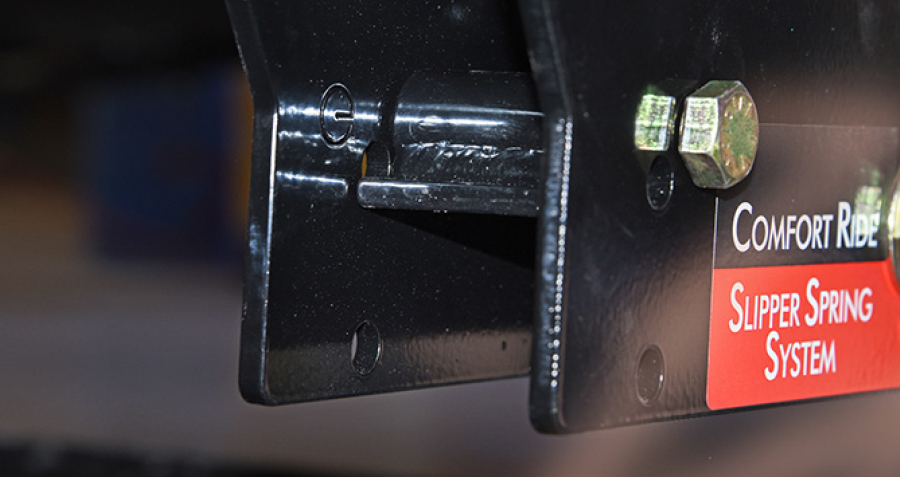
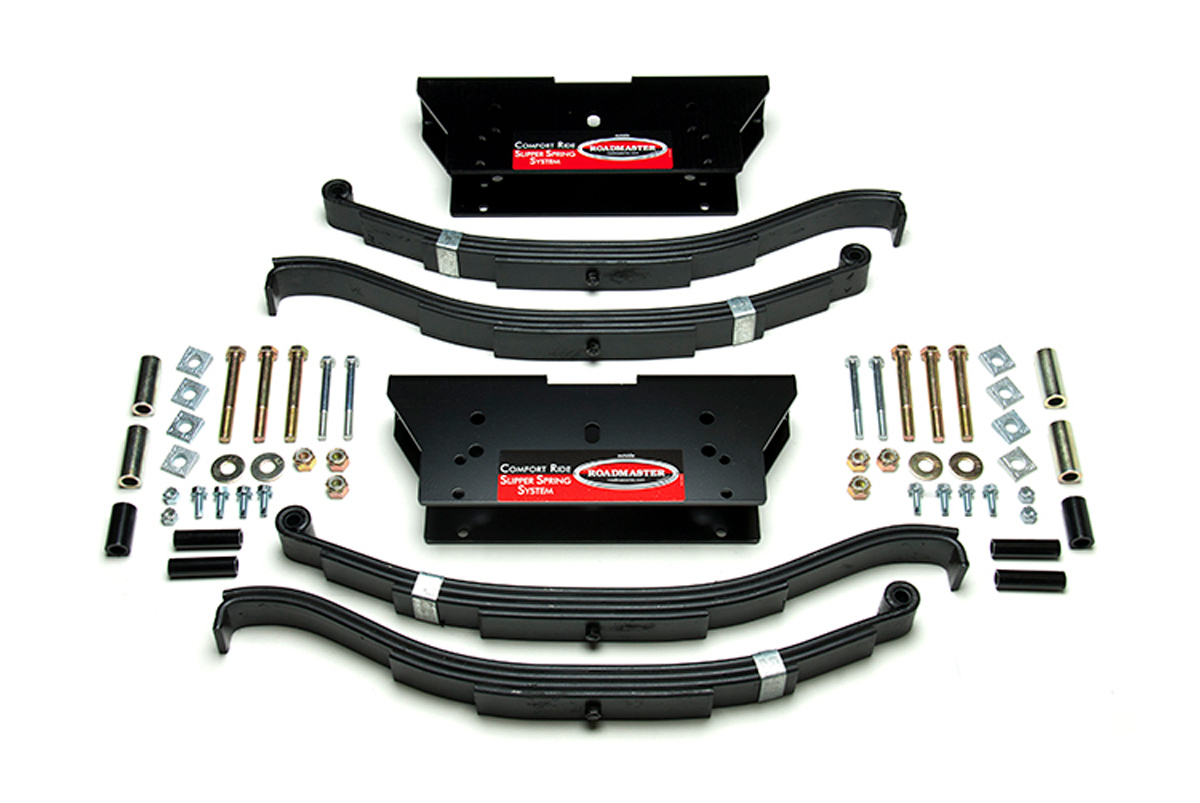
Roadmaster Inc. of Vancouver, Wash., is well-known for its dinghy towing products — which range from baseplates and tow bars to auxiliary braking systems and more — but a few years ago the company introduced its Comfort Ride slipper spring and shock absorber kits for tandem-axle trailers, which can be purchased together or separately. The slipper spring kit is engineered to reduce bucking and bouncing by replacing the equalizer (that triangle-shaped component that the leaf springs connect to between the wheels) with a steel box structure that bolts to the equalizer bracket and to the trailer’s frame. The spring box incorporates rollers and wear plates, which are designed to accommodate the specially designed leaf springs in the kit.

At one end, the springs have a traditional “eye” that bolts to the spring hangers — but the ends that locate inside the spring box have open, curved ends. The curved ends locate over the rollers inside the box, while wear plates locate above these ends keep them properly positioned. As the spring compresses (flattens), the curved ends ride on the roller assemblies, which prevents them from transmitting forces to the chassis and to the adjacent leaf spring/axle. To a large extent, this allows each axle/spring assembly to operate independently of one another, instead of transmitting force to each other through the spring equalizer.
Comfort Ride slipper spring system
Kit
The test trailer was fitted with the Comfort Ride slipper spring system for up to 5,000-pound rated axles (#2560) and the shock absorber kit for 2-3/8-inch axles (#2450). Roadmaster also offers slipper spring kits for 7,000-pound and 8,000-pound rated axles, and shock kits for 3-inch and 3-1/2-inch axles.
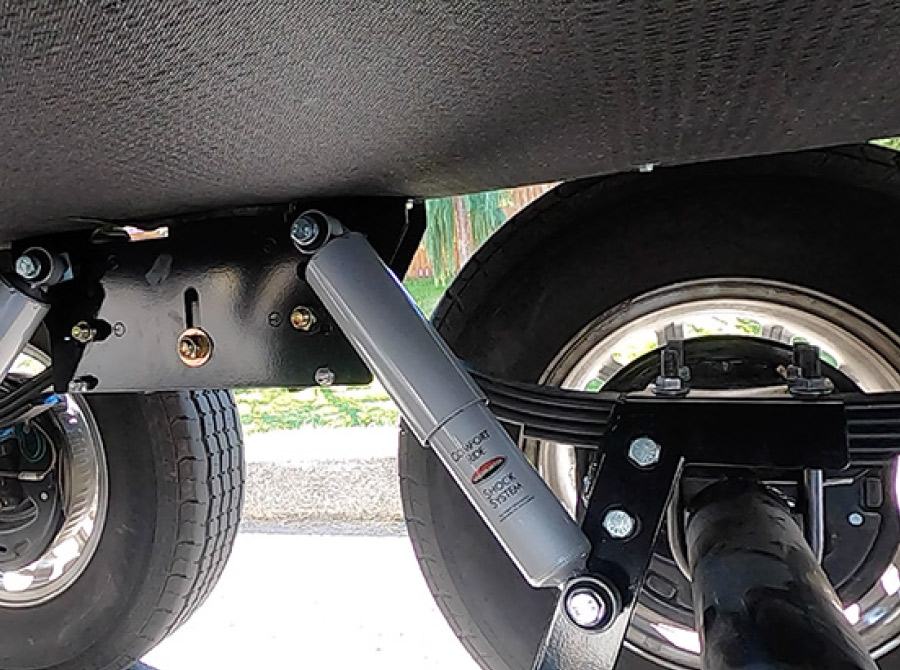
As with any vehicle, the shock absorber kit damps the up/down movement of the axles, which greatly reduces bounce. The kit allows the gas-charged shocks to be mounted at the correct angle so that they work effectively yet fit the confines between the axle and the trailer floor. If used on their own, the Comfort Ride shocks are mounted using an extension bracket attached to the leaf spring perches and to the frame with included L-shaped brackets. If used with the Comfort Ride slipper spring kit, the lower end of the shock mounts to the same extension bracket, but the top of the shock mounts to the spring box.

We were interested in experiencing the benefits the Comfort Ride system had to offer, so we visited Roadmaster and followed along as a complete system (slipper springs and shocks) was installed on a 2021 Grand Design travel trailer. But first, we drove the truck and trailer on a 5-mile loop that included large speed bumps and a few sections of rutted road in an industrial area. The results were as anticipated; the trailer bounced, bucked and swayed slightly over the large bumps and transmitted harsh vibration to the truck when crossing pockmarked pavement.

After the installation, the difference was dramatic: The same bumps and rough road were barely noticeable and the trailer felt more stable and connected to the road. Several weeks later, the owner of the trailer commented on another benefit that we hadn’t thought of: The trailer, he said, was now far more stable when encountering side winds and when being passed by trucks. With the smoother spring operation and shocks to damp side-to-side movement, the trailer chassis was better able to cope with side loads created by the wind, which made it easier to handle.

Travel trailers
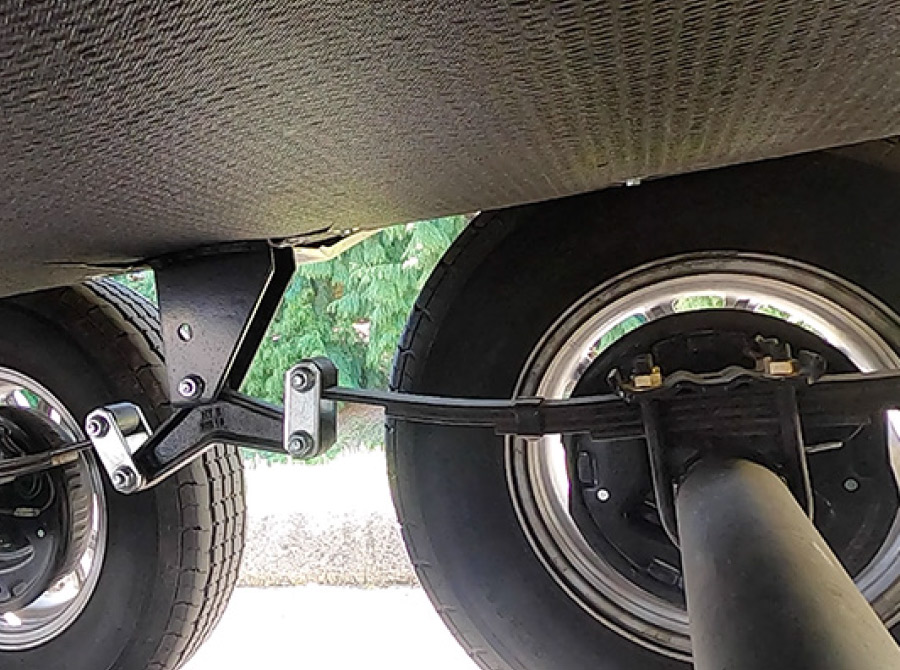
Most travel trailers and many fifth wheels are equipped with a simple spring equalizer, which connects the ends of the springs in a central location attached to the frame, as shown here. When one axle encounters a bump or pothole, the spring on that axle transmits force to the other spring — and the process is repeated when the next axle/spring assembly absorbs the impact. The result is a harsh, jarring ride that is exacerbated by the lack of shock absorbers.
Whether springs-only or the complete system, Comfort Ride products are designed for a bolt-on installation and universal fit on trailers with a standard leaf spring suspension. Trailer chassis can vary slightly in design, however (including so-called “wide stance” axles), so if you have any concerns, contact Roadmaster customer service to make sure the kit (or kits) is a good fit for your trailer.

Installation for the complete kit took approximately three hours for a professional tech with air tools, but we estimate that a competent DIYer with hand tools could complete the same job in about twice that time, or 6-8 hours. That’s a chunk of time, we know, not to mention a significant investment: MSRP for the slipper springs kit is $1,014, while the shock kit will set you back $572. If you use your trailer for more than the occasional weekend outing, however, it’s tough to put a pricetag on the peace of mind that comes from better handling — and we haven’t touched on the potential savings from now-unbroken connections, components and kitchen crockery.

Trailer is jacked up
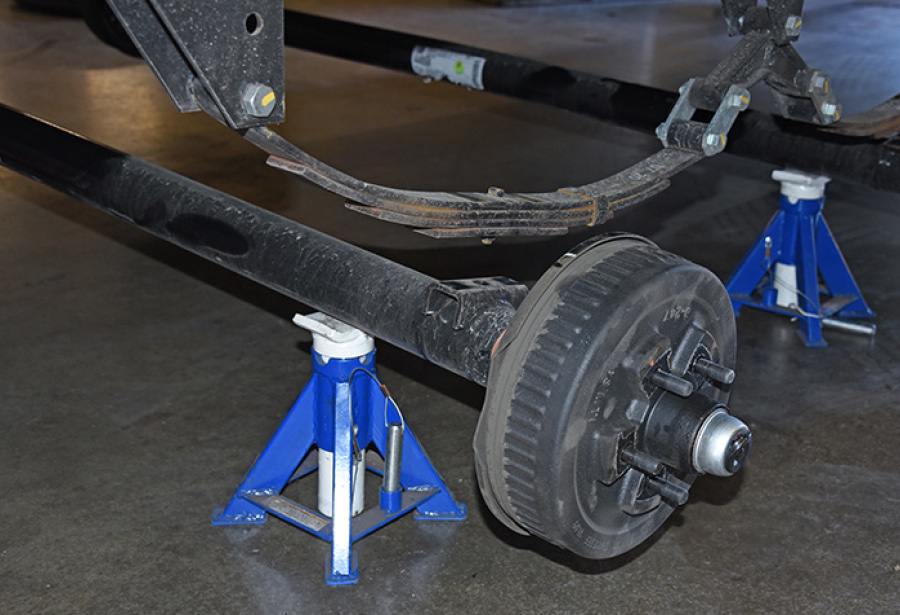
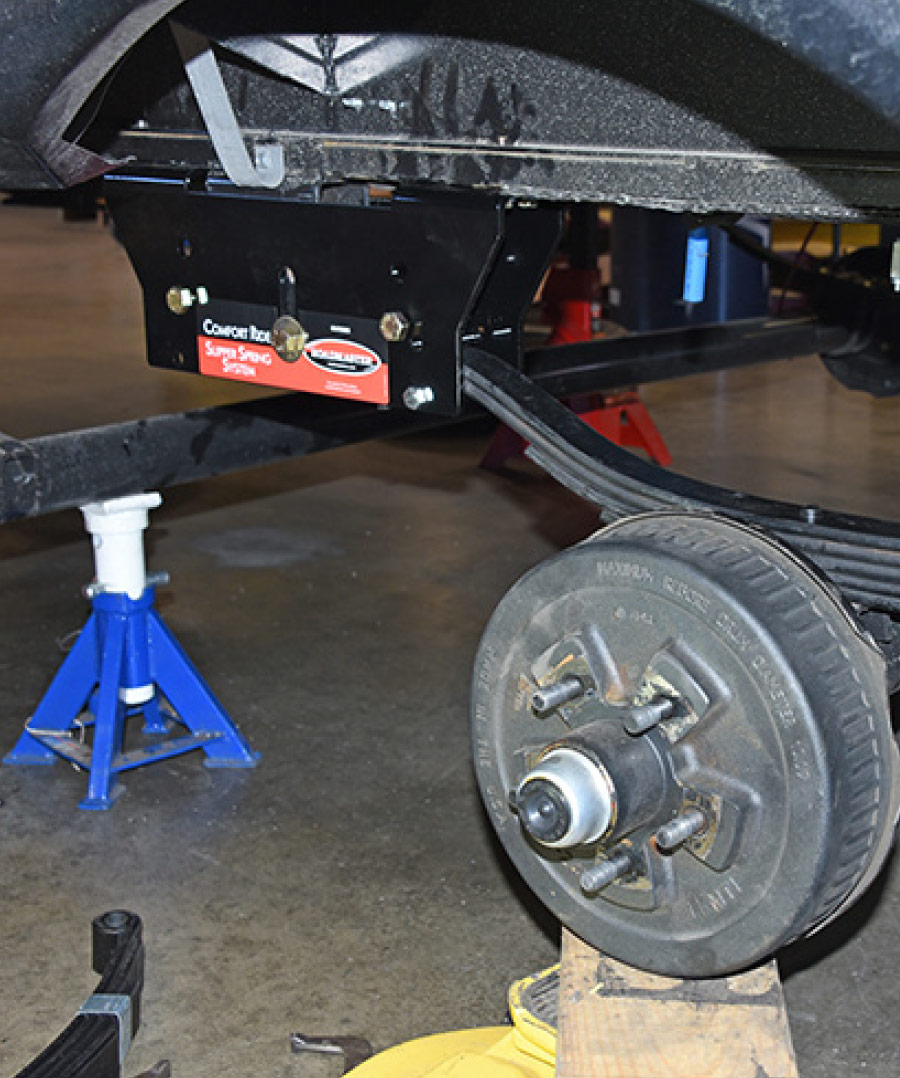
The trailer is jacked up and properly supported by jack stands at all four corners before work commences. The wheels can then be removed on one side.
Springs and equalizer
With the wheels removed, you can get a better view of the springs and equalizer.
axles
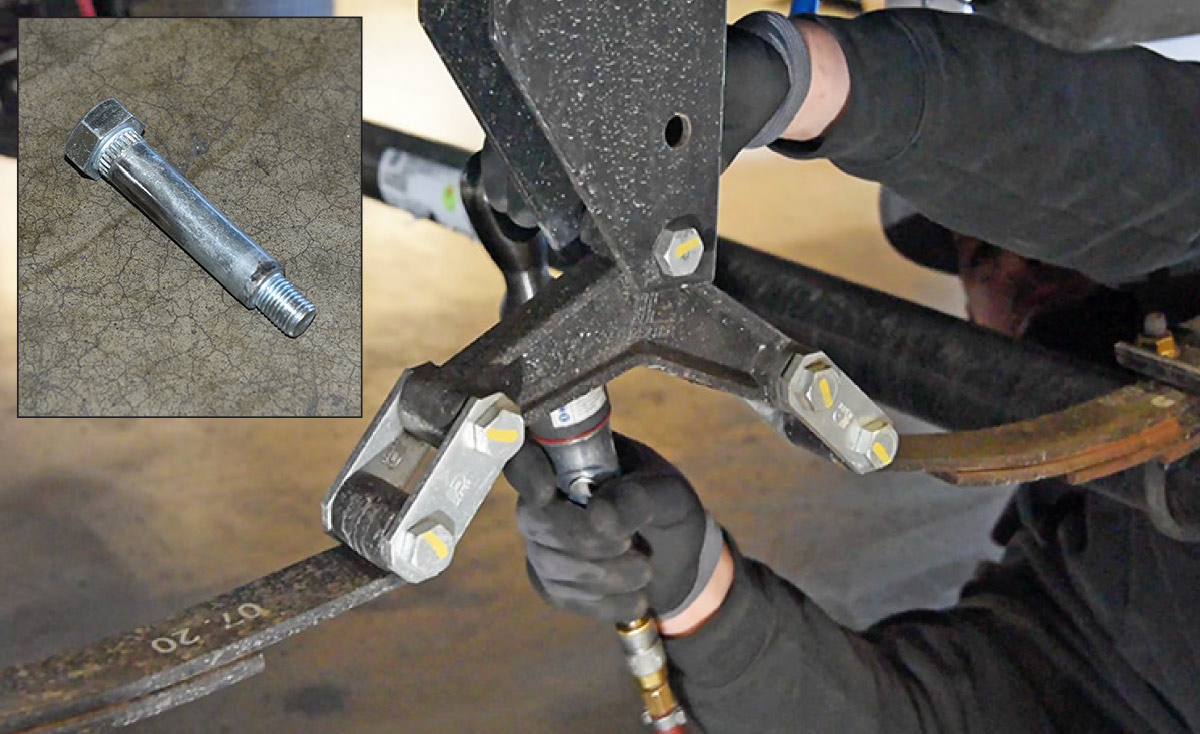
With the axles properly supported, the first step is to remove the nut from the bolt that runs through the center of the equalizer. The bolt used in these applications has serrations near the head designed to prevent the bolt from loosening, so attempting to remove the bolt rather than the nut will damage the inside of the bracket.
hanger nuts
Next, the hanger nuts at each spring end are loosened.
Axles supported
With the axles properly supported, the U-bolt nuts are removed next.
U-bolts
Spring/hanger assembly
The U-bolts are removed and the entire spring/hanger assembly can be unbolted and removed as a unit.
Comfort Ride slipper
Bolt/nut assembly
The Comfort Ride slipper spring box is then trial fit over the equalizer bracket on the frame, and the bolt/nut assembly loosely installed. A line is then traced around it and the underbelly material trimmed away with a razor knife. The spring box is then used again as a template to mark the mounting holes that will be drilled in the bottom of the frame.
frame
box mounted
The frame is then drilled and the box mounted to the frame with the supplied fasteners. It is recommended that red thread locker be used on the bolt threads before installation.
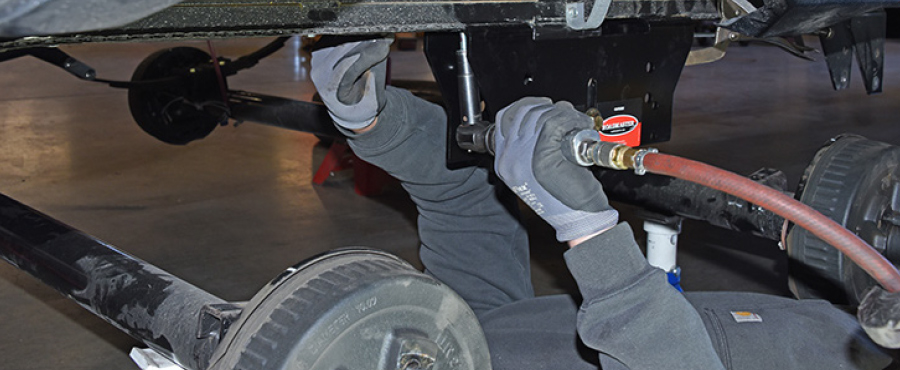
The bolts are then torqued
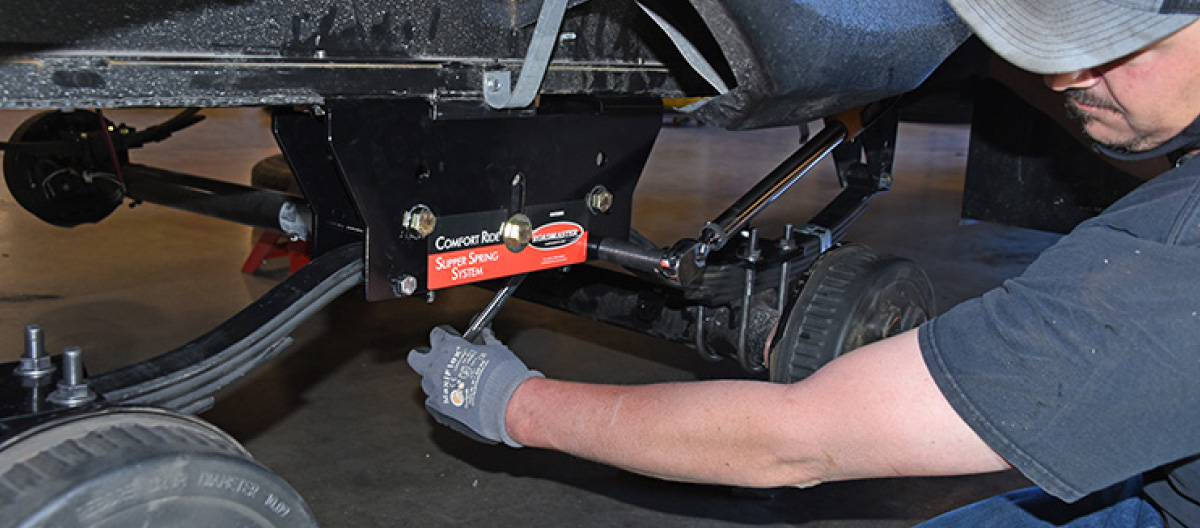
The bolts are then torqued to specification.
The wear pad
The wear pad is located above the roller assembly; the roller itself is positioned in the lower hole after the curved end of the spring has been inserted into the box.
Spring ends
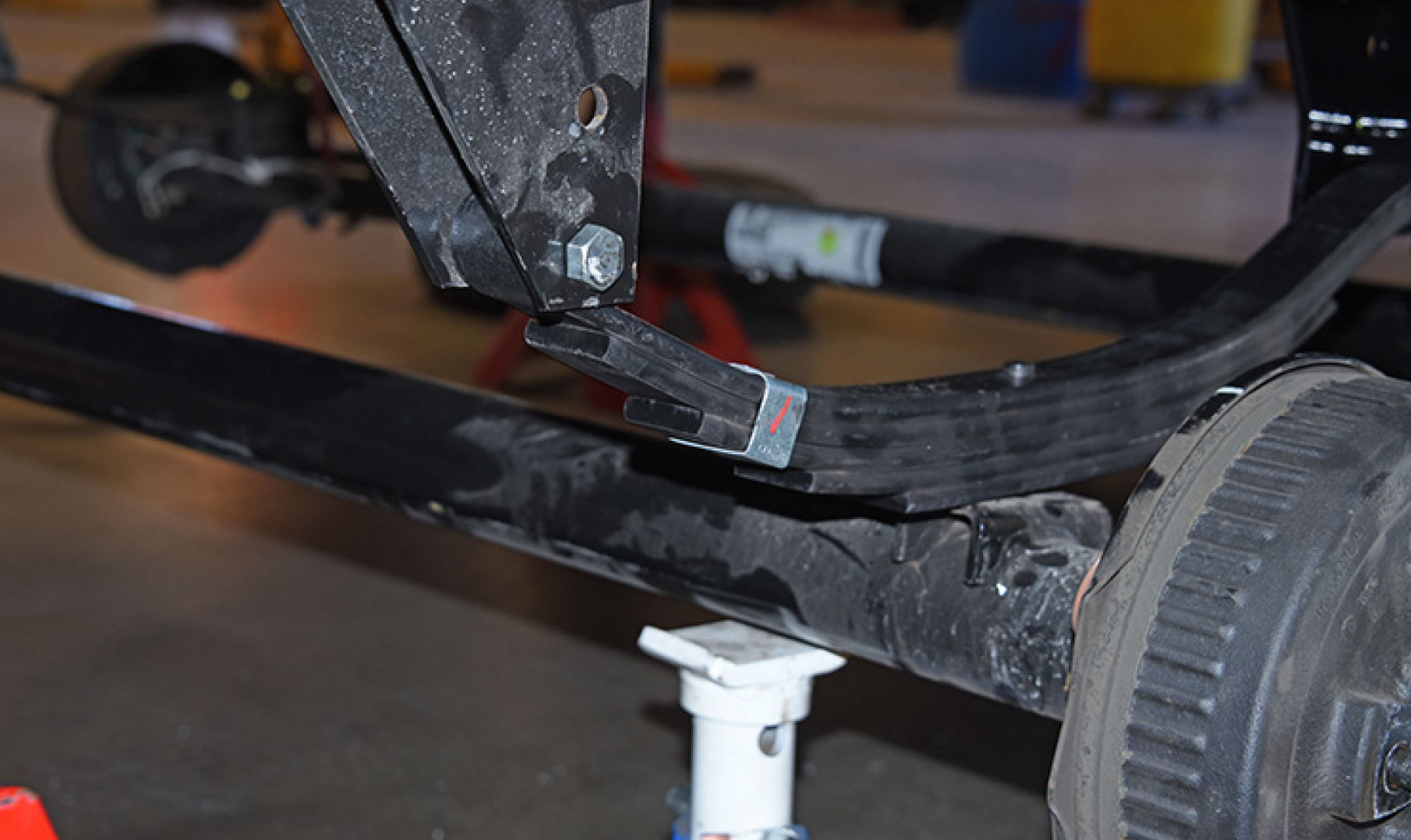
Here, you can see that one of the spring ends has been placed over the roller assembly in the spring box, with the wear pad located above.
Comfort Ride leaf springs that attach to the factory
The ends of the Comfort Ride leaf springs that attach to the factory spring hangers use typical closed spring eyes. A bolt is placed through the hanger/spring eye and finger tightened; the spring then rests on the spring perch.
Torqued to specification
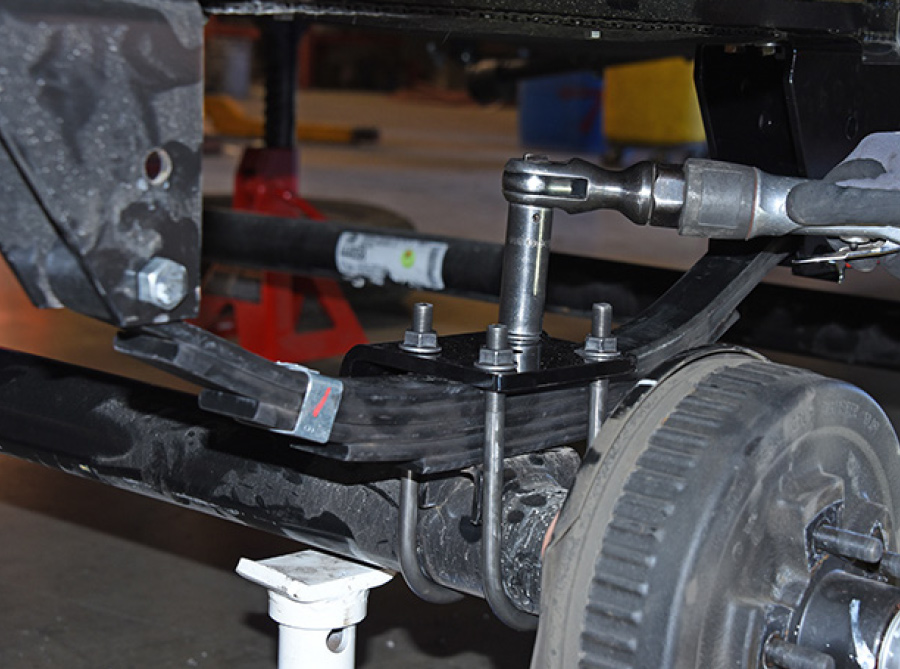
This customer opted for a heavier spring pack, so new, longer U-bolts were required. The nuts are first tightened, then torqued to specification.
Roller assemblies
With the springs in place, you can see how the system works: The curved ends of the springs ride on roller assemblies, while the wear pads are positioned above the ends to control up/down movement. By allowing the spring ends to move freely, the suspension can operate independently instead of being tied together by an equalizer.
torqued to specification
Finally, all of the fasteners in the Comfort Ride system are torqued to specification.
Comfort Ride
extension plate
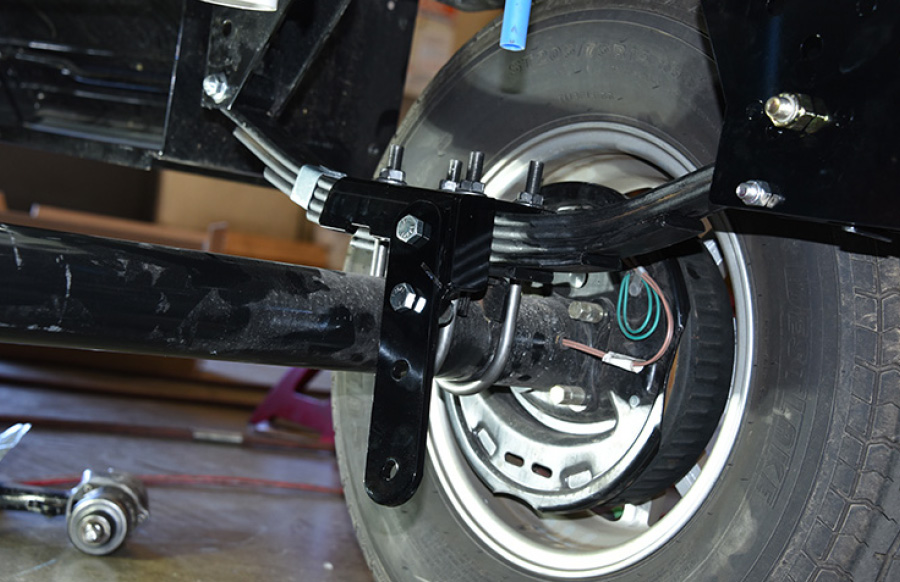
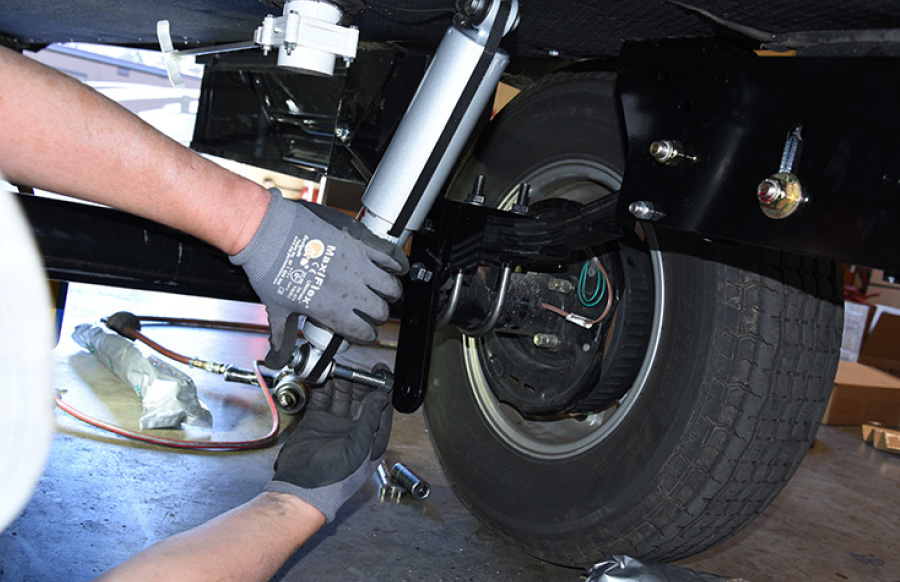
Viewed from underneath, you can see that the Comfort Ride spring perches can be fitted with extension plates to mount the shock absorbers. The shocks come with straps to keep them compressed, which makes installation easier. The supplied hardware is inserted through the extension plate first.
An offset spacer
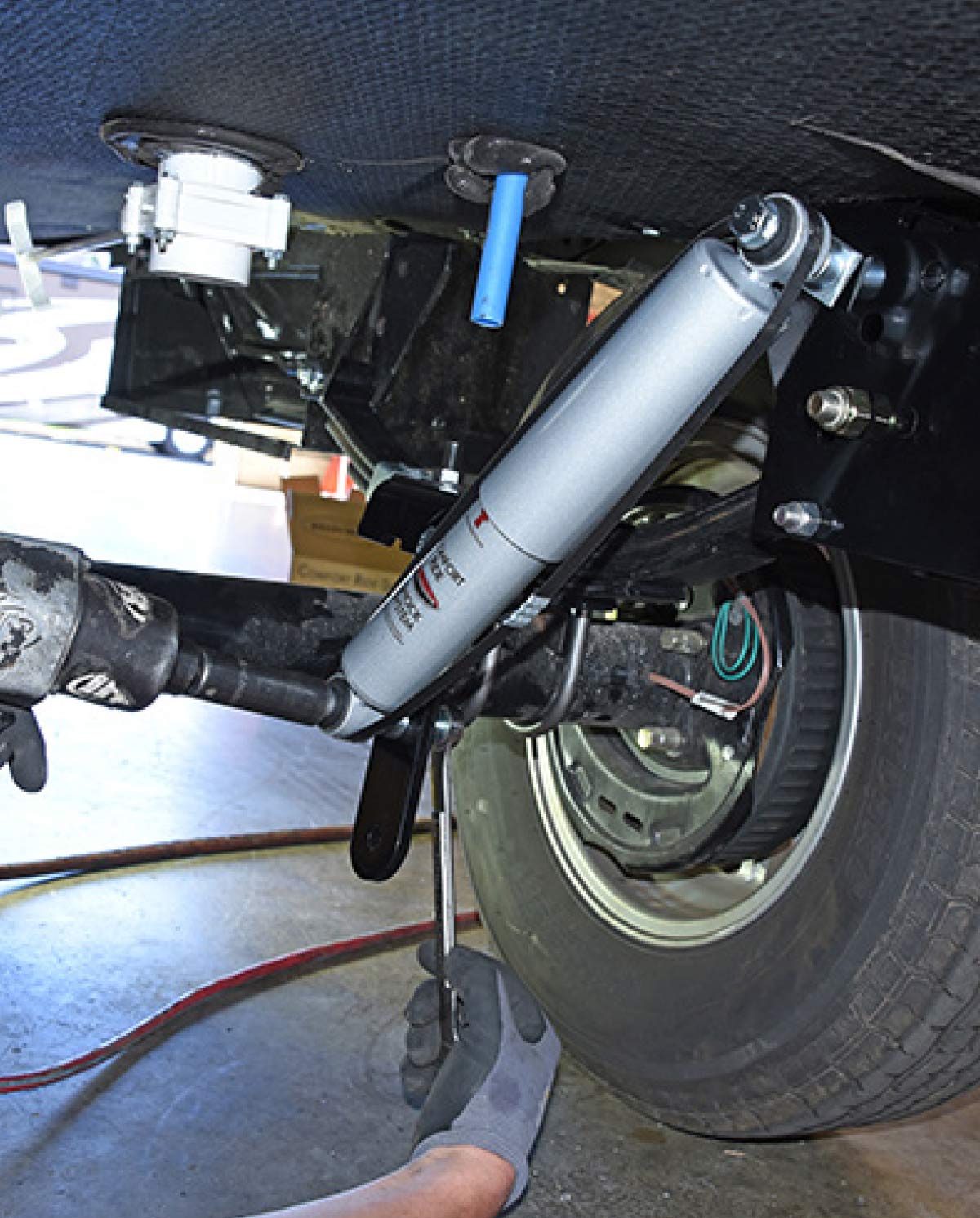
An offset spacer and square, wedge-shaped washer allow the top of the shock to be mounted at the correct angle on the spring box.
The shock
The shock mounting bolts are then tightened, and the straps cut off.
Five-mile course towing
installation
Our seat-of-the-pants testing — a five-mile course towing the fifth wheel before and after the installation — showed the Roadmaster Comfort Ride system dramatically increased the trailer suspension’s ability to smooth out road hazards without channeling them throughout the RV. The owner later reported that with the system in place, the fifth wheel demonstrated much better control when encountering side winds and passing trucks.
Source:
Roadmaster, Inc.
(800) 669-9690
www.roadmasterinc.com