

f there was a silver lining to the Great Recession of 2007-’09, it was that RV manufacturers had a lot of time on their hands. The national economy was in the toilet — and no industries were hurt more than those building recreational vehicles (we’ll include pleasure boats here, as well). According to the RV Industry Association, shipments to dealers dropped from 353,400 in 2007 to just 165,700 two years later. And actual retail sales were worse.
Obviously, something had to be done. So, the industry essentially reinvented itself. A case could probably be made that, prior to the recession, the industry was building units it wanted to build. By the time the recession ended, manufacturers had, to a large degree, begun designing and building RVs in the sizes, weights and floorplans that those consumers willing to make a purchase wanted — and, more importantly, they had recommitted to building quality units. For years, it had been accepted that Baby Boomers — then the largest demographic fueling the outdoor hospitality arena — were a hands-on group capable of making repairs on the road should something go awry. That wasn’t being said of the incoming wave of Millennial buyers more used to electronics that simply worked when you plugged them in.
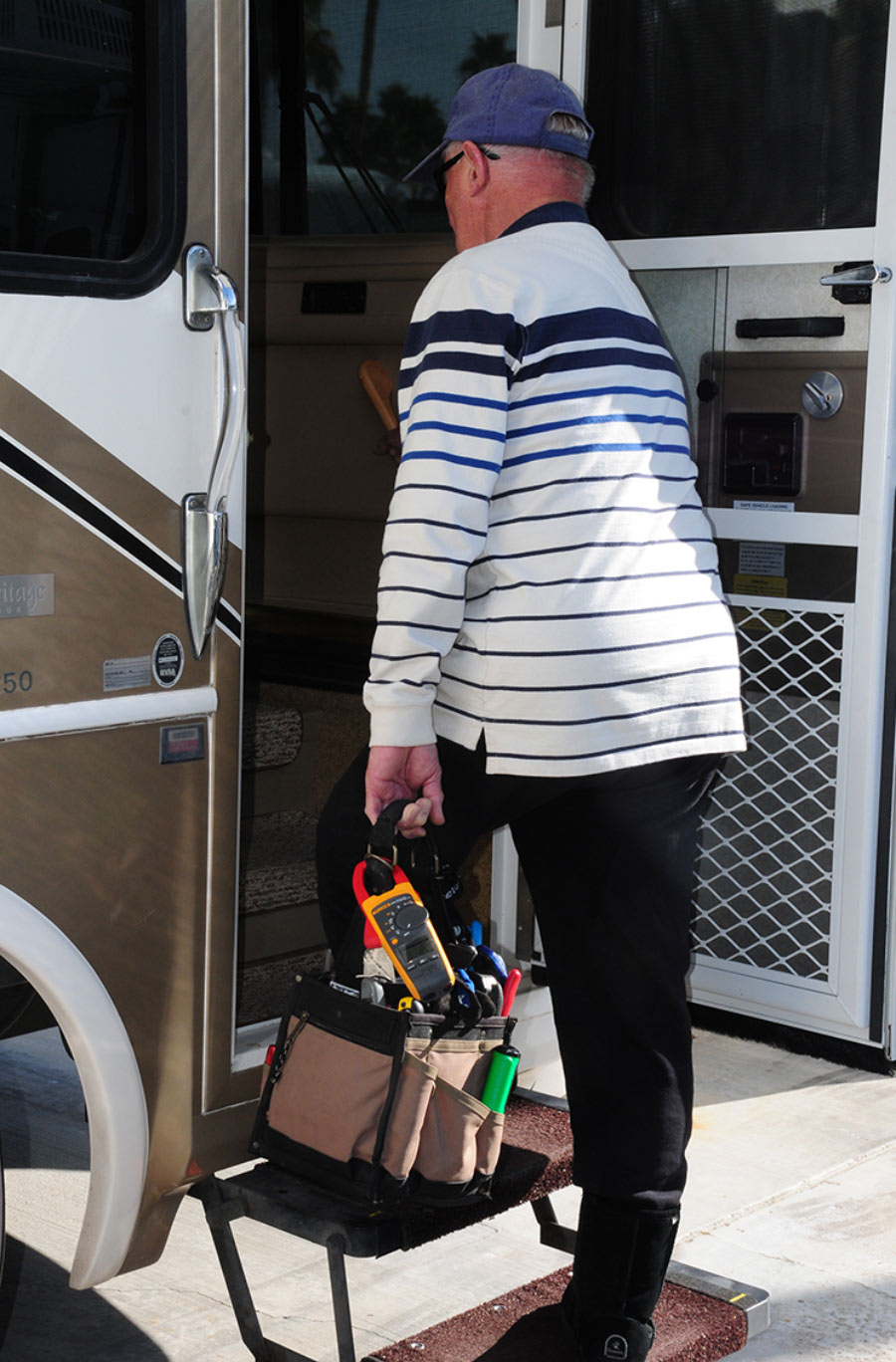
All this has been a huge and costly undertaking, designed to produce quality units. That said, however, parts in RVs will still break. It’s an unavoidable byproduct of towing or driving a house on wheels across hundreds or thousands of miles of oftentimes rough roads. As such, you need to be prepared. When something breaks, you need to know how to fix it — or where to go to get the correct information to make the repair — because your chances of finding a dealer service center right now that’s not backed up with a weeks-long list of appointments is somewhere between a rock and a hard place. I won’t get into the need to vet your technical sources — Mark Polk, a well-known RV educator and author of all things RV-related, does a good job of pointing out the pratfalls of following questionable advice elsewhere in this issue (see “Technically Speaking”). What I will do here is make mention of the tools and spare parts you should be carrying in your rig, because knowing how to repair something won’t help if you don’t have the basic tools to do the job.
TOOLS — 12-volt screw gun with large bit set, to include nut drivers, Allen, hex and Robertson (square) #1 and #2 bits of varying lengths • Compact air compressor • Set of manual screwdrivers or all-in-one model to include Phillips and Robertson (square), preferably with a rubber handle • Rubber-handled pliers set, including slip joint, lineman needle-nose pliers and crimp/wire stripper • Utility knife and blades • Hammer (around 18 ounces) • Prying tool/small Wonder Bar • Caulk tool and gun • Tape measure • Adjustable wrench set • Tiny screwdriver set • LED flashlight • SAE and metric Allen wrench set • Gloves — nitrile for anyone with allergies to latex for use when handling sewer hoses; heavier version for working with tools • Torque wrench (for lug nuts) with thin-wall socket for aluminum wheels • ½-inch cordless impact wrench with impact sockets • Stapler/brad nailer • RV-friendly lubricants — including a dry lubricant for hinges and moving metal parts • Electrical tape • Alcohol wipes — for cleaning surfaces before using tape • Good general cleaners like Voom and, for sticky stuff, Goop • Roof sealant • Gorilla Tape • Eternabond tape • Carpenter’s glue.
ELECTRONICS TOOLS — Clamp-on AC/DC multimeter — an important tool for checking voltage, amperage, polarity, continuity and more. A “must have” for self-sufficiency — and don’t buy cheap here • Voltage meter that can be plugged into hookup to check for voltage, polarity, Hertz (cycles); if you are using a surge protector with this function, then not needed to check hookup connection • Non-contact voltage tester (NCV) — useful as a small, handy pocket-sized tool designed to find voltage; good for tracing wiring issues • Infrared thermometer, good for monitoring the temperature of your A/C, brakes, even outdoor grill • Solderless connector kit.
REPLACEMENT PARTS — Assortment of RV screws to match your RV — available through RV surplus shops • LP-gas regulator — and don’t forget to bring a replacement first stage/high pressure regulator for fifth wheels • Extra pipe (PEX) and fittings • Extra water-pressure regulator • Extra bulbs for light fixtures, and recessed ceiling lights • Awning repair/slideout topper repair kit for small holes or rips • Temperature gauge for refrigerator • Extra batteries for all devices.
This isn’t complete, by any means; you’ll add to it as you travel (RV Enthusiast Publisher Bob Livingston, for example, is something of a wine connoisseur and notes that he wouldn’t pull into his campsite without a spare corkscrew). But it’s a start.