



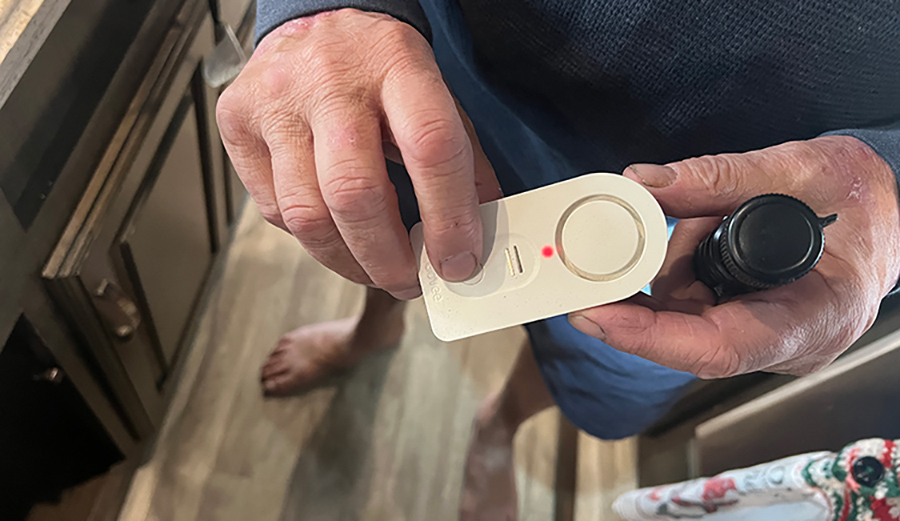
hen leaking water goes unchecked in an RV, the results can be disastrous. If you don’t find out about a leak until water drips on the ground — or pours out the entry door — it’s likely too late. You can prevent an expensive clean-up by taking a proactive stance and installing inexpensive leak detectors that can give you advance warning before things get out of control.
There’s a proliferation of such devices on the market — they’re well-known among folks who have owned a brick-and-mortar house with a basement prone to flooding — and if you search the Internet, the choices are extensive. My guess is that most will do the job, but when a friend praised the performance of the Govee water sensors he’s used for some time, that’s all I needed to make a good choice. It’s all about experience with products and reviews these days.
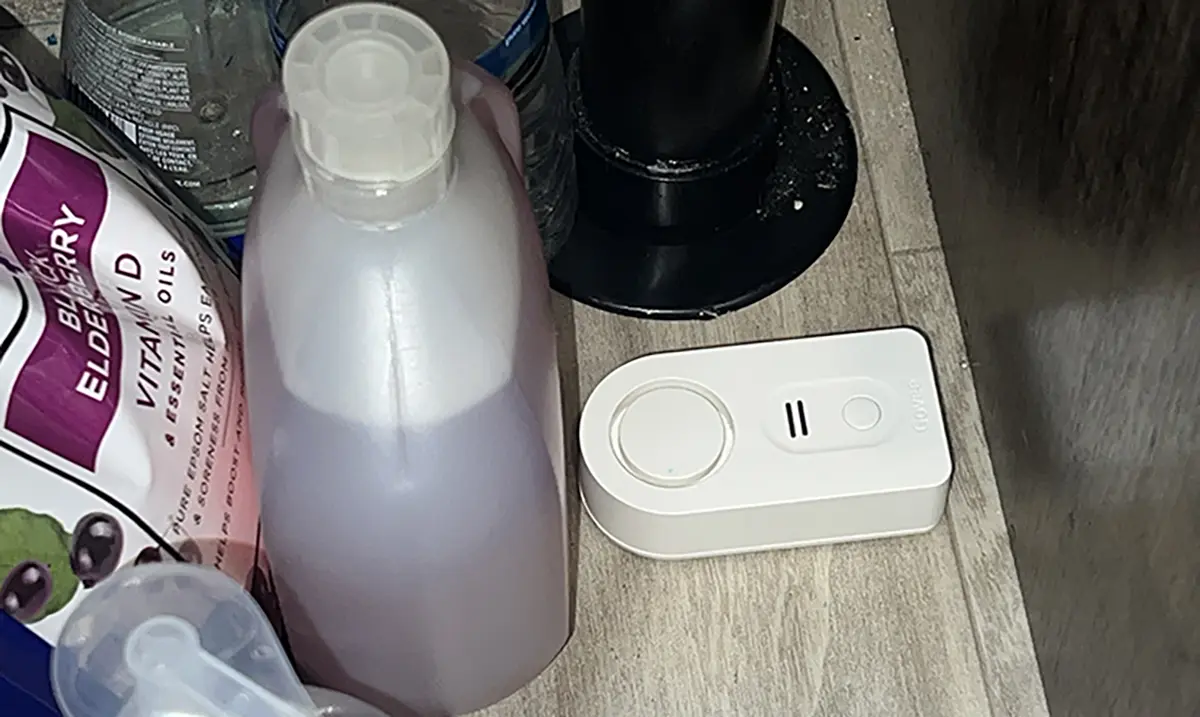
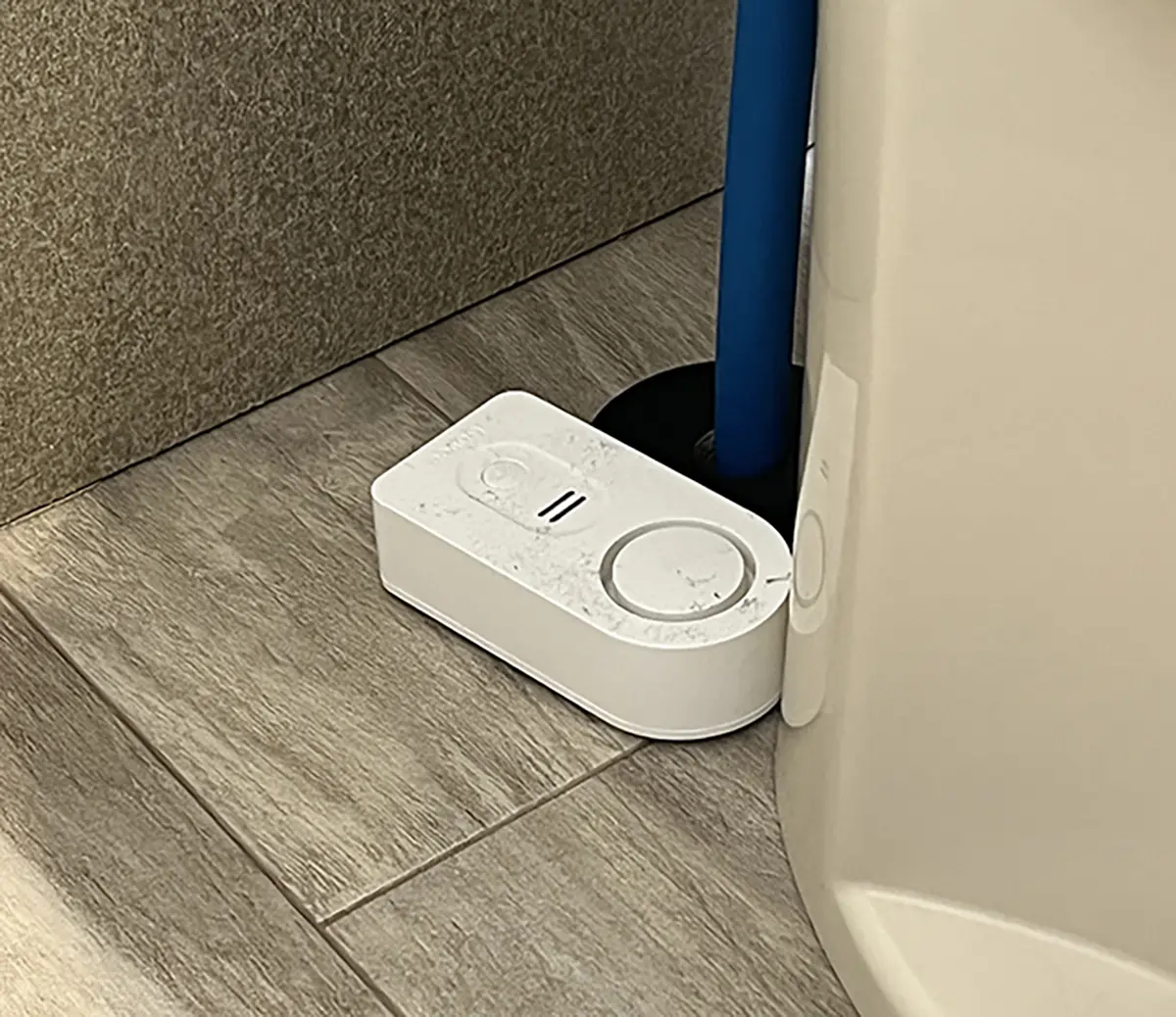
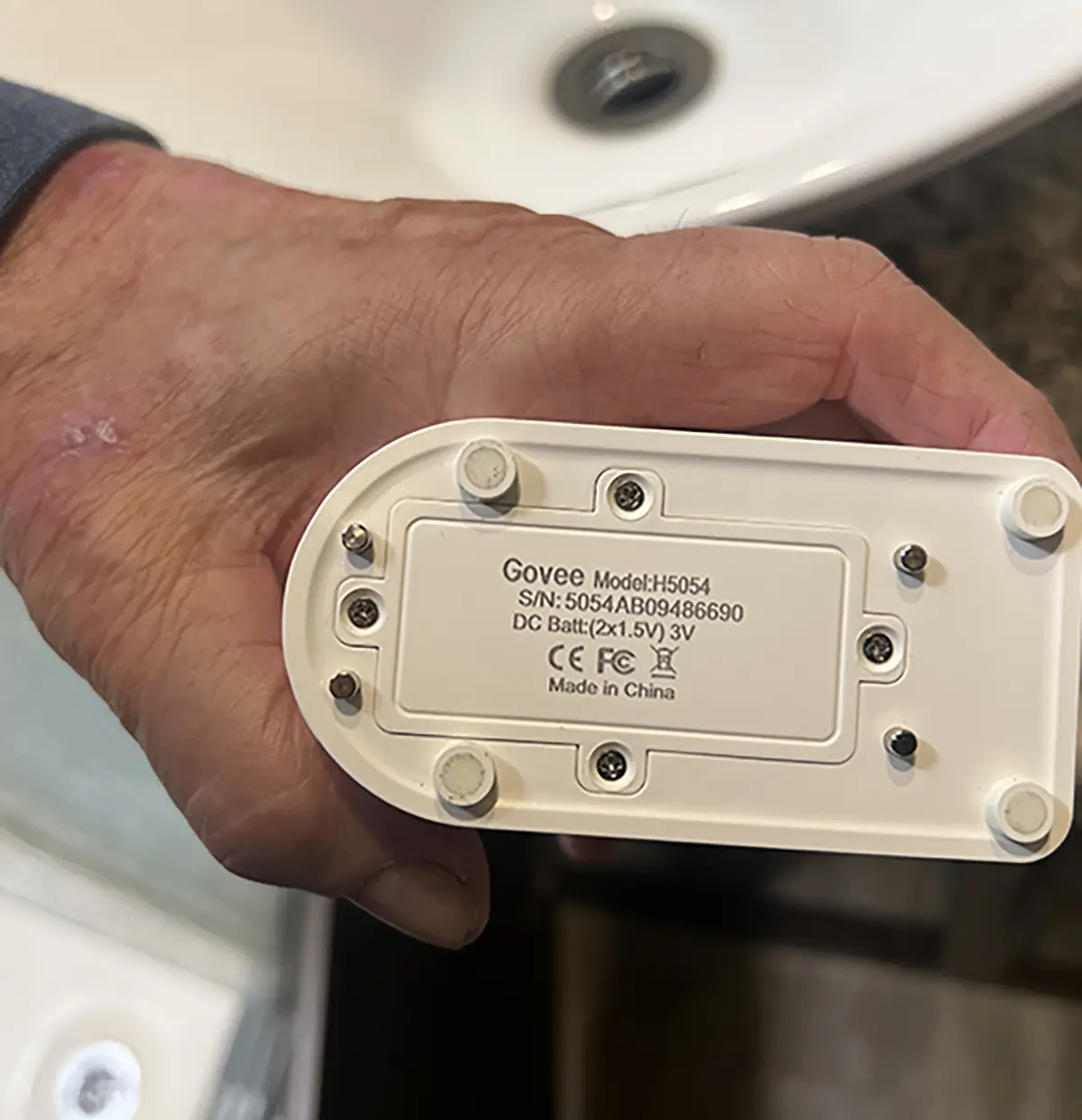
When water is detected, a loud (100 db) alarm can be heard from anywhere inside the RV and on an RV site. A red light also signifies the leak. For those who would like to be informed offsite, there’s a Wi-Fi component that will send messages via email to your phone or tablet. It works on 2.4G Wi-Fi but not on 5.0G versions, so check your system to make sure it’s compatible.
These sensors can be placed anywhere there’s a potential for moisture. For example, logical locations to monitor are under the bathroom and kitchen sinks, behind the toilet, next to the demand water pump, inside storage compartments and in a utility bay. And the sensors are very sensitive — one even went off in our RV when the floor was washed a few minutes before returning the sensor to its previous location. If it does sound an alarm, dry the sensors with a towel and press the mute button and you’re ready to be protected again.