

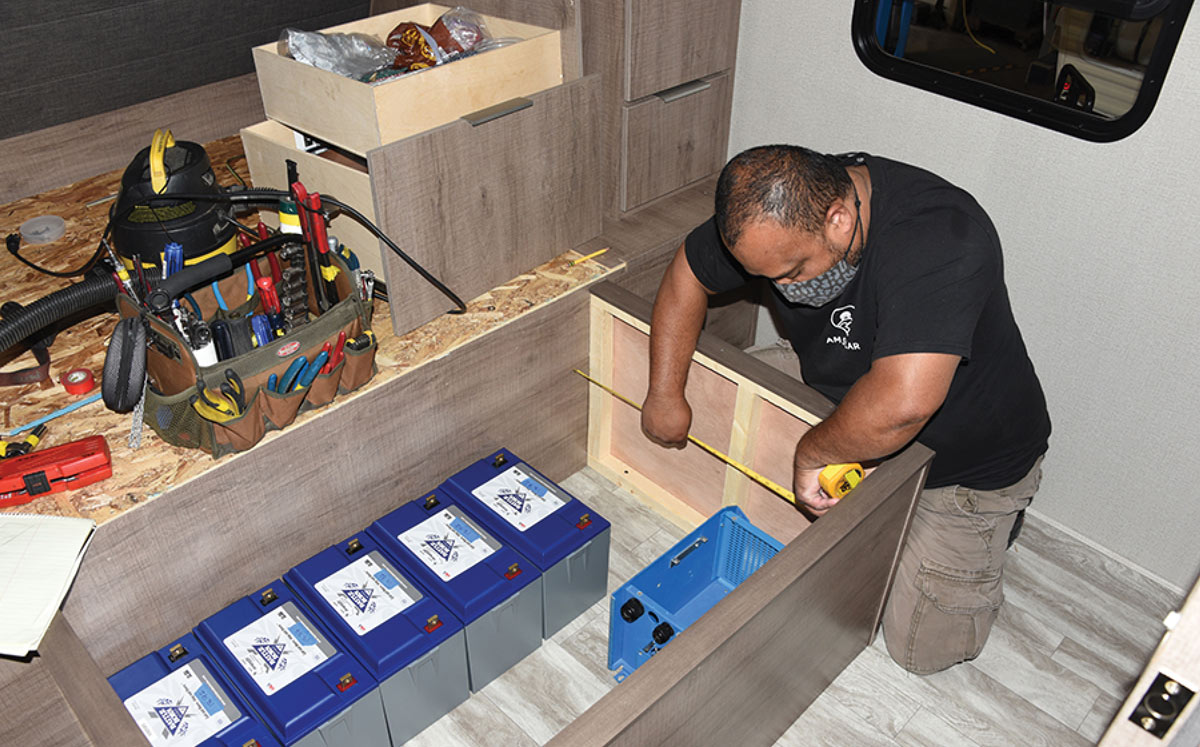

rue self-containment in an RV is not possible without a reliable and rechargeable power source.
Amazing, isn’t it, that such a simple, direct declaration can create so much confusion? There are a lot of reasons for this — and, admittedly, plenty of “blame” to go around. But whether the culprit is the outdoor hospitality industry (campgrounds) that were caught flat-footed as pandemic-fueled buyers gravitated towards camping — a bit of a reach, because no one undertakes the costly construction of new RV resorts without good reason — or simply a younger generation of RVers looking for experiences found outside a rented RV space, the fact remains that, today, batteries in RVs are under much greater loads than any time in the past because of the push to go off the grid and not give up creature comforts.
Manufacturers are well aware of this, as evidenced by the burgeoning number of units rolling off assembly lines with at least a modicum of battery-and-solar packages intended to try and keep the “lights on.” So, too, is the supplier side of the industry, which is flooding the shelves of RV and automotive parts stores with a mind-numbing number of new and increasingly cheaper 12-volt batteries embracing — at least in theory — the latest energy technology.
But even cheap batteries aren’t really cheap. Unfortunately, a lot of RVers won’t understand the benefits of a better — read that “more expensive” — onboard energy system until they are in their second day of a long weekend and wake up to an electrically dead RV due to depleted batteries.
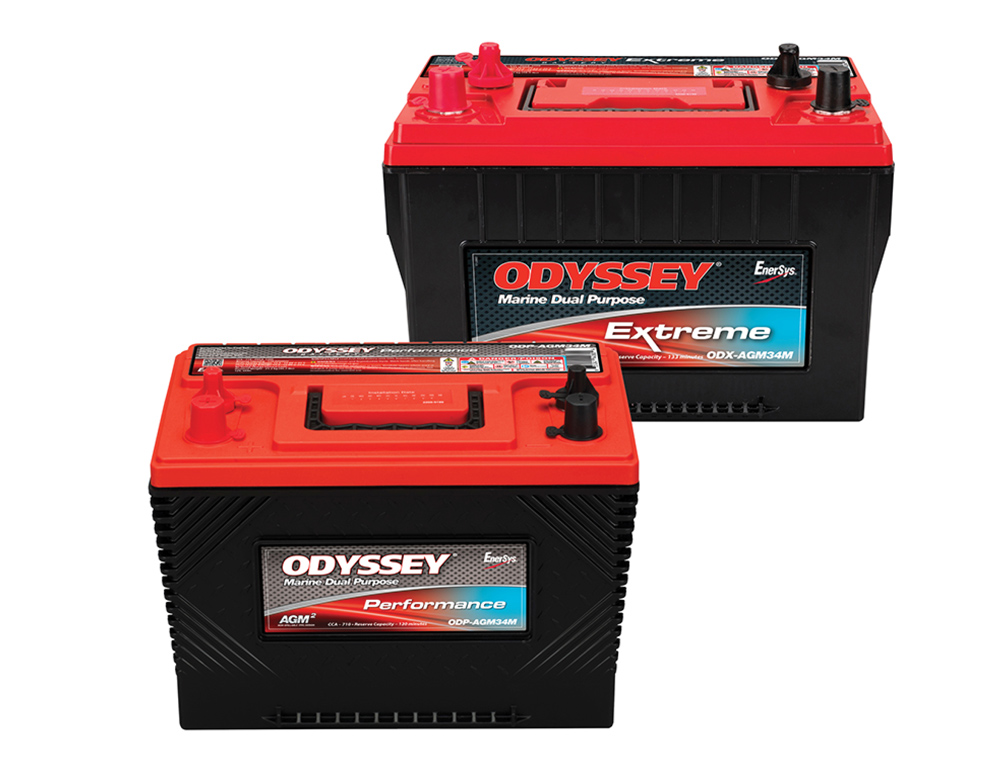
By way of description, most dual-purpose batteries use AGM technology, in which fiberglass separators are saturated with the electrolyte and compressed tightly between the lead alloy plates. The battery is sealed, which eliminates the need to replenish the electrolyte with distilled water to make it virtually maintenance-free.
An RV with a conventional flooded lead acid battery will likely have separate starting, lighting, ignition (SLI) and deep-cycle batteries. Dual-purpose batteries, however, produce both the cold cranking amps (CCAs) for SLI and deep cycling for the longer but deeper discharge rates to support house loads.
Lithium-ion batteries, meanwhile, utilize lithium-ion cells along with a protective circuit board. In a lithium cell, ions move internally through electrolyte between the cathode at one end and the anode at the other; electrons move in the opposite direction in another circuit. This migration creates the electrical current.
“There are a lot of factors in trying to correctly size components, especially for solar systems and batteries, because an owner or installation facility has to figure out when the customer is going, where they’re going, how long do they want to go for, and then usually figuring out how long are they planning to run it versus what they actually end up doing. And then building in some buffer,” said Mark Spilsbury, RV division manager-mobile power solutions, for Go Power! (The company offers technical support as well as handy solar and inverter size calculators on its website: gopowersolar.com).
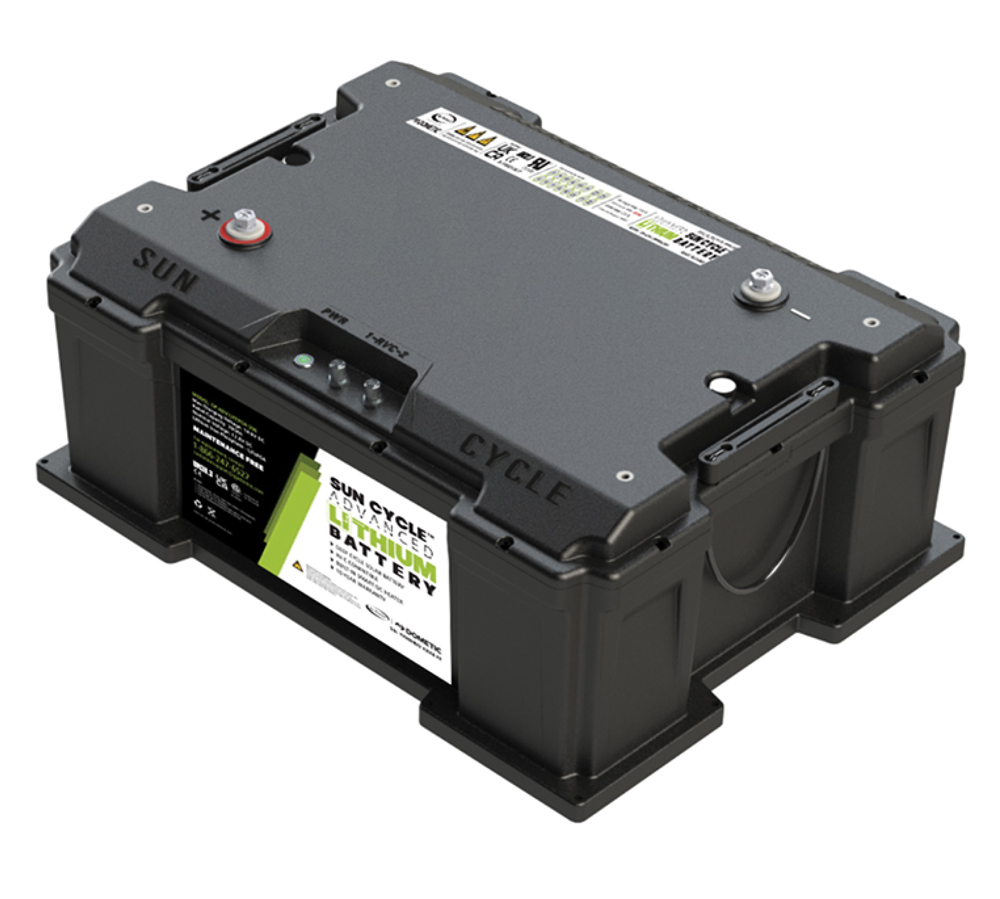
While Go Power! is primarily a supplier of lithium batteries for the RV space, the division of Dometic also carries 6-volt and 12-volt AGM batteries because, noted Spilsbury, campers need to factor in the higher cost when determining needs.
“Lithium is great, but not everybody really needs it,” he said. “If you’re not going out all the time and only need it for a weekend here and there, you could still do that with AGMs or even lead acid batteries, depending upon your power requirements. But if you’re really into going off-grid and trying to keep weight down and get the most out of your system, that’s where lithium comes in and has a lot of benefits.”

And, for frequent or full-time RVers, even the higher tariff shouldn’t be much of a deciding factor. Lithium batteries can actually save money in the long run. The battery life of a lithium unit is 3,000-5,000 cycles, compared to 500-1,200 for a conventional lead-acid battery. Some advanced lithium batteries such as those from Go Power! also carry a reserve capacity of 5% to allow users to perform emergency actions even when the battery is completely discharged.
While ODYSSEY batteries (odysseybattery.com) come under the AGM description, they are actually a bridge of sorts between traditional AGM units and lithium — and, in fact, provide many of the advantages of lithium.
“ODYSSEY is an AGM battery — done to an extreme level,” said Bryce Gregory, product manager-transportation and specialty, for the subsidiary of EnerSys, a global leader in stored energy solutions for automotive, military and commercial applications. “Our key advantage is what’s called Thin Plate Pure Lead (TPPL) technology, which allows us to design a battery with more plate surface area in the same footprint as a comparably sized conventional lead acid battery. This increase in surface area provides much greater power in any group size.”
According to Gregory, the patented TPPL technology allows ODYSSEY deep-cycle dual-purpose batteries to generate twice the overall power and three times the life of conventional flooded lead acid batteries. And unlike traditional flooded lead acid batteries, Gregory noted that ODYSSEY batteries have an “amazing” deep-cycling capability: up to 400 cycles at 80% Depth of Discharge (DOD).
“They handle that DOD very well,” he added. “You can recover the battery up from hundreds of times from 20%. So, it’s a much more reliable battery in the exact same application.”
Like many popular spiral-wound batteries, ODYSSEY Extreme batteries employ dry cell AGM technology to contain acid, allowing the battery to be installed even on its side. “A big difference is we don’t use calcium in our batteries,” Gregory added. “Calcium and lead are not good elements to mix together because the one causes corrosion (sulfation) in the other. Using pure lead allows for deep cycling without the buildup of corrosion, which extends battery life.”
For his part, Gregory also cites cost of premium batteries as being either a positive or negative influence on battery selection — but for other reasons.
“Most people don’t keep their RVs for more than five or six years — they’re going to upgrade or go from one class to another,” he pointed out. “So, a big investment in their off-grid power system may not pay off; people aren’t going to move their entire electrical integration from one camper to another. That’s a lot of work.
There is one drawback that owners would need to pay attention to: weight. The use of TPPL technology means that ODYSSEY is able to fit a greater number of plates inside the same sized case, and lead is heavy. An ODYSSEY Group 24 battery, for example, weighs 57 pounds.
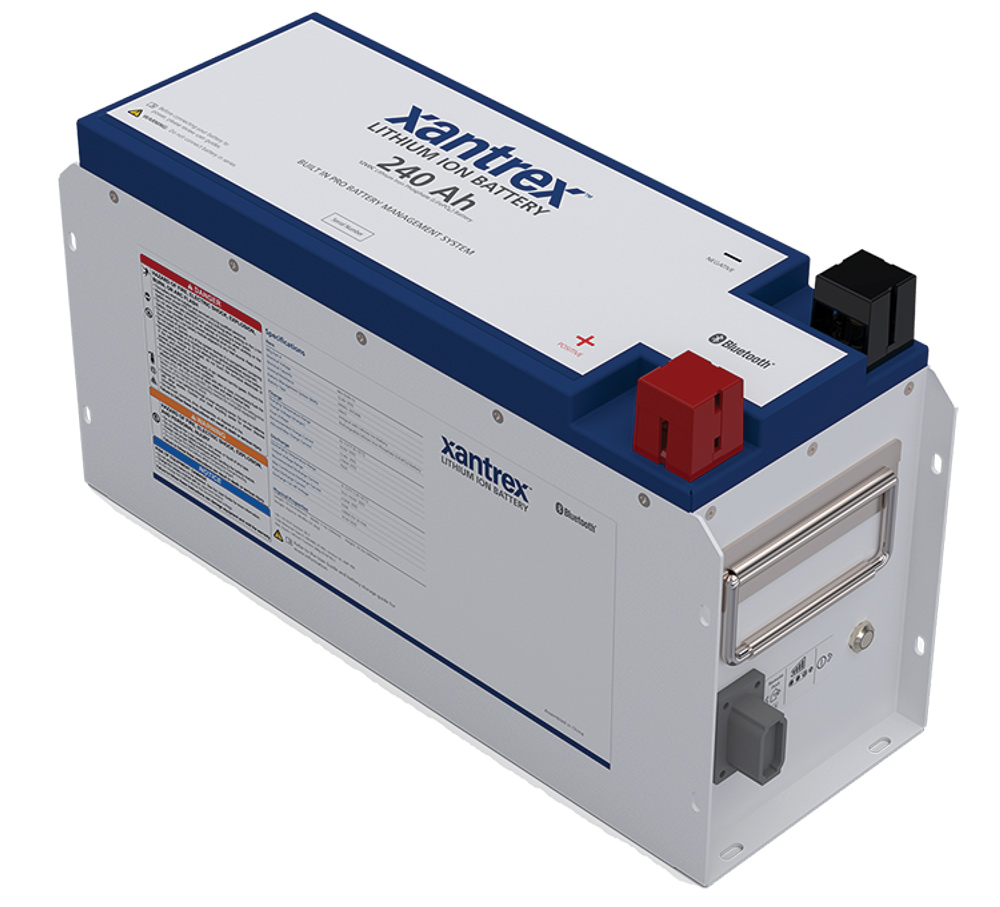
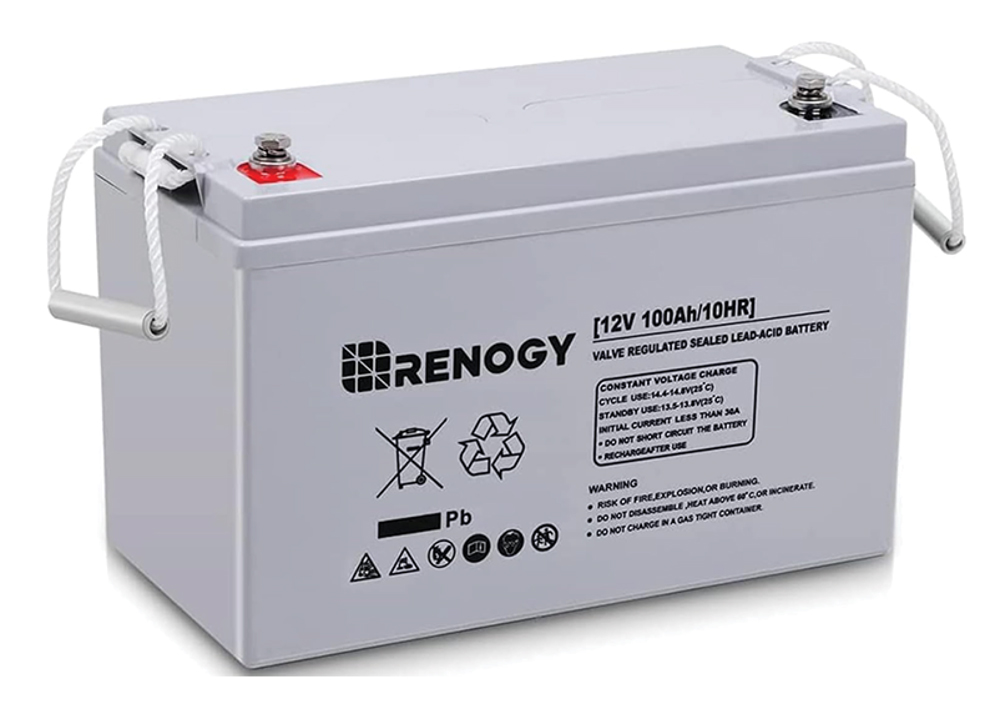
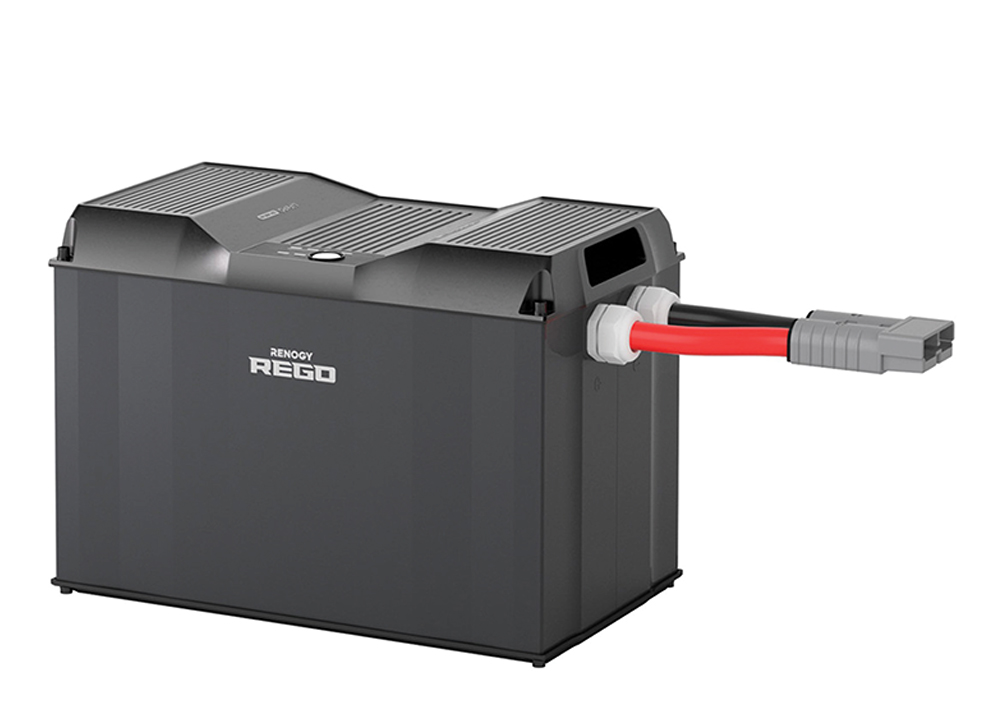
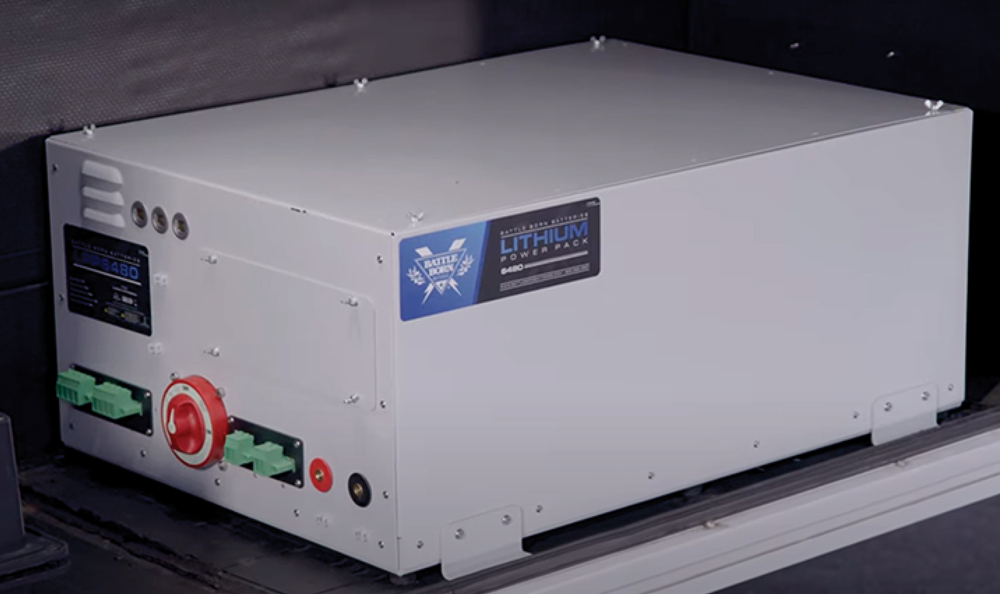
That said, the popularity of lithium-ion batteries has created a cottage industry of sorts, with a lot of new manufacturers entering the space — often, with private-label units manufactured overseas and not always to the same rigorous standards employed by companies like Go Power!, Battle Born, Xantrex, Renogy and others.
“It can be tough for consumers to decide,” said Spilsbury. “They see a ‘lithium’ battery at a low price and may just go for it. But not all lithium batteries are built the same. Many of the drawbacks are internal, in things like the lithium tube, that they can’t see, but at the very least they should read the specs for the battery management system (BMS) that’s a part of it. The BMS monitors all the things going on with the battery and then — depending on how it’s been designed — how much current can go back into the battery at one time. That can make a big difference. We ran into some competitors in our space where their products only allow 50 amps of charging at one time back into the battery. If an end-user has a bunch of solar panels putting out 30-plus amps, along with a converter charger operating, some batteries don’t like that. Then they have to really dial it back — and those usually come with a lower price point.”
Spilsbury also recommends that potential buyers check to ensure that the battery also carries UL (Underwriter’s Laboratories) approval, “because there can be issues with lithium if it’s not taken care of properly or does not have that approval.
One advantage enjoyed by lithium batteries may not be just limited to that battery class for long: monitoring of the battery performance. Go Power!, like most other premium lithium-ion batteries, uses a management system that incorporates a built-in shunt that allows the user to track the amperage leaving and entering the battery.
“It’s kind of like a ‘gas gauge’ for the batteries,” said Spilsbury. “It tells you what percentage of power you have in the battery, how many amps remain and can calculate how much time you have remaining in them. We have a digital touchscreen power track display or you can use our app to check performance.”
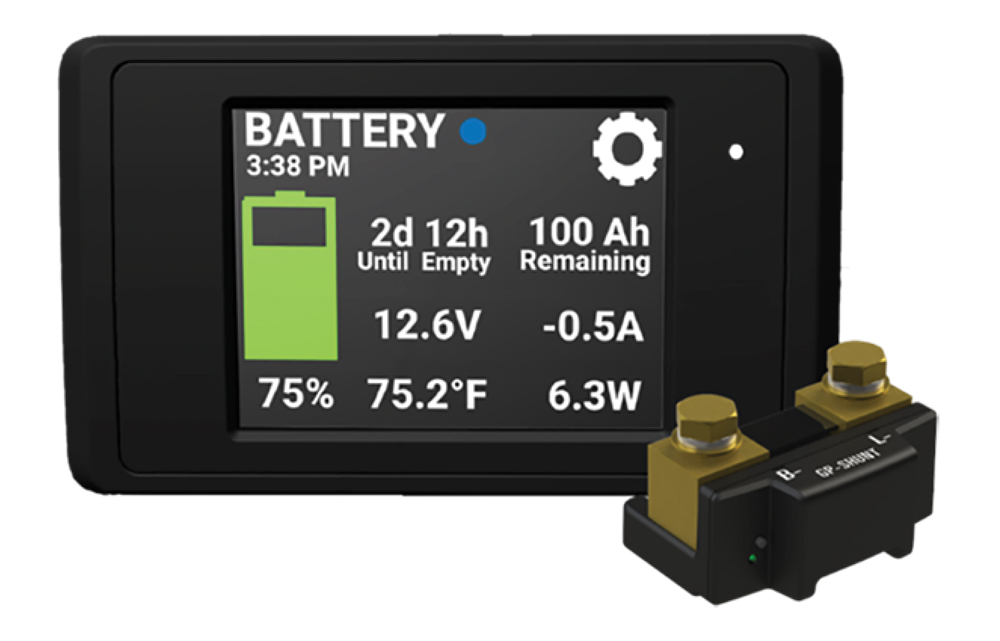
“With our advanced lithium batteries, we have a shunt built in, said Spilsbury. “but let’s say you’ve got an older lithium battery or a brand new set of AGMs and yet you wanted to use our display because you want to tie it in with our solar and our solar controller and inverter. You can add that shunt to an AGM or some other brand of lithium battery and then be able to use our touchscreen display just like you would if it was with our battery. It allows you to turn a not-so-smart battery into a smart battery and get that information out of it.”
ODYSSEY, for its part, is developing a similar system. Plans call for it to be included on the company’s Group 31, Group 24 and Group 27 products.
“We’re working on releasing new technology that we call Odyssey Connect,” said Gregory. “It’s a monitor that comes on the battery and connects with Bluetooth. Once you’ve synched it to, say, your smart phone, anytime you get within range you can see what your state of charge is, what it’s been exposed to in terms of temperature and charging/discharging voltage and even how many cycles it may have seen.”
The need for a capable energy system for going off-grid, added Gregory, is all the more important today due to constantly evolving accessories and appliances.
“The ‘elephant in the room’ is parasitic draw,” he noted. “A lot of RVs are built today with a non-ammonia refrigerator. And in the higher end, they use residential refrigerators. Those things are parasitic drains on a battery of significant proportion that most RVers have never seen before. On top of that, many dealers are putting the least-expensive battery they can buy in them to get customers out of the door. Yes, you can add an inverter to help run these appliances, but the parasitic drains are just like what a chassis battery goes through — even just driving down the road is drawing those batteries down, they’re getting cycled. And a lot of times, those batteries just aren’t designed for cycling — they may just be starting batteries put in a cycling application. No one wants to be in a position of having to replace their batteries every year.”
-
Inspection: Inspect the condition of the battery’s case, cables and terminals for any damage or corrosion. Replace frayed or worn cables and terminals — but if the case or terminals are damaged, also replace the battery itself.
While maintenance-free AGM and lithium batteries are finding their way into more RVs from the factory, many continue to be equipped with lead acid batteries — most of which use plates made of an alloy of lead and calcium or antimony for electrodes. The electrolyte is a solution of sulfuric acid and water, and in the case of conventional flooded lead acid batteries, is housed in cells. The electrolyte levels in these cells should be checked and, if low, filled with distilled water to the manufacturer’s specified level.
- Cleaning: Clean dirt and corrosion from the terminals with a battery terminal brush or an emery cloth and wipe down the case with mild soap and water, rinse and dry.
- Testing: Load testing is one method of assessing the battery’s State of Charge (SOC). An auto parts store associate, mechanic or battery dealer can perform a load test at a service facility. Another method is to use a digital voltmeter to measure the battery’s Open Circuit Voltage (OCV). The battery manufacturer’s specifications will indicate what OCV corresponds to 100% SOC. For a conventional flooded lead acid battery, a hydrometer will confirm the specific gravity of each cell, which should read 1.265 – 1.285 to indicate 100% SOC.
-
Charge: A full charge is the most important precaution to help safeguard the battery’s performance when recommissioned and through its intended service life. Excessive discharging of flooded lead-acid batteries can cause the voltage to decline, which reduces the level of sulfuric acid in the electrolyte. Decreased sulfuric acid increases the amount of water in the solution and, with it, the risk of the electrolyte freezing in cold weather and damaging the battery case.
In addition, a fully charged battery is stored with a significantly reduced risk of sulfation, which is the accumulation of lead sulfate crystals on the surface of the plates when the battery is persistently undercharged. This accumulation reduces the plates’ surface area, which interferes with the battery’s ability to hold a charge.
To prevent internal damage, flooded lead acid batteries should not be discharged to less than 50% SOC. Different battery chemistries have their own charging requirements, which are available through the manufacturer or a battery specialist.
-
Managing Parasitic Loads: If a battery in storage remains connected to an RV’s “house” loads — especially those that use memory — it may be discharged from parasitic loads. This occurs when those loads continue to consume small amounts of power from the battery. Each load may consume only a minimal amount of power in a day — but combined over a period of time in storage, they can drain the battery significantly if it is idle long enough. For example, if a steady parasitic draw of just 20 milliamps occurs while the battery is stored for 150 days, the load will consume more than 70Ah.
One method of maintaining a consistent SOC while the battery remains installed during storage is to use a trickle charger. Batteries should be fully charged before being connected to a trickle charger. An alternative to using a trickle charger is to disconnect the negative battery cable or the terminals, or use a battery disconnect switch, to cut off parasitic loads. Even so, batteries should be checked and charged monthly while in storage.
- Deep-cycle batteries: are essential for providing dependable power to your rig, designed to stand up to energy-hungry appliances such as your RV’s heating, ventilation and air-conditioning (HVAC) systems as well as the microwave, television and refrigerator, just to name a few. Deep-cycle batteries come in a variety of types and price points. Some are called marine batteries, which are interchangeable with RV batteries with comparable ratings. The best RV batteries have a large reserve capacity to power everything you need between charges, as well as a low self-discharge rate.
There are several ratings you want to look for when making a deep-cycle battery purchase for your RV:
- Capacity or Reserve Capacity — Higher Ampere Hours (AH) or Reserve Capacity (minutes) means a battery can deliver more energy and perform longer.
- Depth of Discharge/Cycle Life — Depth of Discharge (DOD) indicates the percentage of the battery that has been discharged relative to the overall capacity of the battery. Because the number of times a battery is charged and discharged — and the depth of those discharges — affects its lifespan, you want a battery that also features long cycle life.
- Charging — A battery that recharges quickly is the best option to help ensure you’ll reach full capacity in less time.
- Temperature Resistance — Ideally, you want a battery that is engineered to perform well in both hot- and/or cold-temperature environments.
- Shock and Vibration Resistance — Things can — and usually will — get bounced around considerably in your RV. Make sure your battery is built to handle any rough terrain or road conditions.