

hen I first started rebuilding and modifying cars, there was no Internet. In some ways, that was a blessing. There’s little worse today than being stymied by a problem halfway through a repair, logging onto your favorite forum to explain your conundrum and getting a hundred or so replies — some of which tend to either back up one of a half-dozen or so competing “fixes,” while others usually include a cadre of members practicing a style of sophomoric humor most of us thankfully left in the fifth grade.
No, “back in the day” we developed our own information sources. Among my most trusted “consultants” were the guys across the counter at the local speed shop, who were only too happy to collect my weekly paycheck and dispense wisdom with my change. I was also fortunate enough to make friends with a group of guys who hung around at a machine shop in a neighboring city. The owner accepted me into the group, which meant that not only did he become a source of information but made everything in the shop available — from the typical array of engine-rebuilding machinery to a table grinder for resurfacing flywheels and a bead blaster for stripping parts. For free.
I was reminded of this some time ago while reading the “RVelectricity by Mike Sokol” forum on FaceBook. Unlike many groups found on social media, this is one of the most technically accurate forums on the world wide web. Sokol is an all-around electric guru and one of the most respected engineers in his field.
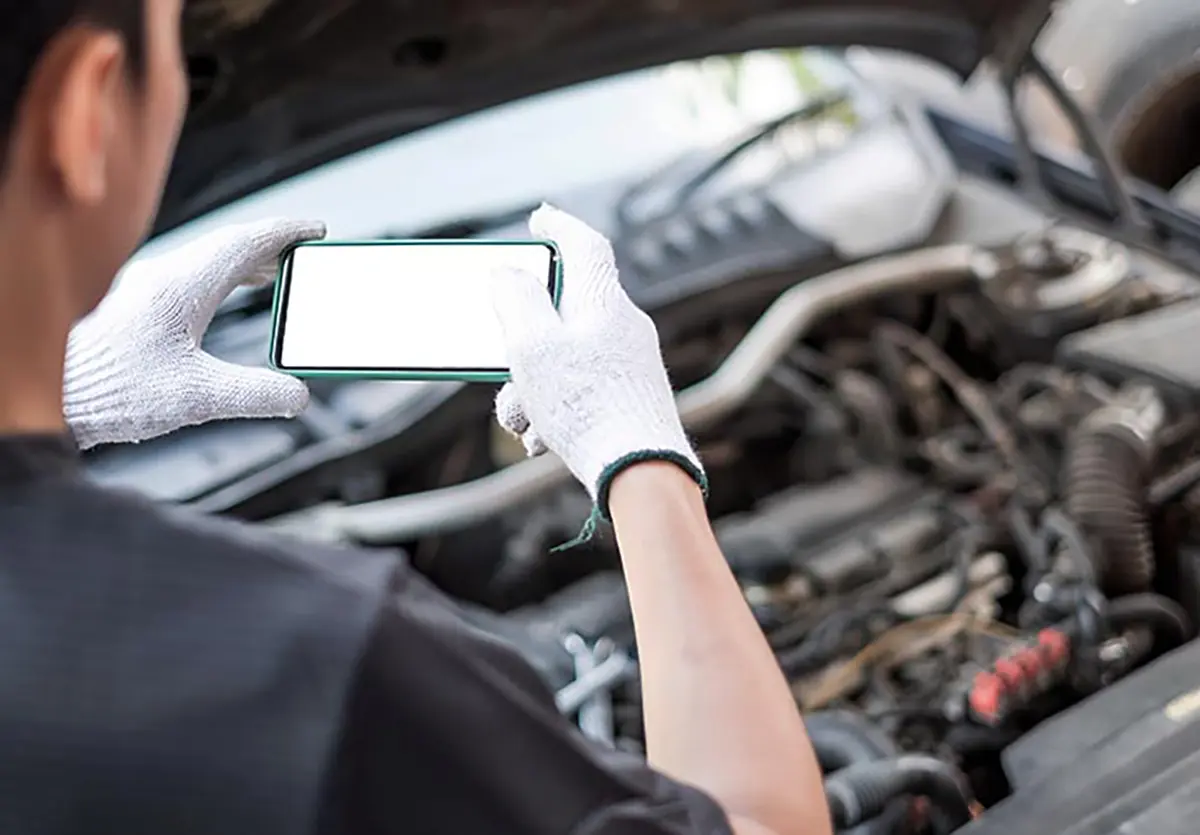
In his post, Mike included this nugget: “You should never attempt to commit any wiring connections to memory. In your pocket you probably have one of the greatest inventions of all times for DIY fixers: A cell phone with a camera.
“So, before you take anything apart, take plenty of pictures of it from every angle possible. And if all the wires are the same color, get a roll of yellow or white electrical tape and a Sharpie marker. Then mark each pair of connections as 1, 2, 3 or A, B, C, etc. Plus, again, take plenty of pictures! No matter how many times I do something, I still try to take pictures to help me reassemble whatever it is.”
It’s great advice — and it was nice to know I’m in good company. Since Mike was writing on his RVelectricity forum, he limited his comments to that segment — but this is something that can (and should) be done by every back yard wrench whenever attempting a parts repair, swap or upgrade. Tearing into your air-conditioning unit? Take photos along the way. Replacing your furnace? Ditto. Heck, for that matter, take pics for something as easy as replacing the plumbing beneath your kitchen sink. Why? Because stuff happens. Having a photo you can refer to of the stock factory setup can prevent a whole host of potential problems — and keep you from taking shortcuts.
It’s just good common sense to have something to fall back on and refer to — even on those all-too-rare occasions when you receive components with installation diagrams well-written instructions. A diagram is nice to fall back onto — but a photo lets you see everything as it should be.
Granted, some things may not need the photographic backup — if, for example, you’re replacing brake pads on your trailer, you can just look at one of the other assemblies to guide you. For the most part, though, taking photos along the way will undoubtably ease your frustration level — to say nothing of eliminating all those “extra” parts that always seem to be part and parcel to many repairs. Heck, I’ve been known to take photos of every phase of a teardown as added insurance so I don’t “forget” something when it comes time to put it all back together again. And that holds doubly true when there’s a time gap between disassembly and reassembly.
The onrush of technology means that cameras are omnipresent today. They allow government employees to watch for scofflaws, while many municipalities hook them up to light poles and use them as a deterrent to traffic disobedience. (Don’t get me started on that one.) Closer to home, it’s not unusual today to see homeowners and even RVers rig their property front and back with the watchful eyes of security cameras. And for travelers, cameras have made backing up a trailer or motorhome infinitely easier, while dashcams have enabled motorists of all vehicles to capture problems and accidents while on the road.
So, use the technology to your advantage. As Mike and countless other veteran gearheads know full well, one of your most valuable tools isn’t in that Craftsman rollaway chest in the garage — it’s in your pocket.
On a separate note: The New Year hasn’t been kind to RV Enthusiast staffers, several of whom had to work their way through illnesses. That resulted in our combining the first three months into this one issue. Rest assured RVE subscribers will receive six full issues this year.