

Freeze Warning
[maghub_sidebar]
Weekend Projects department; digital illustration of a man holding a beverage and laying in a hammock
FREEZE WARNING
a Kidde Wifi Water Leak Detector and Freeze Alarm Alexa device at work
Being “in the know” before pipes will freeze and rupture can circumvent costly repairs and downtime to your RV. A simple device from Kidde is your first line of defense.
By Bill Gehr / Photos by author
W

hen my tankless water came on recently in the wee hours of the night in order to protect itself from freezing ambient temperatures, the reality of winter set in. Fortunately, the water heater is able to protect itself automatically — but there are other vulnerable points that need attention to prevent damage from below-freezing temperatures. For example, the plumbing behind the water manifold in the utility bay or in the area around the pump. And, of course, any water lines that are not protected by furnace heat and/or additional insulation can be damaged.

While I use wireless probes in exposed areas to monitor temperature, I wanted a device to sound an alarm before the area was subject to freeze-ups. In today’s world there are specialty devices for just about everything, so I was not surprised to find one made by Kidde, a well-known company that markets smoke and carbon monoxide detectors. This product, interestingly, also monitors the surrounding area for water leaks. The device can be found on Amazon by searching “Kidde WiFi Water Leak Detector & Freeze Alarm Alexa Device, Smart Leak Detector for Home with App Alerts, White.” It’s available on the Kidde storefront (kidde.com/home-safety/en/us/) and other websites with prices starting at less than $30.
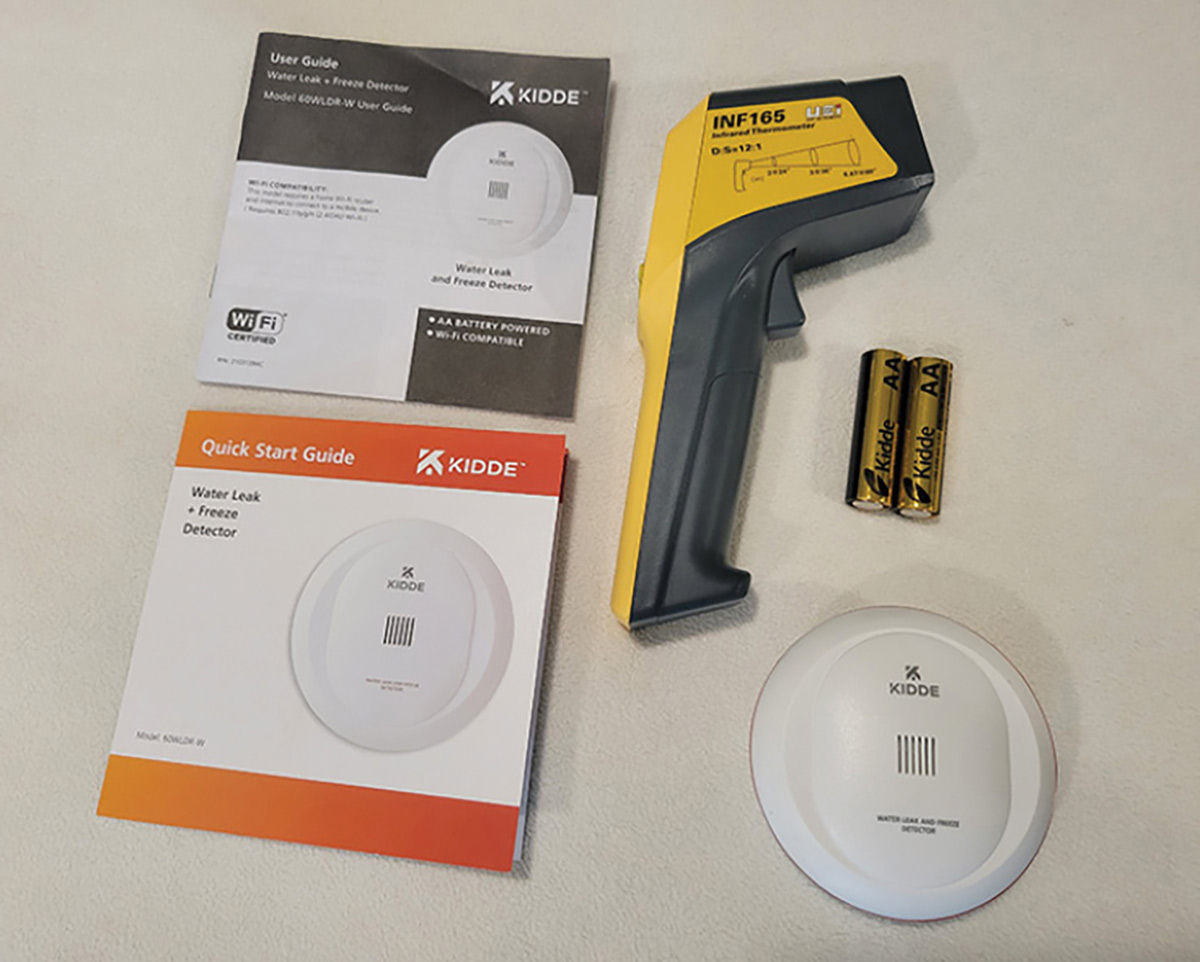
a new Kidde freeze and water detector with original packaging
The Kidde freeze and water detector is a compact unit that operates on two alkaline AA batteries, which should last around one year of normal use. I dug out my temperature gun to help with testing of the freeze detection component.
Since my main concern was to detect frozen water lines, the leak detection component was secondary; it’s nice to have but there are dozens of such devices on the market (including the Govee H5054 sensors featured elsewhere in this section).
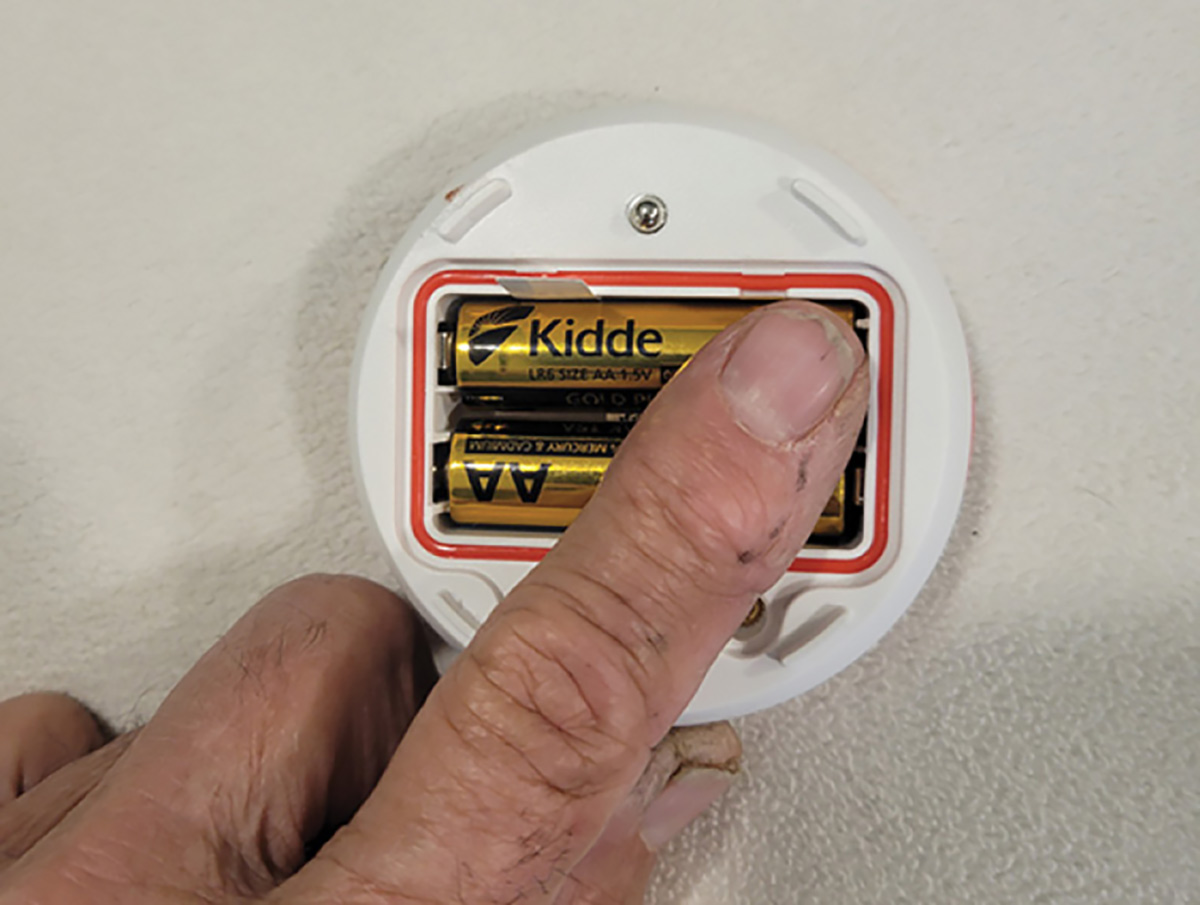
Kidde batteries being placed into unit
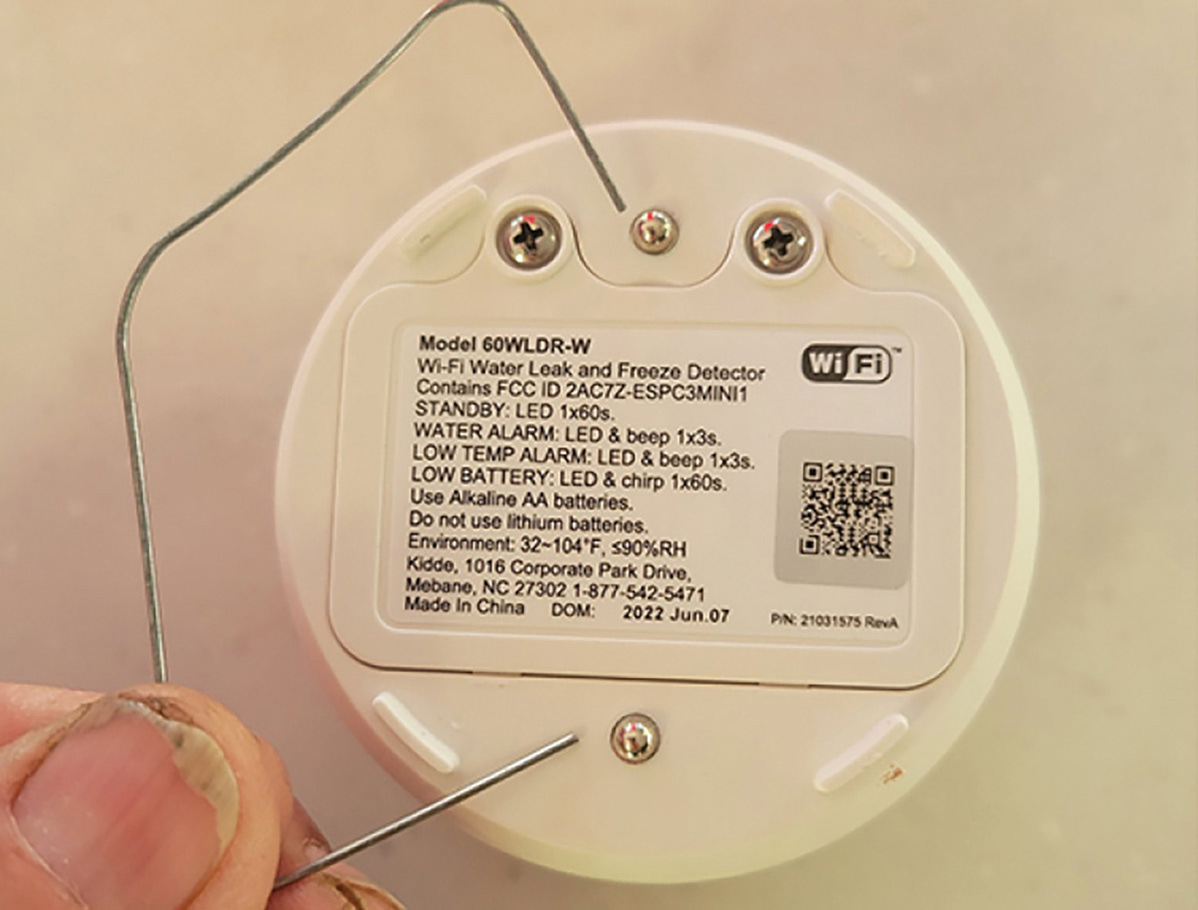
jumping the two sensors on the back of the unit to test the alarm system
Access to the battery compartment is via two screws on the back of the detector. This compartment is sealed against moisture intrusion, for obvious reasons. Two AA batteries are included with the detector; Kidde prohibits the use of lithium batteries. You can test the audible alarm by jumping the two sensors on the back of the detector with a paperclip. The alarm sends out an 85-db beeping alert, which can be heard throughout the RV.
The Kidde freeze detector operates on two supplied AA alkaline batteries (which should last around a year) and will sound an 85-db alarm when the temperature drops to 37 degrees F, or during a rapid decrease in temperature. The company prohibits the use of lithium batteries.
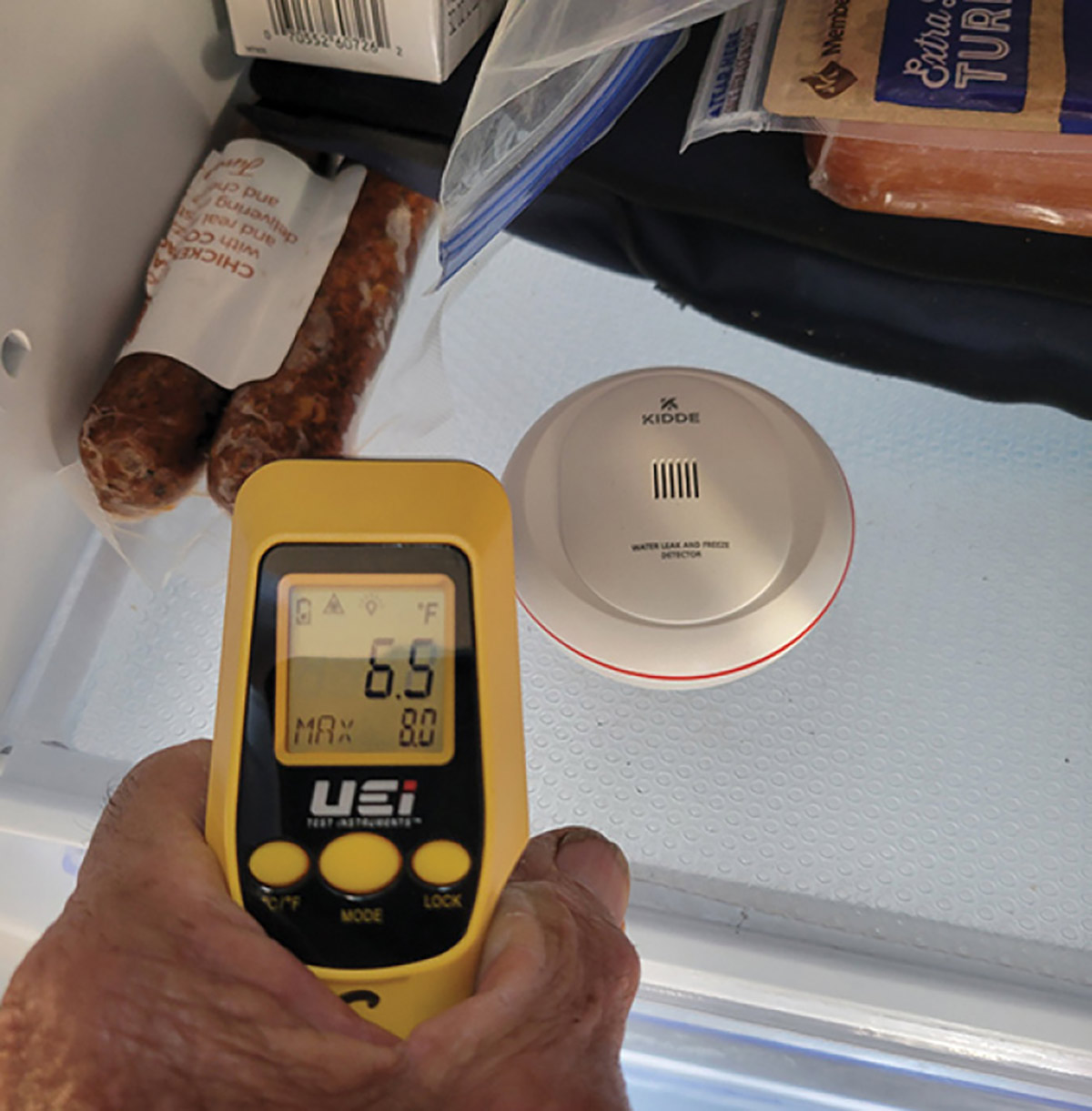
placing the detector in the freezer as a test run
The device was placed in the freezer compartment to test the alarm under low temperatures. It goes off went the temperature hit 34-37 degrees F. As you can see, ultimately this freezer was plenty cold.
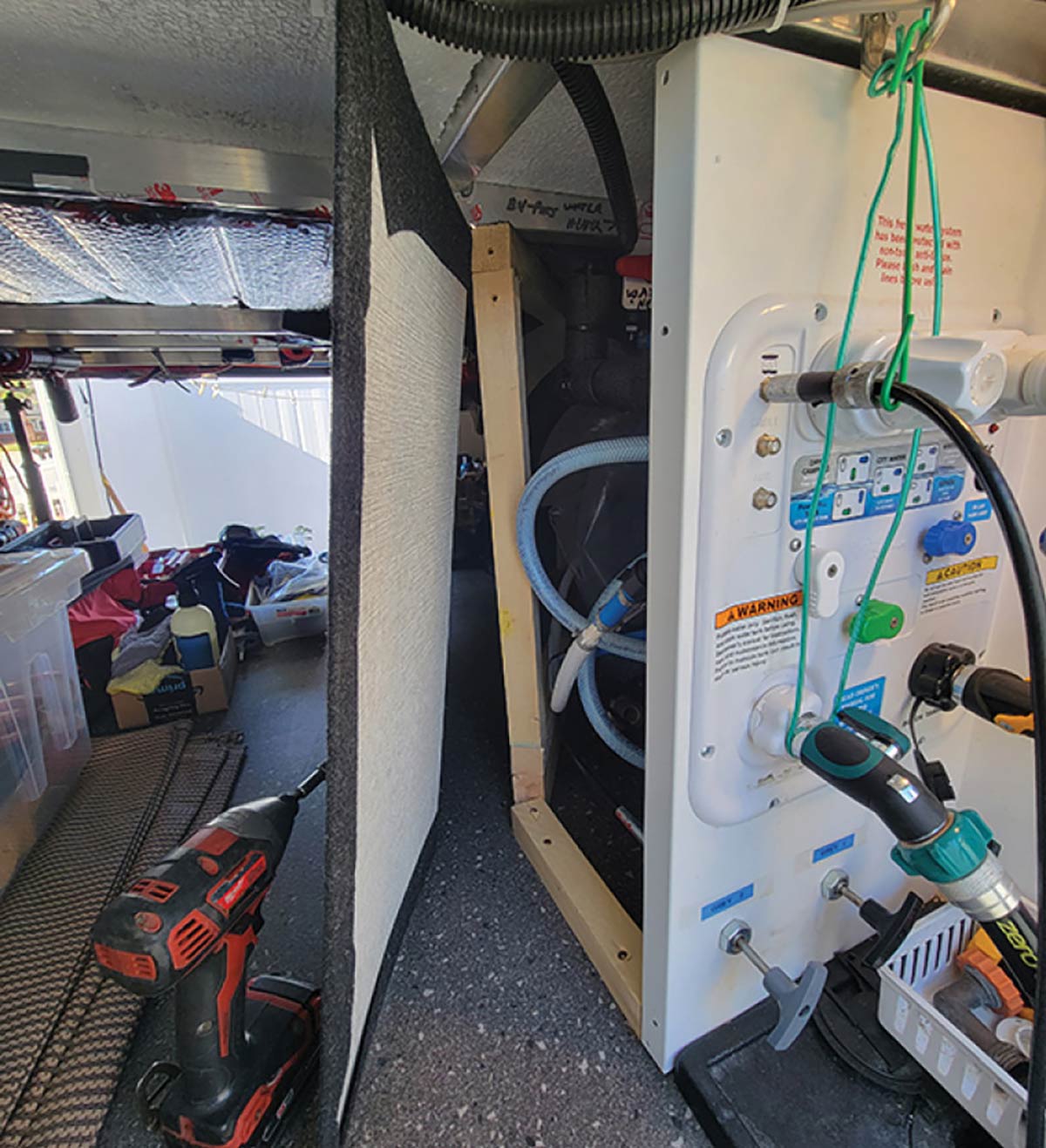
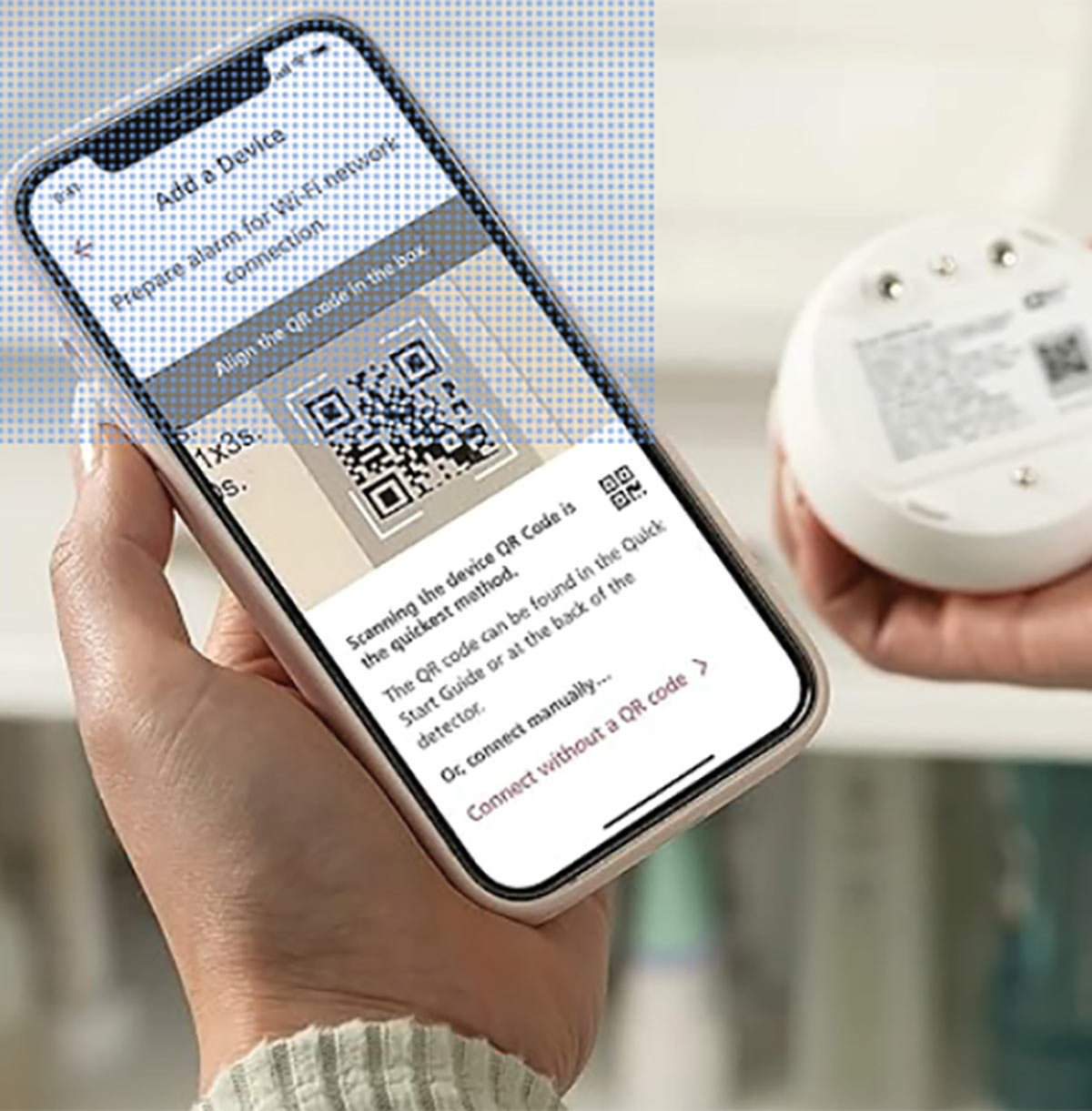
There is no installation requirement other than to set the device in areas susceptible to freeze damage. In my fifth wheel, the logical location was in the vicinity of the central water system that was plumbed with several valves and a spaghetti-type mass of water lines running in multiple directions. I had to remove the divider wall in the front storage compartment to gain access to the area. The compartment is right below the bedroom, so I knew that I would hear it, but it’s really loud enough to be heard anywhere in the fifth wheel. Since the device is Wi-Fi enabled, an alert during a freezing/water leak incident can also be viewed on a smartphone (iPhone or Android). All you do is download the App and set up the communications using the QR code on the back of the device. Keep in mind you’ll need Internet service to make this work, but it’s a great feature when leaving the RV unattended.
placing the device behind a water manifold in the utility bay
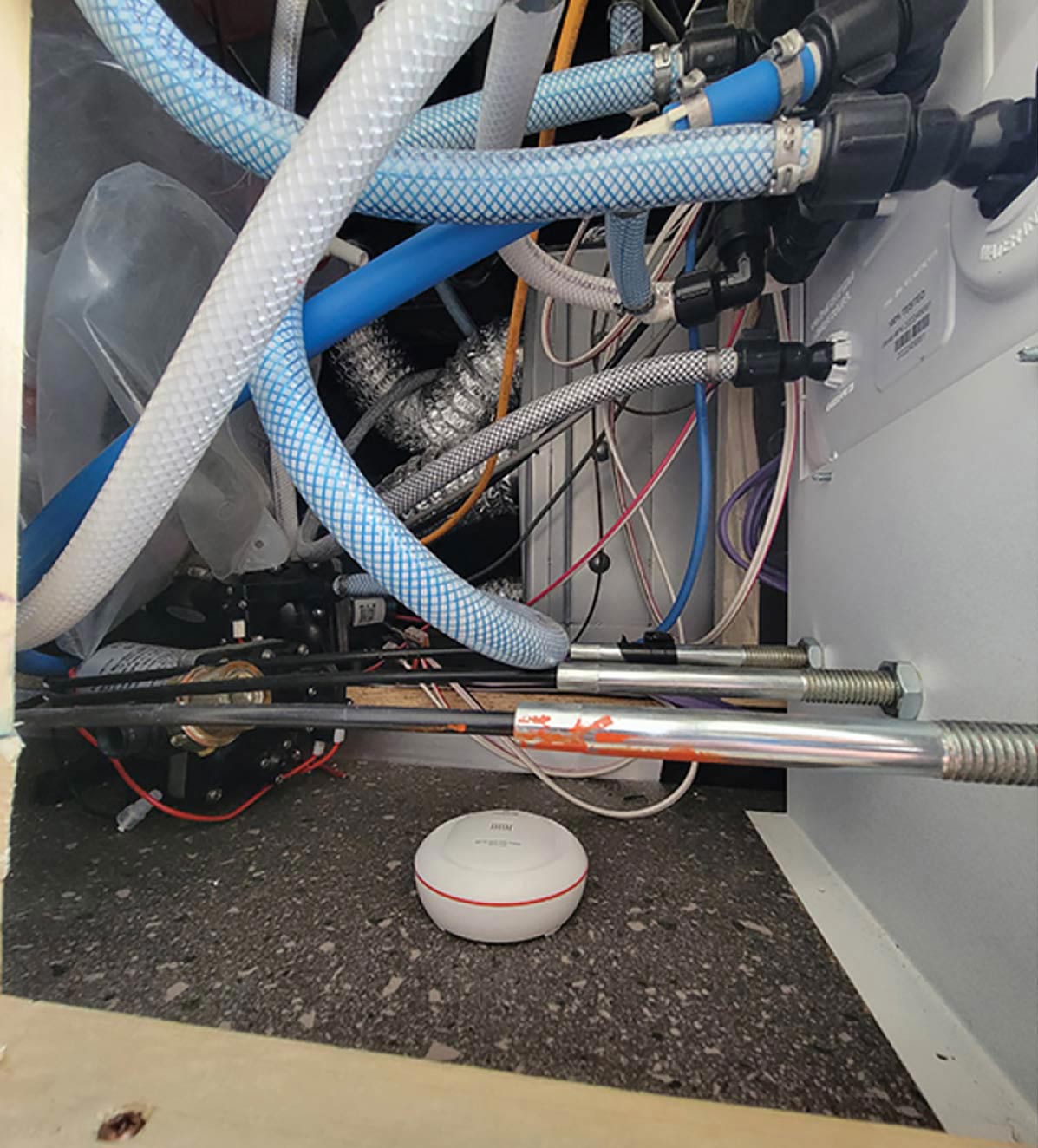
the device is placed on the floor in the vicinity of the water lines and connections
A perfect place for the device was behind the water manifold in the utility bay located in the fifth wheel storage compartment. Here, there’s a spaghetti bowl of water lines that are susceptible to freezing temperatures. The divider that closes off the front section had to be removed to gain access to this location for the Kidde device. The device was simply placed on the floor in the vicinity of the water lines and connections. It takes up very little space.
I tested the unit’s capabilities by following the suggestions in the short owner’s manual. The device was placed in a shallow dinner plate with a little bit of water, and it didn’t take long before the alarm sounded. Next, I placed the device in the freezer compartment, and in short order the device started to blare the alarm.
the smartphone app that connects to the Kidde freeze and water detector on wifi
In order to activate the Wi-Fi feature, an app is downloaded to your smartphone (or tablet) and the QR code on the backside of the Kidde alarm is used to set up communications. Just keep in mind that you’ll need Internet service to make this feature work. It offers great peace of mind when away from your RV.
The cost for this device is peanuts when compared to the expense — and hassle/down time — of making repairs due to freeze and water damage. I am a big proponent of preventive maintenance and even though I rarely travel to places when the temperature plummets, I have found myself in extreme cold weather that was not forecasted, so being prepared is my mantra — and should be yours, as well.