
onnecting a hose to the RV hookup spigot seems like a benign process — but there are times when the placement of these faucets can have you scratching your head, wondering how designers managed to complicate the process when installing the faucet as part of the hook-up utilities. That’s when a wye connector comes in handy. These simple “splitters” do the obvious: They allow two hoses to be connected at once. Further exploration, however, reveals several other convenient purposes when using this inexpensive piece of equipment.
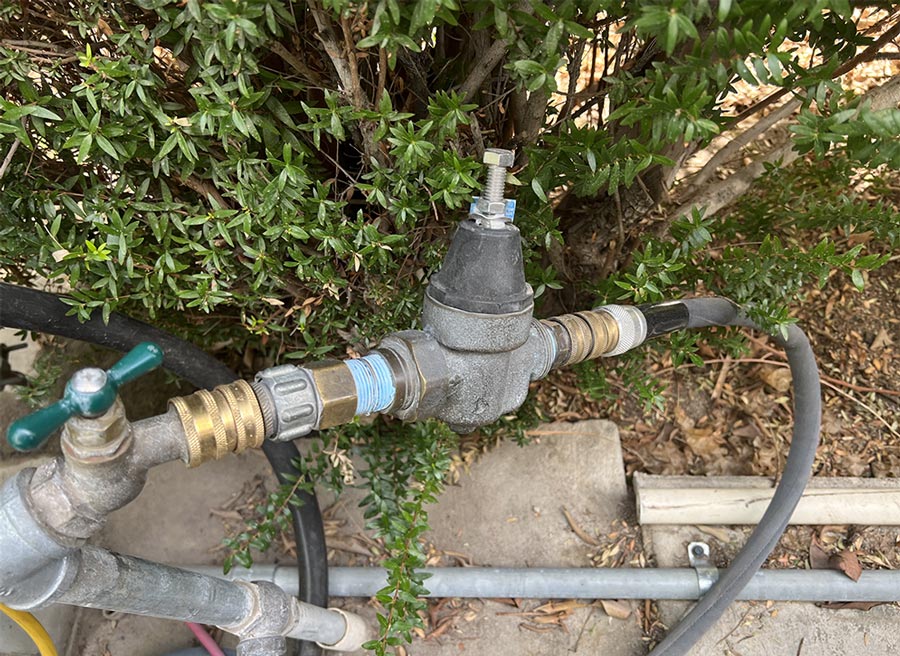
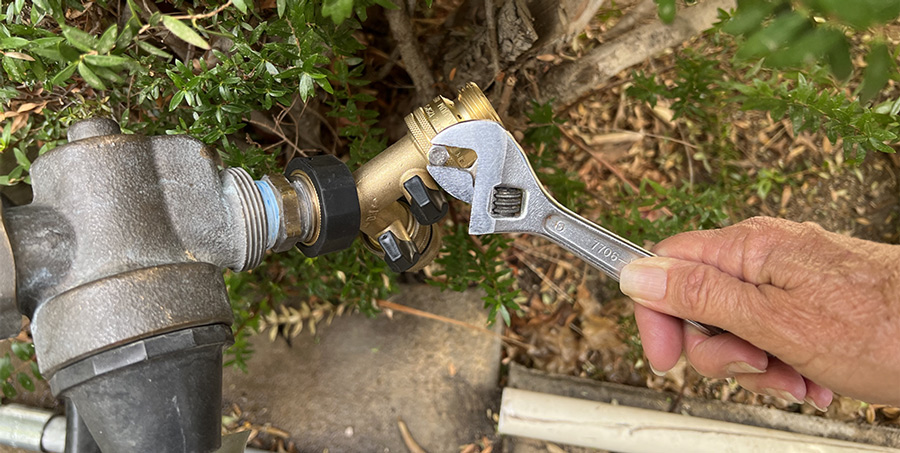
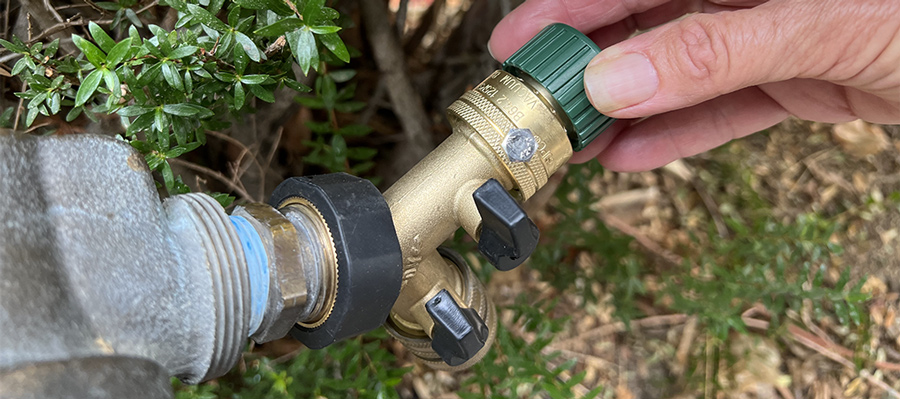
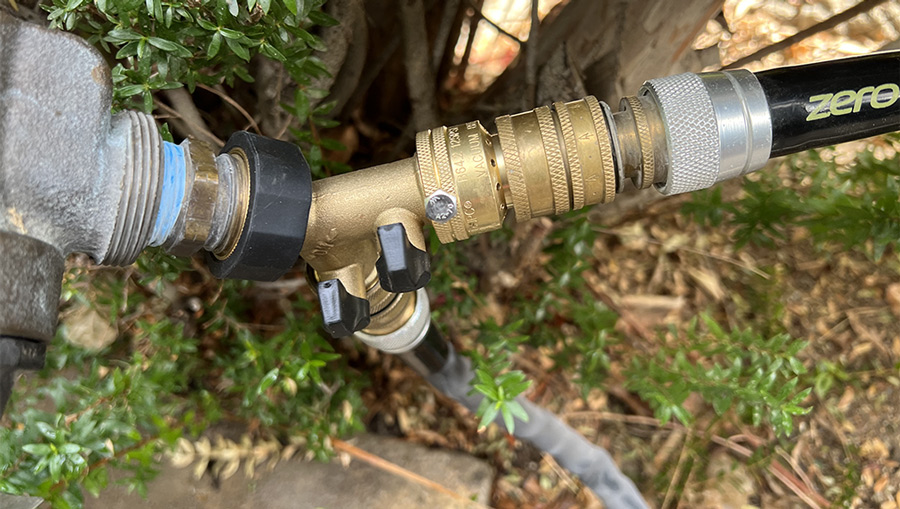
First off, I use a home-style pressure regulator, which is bigger and bulkier than the typical fitting found in RV supply stores and in starter kits provided with new RVs. Faucets that are too close to the ground, or worse yet, pointed downward, made it difficult to attach the regulator and hose without crimping the hose and impeding water flow. Adding a wye adapter (like the one I purchased at Lowe’s for $11) allows the connection point to be moved into a position that will provide additional clearance.
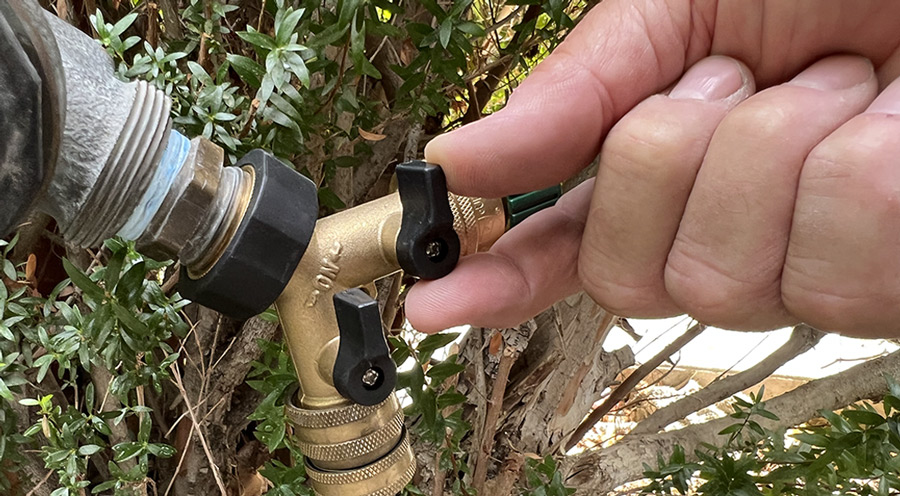
The second bib is obviously for attaching another hose, which can be used to clean out the holding tank or to connect a short hose for washing the dog or your feet, etc. Just keep in mind that any time a second hose is used in an unsanitary environment (for example, a holding tank clean-out or portable back-flush adapter) there must be a backflow preventer in the line. These devices can be found online at hardware stores; the one I installed for this project is a vacuum breaker with male and female hose threads; it sells for $7 at Lowe’s but can easily be obtained online. Normally, there is a back-flow preventer on the clean-out devices, but they are not super-robust and can fail, so the brass vacuum breaker is extra insurance to prevent water contamination. Also, always dedicate a hose for purposes other than hooking up city water or filling the freshwater tank.
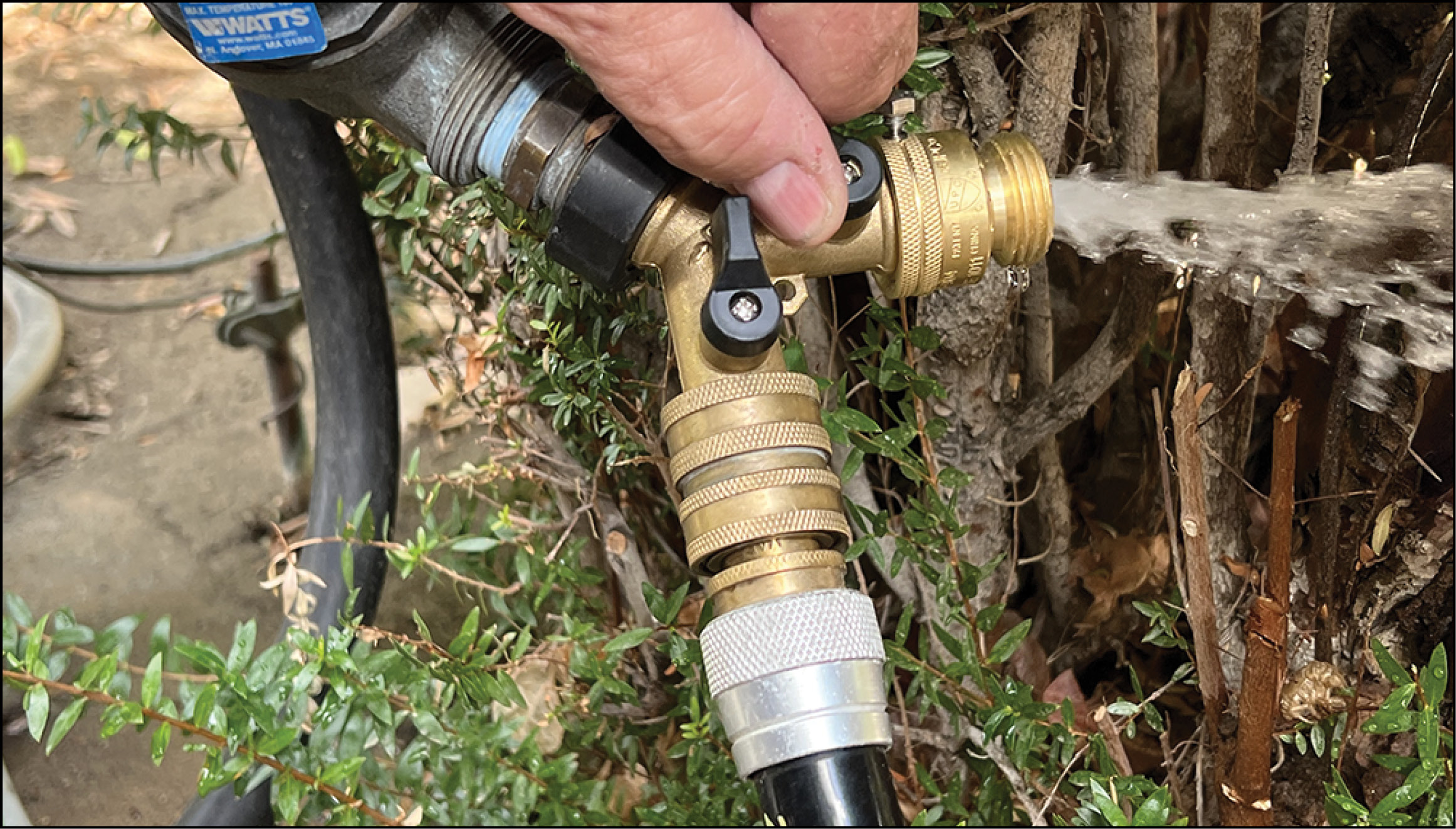
Beyond the convenience of attaching two hoses to one faucet, the wye adapter makes it easier to disconnect a hose that’s been under pressure. Relieving pressure requires that the water be turned off and any faucet in the RV (or compartment) be opened to allow the water to drain. Inevitably, I forget (or I am too lazy) to do that and get a cold spray of water — usually soaking clothing — when disconnecting the hose, either at the filter pack or hook-up faucet. That’s okay on a hot summer day, but not so much in cold weather. Opening the second valve on the wye adapter is a simple way to relieve pressure and control water flow to the ground.
Another benefit of connecting a hose to the outlet side of the regulator is to keep water pressure under the threshold for the adapter and on-board tank flushing system. Exposing the tank-flushing device hose, fittings and nozzle to high RV park pressure can lead to a rupture, especially if the system has been in service for a number of years. And that’s not pretty.