
f you’re an entomologist, you love bugs. If you’re an RVer, not so much. For RVers, the bug collection can be found on the windshield, grilles and the front of their rigs — and they make a mess. Once bugs have dried on these surfaces, removing them can be pretty difficult.
Over the years I have used several commercial bug cleaners; some work and some don’t. Recently, I ran out of cleaner — and the bug remains stacked up. Since I hate to see bugs on my tow vehicle and fifth wheel, I experimented with a few products I already had in my storage compartment — and discovered that, together, they worked amazingly well.
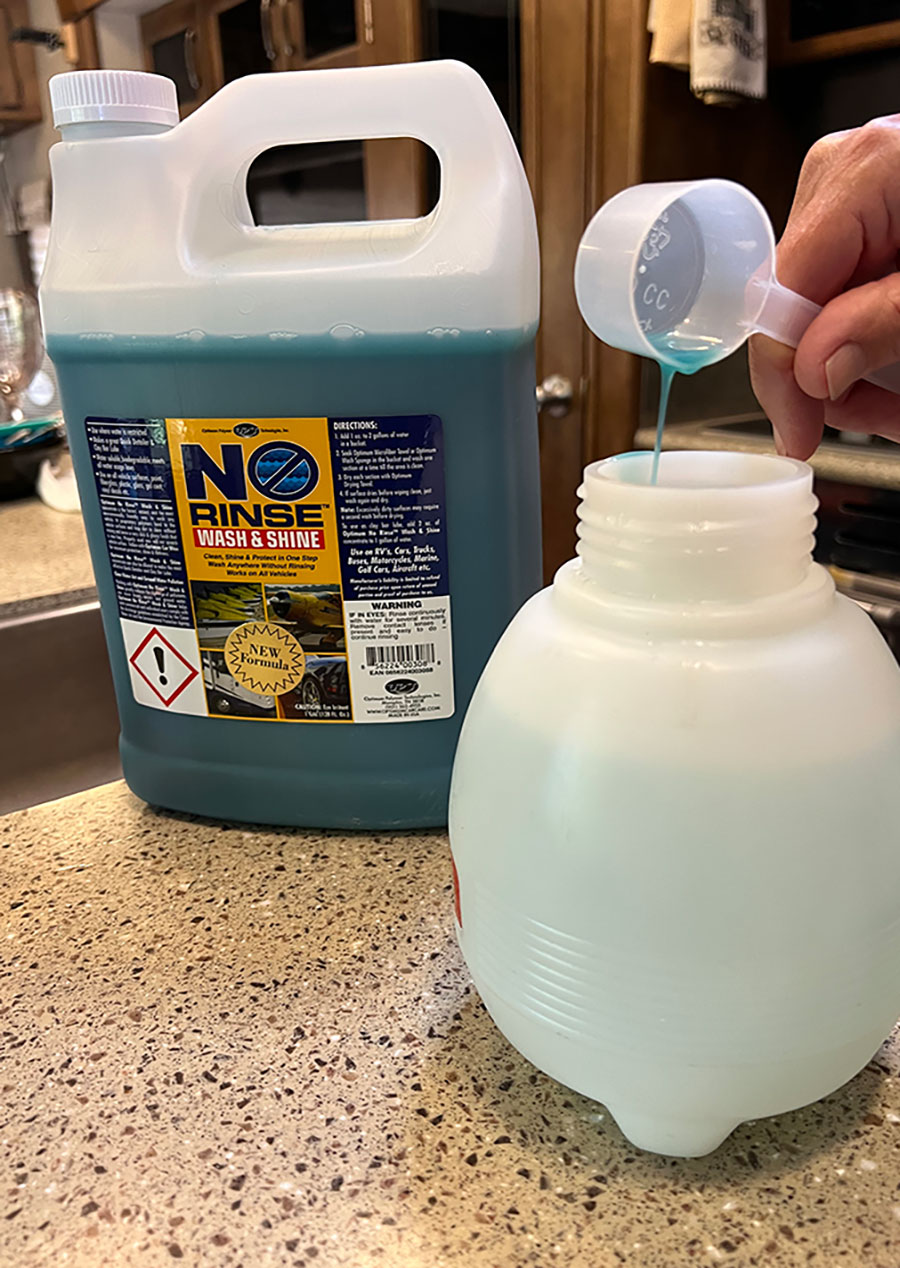
I’ve professed the value of washing vehicles with Optimum No Rinse Wash and Wax ($43.99 for a gallon container on Amazon) for years; it’s my go-to product for washing vehicles without running water. Washing with No Rinse removed some of the bugs — especially if the surface could be saturated with the solution and allowed to stand — but hot weather can dry the washing solution too quickly. Figuring the No Rinse has good cleaning properties, I mixed some with water in a spray bottle and used it as a standalone bug remover. And, rather than rely only on a microfiber towel to scrub the bugs off, I enlisted an old standby, The Boss Love Bug Eraser (3-pack on Amazon for $8.50), to help break down the dried-on bugs. The combination made short, almost effortless, work of removing bugs — especially around the truck grille, which has lots of places for bug bodies to collect.
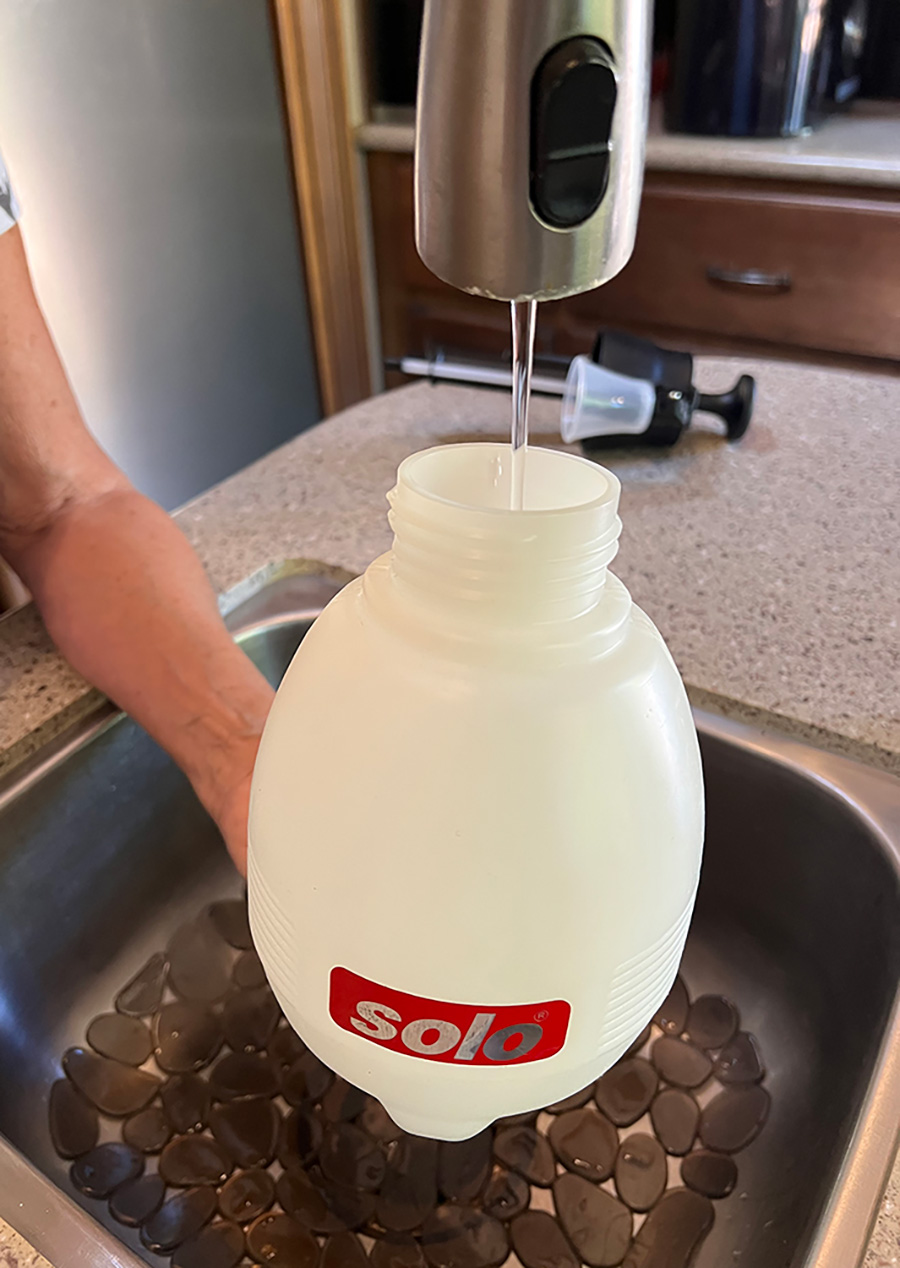
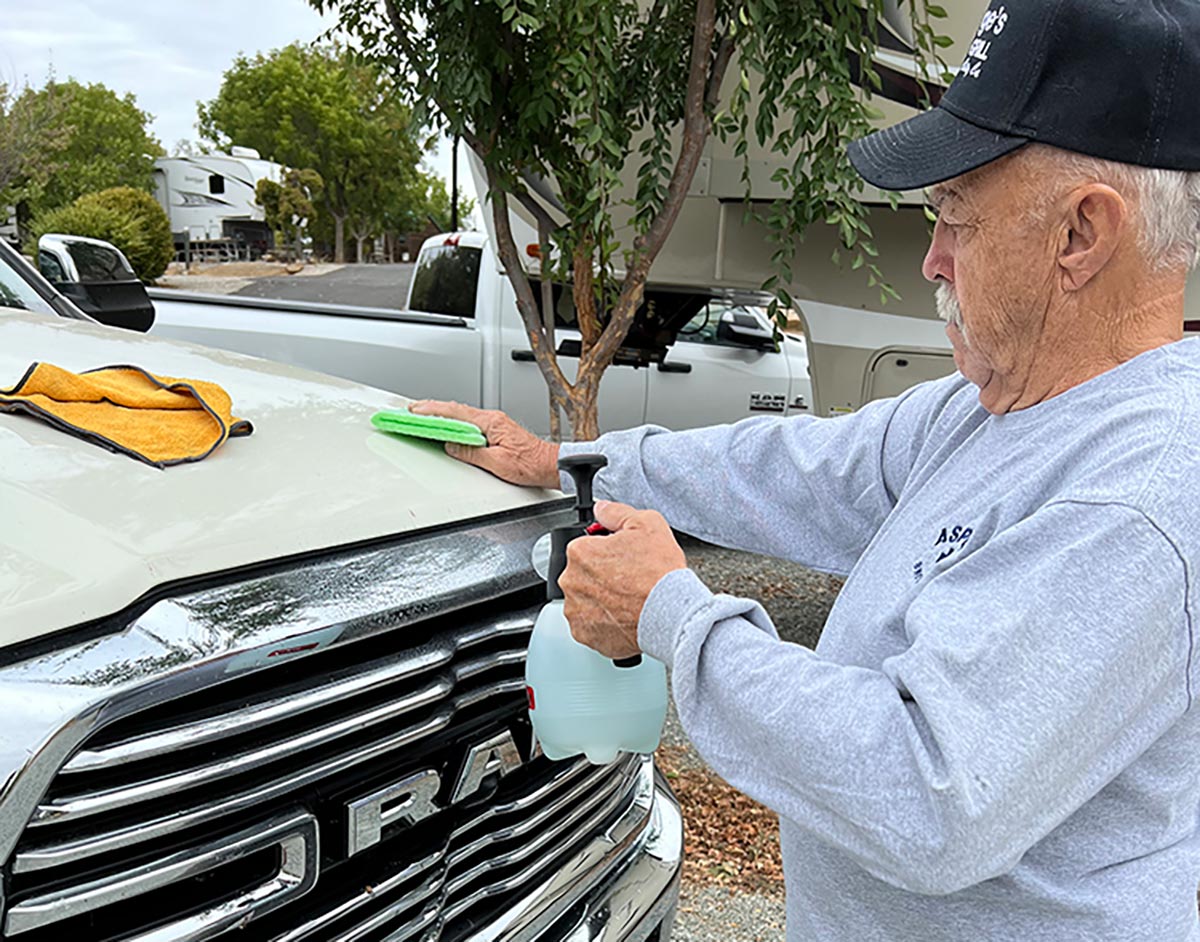
While just about any spray bottle found online and at home-improvement stores will suffice, I also moved the bar up substantially by purchasing a Solo 418 One Hand Pressure Sprayer from Amazon ($27.99). It’s a lot more expensive than common spray bottles, but it’s much more durable and certainly easier to use — especially for RVers with arthritic hands. It holds one liter of solution (around 34 ounces) and after pumping up the pressure, it distributes an atomized spray pattern by simply pressing a lever.
Adding the right amount of No Rinse concentrate to the liter of water took a little math. Washing vehicles requires only an ounce of concentrate for two gallons of water, so the amount used in the 1-liter bottle was small. I normally use two ounces of concentrate when washing vehicles, which works better, so I splurged and added ½ ounce of No Rinse in the Solo sprayer. It turned out to be a winning formula.
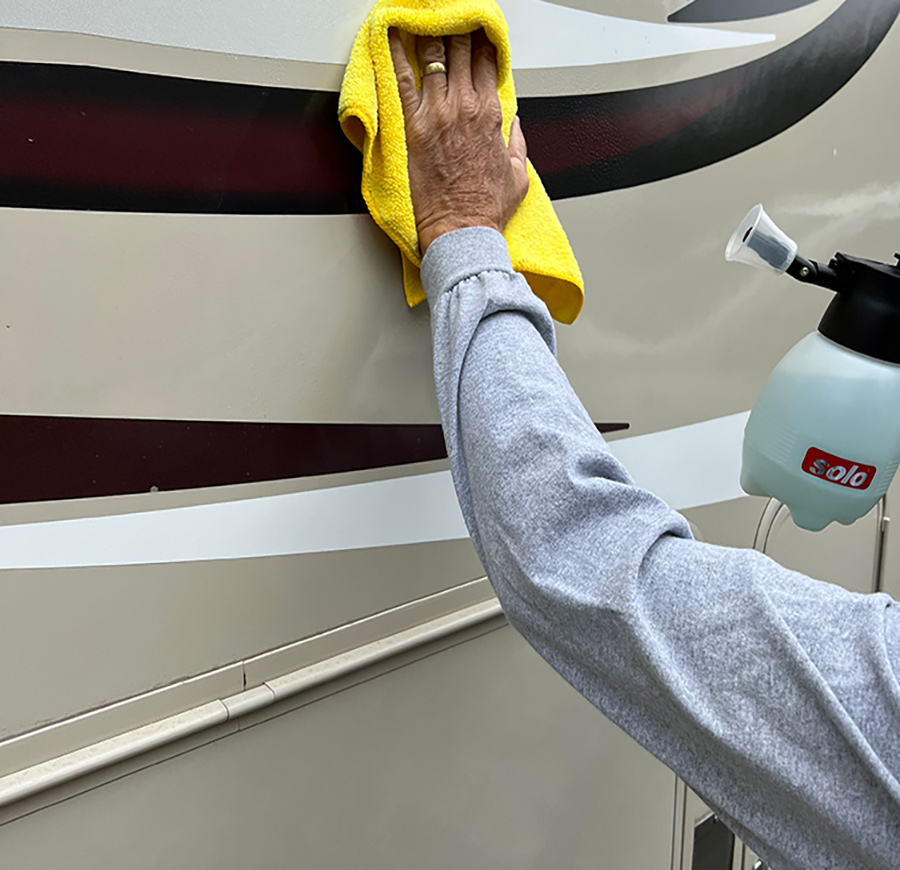
The Love Bug Eraser is designed to only use soap and water — and doing so produces excellent results — but spraying the bug-covered surface first via the Solo bottle allowed the wet-with-water Love Bug Eraser to glide smoothly over the surface effortlessly and remove the bugs. A microfiber towel was used to dry and buff the surface. The Love Bug Eraser is safe for painted surfaces, chrome, glass and plastic; just don’t bear down on the pad on painted surfaces and keep it moist.
Sometimes experimentation disappoints. In this case, the stars were aligned.