

A Soak to Success
[maghub_sidebar]
clipart stopwatch; Quick Tips & Tricks
A Soak to Success
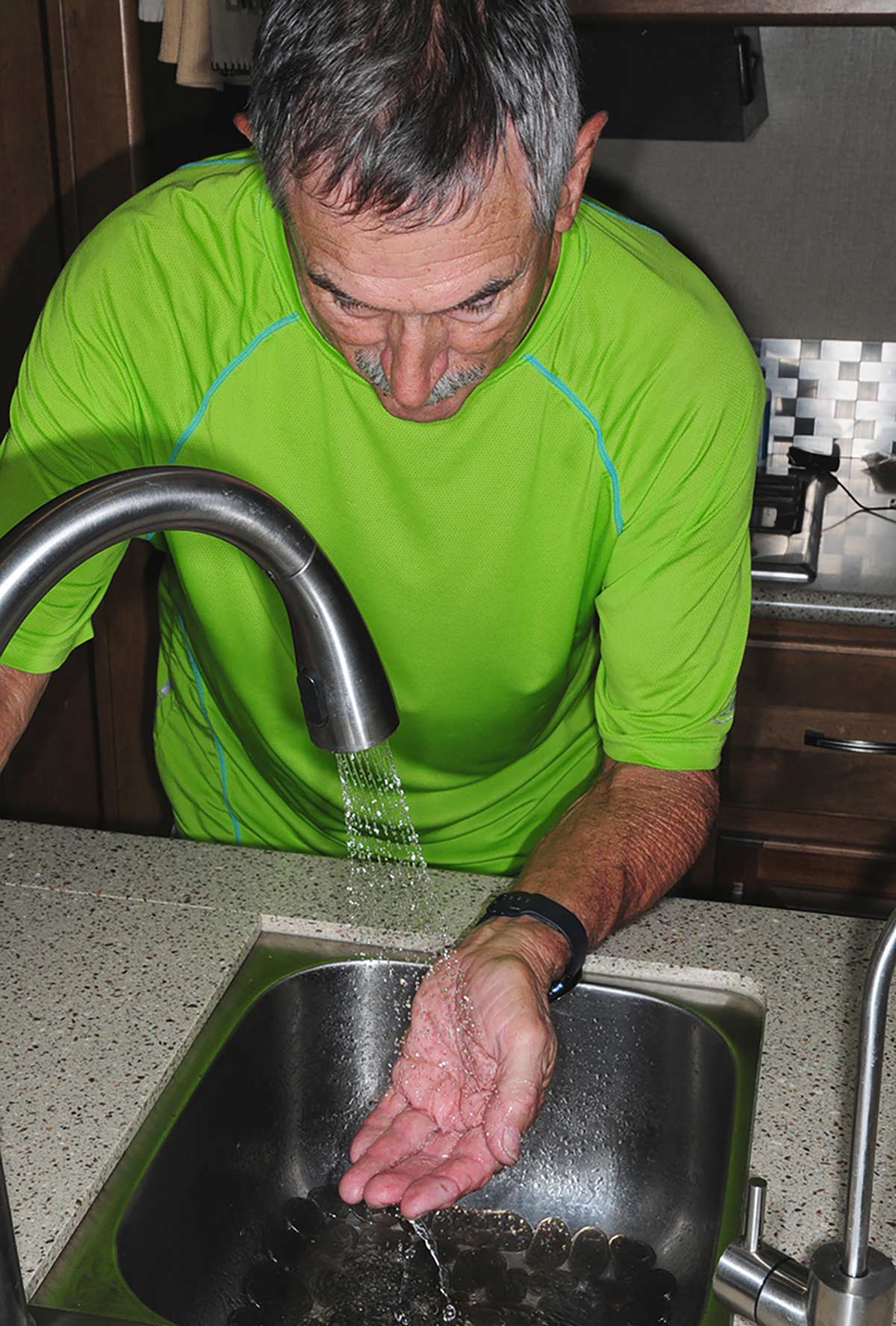
man rinsing his hand off in the sink
Calcium deposits impact water faucet efficiency — and just look ugly. Here’s an easy way to eliminate the problem.
By Bob Livingston
W

hen you’re RVing, you never know the quality and hardness of the water you hook up to at a campground. Hard water wreaks havoc on any RV water system and usually ends up leaving heavy calcium and other mineral deposits on the faucet spray head or aerator — to a point where the water either stops flowing or does a wild dance all over the sink counter. Removing these ugly deposits should be done periodically to keep the water flowing smoothly and prevent damage to the faucets.

While there are products on the market that are formulated to break up these calcium and lime deposits, finding a way to use them without first having to remove the spray head, aerator and/or even an auxiliary spigot can be problematic. After some head scratching, we found a slick and easy method to get the job done with little effort and expense: We enlisted small Ziploc storage bags, cable ties and CLR Calcium, Lime & Rust Remover, all commonly available in grocery stores and Walmart.

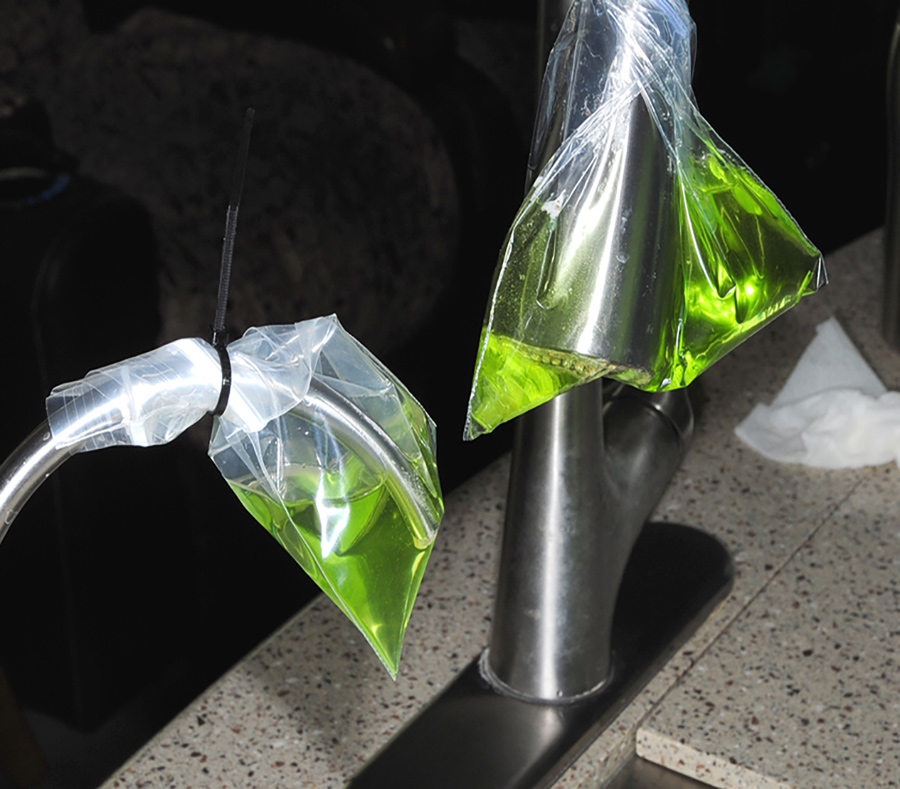
The procedure is simple and even though it may take some time for the calcium remover to work its magic, you can simply walk away and return when the job is done. Our kitchen counter, for example, has a faucet with a removable spray head that was caked with calcium, obviously caused by very hard water. Next to the sink is a smaller faucet that’s dedicated to dispensing purified water; the calcium build up on it was starting to restrict flow, as well. Small Ziploc bags (there are other brands on the market that work as well) were partially filled with CLR solution, positioned over the faucet to a point where the offending calcium was dunked in the liquid and then cable tied in place.
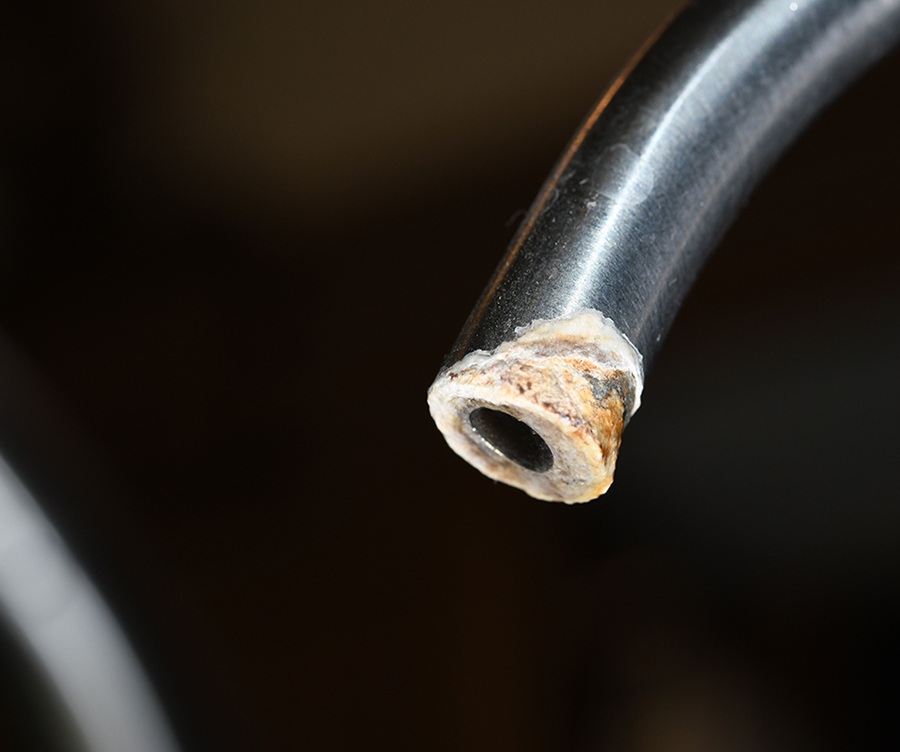
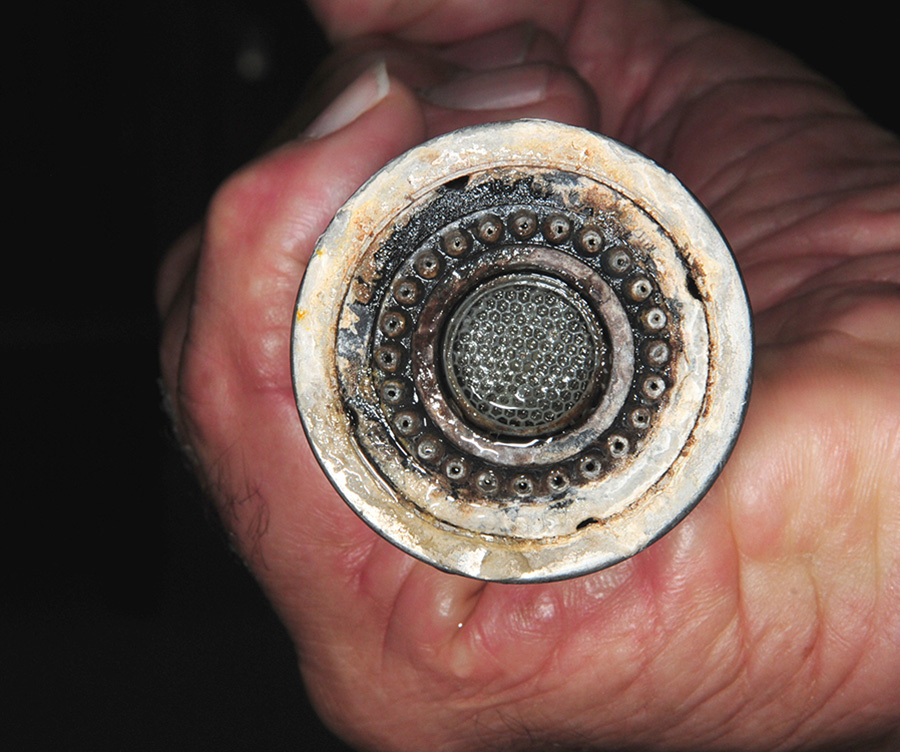
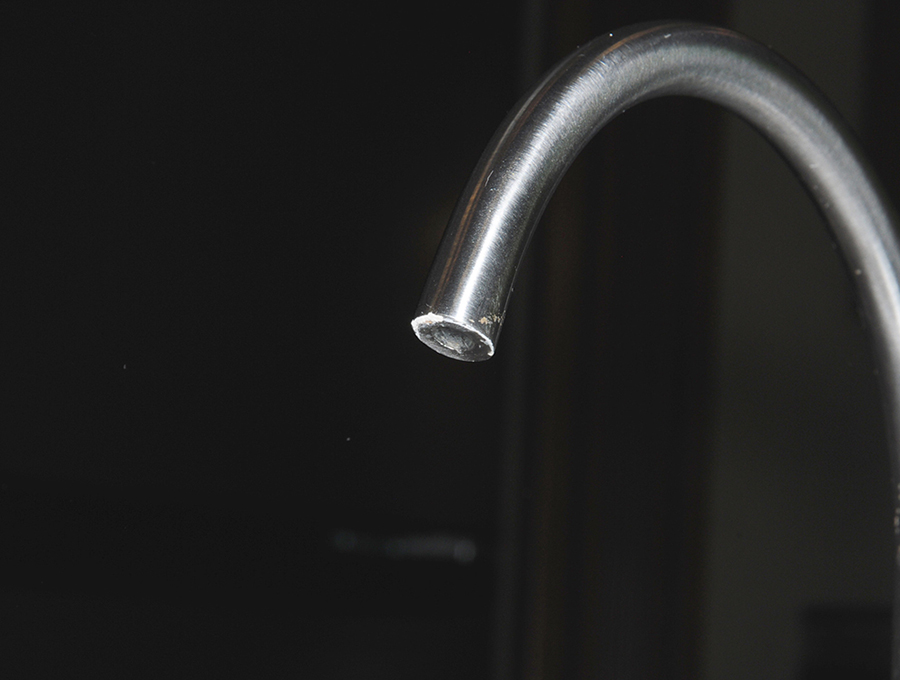
Before — The spray head on the kitchen faucet and the purified-water spigot were caked with calcium that not only looked ugly but impeded water flow. Hard water in RV parks — especially in the desert regions of the Southwest — wreaked havoc on the faucets in the kitchen and bathroom.
Immediately you’ll see bubbling as the solution attacks the calcium. Leave the bag in place for an hour or so, and most of the bad stuff will be dissolved. If you can leave it stand overnight, the process will work even better.

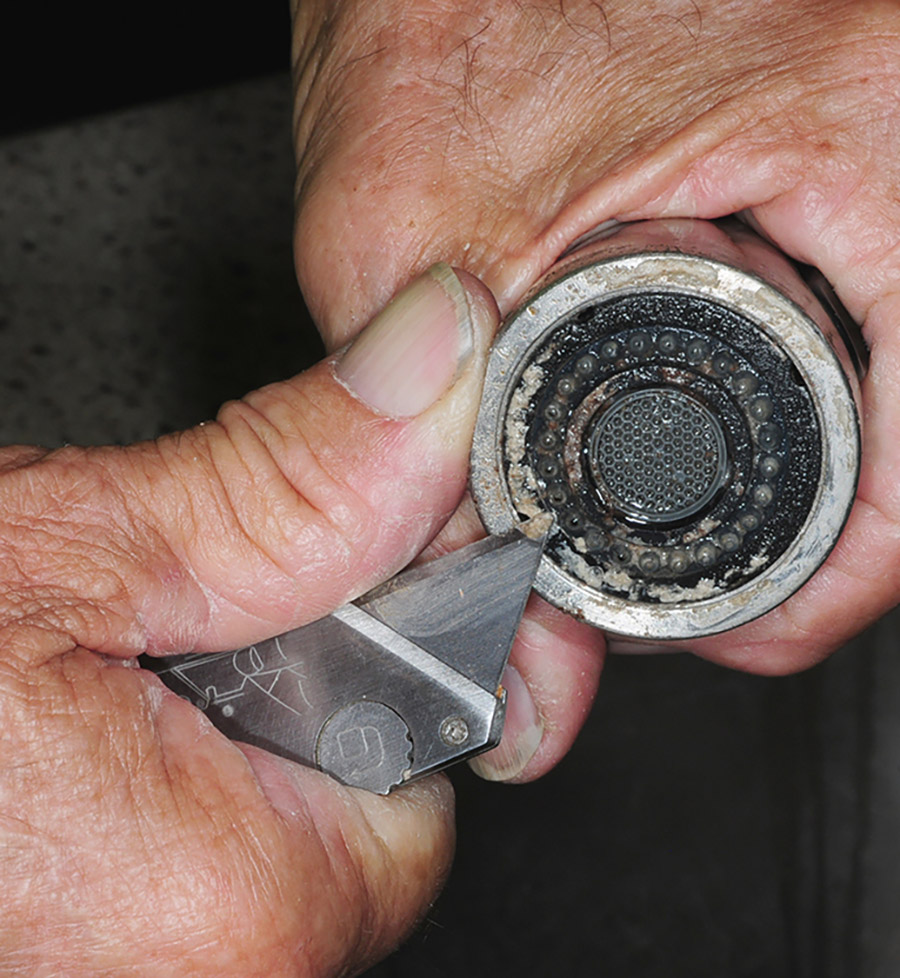
After removing the bags, we immediately recognized that more soaking time would have been better, but rather than do it again, we scrubbed off the remaining deposits with nylon and brass-bristle brushes and scraped off bigger chunks with a razor knife. The deposits came off easily and in the end the spray head and smaller faucet flowed — and looked — like new.

The project was finished off by cleaning the ugly calcium deposits that had collected around the faucet base. We sprayed Foaming Action Lime-A-Way (also available in grocery and hardware stores) on the deposits, let it sit for five minutes and scrubbed the area with a nylon, stiff-bristle brush. The faucet looked good as new — with little effort.
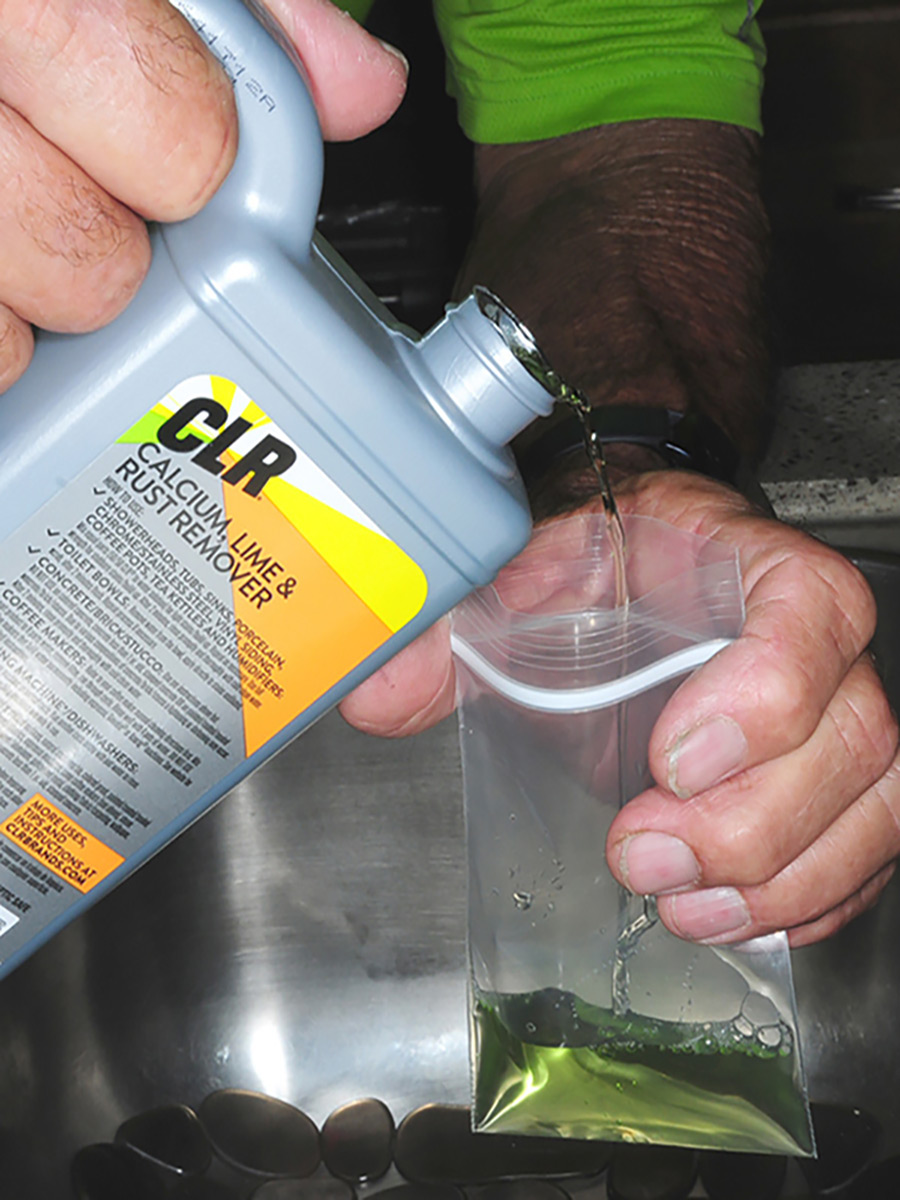
Two small Ziploc storage bags were partially filled with CLR Calcium, Lime & Rust remover before placing over the spray head and water purifier spigot in the kitchen. CLR is 80% plant-based so it’s relatively safe to use (can even be used to clean coffee pots), but thorough rinsing after use is still in order.
Cable ties held the bags on their respective faucets so that the offending deposits could remain dunked in the liquid for at least an hour. This method made it possible to let the cleaner do its magic without someone watching over the process or removing the spray head and faucet.
A brass-bristle brush was used to eliminate leftover calcium after removing the bags. In retrospect, we could have left the liquid in place for a longer period, which would have removed more calcium. Nevertheless, the cleaning process required little effort and went very fast.
Bigger chunks of stubborn calcium were removed from the metal ring with a razor knife. They came off easily, but care must be taken to prevent cutting the plastic spray nozzles, which were then cleaned individually with a safety pin.
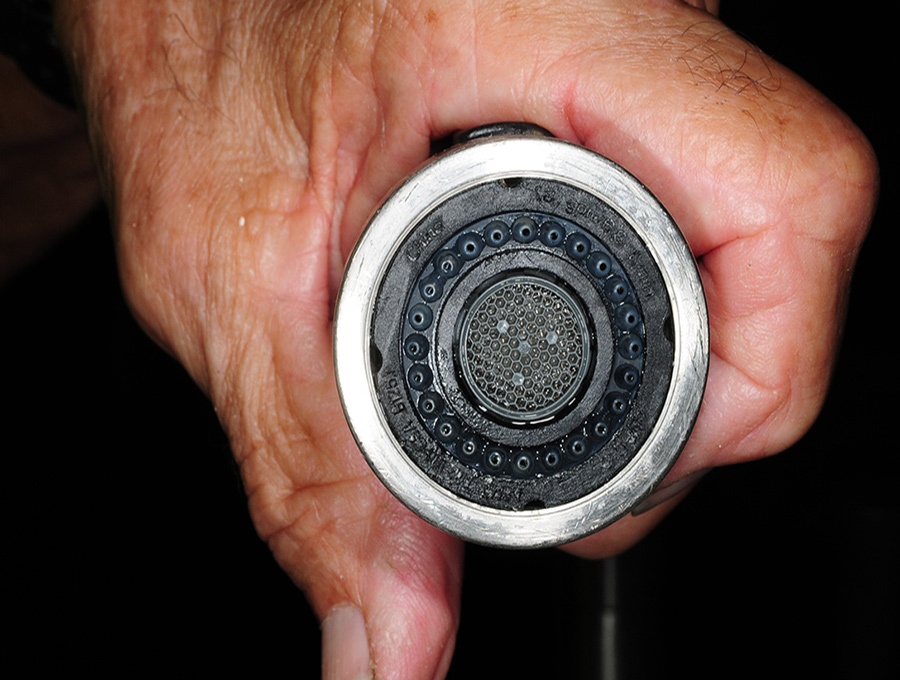
After — “Mission impossible” turned into “Mission accomplished” after the faucets took a bath in the CLR cleaner. Although there were a few tiny spots remaining on the purified water spigot (which were almost imperceptible), the cleaning restored the original look and opened the end to improve water flow.
As a finish to the project, the calcium that had built up around the base of the faucet with the spray head was removed with Foaming Action Lime-A-Way and a stiff-bristle nylon brush.