

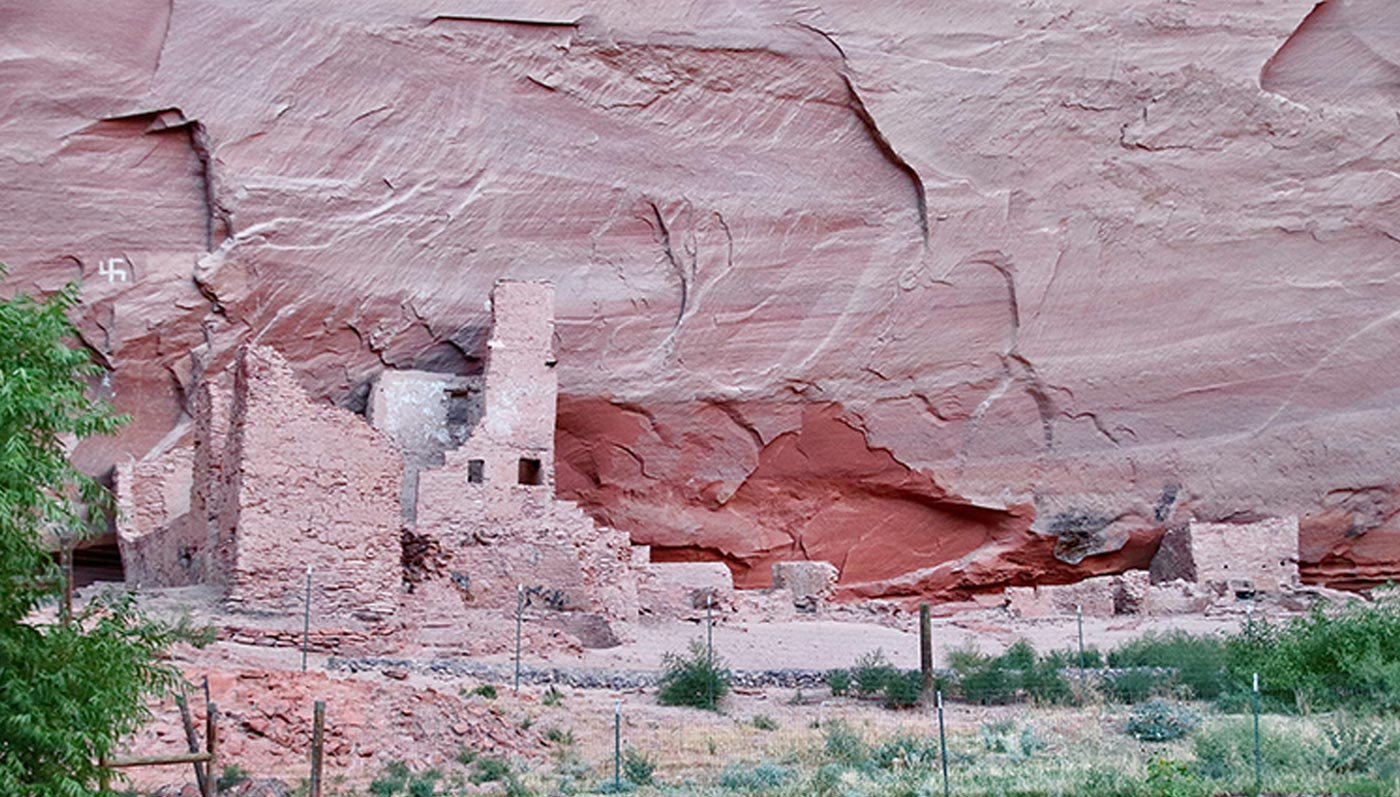
he state of Arizona is home to 22 Native American tribes, each living on their own tribal lands (reservations). The largest of these reservations is the Navajo Nation Tribal Land, located in the northeast corner of Arizona. On this reservation lies one of the Navajo’s holiest sites, Canyon de Chelly (pronounced de-shay) — a canyon that exudes a quiet magic and spirituality. This area was carved out over the course of millions of years by water flow from the Rio de Chelly in addition to years of land uplifts, which created the colorful sheer cliff walls. The canyon cliffs glow pink, yellow and orange and offer breathtaking scenery.
This Navajo holy site is one of the longest continuously inhabited landscapes in North America. Evidence of the first settlers, the Anasazi Indians (more recently called Ancient Puebloan people), who lived in pit houses in the canyon around 1150 A.D. Later, the Anasazi moved from pit houses to building homes in the caves and alcoves of the canyon walls. The remains of numerous multi-storied masonry dwellings can still be found in the sandstone cliffs of this canyon. By the mid-1300s, the Anasazi people left the canyon and moved elsewhere because of drought conditions. The Hopi tribe then moved into the canyon and planted crops of corn and peaches. Hundreds of years later, the Hopi also left the canyon and moved to the mesa tops. The Navajo tribe later moved into the canyon, created farms on the floor of the canyon, planted crops, raised livestock and built dome-shaped hogans as their homes. To this day, the canyon is still inhabited by Navajo families.
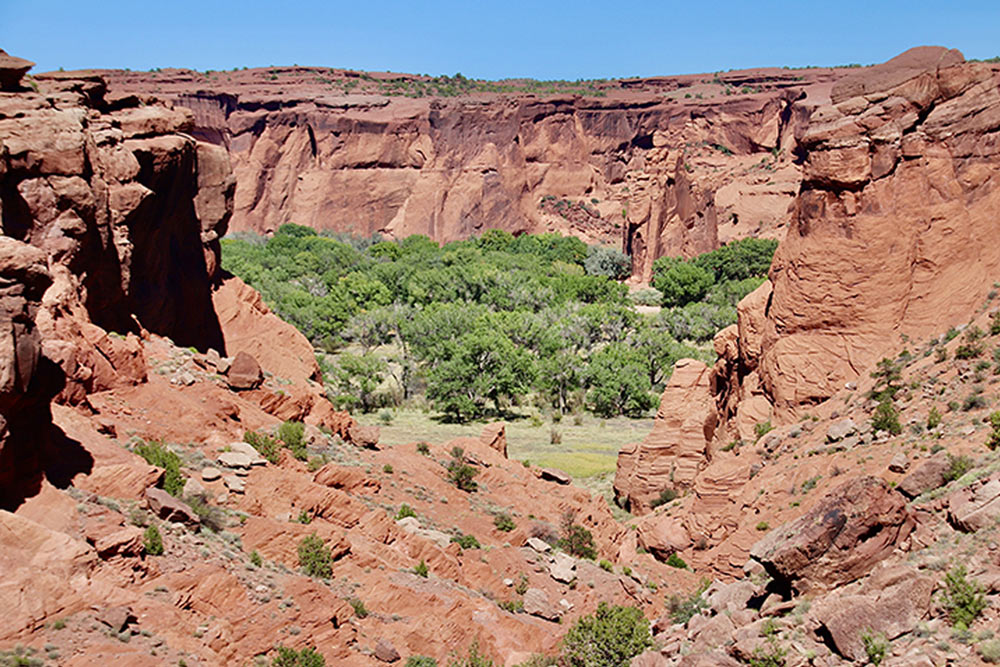
President Herbert Hoover established Canyon de Chelly National Monument in 1931 to preserve the archeological resources in this canyon dating back more than 4,000 years. The canyon is considered a sacred outdoor “museum” of the Navajo nation. This National Monument Park covers almost 84,000 acres, all of which is on Navajo Nation Land. Canyon de Chelly National Monument is managed by a partnership of the National Park Service and the Navajo Nation, but the land is still owned by the Navajo Tribal Trust.
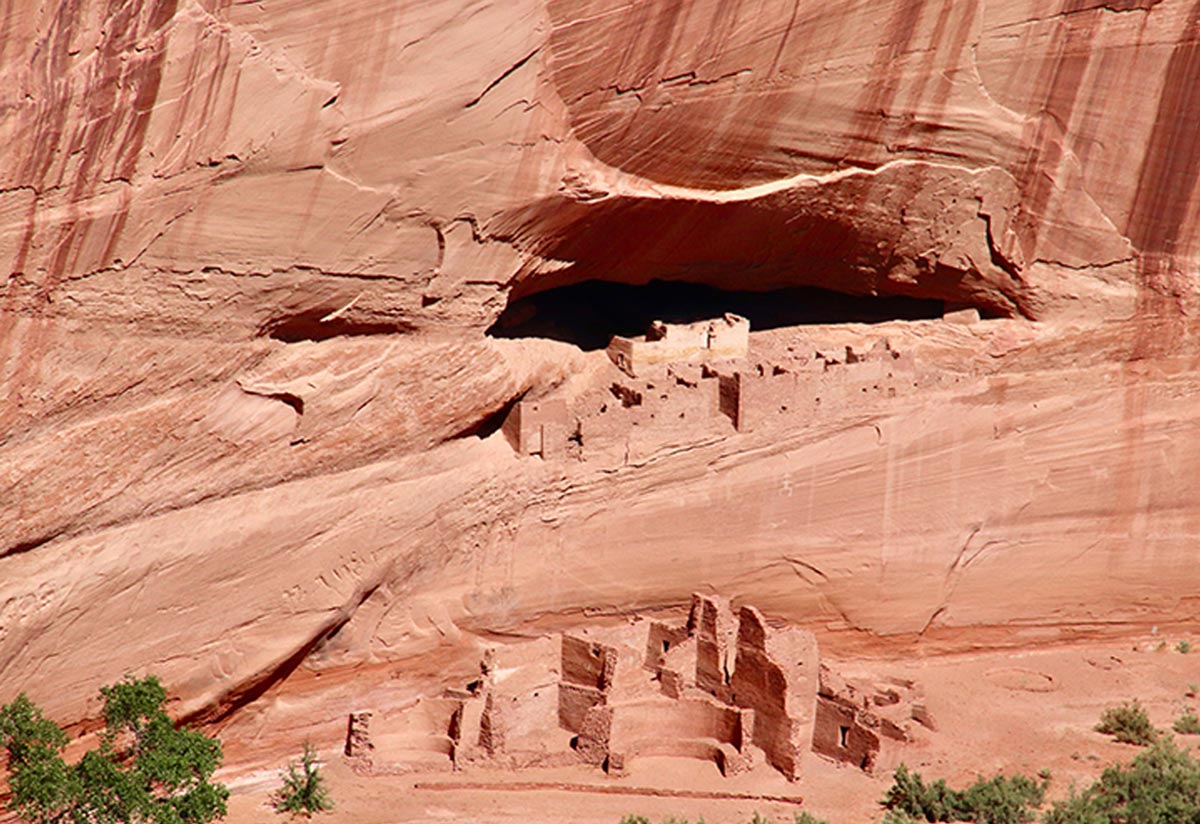
The White House ruin is the best-known cliff dwelling in Canyon de Chelly. This ruin had up to 80 rooms and four kivas during its most heavily used years and is the largest ruin in the canyon. These masonry cliff dwellings were built by the Anasazi.
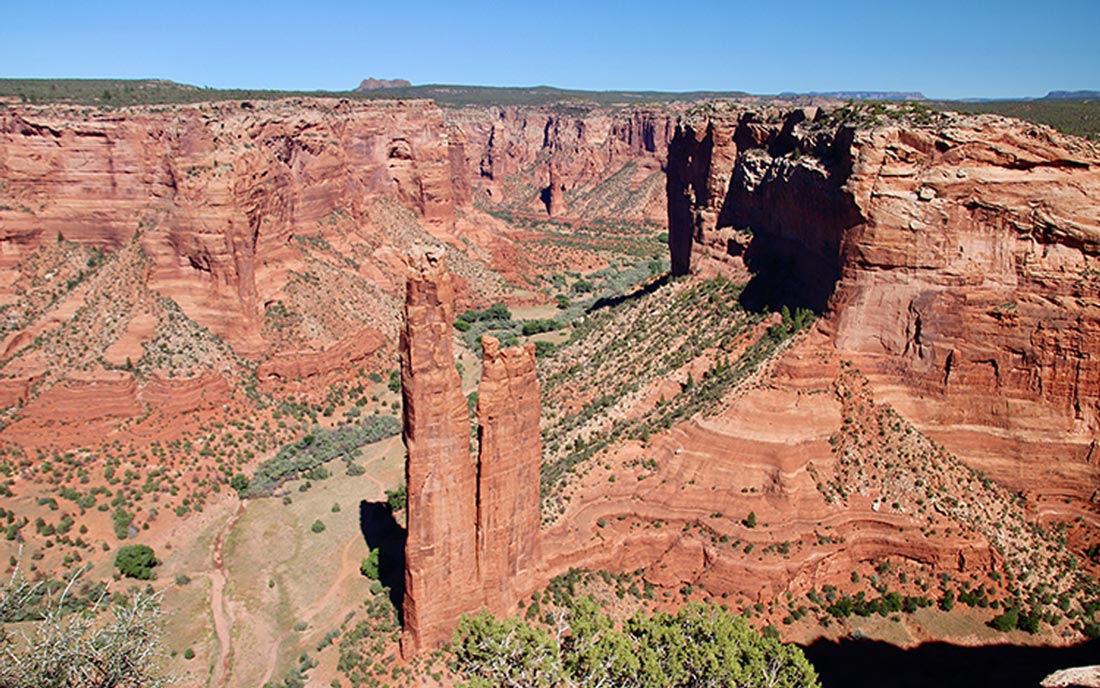
Canyon de Chelly actually encompasses the floors and rims of three major canyons, including Canyon de Chelly, Canyon del Muerto and Monument Canyon. Canyon del Muerto, which means Canyon of the Dead, got its name when an ancient burial ground was discovered. The 84,000-acre canyon area offers breathtaking views and has several prominent unique features. The most distinctive geologic feature in the canyon is Spider Rock, a spire of sandstone that rises about 800 feet from the canyon floor at the juncture of Canyon de Chelly and Monument Canyon. This is one of the more sacred spots in the canyon; according to Navajo beliefs, a Spider Woman lives on top of this spire. The Navajo believe that Spider Woman was the one who taught their ancient tribes to weave. Another prominent feature in the canyon is White House ruin, built by the Anasazi Indians around 1060 AD. More rooms were added during the next 200 years, totaling up to 80 rooms and four kivas during its most heavily used period. The White House ruin is the largest of the ruins in Canyon de Chelly, and visitors can tour the ruin with a Native guide. One other notable prominent feature in the canyon is Mummy Cave, a large cliff dwelling with a three-story tower. Researchers found that this dwelling was occupied from 300-1300 AD.
Canyon de Chelly contains more than 2,500 archeological sites. In addition to the numerous masonry cliff dwellings that have been found in caves and built into recesses in the canyon walls, a great amount of prehistoric rock art — more than 100 locations — can be found on the cliff walls throughout the canyon. Amazingly, these ancient pictures have withstood the elements and weather over thousands of years, and can still be viewed today.
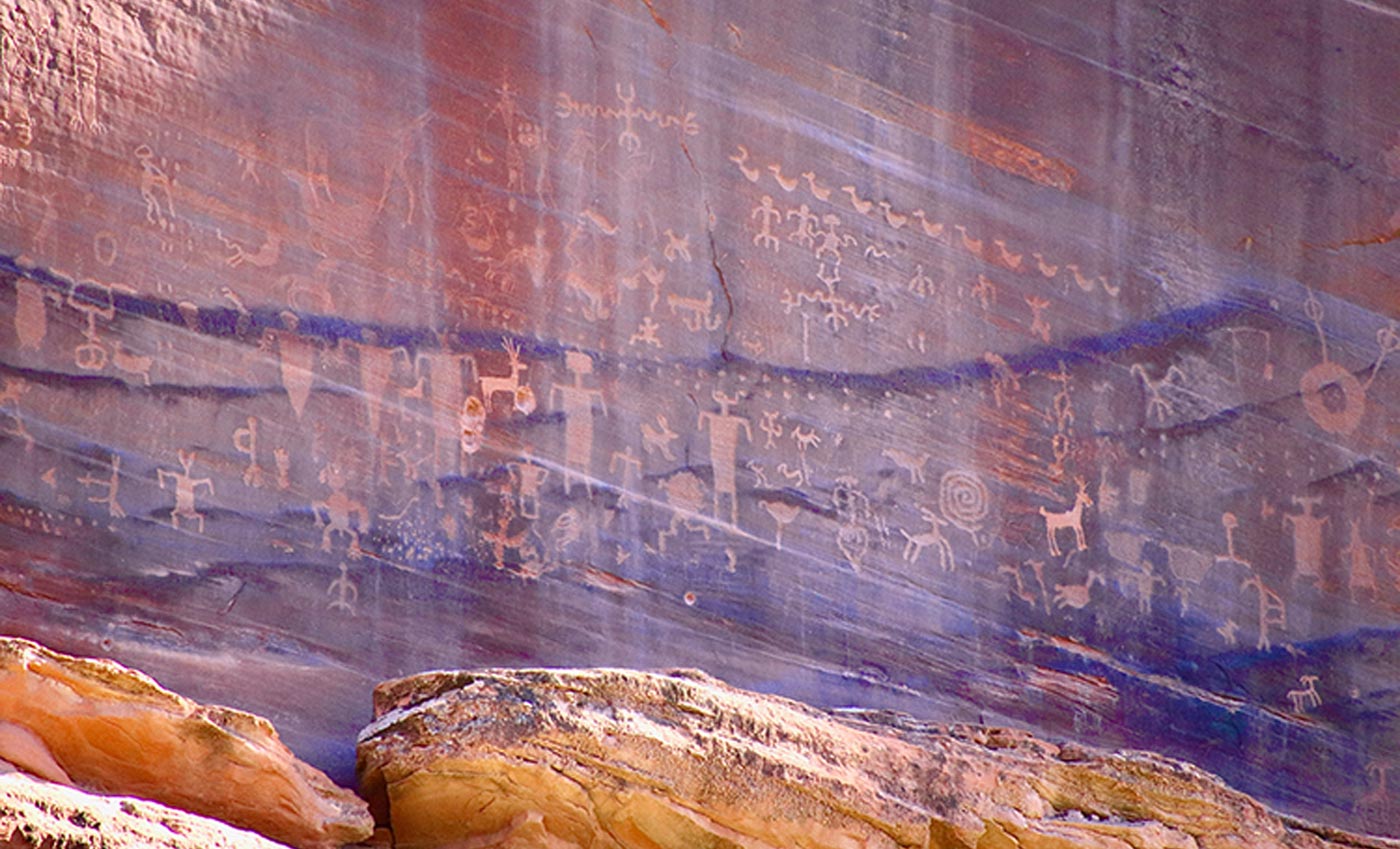
Canyon de Chelly is home to more than 2,500 archeological sites and 100 rock art locations. This panel of rock art is one of the largest in the canyon.
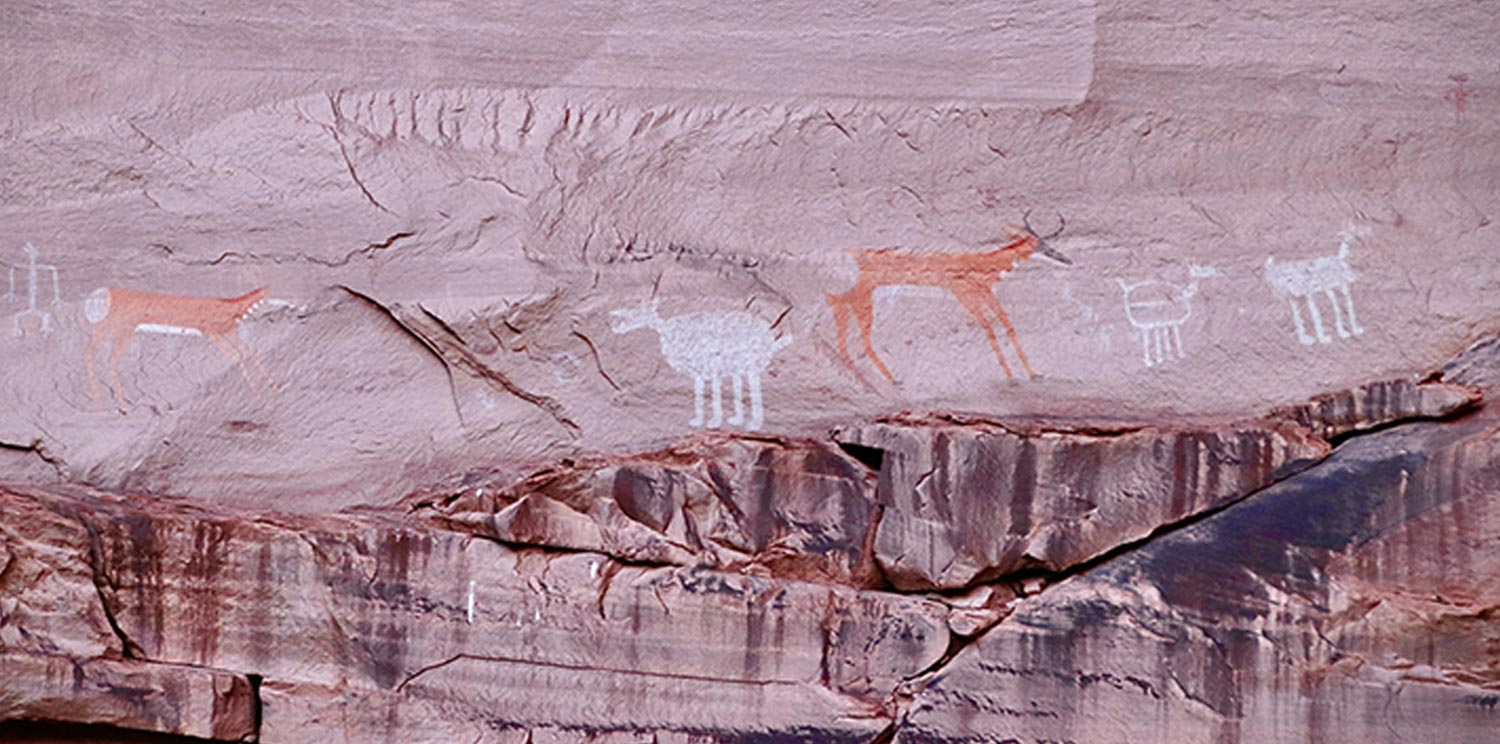
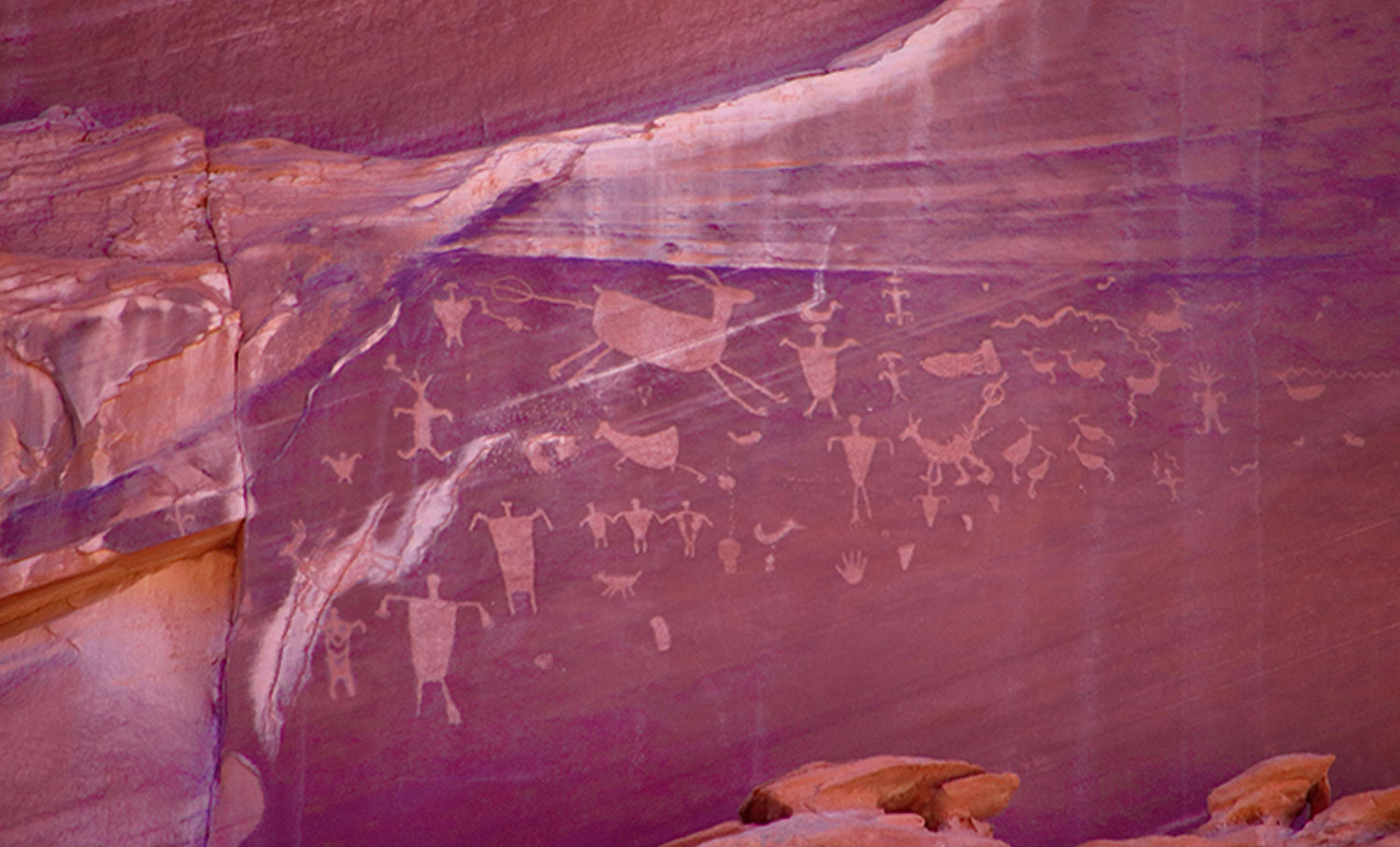
This panel of rock art, found on one of the canyon walls, clearly shows many human and animal figures. Other unknown symbols and what appear to be handprints can also be seen.
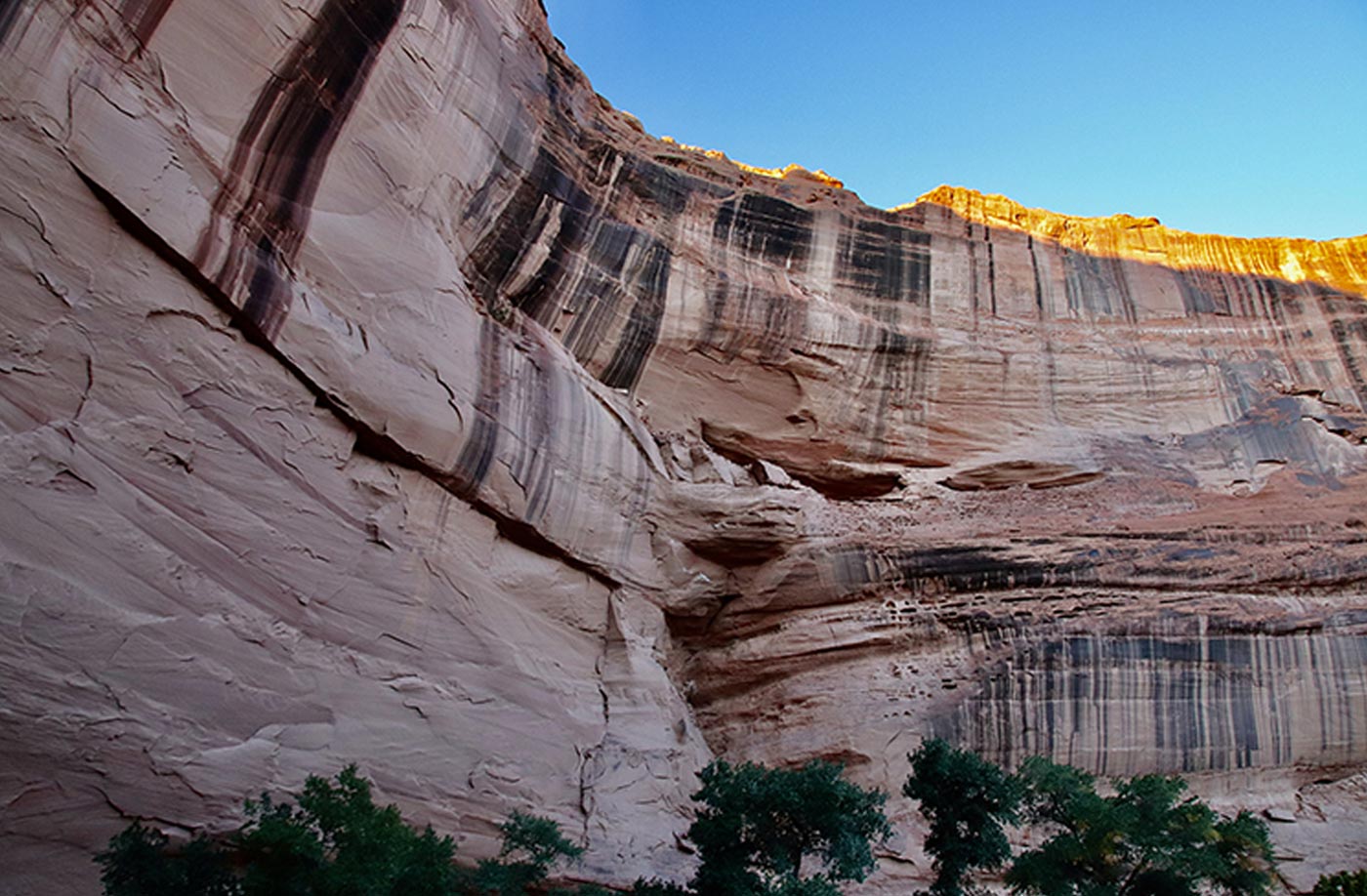

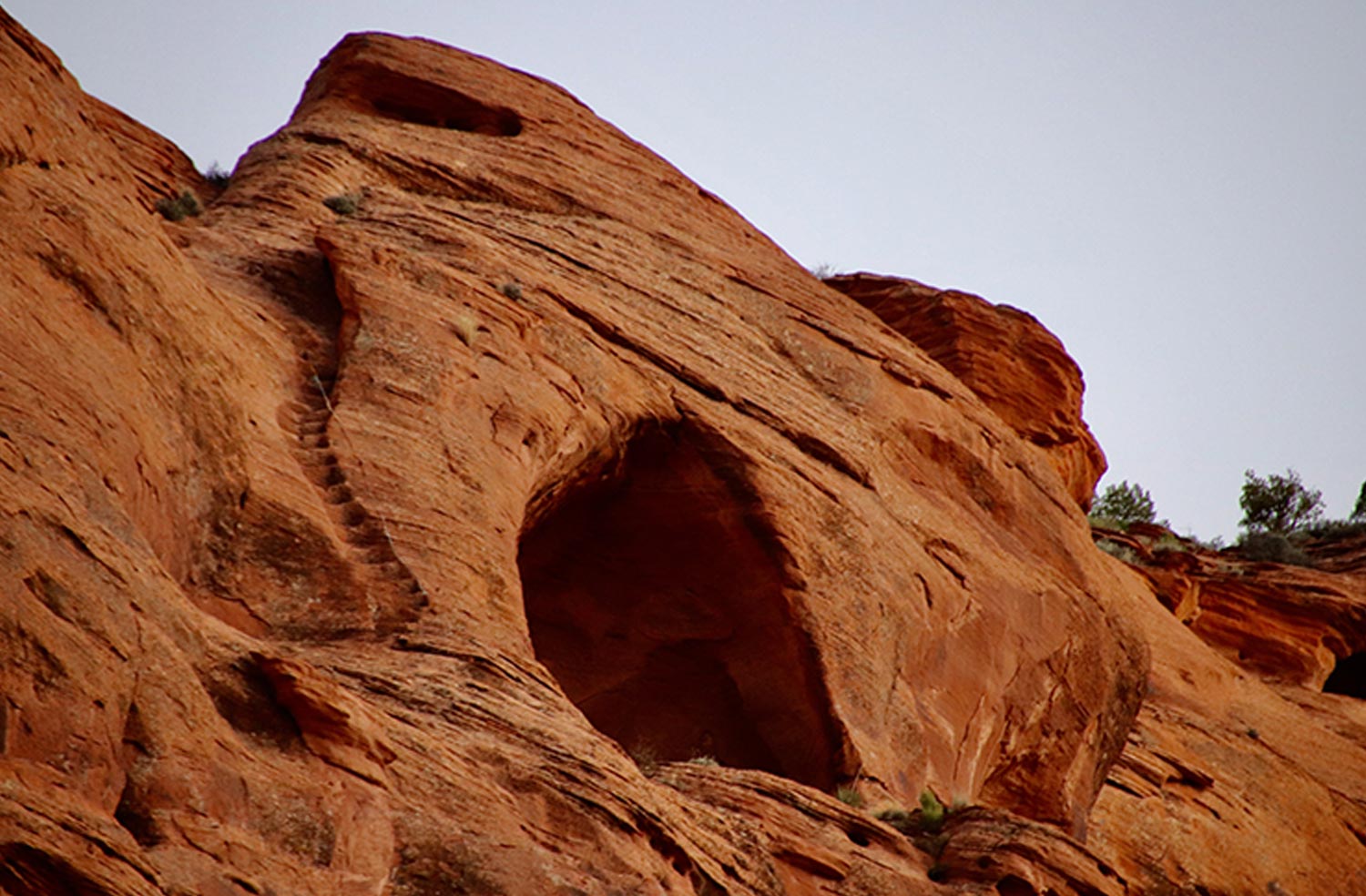
This unusual rock formation, often referred to as “2 Dog Formation,” is in Canyon de Chelly

Another archeological site within Canyon de Chelly is a masonry cliff dwelling with a very large rock art image painted to its right.
Suzanne Strauss and her husband, Rich, have been full-time RVers for about four years. They started out camping on weekends in a pup tent; eventually, they bought a small single-axle travel trailer to “test the waters” and fell in love with RVing. Now living full-time in a motorhome, they ply the roadways in search of interesting and “off the beaten path” places. She can be reached at: RStrauss22@gmail.com