


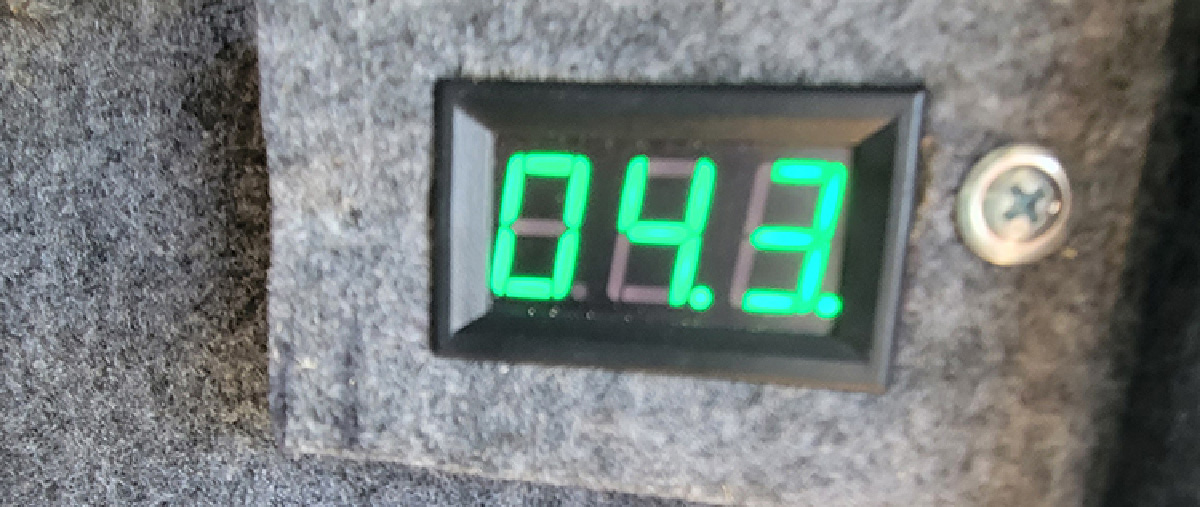
For those without sophisticated remote monitors. keeping tabs of 12-volt DC consumption when camping off the grid can be as simple as adding a $20 amp meter.
amping off the grid presents several challenges — one of which is managing battery power. Whether you have one battery or a bank of six, having the capability to monitor amperage draw can make a big difference when estimating how often you need to recharge the batteries — and if your system is capable of getting the job done. A solar system takes some of the guesswork out; however, several days of rain or clouds will affect charging status.
Inverters can be the biggest battery drain, depending on how many appliances are operating throughout the day. There are a few options for monitoring battery levels and, for the most part, these remote gauges are tied into the inverter or solar system and can be rather expensive; retrofitting can also be labor-intensive. However, an inexpensive induction amp meter can give you a general real-time battery condition along with your onboard voltmeter. Then, if you keep a log of voltage in conjunction with the amperage draw, it’s possible to figure out how long the batteries will provide enough power to the inverter before shutdown occurs.
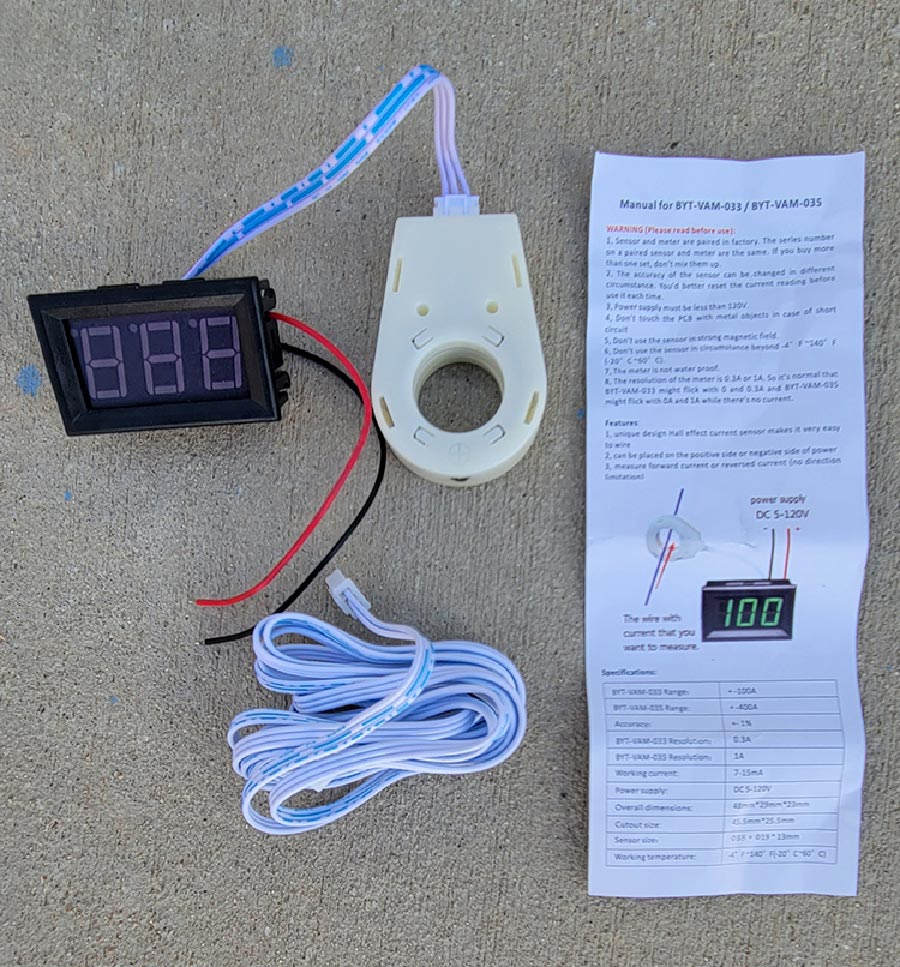

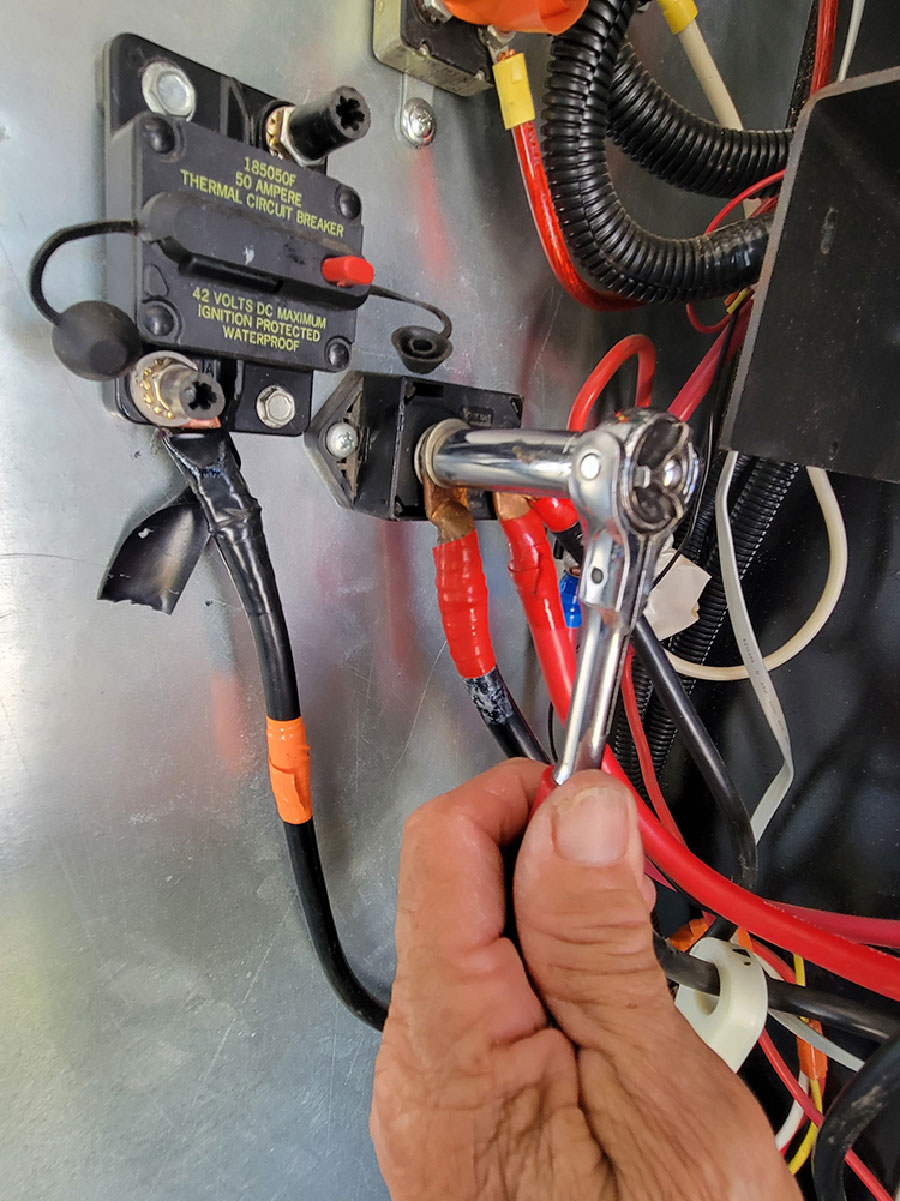
For this project, we purchased a $20 ampmeter and installed it on the positive inverter input cable near the circuit breaker. The induction feature allows the cable to be routed through a plastic ring wired to the meter, which will read amperage without any hard wiring — in the same manner as an induction voltmeter functions. This meter can be used for monitoring charging inputs to your battery as well as either from a solar system or your on-board converter. It’s a no-frills ampmeter, which will probably be viewed as rather crude by electronic experts, but it can be purchased readily on Amazon (just Google Baylite DC-5 120V 100A Mini Digital Current Voltage Amp Meter). It’s capable of monitoring from 5 to 120 volts DC.
Installation is very straightforward. First, locate the positive cable that runs from the inverter’s circuit breaker or fuse to the input of the inverter. Be sure to disconnect this cable at the breaker instead of the inverter to ensure you won’t have a live wire floating around while you’re sliding on the induction ring. The induction ring has an arrow on top, which shows the directional amp flow.
Once you find a suitable location for installing the monitor, follow the cutout size listed in the instructions. This monitor only comes with a 6-foot cable from the induction ring and the power leads will have to be connected to 12-volt DC power. The power leads from the monitor will undoubtedly need to be extended, but the wire does not require a heavy gauge since there is very little draw; 22-26 gauge will be more than adequate. A 1-amp fuse and holder will need to be installed for circuit protection.

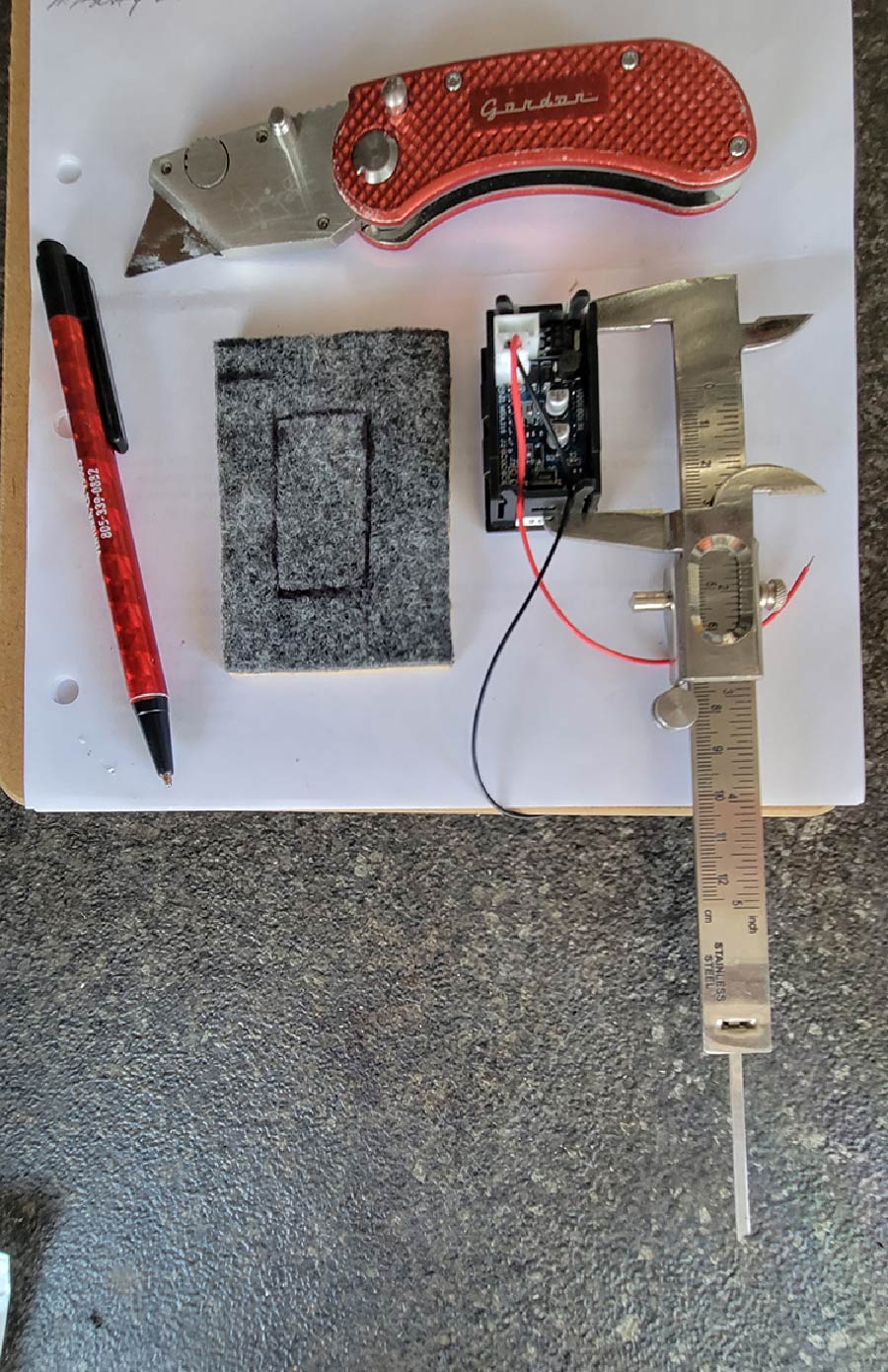

You’ll also need the aforementioned 20-26-gauge wire, cable ties, caulking or putty to seal the holes where the wires are routed, miscellaneous terminals and a roll of black electrical tape. While this meter does not record amp-hours, there are others on the market that will provide this information — but the cost is considerably higher. Take a few notes, do some simple math and you’ll quickly learn that this inexpensive meter will help keep you from running out of power unexpectedly.