

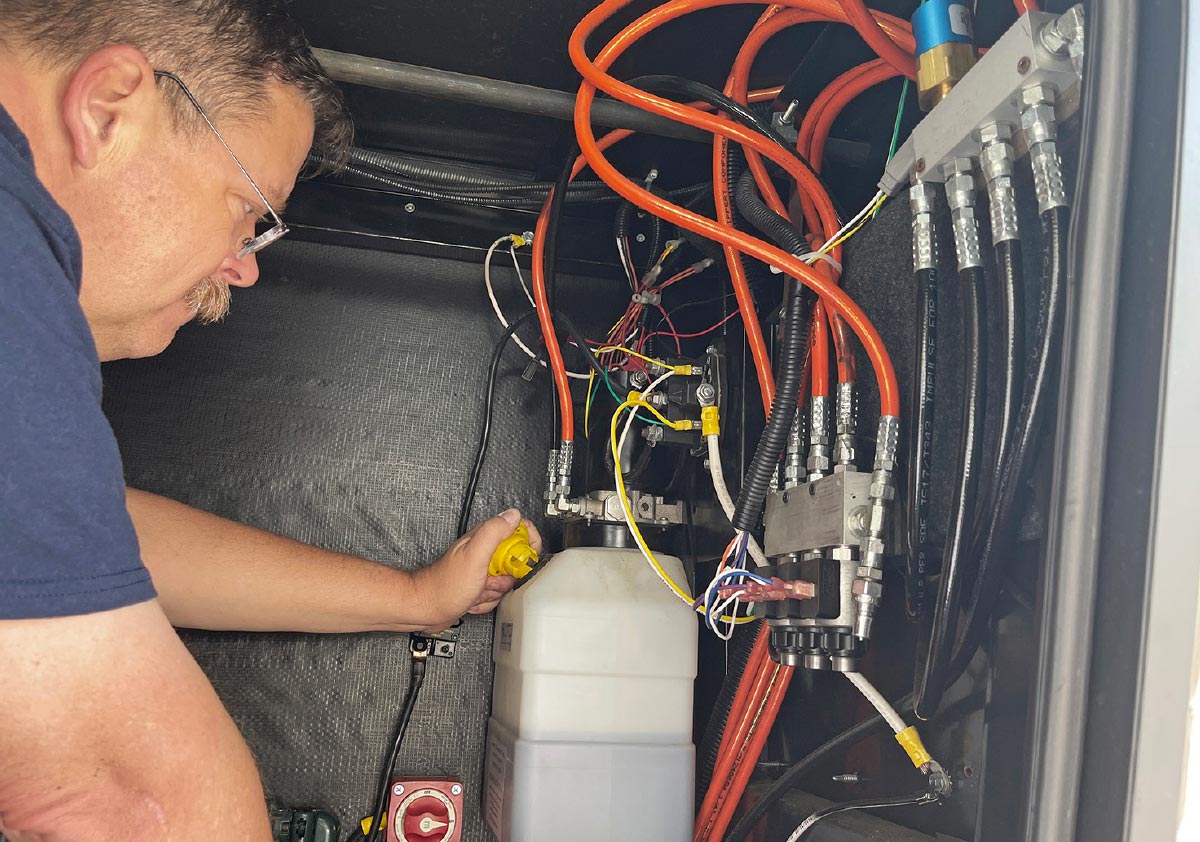
oud noises are always disconcerting while RVing, but when they originate at the hydraulic systems driving the leveling jacks and slideouts, owners — especially newcomers — tend to freak out. Popping noises — which can oftentimes lead owners to believe system failure is imminent — are not welcome, and in most cases are virtually impossible to identify. This condition is a common problem experienced by RVers with hydraulic leveling jack systems, but occasionally hydraulic slideout room mechanisms. In extreme cases, this sound can be quite loud and unnerving, but the good news is that the problem can be traced to couple of different sources — and anytime you can track a problem down, you can fix it.
Cause
Due to the high pressure necessary to operate hydraulic leveling jacks, micro bubbles in the ram section are the leading cause of the popping sound. A companion problem is caused by static friction or “stiction.” The noises may come and go, leading one to think the problem is going away, but they will usually return. Fortunately, these noises do not lead to system failure, and there is a simple fix that was initially circulated by Lippert, the leading supplier of hydraulic systems to the RV industry.
There are two ways to eliminate the noise. One is to bleed the micro bubbles (air) from the suspect ram(s) or jack leg(s), while the other requires a little more effort and adding of a couple of fluids (we’ll get into that later). In either case, before starting this process, be sure check the entire system for any possible fluid leaks, including the jack leg/ram hoses and fittings. For this project, we directed our efforts at solving the popping sound in the hydraulic system of a fifth-wheel trailer.
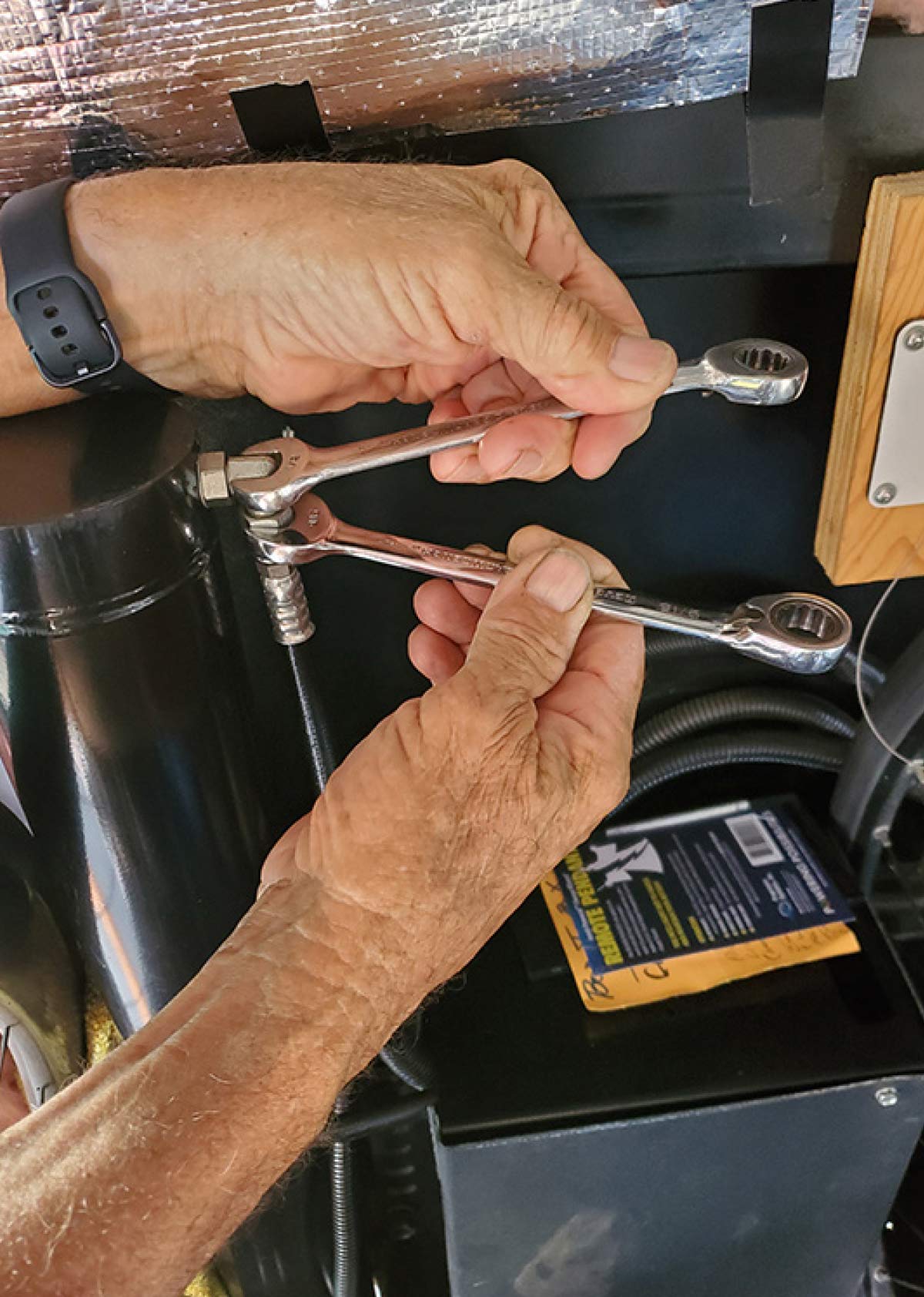
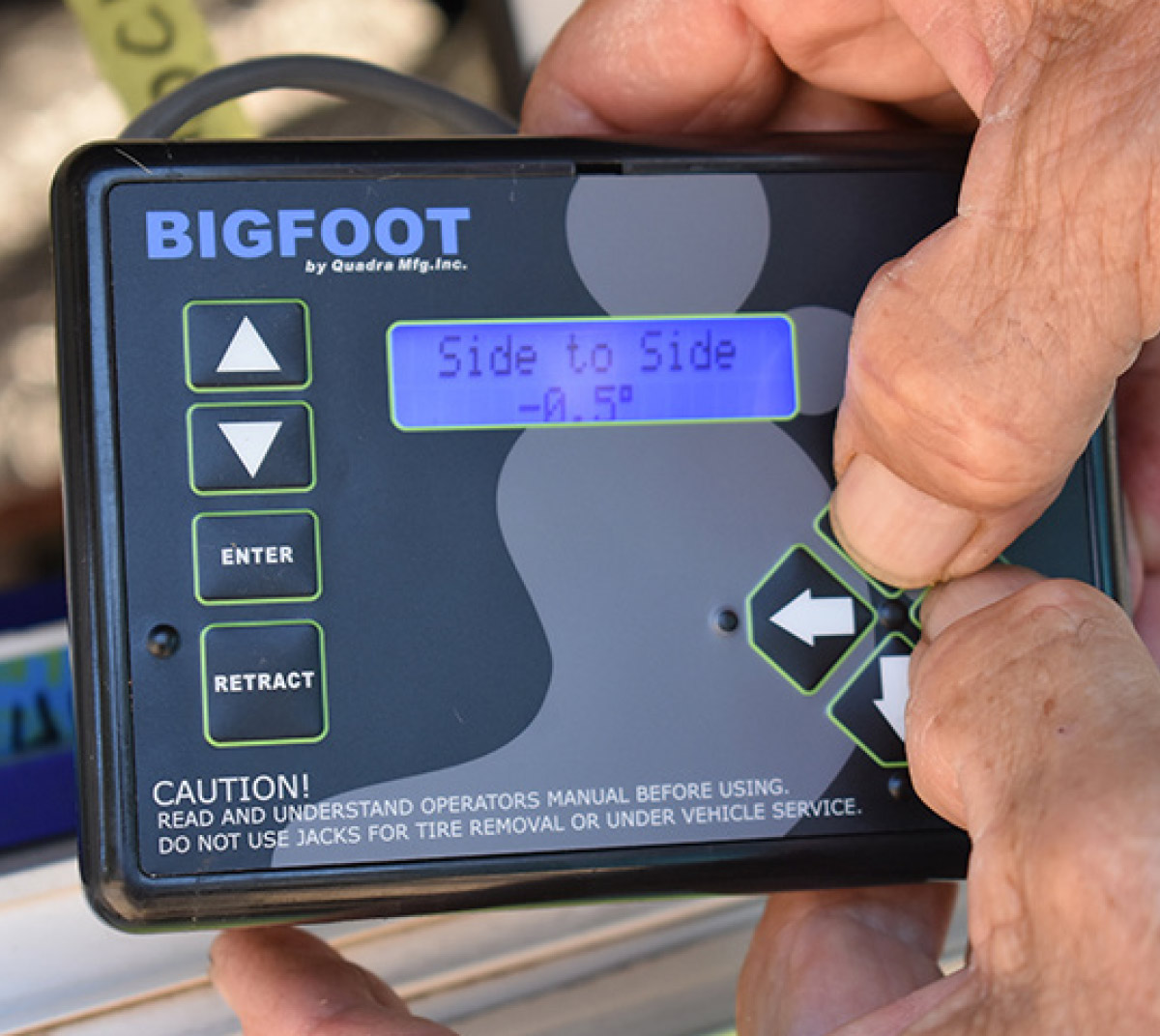
If you elect to bleed the system, hitch the fifth wheel to the tow vehicle for support and safety. Extend the jacks to the ground and raise the fifth wheel without lifting the pin box off the hitch saddle. Once you are satisfied that you’ve established a solid stance for the unit you can begin. You’ve probably been able to ascertain which jack has been “popping off” by where the sound is emanating from and will have to access the hydraulic lines at the top of the jack (from beneath the unit or from within a storage compartment, depending upon model and jack position).
Using two wrenches on the return line (normally the upper line on the jack leg), loosen the fitting while holding the other wrench to prevent twisting the line. Be careful not to open the return line too much, as the pressure will blow the fluid everywhere. Use several rags or old towels to soak up the fluid as it purges from the jack leg. You may need to perform this process two or three times to purge all the air. Make sure the fluid level in the reservoir is replenished as needed to prevent drawing air into the jack leg.
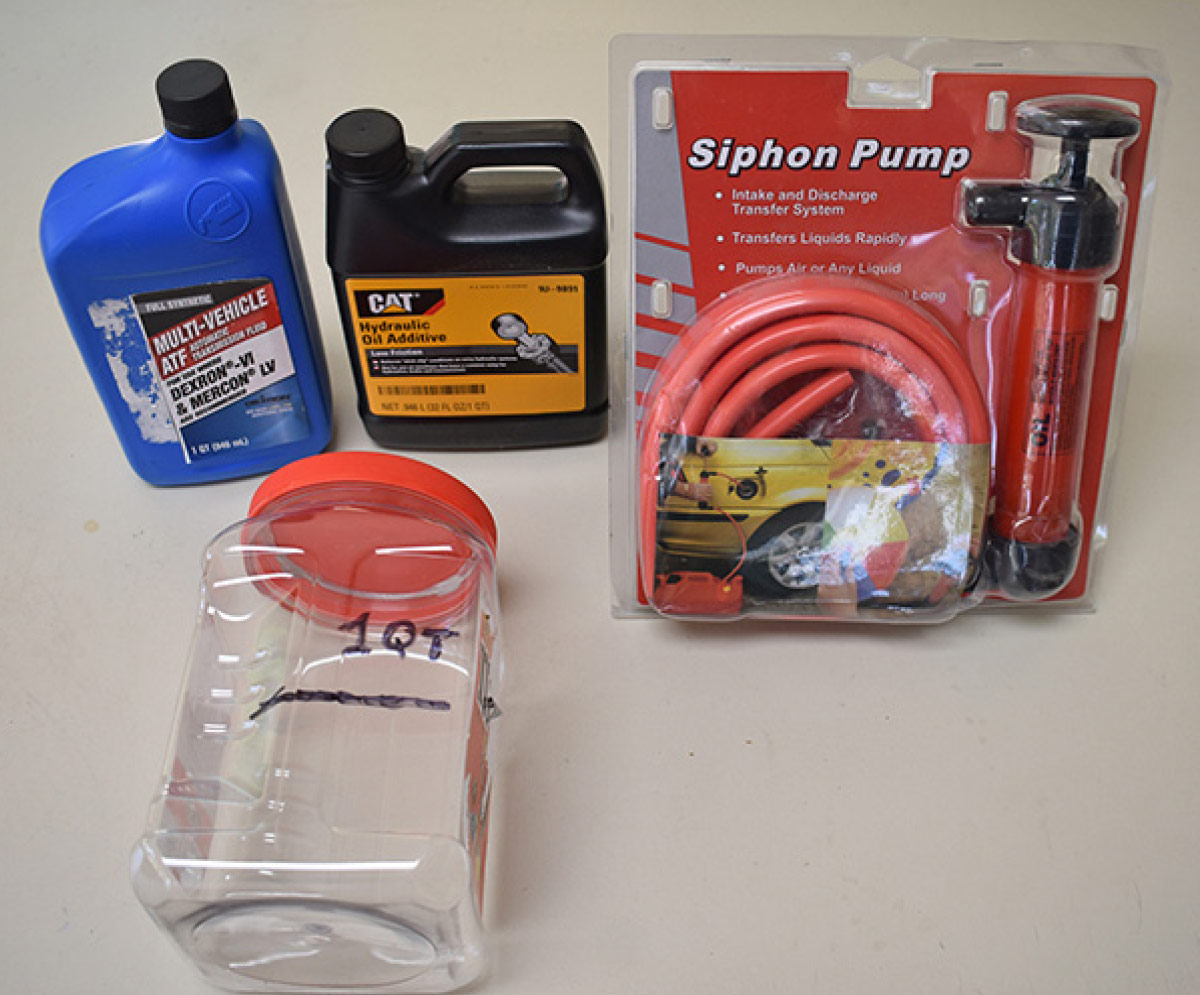
Once you are satisfied that all the air is out of the system (fluid runs clear), tighten the fittings. Continue using the RV, opening and closing the slideouts and activating the leveling jacks as you normally would. If the popping noise still exists, the next step is to add an anti-stiction fluid like Caterpillar 1u-9891 Hydraulic Oil Additive, which is available online or at the local Caterpillar dealer. I tried using motorcycle fork oil as suggested by some people on the Internet, but it did not work.
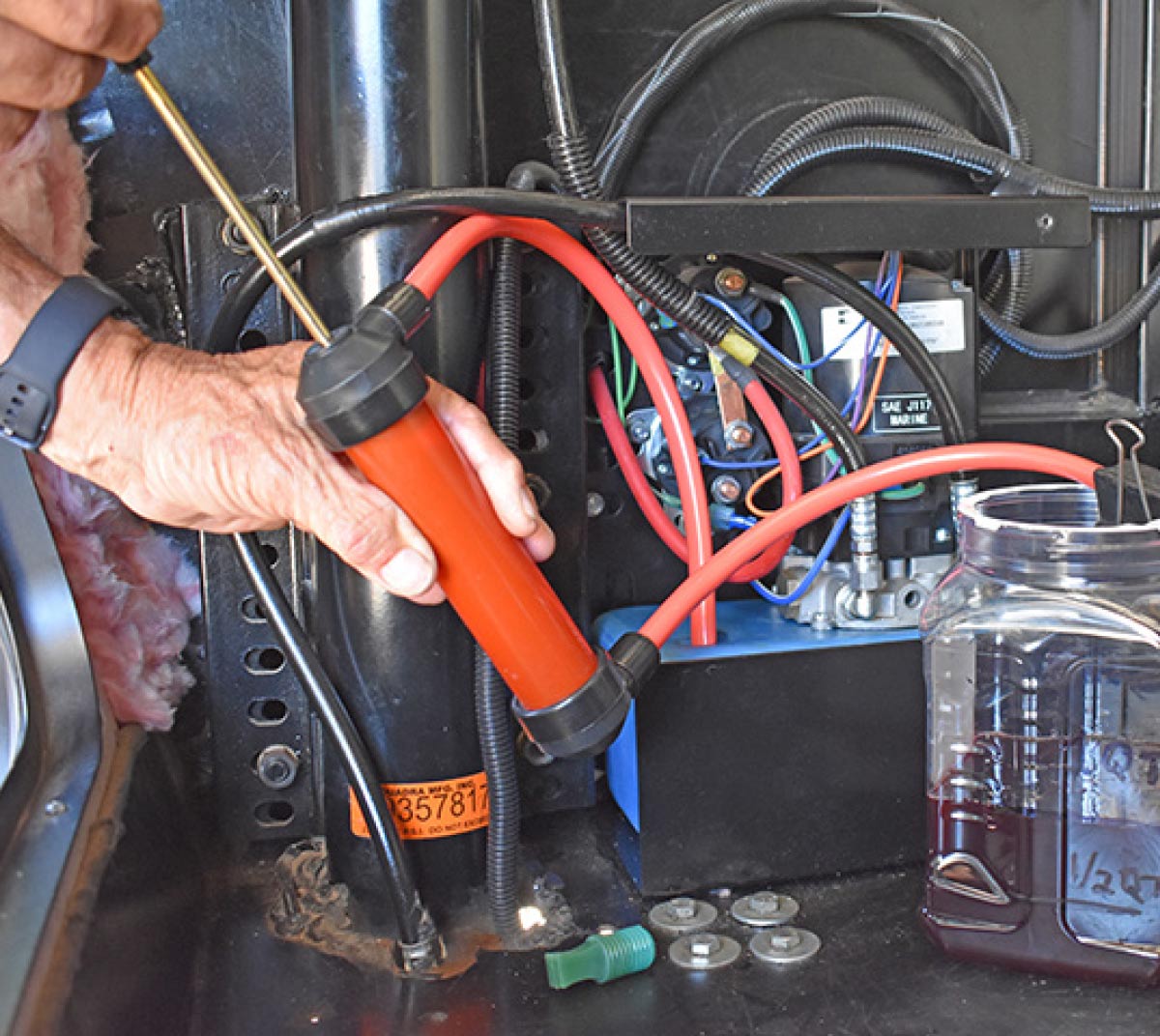
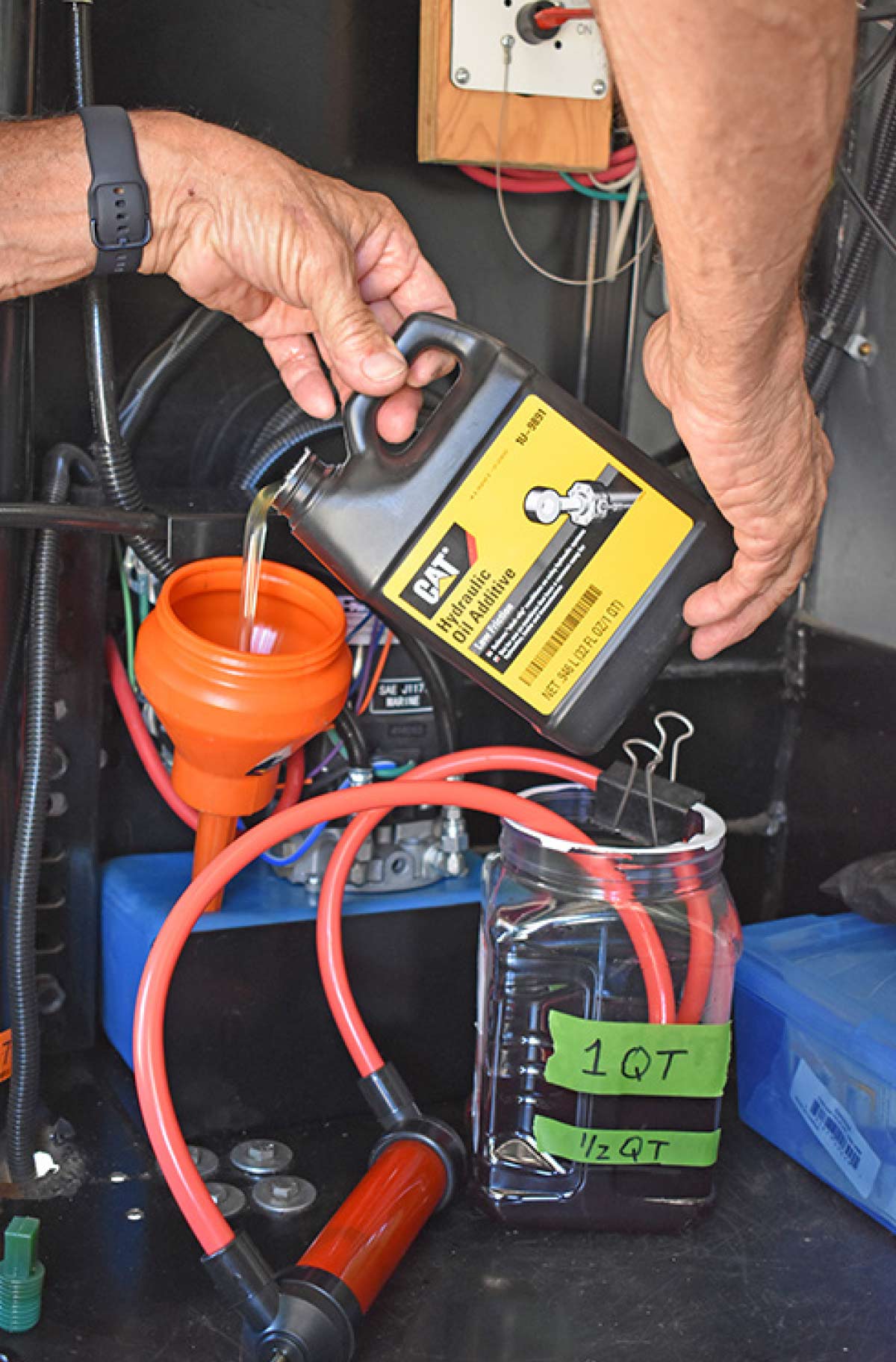
The job will usually require ½ quart of the anti-stiction fluid for each jack/ram that’s making the popping sound. You will also need some type of siphon pump to remove the fluid from the reservoir. Check with Harbor Freight, Pep Boys, a local auto parts store or shop online for a pump. Locate the reservoir (tank) that holds the automatic transmission fluid and, using the siphon pump, start by drawing out the fluid in the reservoir to make room for the Caterpillar additive (it’s best to remove closer to one quart to prevent possible overflowing). Add a half-quart of anti-stiction fluid back into the reservoir. Cycle the jack up and down two or three times to mix the fluids — but be sure not to run the reservoir out of fluid as this will introduce air into the system. Fill the reservoir to the proper level with automatic transmission fluid (specified by the manufacturer of the hydraulic system) after adding the Caterpillar additive.
Again, continue using your systems as you normally would and give the anti-stiction fluid some time to do its job. If the popping noise persists, repeat the process, adding another half a quart of anti-stiction fluid to the reservoir. If the noise still persists and you believe that the jack/ram has developed air bubbles, try purging air from the jack or ram one more time. The additive will likely prevent micro bubbles from forming inside the system, but you will need to give it some time to be sure that the fix is working.
Another possible source of the problem is overextended jacks, which can be unsafe and lead to a popping noise even though the system is airtight. If you need to extend the jacks near their limit, use blocks or another commercial stabilizing product under each jack foot. Just make sure that whatever you use is wide enough so the jacks cannot slip off — and use wheel chocks to prevent the fifth wheel from rolling.
While there is no definitive answer regarding a permanent cure for this popping noise, the process above seems to have a strong chance of solving the problem. In some cases, the popping sound will not be totally eliminated, but it will be curtailed enough to eliminate jumpy nerves.