
Pony Up
[maghub_sidebar]
Making Memories
By Sue Strauss photos by author
Pony Up
A visit to Assateague Island, shared by Maryland and Virginia, nets breathtaking views — and is home to two herds of feral horses that roam free
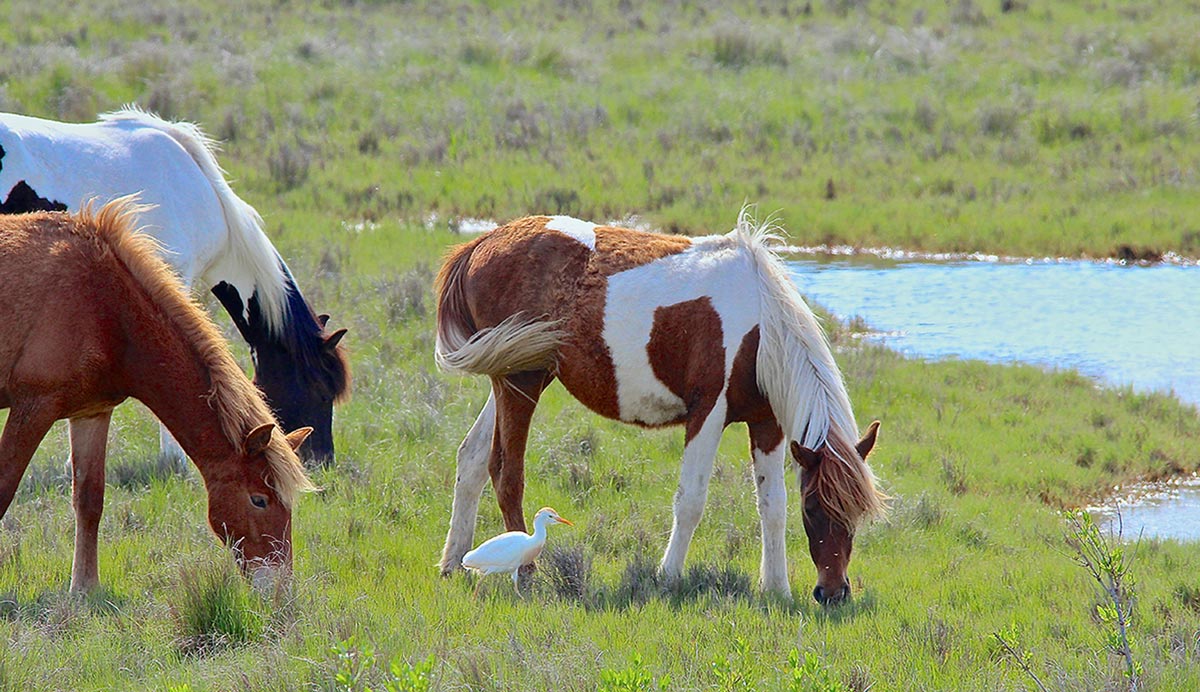
feral horses graze on the Assateague Island National Seashore
Feral horses roam the Assateague Island National Seashore and have become the No. One attraction on the island for visitors to view and photograph. This group of Assateague horses are befriended by a Cattle Egret while grazing along the national seashore. These wild horses are protected and cared for by the National Park Service on the northern end of Assateague Island.
S

everal years ago while RVing along the east coast of the United States, I planned a visit to Assateague Island. I am a true nature lover, which means I thrive on spending time in the outdoors and photographing wild animals, flowers and scenery. Mother Nature teaches us something new every day, and there are many ways to soak in the beauty of the outdoors, either through hiking, kayaking and canoeing, bicycling, birding or even gardening. To that end, while searching the National Wildlife Refuge System’s website (fws.gov/refuges/), I discovered Chincoteague National Wildlife Refuge, located on Assateague Island. The National Wildlife Refuges are quite inexpensive to visit (generally $3-$5 daily) and will also accept the America the Beautiful Federal Recreational Lands Pass (Golden Pass). A Senior Pass to the National Parks is also acceptable to enter National Wildlife Refuges, as well. Assateague Island was once part of Fenwick Island, a barrier island off the coast of Maryland. Barrier islands often change in shape and size due to coastal storms and conditions that affect their landmass. In 1933, a hurricane hit Fenwick Island and separated the area into two islands, creating an inlet between them. Assateague Island was named for the tribes that had lived in the region at the time of the European invasion of explorers. Following the hurricane, jetties were built to keep the two islands separated and to create a navigational channel.

Assateague Island is 37 miles long and located off the eastern coast of Delmarva Peninsula, in the Atlantic Ocean. The island is claimed by two states, with the northern two-thirds of the island belonging to Maryland and the lower portion belonging to Virginia. You can access this island by bridges from either state, but there is no road on the island that connects the northern and southern sections of Assateague. Vehicles must return to the mainland to access either the north or south entrance of Assateague Island.

In 1965, Assateague Island National Seashore was established by the National Park Service to preserve the barrier island, as well as the surrounding waters, and to provide recreational opportunities for visitors. The daily entrance fee for the National Seashore is $20 per vehicle and the area also offers camping for tents, trailers and RVs from March 15 through November 15 (the Maryland part of the island is the only area that allows camping). There are two campgrounds in the National Seashore area, offering dry camping (no hook-ups), with picnic tables and fire rings only. You can make reservations up to six months ahead for either Oceanside Campground or Bayside Campground by going to www.recreation.gov. Reservations are through the National Park Service and cost $30 per night; if you have a Golden Access Pass, you will receive a 50% discount on camping fees.
Maryland’s Assateague State Park also lies within the National Seashore boundaries. It encompasses approximately 800 acres and is the most developed part of the entire island. This is an oceanfront state park and camping is permitted from the end of April to the end of October. Assateague State Park campground has 342 campsites, with both tenting and 30-amp electric hook-up sites, depending on which loop you reserve. Maximum length for RV sites is 25 feet. Beautiful bathhouses with dishwashing stations and outdoor showers are also provided in the campground. Reservations can be made for Assateague State Park Campground online at www.parkreservations.maryland.gov. Campsite fees are $27.50 per night for tent sites and $38.50 per night for electric hook-up sites.
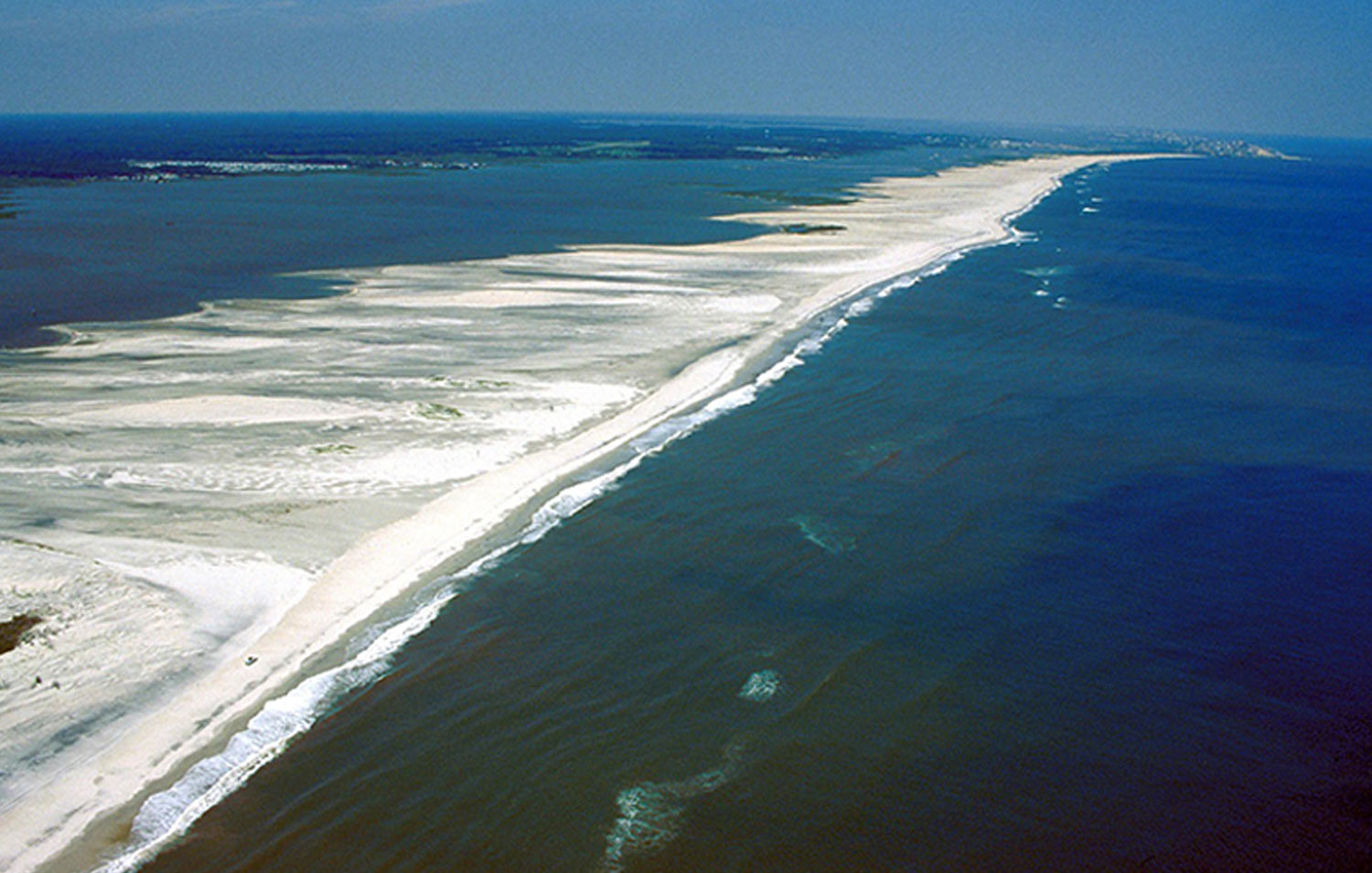
aerial view of Assateague Island National Seashore
This aerial view of Assateague Island National Seashore highlights the location’s pristine beaches. This National Seashore is located on the barrier island of Assateague, owned by both Maryland and Virginia, and boasts the Assateague Island National Seashore, Assateague State Park and Chincoteague National Wildlife Refuge. (Photo courtesy en.wikipedia.org).
Maryland’s Assateague State Park also lies within the National Seashore boundaries. It encompasses approximately 800 acres and is the most developed part of the entire island. This is an oceanfront state park and camping is permitted from the end of April to the end of October. Assateague State Park campground has 342 campsites, with both tenting and 30-amp electric hook-up sites, depending on which loop you reserve. Maximum length for RV sites is 25 feet. Beautiful bathhouses with dishwashing stations and outdoor showers are also provided in the campground. Reservations can be made for Assateague State Park Campground online at www.parkreservations.maryland.gov. Campsite fees are $27.50 per night for tent sites and $38.50 per night for electric hook-up sites.
aerial view of Assateague Island National Seashore
This aerial view of Assateague Island National Seashore highlights the location’s pristine beaches. This National Seashore is located on the barrier island of Assateague, owned by both Maryland and Virginia, and boasts the Assateague Island National Seashore, Assateague State Park and Chincoteague National Wildlife Refuge. (Photo courtesy en.wikipedia.org).
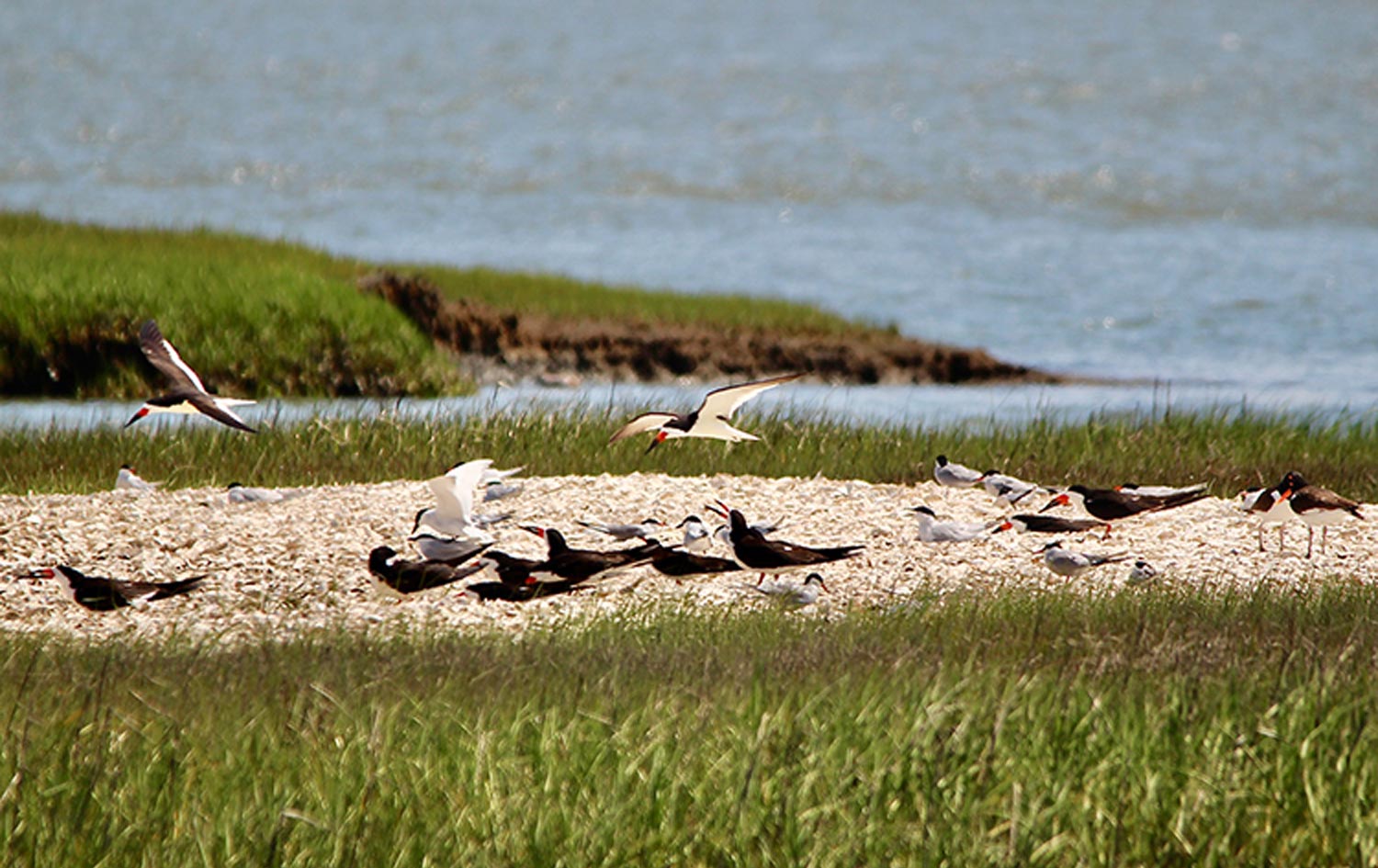
Caspian Terns, Black Skimmers and American Oyster Catchers enjoy the Assateague Island National Seashore
Assateague Island National Seashore was established to preserve the barrier island and its surrounding waters. These Caspian Terns, Black Skimmers and American Oyster Catchers enjoy the protected shores of this national seashore area.
We visited both the northern and southern ends of Assateague Island, with most of my time spent visiting Chincoteague National Wildlife Refuge on the southern end of Assateague Island. This refuge was established by the U.S. Fish and Wildlife Service in 1943, primarily to provide habitat for migratory birds. It is one of the most-visited refuges in the U.S. and houses the Herbert Bateman Education Center, as well as Tom’s Cove Visitor Center. This visitor center is open daily and houses a marine aquarium and touch tank inside, while the education center is open to the public seven days per week and offers a variety of programs for visitors.

One of the more popular programs offered is the Refuge Trek Tour, formerly known as the Wildlife Tour, an 8-mile bus drive to the northern end of the island that takes you into areas not accessible by car. The tour lasts 90 minutes and costs $14 per adult; reservations (757-336-3696) are strongly recommended. Chincoteague National Wildlife Refuge is located along the Atlantic Flyway and is a resting place for many migratory birds at different times of the year — Snow Geese are especially bountiful here, as well as American Oyster Catchers, Great Blue Herons, Snowy Egrets and Piping Plovers.

While planning our visit to Assateague Island, I learned that the island is best known for its herds of feral horses. No one knows for sure how the horses got on the island, although legends abound. The most popular tale is that the ponies swam ashore to the island from a Spanish ship that ran aground in 1750. Some locals believe these Spanish horses were the start of the now-famous herds of Assateague ponies. The horses on the island are typically smaller than most horses (due to environmental adaptation) and are referred to as ponies.
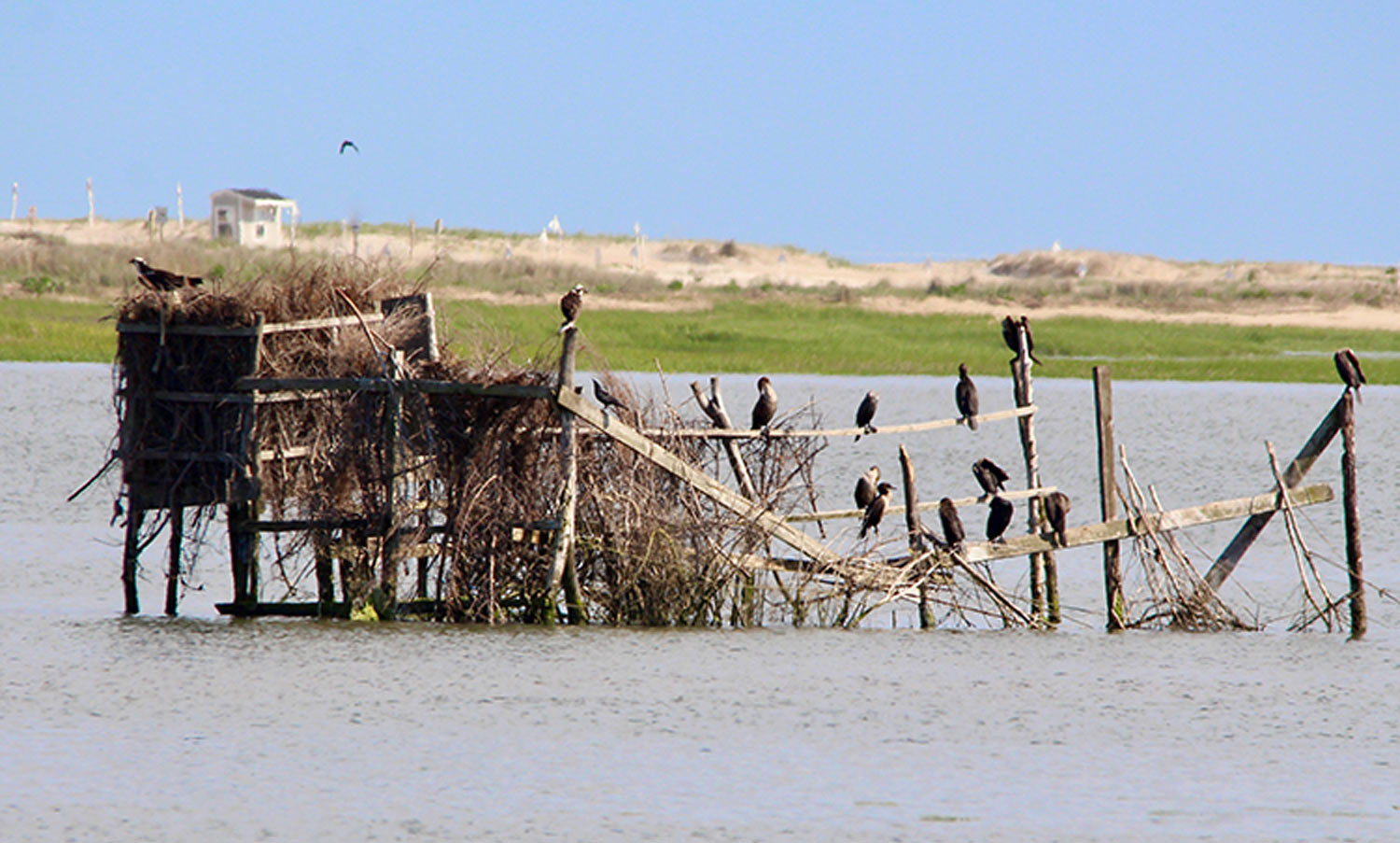
a gathering of Osprey and Cormorants
Chincoteague National Wildlife Refuge was established in 1943 to provide habitat for migratory birds. Located on the southern end of Assateague Island, this area is one of the most visited refuges in the U.S. This wildlife refuge, located along the Atlantic Flyway, is renowned for its diverse bird habitat where more than 320 species are known to use this refuge regularly during migration. In this photo you can see a gathering of Osprey and Cormorants.
Today the ponies are split into two herds: a Maryland herd (Assateague horses), owned and managed by the National Park Service; and the Virginia herd (Chincoteague Ponies), owned and cared for by the Chincoteague Volunteer Fire Company. The two herds are kept separated by fencing along the state line on the island. These feral horses were also popularized by a famous children’s book, “Misty of Chincoteague Island” by Marguerite Henry. This novel is the real-life story of the Beebe family and their efforts to raise a filly born to a wild horse in Chincoteague, Virginia. The ponies are now one of the most photographed attractions on Assateague Island.

Another popular attraction is the Assateague Lighthouse. This red-and-white-striped lighthouse was constructed in 1867 and is located on the southern part of the island, within the Chincoteague National Wildlife Refuge. The lighthouse is a 142-foot-tall structure and is still operational today. It’s open to the public on weekends and admission to the lighthouse is free. If you are fit enough to climb the 175 steps to the top, you will be rewarded with beautiful panoramic views of Assateague Island.

Depending on the time of year that you visit Assateague Island, you may want to join one of the annual festivals. On the first Saturday in May, the annual Chincoteague Seafood Festival is held on Virginia’s Eastern Shore. This festival has been a tradition for more than 50 years and promotes the seafood industry in Virginia. During the third week of July, Chincoteague hosts its annual Blueberry Festival, followed one week later by the Chincoteague Pony Swim. Approximately 40,000 visitors come to Assateague Island at the end of July to watch the annual Pony Swim. The Chincoteague Ponies are led across Assateague Channel by “Saltwater Cowboys” when the tide is slack calm — when there is the least current, allowing for a safe swim for the ponies to the mainland. The horses are evaluated and separated and some are auctioned off a few days later. The one hundred-plus ponies are then escorted to the channel, where they swim back to their island home. The annual pony swim and auction help manage the number of horses on Assateague and prevents them from adversely impacting the sensitive barrier island and the proceeds from the auction are used to buy new equipment for the Chincoteague Volunteer Fire Company.
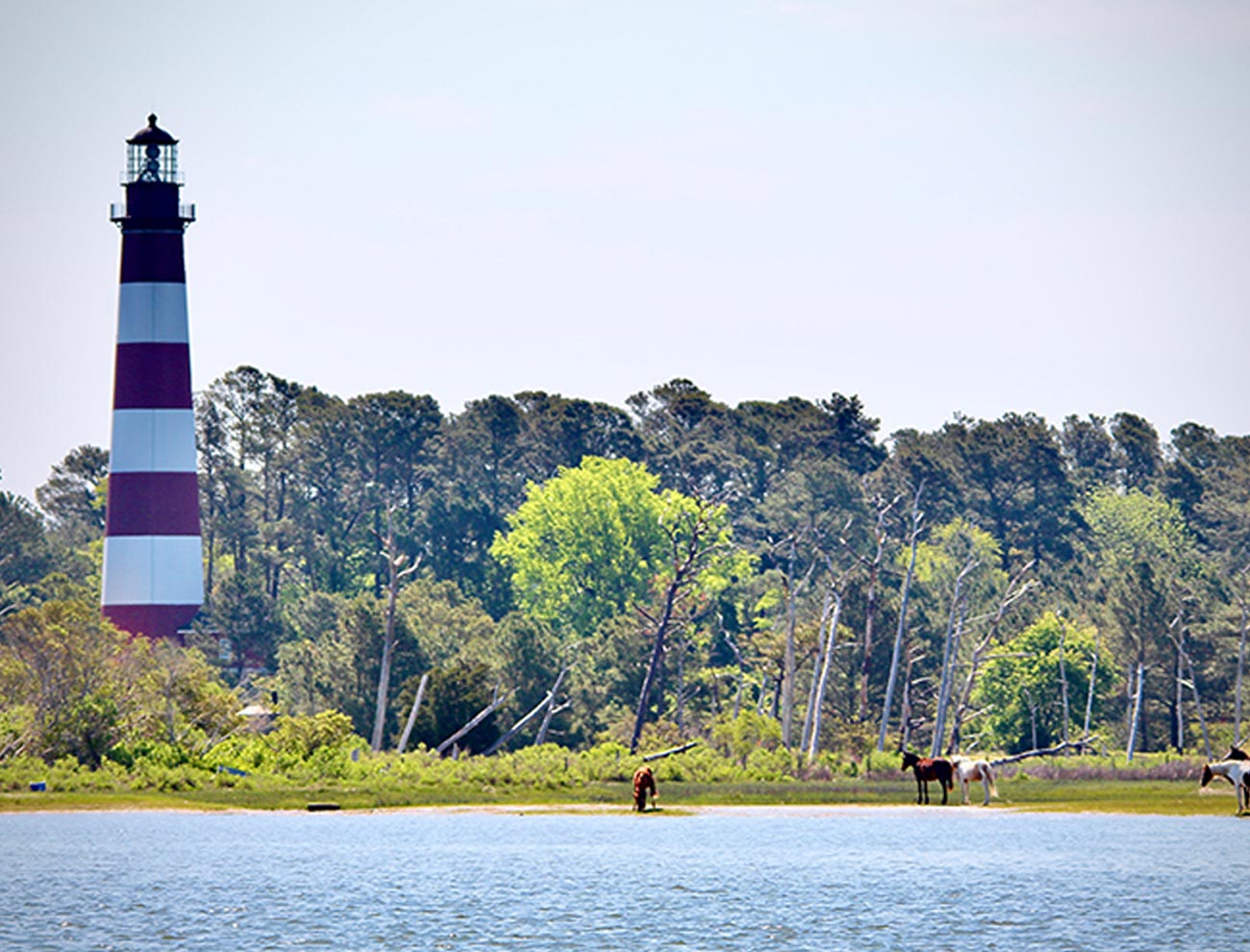
view of the Assateague Lighthouse
Assateague Lighthouse stands 142 feet tall and is open to the public on weekends. If you are fit enough to climb the 175 steps to the top, breathtaking views can be seen in every direction.
If you are RVing and want to spend time on the southern part of Assateague Island, you will need to stay at a campground on the Virginia mainland. Chincoteague Island KOA is closest to Assateague Beach. This KOA (koa.com/campgrounds/chincoteague/) is open April 1 to November 30 and offers 50-amp, full-hookup sites up to 65 feet; fees range between $60-$70 per night. Pine Grove Campground (757-336-5200) is a privately-owned campground, also in Chincoteague and is located on 37 acres of land, including six ponds to enjoy while camping. Pine Grove Campground is within walking distance to the town of Chincoteague and is open April-December. We camped at Pine Grove and I enjoyed watching and photographing waterfowl and black swans in the campground ponds.
view of the Assateague Lighthouse
Assateague Lighthouse stands 142 feet tall and is open to the public on weekends. If you are fit enough to climb the 175 steps to the top, breathtaking views can be seen in every direction.
If you are RVing and want to spend time on the southern part of Assateague Island, you will need to stay at a campground on the Virginia mainland. Chincoteague Island KOA is closest to Assateague Beach. This KOA (koa.com/campgrounds/chincoteague/) is open April 1 to November 30 and offers 50-amp, full-hookup sites up to 65 feet; fees range between $60-$70 per night. Pine Grove Campground (757-336-5200) is a privately-owned campground, also in Chincoteague and is located on 37 acres of land, including six ponds to enjoy while camping. Pine Grove Campground is within walking distance to the town of Chincoteague and is open April-December. We camped at Pine Grove and I enjoyed watching and photographing waterfowl and black swans in the campground ponds.
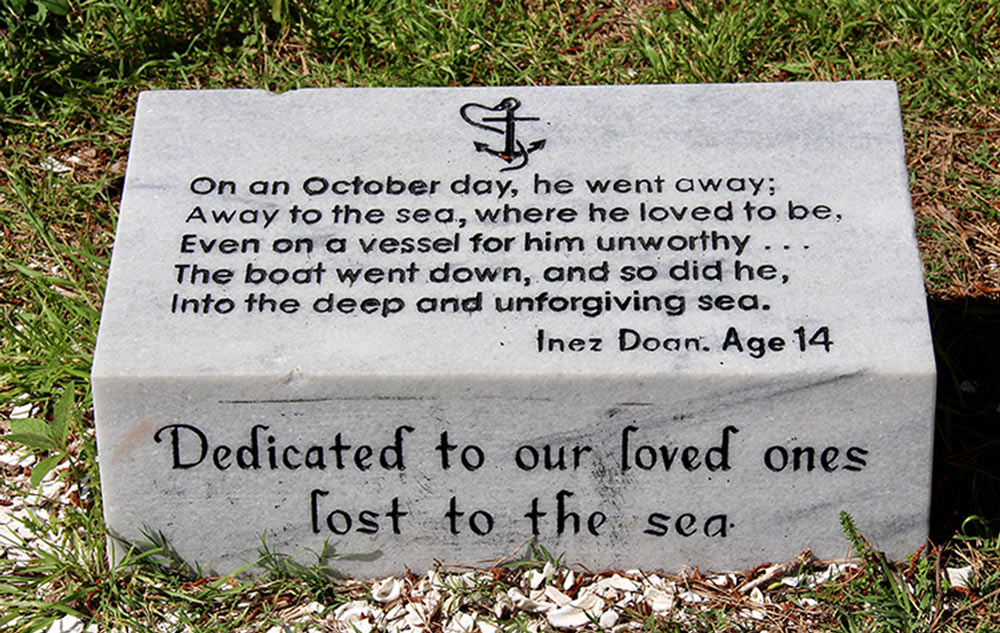
a monument dedicated to the many ship that have run aground or even sunk along the shores of Assateague Island
A monument dedicated to loved ones lost at sea reminds us that the sea can be an unforgiving place. Many ships have run aground or even sunk along the shores of Assateague Island, which have created many legends about this area.
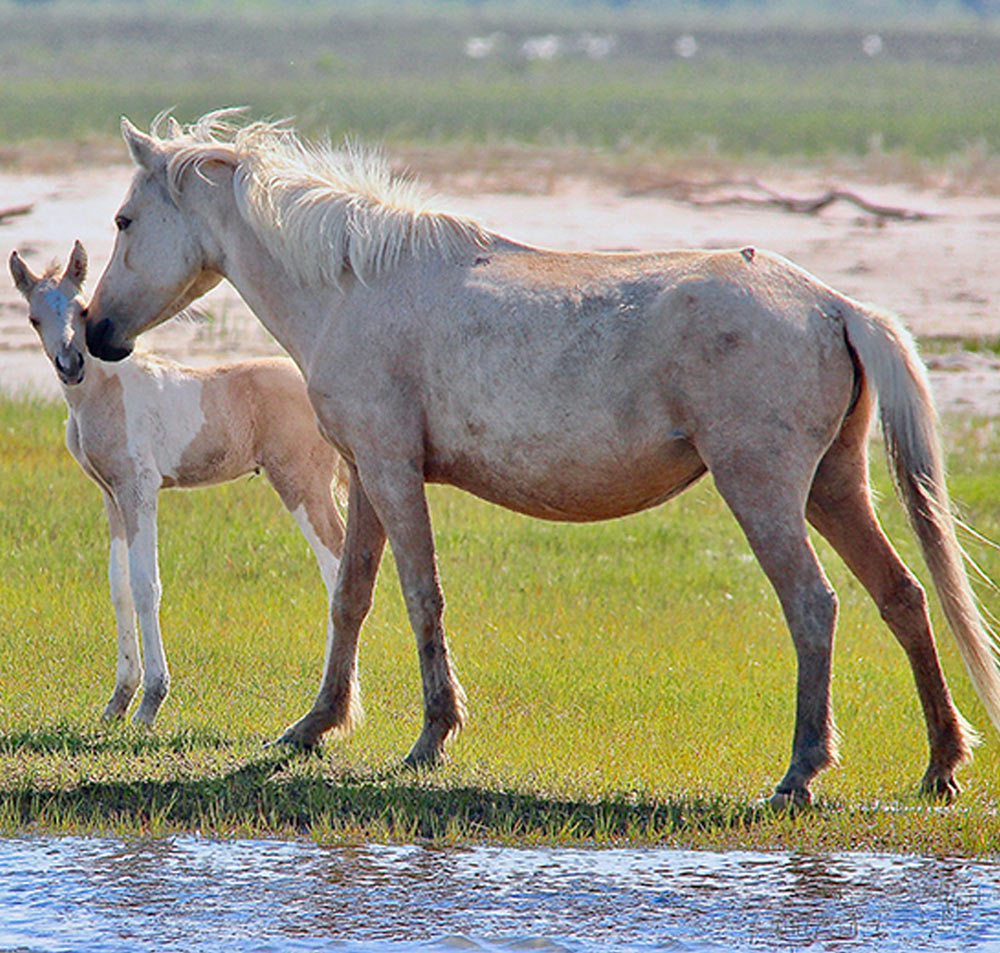
a Chincoteague pony and its foal
Chincoteague ponies and their foals are the most photographed sight on Assateague Island. Here, a feral palomino Chincoteague pony stands with her approximate two-week-old foal.
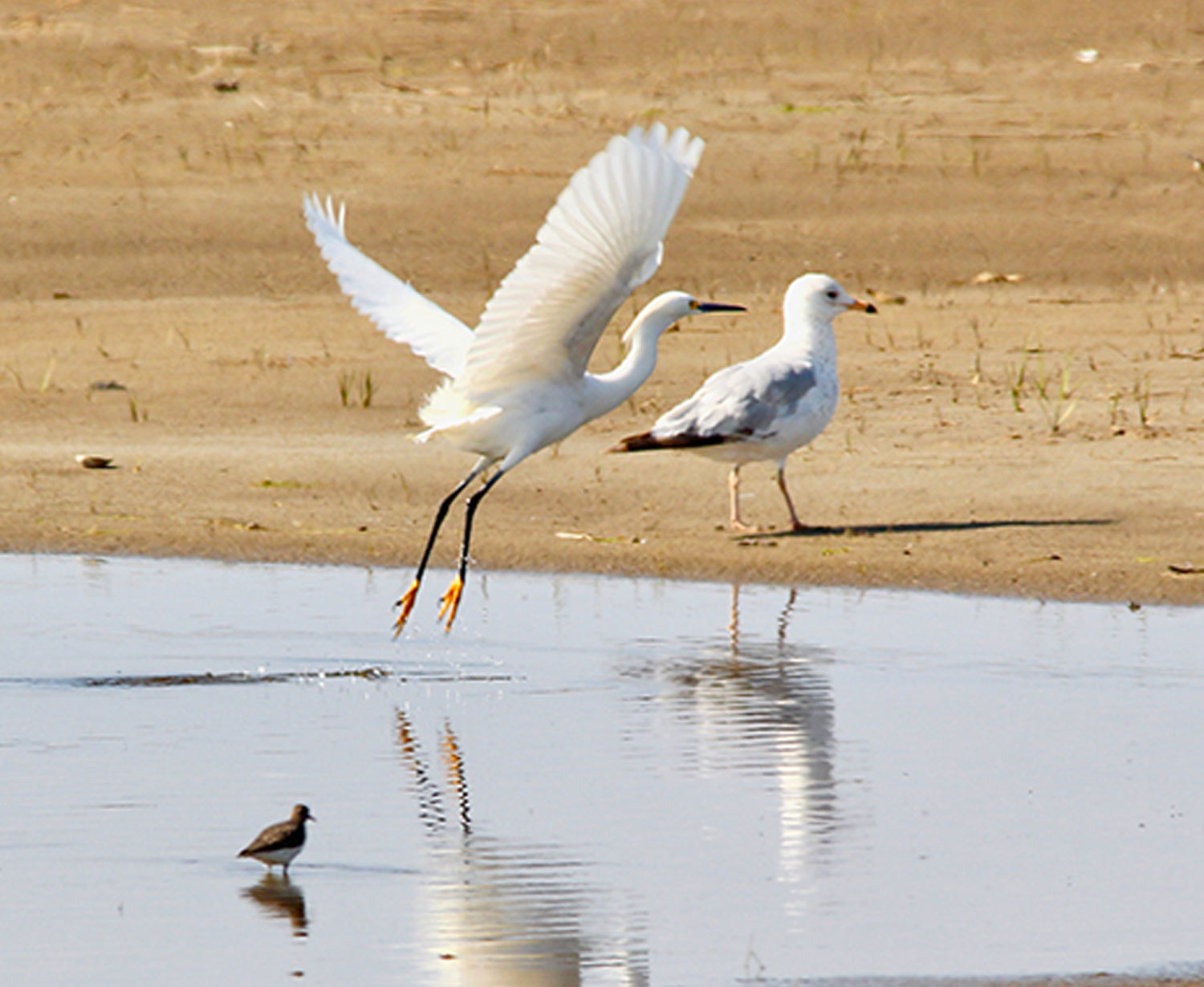
a Snowy Egret takes flight in front of a Ring-Billed Gull (background) and a tiny Piping Plover (foreground)
A wide variety of species stop at Chincoteague National Wildlife Refuge, along their migratory path. Here, a Snowy Egret takes flight in front of a Ring-Billed Gull (background) and a tiny Piping Plover (foreground).
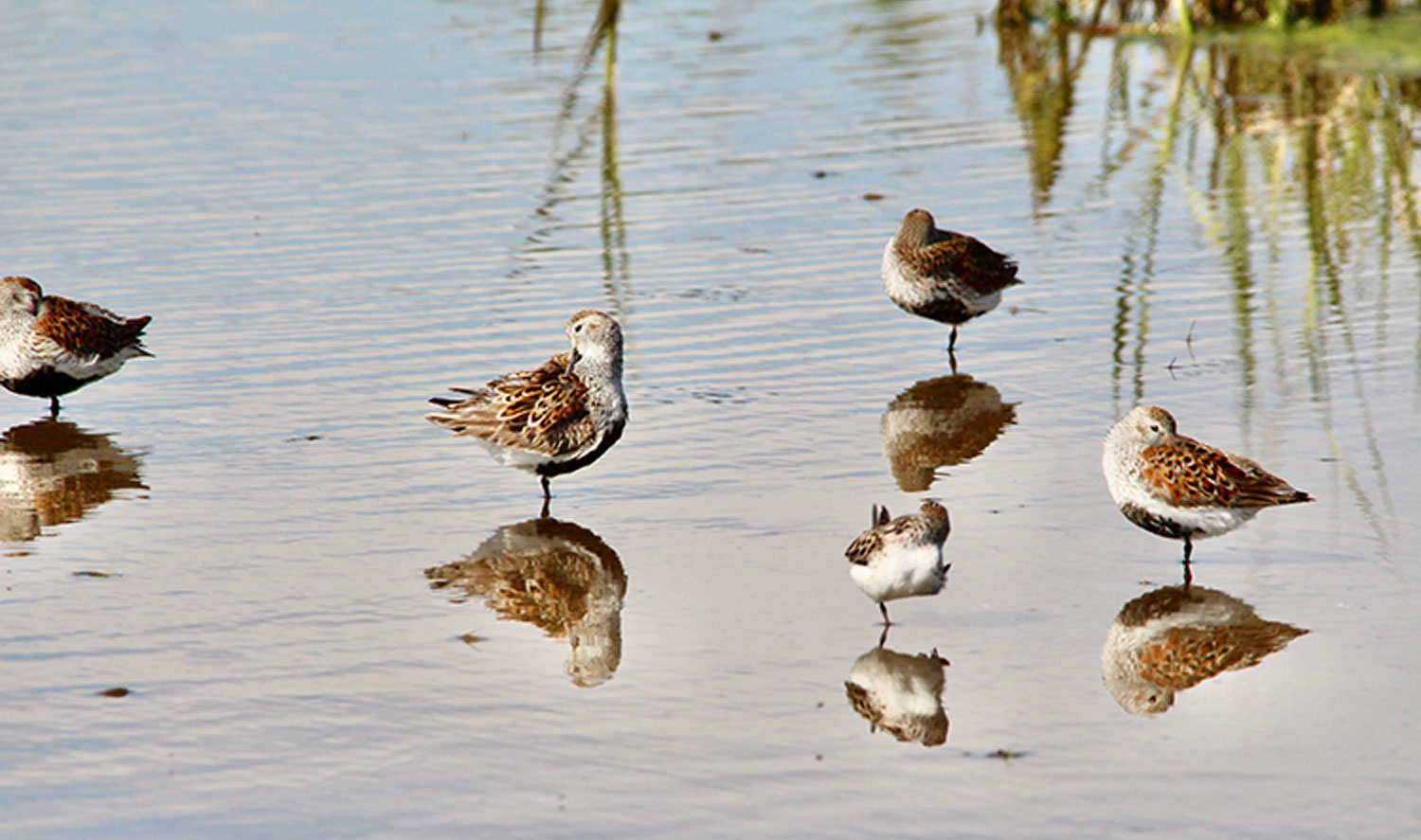
Sandpipers relax along the shores of Chincoteague’s National Wildlife Refuge
Sandpipers and their reflections can be seen along the shores of Chincoteague’s National Wildlife Refuge. This refuge attracts not only thousands of migratory birds each year, but also thousands of people as well.
Before leaving Assateague Island, be sure to spend some time on its pristine beaches, which is the second-most-popular attraction. Kayaking, canoeing and paddle-boarding are all popular water sports in this area, along with boating, fishing and crabbing. I thoroughly enjoyed our four days on Assateague Island, spending my time surrounded by nature and observing the beautiful wildlife that abounds here. It’s certainly a good candidate for anyone’s bucket list.
Suzanne Strauss
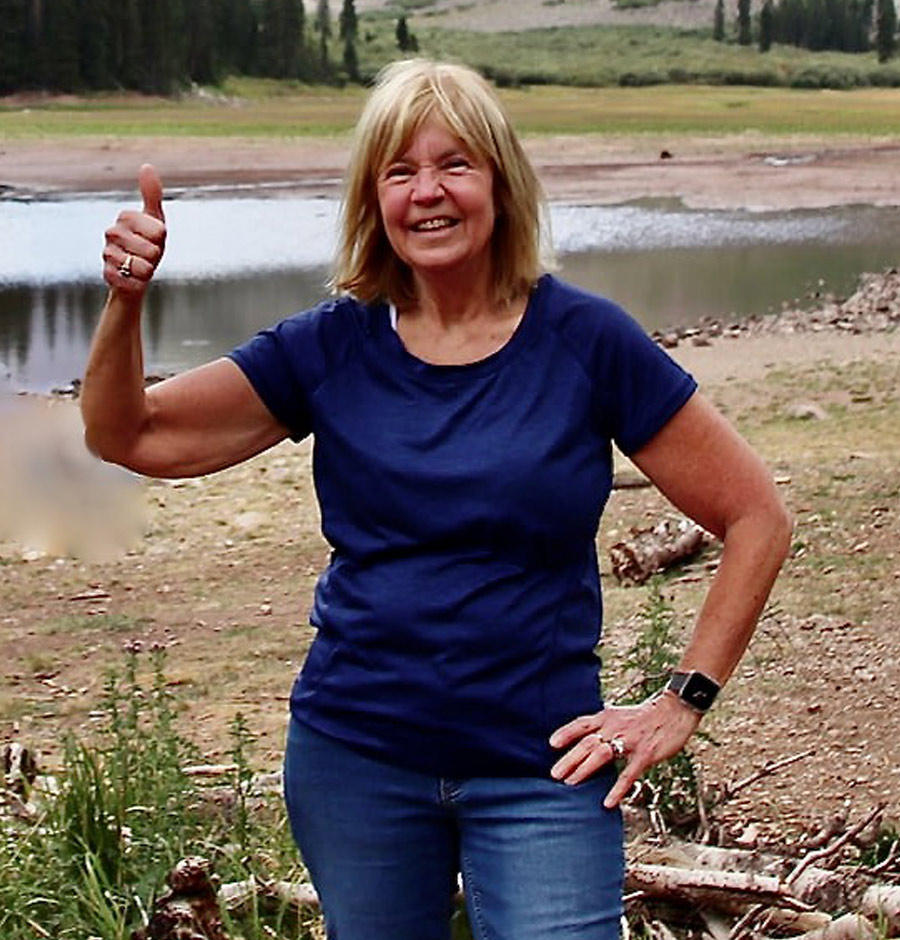
Suzanne Strauss portrait
Suzanne Strauss and her husband, Rich, have been full-time RVers for about four years. They started out camping on weekends in a pup tent; eventually, they bought a small single-axle travel trailer to “test the waters” and fell in love with RVing. Now living full-time in a motorhome, they ply the roadways in search of interesting and “off the beaten path” places. She can be reached at: RStrauss22@gmail.com