
Behind Closing Doors
[maghub_sidebar]
Behind Closing Doors
Lippert’s entryway product threesome adds a huge dose of convenience when going in and coming out of a trailer — and then there’s the cool factor
By Bob Livingston
Photos by author
Lady holding the door
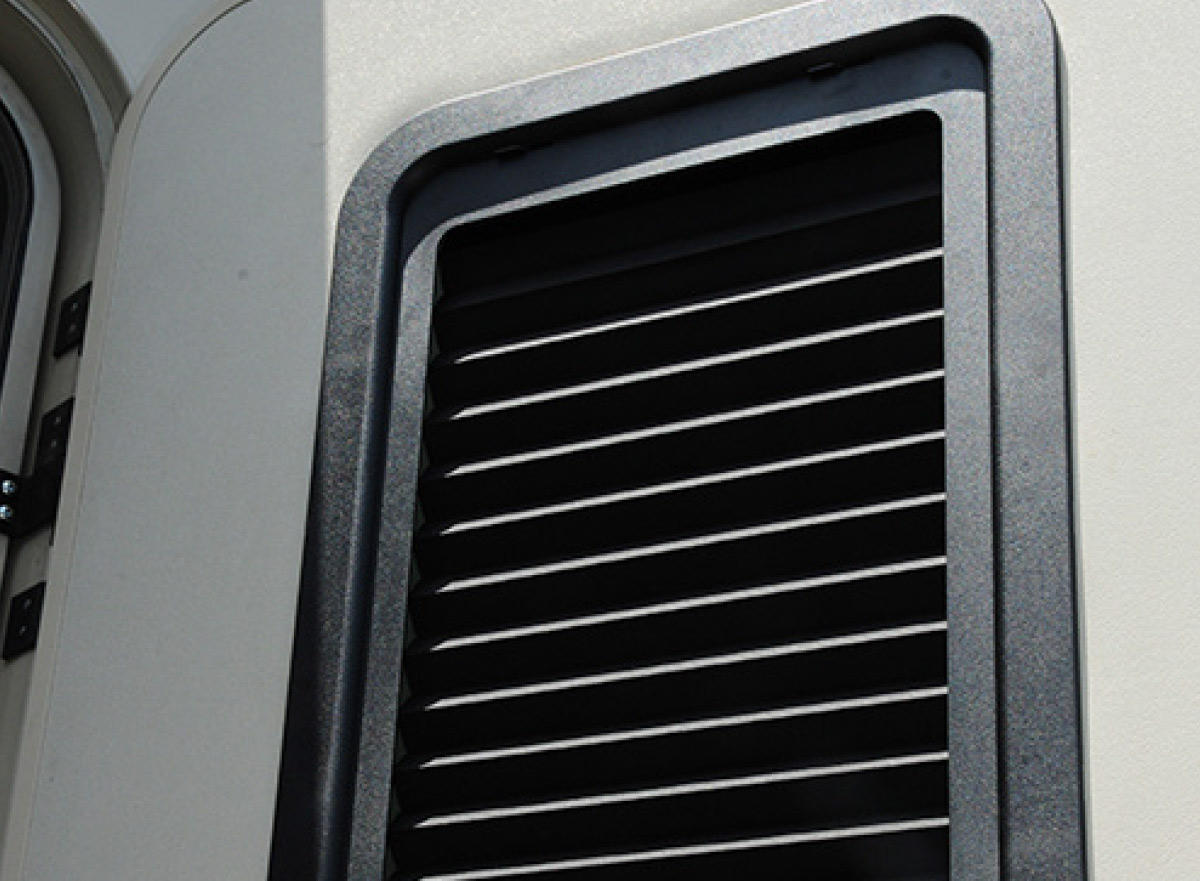
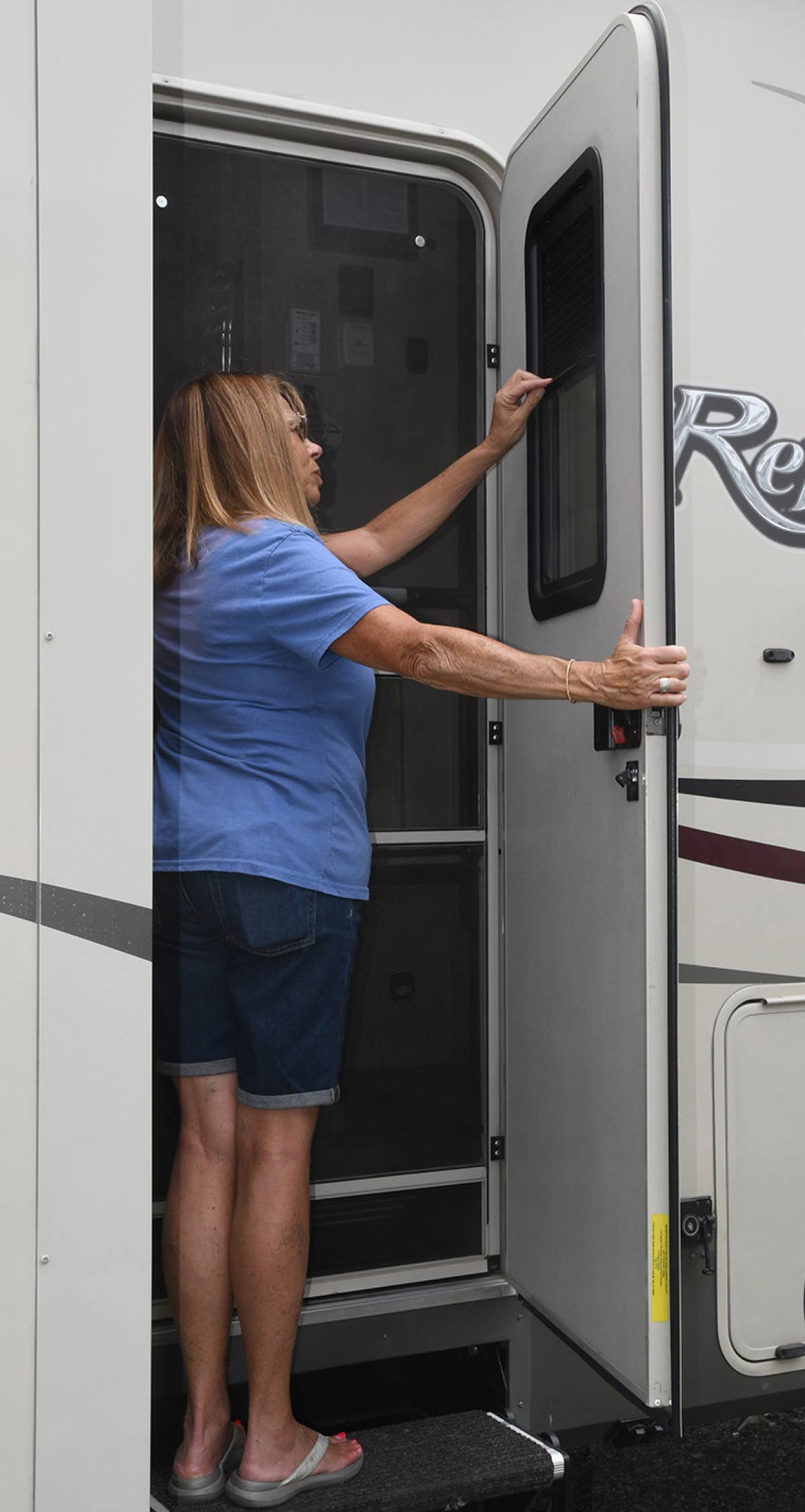
Outfitting an entry door with Lippert’s Thin Shade/window, Screen Shot automatic screen door closer and Screen Defender mesh insert adds another layer of convenience to this normally mundane RV component. Occupant must go outside to lower or raise the Thin Shade, but a routine can be easily established.
E

ntry doors are taken for granted — and often neglected. Let’s face it, a door is as forgettable as it is functional. It has one job: To allow you to easily enter and exit your RV. Not surprisingly, trailer- and fifth-wheel entry doors are pretty bland from the factory. However, Lippert has introduced several aftermarket products of late that make entry doors and screens more convenient, private — and protected from pets who love to plow through the lower screen or, at least, paw the material to death.

Our door transformation started with replacement of the window with a snap-in frame counterpart that can be fitted with a Thin Shade pleated privacy “curtain.” From here, we installed the Screen Shot auto-closing mechanism for the attached screen door and, finally, added a Screen Protector mesh panel to the bottom section of the screen door. None of these projects was particularly difficult, but you’ll have to spend some time reading the clearly presented instructions to avoid making mistakes. Installing all three products will take about an hour for anyone with a moderate level of mechanical aptitude.
Kit
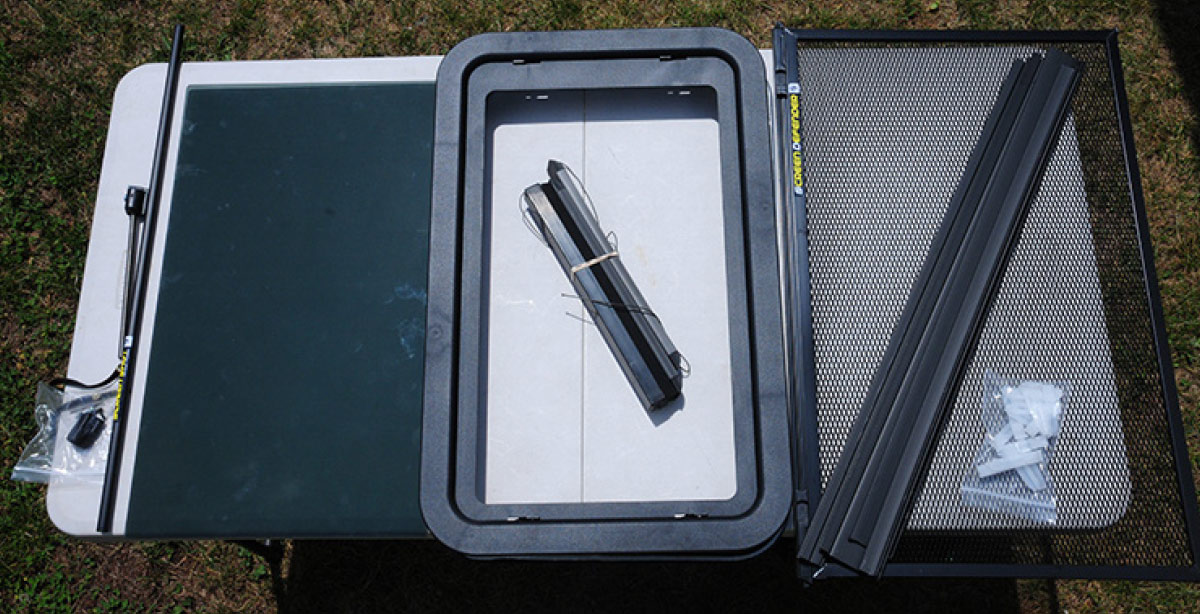
Before starting the door transformation project, all the parts from the three Lippert products were laid out on a table.
Step 1: No More Peek-A-Boo
Windows in trailers/fifth wheels come in two varieties: opaque and tinted. The opaque-style window eliminates the need for a privacy covering but will still allow in light. It also prevents a clear view to the outside, which could be problematic when identifying strangers knocking on the door. Tinted windows, on the other hand, provide the view and diffuse harsh light, but also put occupants on display at night without some type of privacy cover. Installing Lippert’s Thin Shade and frame sections offers the best of both worlds.

You’ll have to verify window size to make sure the kit will fit without modifications, but for the most part, the hole opening is universal — chances are the door was made by Lippert, the largest single supplier to the RV industry, so fitment should present no issues.

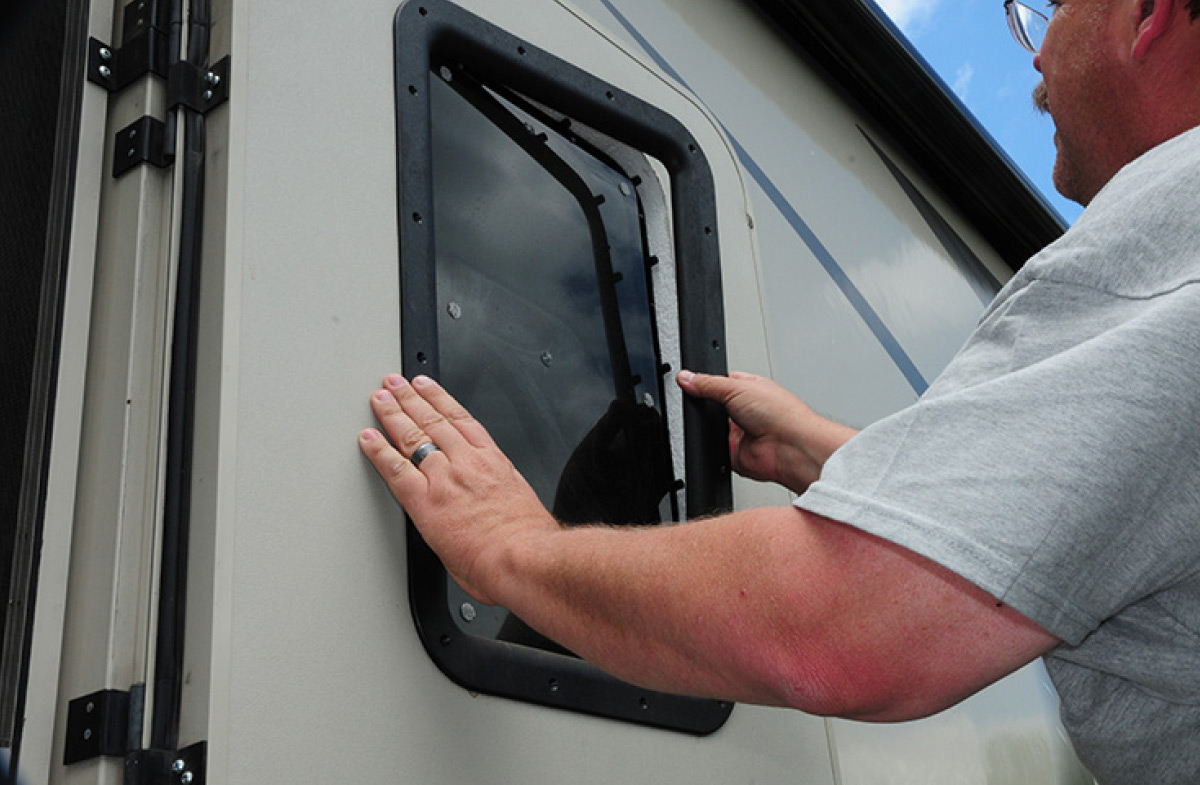
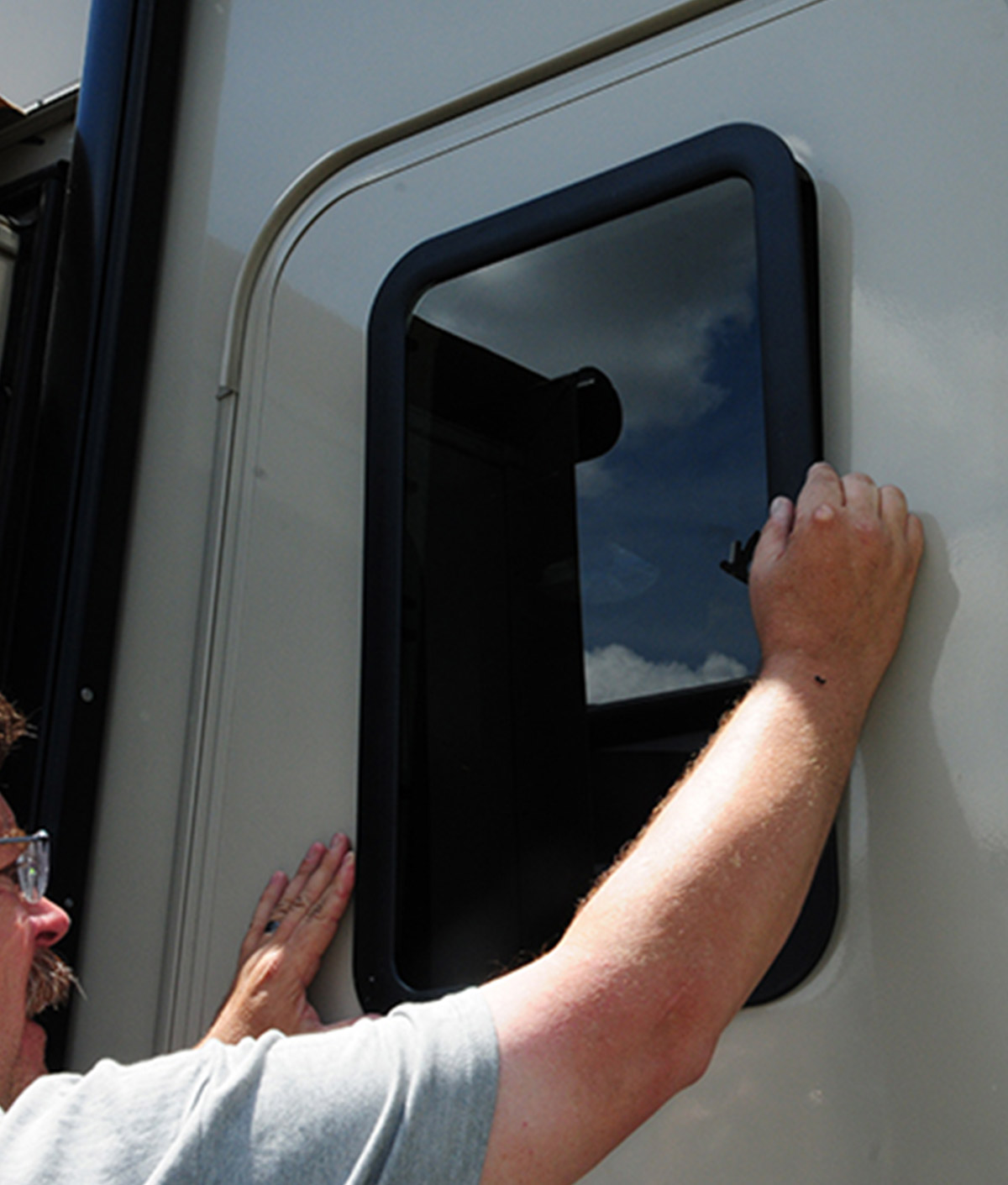
Popping out the existing window requires removal of the screws around the inner frame and pushing on the outer frame and window. It’s best to have a second person on the other side just in case the window gets away from you while popping out. The existing frame may be a little sticky, depending on the age of the trailer, but for the most part it does not require a lot of pressure to get the job done.

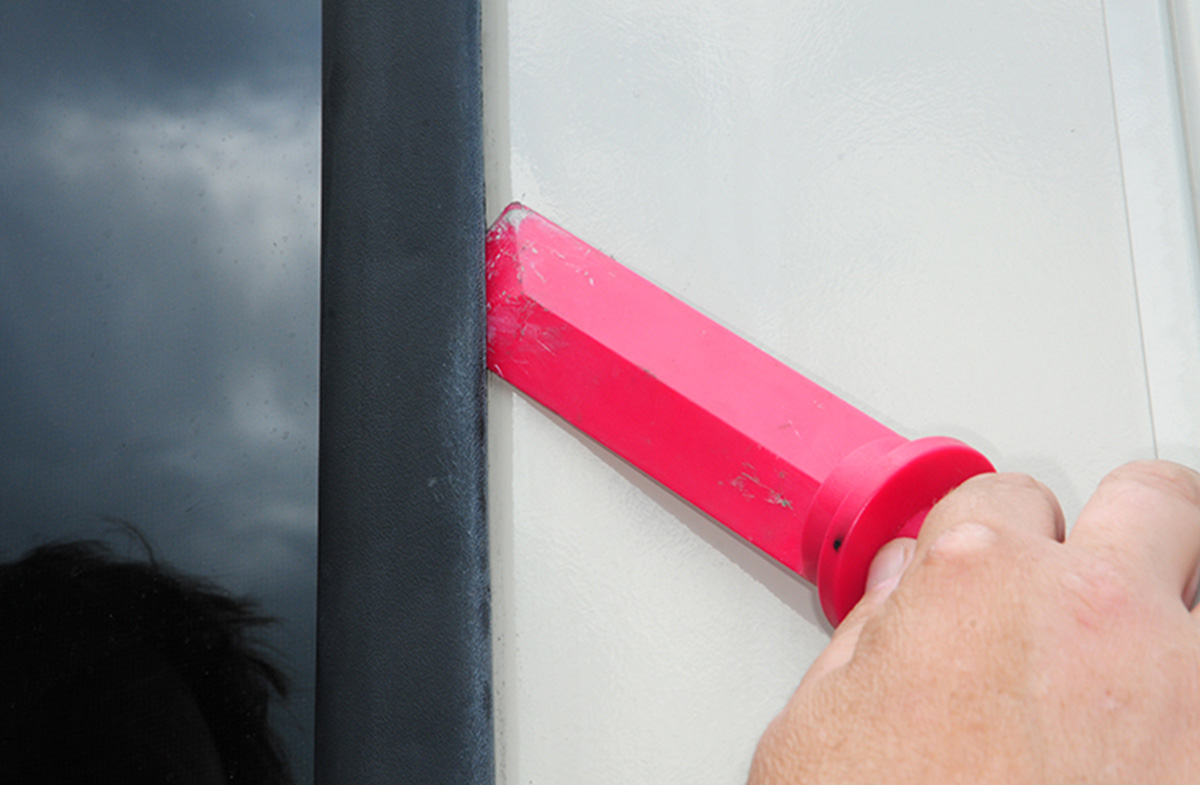
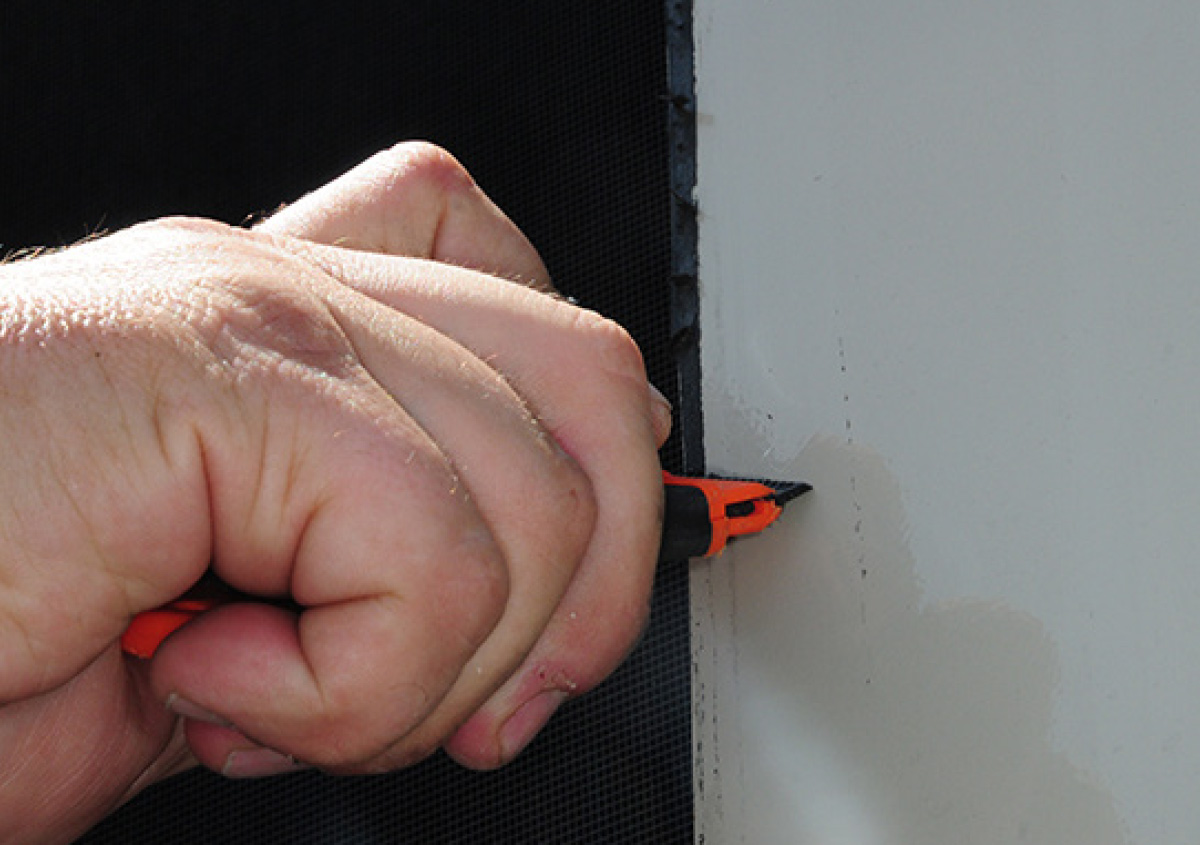
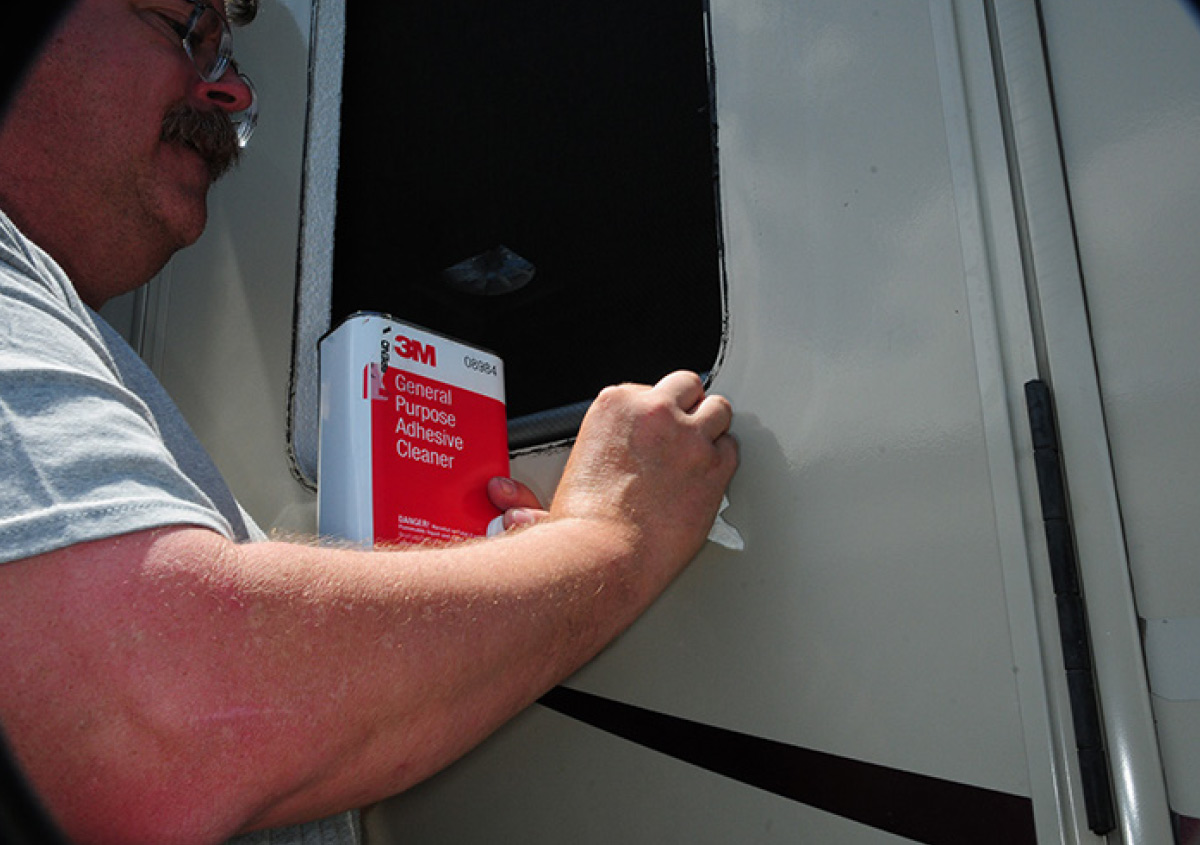
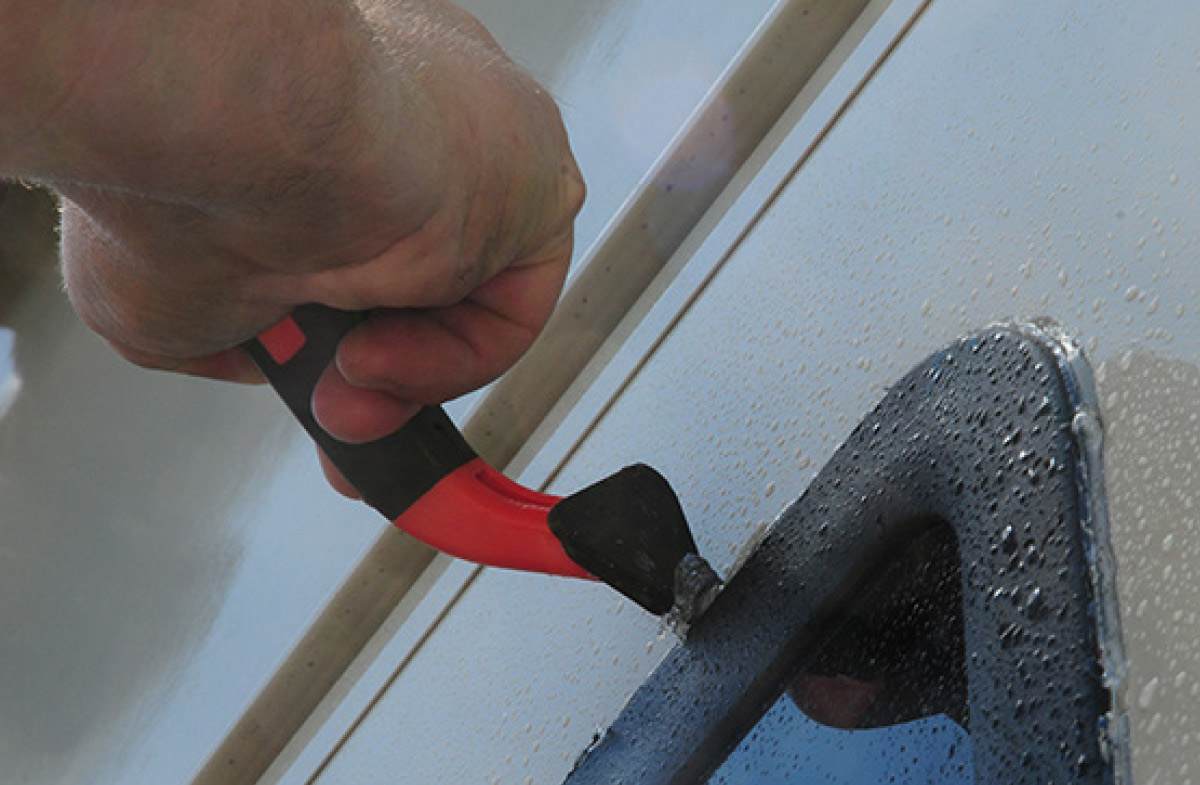
Once the window frames are free, the old sealant must be removed. The fifth wheel for this project was fitted with an aftermarket replacement for the stock opaque window, so there was more sealant to contend with than normal. A plastic razor blade scraper (various products are available at Amazon and local hardware stores) was used to scrape away the bulk of the sealant (in this case butyl tape) and the residue was cleaned with alcohol.

The Thin Shade fits into the inner frame (Part No. 786036), which attaches uniquely into the outer frame (Part No. 711862). Barbed studs molded into the edges of the frame are mated to the other side; when pressure is applied the two sides are seated. There are no screws to install into the inner frame as done with conventional counterparts. While the process is easy, you only get one shot at mating the two frames — and it takes quite a bit of pressure to make sure the seal on both sides is tight. The caveat: Don’t plan on removing this frame without damaging the barbs and plastic frame. Obviously, we’re speculating since we didn’t test that supposition. Realistically, there should be no reason to remove the window unless the glass becomes damaged.
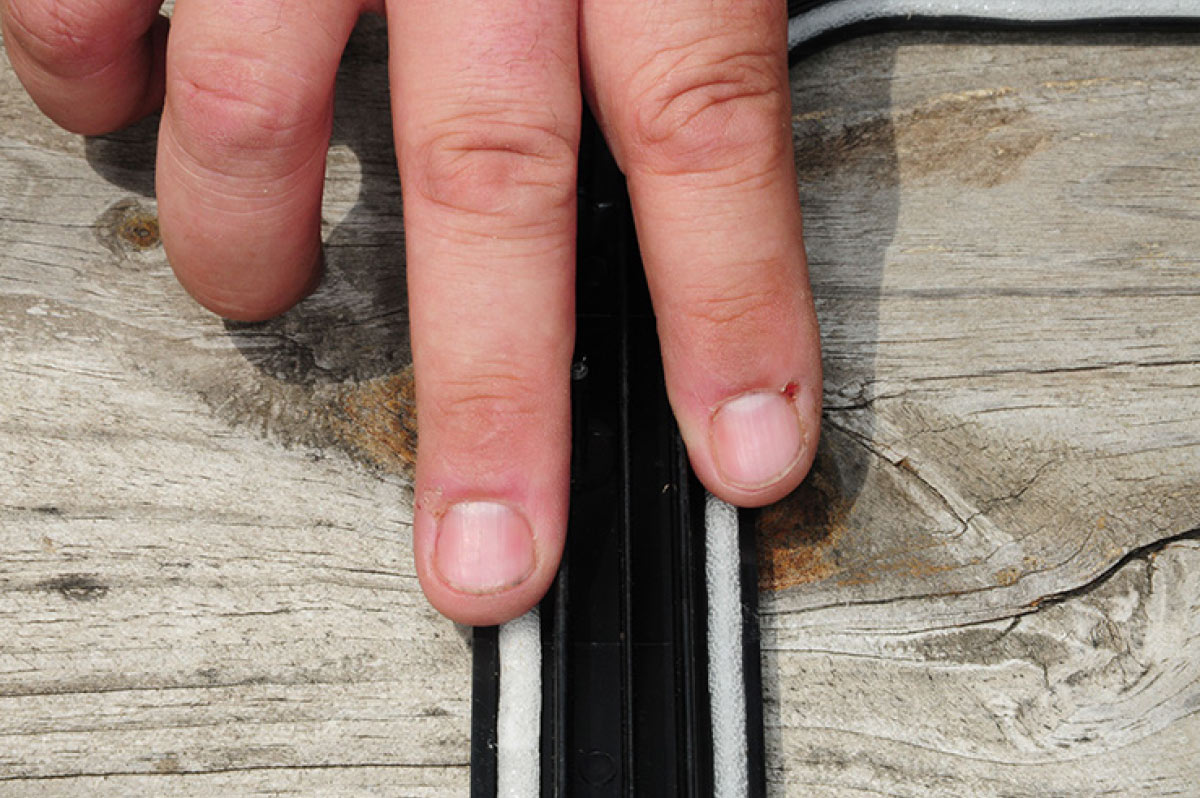
Strips of sealer
We decided to tackle the window replacement first. To make things easier, strips of sealer to seat the window glass are pre-installed in the outer frame.
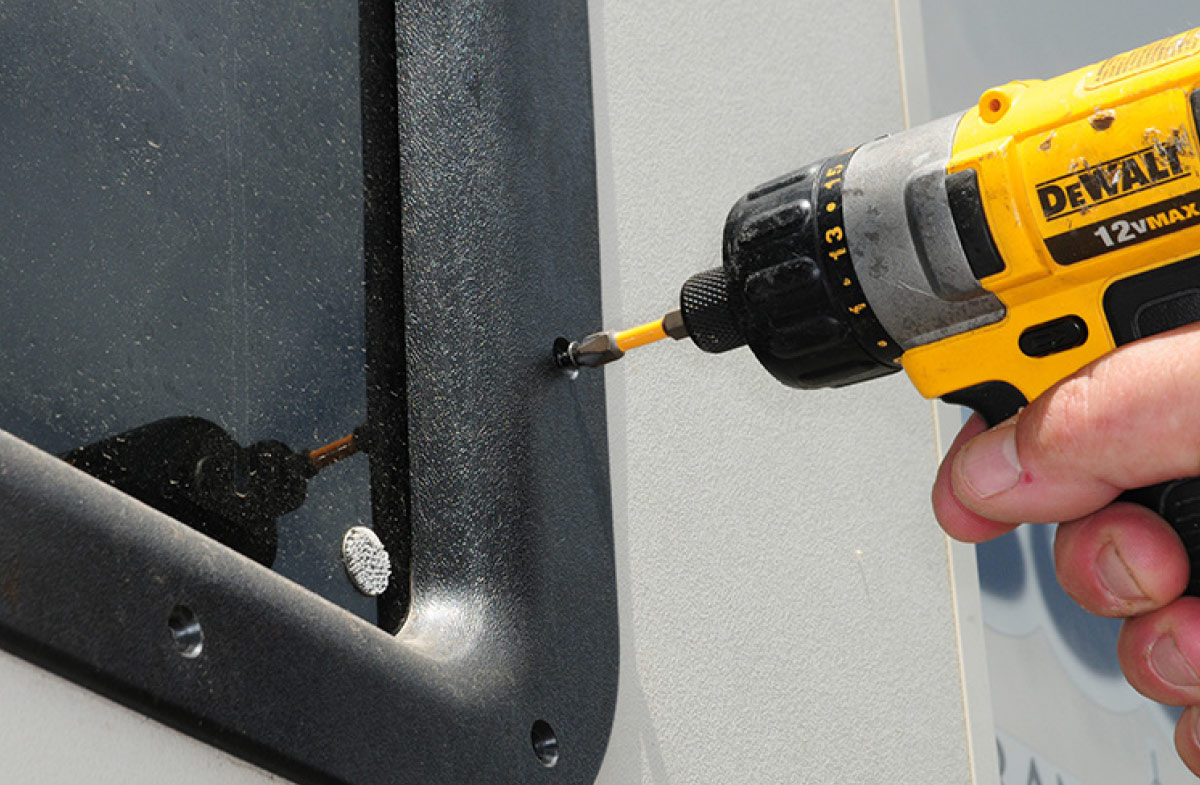
Screw gun
window
Inner window-frame screws are removed with a screw gun. The inner frame is carefully removed, paying close attention to whether the outer frame and window will release on its own.
Window on the project
Since the window on the project fifth wheel was replaced a few years back with an aftermarket version, the outer frame continued to stick to the door panel. A plastic pry bar was used to release the frame from the butyl tape.
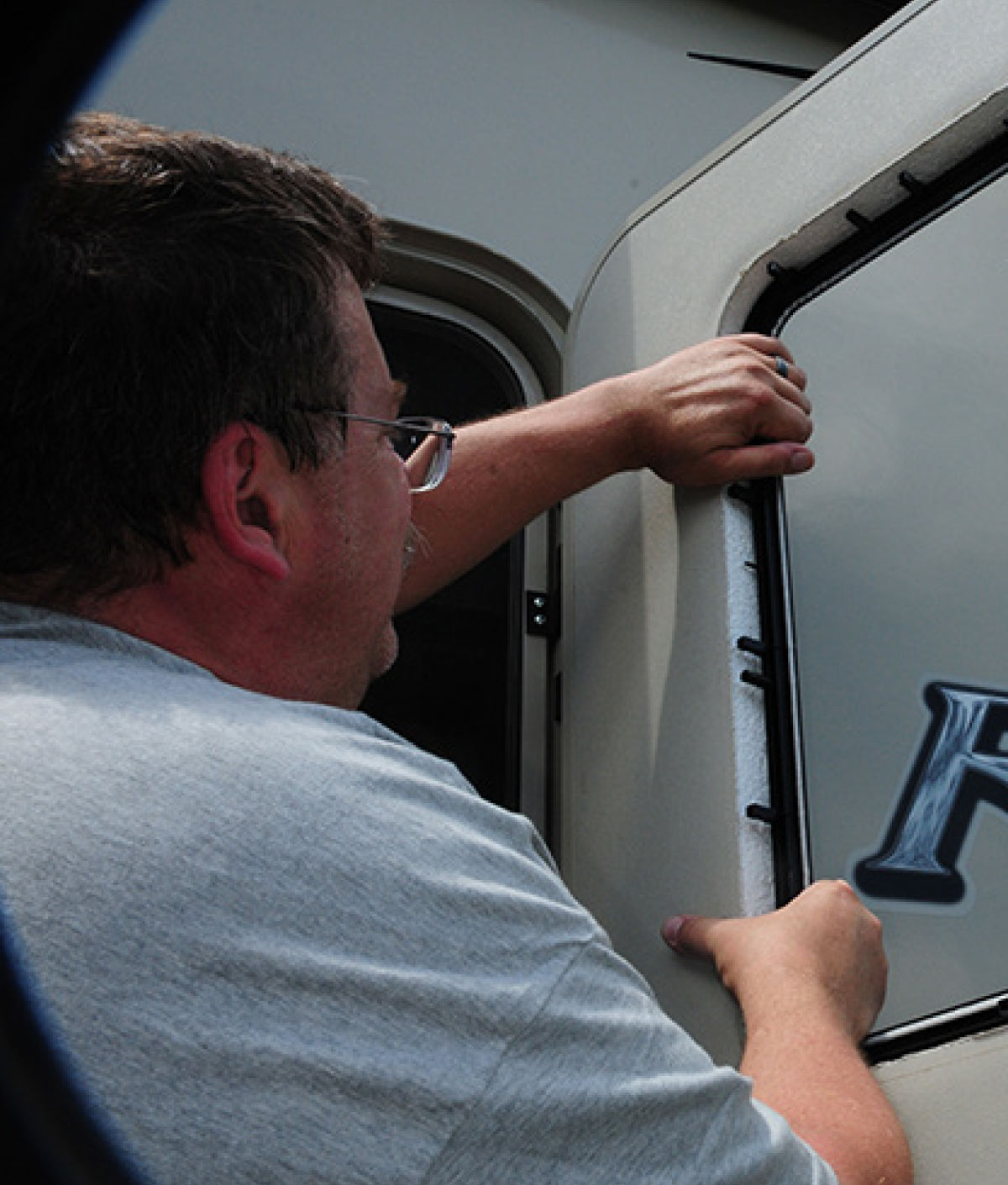
Before sandwiching the frames, the glass is positioned, making sure it’s seated properly against the built-in seal. Again, a second person can help with placing the three parts of the frame and window, if necessary.

There’s an obvious snapping sound as the barbs are seated and we were comfortable that the seal made by the outer and inner frames was tight, but just in case we ran a bead of silicone around the upper edges of the outer window frame. Clear silicone from a small tube was used to run the small bead and cleaned up with a caulk finishing tool, easily procured on Amazon or from a local hardware store.

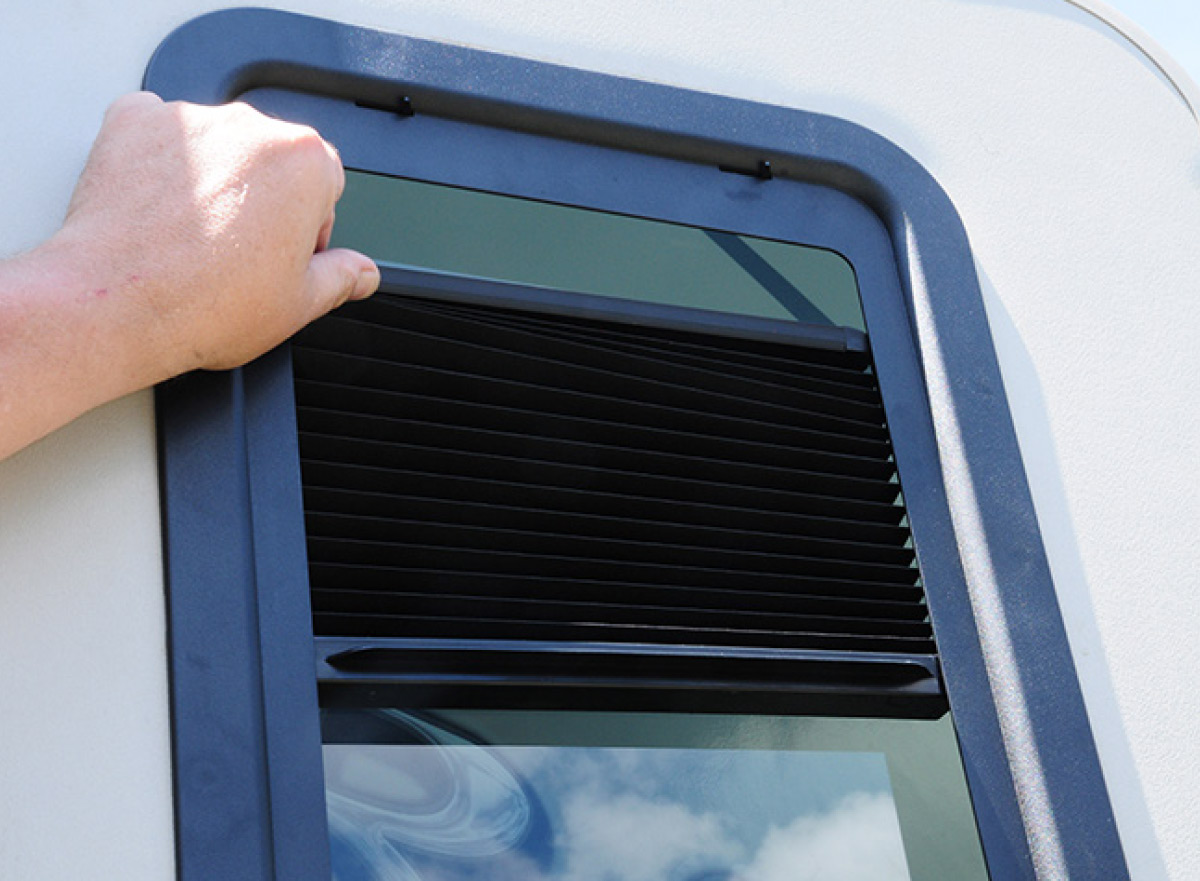
The last step was installing the Thin Shade, which could not be easier. Maneuvering it at a 45-degree angle allows the shade to fit between the inner frame and window. Levers on the top and bottom of the frame hold the shade in place. It only takes a minute to accomplish this task.When you want privacy, simply grab the “handle” at the bottom of the shade and pull it down. It moves smoothly with little effort and covers the entire window.

Since the screen has to be separated from the entry door in order to reach the Thin Shade, most owners will have to get into a routine to pull it down before the door is closed. If the shade becomes damaged — through misuse or after exposure to heavy rain — it can be replaced easily without tools. The frames, window and Thin Shade retail for $99.95.
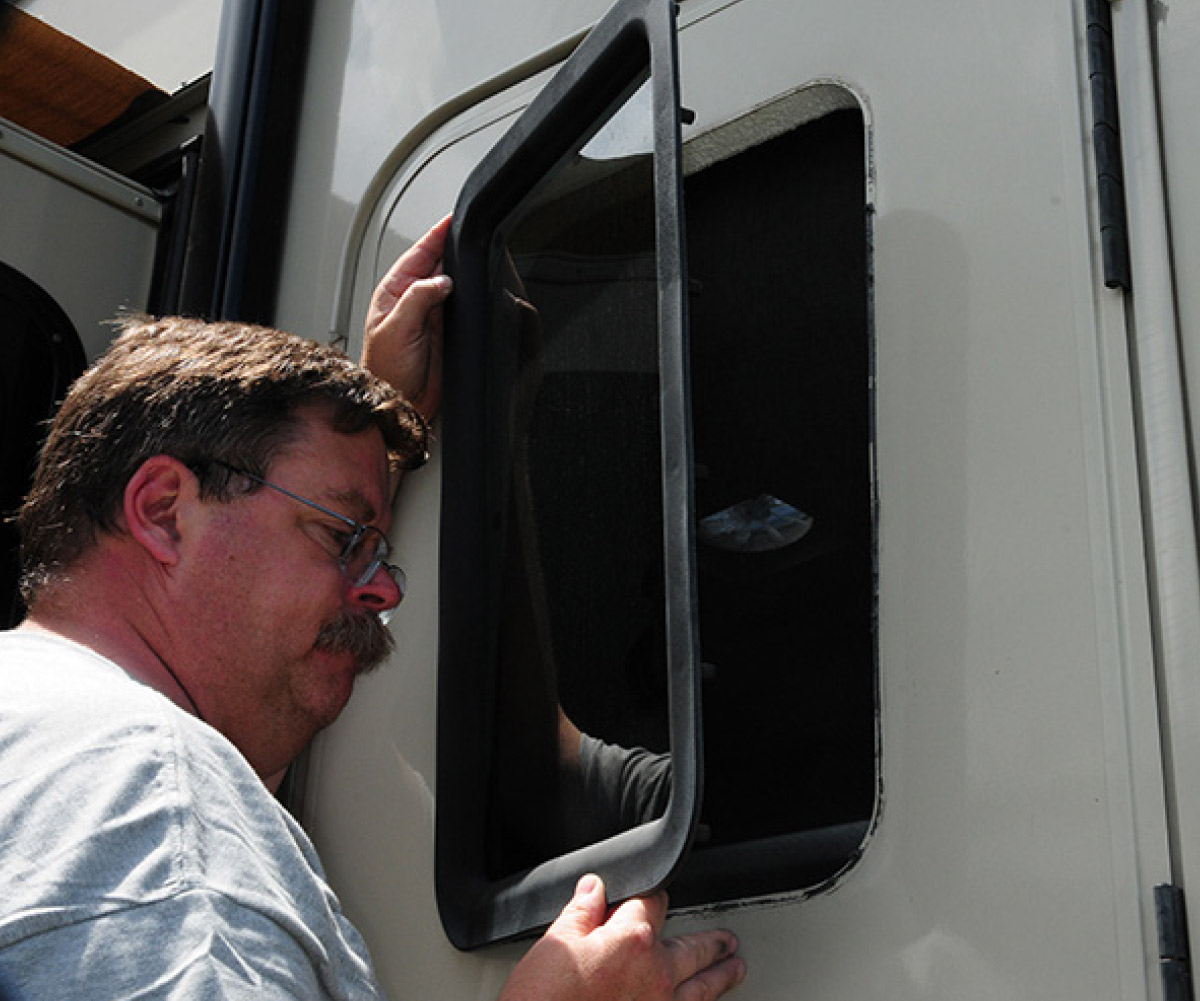
Man adjusting window
Frame
The outer frame is pulled away from the door panel and set aside, leaving a line of butyl tape remnants. Remember, there’s glass in there, so the installer must use care when removing the frame.
Plastic razor blade
A plastic razor blade scraper, procured from a local hardware store, was used to remove the remaining butyl tape on the door panel. Factory-installed windows may not leave any residue.
Butyl tape
Once the bulk of the butyl tape was scrapped off, alcohol was applied to thoroughly clean the door panel around the window opening.
The outer frame
panel
The outer frame is positioned in the window opening and pulled toward the inside to ensure the frame will seat against the panel.
sealer
The glass pane is carefully placed in the outer frame and pushed against the sealer. A second person on the other side will ensure the frame does not pop out during this process.
outside frame
Although the inner and outer frames were seated via the barbed fittings tightly, a bead of clear silicone sealer was applied to the top edge of the outside frame.
A caulk tool
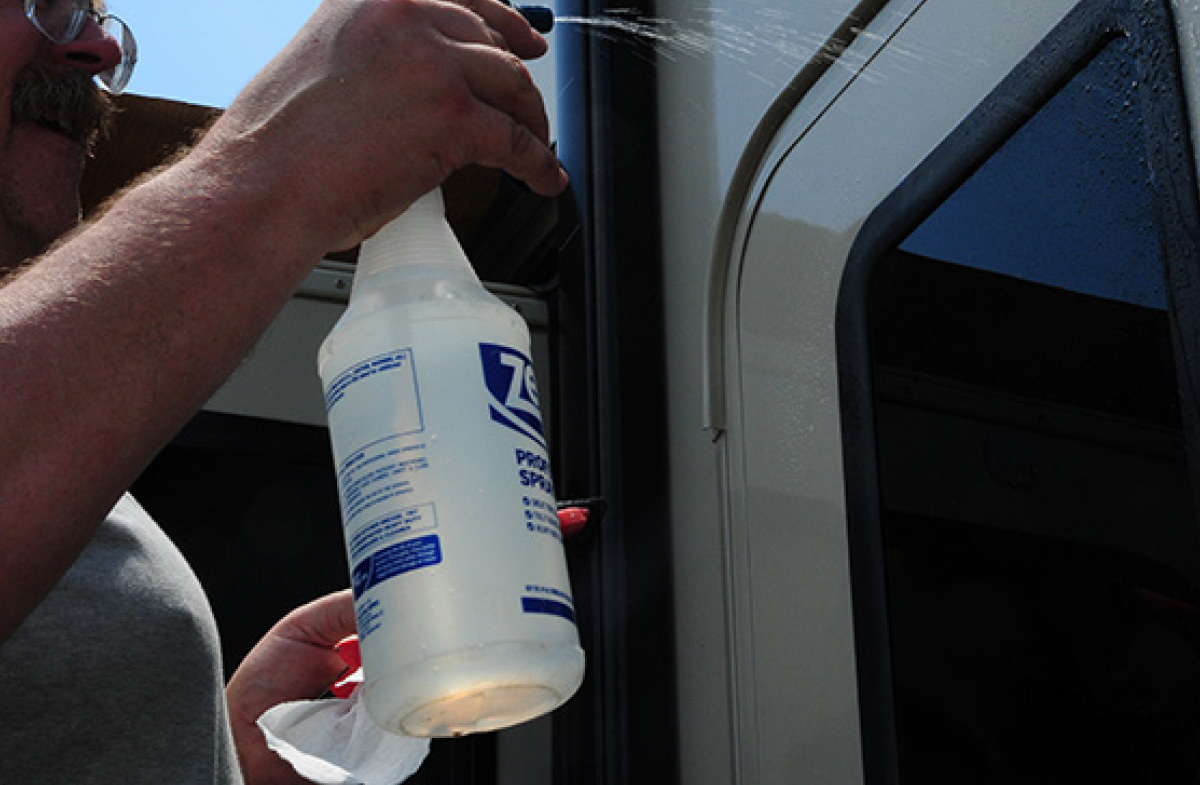
Spraying water
A caulk tool, easily found on Amazon or local hardware stores, was used to smooth out the silicone bead, leaving a nice finish. Spraying water on the silicone will help control the bead. Roadmaster’s Voom was used to clean up the surrounding door panel after the job was completed.
Thin Shade
Finally, the Thin Shade was jockeyed into position between the glass and inner frame and latched in place. Cleverly designed fasteners make this a very simple procedure.
Window
Thin Shade is ready to go. It can be lowered or raised smoothly by grabbing the extrusion. The shade covers the entire window.
Step 2: Full Closure
Like the entry door, there’s nothing exotic about the screen door that’s integrated into the frame hinges. The design has been around forever and, frankly, it works. A common annoyance is having to reach out the door to grab the screen and swing it to latch into the frame. Aftermarket handles are helpful, but many times the reach is awkward. This can be a problem when parking in areas where bugs are on full attack. Lippert’s Screen Shot fixes this dilemma by allowing the screen door to automatically close behind you.

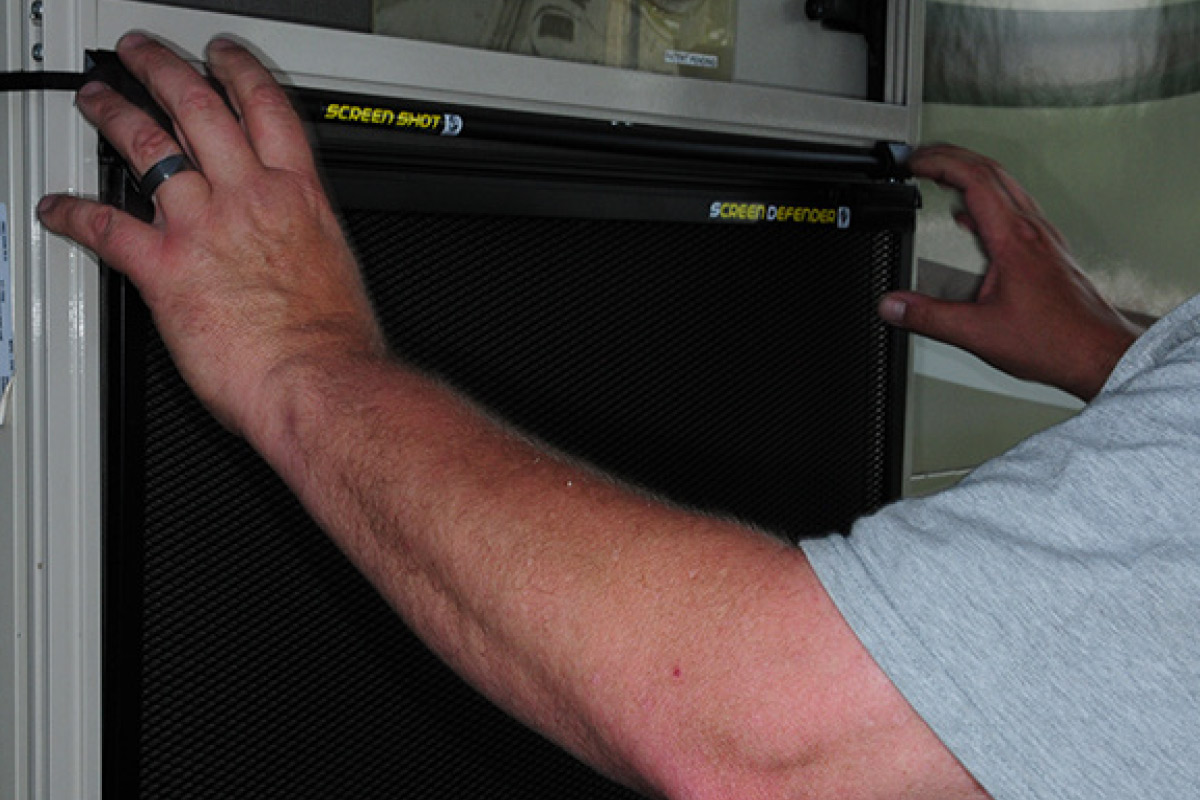
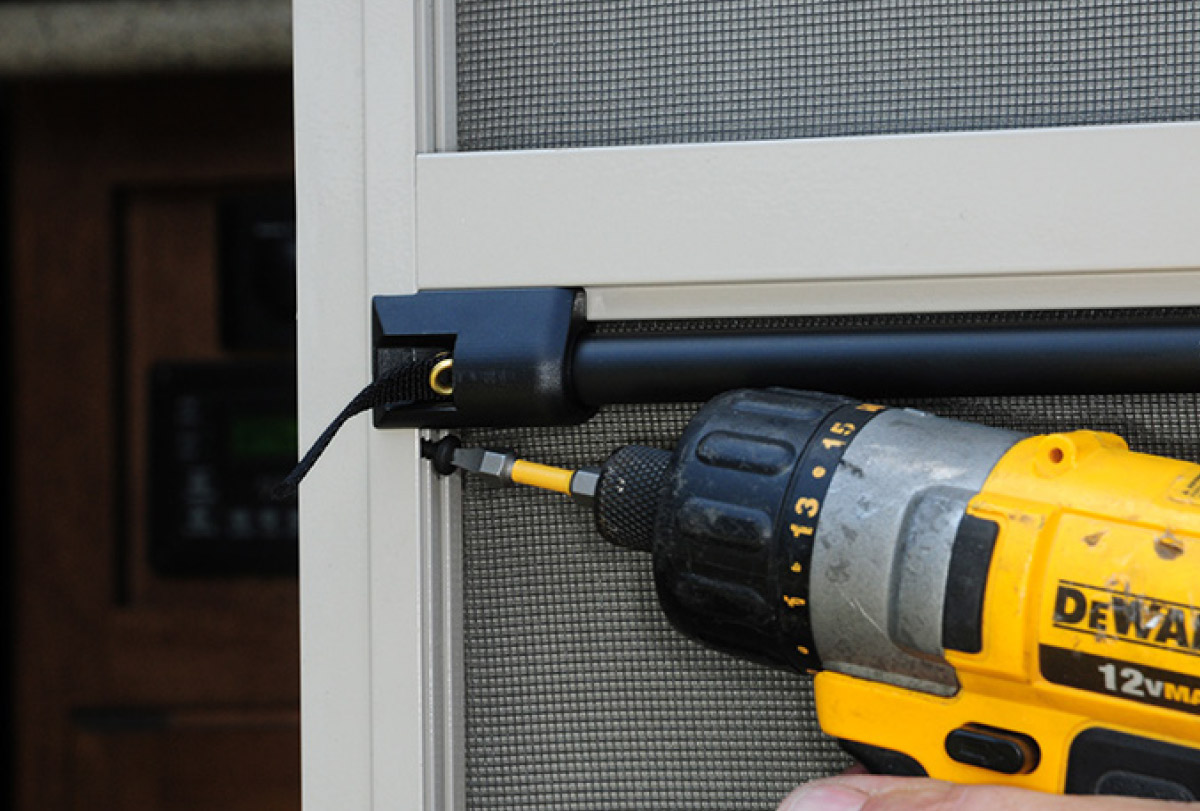
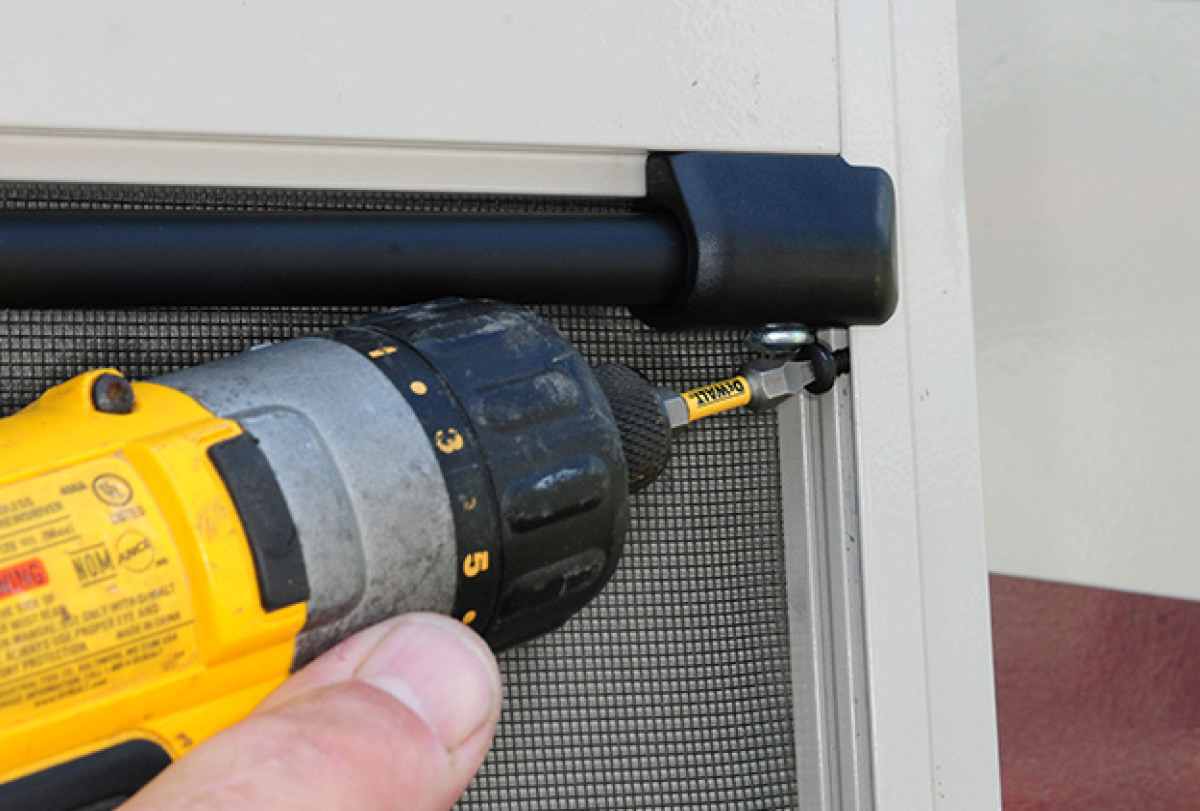
The design of the Screen Shot is one of those “why didn’t I think of that” products. It simply uses a length of webbing attached to a spring that is secured to the screen frame and door jam. There are a few small parts in the kit and it only takes a few minutes to install (once you figure out how it’s assembled). After threading the webbing and spring through a tube, the latch and hinge side-support brackets are attached to the ends before securing (using provided screws) to both sides of the screen door frame. Lastly, the open end of the webbing is stretched across the door jam and a metal screw is installed through the brass eyelet 1/2-inch from the edge. A rivet can be used in lieu of the sheet metal screw; we found no issue with using the screw.
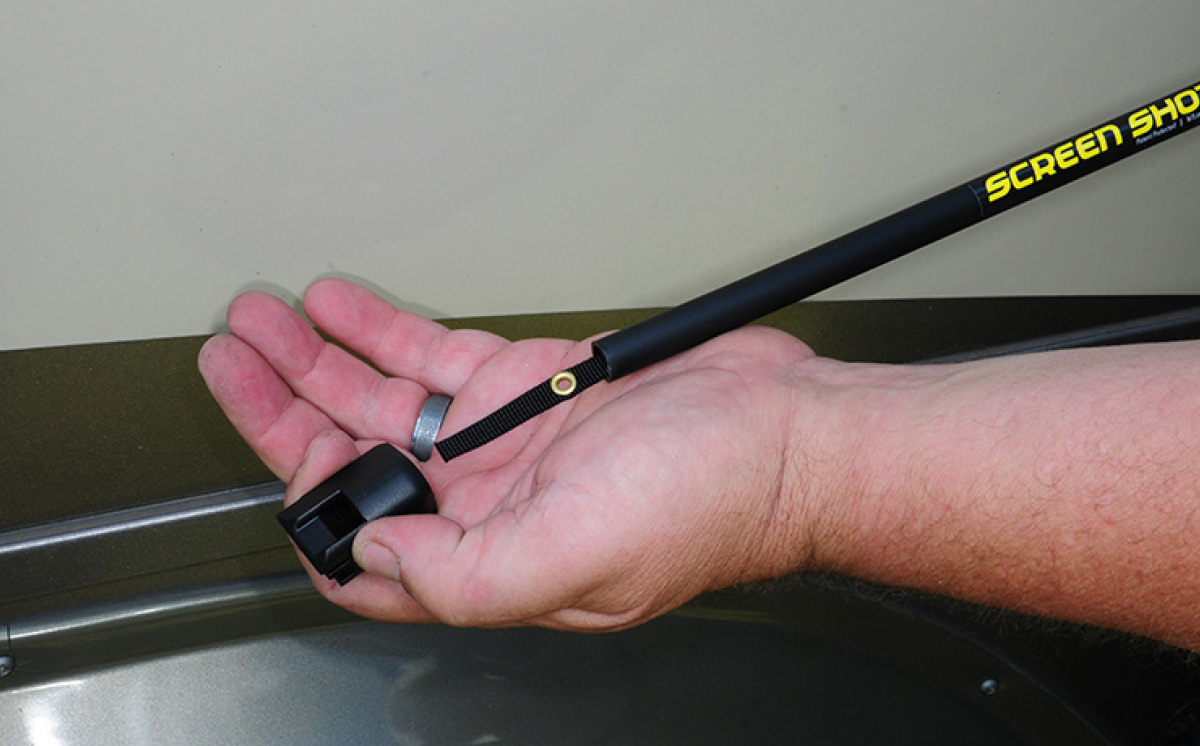
Screen Shot
The hinge side bracke
To start the installation of Lippert’s Screen Shot, the webbing and spring are threaded through the plastic tube and the hinge-side support. The hinge side bracket has the notch in the plastic body.
The latch-side support
The latch-side support is held in place against the screen door frame while the other support is positioned on the opposite side.
It’s a quicky project that nets long-term benefits. The screen door closes by itself, but you shouldn’t allow it to swing the entire way; doing so slams the door hard enough to be disconcerting. Owners will quickly find a “sweet spot” and enjoy the convenience of not having to go through other motions to close the screen door. In fact, there’s actually enough spring to allow the entry door and screen door to close by themselves when latched together, which we really liked. The only caution is being aware that the door is closing behind you by itself and can kick you in the rear — or trap your dog — if you’re not paying attention.

Before ordering, you’ll have to measure the door from the frame edges and match the size with the proper part number. The Screen Shot ($23.95) is designed to work on Lippert doors with hinges on the right side, but don’t worry — you’d be hard-pressed to find a contemporary RV using something other than a Lippert door today.
Screen material
Hinge-side support
A sheet metal screw is driven into the channel closest to the screen material, holding the latch-side support in place. The same process is repeated for the hinge-side support.
Mounting location
The mounting location for the webbing on the door jam is measured at ½-inch from the edge and marked.
Webbing
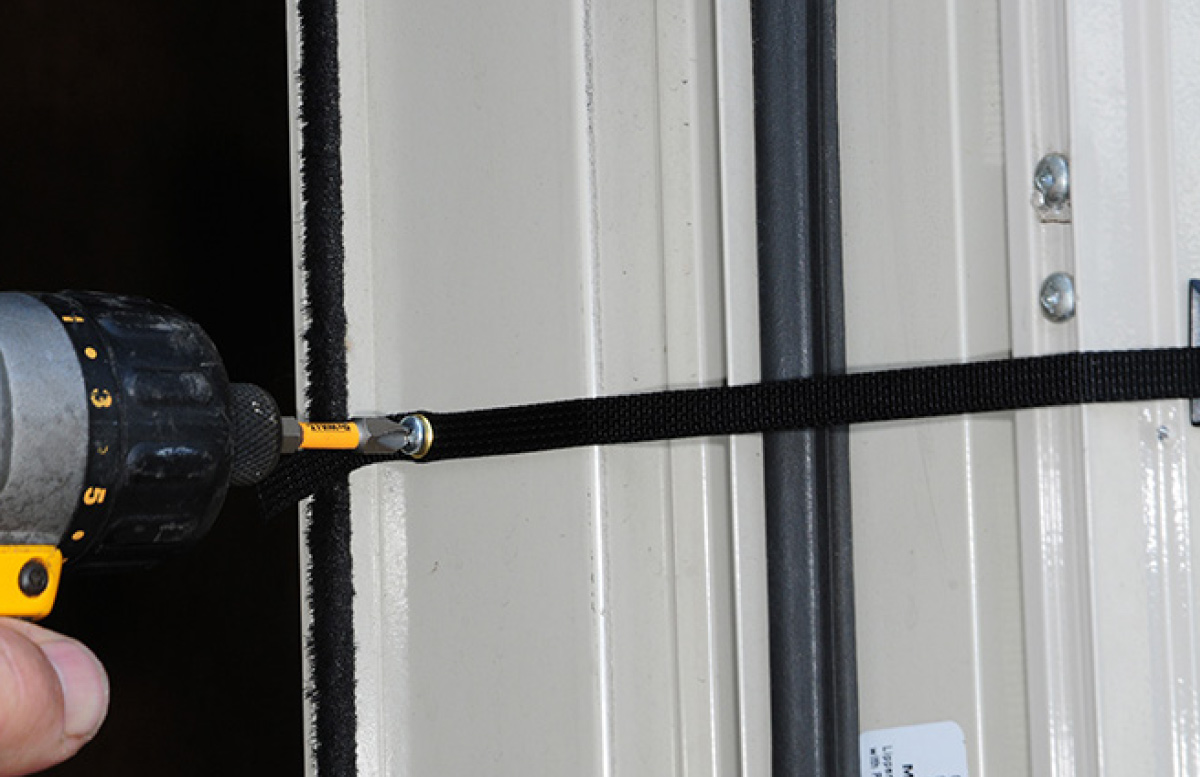
Webbing is pulled across the door jam and a sheet metal screw is driven through the eyelet at the pre-marked location. A rivet, supplied with the kit, can be used in lieu of the screw, which we found unnecessary. Project done.
Step 3: Fido Barrier
poodle dog
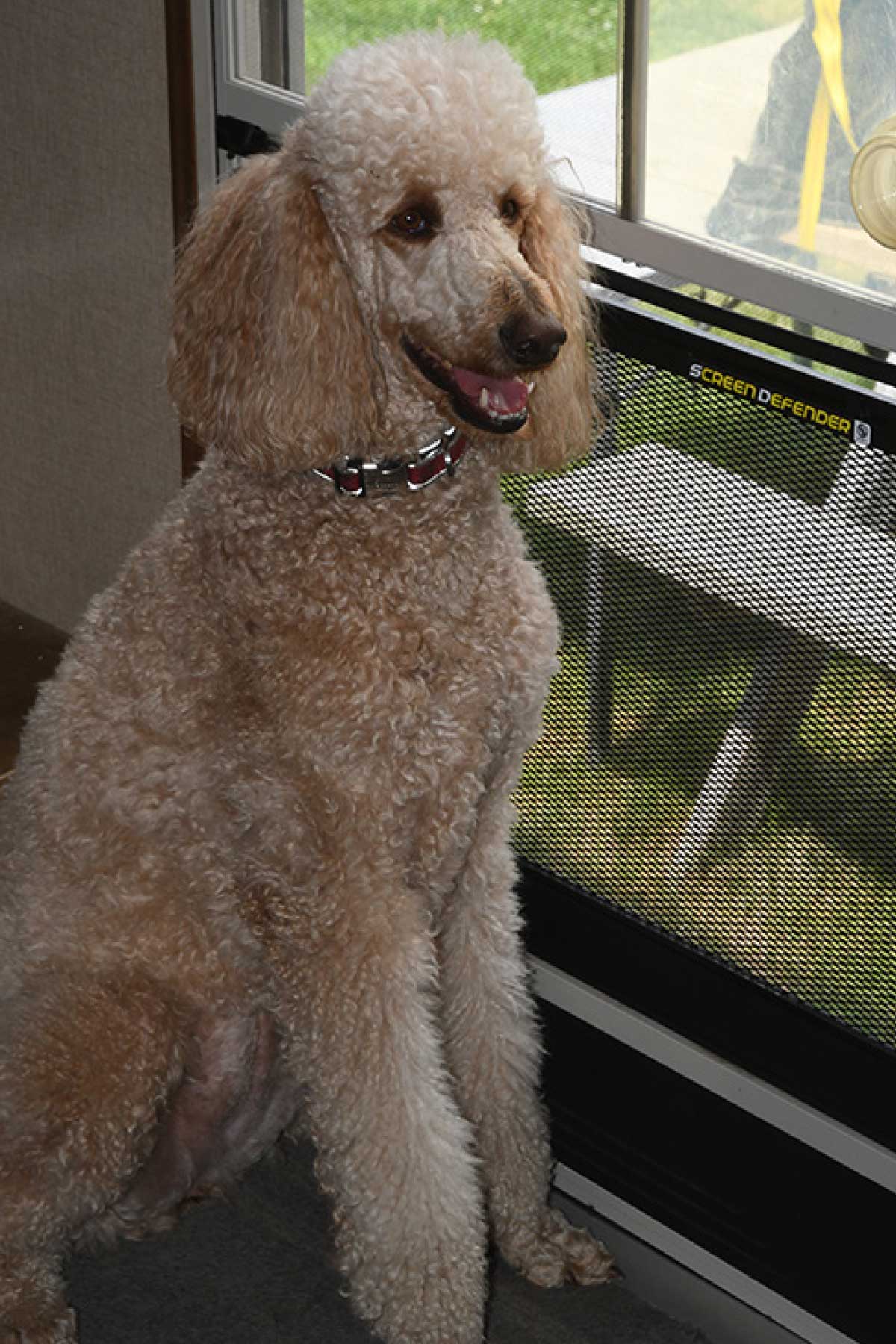
Our standard poodle loves to hang out at the screen door, hoping to get an invite to run around outside. Screen Defender protects the screen from errant moves—and looks good, too.
Step 3: Fido Barrier
Dogs love to gaze out the lower section of the screen when the entry door is open — and when not scanning the outdoors, they love to lay down against the screen, typically stretching out against the material. More mischievous dogs and cats also enjoy irritating owners by scratching at the material until it rips. Screen protectors are not new to the RV world, but Lippert’s Screen Defender reinvented the installation process to make it simple without the use of any tools, except possibly a tape measure.

The Screen Defender is a metal mesh insert that attaches to the bottom portion of the screen, as long as this area is more than 20 inches high. Don’t get overwhelmed by the seven pages of instructions: The process is exceptionally easy, taking only a few minutes to accomplish.

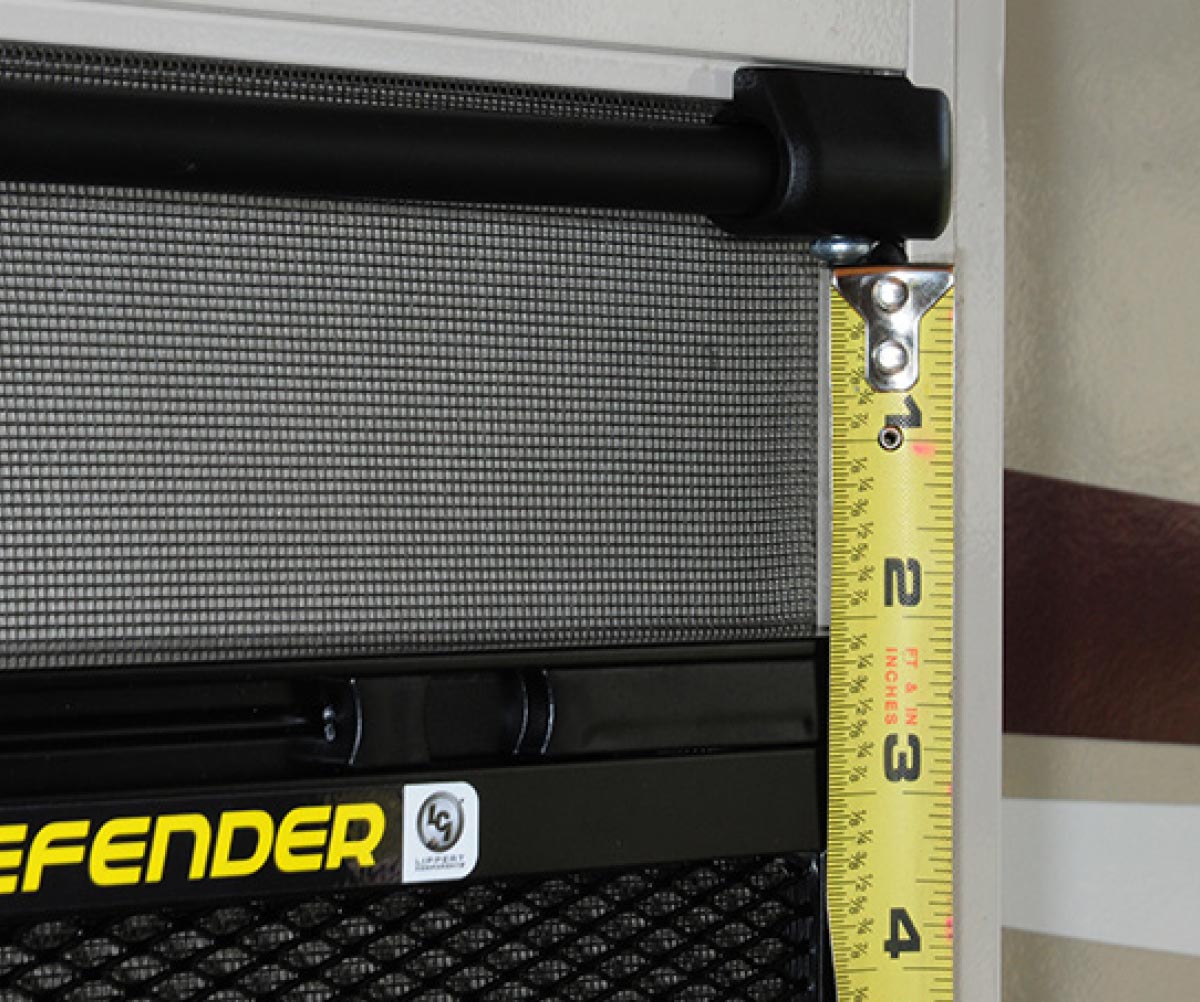
First, a determination must be made whether the provided extrusions are needed to fill any gap between the center bar of the screen door and bottom of the frame. To establish the need for extrusions, the metal mesh insert is pre-fit on the screen and any visible gap is measured. We had to put two extrusions together to make a 2-inch gap filler, taking into account the Screen Shot bar installed earlier. This is done by sorting through the provided extrusions and finding the right combination. For this project, two pieces were pressed together, setting the barbs that are used as fasteners.
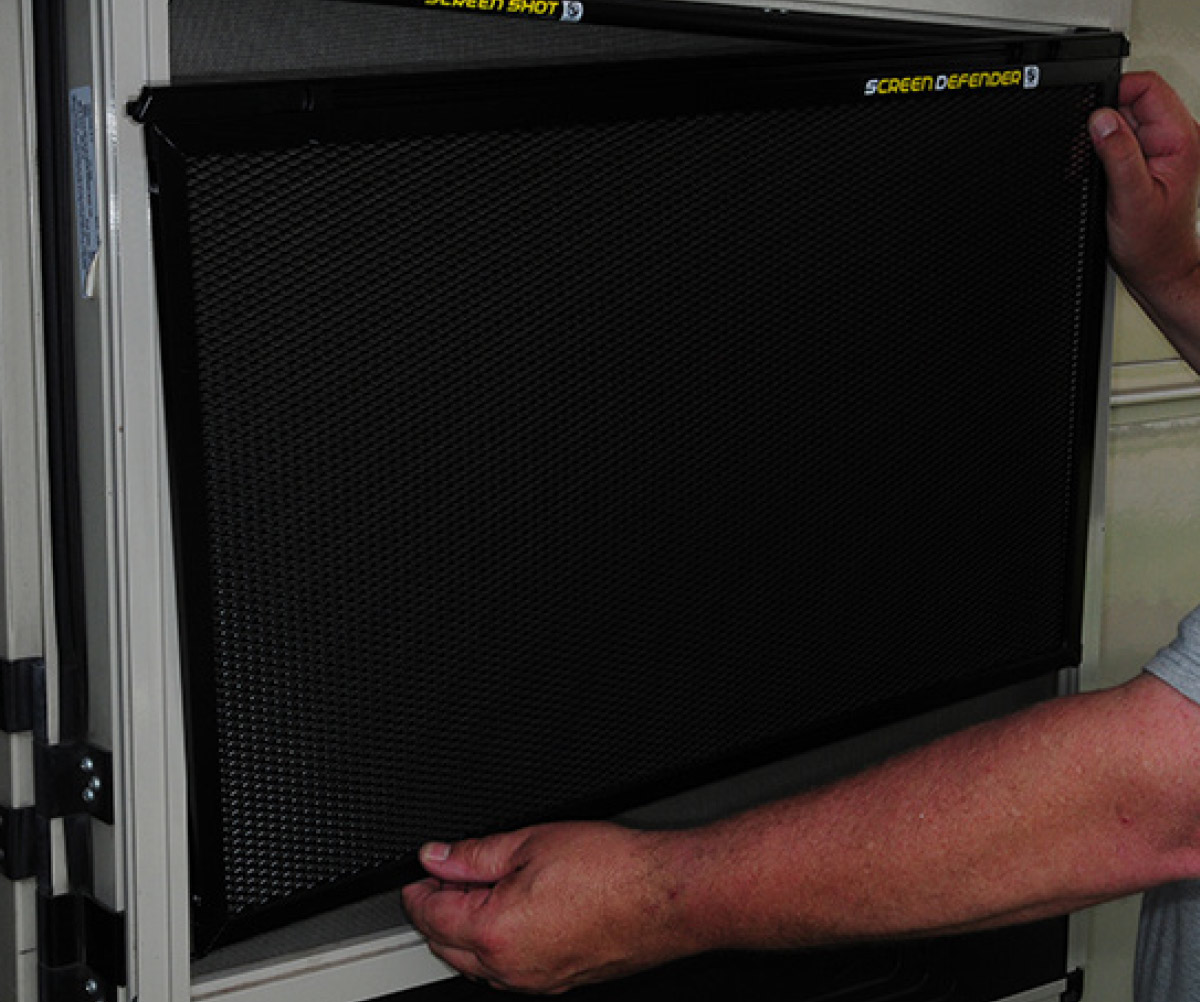
Once the extrusions are set, they are placed in the lower portion of the screen door frame and the Screen Defender is simply positioned on top. The spring-loaded latches are then employed to secure the mesh insert into both sides of the screen door frame. In no time you’re done, and the metal mesh insert is solidly in place, ready for the wrath of fido — or even an errant human foot. The Screen Defender has a $56.95 MSRP.
The Screen Defender
Ruler
The Screen Defender is pre-hung on the lower portion of screen door to determine whether extrusions will be needed to fill any gaps. In this installation, a 2-inch extrusion was needed, considering the height of the lower section of screen and the location of the previously mounted Screen Shot screen door closer.
gap filler
To make a 2-inch gap filler, two sections of extrusion material were snapped together via the barbed layers of plastic.
Screen protector
The extrusion was fitted to the bottom of the metal mesh screen protector before placing it in the screen channel.
Metal mesh in place
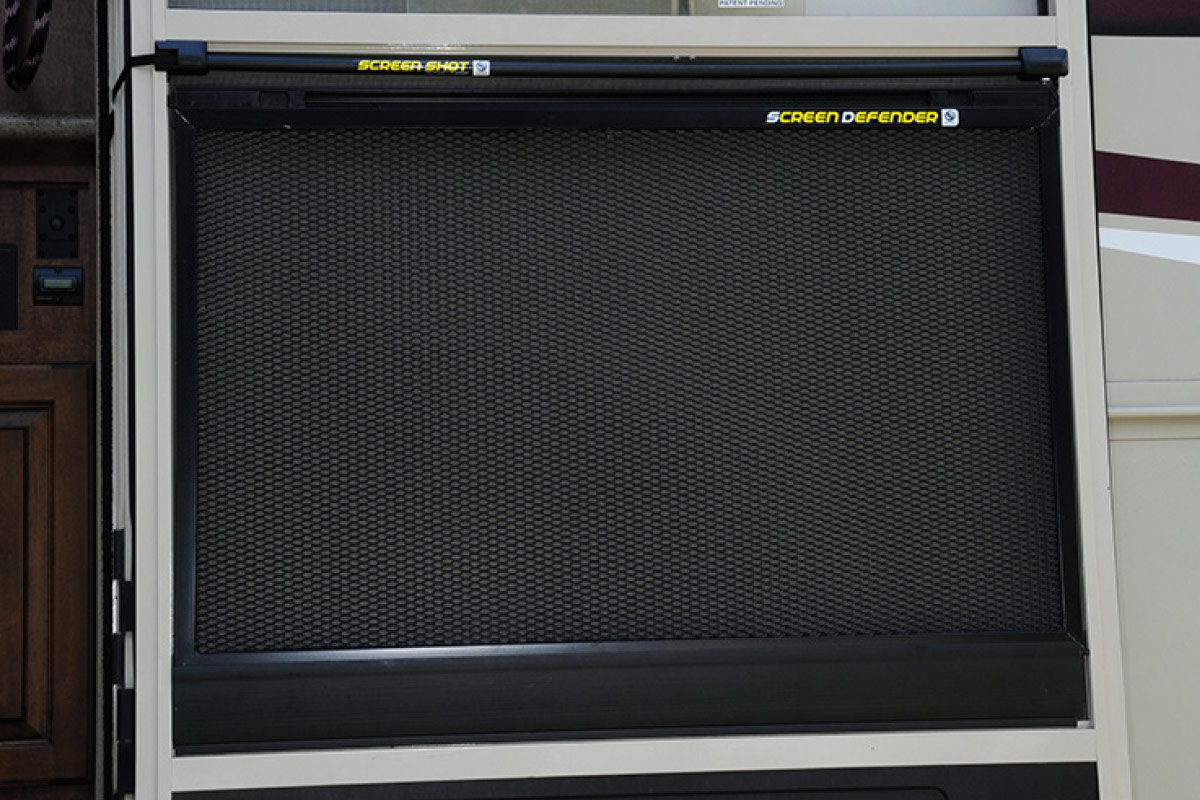
Once the Screen Defender is in position, the spring-loaded latches are employed, locking the metal mesh in place.
Screen Defender is a welcome addition to the screen door
The nice-looking Screen Defender is a welcome addition to the screen door. It mounts solidly and is a great dissuader for pets that tend to lean against the screen, or, worse yet, paw the screen material to shreds.
Source:
Lippert
(574) 535-1125
lci1.com