

t’s funny how trends are recycled. Back in the 1970s, van conversions were popular, a movement driven by the surfing craze and “hippies” who lived life on the fringe. Undoubtedly, the Dodge Tradesman van was the most popular foundation for those RV companies that transformed a common work vehicle into a mobile bedroom for spirited individuals who wanted to spread their wings and explore beyond the routines of daily life. As a young person emerging from the late 1960s, when it could be argued that the anti-establishment movement helped shape the future of America through its “peace and love” mantra, I, too, became infatuated with “van life,” which has evolved into a hot ticket for the RV industry.
I built my first RV by converting a used Dodge van into a traveling motel, but I moved in a different direction from that of the surfer crowd (although living near the beach in Southern California was certainly the impetus for my surfboarding adventures). This van, of course, was rather crude by today’s standards, but it had everything my wife, Lynne, and I needed to hang with the RV crowd.
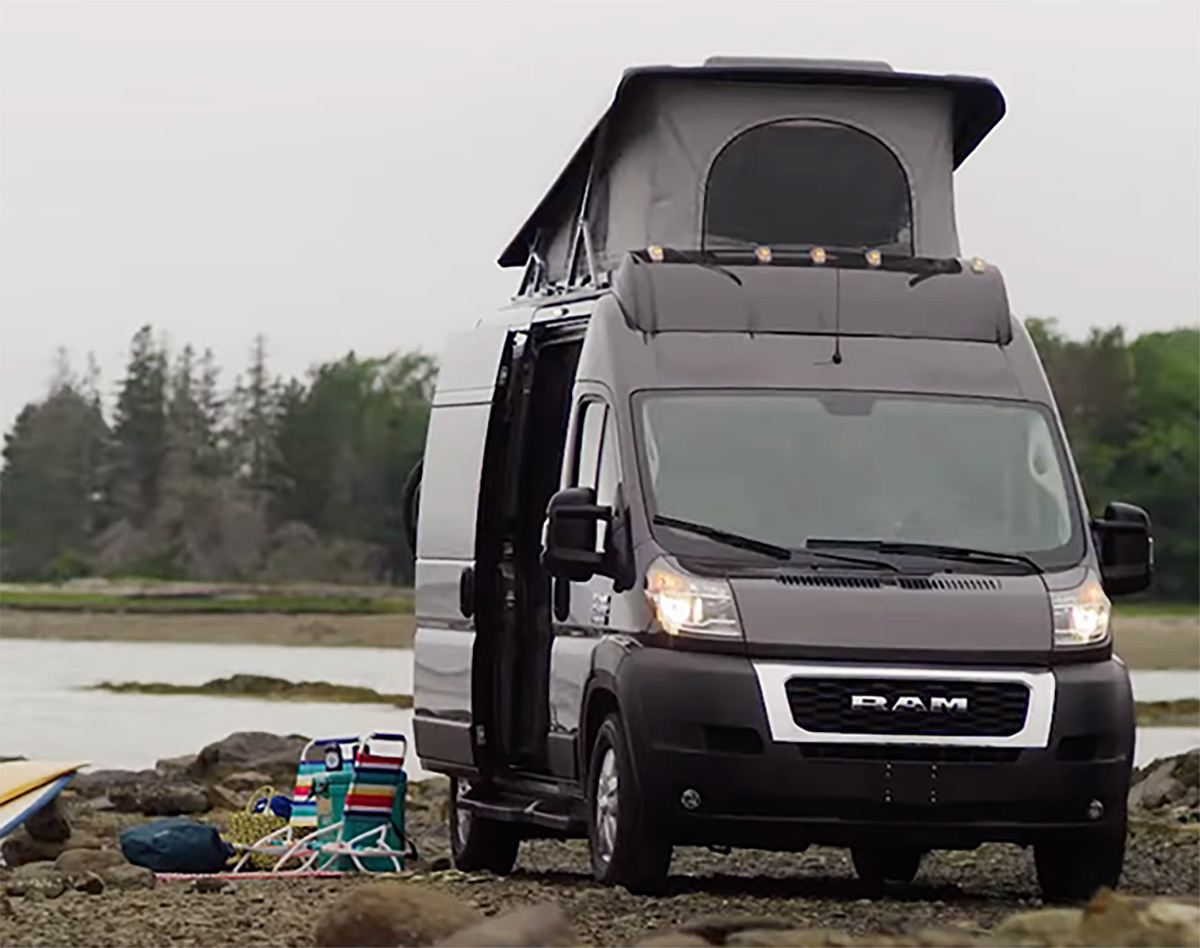
Today, we’re that much older crowd — and the latest generation of younger RV enthusiasts is no longer an anomaly.
While I’m not surprised that my early encounters with the RV lifestyle and career as an RV journalist propelled the decision to live full-time in a fifth wheel more than eight years ago, I still get a kick out of watching videos depicting van life — and the nomadic lifestyle — on YouTube.
When the auto makers shuttered the manufacture of standard-size vans and introduced more svelte replacements, many of us were sure that “real vans” were headed for extinction. Fortunately, nothing can be further from reality; vans are better than ever, albeit more expensive. Kudos to the automotive industry for building more efficient vans that led to the resurgence of a lifestyle segment powered by energetic and enthusiastic individuals looking to escape the doldrums of daily life.
Surprisingly, many of the “nomads” of today are venturing out later in life — and have embraced the lifestyle with a passion. I still fantasize about getting back into a van to relive my RVing roots, and a relatively new activity — “stealth camping” — has really piqued my attention. Self-containment efficiency has spearheaded the practicality of living in close quarters without giving up amenities. I can’t believe how many owners I see while traveling or watching YouTube who park anywhere, even on city streets. These free spirits are enjoying travel adventures only made possible by robust, compact energy and comfort systems, while operating on a budget that seems impossible these days. I won’t debate the legally of overnighting anywhere with impunity, but you have to give these people credit for creativity. In many cases, it’s hard to decipher a work van, like those used for delivering packages, from a recreational van doubling as a daily driver. The whole concept is fascinating — and, of course, traditional boondocking is more than just a passing fad.
Living large is not fashionable for those who embrace a minimalist lifestyle. The idea of living in a “tiny home” is intriguing; fortunately, the industry has responded generously by offering products for those who want to keep life simple. Heck, I’ve seen videos and camped near people living full-time in a teardrop trailer, so having a comfortable bed, a well-equipped galley and a bathroom makes a Class B motorhome seem like a palace by comparison. But the happiness factor seems parallel.
At one time, many of the technological advancements that embellish RV livability trickled down from the more expensive Class A motorhome segment. Today, it could also be argued that systems packed into vans and small camping trailers are driving innovation throughout the RV industry. Case in point: efficient solar and energy systems that are capable of running the gamut of appliances and accessories without hookup support. Watching a 40-inch TV while inside a smaller trailer — not to mention preparing food in a microwave or on an induction cooktop while enjoying air-conditioned comfort — would be unfathomable not that many years ago. Now, that’s what I call “roughing it without restraint” — something only made possible by the RV industry’s accurate read of contemporary trends.
The aftermarket is also loaded with items readily available to talented do-it-yourselfers building custom interiors in vans and tiny trailers. Many of those conversions — and the clever use of space — are breathtaking. I can’t imagine that executives in the industry aren’t today considering many of the ideas populating social media.
One thing for sure, as history will attest, even tiny RVs will keep enthusiasts engaged — and the lifestyle buzz alive.