

owing travel trailers is wildly popular these days. Actually, more travel trailers are built every year than in any other segment of the RV industry. That makes sense, since just about anything on wheels these days can tow a trailer. In this arena, though, the “half-ton” pickup has become a staple. Heck, the best-selling vehicle in the country is the F-150, which has become a super capable tow vehicle, with tow ratings up to 14,000 pounds.
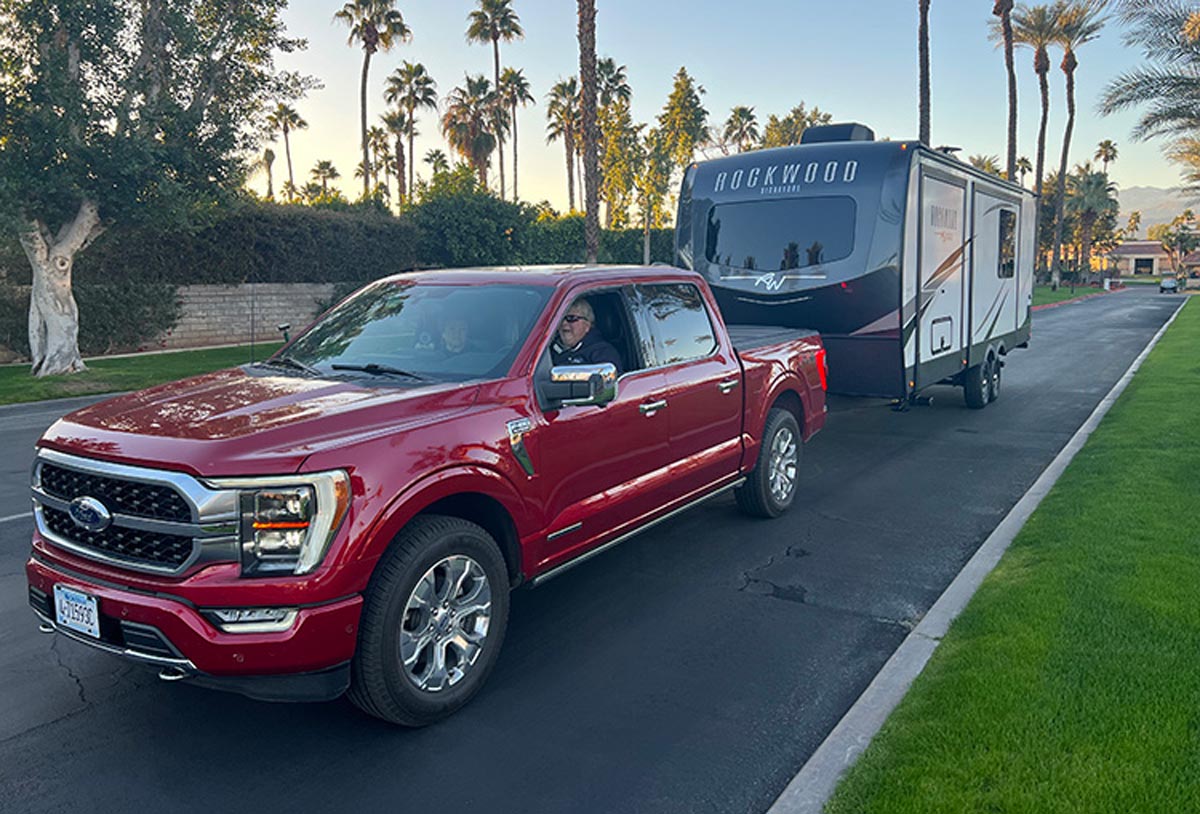
The Ford was, in fact, a friend’s choice of trucks when he decided that he needed a smaller RV to travel during the summer. In this instance, the truck was purchased first — he was smitten, perhaps, with all the bells and whistles Ford has to offer for this model pickup. Almost $80,000 later, the shiny red F-150 was sitting in his driveway. And, it was loaded with top-notch towing features — except for the proper mirrors, which was puzzling since my friend made it clear to the salesperson that he was going to tow a trailer, but they were a simple (albeit expensive) addition afterwards. The search for a trailer ended with a 29-footer that maxed out the limits of the truck and, as such, required precise equipment to hitch it up. That’s when we turned to the Equal-i-zer Sway Control Hitch (equalizerhitch.com).

Stability on the road was a critical factor, considering the total weight of the truck and trailer (at 11,220 pounds) was a sizeable load for the truck, so it was going to be important to make sure any possible sway could be mitigated. And the 1,220-pound hitch weight was also challenging for the truck, leaving little room before potentially overloading the rear axle. It was going to take thoughtful loading and the equalizing hitch to keep things on an even keel. Obviously, when setting up a towing combo like this one, spending time at the public scales is a necessity.
Considering the discovered weights at the public scales, we elected to order the Equal-i-zer set-up with a 1,400-pound maximum hitch weight and a maximum trailer weight of 14,000 pounds (part number 90-00-1400). The kit comes with the ball mount as well as spring arms and brackets for the trailer A-frame, which are instrumental for providing sway control. The 2 5/16-inch ball was installed and torqued to specifications at the factory. Total retail cost: $945.
While the patented hitch system does a credible job of transferring hitch weight from the coupler to the truck and trailer axles, it’s “claim to fame” is its four-way sway-control capability, which is superior to a simple friction device mounted independently between the ball mount and A-frame. With the Equal-i-zer system, friction is applied by downward pressure from the trailer A-frame combined with upward pressure from the spring arms connected to the proprietary brackets mounted on the A-frame. This creates two points of rotational friction at the hitch head (ball mount) by pinching the spring arm sprockets. The other two points of friction are created by the loading of the spring arms on the L-brackets mounted on the A-frame. Together, these four points of friction effectively combat lateral movement (yaw or sway) caused by environmental conditions and passing large vehicles that move a lot of air.
Setting Up the Components
Plan on spending a few hours assembling the parts and making the adjustments. The components are relatively heavy but can be handled easily by do-it-yourselfers. Before bolting any of the parts together, the trailer should be parked on a level surface and measured, front and back, from the frame to the ground to ensure it is level. The first step was to mount the hitch head to the shank after sliding it into the truck’s receiver and pinning in place; the top of the ball should be at the same height as the top of the trailer coupler or 1-inch higher. At the outset, the company suggests adding six washers to the spacer rivet before mounting the hitch head to the shank to establish a beginning angle; this will likely change after hitching up the trailer.
Once the ¾-inch bolts are placed to establish the proper hitch head height, the nuts are tightened enough to allow for loosening to adjust when establishing proper weight distribution. They were ultimately torqued to 320 ft.-lb., which required a pro-grade torque wrench; you’ll also need a 1 1/8-inch socket and ratchet handle and a 5/8-inch socket or box-end wrench to tighten the angle set bolt.
The second part of the hardware installation was mounting the spring arm brackets on the A-frame. Again, measurements established mounting locations on both sides, which will be 27-32 inches from the center of the A-frame coupler. There are specific requirements for installing the link plates and L-brackets, and the company warns against using an impact wrench for this step. The final position of the L-brackets will take some experimentation and more measuring.
Traditionally, hitch installers took a very basic approach to setting spring arm (bar) tension with the use of a tape measure. The Equal-i-zer instruction booklet provides an excellent process for determining the proper percentage of weight distribution, which is between 50% and 100%. Following these instructions will ensure that the front of the tow vehicle meets the proper weight distribution criteria to prevent control issues while towing. Adjustments can be made by adding/removing the aforementioned spacer washers and/or raising/lowering the L-brackets.
While this method has worked for years, Equal-i-zer has raised the bar substantially by introducing its OnTarget Towing Tool, which eliminates guesswork and allows for more critical adjustments (see sidebar).
Other than making sure all the bolts are torqued to specifications (provided in the instruction booklet), the only other maintenance is to keep the components clean and lubricate the surfaces of the arm sockets that rub against the top and bottom of the hitch head. You can use multi-purpose or bearing grease; Equal-i-zer’s high performance lubricant (part #91-00-4250) is also available.
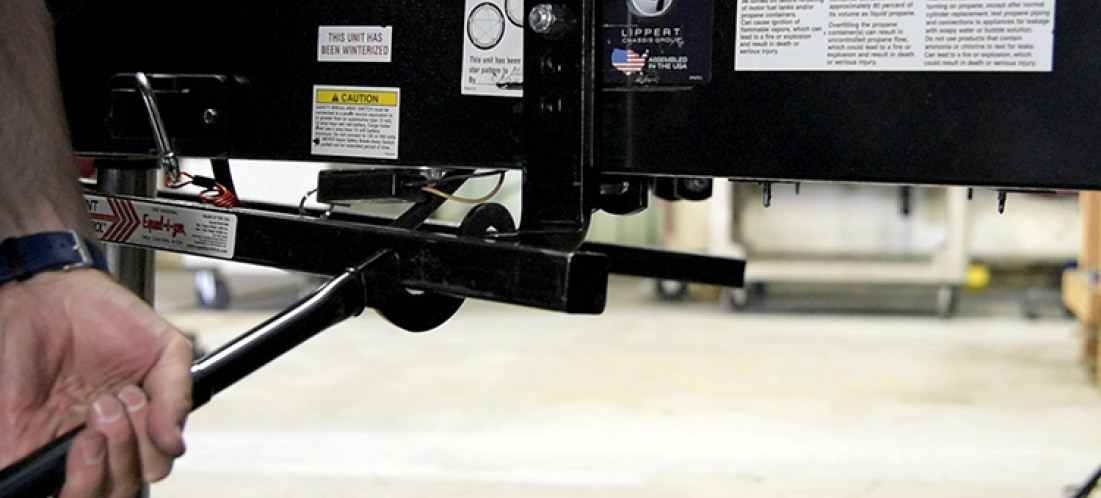
Hitching and unhitching is straightforward, although after pinning the spring arms into the hitch head sockets, they were a little stiff and difficult to move at first; after a short while, they loosened up. The socket bolts can be torqued to specifications if needed. Since we were using the 14,000-pound-rated hitch, lifting the spring arms required raising the A-frame while coupled to the ball with the electric jack to remove much of the pressure; the Snap-up lever helps lift the spring arms onto the L-brackets. Once in place, the L-pins are inserted to prevent the spring arms from jumping off the brackets.
Testing the fruits of our labors afterward, we were more than pleasantly surprised at how well the Ford F-150 handled the big 29-foot travel trailer. There was virtually no sway at highway speeds and passing big trucks created no stability issues. The results certainly squelched the naysayers who were “certain” that towing a trailer of this length would “pucker-up” the driver. Obviously, loading will have to be managed to comply with Ford’s axle and payload limits, but other than consuming more fuel than expected (8 mpg while towing), the F-150 was comfortable and safe on the road once the new mirrors were installed.
By the way: Potential buyers be warned. Ordering towing mirrors from the factory is much cheaper than the $1,820 price tag for the parts after the fact. We’re not sure how Ford can label the towing package as “heavy duty” and not include towing mirrors, but the lesson was learned for this owner.
Without question, the Equal-i-zer hitch system is a game-changer when it comes to towing safety and ease of use. The company, Progressive Mfg. Inc., backs the hitch (all components are made in the U.S.A.) with a limited lifetime warranty to the original purchaser — and provides excellent support materials to customers. Teamed up with the ultra-luxurious F-150, the towing experience rises to a new level of comfort.

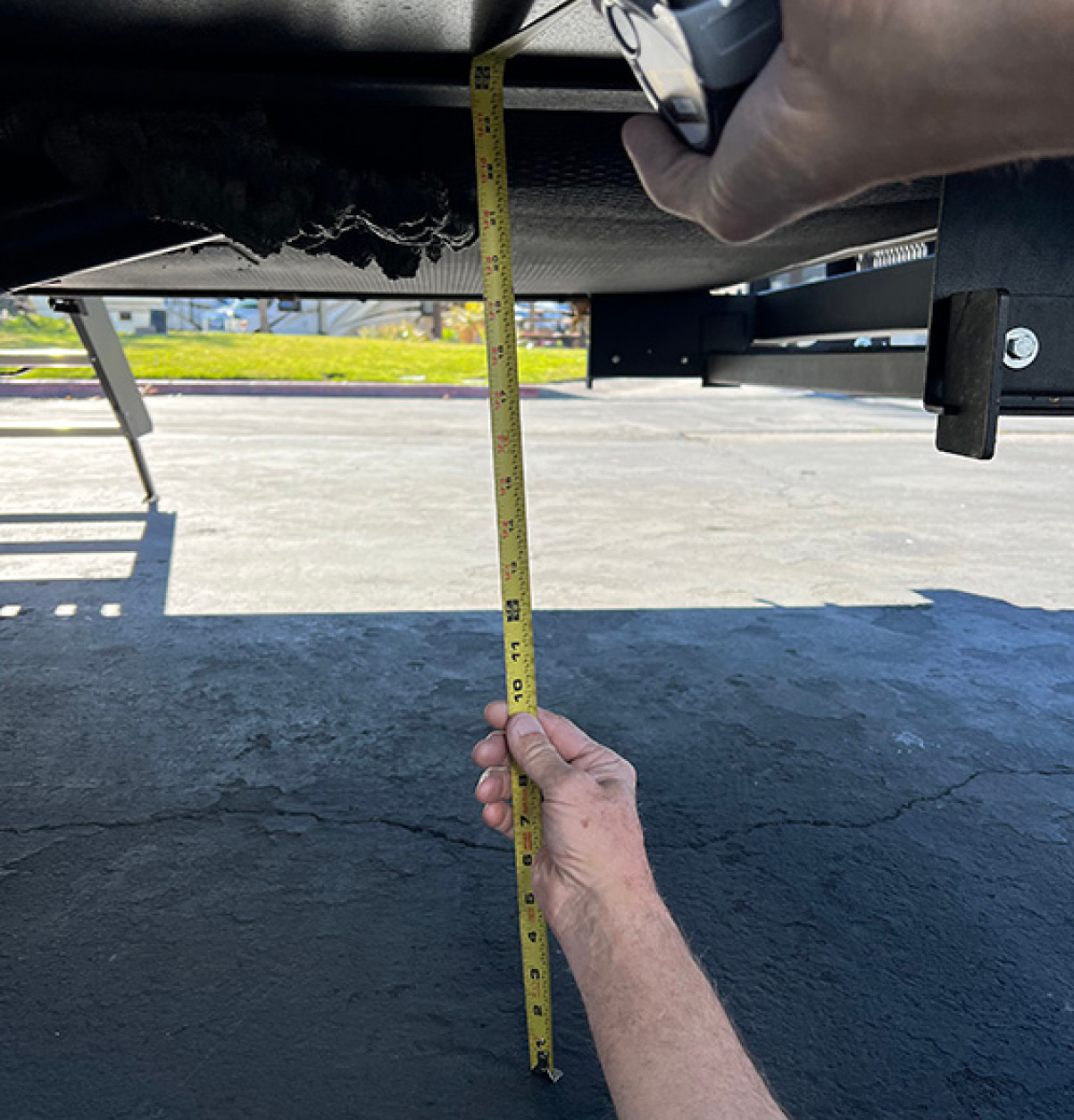
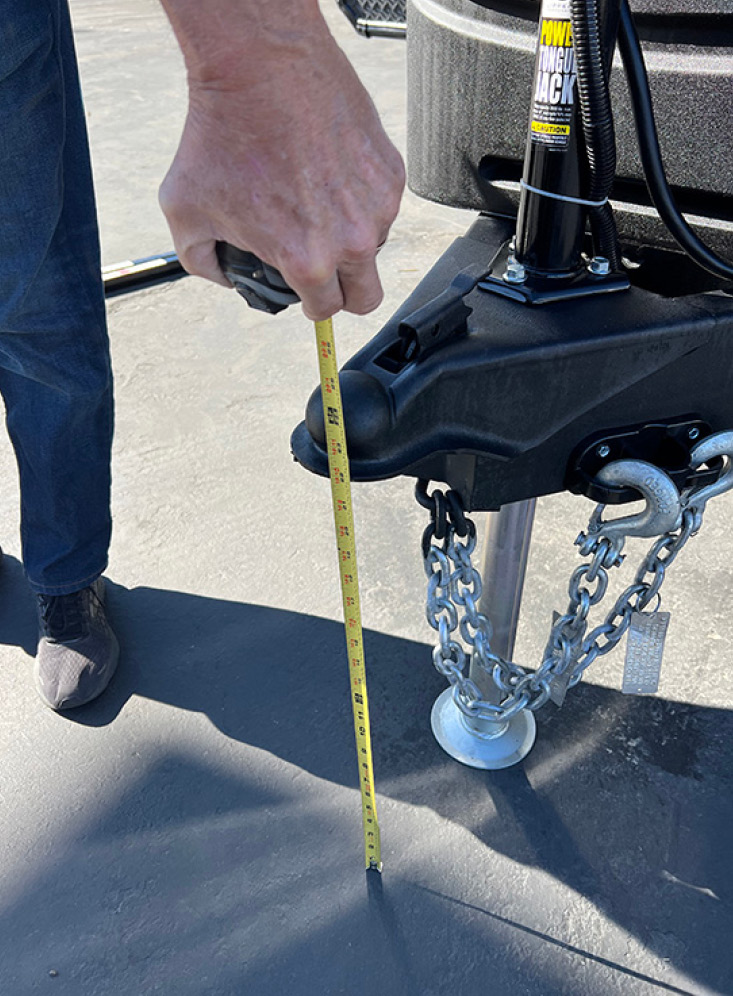
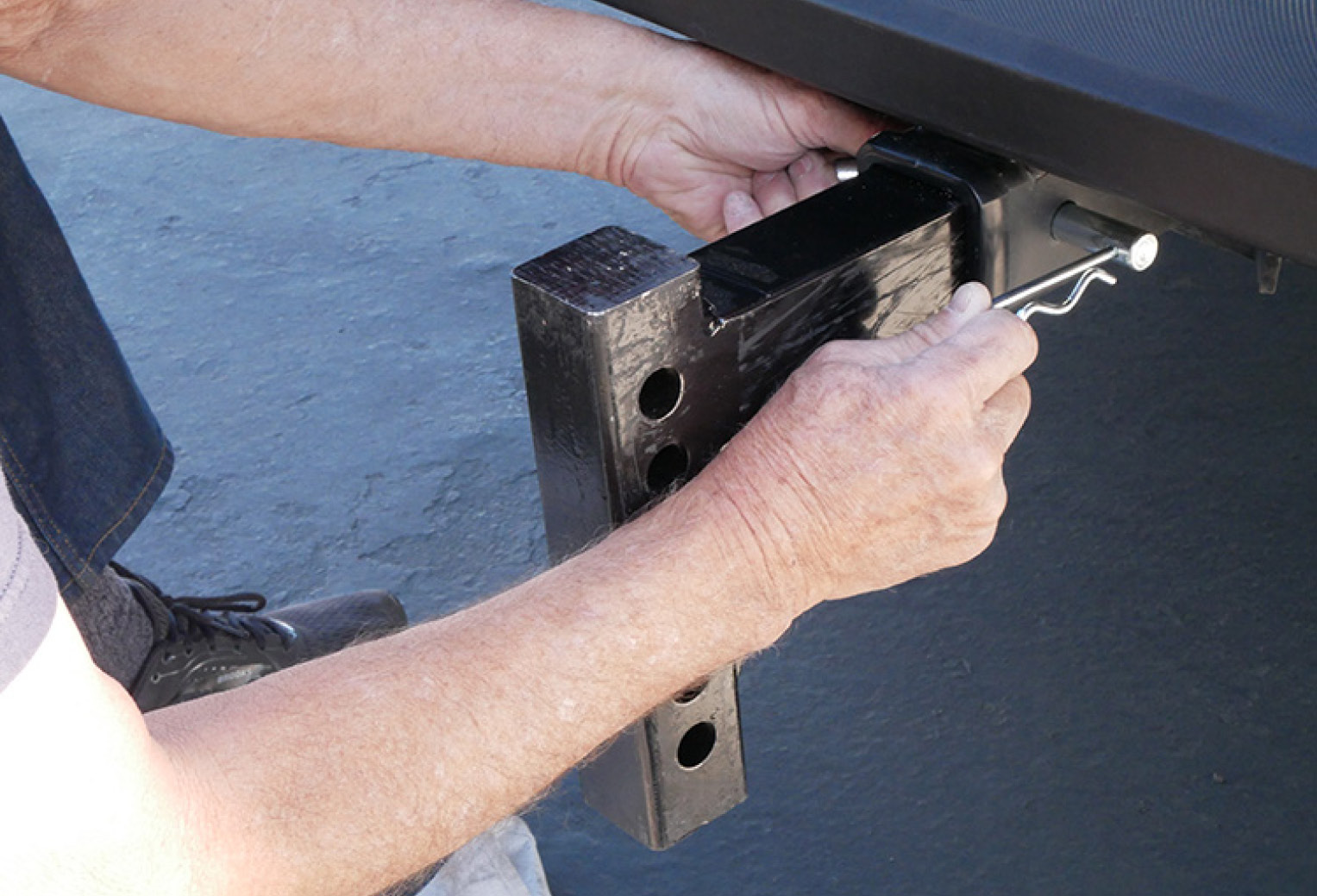
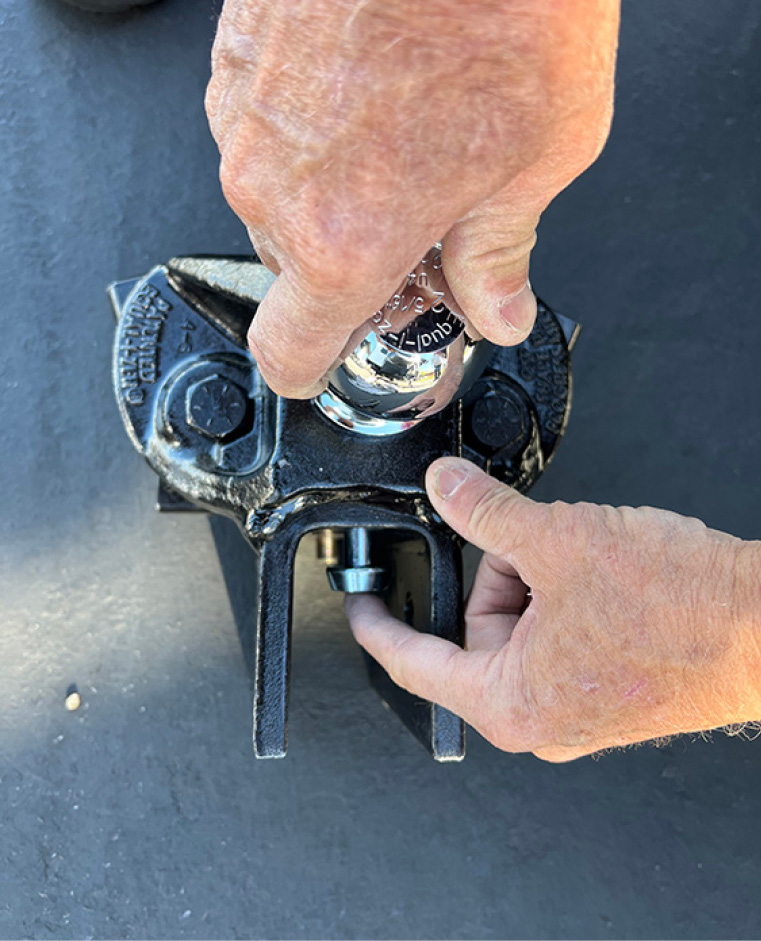
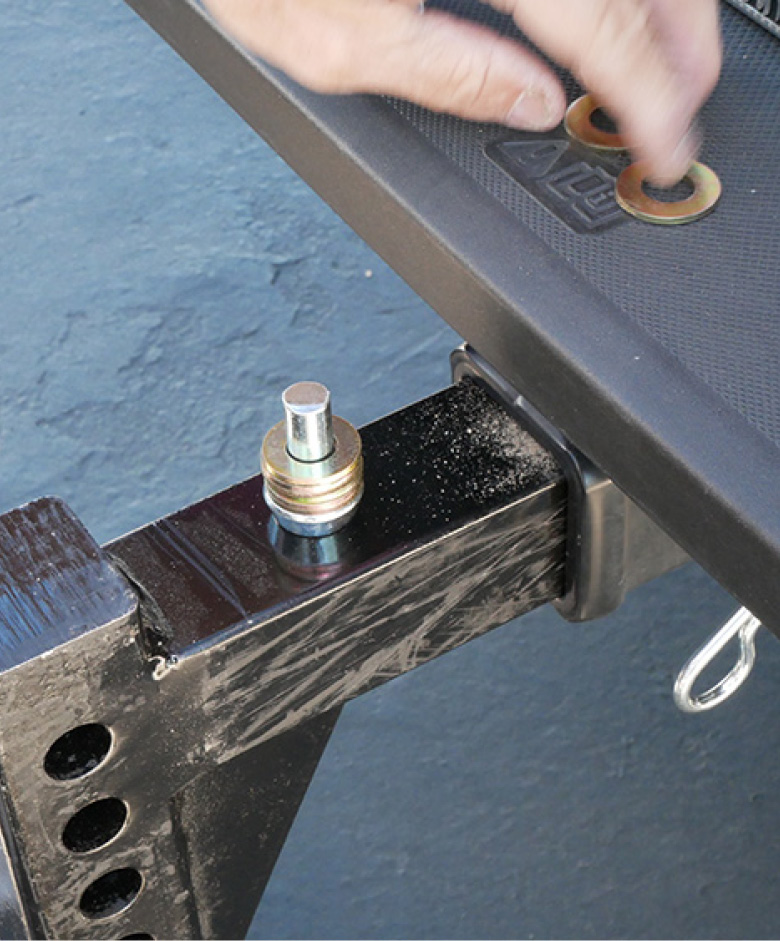

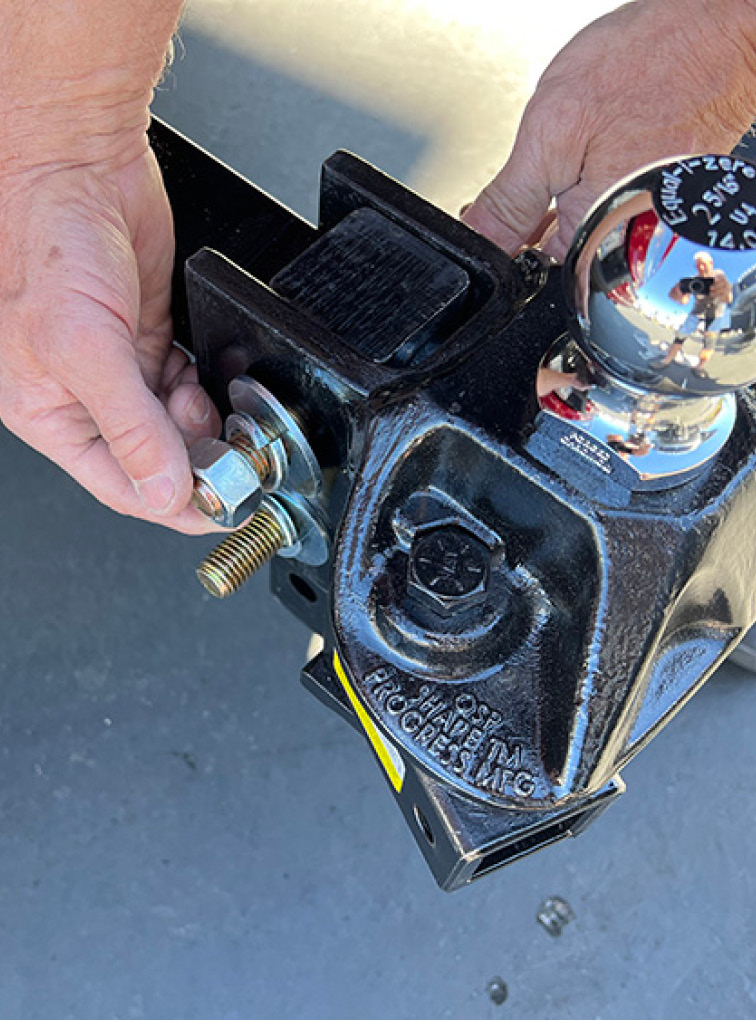
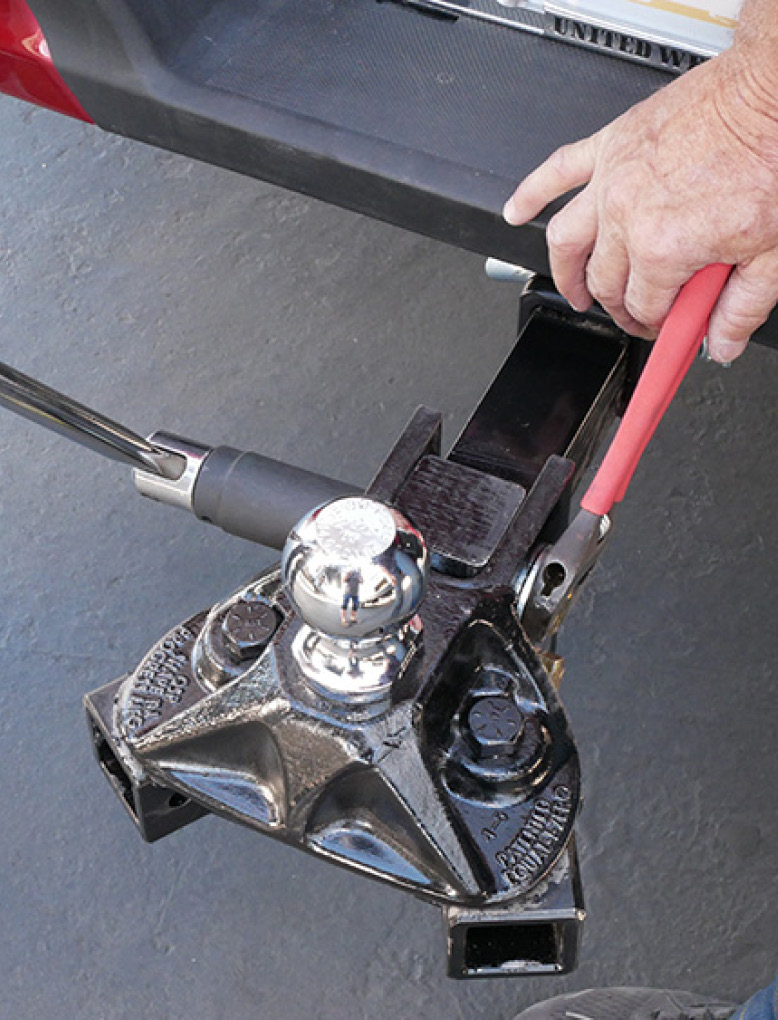


Setting up the Equal-i-zer hitch for towing this 29-foot travel trailer with a F-150 required precise adjustments to keep the truck and trailer level while providing the right amount of weight distribution. This combination presented a few challenges because the hitch weight of the trailer was close to maxing out the truck’s rear axle and suspension. It was critical that the front end was loaded correctly, without under-distribution of hitch weight, which would create stability problems while towing.

We first made sure the truck and trailer were on flat, level ground. The first measurement was taken with the truck disconnected from the trailer. After clearing the device, pushing the Read button revealed a number on the screen. The OnTarget device at this point was left on without touching any other buttons and the trailer was then attached to the truck with all the hitch weight on the ball — no spring bars and the jack was retracted. A second measurement was taken at the front wheel well in the same location and a second number was revealed on the screen.

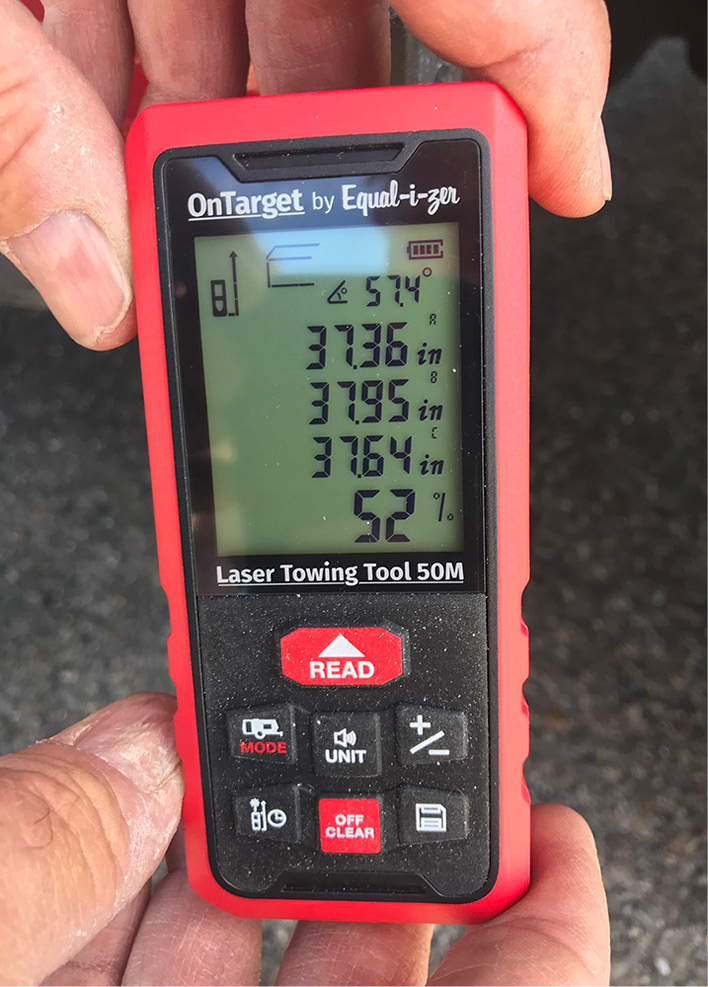
The device can also be used to laser measure when leveling the trailer in a campsite or to determine clearance for the slide-out, among many needs to establish distance without having someone hold the dumb end of a tape measure.
After using the OnTarget Towing Tool, I can’t image working with hitches without it. It sells for $79.95 and, like the hitch, can be purchased from online/brick and mortar sellers of RV parts and Amazon.