

hether it’s a pop-up, travel trailer, fifth wheel or motorhome, most RVs have at least one item in common: self-containment. While it may be minimal in some cases and extensive in others, it means having everything necessary onboard to be independent from hookups for a few days — or even for a few weeks.
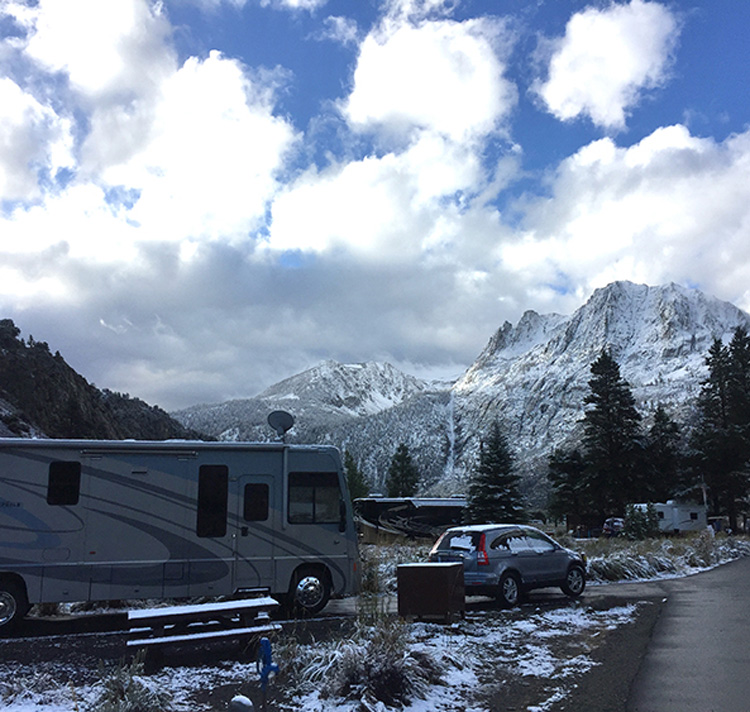
Known as dry camping or boondocking, spending time off the grid is appealing to those who prefer more natural surroundings — and get a kick out of the freedom afforded by being self-contained. We can camp in the midst of some of the most beautiful and special places on this continent. Our RVs are our tickets to versatility, from spending time in a primitive campground in a spectacularly beautiful national park or national forest, a few days in a friend’s driveway or the convenience of an overnight stay at a Harvest Hosts partner location. Being “unhooked” may be a once-in-a-while choice or a preferred way of travel rather than just visiting for a few hours and then departing to a site with hookups. And don’t forget the financial consideration, which has been top-of-mind now that sites are more expensive than ever — if they are even available when you want to travel.
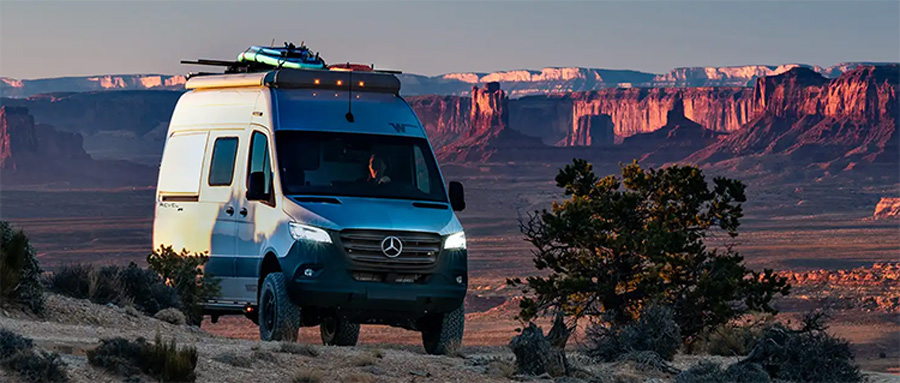
Unfortunately, some newer travelers tend to confuse “boondocking” with simply owning an RV — and while it’s true that virtually any contemporary RV can take you off the grid, being able to exist without electrical, water and sewer hook-ups means not only a different mindset but additional equipment not generally part of an RV’s factory package. And while all types of RVs can be used in a variety of primitive camping locations, the “ideal” RV for boondocking may be a compromise for those who relish lots of interior space. Class B motorhomes and truck-mounted campers arguably are the most agile in tight situations, on rough roads and in tighter turns — but most don’t carry as much water (or have the holding tank capacity), and their seating and sleeping accommodations are more limited.
For thrifty owner(s) who can ration water and 12-volt DC power effectively, they are a good compromise. For those of us who own larger motorhomes or trailers, site selections are more limited but still abundant, especially if we’re just looking for an overnight camping spot, not a destination. Generally, motorhomes and truck campers are the most versatile because they are more adaptable to on-the-fly investigation of prospective sites — and, of course, motorhome owners can quickly un-hitch and re-attach a towed vehicle (dinghy) to explore new territory.

Where to go? The Internet is, obviously, an essential source for researching dry-camping destinations. Not many years back, choices for an off-grid overnight stay were limited to the nearest Walmart parking lot. Some still allow this, as do many businesses such as Cabelas and Cracker Barrel, but the big change has been the membership groups that provide self-sufficient camping in locations that can almost seem idyllic in comparison. Sites such as Harvest Hosts (harvesthosts.com), Campendium (campendium.com), Boondockers Welcome (boondockerswelcome.com), the dyrt (thedyrt.com) and others allow members access to thousands of sites ranging from golf courses and wineries to just folks opening their private grounds.
And then, of course, there are U.S. Forest Service and U.S. Park Service locations, state parks and even local city and county locations — all with websites than can be utilized. The U.S. Forest Service, in particular, has thousands of campgrounds and dispersed camping sites. Most National Park campsites do not offer hookups and are some of the most beautiful places to camp. The primary information source for various federal campgrounds and reservations is recreation.gov.
Keep the Water Flowing
Sufficient water is essential for dry camping. Good-quality water can be assured with filtration, which should occur at the water-supply faucet via a filtering system utilizing two canister filters with the inlet filter (nearest the faucet) providing coarse filtration (1 to 5 microns, for sand and other sediment) and the second filter (.0.2 to 0.5 micron) to catch mold, cysts and many other pollutants as well as removing chlorine. Take care with filter specifications: most common 10-inch canister filters are only adequate to remove the larger pollutants. Ten-inch, two-filter sets are available at RV supply stores or sources such as Amazon under brands such as Clearsource (clearsourcerv.com) for $50 to $60. Twin canisters for the 10-inch filters vary widely in price, from $55, and can be mounted in commercial housings designed for the RV market. Use of a countertop filter only for drinking water is an alternative, but it’s preferable to filter all water as it enters the RV.

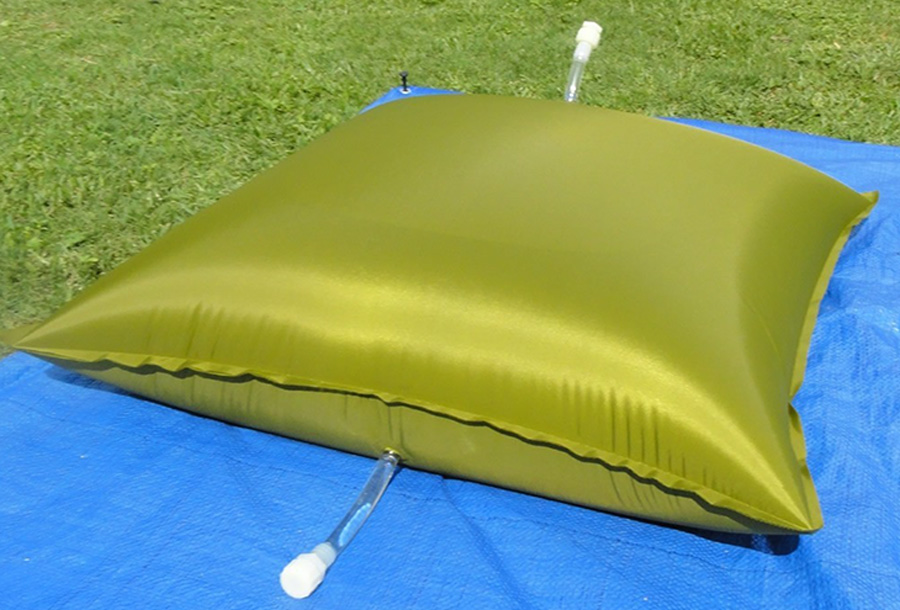
Getting ample fresh water is one of the main limiting factors for extended-stay dry-camping — it can be inconvenient to depart from an enjoyable site to pursue additional water. One of the few alternative ways to supplant water supplies without having to move the RV is to use a water bladder, which can be carried to a nearby town or other water source. Such bladders can be filled at municipal water stations, city parks, RV parks, city sanitation stations or anywhere potable water is available to the public free or for a fee. Such bladders include the Surviv-A-Tac 53-gallon ($120 at Amazon) and the Aquatank 60-gallon, available at aquaflex.net in various capacities (and also at Amazon); figure on spending $142-160, depending on the capacity. These two examples are good fits for hauling in the back of a dinghy vehicle or in a pickup truck bed.
Use of a bladder usually will require a portable 12-volt DC water pump similar to the pump used to operate an RV water system, with suitable fittings for connection to a water hose and to the bladder, allowing water transfer to the RV. Jumper cables can be used for temporary battery power to operate the pump.
While it may be somewhat slower, the RV’s built-in water pump may be useable with its intake valve turned to the “winterize” position so it temporarily draws from an outside container rather than from the RV’s water tank. In some cases, the water inlet selector can be turned to “tank fill” to pump water from a bladder directly into the RV tank.
Power Up Off the Grid
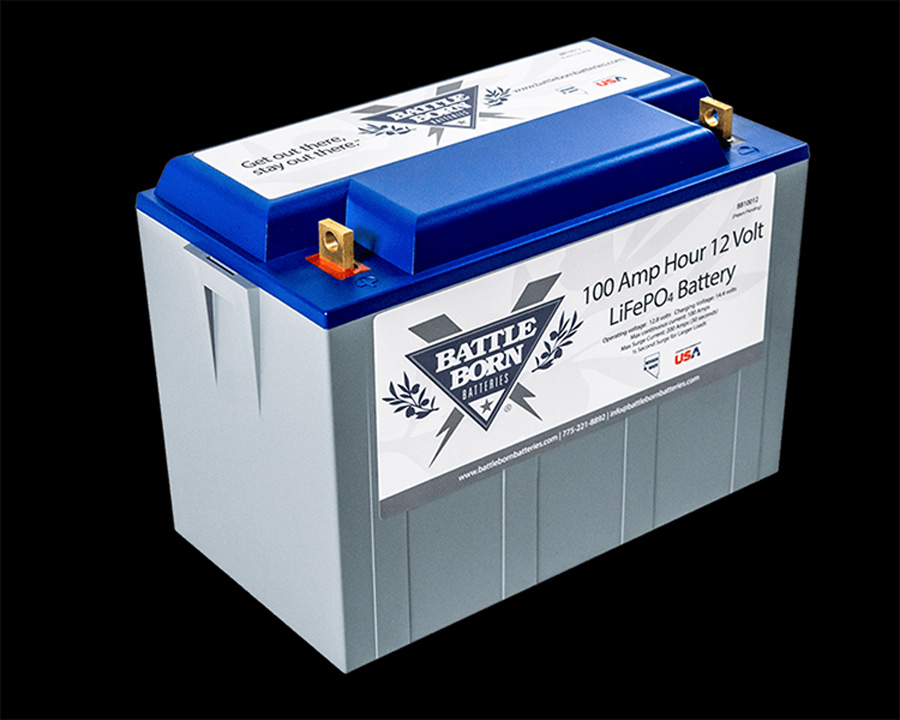
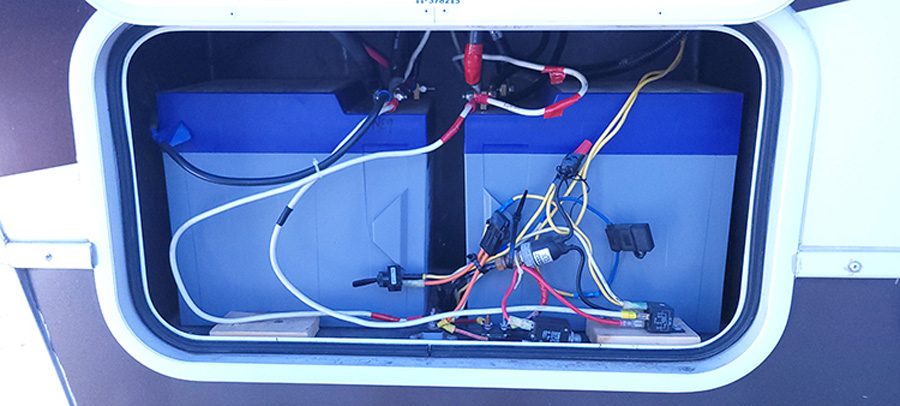
Comfortable dry camping can be difficult without adequate 12-volt DC power in the form of one or more batteries that are dedicated (isolated) for “house” functions. Battery choices vary widely from the low-cost approach (a single conventional flooded-cell 12-volt RV/marine deep cycle battery rated at 115 amp hours) to a bank of four or six lithium house batteries rated at 400 to 600 amp hours or more. It all depends on the complexity of the RV and your electrical needs.
The advantages of lithium batteries are that virtually all their stored power is usable, in contrast to conventional batteries that are limited to about 50% of usable power before conditioning (charging) is required. Lithium batteries can also maintain adequate voltage much longer before they are “flat” and need recharging — and they are sealed, so there is no corrosion created by battery electrolyte that escapes from flooded-cell batteries. They also weigh considerably less than flooded-cell or AGM batteries.
Of course, all these benefits don’t come cheap. In terms of budget, prices range from a low of around $225 for a single flooded-cell (conventional) RV deep cycle battery such as the Trojan SCS150 to about $800 for a single lithium Battle Born LiFePO4. Owners of small RVs may find a single house battery adequate, but a pair is more common — and four or more house batteries are typically installed in diesel pusher motorhomes.
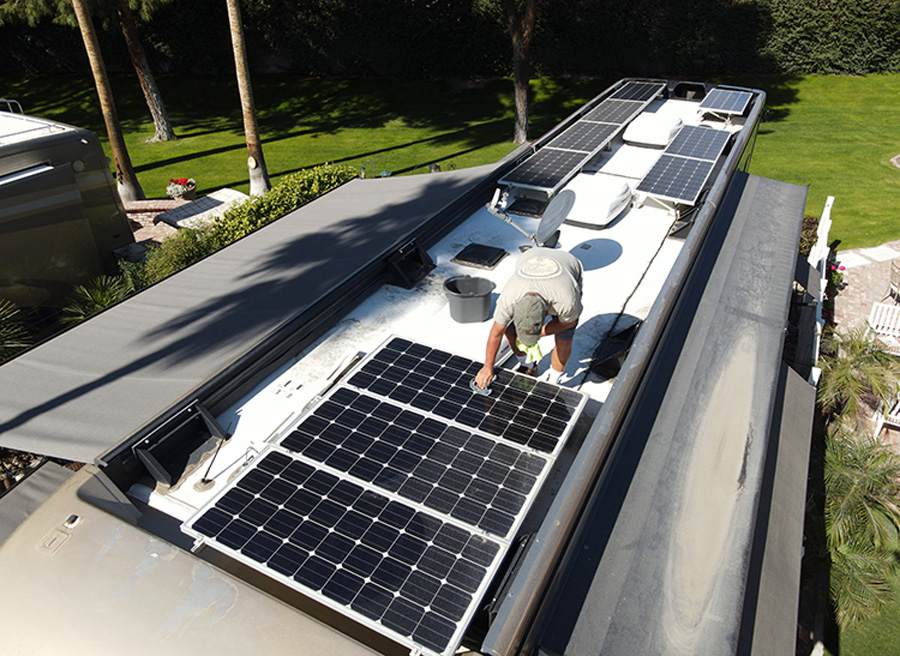
That said, a bank of batteries is only as good as the owner’s ability to re-charge them, and widespread use of solar power has dramatically extended dry-camping capability. Solar charging systems vary from small (300 watts of panel output) to expansive (1,500 watts) for large motorhomes and trailers that place high demands on battery reserve power, largely due to the use of residential refrigerators and entertainment systems in the evening when solar charging has ceased. Winter camping, which oftentimes requires extended running time for an RV furnace, is also a huge power drain.
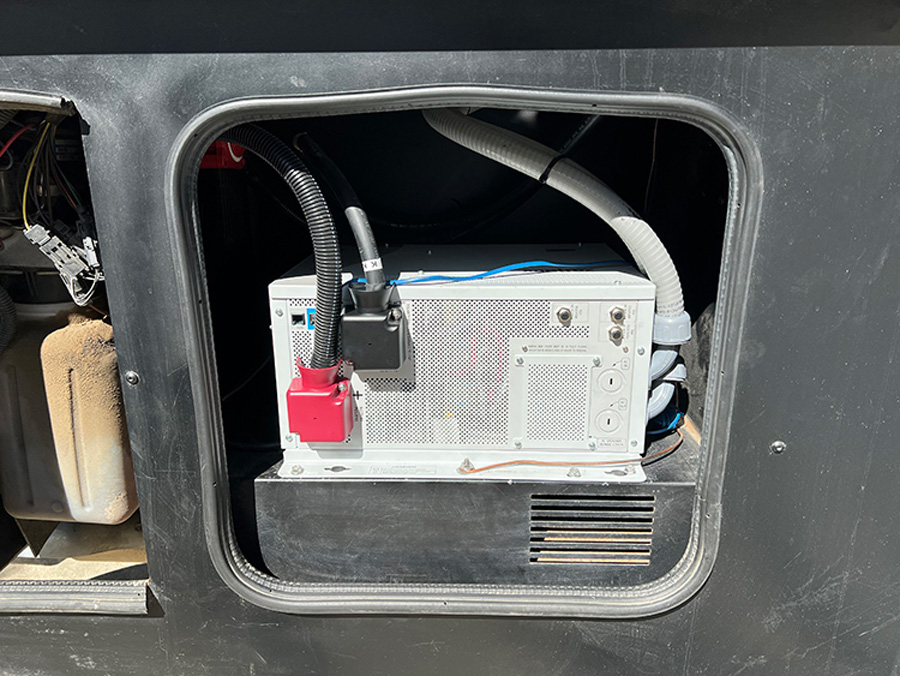
Cloudy days or camping in partial shade can dampen the recharge picture, and a generator should be considered as a backup for charging via an effective “smart” converter (battery charger). A smart converter/inverter is programmed to re-charge rapidly in its “Bulk” phase when a bank of batteries is significantly discharged. As re-charging progresses, the converter/inverter transitions to the “Absorption” phase during which substantial re-charging occurs over more extended time, and finally to the “Float” phase when charging has been completed. Charging parameters for flooded-cell, AGM and lithium batteries are different, and many converters/inverters/solar controllers can be set accordingly.
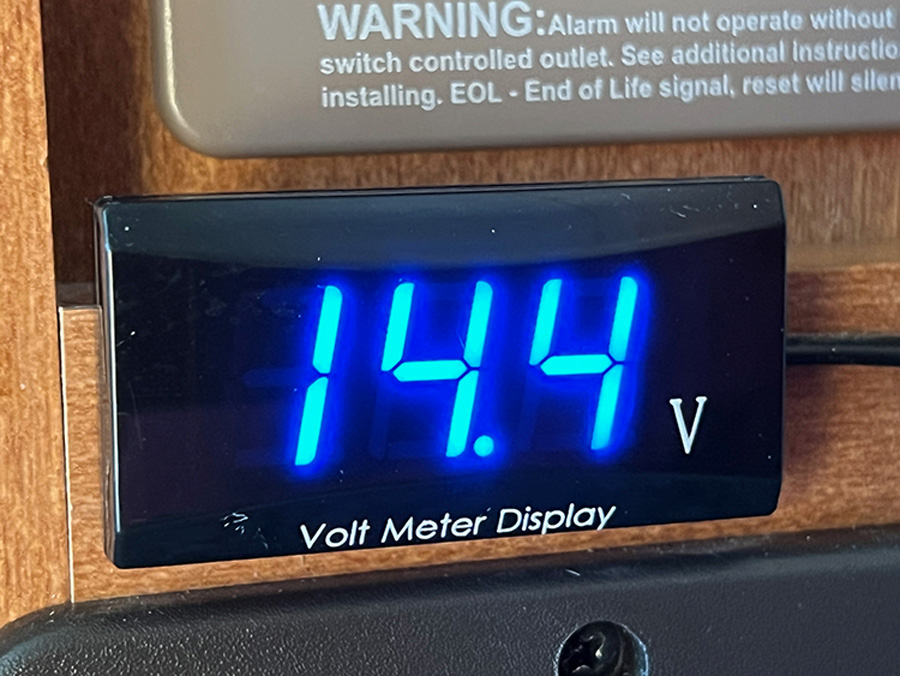
Boondockers rely on batteries for just about all RV functions, and a 12-volt DC voltmeter serves as a monitor for how things are going, especially when relying on flooded-cell batteries. Depending on battery type, a fully charged 12-volt battery will show 12.8 to 13 volts DC while at rest (no load). Overnight, after it has been partially depleted, no-load voltage may drop to 11.5 for flooded-cell batteries and re-charge is needed.
RV appliances such as gas/electric refrigerators, furnaces and conventional water heaters are listed as requiring at least 10.5 to 11 volts DC for operation, but at-rest voltage of flooded-cell batteries should not be pulled down that low, where there is little battery reserve capacity remaining. With lithium batteries, voltage remains relatively constant — 12 volts or higher — until the battery bank is significantly discharged. This makes them ideal for RV dry-camping use.
Dumping Holding Tanks
Of course, dry camping results in sanitary needs: getting rid of gray water, which is produced by bathing and kitchen functions, and black-water (sewage), both of which must be disposed of in appropriate dump stations. Such stations usually are available at RV parks, which for the most part will allow dumping by transient RV owners for a fee. Many towns and cities also have dump stations allied with their city sanitation operations, as do some truck stops. Internet sites such as rvdumps.com or rvdumpsites.net can provide locations, as can RV member sites such as Campendium and downloadable apps such as Sanidumps.
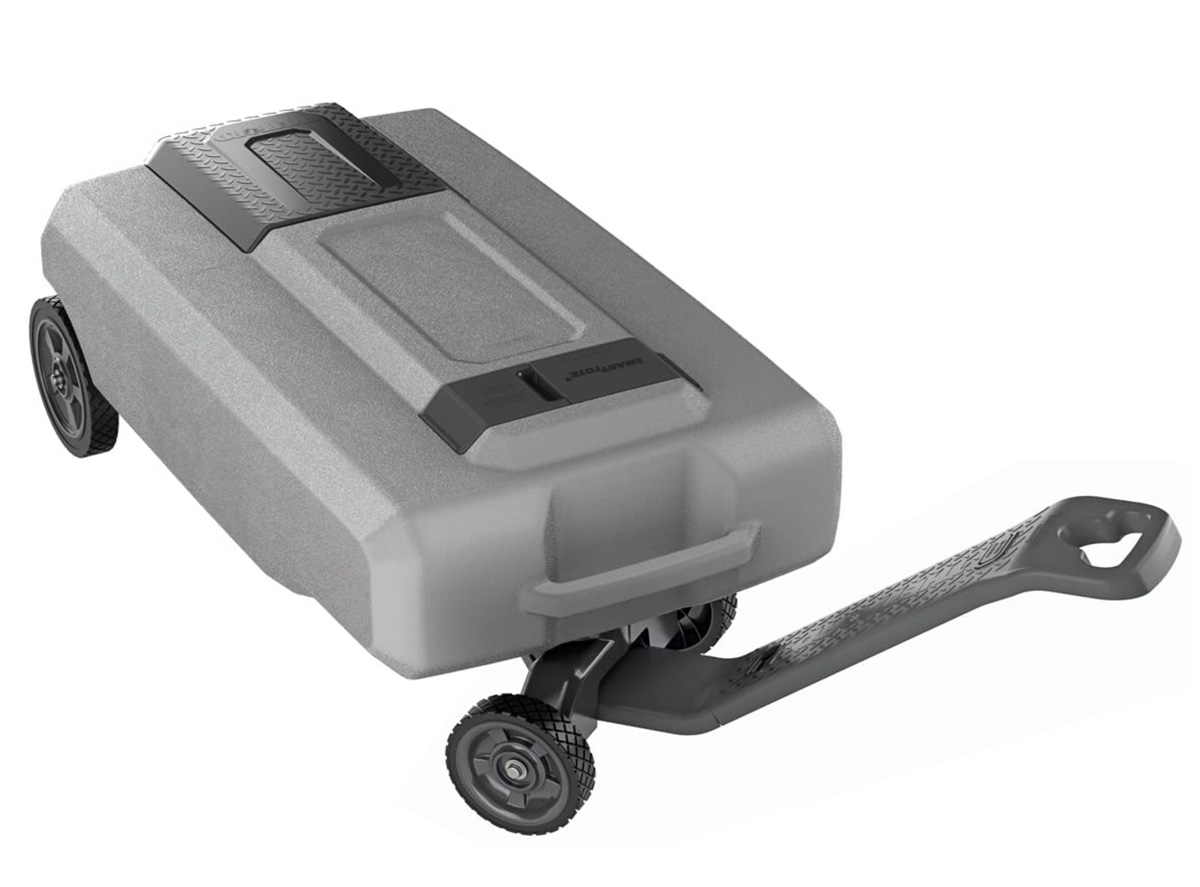
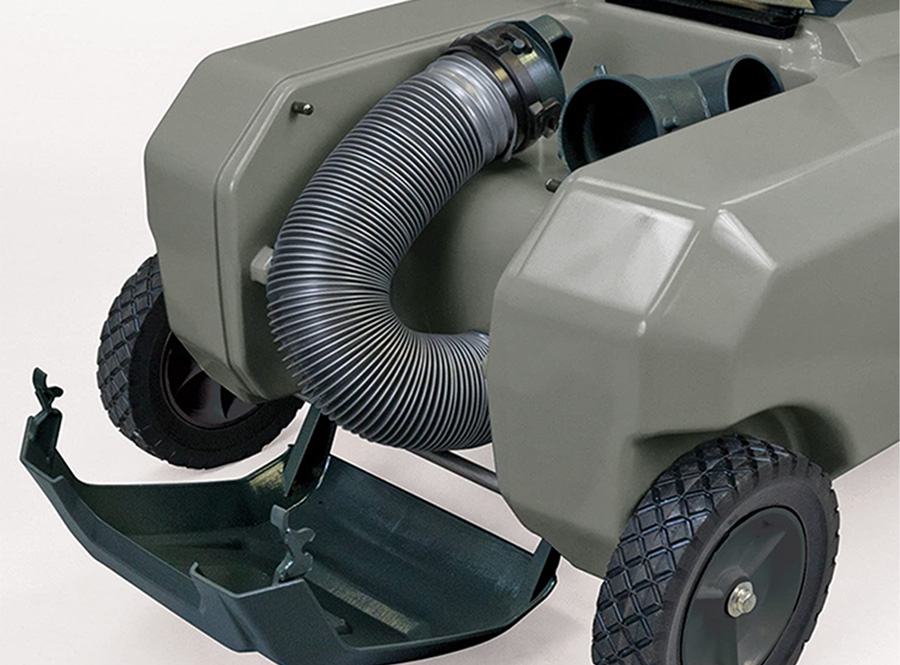
Alternately, a few inventive RV owners use macerator pumps that allow evacuation of the black tank into pit toilets on public lands (where permitted). Obviously, an RV with large gray- and black-water tanks is preferable for extended dry camping. Totes, like the Thetford SmartTote2 LX 4 Wheel Waste Tank, are available at most RV supply stores and at Amazon. The SmartTote2 tank is available in 18, 27 and 35-gallon capacities and can be towed to a nearby dump station within the camping facility. Figure on spending around $100 for the 27-gallon model, for example. Storage of these totes can be problematic, so many RVers mount them on the rear ladder.

Staying Connected
The internet has become a virtually essential source of information for the dry-camping nomad, and it can require some inventiveness when low signal strength occurs. A smartphone is the main link for Internet for many RV travelers, unless money is not an obstacle and you choose to install a satellite-based system such as HughesNet (hughesnet.com) or SpaceX Starlink, Eton Musk’s latest concept (starlink.com) — and even these systems have limited speed.
Using a cellphone hotspot to provide an Internet signal for a computer often is practical depending on signal strength, but it can run up your data bill if you’re handling a number of files, surfing the web or attempting to view videos or movies. Signal strength may not be strong enough to support videos, so your usual Internet menu may have to be restricted while boondocking in remote areas unless you happen to be located near a cell tower.
RV Enthusiast Publisher Bob Livingston uses Nomad Internet (nomadinternet.com), which has proven to be reliable in most of the country. This service works off cell towers and allows uninterrupted streaming and other data use without limitations and slowdowns. At presstime, set-up was $99 and service fees were $149 per month, with no required contracts.
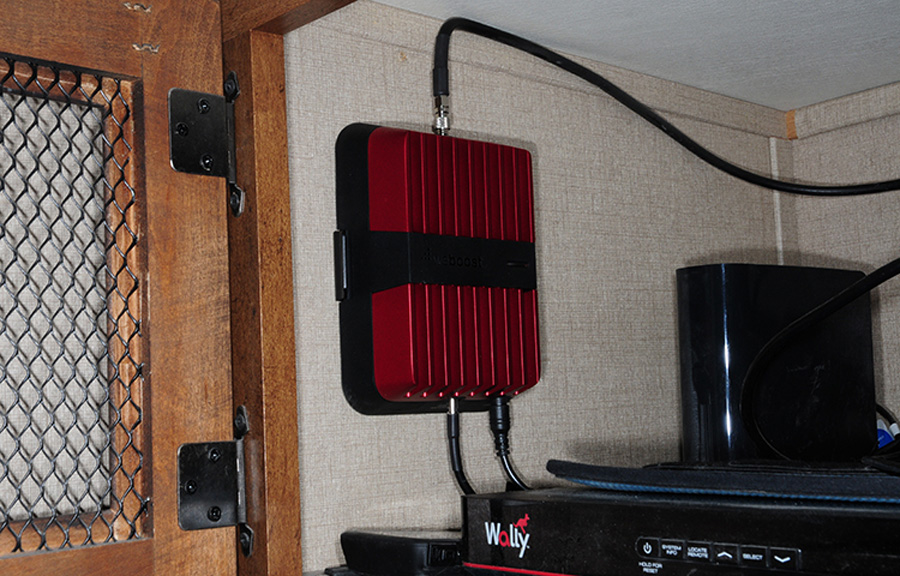
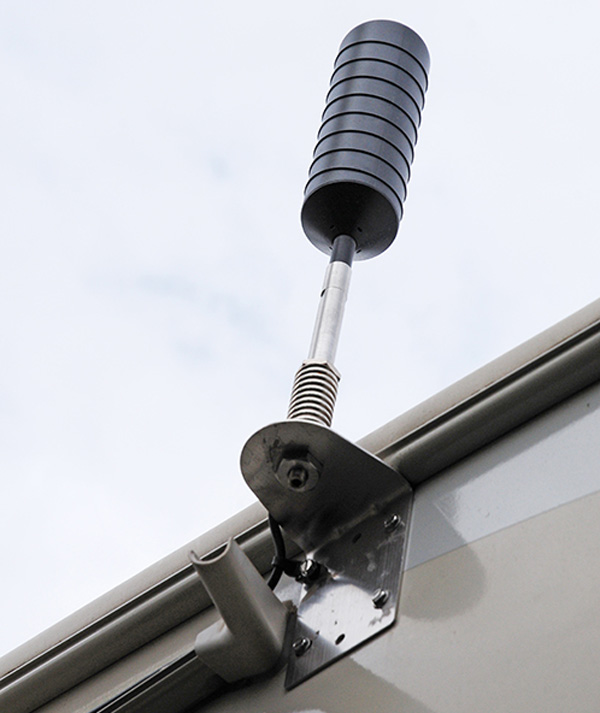
Cellphone signal boosters such as weBoost by Wilson Electronics (weboost.com) or Winegard’s Boost XT (winegard.com) can help if low signal strength impairs cellphone usage. Winegard also markets a variety of television signal booster antennas for improved over-the-air reception.
Protection in the Wild
Boondocking in remote areas may create a feeling of vulnerability unless other boondockers are camped nearby, and it raises the question of protection. To veteran boondockers, it may appear that the threat ranges from minimal to non-existent, but there are no statistics on trouble in the backwoods.
How you choose to protect yourself is a personal decision, but for boondockers who elect to carry firearms, the oft-repeated advice is to practice — get comfortable with the firearm and rehearse strategy by learning how to handle a threatening situation — and above all, be cognizant of all local gun laws in the states and cities where you’re traveling.
Opinions vary; one veteran RVer I know who competes in shooting matches says he has learned from many years of practice and familiarity with firearms to rehearse avoiding the need to use his firearm for protection because using it may turn out to be tragic or, at the very least, a lot of otherwise unnecessary trouble. He continually, habitually, practices situational awareness.
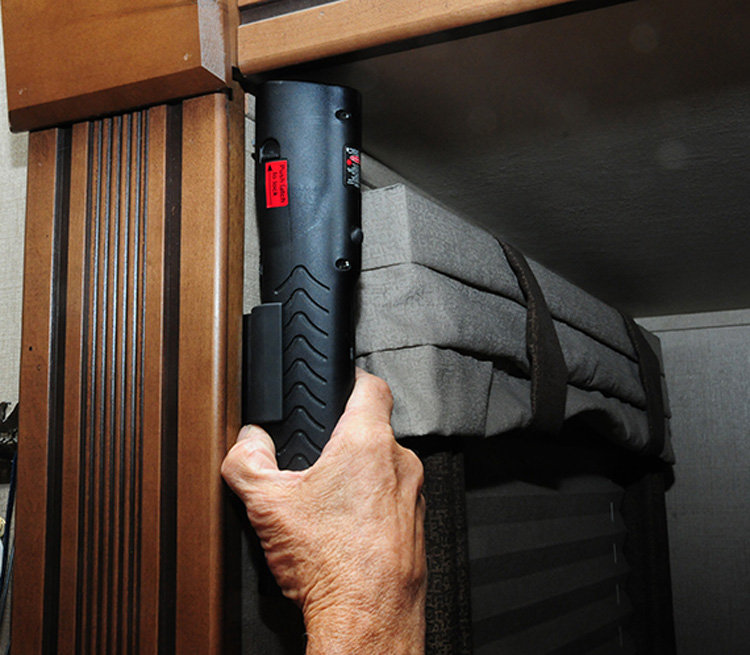
An alternative is the use of pepper-launching devices as a deterrent. These devices range from pocket/purse size aerosols to “guns” that propel pepper balls that break on bodily impact and cause extreme discomfort, causing an assailant to abandon an attack. Although there are a number of these products on the market, the PepperBall LifeLite is one of the more inconspicuous devices. It looks like a large flashlight — and, as a matter of fact, includes a flashlight integrated into the handle. The device, which retails for about $300 (pepperball.com) shoots pepper balls up to 60 feet and has a proven track record for effectiveness.
Dry camping/boondocking is not for the RV owner whose comfort zone usually involves full hookups. But for the RVer who enjoys the challenge of being untethered to civilization, it can provide access to some of the most memorable RV camping experiences ever enjoyed.